




California
Sacramento ADU Costs 2026: Types, Value, and Budget
06.29.2026
12.29.2025


In This Article
Renovating a home in Riverside can be both exciting and surprisingly complex. The city’s mix of historic neighborhoods, mid-century suburbs, and newer developments means no two renovation projects look quite the same. Add in long, hot summers, water-conscious landscaping norms, and a large inventory of homes built before modern building standards, and it’s clear why careful planning matters here.
Whether you live near downtown, in Canyon Crest, or closer to the foothills, most Riverside homeowners renovate to make their homes more comfortable, efficient, and better suited to how they live today. This guide walks through what to expect when renovating in Riverside, including realistic cost ranges, how architectural styles influence design decisions, and the specific issues that tend to shape projects in this market.
Renovation costs in Riverside vary widely depending on scope, home age, and material choices, but most projects fall into a few broad ranges.
Light renovations typically cost between $10,000 and $25,000. These projects focus on surface-level improvements such as repainting, replacing flooring, updating light fixtures, or swapping out countertops while keeping existing layouts and systems intact. In neighborhoods like Mission Grove, this might include replacing original ceramic tile with large-format porcelain and upgrading laminate counters to quartz without moving plumbing.
Mid-range remodels often land between $30,000 and $60,000 and include many kitchen and bathroom renovations in Riverside. New cabinetry, plumbing fixtures, appliances, lighting, and selective electrical work can all fit within this range.
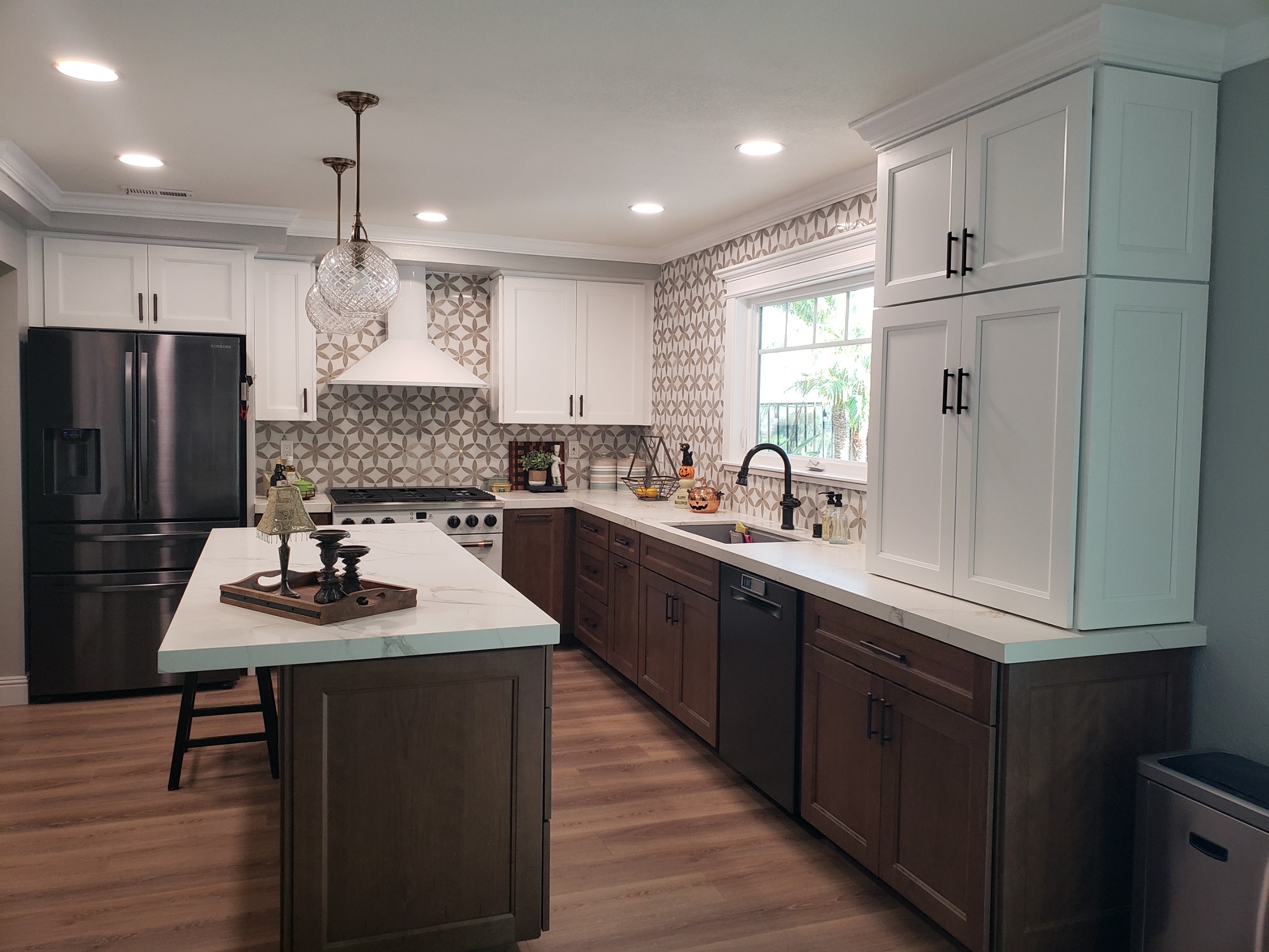
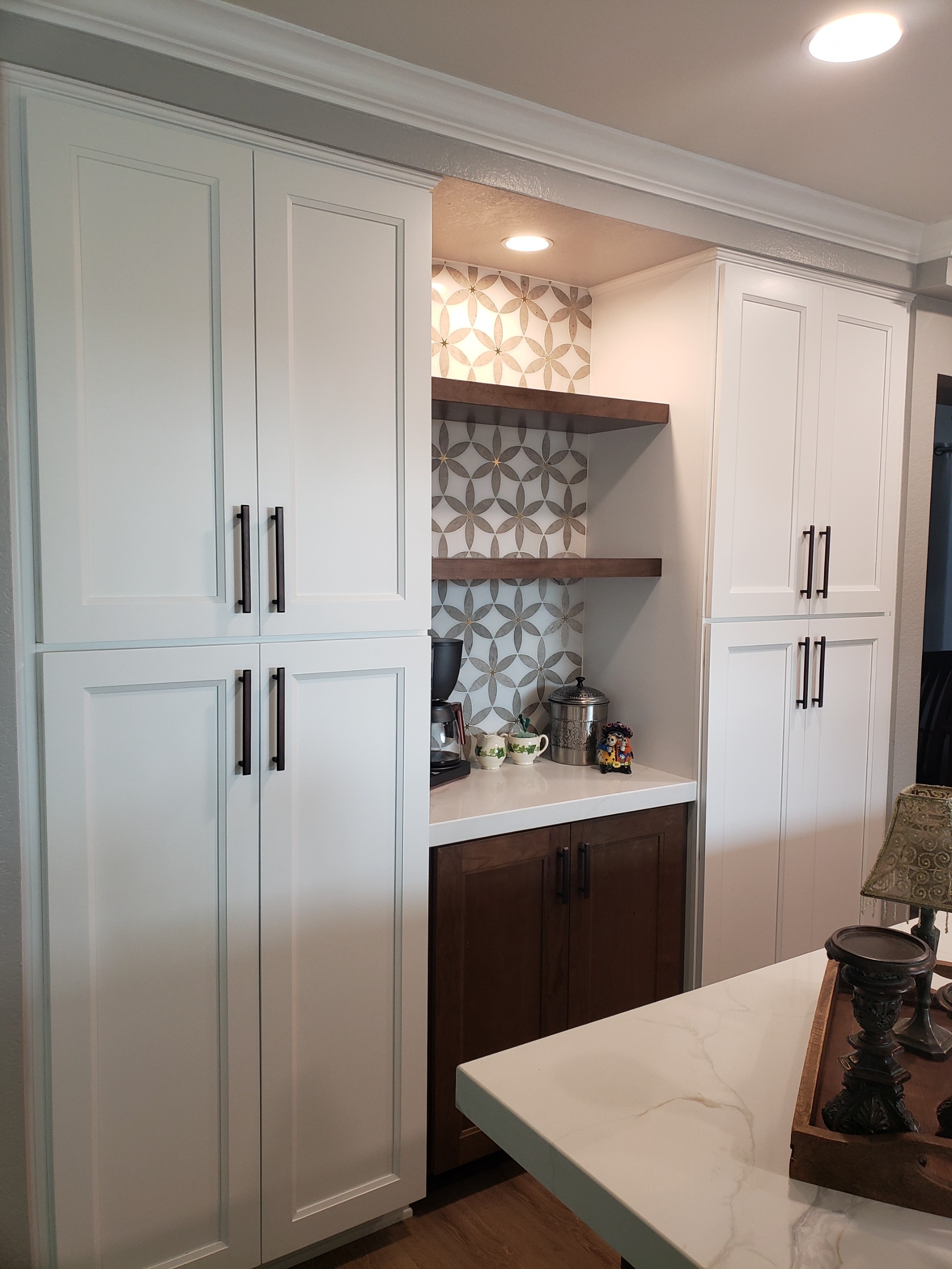
For a real-world example of what your budget can get you, look to this Riverside kitchen renovation by The Cabinet Lady, Inc. The project came in at $55,000 and included semi-custom cherry cabinetry, an enlarged and re-centered window, a new chimney hood, expanded cabinetry, double pantries, a coffee bar, and a marble mosaic backsplash. The microwave also moved to the island, freeing the range wall for the new hood.
Extensive or whole-home renovations frequently exceed $75,000 and can climb past $100,000 depending on complexity. These projects are common in older areas such as Wood Streets or Alessandro Heights and often combine multiple spaces with major infrastructure upgrades. Electrical panel replacements, full HVAC system changes, roof repairs, window replacement, and layout reconfiguration all contribute to higher costs.
On a per-square-foot basis, Riverside renovations generally range from $150 to $300 or more. Projects that keep walls, plumbing, and electrical lines in place tend to fall at the lower end, while renovations that involve structural work, custom cabinetry, or premium finishes move toward the upper end of the range.
The difference can show up even when walls stay put. Case in point, the Cabinet Lady, Inc.'s $55,000 Riverside kitchen renovation had the window was enlarged and re-centered. Cabinetry was extended along the exterior wall, and the microwave moved to the island.
Nationally, whole-home renovation costs often cluster around $50,000. Riverside sits close to that midpoint, though projects here frequently exceed national averages once energy upgrades or system replacements are involved. While still more affordable than many coastal Southern California markets, Riverside renovation costs are generally higher than those in the Midwest or Southeast due to labor rates, permitting requirements, and climate-driven construction needs.
Transparent Pricing You Can Trust

In Riverside, architectural style influences more than curb appeal. It affects how homes handle heat, what materials are appropriate, and how easily renovations move through permitting. Renovations that respect a home’s original structure and proportions tend to integrate more smoothly and maintain long-term value.
Spanish Revival and Mediterranean-style homes are common in areas near downtown, Victoria, and parts of Wood Streets. These homes typically feature stucco exteriors, clay barrel tile roofs, arched openings, and courtyards designed to create shade and airflow.
Renovating this style of Riverside homes often involves technical challenges rather than stylistic ones. Matching existing roof tiles can require salvaged clay tiles instead of modern concrete alternatives. Interior upgrades frequently include adding rigid foam insulation behind stucco, replacing original steel windows with custom aluminum-clad or wood units, and selecting flooring such as terracotta-look porcelain or wide-plank engineered wood that complements the home’s character.
Outdoor spaces are especially important in these homes. Preserving covered patios, arcades, and shaded walkways often provides greater comfort gains than purely interior changes.
Craftsman homes and bungalows are concentrated in older Riverside neighborhoods like Wood Streets and Casa Blanca. These homes often feature original wood floors, built-ins, and detailed trim, but they also tend to hide aging systems behind plaster walls.
Renovations here typically prioritize infrastructure, including replacing outdated wiring, upgrading electrical panels, and addressing old plumbing. Design updates are usually restrained, with homeowners refinishing original floors, restoring built-ins, and choosing handmade ceramic tile or simple shaker cabinetry rather than highly contemporary finishes. Lighting upgrades using warm LEDs and period-appropriate fixtures can dramatically improve usability without compromising character.
Ranch and mid-century homes dominate many postwar Riverside neighborhoods such as Arlington Heights, La Sierra, and parts of Canyon Crest. These homes are valued for their straightforward construction and flexible layouts.
Homeowners often renovate to open kitchens, improve indoor-outdoor connections, and upgrade systems. Common choices include flat-panel cabinetry, quartz countertops, large sliding doors, and durable flooring such as luxury vinyl plank or concrete-look porcelain tile. Because many of these Riverside homes still rely on original insulation and ductwork, energy upgrades often deliver immediate comfort improvements.
Victorian and Mission Revival homes are less common but highly visible near downtown and in designated historic areas. Renovations in these homes often require additional review, especially for exterior changes.
Interior renovations typically modernize kitchens and bathrooms while preserving ceiling heights, staircases, and window proportions. Specialty trades such as custom millwork or plaster repair can add cost, but these investments help retain architectural integrity and long-term appeal.
Renovate with confidence every step of the way
Step 1: Personalize Your Renovation Plan
Step 2: Receive Quotes from Trusted Contractors
Step 3: Let Us Handle the Project Details

Extended summer heat directly or indirectly impacts many Riverside renovation decisions. Many older homes lack adequate insulation and rely on inefficient cooling systems, making energy performance a central concern.
Common upgrades include replacing attic insulation paired with radiant barriers, low-emissivity dual-pane windows, and reflective roof coatings. Inside, homeowners often install variable-speed heat pumps, zoning systems, and ceiling fans to reduce constant air conditioning use. These upgrades may be subtle, but they significantly improve comfort and long-term operating costs.
Water efficiency is both a regulatory and practical consideration in Riverside renovations. Most projects now include WaterSense-rated fixtures, dual-flush toilets, and efficient appliances as a baseline.
Outdoor renovations frequently replace lawns with drought-tolerant landscapes, decomposed granite paths, and native plantings such as California sage, lavender, and agave. Drip irrigation systems and smart controllers are common additions, particularly in neighborhoods with larger lots like Alessandro Heights.
Homes built between the 1950s and 1980s often appear structurally sound but hide system limitations. Electrical panels may be undersized for modern usage, plumbing may restrict water pressure, and HVAC systems may be inefficient or nearing the end of their lifespan.
Addressing these systems during a renovation avoids repeated demolition later. Many Riverside homeowners use kitchen or bathroom remodels as an opportunity to replace supply lines, add circuits, and prepare their homes for future demands such as electric vehicle charging.
Riverside requires permits for most work beyond cosmetic updates. Electrical changes, plumbing relocations, structural modifications, and additions all require review and inspection.
Projects such as ADUs, garage conversions, and room additions must comply with zoning rules related to setbacks and lot coverage, which can vary by neighborhood. Factoring permit review and inspection scheduling into the project timeline is essential for larger renovations.
In Riverside neighborhoods near foothills or open land, wildfire resilience increasingly shapes renovation decisions. Homeowners often choose Class A fire-rated roofing, non-combustible siding such as stucco or fiber cement, and ember-resistant vents.
Hardscaping elements like concrete patios or gravel buffer zones around structures reduce fire risk while also lowering outdoor maintenance. These upgrades support long-term safety and can influence insurance considerations.
Block’s Renovation Studio helps Riverside homeowners plan renovations with greater clarity before the first nail is ever hammered. By visualizing layouts, materials, and finish combinations, homeowners can explore how choices such as engineered wood versus porcelain tile, semi-custom versus stock cabinetry, or layout changes versus cosmetic updates affect both design and budget.
Better still, our tool generates personalized cost estimates informed by local labor rates, home styles, and renovation scope, helping homeowners make better informed decisions that best serve their home and budget in the long-run.
Know the Cost Before You Start
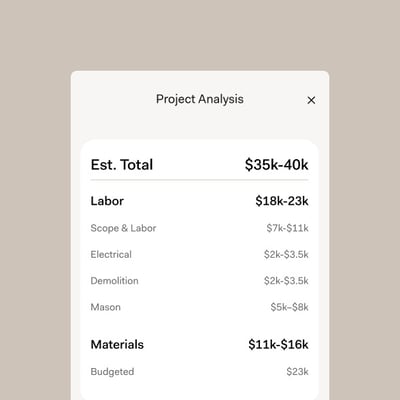
Renovating successfully in Riverside depends on working with contractors who understand local housing types, permitting requirements, and climate-driven construction challenges. Block connects homeowners with a vetted network of contractors experienced across Riverside neighborhoods, from Craftsman updates in Wood Streets to large-scale Ranch remodels in Canyon Crest.
By pairing careful planning with experienced professionals, Block helps homeowners move from concept to construction with clarity, ensuring renovations reflect both the home’s character and the way it’s meant to be lived in.
Remodel with confidence through Block

Connect to vetted local contractors
We only work with top-tier, thoroughly vetted contractors

Get expert guidance
Our project planners offer expert advice, scope review, and ongoing support as needed
Enjoy peace of mind throughout your renovation
Secure payment system puts you in control and protects your remodel

Renovate confidently with Block
Easily compare quotes from top quality contractors, and get peace of mind with warranty & price protections.
California
Sacramento ADU Costs 2026: Types, Value, and Budget
06.29.2026

California
Custom Home Building in Santa Rosa, CA: A Complete Guide
05.20.2026

California
Custom Home Building in Stockton, CA: Climate-First Guide
05.19.2026

California
Custom Home Building in Rocklin, CA: What You Need to Know
05.18.2026

California
Custom Home Building in El Dorado Hills, CA: A Practical Guide
05.12.2026