Block Renovation Logo
Renovation StudioNew
How It Works
Locations
Gallery
Resources

Kitchen Renovation Costs in Corona CA

Corona has recorded 81 kitchen renovation permits since March 2021, reflecting steady homeowner investment across this Inland Empire community. At an average project cost of $58,393, Corona renovations run about 25% above the national average of $46,623 - and nearly in line with California's state average of $60,081. That positioning reflects a market where homeowners are making meaningful investments in their kitchens, driven in part by the area's rising home values and its role as a more affordable entry point into Southern California's housing market. With a median home value around $590,000, kitchen renovations here make strong financial sense. The data below captures what projects in Corona actually cost.
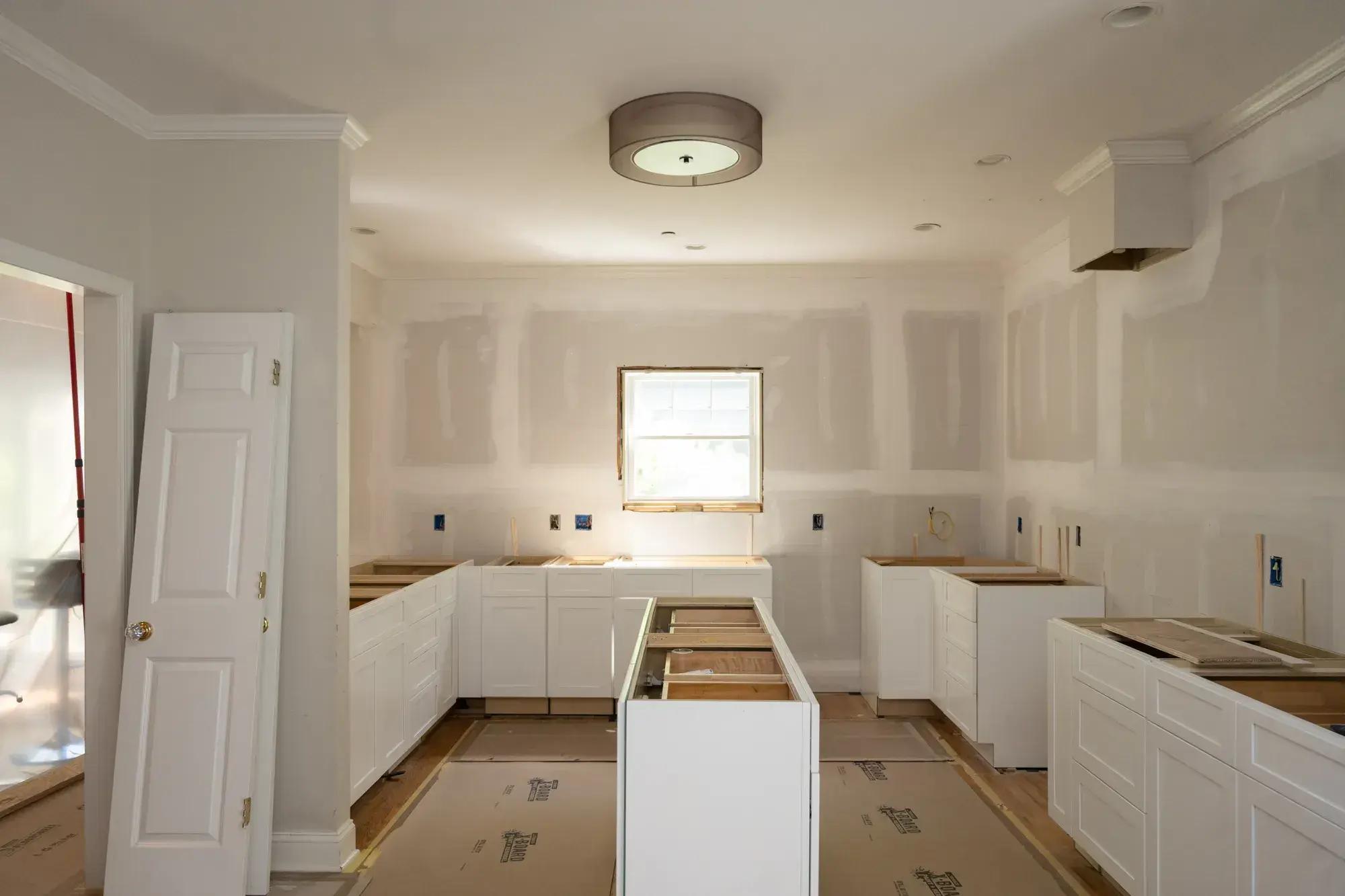
Get Estimate
Kitchen renovation

Average Project Costs

$58,393

vs National Average

25% above

How does your renovation budget compare in Corona?


Your Budget$58,393
$0$225,000

This is right around the average renovation cost in Corona.

How we calculate these costs

A renovation permit is official documentation filed with the local Department of Buildings when homeowners undertake construction work. It serves as proof that work is being done to code and represents your best data point for understanding real kitchen renovation costs in Corona. The declared permit value - the estimated cost submitted by contractors or homeowners when filing - provides a reliable baseline for typical project investments, though actual costs may vary. This analysis focuses exclusively on kitchen renovation permits, excluding other room types and new construction to ensure the data accurately reflects what homeowners like you are spending on kitchen upgrades.

Cost calculation methodology for Corona

Meet kitchen contractors serving Corona

Block Renovation partners exclusively with top-rated Corona contractors who meet our strict standards for quality, reliability, and customer satisfaction. Every professional in our network is vetted, licensed, and committed to delivering exceptional kitchen renovations.
Top-rated contractors serving Corona

Understanding labor costs in Corona

Labor costs in Corona reflect its position in the Inland Empire - a market that runs above national averages due to California's high cost of living, but below coastal Los Angeles and Orange County rates. General contractors in Corona typically charge $85-$115 per hour, about 13-53% above the national average of $75/hr. Plumbers bill at $100-$130/hr, roughly 11-44% above the $90/hr national benchmark. Electricians range from $95-$125/hr, 12-47% higher than the $85/hr national rate. Cabinet makers run $100-$130/hr, 5-37% above the national $95/hr average. These rates reflect California's licensing requirements, workers' compensation costs, and steady demand from a large residential market. Labor typically represents 30-40% of total kitchen renovation costs, making accurate labor budgeting an important part of planning any project in Corona.

General Contractor

$85-$115

per hour

Plumber

$100-$130

per hour

Electrician

$95-$125

per hour

Cabinet Maker

$100-$130

per hour

Design and budget your next renovation with our free AI tool

A great renovation brings together style, layout, and cost in a way that works for your life. Renovation Studio, our free AI-powered tool, helps you create a personalized plan that aligns your vision with your space and budget.

Visualize diverse remodeling options

See how design decisions affect your budget in real time

Save and share project plans to guide your renovation journey
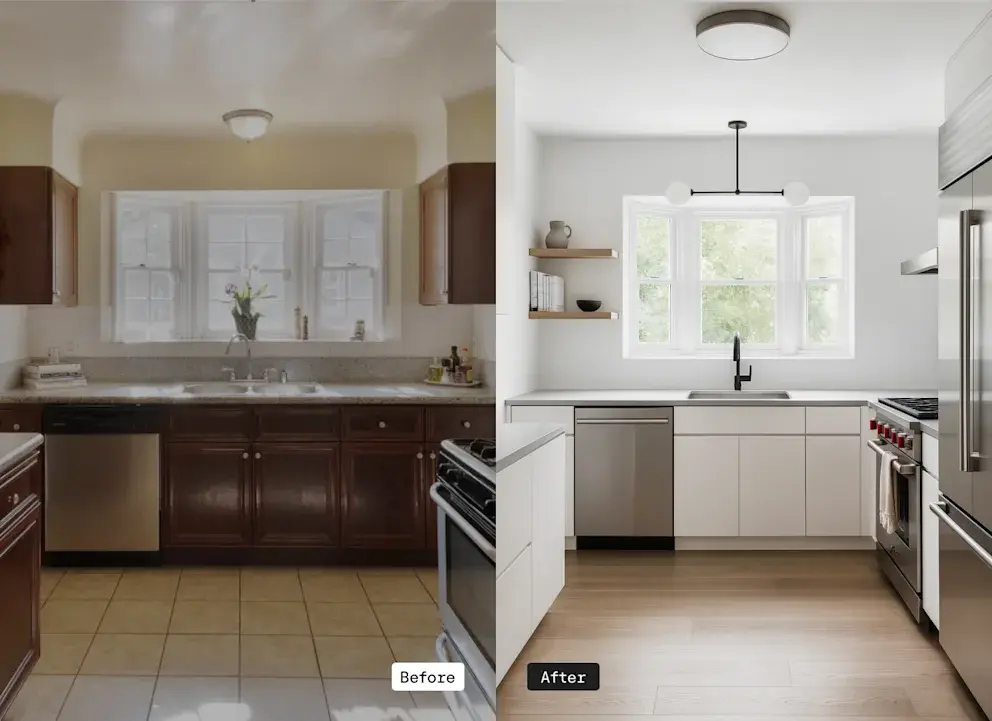
Renovation Studio kitchen design tool

How Corona compares to other suburbs

Monthly renovation permit activity in Corona over the past 5 years.


Average Renovation Cost by Suburb

Murrieta

$68,340

17% higher
Spring Valley

$66,582

14% higher
Peoria

$51,319

12% lower
Enterprise

$48,524

17% lower
Goodyear

$47,129

19% lower
San Marcos

$26,836

54% lower

Regional insights for Corona kitchen remodeling costs

Corona's average renovation cost of $58,393 falls in the upper tier of its comparison group. Murrieta ($68,340) and Spring Valley ($66,582) both run higher - between 14% and 17% above Corona's average - suggesting those markets are driving larger or more premium projects. On the lower end, San Marcos stands out sharply at $26,836, roughly 54% below Corona, which likely reflects a different mix of project types or a smaller dataset skewing toward lower-cost permits. Enterprise ($48,524), Goodyear ($47,129), and Peoria ($51,319) all come in meaningfully below Corona, ranging from 12% to 19% lower. If you're gathering contractor bids in Corona, be aware that pricing from contractors working in adjacent Murrieta or Spring Valley markets may reflect higher baseline expectations - while contractors based in the broader Inland Empire may offer more competitive rates.

How Corona compares to state & national averages

Understanding how kitchen remodeling costs stack up against national benchmarks helps you budget more accurately.


Average in Corona

$58,393

CA State Average

$60,081

US National Average

$46,623

vs National Average

+25.2

Cost Comparison

Local vs. National Insights

Corona's average kitchen renovation cost of $58,393 sits 25.2% above the national average of $46,623 and is nearly aligned with California's state average of $60,081 - just 2.8% below it. This positions Corona as a mid-range California renovation market, tracking closely with statewide norms despite being one of the more affordable housing communities in the greater Southern California region. The above-national-average spend reflects California's elevated labor and material costs rather than luxury project specifications - most Corona renovations are practical, quality-focused upgrades rather than high-end custom builds. When budgeting, the local average of $58,393 is the most reliable benchmark; national estimates will meaningfully understate what projects cost in this market.

Seasonal kitchen renovation trends

Month-by-month patterns in kitchen renovation costs and permit activity in Corona.


Average Renovation Cost

Avg. Cost

Data represents 4-year average trends (2021-2025) to smooth out year-to-year variations and reveal consistent seasonal patterns in Corona's kitchen renovation market.

Peak Season

Fall Brings the Highest Activity and Costs

September stands out as Corona's highest-volume and highest-value month, with 12 permits recorded and an average project cost of $115,000 - the highest of any month. This late-summer to early-fall surge likely reflects homeowners launching projects after summer heat subsides. May also shows elevated volume at 11 permits, though at a much lower average of $36,317. If you're planning a fall renovation, book contractors early - September availability tightens quickly.

Transitional Months

Winter Months Show Solid Volume

December and March each record 12 and 6 permits respectively, with December averaging $44,092 and March averaging $57,524. January and February show moderate activity with averages of $93,058 and $98,676, suggesting that when homeowners renovate in winter, they tend toward larger projects. These months offer a window of moderate competition and solid contractor availability compared to the fall peak.

Slower Period

Spring and Summer Offer Lower Costs and Better Access

April is the quietest month with only 2 permits and the lowest average project cost of the year at $15,550. June recorded zero permits, signaling a near-complete pause in activity. July and August show modest volumes at 10 and 5 permits with averages of $53,963 and $28,520. These slower months - particularly April through August - typically offer the best contractor availability and most competitive bids for homeowners with flexibility on timing.

About this data

Here's how we collect, process, and present kitchen renovation cost data for Corona.

Permit Data Explained

Renovation permits are filed with the Department of Buildings when homeowners undertake construction. The declared permit value - the estimated cost submitted by contractors - serves as a reliable proxy for actual kitchen renovation costs in Corona.

Data Scope

We analyze residential kitchen renovation permits only, excluding commercial projects and new construction. This ensures the data reflects what homeowners are actually spending on kitchen renovations in Corona.

Source and Methodology

81 permits sourced from Corona DOB open data via BuildZoom, covering Mar 2021 to Dec 2025. Records are validated and filtered to remove duplicates and incomplete filings.

Permit Data Explained

Renovation permits are filed with the Department of Buildings when homeowners undertake construction. The declared permit value - the estimated cost submitted by contractors - serves as a reliable proxy for actual kitchen renovation costs in Corona.

Data Scope

We analyze residential kitchen renovation permits only, excluding commercial projects and new construction. This ensures the data reflects what homeowners are actually spending on kitchen renovations in Corona.

Source and Methodology

81 permits sourced from Corona DOB open data via BuildZoom, covering Mar 2021 to Dec 2025. Records are validated and filtered to remove duplicates and incomplete filings.

Permit data provided by BuildZoom. Data last updated Dec 2025.
© 2026 Block Renovation. All rights reserved.

Ready to start your Corona renovation?

Easily compare quotes from top quality contractors in Corona, and get peace of mind with warranty & price protections.

Top quality contractors

Warranty & price protections

Expert resources
Kitchen renovation in Corona

Learn more about kitchen renovations

Expert advice and practical tips for planning your Corona kitchen renovation.


Frequently asked questions about renovating in Corona

Are there water efficiency requirements I need to follow for a kitchen renovation in Corona?

Yes - California and the Riverside County region have specific water efficiency requirements that apply to kitchen remodels. Any new or replaced kitchen faucets must comply with California's plumbing code, which requires a maximum flow rate of 1.8 gallons per minute (gpm) for kitchen faucets - and many jurisdictions enforce the stricter WaterSense standard of 1.5 gpm. If your remodel involves replacing a dishwasher, California's appliance efficiency standards require Energy Star-certified models. The city of Corona, operating under Riverside County Water Standards, may also require water-efficient fixtures as part of the permit approval process. Southern California's long-running drought conditions make these requirements more than just regulatory - they represent real cost savings over time. Contractors working regularly in the Inland Empire will be familiar with these requirements and can ensure your renovation stays compliant.

How does Corona's extreme summer heat affect material storage and contractor scheduling?

Corona's Inland Empire location means summer temperatures regularly exceed 100 degrees Fahrenheit, and this has real implications for kitchen renovations. For material storage, avoid leaving composite materials, adhesives, or pre-finished cabinets in unventilated spaces like garages or trailers during peak summer heat - extreme temperatures can warp cabinet doors, delaminate veneers, and degrade adhesive bonds. For scheduling, many experienced Corona contractors prefer to start early in the morning (6-7 AM) during July and August to complete physically demanding work before midday heat peaks. This can extend project timelines slightly or require adjusted shift schedules. Fall and winter (October through March) offer the most comfortable working conditions and tend to attract more competitive bids from contractors who have capacity during the slower season. If you must schedule a summer renovation, plan for slightly longer timelines and ensure your home has adequate cooling during demolition and rough-in phases.

As a landlord in Corona, which kitchen upgrades justify a rent increase and which won't affect what tenants are willing to pay?

In Corona's rental market - which serves a largely working-to-middle-class renter base - upgrades that improve functionality and durability tend to command higher rents than purely cosmetic changes. Replacing aging appliances with new stainless-steel Energy Star models, installing quartz or granite countertops over laminate, and upgrading to soft-close cabinetry are all upgrades that tenants notice and will pay a modest premium for - typically $50-$150 more per month depending on the overall unit quality. Luxury upgrades like custom cabinetry, high-end fixtures, or chef-grade appliances rarely translate to proportional rent increases in the Inland Empire rental market, where price sensitivity is high. The strongest ROI comes from full kitchen refreshes - new counters, painted cabinets, and updated hardware - that make a dated kitchen feel modern without overspending. Focus on durability: LVP flooring, solid surface counters, and commercial-grade fixtures reduce maintenance costs and tenant turnover, which matters more than any single upgrade.

What are some Corona kitchen upgrades that can help lower my utility bill?

Given Southern California Edison's tiered electricity rates and SoCal Gas pricing in the Inland Empire, strategic kitchen upgrades can meaningfully reduce monthly utility bills. Replacing incandescent or halogen lighting with LED fixtures can cut kitchen lighting energy use by 75% or more. Upgrading to an Energy Star refrigerator from a model 10+ years old can save $50-$100 annually on electricity. Induction cooktops are roughly 85% efficient versus 40% for gas - a significant difference given how often Inland Empire households cook. Installing a tankless water heater (if your kitchen renovation includes adjacent plumbing work) eliminates standby heat loss and can reduce water heating costs 20-30%. For passive efficiency, adding insulation behind drywall during a gut renovation reduces cooling loads - critical in a climate where air conditioning runs hard from May through October. SoCal Edison and SoCalGas both offer rebate programs for qualifying efficient appliances and fixtures.

What are ideas for bringing outdoor-indoor living to my Corona kitchen remodel?

Corona's climate - mild winters and abundant sunshine - makes indoor-outdoor kitchen integration a natural fit. The most impactful option is installing a large sliding or bifold patio door directly from the kitchen or adjacent dining area to an outdoor space, which can cost $3,000-$12,000 depending on door size and framing work required. If your lot allows it, extending the kitchen footprint toward the backyard with a covered patio pass-through window (often called a serving window or bar window) creates a casual indoor-outdoor connection popular in Inland Empire homes. Outdoor kitchens with a built-in grill, small fridge, and prep counter can complement an interior renovation and run $8,000-$30,000 depending on finish level. For a lower-cost approach, replacing a standard kitchen window with a large casement or picture window framing your backyard view creates a visual connection without structural changes. Pergolas and shade structures over adjacent patio spaces extend usable outdoor time during Corona's hot summers.

How much does building a kitchen in a new Corona ADU typically cost?

Building a kitchen in a new accessory dwelling unit (ADU) in Corona typically costs $22,000-$50,000 depending on finish level and the complexity of connecting to existing plumbing and electrical systems. A basic ADU kitchen with stock cabinets, laminate countertops, and entry-level appliances runs $22,000-$32,000. A mid-range build with semi-custom cabinets, quartz countertops, and standard appliances lands at $32,000-$42,000. Higher-end finishes approach $50,000 or more. California's ADU-permitting reforms have made Corona a strong market for these additions - the city has streamlined ADU approvals, and Inland Empire contractors have built significant expertise in ADU construction. Key cost drivers include the distance from the main structure's plumbing stack, ventilation requirements, and whether the ADU is attached or detached. For detached ADUs, running new gas, water, and sewer lines from the main structure adds $5,000-$15,000 to the overall project. Many Corona contractors offer ADU packages that bundle kitchen, bath, and living area work under a single contract.