




Bathroom Floor Plans
300 Sq Ft Bathroom: 7 Large Master Bath Layouts
06.05.2026
04.20.2026


In This Article
A 4x6 bathroom is one of the smallest full bathrooms you'll encounter, with just 24 square feet to fit a shower, toilet, and vanity; in fact, it’s a few feet shy of our recommended minimum for such a configuration. Still, if you’re determined enough to add that shower, it’s possible.
These bathrooms show up constantly in older homes, apartments, condos, and starter houses where the original builder prioritized bedroom count over bathroom square footage. They're also common as secondary bathrooms, basement half-bath conversions, and in-law suite additions where the available footprint simply doesn't allow for anything bigger. If you're working with a 4x6 bathroom (or planning to add one), you're far from alone, and the space is more workable than it looks on paper.
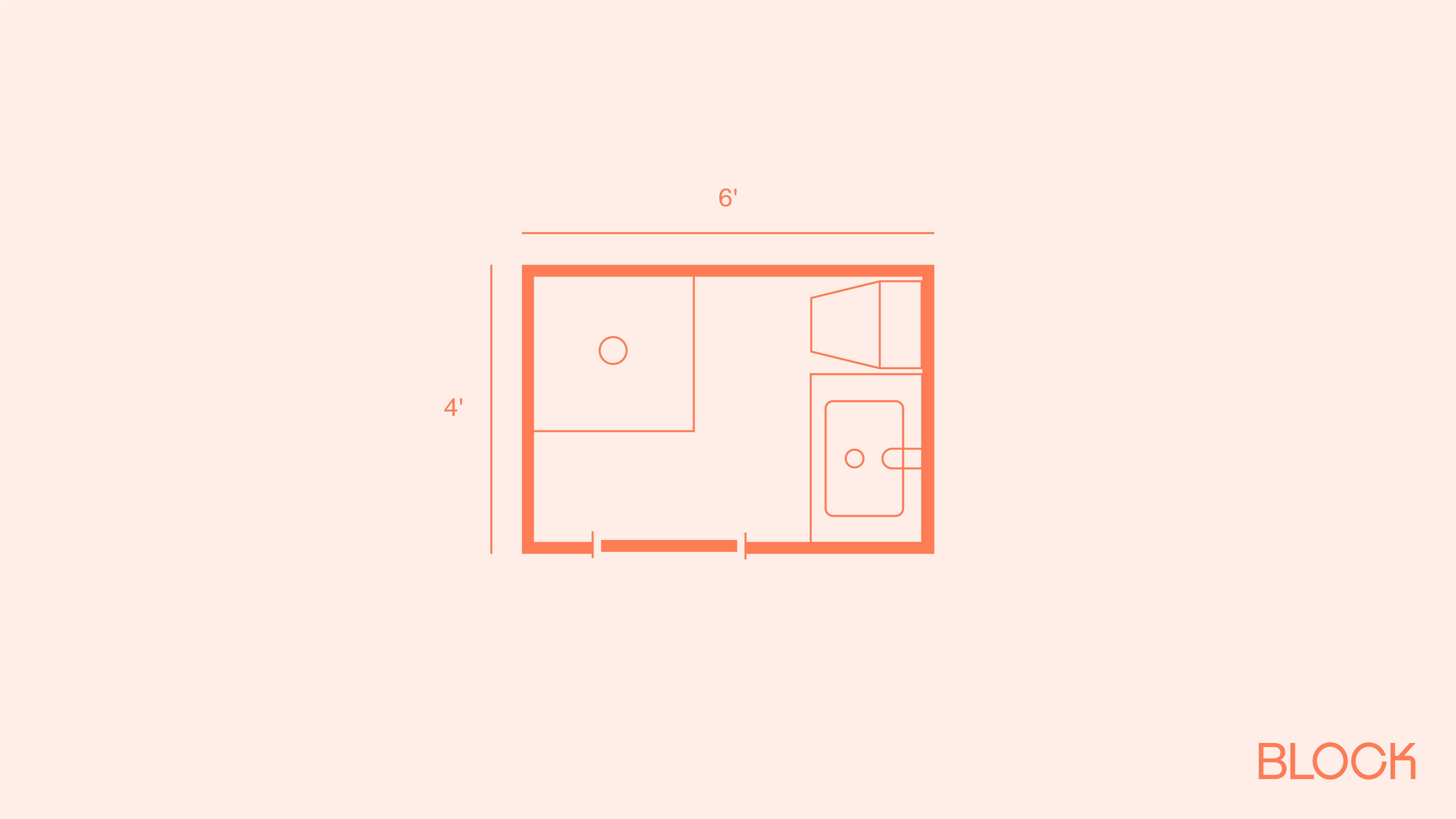
The shower or tub-shower combo sits along the upper-left portion of the room, taking up roughly half the back wall. The toilet is positioned in the upper-right corner, directly adjacent to the shower. The vanity with sink occupies the right wall, below the toilet. The entry door is centered on the bottom (4-foot) wall and swings inward.
This is the most conventional and buildable 4x6 bathroom layout. Plumbing runs along two adjacent walls (the back wall for the shower, the right wall for the toilet and vanity), so rough-in costs stay as low as they'll get in a bathroom this size. The wet zone sits as far from the door as possible, which limits splash exposure. And the centered door on the short wall gives you a clear sightline when you walk in, with enough clearance to reach the vanity or the toilet without squeezing past anything.
It's the layout most contractors will default to, and for good reason. Nothing about it is complicated.
That inward-swinging door. In a 4x6 room, the arc of a standard door eats into real usable floor space. Swap to a pocket door or an outward-swinging door and you recover several square feet of functional area. Not a huge difference in a bigger bathroom. In this one, it changes how the room breathes.
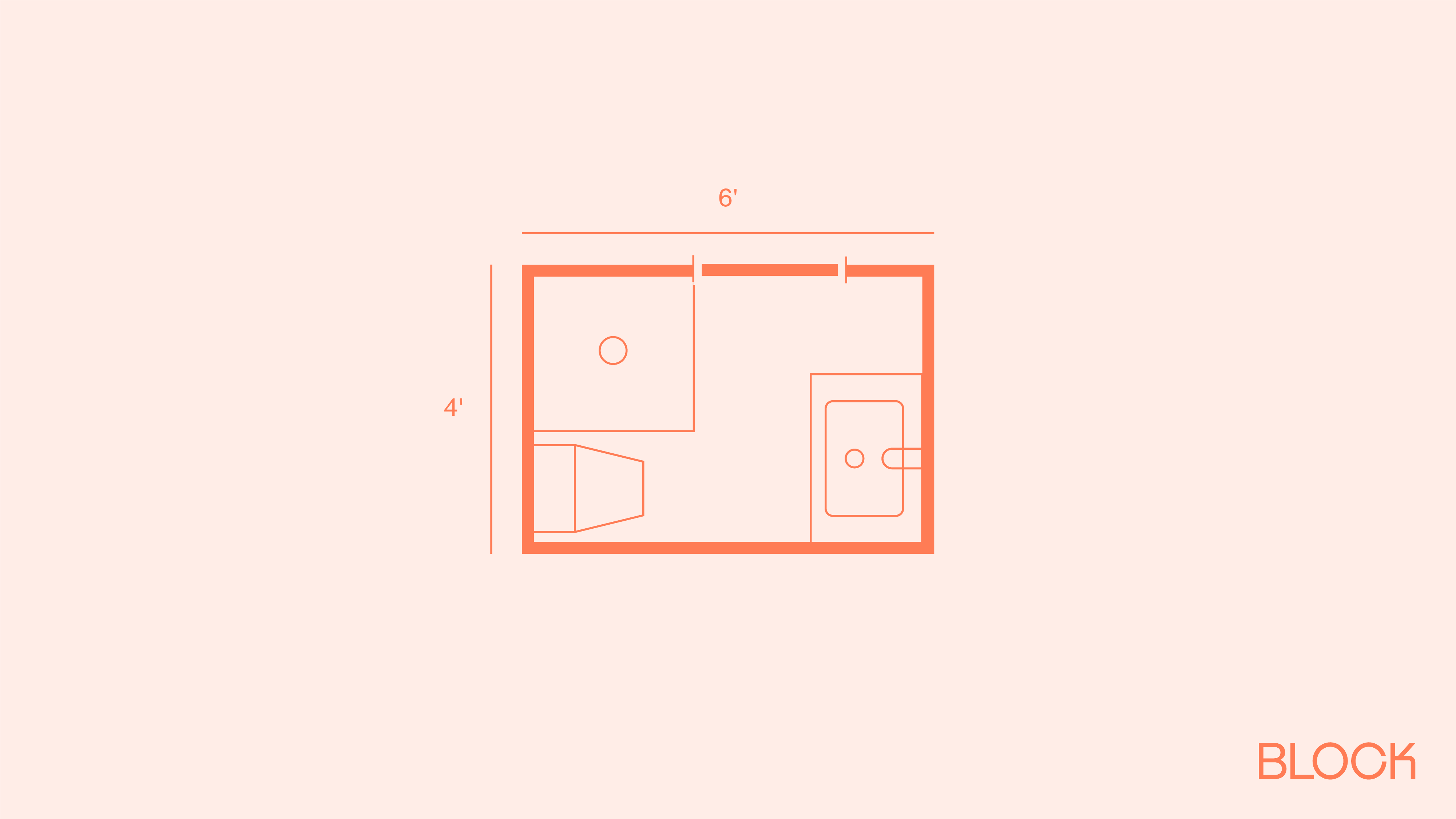
The shower occupies the upper-left area with the drain centered in the stall. The toilet has moved to the lower-left corner of the room, opposite its position in the first layout. The vanity stays on the right wall. The entry door is now on the top (6-foot) wall, appearing as a sliding or pocket door.
Moving the door to the long wall changes the entry experience entirely. Instead of walking straight toward the shower, you step in alongside it, which makes the room feel wider right away. The toilet landing in the lower-left corner, diagonally opposite the shower, gives each fixture some separation. The room feels less like a stack of plumbing and more like an actual bathroom.
The pocket or sliding door helps, too. No swing radius to work around means no dead zone behind the door. This layout is a natural fit when the bathroom's entry point falls along the longer wall, something you see often in hallway bathrooms and secondary baths tucked next to bedrooms.
The plumbing. With the shower drain and toilet on opposite walls, you're running two separate drain lines instead of sharing one wet wall. That split can add $1,000–$3,000 to rough-in costs depending on whether you're working above a basement (easier) or on a concrete slab (harder, and more expensive to cut into). It's not a dealbreaker, but it's the kind of cost that catches homeowners off guard if they're only comparing fixture prices.
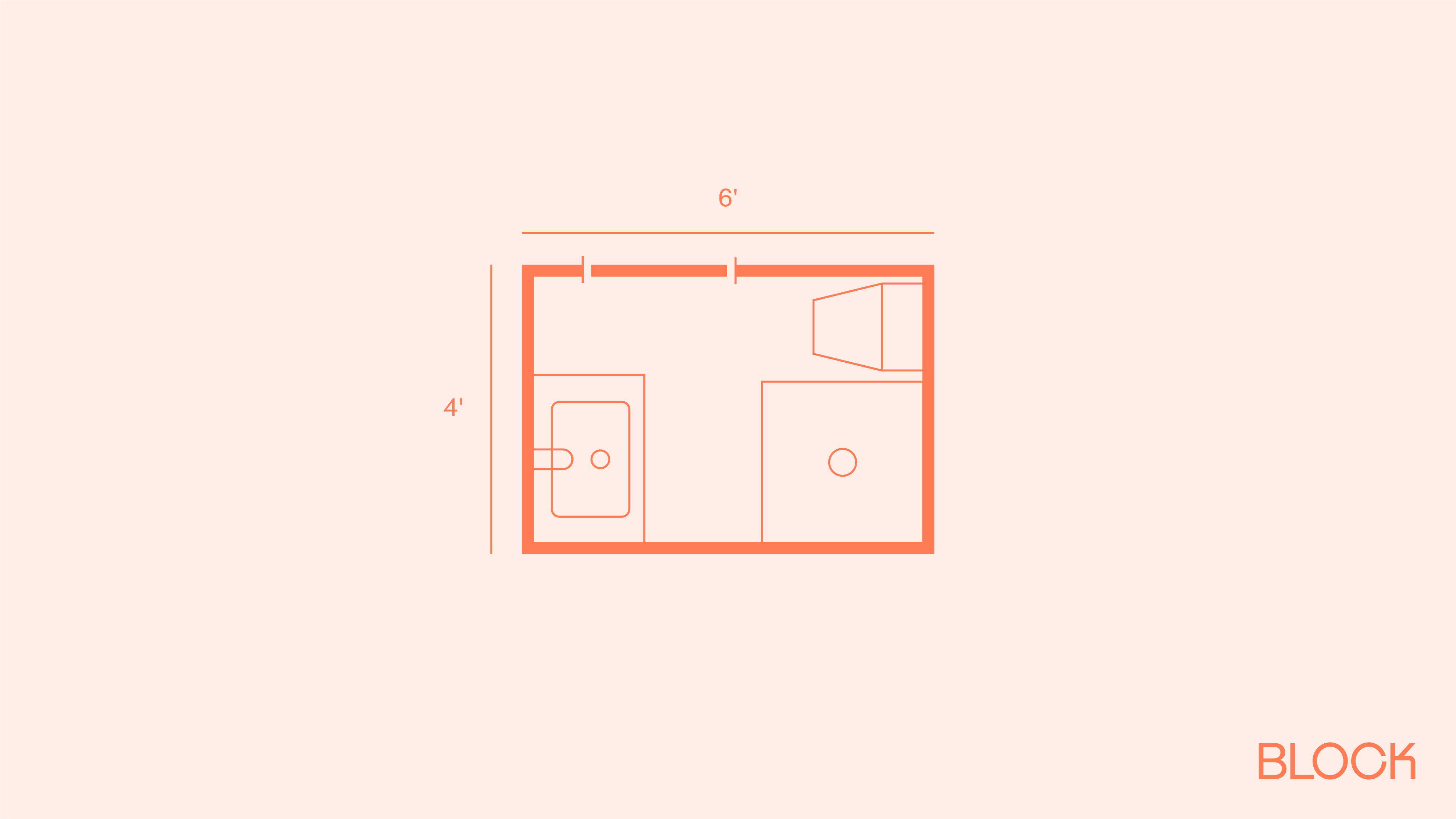
The shower or tub-shower combo anchors the upper-right corner. The toilet and vanity are clustered together on the left wall, with the vanity positioned above the toilet and closer to the entry. The door is again on the top (6-foot) wall as a sliding or pocket door.
All the non-shower plumbing (toilet supply, toilet drain, vanity supply, vanity drain) consolidates on a single wall. The shower gets its own dedicated wet wall on the right. That clean separation simplifies waterproofing scope and keeps the plumbing runs short and organized.
From a daily-use perspective, the vanity is the first thing you reach when you walk in. Quick hand-wash, brush your teeth, check the mirror, leave. The toilet sits further back, tucked behind the vanity, which gives it a more private position.
Here's the honest limitation: fitting a toilet and a vanity side by side on a 4-foot wall doesn't leave much room for either. If your vanity is wider than 24 inches, the wall starts to feel crowded. A wall-mounted vanity or a pedestal sink can help by opening up floor space below, but you're giving up cabinet storage to get there. In a 4x6 room, that's usually the right trade. Visible floor makes a small room feel larger in a way that an extra drawer simply can't.
Design a Home That’s Uniquely Yours
Block can help you achieve your renovation goals and bring your dream remodel to life with price assurance and expert support.
Get Started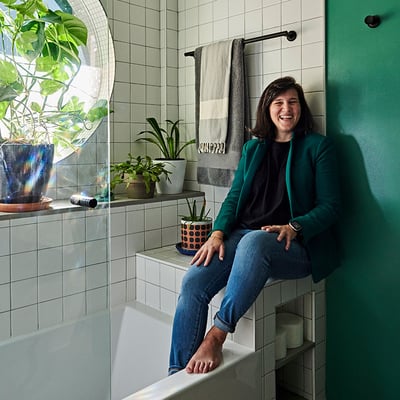
A standard tub-shower combo (typically 30 x 60 inches or 32 x 60 inches) is the default for a reason. It fits along the 5-foot dimension of one wall with a few inches to spare, gives you the option of bathing or showering, and costs the least to install.
A standalone stall (typically 32 x 32 or 36 x 36 inches) frees up floor space that a tub would claim. In a 4x6 layout, that recovered space can be the difference between a comfortable path to the toilet and a sideways shuffle.
The premium option. No step-over barrier means the bathroom reads as one continuous floor plane, which makes the room feel noticeably larger. Accessibility improves dramatically, too.
The catch is execution. A curbless shower needs a precisely sloped floor and bulletproof drainage, which typically adds $1,500–$3,000 over a standard shower pan. You're also waterproofing the entire floor, not just the shower area. But in a 4x6 bathroom where every visual trick counts, a curbless shower with a glass panel can make the room feel intentional rather than cramped.
This one decision does more for the perceived size of a 4x6 bathroom than almost anything else you can spend money on. A shower curtain works fine functionally, but it visually cuts the room in half. A frameless glass panel keeps sightlines open and lets light move through the entire space.
A 4x6 bathroom is small enough that the total project cost stays lower than most bathroom renovations. But the per-square-foot cost runs higher, because you're still installing the same number of fixtures, the same plumbing rough-in, and the same waterproofing as a larger room. The labor doesn't scale down just because the walls are closer together.
Basic refresh: $5,000–$10,000. New fixtures (toilet, vanity, showerhead), fresh paint, updated lighting, and perhaps new flooring. The layout stays the same, plumbing stays where it is, and you're working with off-the-shelf components. A surface-level update, but one that can make a tired bathroom feel significantly better.
Mid-range renovation: $10,000–$20,000. New tile (floor and shower surround), a better vanity, upgraded fixtures, improved ventilation, and potentially a new shower stall or tub-shower unit. Minor layout adjustments are possible: moving a vanity a few inches, swapping a swinging door for a pocket door, or adding a recessed medicine cabinet. This is where most 4x6 bathroom renovations land.
High-end renovation: $20,000–$35,000+. Full gut to the studs. Custom tile work, a curbless shower with frameless glass, wall-mounted toilet, floating vanity, heated floors, and a complete rethink of the layout. At this level you're rebuilding from scratch: new subfloor, new waterproofing membrane, new plumbing runs, and potentially structural work for a pocket door or shower niche.
A few upgrades that are worth knowing about at this size:
Block's Renovation Studio can help you see how different configurations and finishes affect your total estimate before construction begins.
A 4x6 bathroom doesn't give you room to second-guess your layout. Every fixture has one or two viable positions, and the relationships between them (clearance to the toilet, access to the shower, elbow room at the vanity) determine whether the room works or fights you every morning.
Which layout fits your project depends on where your door is, where your existing plumbing runs, and how much you're willing to invest in moving things around. But regardless of which layout you choose, a few principles hold:
With Block Renovation, you can experiment with different layouts, materials, and finishes through the free Renovation Studio, seeing how each decision affects your budget before construction begins. When you're ready, Block connects you with vetted local contractors who provide detailed, comparable proposals backed by progress-based payments and a one-year workmanship warranty.
The best small bathrooms aren't the ones that try to feel big. They're the ones where every decision was made on purpose.
Remodel with confidence through Block
Connect to vetted local contractors
We only work with top-tier, thoroughly vetted contractors

Get expert guidance
Our project planners offer expert advice, scope review, and ongoing support as needed
Enjoy peace of mind throughout your renovation
Secure payment system puts you in control and protects your remodel


Renovate confidently with Block
Easily compare quotes from top quality contractors, and get peace of mind with warranty & price protections.
Bathroom Floor Plans
300 Sq Ft Bathroom: 7 Large Master Bath Layouts
06.05.2026
Bathroom Floor Plans
100 Square Foot Bathroom Layout: Make It Work
06.02.2026
Bathroom Floor Plans
Rectangular Bathroom Layout Guide: Plans & Costs
05.11.2026
Bathroom Floor Plans
5x7 Bathroom Floor Plans: Layouts & Fixture Guide
04.29.2026

Bathroom Floor Plans
7x9 Bathroom Layout: 4 Floor Plans + Real Costs
04.27.2026