




Kitchen Floor Plans
Galley Kitchen Floor Plans and Ideas That Work | Block
07.15.2026
02.13.2026


In This Article
An 8x8 kitchen is about as tight as kitchens get—just 64 square feet to fit everything you need to cook, prep, store, and clean. But compact doesn't have to mean compromise. With the right layout and a few smart design decisions, a small kitchen can feel surprisingly capable and even spacious.
These kitchens show up most often in older apartments, starter homes, condos, and townhouses where the original floor plan prioritized bedrooms and living areas over kitchen square footage. If that sounds like your situation, you're not alone—and you have more options than you might think.
Below, we walk through six layout configurations for an 8x8 kitchen, each designed to solve a different space challenge. We also cover what a renovation at this size typically costs, and share practical ways to make a small kitchen feel bigger without adding a single square foot.
Turn your renovation vision into reality
Get matched with trusted contractors and start your renovation today!
Find a Contractor
An 8x8 kitchen is smaller than the industry-standard 10x10 pricing benchmark, which means your overall costs will generally be lower—but the per-square-foot cost can actually be higher, since you're still installing full-size appliances, plumbing, and electrical in a tighter space.
Here's what to expect based on the level of renovation:
Basic refresh: $15,000–$25,000. This typically covers cabinet refacing or replacement with stock options, standard appliances, new countertops, and minimal layout changes. Plumbing and electrical stay where they are.
Mid-range renovation: $25,000–$40,000. Semi-custom cabinetry, upgraded appliances, improved lighting, a new backsplash, and modest plumbing or electrical updates. You might relocate a fixture or two to improve the work triangle.
High-end renovation: $40,000–$60,000+. Custom cabinetry, premium appliances, full layout reconfiguration, and architectural details like specialty tile or integrated storage solutions.
Single-wall layouts tend to fall at the lower end of these ranges because they require fewer cabinets and shorter utility runs. L-shaped, galley, and U-shaped configurations increase costs as more cabinetry, countertops, and potentially more complex plumbing or electrical work come into play.
Your actual cost will also depend on where you live. Labor rates, permit fees, and material availability vary significantly by region. Block's Renovation Studio can help you see location-based pricing in real time so you have a clear picture of what to expect before committing to a budget.
Before choosing a layout, it helps to understand the constraints you're working with. In a kitchen this size, every decision has an outsized impact. A few principles hold true across all 8x8 configurations:
Maintain at least 36 inches of clearance for walkways—closer to 40 if two people regularly use the kitchen at the same time. Keep the work triangle (the path between your sink, stove, and refrigerator) as short and unobstructed as possible. Prioritize vertical storage over sprawling cabinetry, and resist the urge to fill every wall—leaving some surfaces open helps the kitchen breathe.
An 8x8 kitchen rewards restraint. The goal is a layout that supports your daily routine without making the room feel like a puzzle you have to solve every time you walk in.
Renovate with confidence every step of the way
Step 1: Personalize Your Renovation Plan
Step 2: Receive Quotes from Trusted Contractors
Step 3: Let Us Handle the Project Details
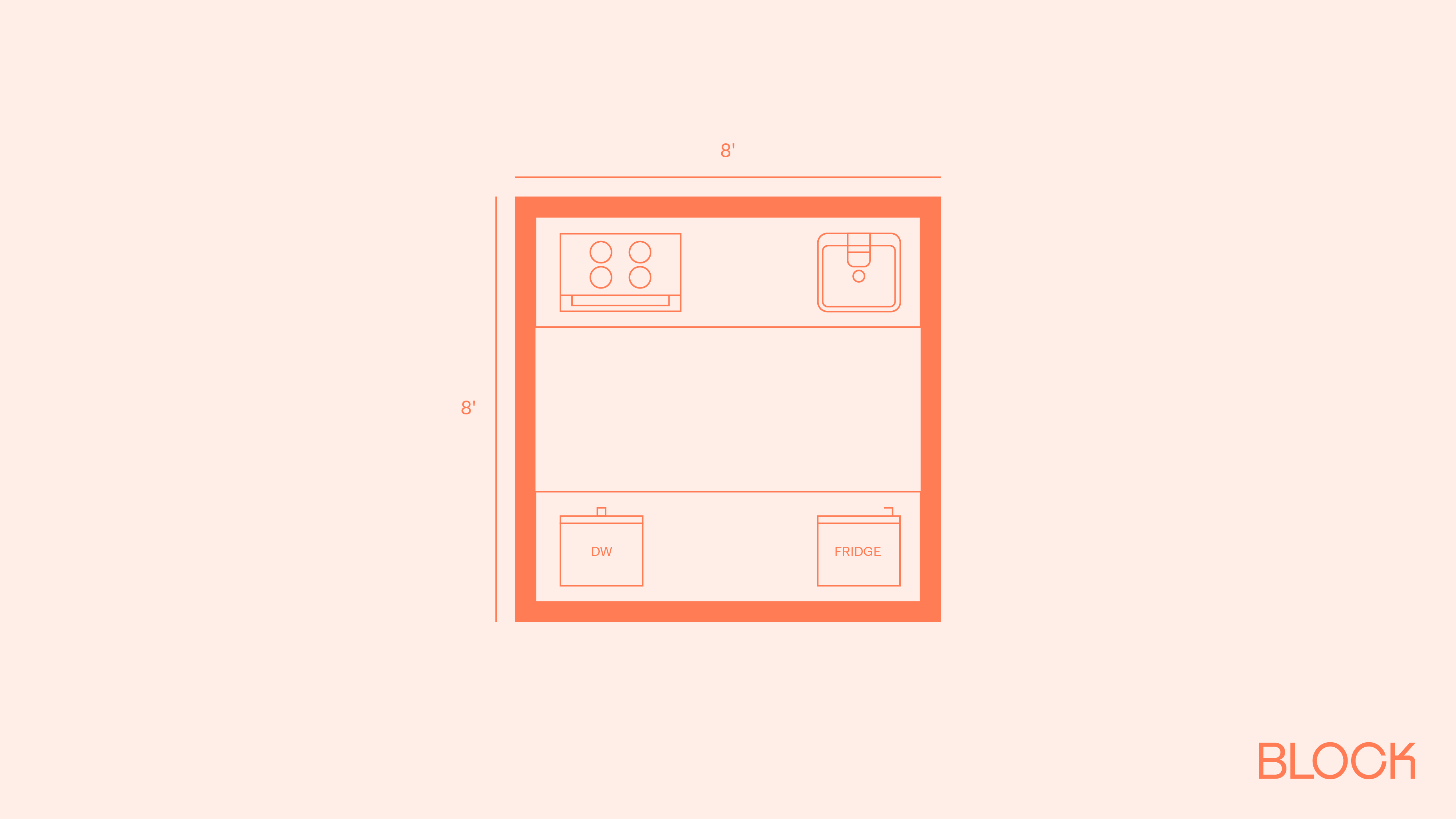
Two parallel runs of cabinetry and appliances face each other, with the stove and sink on the top wall and the dishwasher and refrigerator on the bottom wall. The central aisle provides a clear walkway between the two zones.
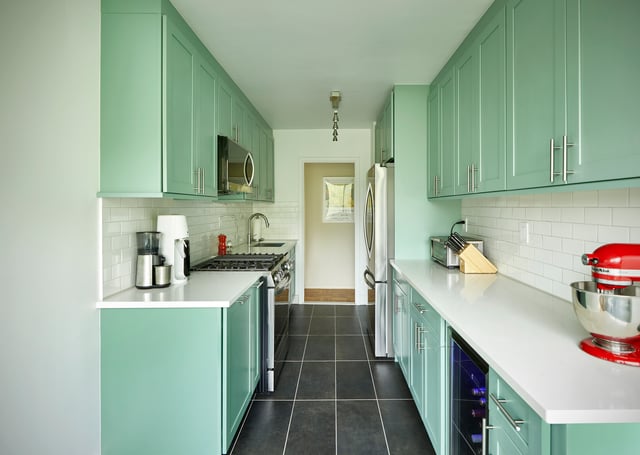
Galley layouts are the efficiency workhorses of small kitchens. You can pivot between tasks with minimal steps, and the dual runs give you significantly more storage and counter space than a single-wall setup. The challenge in an 8x8 footprint is keeping the aisle wide enough—aim for at least 36 inches between facing counters, and be selective with upper cabinets to prevent the space from feeling closed in.
If you're a serious cook who values function over everything else, this layout delivers. Just pay attention to lighting—galley kitchens benefit enormously from strong task lighting under cabinets and ambient light overhead.
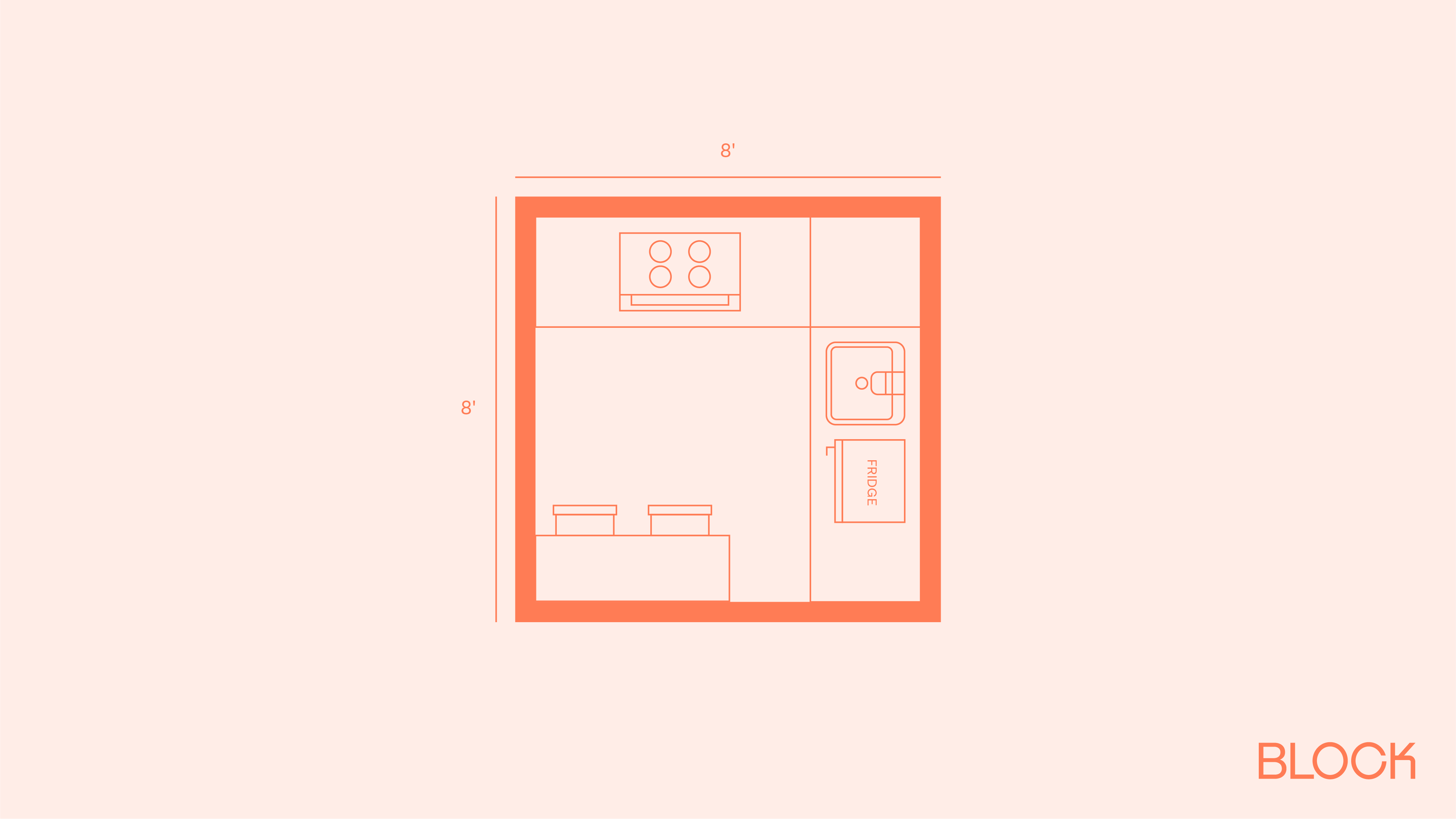
This layout places cabinetry and appliances along two adjacent walls, forming an L. The stove sits along the top wall, with the sink and fridge positioned on the right-hand wall. The lower-left portion of the room stays open, offering space for a small prep cart or simply room to move.
The L-shape is one of the most versatile configurations for a kitchen this size. It creates a natural work triangle without boxing you in, and the open floor area gives you flexibility—whether that means adding a rolling island on occasion or keeping the space clear for easier circulation. Corner placement does require some planning around cabinetry (think pull-out drawers or angled shelves to avoid dead zones), but the payoff in usable counter space is worth it.
This is a strong choice if you cook regularly and want dedicated landing zones near your stove and sink.
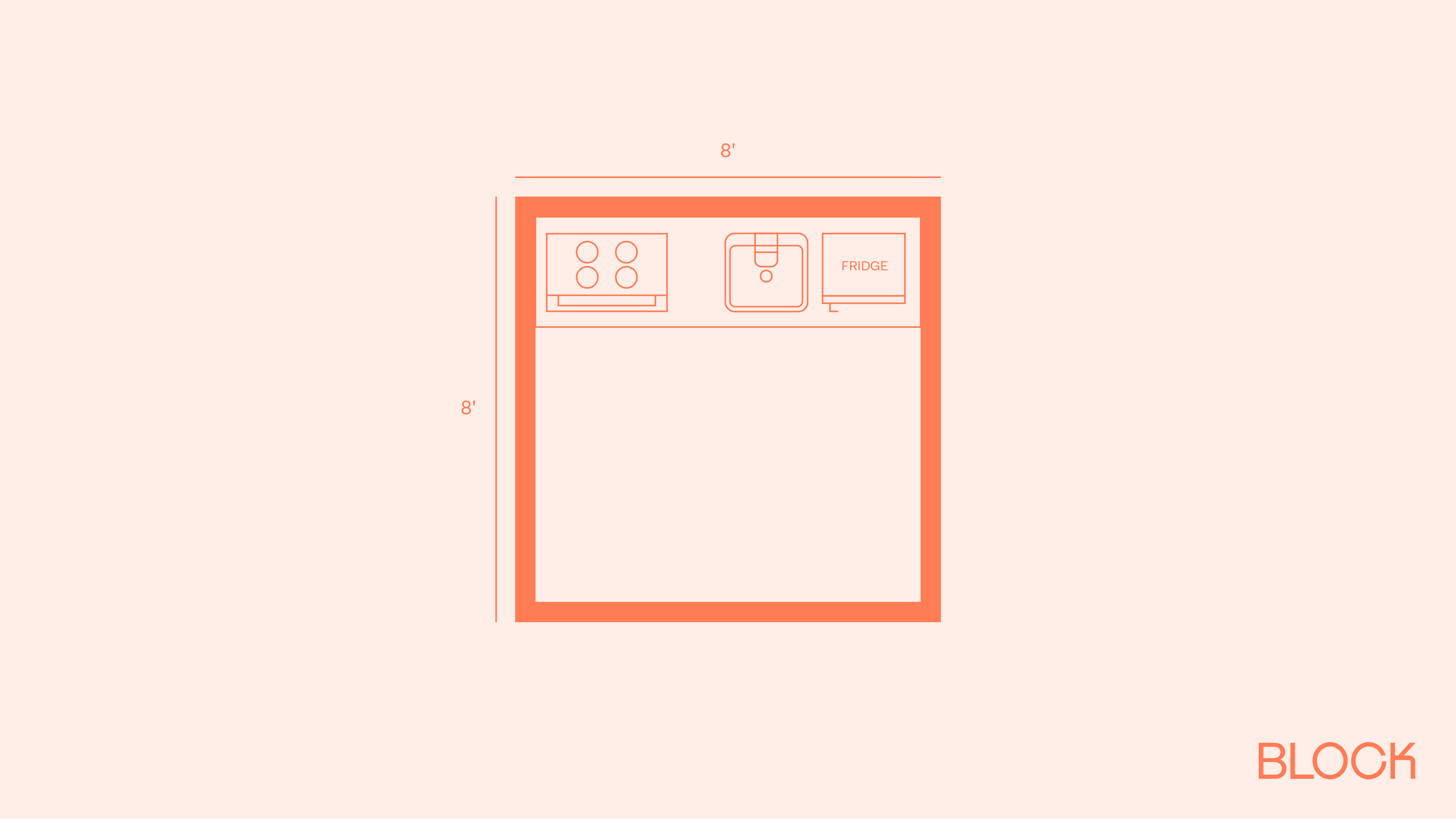
Everything lives on one wall: stove, sink, and refrigerator, arranged in a single linear run. The remaining three walls and the center of the room are completely open.
If your kitchen shares sight lines with a living or dining area, this layout makes the most sense. It keeps the room feeling open and airy, almost like the kitchen is just one piece of a larger space rather than its own enclosed room. The trade-off is less counter space and fewer storage options—you'll want to plan for vertical shelving, a wall-mounted pot rack, or a nearby pantry to compensate.
This layout also tends to carry the lowest renovation cost, since plumbing and electrical are concentrated on a single wall. For homeowners who use their kitchen primarily for simple meals and want to preserve a sense of openness, it's hard to beat.
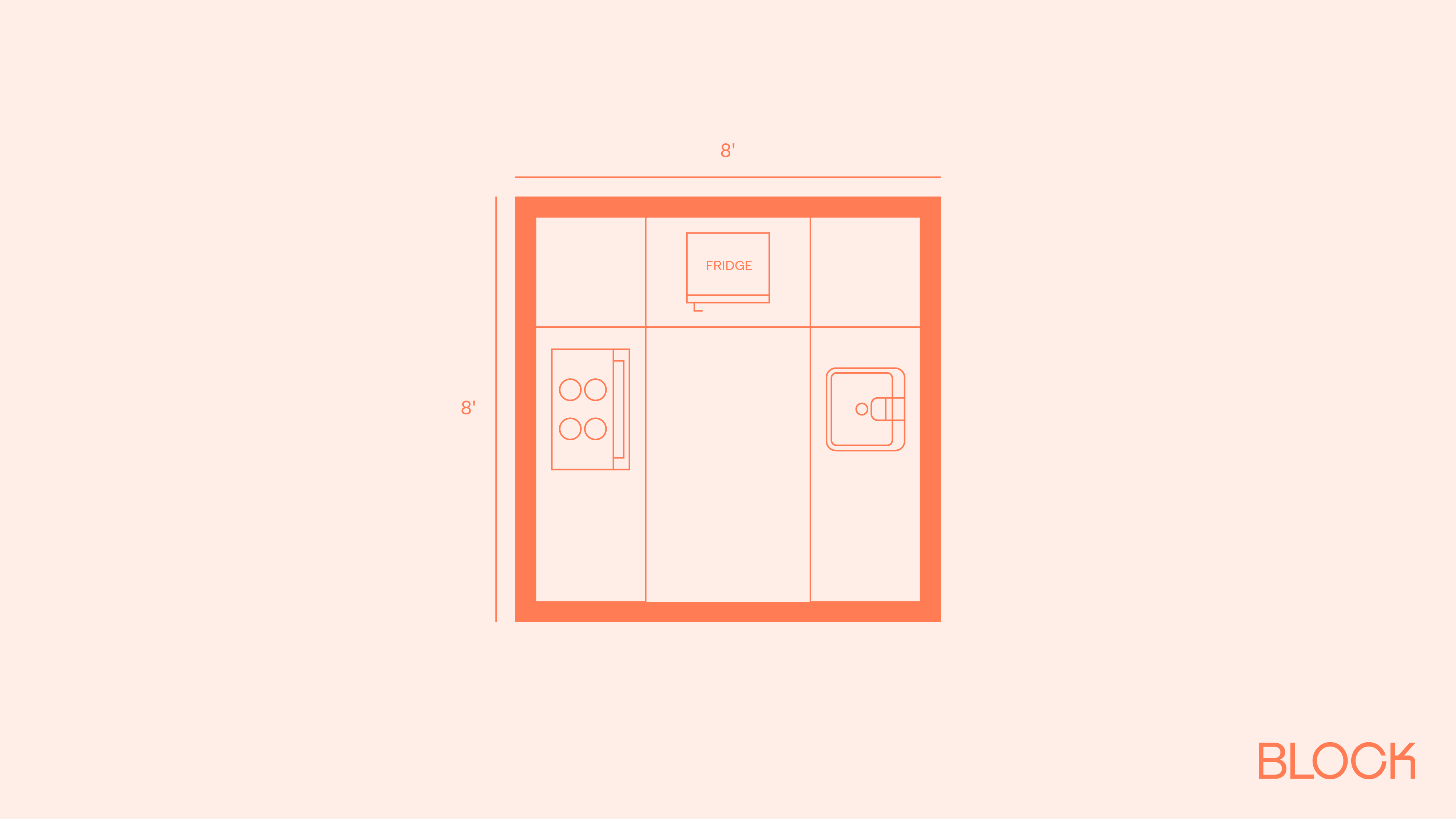
Appliances and storage wrap three walls. The refrigerator sits centered along the top wall, with the stove on the left and the sink on the right. This creates a U-shaped configuration that surrounds you with prep and storage surfaces.
A U-shape offers the most storage density of any 8x8 layout, and it keeps every appliance within arm's reach. The work triangle here is extremely compact—almost no wasted movement. The downside is that the room can feel enclosed, especially if you add upper cabinets on all three walls. Consider limiting uppers to one or two walls and using open shelving on the third to keep the space from feeling heavy.
This layout is ideal for homeowners who need to maximize every inch of storage and don't mind a more enveloping kitchen feel. It's also a good fit for single-cook households where wide circulation isn't a priority.
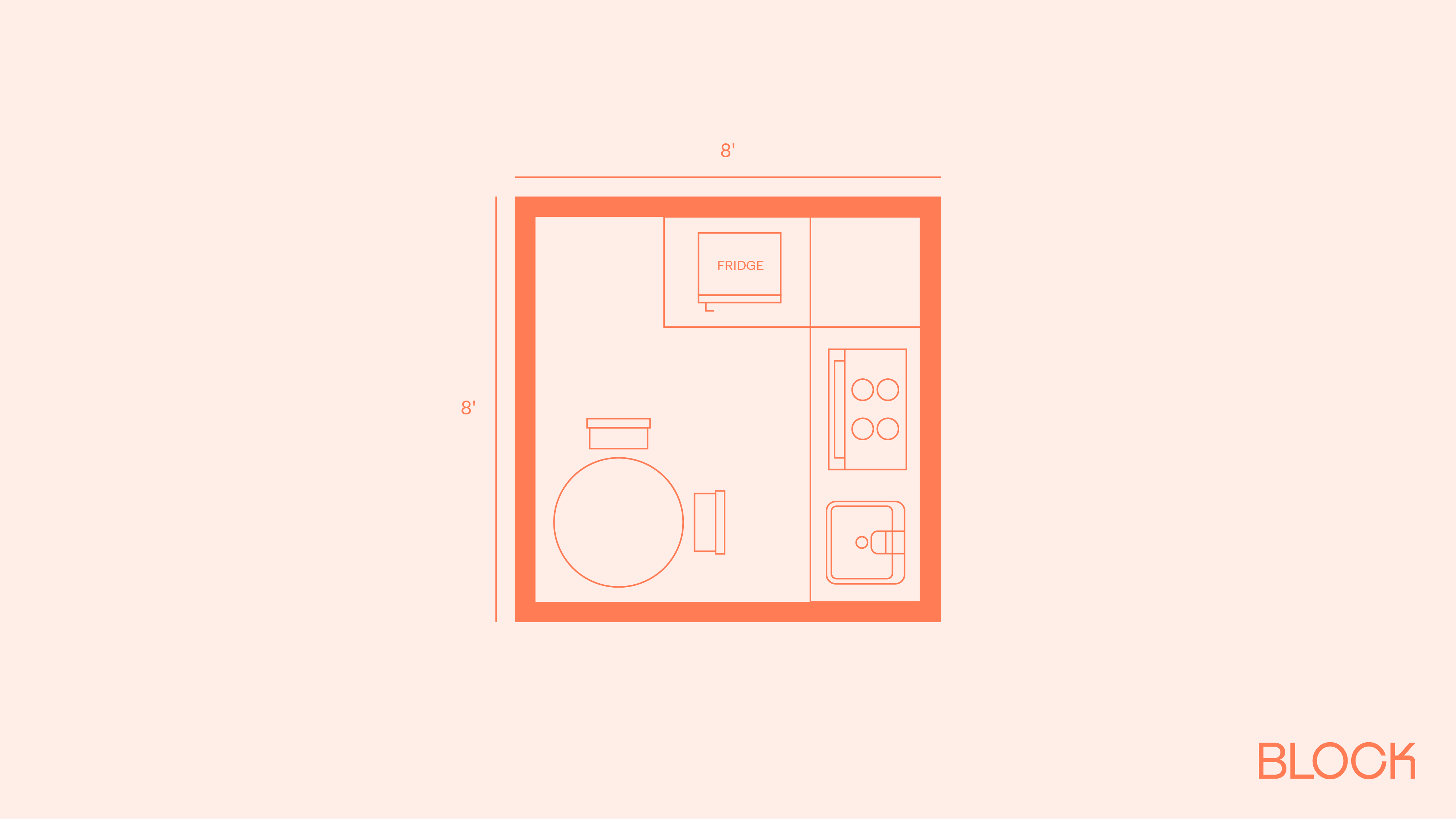
The refrigerator anchors the top wall, while the stove and sink are arranged along the right wall in an L configuration. The remaining floor space accommodates a small round dining table—turning the kitchen into a true eat-in space.
This is a layout that does double duty. By keeping the appliances tight to two walls, you free up enough room for a bistro-style table that seats two to three people comfortably. It's a practical solution for apartments or small homes where a separate dining room isn't an option and you want to keep daily meals in the kitchen rather than carrying plates to another room.
The key here is choosing a round table (which keeps circulation paths clear around its edges) and making sure the stove and sink still have adequate landing space for prep. A compact dishwasher or an under-counter model can help preserve counter real estate.
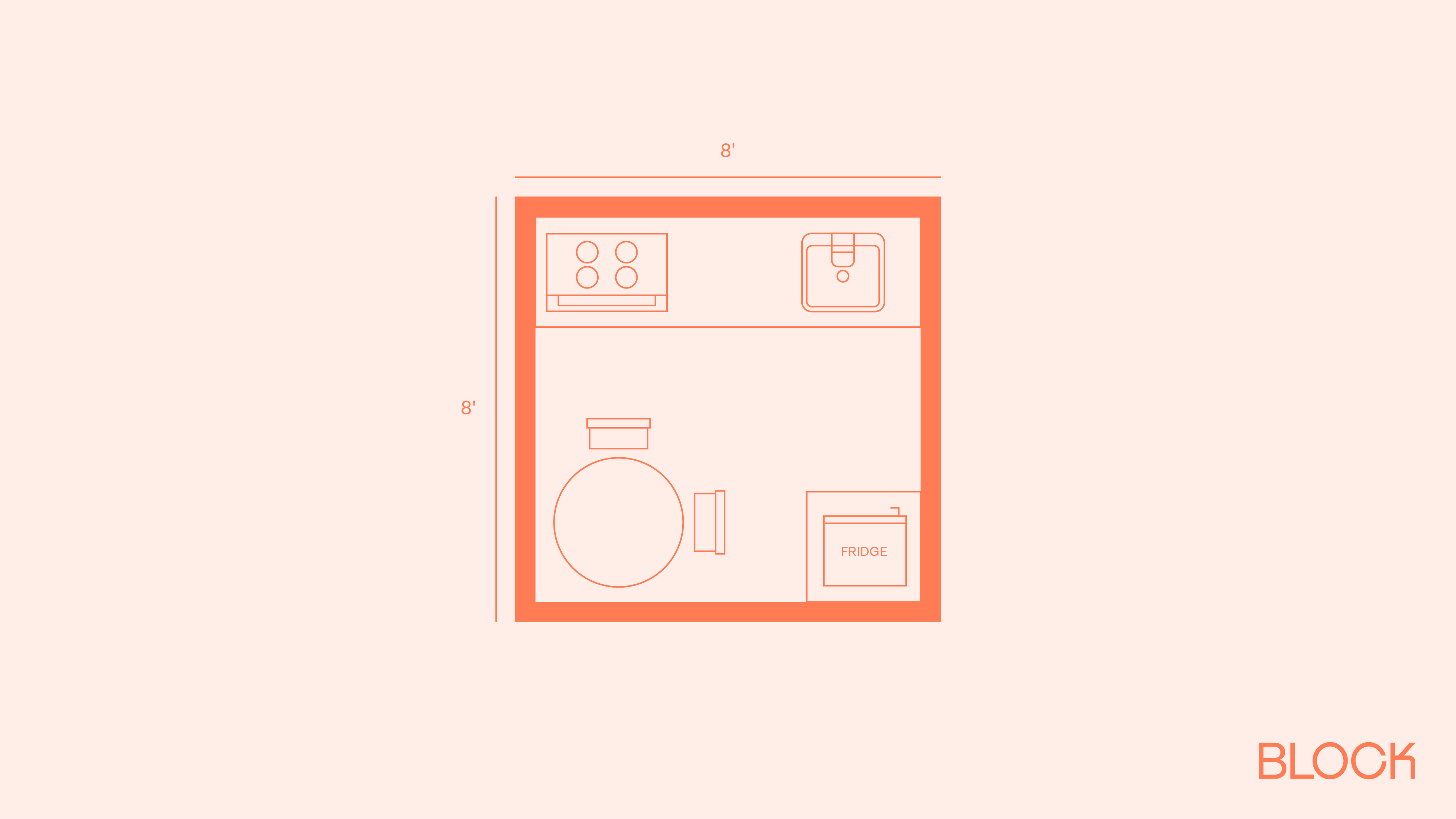
The stove and sink share the top wall in a single run, while the refrigerator is pulled to the lower-right corner of the room as a freestanding unit. The open floor area holds a round dining table, similar to Layout 5, but with a different appliance arrangement.
Moving the refrigerator off the main working wall gives you an uninterrupted stretch of counter between your stove and sink—a real advantage for meal prep. The freestanding fridge placement also opens up the possibility of positioning it closer to the kitchen entry, which is convenient for grabbing drinks or snacks without stepping into the cooking zone.
This is a good option if you entertain casually and want a kitchen that feels welcoming rather than purely utilitarian. The dining table makes it social; the streamlined cooking wall makes it functional.
A small kitchen doesn't have to feel small. Much of the perceived size of a room comes down to how you handle finishes, lighting, and visual weight—not just square footage.
For more tips on making the most of this type of configuration, read our guide to square kitchen layouts.
An 8x8 kitchen asks you to be intentional about every choice—and that's actually a strength, not a limitation. When there's no room for filler, what you're left with is a kitchen where everything has a purpose and nothing gets in the way.
The right layout sets the foundation. Smart material and finish choices amplify the sense of space. And working with professionals who understand how to get the most out of a compact footprint means you won't have to figure it all out alone.
Whether you're refreshing finishes or rethinking the layout entirely, the goal is the same: a kitchen that works for your life, feels good to be in, and holds up day after day.
Remodel with confidence through Block

Connect to vetted local contractors
We only work with top-tier, thoroughly vetted contractors

Get expert guidance
Our project planners offer expert advice, scope review, and ongoing support as needed

Enjoy peace of mind throughout your renovation
Secure payment system puts you in control and protects your remodel


Renovate confidently with Block
Easily compare quotes from top quality contractors, and get peace of mind with warranty & price protections.
Kitchen Floor Plans
Galley Kitchen Floor Plans and Ideas That Work | Block
07.15.2026
.webp?width=640&name=King%20-%20Final%20Kitchen%20(1).webp)
Kitchen Floor Plans
AI Floor Plan Generator: Best Free & Paid Software
06.26.2026
Kitchen Floor Plans
U-Shaped Kitchen Layouts & Floor Plans: 8 Designs
05.28.2026

Kitchen Floor Plans
Kitchen Floor Plans With Islands: 6 Layouts That Work
05.14.2026

Kitchen Floor Plans
12x10 Kitchen Layouts: 5 Designs That Work
04.26.2026