Bainbridge Island, WA bathroom remodel guide to costs and design tips

Budget your upcoming Bainbridge bathroom remodel with help from Block
How we get your estimate
Fill out the form above to either connect with contractors for a personalized quote or estimate your costs with Block's Renovation Studio.
A serene bathroom featuring light wood and marble counters.

In This Article

    Bainbridge Island pairs ferry-to-city access with shaded streets, shoreline views, and a community that pays attention to design. From compact cottages in Winslow to larger homes in Blakely Harbor and Rolling Bay, bathrooms range from original mid-century layouts to newer spa-style suites. Your remodel decisions need to respect that variety while standing up to a damp, coastal climate.

    A thoughtful bathroom remodel can make long, wet seasons more comfortable, protect your home from moisture damage, and upgrade aging plumbing or wiring that you may not see every day. For many homeowners, bathroom remodeling on Bainbridge Island becomes the most practical way to modernize without losing character or overbuilding for the neighborhood.

    Design a Home That’s Uniquely Yours

    Block can help you achieve your renovation goals and bring your dream remodel to life with price assurance and expert support.

    Get Started
    Typical costs of bathroom remodeling in Bainbridge Island

    Bathroom remodeling costs on Bainbridge Island usually land above the national average. Labor is priced to match regional construction demand, and many projects involve careful work in older homes. Ferry coordination, limited staging space on some lots, and a local preference for higher-quality finishes also affect your budget.

    Project scope

    Cost range in Bainbridge Island

    Cosmetic bathroom updates

    $6,000–$18,000

    Mid-level bathroom renovations

    $20,000–$45,000

    Major bathroom overhaul

    $50,000–$90,000+

    Cosmetic bathroom updates usually focus on what you can see without opening walls. You might repaint, swap in a new stock vanity, replace the toilet, upgrade a basic mirror to a medicine cabinet, and install new faucets or an acrylic tub surround. Layout and plumbing stay in place, and waterproofing behind tile typically is not rebuilt. On Bainbridge Island, this level works well if your bathroom is generally sound but feels dated, and you are comfortable using simple materials such as ceramic tile, LVP, and off-the-shelf lighting.

    Mid-level bathroom renovations stay within the existing footprint but go deeper on function and durability. You may replace the tub with a new tub or a shower, retile walls and floors with higher-quality porcelain, install a better ventilation fan, and add layered lighting. You might relocate a vanity or toilet slightly if plumbing access is straightforward. Many Bainbridge Island homeowners find this range gives the best balance between cost, moisture protection, and resale appeal.

    Major bathroom overhauls involve changing the layout or rebuilding the room from the studs. You might expand a shower, remove a tub, move plumbing stacks, add a window, or install features such as a curbless shower with a linear drain and radiant floors. Behind-the-walls work such as replacing old galvanized pipes, correcting venting, adding electrical circuits, and fixing subfloor issues often shows up here, especially in older Winslow or Rolling Bay homes. Design-forward materials, custom cabinetry, and frameless glass can raise material costs on top of that labor.

    What Bainbridge Island residents commonly care about when renovating their bathroom

    Every bathroom has its own quirks, but Bainbridge Island projects share some consistent themes: controlling moisture in a long wet season, dealing with older infrastructure, and creating calm, efficient spaces that feel connected to the landscape.

    Designing your Bainbridge Island bathroom to stand up to high humidity

    Ambient humidity runs high on the island, especially in wooded lots where sun and wind exposure are limited. Bathrooms that are not detailed for these conditions can develop recurring mildew around windows, in grout lines, and on ceilings.

    • Install a humidity-sensing exhaust fan. A fan that turns on or ramps up automatically as moisture rises reduces dependence on habits and protects finishes even when guests forget to run it.
    • Use moisture-resistant backer boards and drywall. Cement board in wet zones and mold-resistant drywall elsewhere provide extra insurance behind tile and paint in a persistently damp climate.
    • Choose washable, bath-rated paints. Satin or semi-gloss sheens on ceilings and walls shed condensation more easily and stand up better to regular cleaning.
    • Reduce grout lines in high-splash areas. Large-format tile or solid-surface panels in showers mean fewer joints to scrub and fewer spots where mildew can start.
    • Add gentle heat where possible. Radiant floors or a towel warmer help surfaces and textiles dry more quickly, which is especially noticeable in winter when windows stay closed.

    Budgeting for older homes’ bathroom needs

    Many Bainbridge Island homes were built decades ago, and some have layered remodels from different eras. When you open walls, it is common to find mixed plumbing materials, older wiring practices, and limited moisture protection.

    • Plan for plumbing updates once walls are open. Replacing sections of galvanized or early-generation copper while you have access often costs less than coming back later for separate repairs.
    • Expect some drain and vent corrections. Slow or noisy drains, odd vent routing, and undersized lines may need adjustment to support new fixtures like larger showers or additional sinks.
    • Assess electrical capacity early. If you want radiant floor heat, multiple vanity lights, and a high-capacity fan, you may need new circuits or even a panel upgrade, which can meaningfully affect budget and schedule.
    • Inspect subfloors around wet areas. Long-term leaks around toilets and tubs often leave subfloors soft or rotted. Reframing and installing proper underlayment protect investment in tile and stone.
    • Improve insulation and vapor control at exterior walls. On a damp island, improving the wall assembly around showers and tubs can reduce condensation, cold surfaces, and long-term mold risk.

    Renovating bathrooms for renters – smart design tips

    If you own a rental near the ferry or in a neighborhood with steady tenant demand, the bathroom is one of the first places prospective renters evaluate. You want finishes that look clean and inviting but can handle frequent turnovers and varying cleaning routines.

    • Choose hard-wearing, easy-to-clean floors. Porcelain tile or quality LVP stands up to moisture and repeated cleaning better than many natural stones or low-grade laminates.
    • Use a one-piece or skirted toilet. Fewer crevices make cleaning faster and reduce the chance of small leaks that go unnoticed.
    • Keep shower systems simple to maintain. A framed door or a sturdy curtain rod with a standard tub or shower base is easier to service and replace than fully custom glass if renters are hard on hardware.
    • Stick to common vanity sizes and configurations. Standard dimensions make it faster to swap a damaged cabinet or top between tenancies without reworking plumbing.
    • Specify durable paint and caulk. Satin or semi-gloss walls and quality silicone in wet joints tolerate strong cleaners and frequent scrubbing.
    • Provide bright, neutral lighting. LED fixtures with good color rendering help bathrooms feel clean and safe, which can support rental appeal.
    • Stay within a neutral finish palette. Simple tile, white or light countertops, and understated hardware reduce the need for style updates between tenants.

    What to know about building a new bathroom in Bainbridge Island

    Adding a bathroom can ease morning congestion, support multigenerational living, or strengthen resale value. On Bainbridge Island, your strategy will depend on how your home sits on the lot, how plumbing is routed, and how much disruption you are willing to tolerate during construction.

    Different approaches to adding the bathroom

    • Convert part of an existing room. Stealing space from an oversized bedroom, closet, or hallway can be the least invasive solution, especially if the new bath lines up with existing plumbing below or above.
    • Finish a portion of a basement or lower level. This can work well if you have adequate ceiling height, a good path for drains to tie into the main line, and a way to provide mechanical ventilation and, if needed, egress.
    • Create an en suite by reworking the primary bedroom layout. Many larger Bainbridge Island homes can absorb a reconfiguration that adds a private bath, though it may require moving walls, ducts, and electrical runs.
    • Build a small addition for the new bath. When interior space is maxed out or your layout is inflexible, an addition offers design freedom but introduces site work, foundation costs, and weather-related scheduling considerations.

    Because island lots range from tight in-town parcels to wooded acreage, an experienced local contractor can help you weigh these options against permitting rules, septic or sewer capacity, and construction access.

    Related costs

    Budget planning for a new bath should go beyond tile and fixtures. Location and structural considerations can shift costs significantly.

    • Routing plumbing and vents. The farther your new bath is from existing stacks and supply lines, the more framing, slab work, and drywall repair you can expect.
    • Structural and envelope changes. New exterior walls, windows, or rooflines add framing, insulation, siding, roofing, and flashing to your budget, all of which matter in a windy, rainy climate.
    • Potential tax impacts. Adding a bathroom or square footage can increase your assessed value and property tax bill, so it helps to factor that into your long-term cost view.
    • Higher ongoing utilities. Extra fixtures, more showers, and additional heated floor area can raise water, sewer, and energy usage once the project is complete.

    Bring Your Dream Bathroom to Life

    Explore stunning design ideas, materials, and color schemes tailored to your space—no guesswork, just inspiration.
    Start Designing

    Finding inspiration for your Bainbridge Island remodel in your home’s architectural roots

    Bainbridge Island architecture spans Pacific Northwest contemporary, Craftsman, mid-century, and farmhouse influences. When your bathroom feels related to the rest of the house, the remodel sits more comfortably in the home and often appeals more strongly to future buyers.

    Ideas for Craftsman bathrooms in Bainbridge Island

    Craftsman homes tend to feature substantial trim, natural wood, and built-in details. In bathrooms, you can mirror that character while still updating systems and waterproofing.

    • Echo existing millwork with warm woods. A stained wood or wood-look vanity that relates to your home’s baseboards or door casings helps the bath feel connected to adjacent rooms.
    • Use simple, period-appropriate tile patterns. Classic squares, running-bond subway, or small-scale mosaics tie in well with Craftsman detailing without overwhelming a modest space.
    • Include built-in storage elements. Recessed linen cabinets, open shelves framed like furniture, or integrated niches reinforce the handcrafted feel.
    • Select finishes that suit the home’s warmth. Aged brass, oil-rubbed bronze, or matte black fixtures pair nicely with Craftsman wood tones.
    • Update lighting while keeping familiar forms. Schoolhouse-style or simple shaded fixtures can deliver modern light levels in shapes that feel rooted in the era.

    Ideas for mid-century modern bathrooms in Bainbridge Island

    Mid-century homes often emphasize efficient layouts, broad windows, and straightforward forms. Bathrooms in these homes usually benefit from clean lines and a restrained palette.

    • Choose flat-panel cabinetry. Slab doors with minimal hardware suit mid-century architecture and create a calm backdrop for bolder tile or color accents if you choose.
    • Favor large-format or slab-look surfaces. Bigger tiles on floors and walls minimize grout joints and align with the era’s affinity for simple planes.
    • Use floating vanities and wall-hung storage. Keeping cabinetry off the floor underscores the light, open feel and makes cleaning easier.
    • Add era-appropriate fixtures. Globe or linear vanity lights, round mirrors, and straightforward metal hardware reference mid-century forms without feeling like a set piece.
    • Keep the palette crisp and edited. Combinations like warm wood, white tile, and a dark accent metal often sit comfortably in this style of home.
    Danny Wang

    “A pedestal sink may look sleek, but a well‑built vanity adds storage, function, and resale appeal.”

    Ideas for Pacific Northwest contemporary bathrooms in Bainbridge Island

    Pacific Northwest contemporary homes tend to blur the line between indoors and outdoors, using natural textures and quiet colors. Bathrooms in these homes often serve as calm retreats with an emphasis on clean detailing.

    • Lean on natural and nature-inspired materials. Wood vanities, stone-look porcelain, and textured tile in muted tones reflect the island’s forests and shoreline.
    • Use frameless glass and low-profile trims. Minimal hardware on shower enclosures and doors keeps sightlines open and lets materials take the lead.
    • Design layered lighting that echoes soft daylight. Combine indirect lighting, dimmable vanity fixtures, and discreet shower lights to avoid harsh contrasts on gray days.
    • Keep the color palette calm and consistent. Soft whites, warm grays, and greens drawn from the surrounding landscape support a relaxed atmosphere.
    • Hide mechanical elements where possible. Quiet, well-sized ventilation and undercabinet outlets preserve the uncluttered look while meeting performance needs.

    Ideas for farmhouse bathrooms in Bainbridge Island

    Farmhouse-style homes, from historic farm properties to newer interpretations, favor approachable comfort and straightforward detailing. Bathrooms can nod to that heritage while functioning like a modern space.

    • Use classic, easy-to-maintain tile. White subway or hex tile with a practical grout color works well for walls and floors, and pairs nicely with painted millwork.
    • Add moisture-aware paneling details. Fiber cement or moisture-resistant shiplap and wainscoting bring farmhouse character without sacrificing durability in a damp climate.
    • Prioritize generous, organized storage. Wide vanities with drawers, open shelves for baskets, and medicine cabinets support everyday use in a busy household.
    • Choose sturdy, simple hardware. Black or brushed nickel faucets and pulls keep the look crisp and are easy to source and replace if needed.
    • Pair mirrors with clear, bright sconces. A straightforward mirror-and-sconce combination keeps the room feeling familiar and functional.

    Visualize and budget your bathroom remodel with Renovation Studio

    Renovation Studio, Block’s planning tool, helps you connect inspiration images with actual product choices and layout options for your bathroom. You can explore how different tile, vanities, and fixtures change the look and cost of your Bainbridge Island remodel before you commit.

    For a climate that demands strong moisture management and a market that expects thoughtful design, this kind of planning can clarify tradeoffs early. You can see how upgrading to porcelain tile, better ventilation, or custom glass affects your budget and decide where to invest for the way you live.

    Perfect Every Detail of Your Bathroom
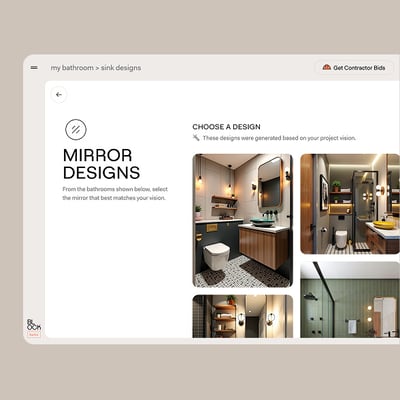
    Select the ideal styles, finishes, and fixtures—down to the tile, vanity, and lighting—to create a space that feels uniquely yours.
    Explore Materials

    Ready to build? How Block helps you find top-rated contractors in Bainbridge Island

    Finding a contractor who understands Bainbridge Island’s housing stock, ferry logistics, and permitting requirements can be as critical as your tile selections. Block matches you with vetted contractors and supports planning, documentation, and coordination so you are not handling every detail alone.

    Block’s structured payment schedules and project protections are designed to bring clarity to the construction phase. You can focus on decisions that affect comfort and durability, while your contractor focuses on execution.

    Remodel with confidence through Block

    Happy contractor doing an interview

    Connect to vetted local contractors

    We only work with top-tier, thoroughly vetted contractors

    Couple planning their renovation around the Block dashboard

    Get expert guidance

    Our project planners offer expert advice, scope review, and ongoing support as needed
    Familty enjoying coffee in their newly renovated modern ktchen

    Enjoy peace of mind throughout your renovation

    Secure payment system puts you in control and protects your remodel

    Get Started

    Frequently asked questions

    When is the best time of year to remodel a bathroom in Bainbridge Island?

    Many homeowners schedule bathroom projects for late spring through early fall, when weather is more predictable and it is easier to ventilate spaces during demolition and drying phases. Indoor work can proceed year-round, but in wetter months you will want a strong plan for dust and moisture control and to account for any shipping delays that can be affected by regional storms.

    What are common design themes for bathrooms in Bainbridge Island?

    Many projects draw on a Pacific Northwest palette: soft neutrals, natural wood, subdued greens or blues, and simple tile patterns. Newer homes tend to favor clean-lined, contemporary spaces, while older Craftsman and cottage homes often keep warmer finishes and more detailed millwork to align with the rest of the house.

    What is the most expensive part of bathroom renovations in Bainbridge Island?

    Labor and behind-the-walls work typically drive the largest share of cost. Moving plumbing stacks, replacing aging pipes and wiring, rebuilding waterproofing, and correcting framing or subfloor issues all require skilled trades. High-end tile, stone, and custom cabinetry can add substantially as well, but those costs are usually easier to dial up or down than structural or systems work.