


Your Guide to Building a Custom Home in Boston, Massachusetts

Budget your upcoming Boston custom home build with help from Block
How we get your estimate
Fill out the form above to either connect with contractors for a personalized quote or estimate your costs with Block's Renovation Studio.
Single-story home exterior with wood windows and light siding.

In This Article

    Boston is a city where history and innovation coexist at every turn—colonial architecture lines streets that lead to world-class hospitals, elite universities, and a tech economy that rivals Silicon Valley in density. The metro’s distinct neighborhoods—from the brownstones of Back Bay to the leafy suburbs of Wellesley, Newton, and Brookline—offer dramatically different building conditions, lot sizes, and community character. A custom home here isn’t just a residence; it’s a bet on one of America’s most enduringly desirable locations, where strong schools, cultural depth, and career opportunity converge.

    Building custom in Greater Boston, however, comes with the highest construction costs in the Northeast outside of Manhattan. Rocky soil and ledge conditions, extremely tight lot inventory, stringent historic district regulations, and a labor market where skilled tradespeople are booked months in advance create a landscape that demands expert local guidance from the start.

    Design a Home That’s Uniquely Yours

    Block can help you achieve your renovation goals and bring your dream remodel to life with price assurance and expert support.

    Get Started

    Cost and timeline overview for future Boston homeowners

    Boston’s construction costs are among the highest in the country, and understanding the local drivers is essential before designing your home.

    Custom home construction in Greater Boston ranges from $240 to $500 per square foot for mid-range to premium builds, with luxury custom homes in towns like Wellesley, Weston, or Lincoln reaching $600 or more. A 2,500-square-foot custom home typically costs $600,000 to $1.25 million before land. Land prices vary enormously: lots in established suburbs close to Boston start around $250,000 and routinely exceed $800,000 in premium towns, while rural parcels in Western Massachusetts offer dramatically more affordable options.

    Labor accounts for 30 to 40 percent of Boston’s construction budgets, with skilled tradespeople commanding some of the highest rates in the nation. Massachusetts’ strict energy codes, particularly the Stretch Energy Code adopted by many municipalities, require advanced insulation, air sealing, and mechanical systems that add cost but deliver long-term energy savings. The state’s rocky soil and widespread ledge formations mean that excavation costs are unpredictable until a geotechnical investigation is complete—blasting or hydraulic hammering of bedrock can add $25,000 to $75,000 to foundation costs.

    Lot availability is the most significant constraint in Greater Boston. Infill lots in established neighborhoods are scarce and expensive; many buyers pursue tear-down-and-rebuild strategies on existing parcels. Suburban lots in developing communities like Canton, Norwell, or Marshfield offer more space at lower per-acre prices but may require longer commutes. Historic districts in towns like Concord, Lexington, and Cambridge add design review layers that influence both timeline and material choices.

    Loose timelines for custom home builds in Boston

    Boston custom builds typically take 12 to 20 months from design to occupancy. Pre-construction—design, engineering, historic review (if applicable), and permitting—often takes three to six months. The building season in New England runs roughly April through November for exterior work, with interior trades continuing through winter.

    Massachusetts’ harsh winters can halt foundation work and exterior construction from December through March, compressing the effective building season. Permit review timelines vary significantly by municipality—some Boston suburbs process residential permits in weeks, while others take months. Rocky soil conditions can extend excavation timelines unpredictably when ledge is encountered.

    Understanding the role of an architect

    In Greater Boston, an architect is especially valuable on constrained urban lots, properties in historic districts (where design review boards scrutinize new construction), and homes that must navigate Massachusetts’ evolving energy codes. They bring expertise in maximizing livable space on tight New England lots and integrating modern systems into designs that respect neighborhood character. For straightforward builds on suburban lots without historic overlay requirements, a design-build firm with in-house design capability can often handle the process efficiently. However, if your project involves a significant addition to an existing historic structure, work on a sloped or ledge-heavy site, or requires Stretch Energy Code compliance, an architect’s involvement is strongly advisable.

    Not sure how to begin your renovation?

    Get free, expert guidance from a dedicated Block Project Planner who can help you navigate proposals, timelines, contractor selection, and more.

    Book A Free Consultation

    Finding the right site in Boston for your custom home

    An experienced Greater Boston builder will evaluate factors that real estate photos never reveal—subsurface rock, wetland setbacks, and municipal idiosyncrasies that vary dramatically across the metro. Critical factors include:

    • Soil quality and site stability. Greater Boston’s geology is a mix of glacial till, marine clay, and extensive bedrock formations. Areas near the coast—including much of the Back Bay, South Boston waterfront, and parts of Cambridge—sit on filled land that can be unstable. Inland suburbs like Newton, Brookline, and Wellesley often encounter granite ledge within feet of the surface, requiring expensive blasting or hammering. A geotechnical investigation is essential before committing to any lot.
    • Utilities access. Most lots within the metro area connect to municipal water and sewer, Eversource or National Grid for electricity, and National Grid for gas. Outer suburbs may require private wells and septic systems, adding $15,000 to $30,000. Massachusetts’ Title 5 septic regulations are stringent and require soil percolation testing before system design.
    • Zoning and restrictive covenants. Massachusetts uses a town-by-town zoning system that varies dramatically—setbacks, FAR limits, and height restrictions differ from one municipality to the next. Historic districts in Cambridge, Concord, Marblehead, and Salem impose design review that can shape exterior materials, window patterns, and rooflines.
    • Lot slope and drainage. New England’s rolling terrain and impermeable ledge create stormwater challenges. Many Greater Boston lots require engineered drainage systems, retention areas, or connection to municipal stormwater infrastructure. Spring snowmelt combined with clay-heavy soils can create seasonal waterlogging that threatens basements.
    • Proximity to amenities. Greater Boston’s MBTA commuter rail and subway system make transit access a significant factor in property values. School districts—particularly Brookline, Wellesley, Newton, Lexington, and Concord-Carlisle—drive family-oriented land purchases across the metro.
    • Environmental concerns or hazards. Coastal flooding is an increasing concern for lots near Boston Harbor, the North Shore, and the South Shore. Some former industrial sites in Somerville, Watertown, and parts of Cambridge carry environmental contamination. Radon levels in eastern Massachusetts are moderate but should be tested, and mitigation systems are inexpensive to include during new construction.
    • View, orientation, and privacy. Southern exposure is particularly valuable in New England’s long, gray winters for maximizing passive solar gain and natural light. Mature hardwood canopy provides privacy and aesthetic appeal in established suburbs but creates shading that affects solar panel performance and winter heating loads.

    Boston homeowners consistently prioritize school district quality, MBTA commute access, and neighborhood walkability when selecting building sites. The metro’s compact geography means that small differences in location can yield large differences in commute time, school access, and lifestyle.

    Popular custom home styles and trends in Boston

    Greater Boston’s architectural heritage is among the richest in the country, and custom builds here balance respect for that tradition with the performance demands of New England’s climate.

    • Updated Colonial and Federal styles remain the foundation of Greater Boston’s residential architecture. Symmetrical facades, center-entry plans, and clapboard or shingle siding define new builds in historic suburbs like Concord, Wellesley, and Hingham. Modern interpretations maintain the exterior proportions while opening interiors to contemporary floor plans with large kitchens, primary suites, and natural light.
    • Shingle-style homes—a New England original—are experiencing renewed popularity in coastal communities. Cedar shingle exteriors, gambrel rooflines, and wraparound porches connect these homes to the region’s seaside heritage while providing the informal, flowing interiors that contemporary families prefer.
    • Modern farmhouse and transitional designs have found a strong audience in Boston’s outer suburbs. Board-and-batten siding, simple gable rooflines, and neutral palettes appeal to families building in towns like Canton, Norwell, and Duxbury, where larger lots accommodate the style’s horizontal proportions.
    • Full basements—finished as recreation rooms, home gyms, and guest suites—are standard in New England custom builds. Massachusetts’ deep frost line requires footings well below grade, making basements a cost-efficient way to add substantial living space. Proper waterproofing is critical given the region’s high water tables and spring snowmelt.
    • High-performance building envelopes are becoming a competitive standard as Massachusetts municipalities adopt the Stretch Energy Code. Spray-foam insulation, triple-pane windows, air-source heat pumps, and energy recovery ventilation systems are increasingly specified from the outset—not as upgrades but as baseline requirements.
    • Mudrooms, boot rooms, and oversized garages reflect the practical demands of four-season New England living. Dedicated spaces for winter coats, boots, sports equipment, and snow-covered gear are non-negotiable in custom designs, protecting the home’s interior from the region’s weather extremes.
    • Smart-home integration and solar-ready design are now expected in Greater Boston’s custom market. Massachusetts’ generous solar incentives (SMART program, net metering) make pre-wiring for photovoltaic arrays a wise investment. Whole-house automation for lighting, heating, security, and EV charging rounds out the technology package.

    Practical tips for keeping your custom home build drama-free

    Greater Boston’s high costs and compressed building season mean that mistakes are expensive and delays compound quickly. These strategies address the most common sources of stress:

    • Get a geotechnical investigation before purchasing your lot. Ledge and rock conditions are the single most unpredictable cost variable in Greater Boston construction. A $2,000 to $5,000 soil and rock investigation before you close on land can reveal whether you’ll need $5,000 or $75,000 in excavation—information that should influence your purchase price and budget allocation.
    • Build a 15 to 20 percent contingency for Greater Boston projects. The region’s high base costs mean that even modest surprises—unexpected ledge, permit revisions, material price spikes—translate to large dollar amounts. A robust contingency prevents forced compromises on finishes or scope.
    • Time your construction start to maximize the building season. Beginning design and permitting in winter positions your foundation pour for early spring, giving you the full April-through-November exterior construction window. Missing this window by even a month can push your move-in date by three to six months.
    • Finalize all material selections before construction begins. Change orders in Greater Boston’s high-cost market average $5,000 to $8,000 each. Making definitive decisions on cabinetry, countertops, flooring, fixtures, and tile during the design phase—not during framing—keeps your budget and timeline intact.
    • Confirm your builder’s familiarity with your specific municipality’s permitting process. Greater Boston’s town-by-town governance means that permitting procedures, inspection requirements, and code interpretations vary significantly across short distances. A builder who’s permitted dozens of projects in your town will navigate the process far more efficiently than one learning it for the first time.
    Danny Wang-Block Renovation copy-Mar-02-2026-04-59-34-2806-PM

    “Most change orders aren’t surprises behind walls—they come from homeowners changing their minds mid‑construction.”

    Additional articles to help prepare you for the home building process

    Partner with Block to find your ideal Boston home builder

    Block Renovation connects Greater Boston homeowners with rigorously vetted contractors through a matching process that includes background checks, insurance verification, and reference reviews. Block’s algorithm pairs you with builders experienced in Boston’s unique challenges—from ledge excavation and historic district compliance to Stretch Energy Code construction. You receive up to three personalized proposals for straightforward comparison.

    Block’s protections keep your project on track. Payments flow through a secure, progress-based system that releases funds only as milestones are completed, and Block’s dashboard provides real-time visibility into your construction timeline. Every contractor in the network provides a workmanship warranty, and Block’s renovation experts offer ongoing guidance at no cost to you.

    Remodel with confidence through Block

    Happy contractor doing an interview

    Connect to vetted local contractors

    We only work with top-tier, thoroughly vetted contractors

    Couple planning their renovation around the Block dashboard

    Get expert guidance

    Our project planners offer expert advice, scope review, and ongoing support as needed
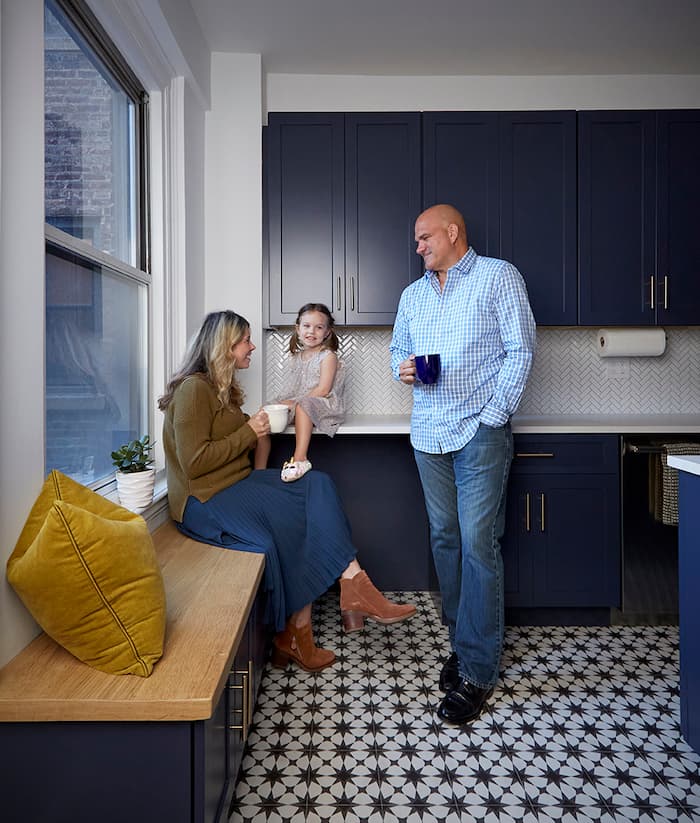
    Familty enjoying coffee in their newly renovated modern ktchen

    Enjoy peace of mind throughout your renovation

    Secure payment system puts you in control and protects your remodel

    Get Started

    Frequently asked questions

    What role would an interior designer play in a custom home build?

    An interior designer coordinates the finish selections—cabinetry, countertops, tile, lighting, paint, and furnishings—that architects typically don’t detail. In Greater Boston, where custom homes often blend historic exterior character with modern interiors, a designer ensures that the transition between traditional and contemporary elements feels cohesive. They manage budgets across finish categories, source materials from the region’s extensive network of suppliers, and prevent the costly reselections that occur when homeowners make decisions in isolation. Fees generally run 10 to 20 percent of the furnishing budget. Many design-build firms in the Boston market include interior design as part of their integrated service.

    What custom home features should I incorporate to boost resale value?

    In Greater Boston, energy-efficient systems command strong premiums: air-source heat pumps, solar panels (leveraging Massachusetts’ SMART program), and high-performance insulation all appeal to buyers. Finished basements, quality kitchen finishes, and at least one primary suite on the main level consistently perform well across the metro. Heated garages and dedicated mudrooms—practical necessities in New England—add functional appeal. In historic-adjacent neighborhoods, exterior design that harmonizes with surrounding homes protects long-term value more effectively than designs that stand apart.

    What are ideas for weatherproofing my new Boston home?

    New England demands a building envelope designed for both extreme cold and humidity. Start with continuous exterior insulation, air-sealed construction, and triple-pane windows to minimize heat loss during winters that routinely drop below zero. Ice dam prevention—through proper attic ventilation and insulation rather than heat cables—protects roof longevity. Basement waterproofing with exterior membrane, interior drainage mat, perimeter drain tile, and a high-capacity sump pump with battery backup is essential given the region’s high water tables and spring snowmelt. An energy recovery ventilator manages indoor air quality while retaining heat during the long heating season.

    Is it realistic to move into the home while part of it is still being built?

    Massachusetts requires a Certificate of Occupancy before legal habitation. Phased occupancy—completing the main level while finishing a basement or attic later—is occasionally possible with explicit municipal approval, but it’s uncommon in Greater Boston and adds complexity. Active construction generates dust, noise, and safety hazards that make cohabitation impractical for most families. The more effective strategy is working with your builder to identify and prioritize the critical-path items that determine your occupancy date, eliminating upstream delays through early material ordering and proactive scheduling.