
04.21.2026


In This Article
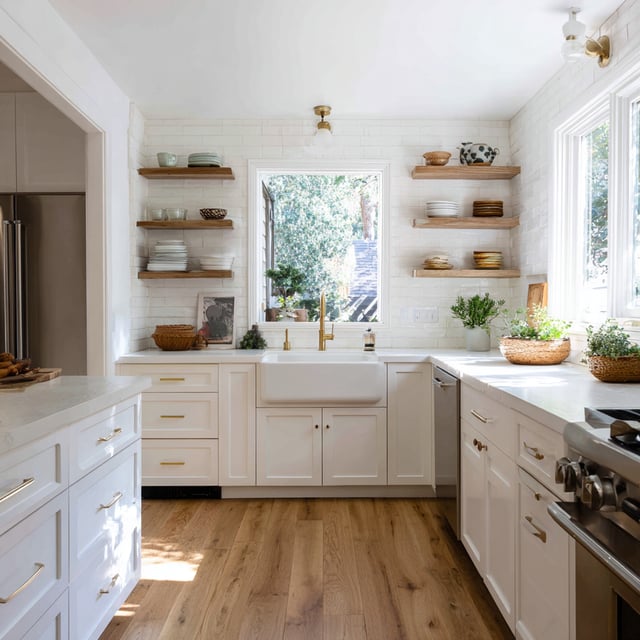
Bungalow kitchens have a personality all their own. Low-slung ceilings, original woodwork, narrow footprints, and decades of charm make them some of the most beloved spaces in American residential architecture. They are also some of the most nuanced to renovate well.
Before diving into ideas, it helps to understand what sets bungalow kitchens apart, both the qualities worth celebrating and the constraints worth planning around:
- Compact square footage. Most bungalow kitchens were designed for a different era of cooking and entertaining, which means limited counter space, fewer cabinets, and little room for modern appliances.
- Low or sloped ceilings. Ceiling height can limit upper cabinet options and make the space feel darker than it needs to be.
- Original character worth preserving. Period woodwork, original floors, and craftsman-era details are assets, but they set a tone that modern updates need to respect.
- Aging systems behind the walls. Older plumbing, knob-and-tube wiring, and original subfloors are common in bungalows and can surface unexpected costs during a kitchen remodel.
- Limited natural light. Many bungalow kitchens were tucked toward the back of the house with minimal window exposure, making brightness a real design challenge.
- Galley or single-wall layouts. The narrow footprint of a bungalow often means working with a corridor-style kitchen where efficiency of movement matters more than open space. It’s reasons like this that some homeowners turn to “bump outs” and other types of bungalow-friendly additions to expand their kitchen’s footprint.
The good news: each one of these constraints has a thoughtful solution. Here are the remodeling ideas that work best for bungalow kitchens, and why.
Remodeling ideas specific to bungalow kitchens
Embrace the galley layout instead of fighting it
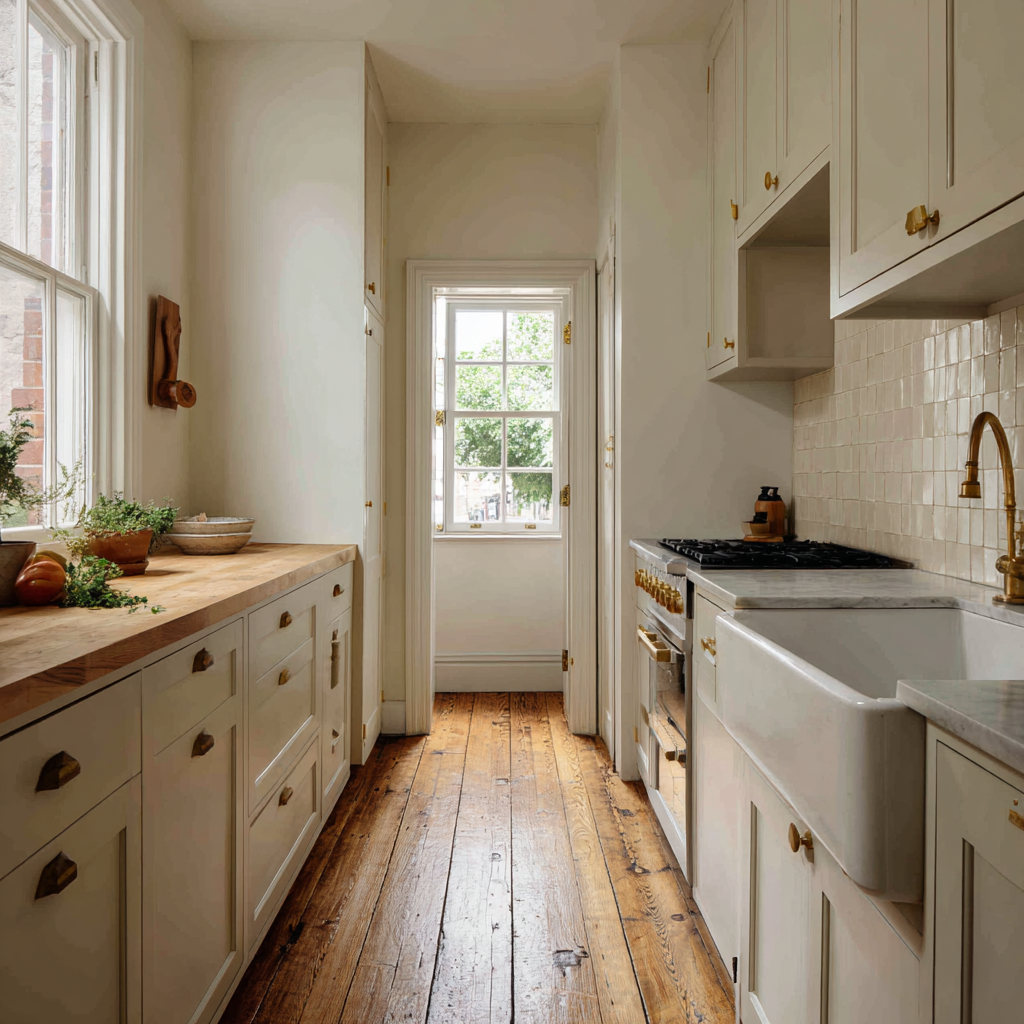
Many homeowners look at a galley kitchen and immediately want to open it up. In a bungalow, that instinct is usually worth resisting. A well-designed galley is one of the most efficient kitchen layouts ever developed. Everything is within arm's reach, the work triangle is tight and logical, and the flow from prep to cook to plate is natural. Professional kitchens have run on this format for over a century, and for good reason.
Commit to the layout with intention. Run cabinets the full length of both walls with consistent shaker doors and a single hardware finish. Keep countertops continuous on both sides to maximize prep surface. End the run with a window that draws the eye down the corridor and fills the space with natural light. The kitchen above is a useful illustration: two full runs of cabinetry, warm wood floors, a window anchoring the far end. Nothing about it feels like a compromise because nothing was treated as one.
Modernize your existing built-in pantry wall
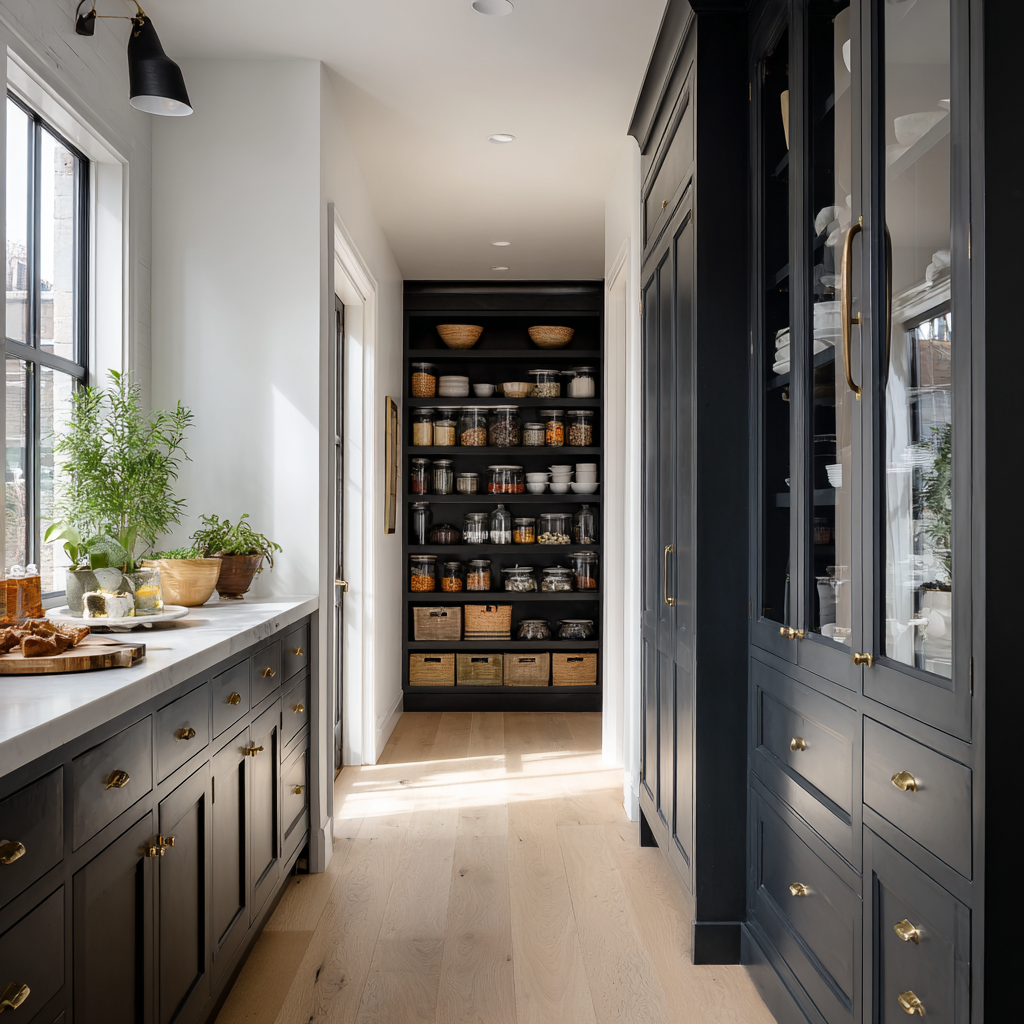
Many bungalows already have a built-in pantry wall, and it is one of the most valuable features a compact kitchen can have. The mistake homeowners often make is pulling it out entirely in favor of something that feels more current. A better approach is to work with what is there and bring it forward.
Repainting existing cabinetry in a deeper, more considered tone is one of the highest-impact moves available in a bungalow kitchen remodel, and one of the most affordable. Charcoal, navy, and deep forest green all read well against warm white perimeter walls. Replacing dated hardware with simple brass knobs or bar pulls updates the feel without touching the structure. Adding glass lites to upper doors introduces transparency and turns the pantry wall into a display as much as a storage solution.
The image above shows what a modernized pantry wall can do. The floor-to-ceiling dark cabinetry reads as a deliberate design feature rather than a holdover. Glass uppers display organized ceramics and dry goods, and the brass hardware ties back to the rest of the kitchen. The bones were already there. The renovation gave them a reason to be noticed.
Maximize natural light to brighten up your bungalow kitchen
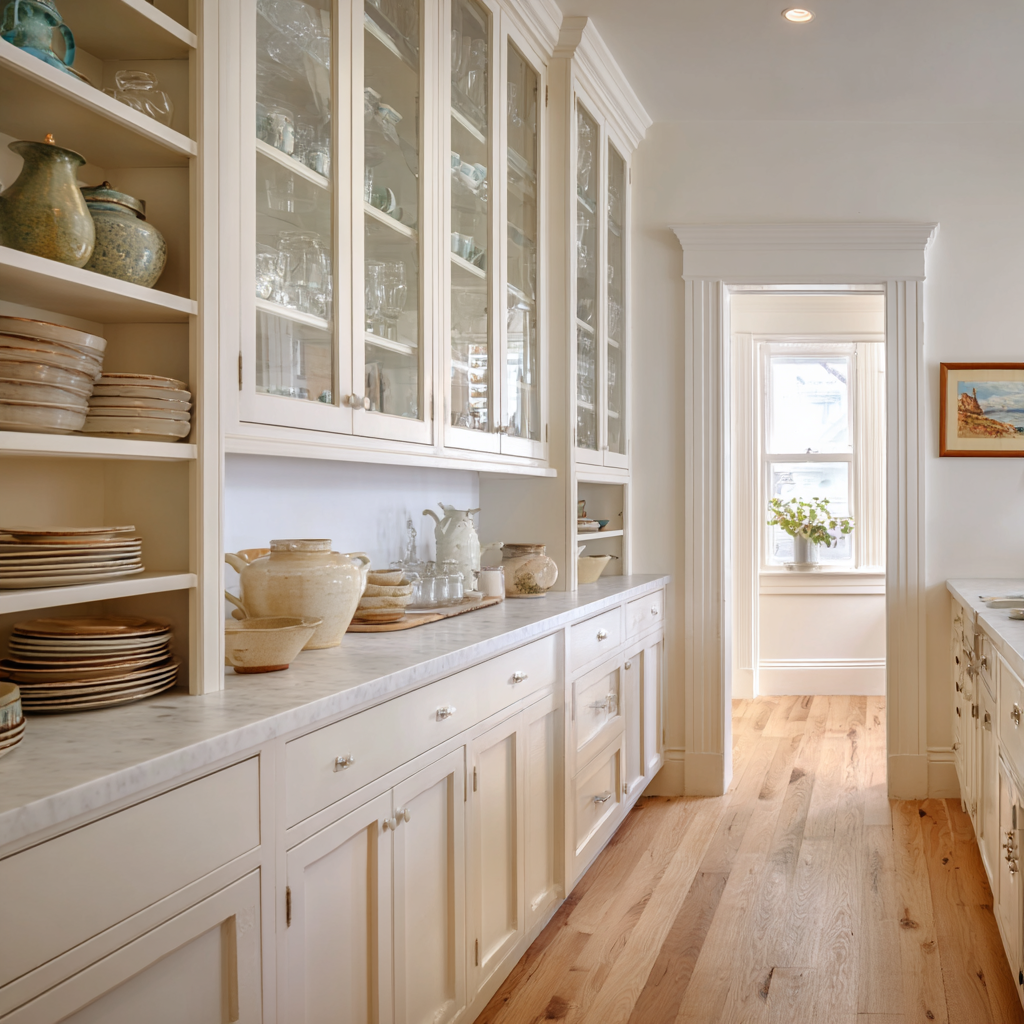
Light is one of the most common challenges in a bungalow kitchen and also one of the most solvable. Before assuming you need to add a window or remove a wall, look at what the existing cabinetry is doing to the room.
Solid upper cabinets absorb light and create visual mass that makes a small kitchen feel closed in. Replacing solid upper doors with glass-front versions opens up the space without any structural work. Glass reflects and distributes light rather than blocking it, making the room feel larger and brighter even when the natural light source stays the same. Pair glass fronts with a warm white interior cabinet finish and the effect is immediate.
Countertop material also plays a role. Honed marble and light quartzite bounce light back into the room in a way that dark stone does not. Keeping walls in a warm white rather than a saturated color makes a meaningful difference in how light travels through the space.
If the kitchen genuinely lacks adequate window exposure, adding or enlarging a window above the sink is one of the highest-return structural moves in a bungalow remodel. It brings in natural light, frames a view, and creates the kind of moment that makes a kitchen feel like the center of the house rather than a room behind it.
Bring natural materials into your kitchen remodel
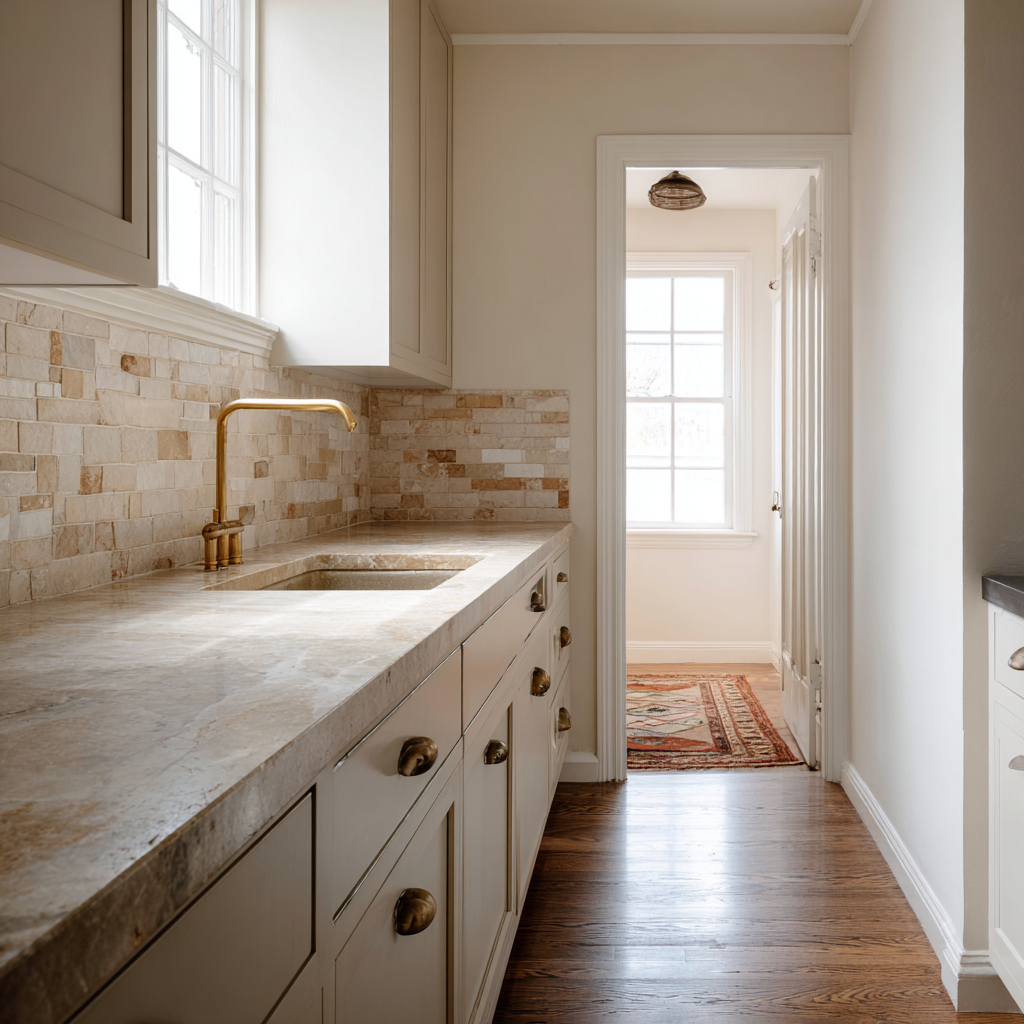
Bungalows were built during the Arts and Crafts movement, a period defined by a deliberate turn toward natural materials, honest construction, and the beauty of things made by hand. So why not lean let this ethos guide your kitchen redesign?
Stone countertops with visible veining and natural variation. Wood floors with real grain and patina. Handmade ceramic fixtures, natural fiber textiles, unlacquered brass hardware that ages rather than stays perpetually shiny.
The practical case is just as strong. Honed stone, solid wood, and fired clay are durable, repairable, and improve with use.
Embrace period-inspired elements within your kitchen
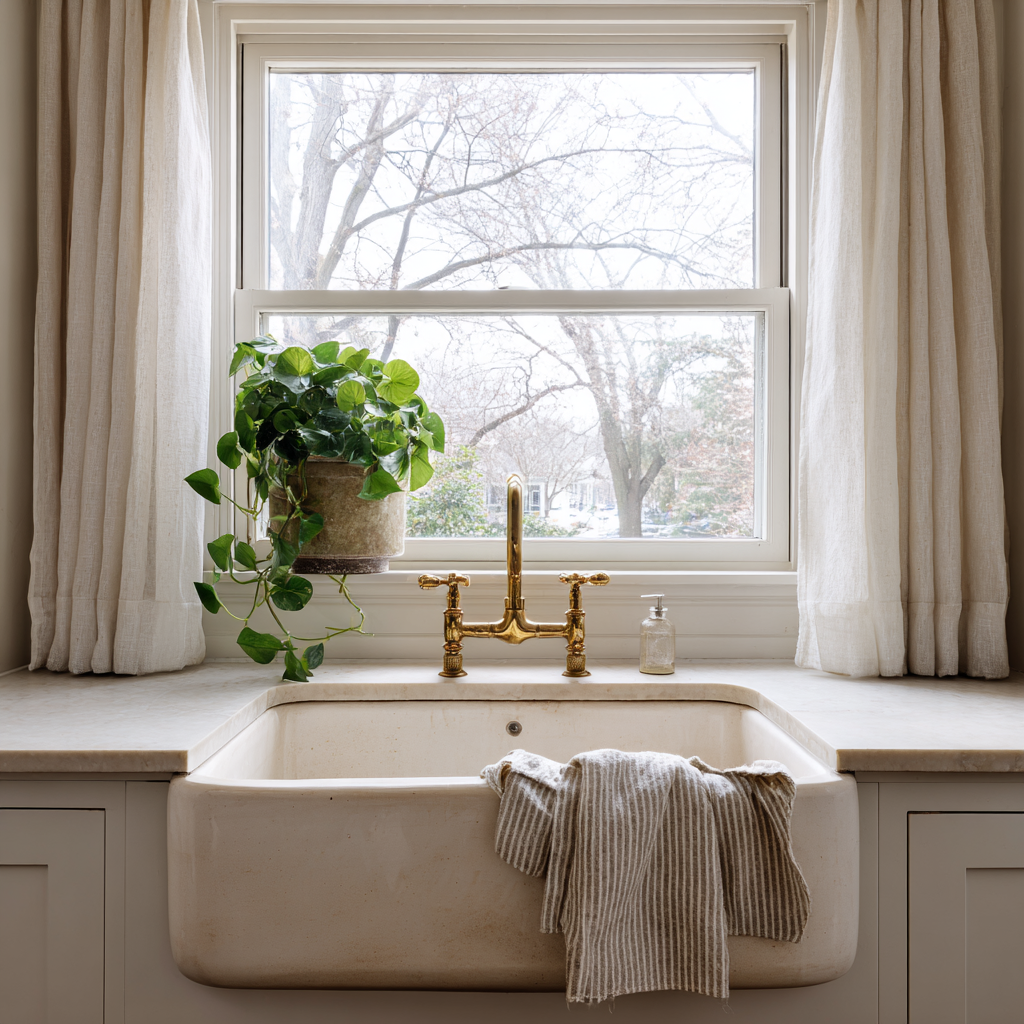
In a bungalow kitchen, the details are not decorative afterthoughts. They are the renovation. A thoughtfully chosen faucet, sink profile, or light fixture can do more to establish the character of the space than almost any other single decision.
Period-inspired fixtures do not mean museum-accurate reproductions. They mean choosing designs that share a sensibility with the house: an apron-front farmhouse sink with a substantial presence, a bridge faucet with cross handles, a schoolhouse pendant over the sink, simple bin pulls or cup hardware on cabinet doors. These are the details that signal a kitchen was designed for its house rather than applied to it.
Unlacquered brass is particularly well suited to bungalow kitchens. Unlike polished chrome or brushed nickel, it develops a natural patina over time that deepens rather than dates. A brass bridge faucet five years into use looks better than it did when it was installed, which is exactly the right quality in a house built to last a century. The image above captures this sensibility without overstating it. The farmhouse sink, bridge faucet, and linen curtains are all doing design work. None of it is precious or overwrought.
Open up to the adjacent room
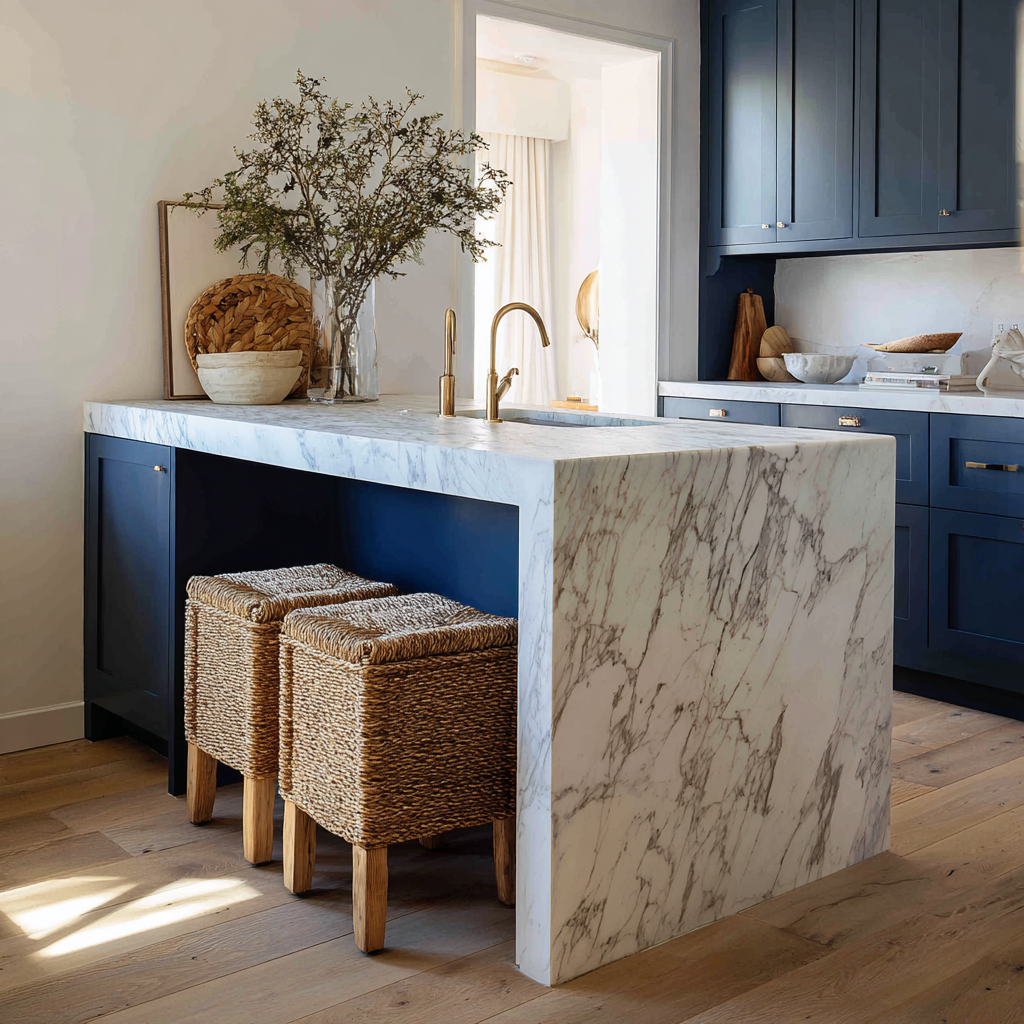
One of the most common structural opportunities in a bungalow renovation is the wall between the kitchen and the adjacent dining room or living room. In many bungalows built before the mid-20th century, these rooms were separated by walls that made sense for a different style of living. Opening that connection, either fully or partially, can change how the kitchen feels and functions without adding a single square foot.
A full wall removal creates an open-plan kitchen that allows natural light to travel further into the house. A partial opening, such as a pass-through or low half-wall, achieves a similar effect while preserving some definition between spaces.
Where this gets interesting is the opportunity to introduce a statement island at the threshold between the two rooms. An island at that boundary provides prep space and casual seating, marks the edge between cooking and living, and gives the renovation an anchor it would not otherwise have. A well-proportioned island with a bold base color and a substantial stone top, as in the image above, can become the most considered element in the entire kitchen. Before removing any wall, consult a structural engineer. Many bungalow walls are load-bearing, and the cost of a properly engineered beam should be factored into the budget from the start.
Embrace the bungalow craftsman spirit with handcrafted kitchen details
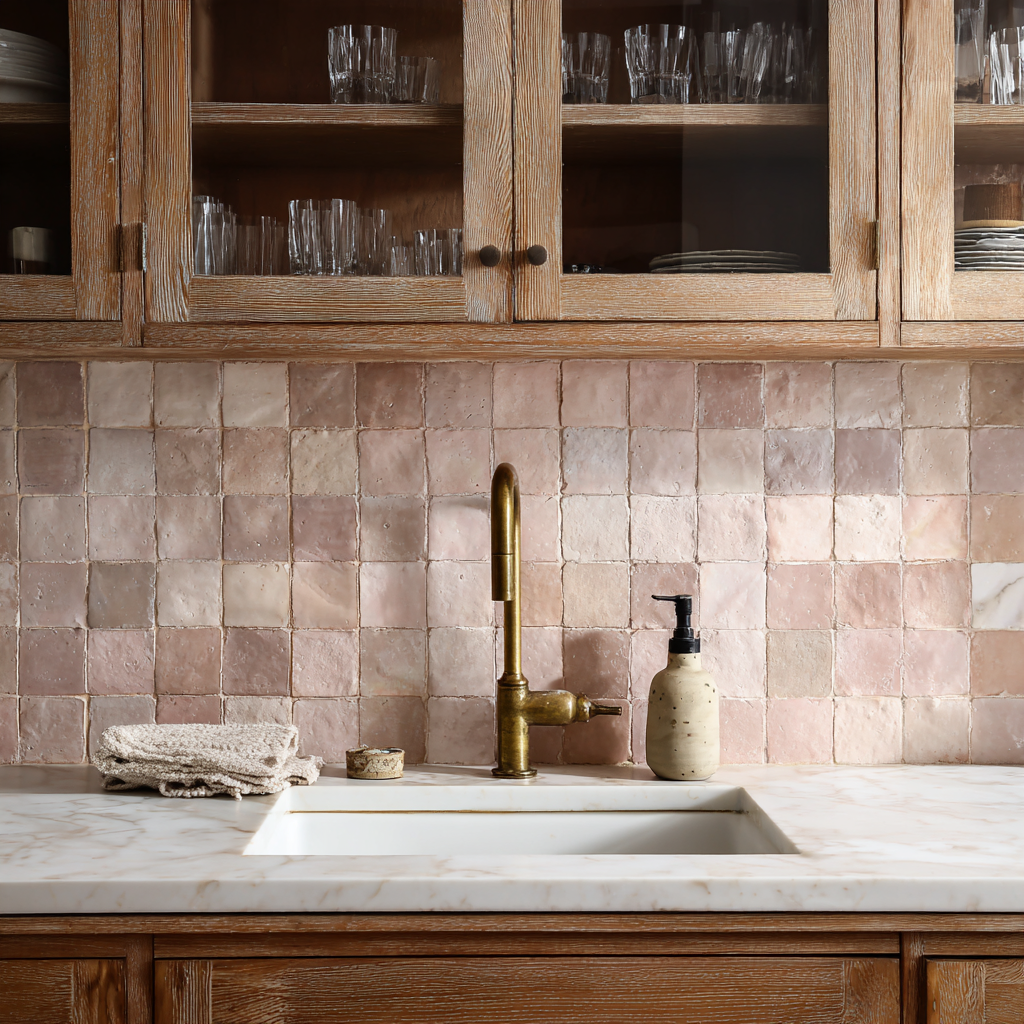
The craftsman aesthetic that defines bungalow architecture was never about perfection. It was about the visible evidence of human skill, and that philosophy is worth carrying into a kitchen renovation.
Handmade tile is one of the most accessible ways to bring this quality in. Unlike machine-made ceramic, handmade tile carries natural variation in its glaze, subtle irregularity in its surface, and a warmth that mass-produced alternatives cannot replicate. Zellige, encaustic cement tile, and hand-pressed clay tile in warm muted tones all work well in bungalow kitchens and age well with use.
But handcrafted details extend beyond tile. Natural wood cabinets with visible grain and honest joinery, hand-thrown ceramic knobs and pulls, hand-forged iron hardware, unlacquered brass fixtures that show their age over time, all of these contribute to the same sensibility.
Make your flooring part of your bungalow kitchen's character
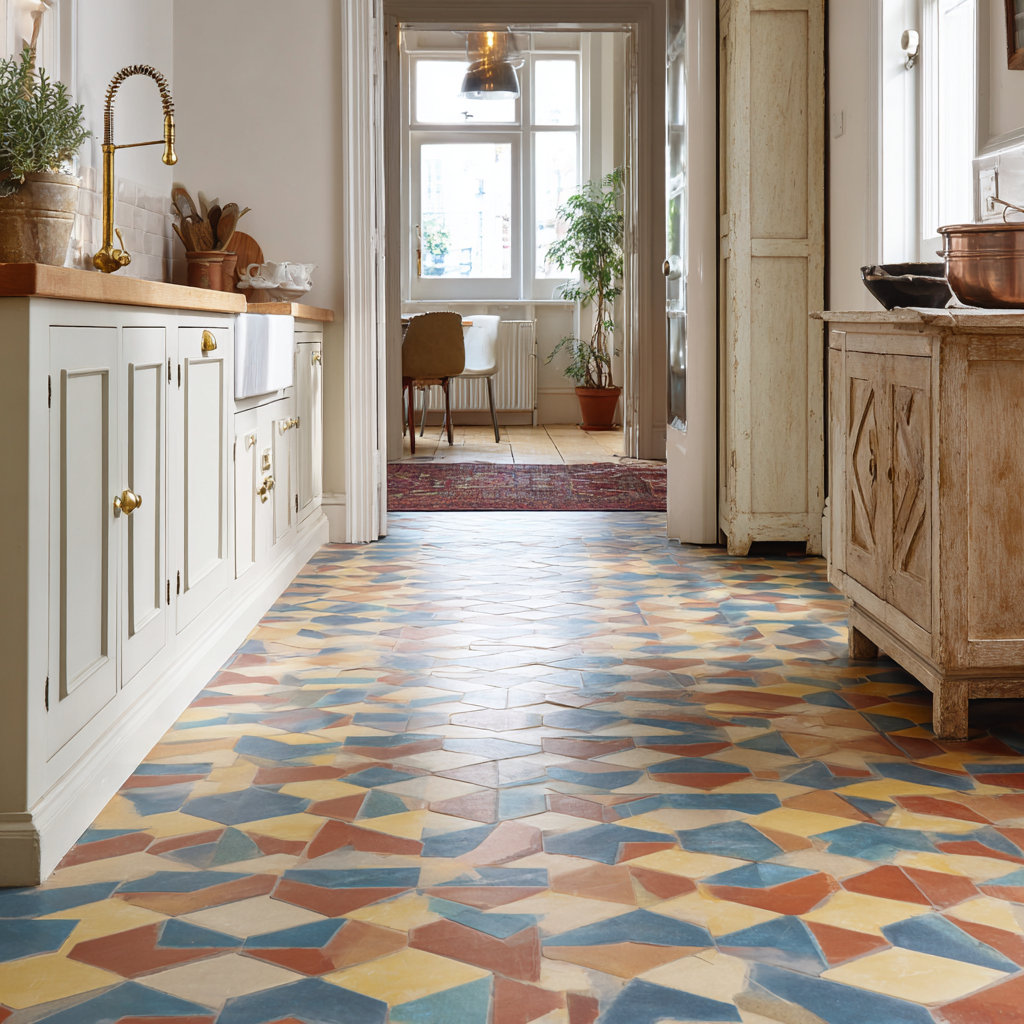
In most kitchen renovations, flooring is a background decision. In a bungalow, it is an opportunity. The kitchen floor is one of the largest uninterrupted surfaces in the room, and in a narrow galley it is also one of the most visible from every angle. Choosing something with genuine character rather than defaulting to a safe neutral can shift the entire feel of the space.
Encaustic cement tile is one of the strongest choices for a bungalow kitchen floor. Made by pressing pigmented cement into a mold rather than glazing a ceramic body, encaustic tile has a matte, slightly porous finish that absorbs light rather than reflecting it. A bold geometric or irregular pattern in terracotta, cream, dusty blue, or warm ochre introduces color and craft at the floor level without competing with the rest of the kitchen.
Original hardwood floors, refinished rather than replaced, are another strong option. Wide-plank pine or fir with visible grain and natural patina connects the kitchen to the rest of the house in a way that tile cannot, and it grounds the space in the material history of the building. Whichever direction you go, the floor should feel like it belongs to the house, not like it came out of a contractor's standard package.
Invest in quality materials and finishes, not trends
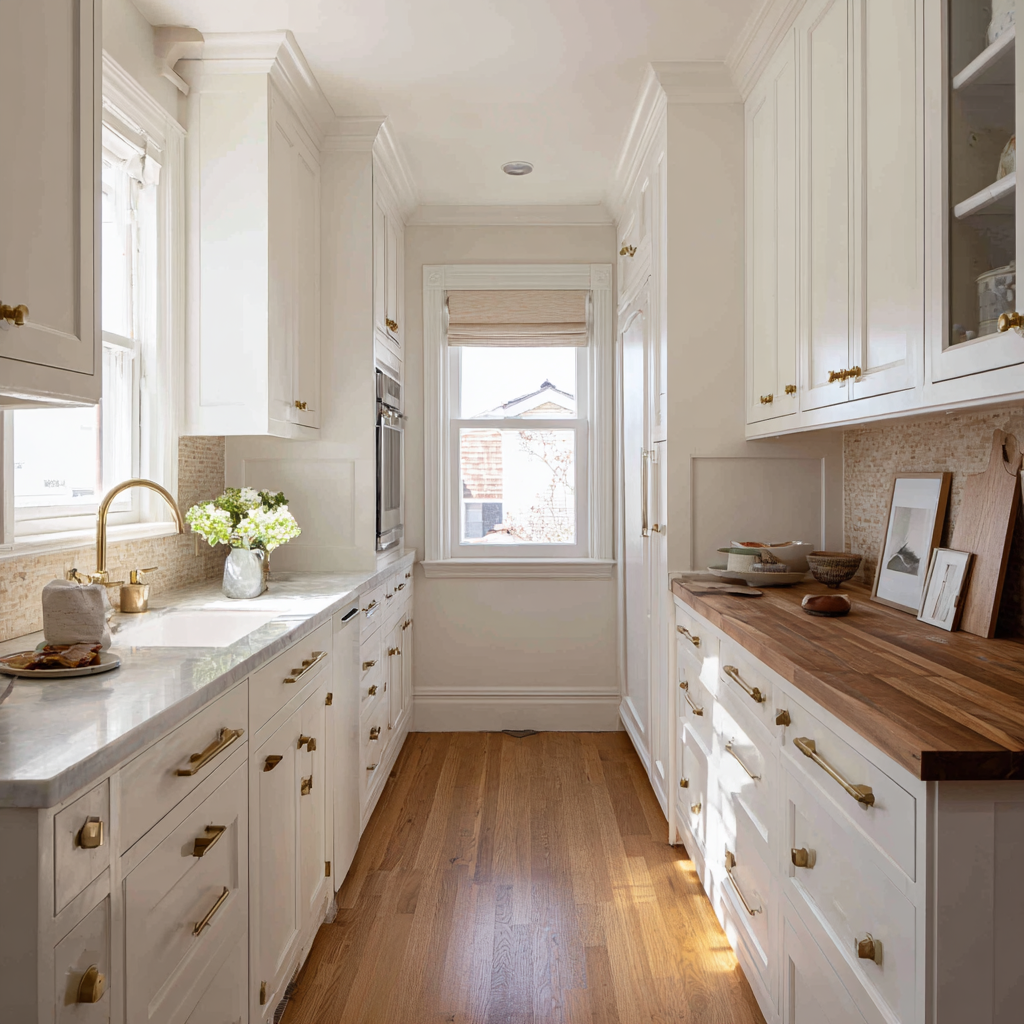
Bungalows were built to last a hundred years. A kitchen renovation that chases what is popular right now will look dated long before the house does. The most expensive mistake in a bungalow kitchen remodel is not overspending on stone or splurging on hardware. It is spending real money on a design direction tied to a moment rather than to the character of the house.
Trends move fast. Limewash everything, open shelving on every wall, a single saturated cabinet color because it was on every mood board two years ago. These choices feel right until they do not, and in a house with the bones of a bungalow, a renovation that prioritizes lasting quality over current appeal will always win.
In practical terms, this means solid wood cabinetry over MDF wrapped in a wood-look finish. Honed stone countertops over printed laminate alternatives. Hardware with real weight and a finish that develops character over time.
It also means being willing to do less, better. A bungalow kitchen with two runs of well-made shaker cabinetry, a single quality stone countertop, and simple brass hardware will outlast and outperform a kitchen packed with features chosen for visual novelty. The image above makes the case quietly. Nothing in it is trying too hard.
Hungry for more ideas and inspiration for your kitchen redesign? Check out these before-and-after images for California bungalows and 1950s bungalows.
Test your bungalow kitchen ideas before you commit
One of the most common renovation regrets homeowners describe is locking into a design direction before they could truly visualize it. In a small bungalow kitchen, where every material decision is visible from every angle, that risk is especially real.
Our free tools let you upload your kitchen to reimagine it with AI, visually and financially working through the details. You can experiment with cabinet colors, countertop materials, and layout configurations and see how each choice shapes both the look of the space and your total project cost in real time.
Want to know whether a dark pantry wall works with your existing floors? Whether natural stone or butcher block makes more sense for your budget? The Studio gives you a clear view of the decisions that matter most, so you arrive at your contractor conversations with a plan you believe in.
Find the right contractor for your bungalow kitchen remodel with help from Block Renovation
A bungalow kitchen renovation calls for a contractor who understands period architecture and has experience working in tight galley footprints. They should also have experience handling surprises common to older homes: aging plumbing, original subfloors, and plaster walls that behave differently than drywall.
Block Renovation matches homeowners with thoroughly vetted, licensed, and insured contractors evaluated not just on credentials but on actual build quality through virtual site visits and homeowner references.
Here is how it works: share your project details, get matched with local contractors who fit your scope and location, and receive detailed proposals you can compare side by side. From there, you can move forward with built-in protections including price assurance, progress-based payments, and a one-year workmanship warranty. Block does the vetting so you can focus on the remodel of your bungalow home.
Remodel with confidence through Block

Connect to vetted local contractors
We only work with top-tier, thoroughly vetted contractors

Get expert guidance
Our project planners offer expert advice, scope review, and ongoing support as needed

Enjoy peace of mind throughout your renovation
Secure payment system puts you in control and protects your remodel


Renovate confidently with Block
Easily compare quotes from top quality contractors, and get peace of mind with warranty & price protections.



