



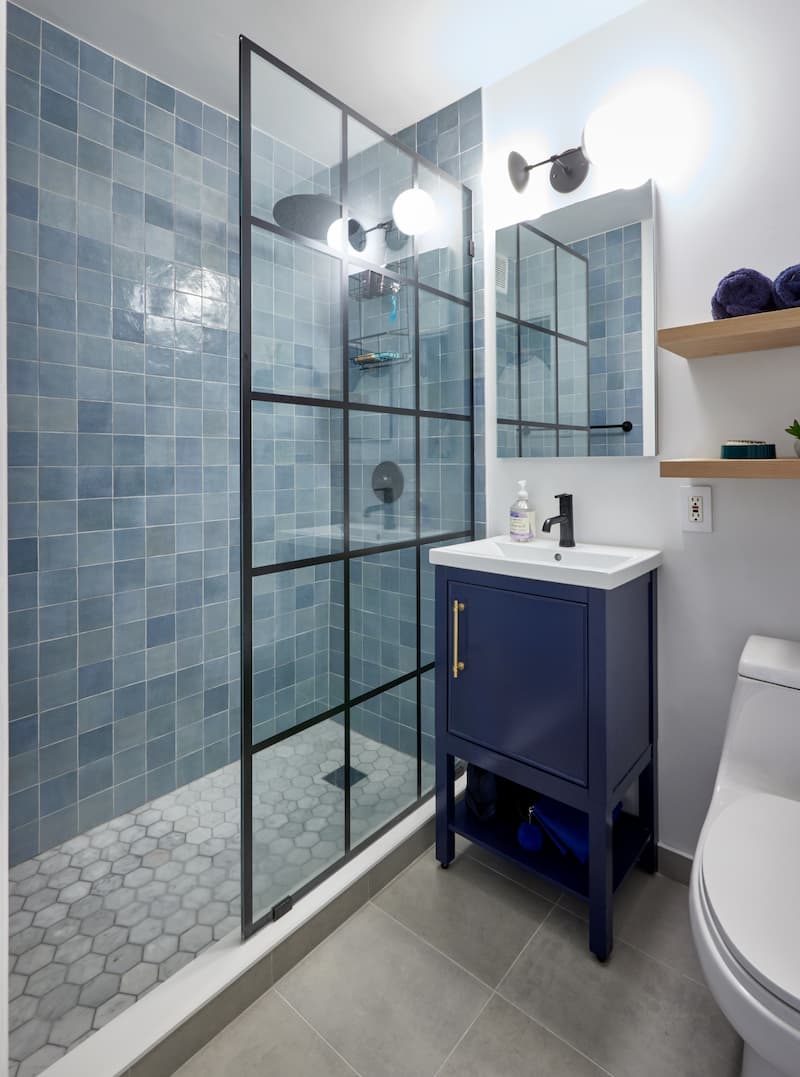
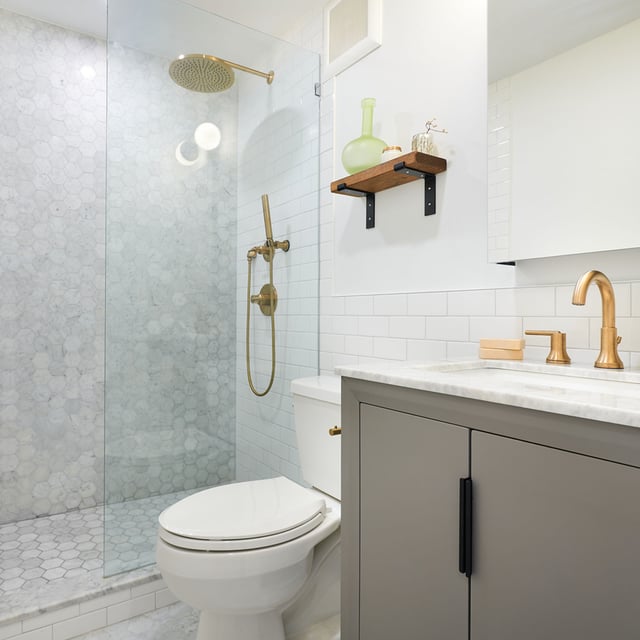
Bathroom
Building a Basement Bathroom: Cost & Planning
06.01.2026
06.01.2026


In This Article
A basement bathroom is one of the highest-value spaces you can add to a home, and one of the easiest to underestimate. What you'll spend depends mostly on one thing: whether the basement sits above or below your home's main sewer line.
|
Bathroom type |
What's in it |
Typical installed cost |
|
Half bath |
Toilet and sink |
$4,000 to $12,000 |
|
Three-quarter bath |
Toilet, sink, walk-in shower |
$7,000 to $20,000 |
|
Full bath |
Toilet, sink, shower, tub |
$12,000 to $30,000 |
Add $2,000 to $5,500 if the basement sits below the sewer line and needs a pump. Existing rough-in plumbing can pull the low end lower. Those ranges are wide for a reason: building a bathroom down here isn't like adding one anywhere else in the house.
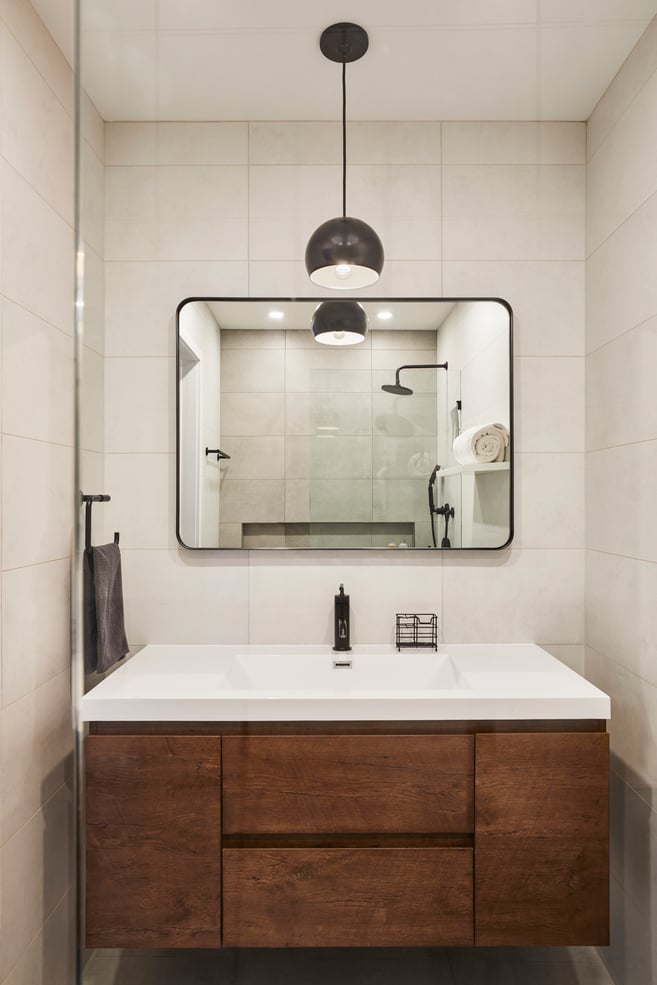
Add a bathroom to a spare bedroom and you're mostly working with what's already there: a subfloor you can open, a stack a few feet away, drainage that runs downhill on its own. A basement takes most of that away.
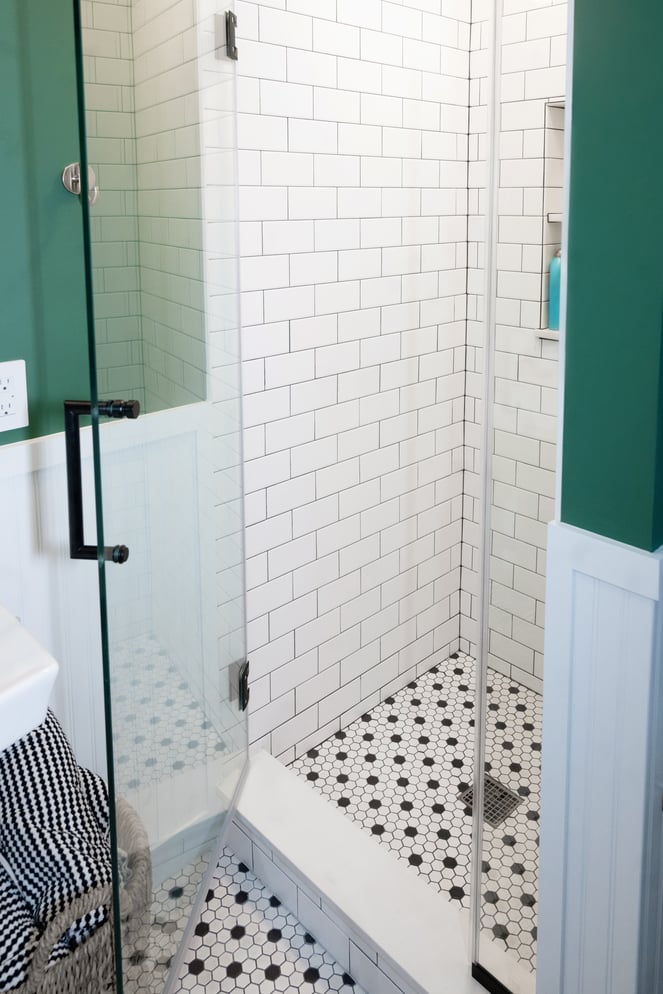
Among the features that move a home's appraised value, an extra bathroom is the heavyweight. NAHB analysis of the 2023 American Housing Survey found that each additional full bathroom raises a home's value by roughly 32%, against about 15% for a half bath and only 5% for an extra bedroom, holding square footage and other features constant (NAHB Eye on Housing).
Read that with one eyebrow raised. "Holding square footage constant" is doing the heavy lifting. The 32% is what a bathroom is worth in a vacuum, as if one could appear without costing space, money, or a pump. In reality you pay for all three.
Treat the figure as a reason the feature is worth wanting. Just don't expect to bank it dollar for dollar. What you pocket at resale falls below a clean 32% once the cost of getting there is on the books.
A new bathroom comes from one of two places: square footage you build, or square footage you already own. A main-floor addition means a foundation, a roof, and exterior walls. A basement bathroom uses space that's already enclosed and heated. You already own that square footage; the bathroom just puts it to work.
That advantage holds until the basement fights back. Chronic damp, low basement ceilings, or a sewer line above the floor can erase the savings and then some. The basement usually wins on cost, though not in every house. Which case you're in shows up in a short list of conditions you can check before spending a dollar.
We talked with Steven Morgan, a master plumber and certified HVAC technician who heads technical training and development at 24hr.Supply, about the most common source of mid-project change orders. He told us:
"From the plumbing side, the answer is almost always what's hiding behind the walls, under the floors, or inside the slab. You contract for a basement bathroom addition and when we open things up we find the main sewer line is cast iron and cracked through. You want to move a sink six feet and the existing drain turns out to be galvanized pipe choked solid with rust. Nobody can see these things from the outside, but you can get ahead of them before you sign anything."
His advice was to pay for a proper pre-construction inspection to cut small access holes, scope the drains with a camera, pressure-test the water lines. That work runs around $500 and routinely prevents $10,000 in mid-project surprises. Homeowners who skip it are essentially betting that nothing bad is hiding in there. That's usually a losing bet in any house over 30 years old.
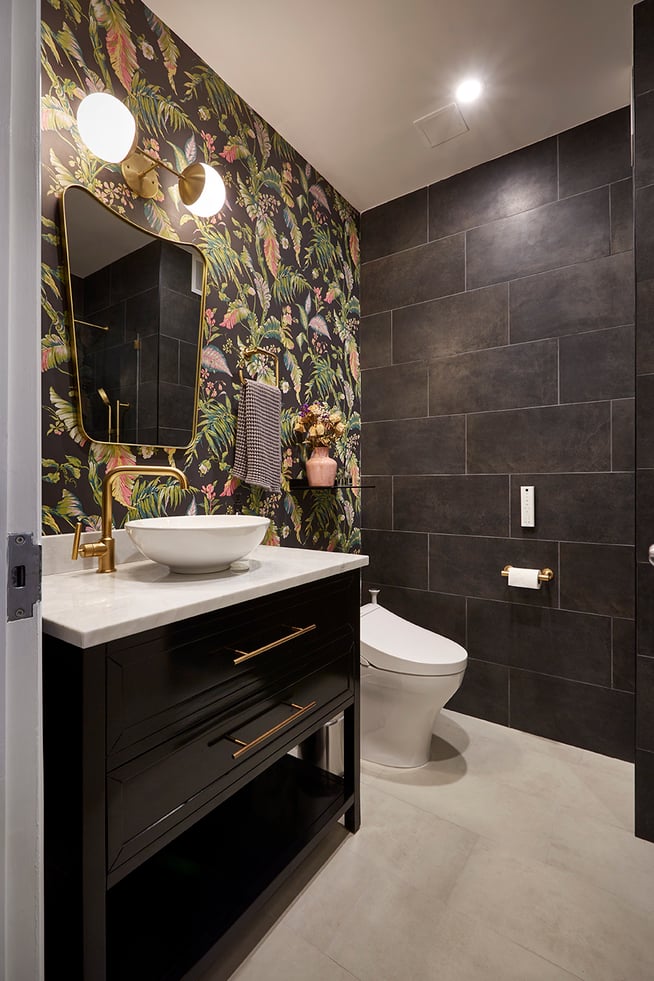
The vanity, the shower tile, the spot for the mirror: those are the fun decisions, and they're the wrong place to begin. Spend on finishes for a space that can't legally or comfortably hold a bathroom and you've buried money in the slab. A basement earns its bathroom by clearing a few conditions first.
Renovate with confidence every step of the way
Step 1: Personalize Your Renovation Plan
Step 2: Receive Quotes from Trusted Contractors
Step 3: Let Us Handle the Project Details

The deciding factor is where your home's main sewer line sits relative to the basement floor. Everywhere else in the house, gravity carries waste away on its own. In the basement, whether gravity still works depends on a few inches of pipe elevation, and that gap splits your budget into two very different numbers.
Settle this before you sketch anything.
Knowing the answer keeps you from drawing a layout the plumbing can't support.
If the line runs below the basement floor, gravity does the work, and this is the cheaper, calmer path. A crew breaks into the slab, ties new drain lines into the existing system at the right slope, patches the concrete, and the plumbing behaves like any other bathroom in the house. No special equipment, no ongoing maintenance, nothing extra waiting to fail.
If the line sits above the basement floor, gravity is against you, and waste has to be lifted up to the main line. Two options come up most often:
It should come as no surprise that the budgetary range is wide for a basement bathroom. A gravity-fed bath lands near the price of a normal bathroom; a pump-dependent one runs higher and brings a basin, a vent, and a replacement clock. Ejector and macerator systems generally last ten to fifteen years, so budget to swap the mechanism at least once, plus a little power and the occasional service call.
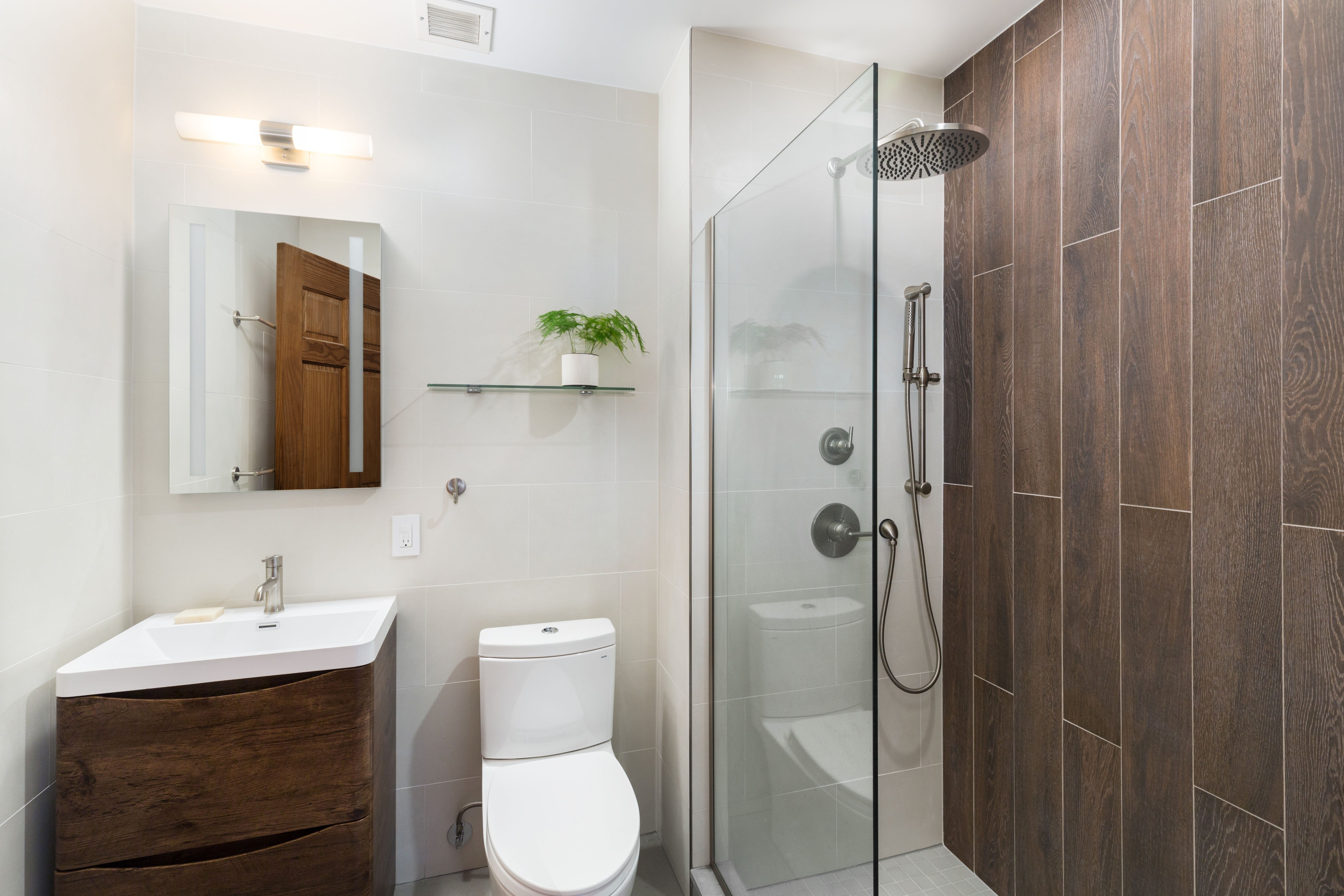
A basement bathroom almost always needs permits, and skipping them tends to surface at the worst moment: when you sell, and a buyer's inspector flags unpermitted work. The plumbing alone usually triggers a permit, since you're adding drain and vent lines to the home's system. Pulling the permit also means the work gets inspected, which protects you when the pipes are about to disappear under a new slab.
A handful of items reliably draw an inspector's attention downstairs:
Build your basement bathroom and the surrounding area to code from the start and the inspection becomes a formality. Cut corners and you're paying to open finished walls later. With worth, feasibility, cost, and code behind you, what's left is the design, and a basement asks for a different playbook than the rest of the house.
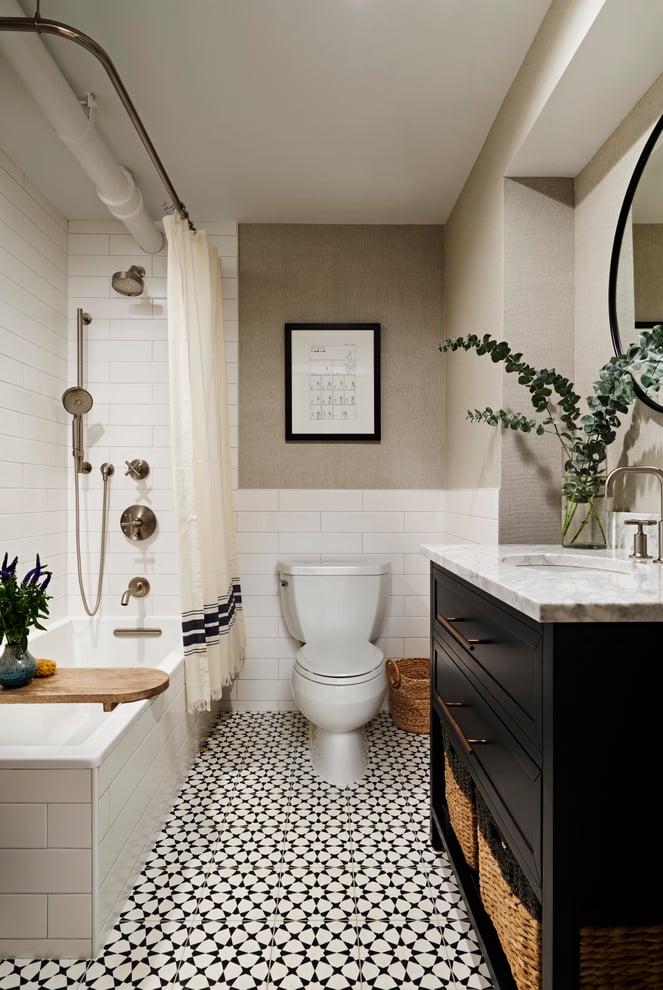
A basement bathroom can be built perfectly sound and still feel grim to stand in. Three things shape how it actually feels, and none of them bother the bathrooms upstairs: a footprint you're fighting for, a cold slab underfoot, and little or no daylight. Handle them head-on and the room feels considered. Ignore them and it never quite shakes the afterthought feeling.
Downstairs, the tub is usually the piece to cut. A three-quarter bathroom (toilet, sink, and a walk-in shower, no tub) captures most of the value of a full bath at less cost and less risk.
The reasons are water and space. A tub adds weight, more surface to waterproof, and more water in a room that already has moisture working against it. It also eats floor area a basement layout can rarely spare. Few people head downstairs for a long soak, and a roomy walk-in shower looks like an upgrade to most buyers anyway.
Two situations flip the answer. If this would be the only tub in the house, keep one: families with young kids and buyers in plenty of markets treat a tub as non-negotiable. And if you're building the basement into a true bedroom suite meant to rival the bedrooms upstairs, a full bath helps it stand on equal footing.
A concrete floor runs cold, and the tile over it is colder still. An electric radiant heating mat under the tile solves that. It's an inexpensive add while the floor is open, warms the room from the ground up, and helps keep humidity from settling in. It's the upgrade homeowners regret skipping.
With no window to borrow from, the fix is mostly light and surfaces. Get both right and even a windowless room feels calm and put-together. Botch them and you've built a closet with a toilet in it.
Ventilation matters as much as the lighting. A strong exhaust fan keeps a windowless bath dry and comfortable to be in.
Active construction usually runs three to six weeks for a bathroom on its own. Permits and inspections bracket that, so plan for five to ten weeks start to finish, longer if the basement sits below the sewer line or your permit office is slow.
|
Phase |
What happens |
Typical time |
|
Planning, design, and permits |
Settle the layout, locate the sewer line, pull permits |
2 to 4 weeks |
|
Plumbing rough-in and slab work |
Break the slab if needed, set drain lines or an ejector basin, run supply |
3 to 5 days |
|
Framing and electrical |
Frame walls, run wiring and the exhaust vent, then pass the rough inspection |
3 to 5 days |
|
Waterproofing, insulation, drywall |
Seal against moisture, insulate, hang and finish drywall |
about 1 week |
|
Flooring, tile, and fixtures |
Lay the floor and any radiant mat, tile the shower, set the toilet, sink, and vanity |
1 to 2 weeks |
|
Final inspection and punch list |
Pass the final inspection and fix the small stuff |
a few days |
The order of operations beats any single finish. Confirm the basement can carry a bathroom, find out where the sewer line sits, then design for the basement you actually have. Block's Renovation Studio was built for exactly this kind of decision: map the layout, visualize the space, and watch how each choice moves the budget before you commit anything.
When you're ready to build, Block pairs your project with vetted local contractors who've done below-grade work. A good one will tell you on the first site visit which sewer-line situation you're in, and exactly what it means for your number.
Remodel with confidence through Block

Connect to vetted local contractors
We only work with top-tier, thoroughly vetted contractors

Get expert guidance
Our project planners offer expert advice, scope review, and ongoing support as needed
Enjoy peace of mind throughout your renovation
Secure payment system puts you in control and protects your remodel

Renovate confidently with Block
Easily compare quotes from top quality contractors, and get peace of mind with warranty & price protections.
Bathroom
Building a Basement Bathroom: Cost & Planning
06.01.2026
Bathroom
Bathroom Remodel Materials List: What to Buy Yourself
05.21.2026
Basement
Daylight vs. Walkout Basement: Which Is Better?
05.18.2026
Cost
Bathroom Remodeling Cost: 2026 Pricing & Real Examples
05.11.2026
Bathroom
Bathroom Cabinet Ideas: 13 Smart Renovation Upgrades
05.08.2026