


Building Your Custom Home in Jacksonville, FL: A Practical Local Guide

Budget your upcoming Jacksonville custom home build with help from Block
How we get your estimate
Fill out the form above to either connect with contractors for a personalized quote or estimate your costs with Block's Renovation Studio.
A tropical patio with a light wood sectional, white cushions, and brick pavers surrounded by lush plants.

In This Article

    Jacksonville has quietly become one of the most compelling cities in the American Southeast—a sprawling, water-rich metro with 22 miles of Atlantic coastline, the St. Johns River winding through its heart, a rapidly maturing urban core anchored by Riverside and San Marco, and an economy diversified across military, financial services, logistics, and a growing healthcare and technology sector. The city's physical scale—Jacksonville is geographically one of the largest cities in the contiguous United States—means it contains multitudes: dense walkable neighborhoods like Avondale and Ortega, beachside communities like Atlantic Beach and Neptune Beach, and suburban growth corridors in Clay County and St. Johns County that consistently rank among Florida's most desirable places to raise a family. Florida's lack of state income tax, Jacksonville's relatively modest cost of living compared to Tampa or Miami, and consistent population growth have combined to make this one of the most active custom home markets in the Southeast. For homeowners willing to navigate its specific conditions, building a custom home in Jacksonville offers an opportunity to create a place that connects daily life to river breezes, backyard shade, and the broader landscape of a city that's still in the process of becoming its best self.

    That opportunity comes with real complexity. Jacksonville's coastal geography, active hurricane exposure, and pervasive wetlands and floodplain areas create site selection challenges that require genuine expertise to navigate. Florida's building code—among the most stringent in the country after decades of hurricane experience—adds cost and regulatory complexity that buyers coming from other states often underestimate, especially when designing homes with large openings, covered patios, and outdoor rooms meant to blur the line between indoors and out.

    Turn your renovation vision into reality

    Get matched with trusted contractors and start your renovation today!

    Find a Contractor

    Understanding the role of an architect

    In Jacksonville's custom home market, a licensed architect brings the most value to projects where Florida's complex regulatory environment, challenging site conditions, or a homeowner's design ambitions require more than plan selection and modification can accommodate. Florida's building code—which includes wind speed maps, exposure category requirements, and product approval processes for windows, doors, and roofing—rewards thoroughly prepared construction documents that address these requirements from the outset rather than discovering gaps during plan review. Waterfront lots, which are among Jacksonville's most coveted building sites, present siting challenges around FEMA floodplains, Coastal Construction Control Lines, and Florida's Riparian rights framework that benefit significantly from architectural guidance, especially when you're orienting terraces, porches, and window walls toward river, marsh, or ocean views.

    The region's historic neighborhoods—Avondale, Ortega, and parts of San Marco—also have design review considerations where architectural expertise in contextually appropriate massing, proportion, and material choice makes a meaningful difference in how proposals are received, including how additions like rear patios, balconies, and garden structures meet neighborhood standards.

    For buyers working within planned communities in Nocatee, Ponte Vedra, or Fleming Island—where established plan libraries and HOA design standards define most of the design parameters—a full architectural engagement may add cost without commensurate value, and a designer or draftsperson can manage customization efficiently, including routine tweaks to lanais and outdoor kitchen layouts.

    The rule of thumb is that the more a project requires original site-specific design thinking—shaping how rooms open to courtyards, managing shade and breezes on porches, framing specific water or tree canopy views—rather than selection within an established system, the more an architect's involvement pays for itself.

    Cost and timeline overview for future Jacksonville homeowners

    Understanding what custom home construction actually costs in Jacksonville and how long the process takes is essential context before any design or lot decisions are made—because both numbers can diverge significantly from national averages in ways that catch unprepared buyers off guard.

    Custom home construction in Jacksonville typically runs between $200 and $350 per square foot for standard to mid-range builds, with coastal resilience requirements, high-end finishes, or complex sites pushing costs to $400 or more per square foot. Florida's building code mandates impact-resistant windows and doors, reinforced roof-to-wall connections, and wind-resistant framing throughout the coastal and inland areas that cover virtually the entire Jacksonville metro—requirements that add meaningfully to base construction costs compared to equivalent homes in non-hurricane-risk markets. Labor costs are generally more moderate in Jacksonville than in South Florida, but the region's active construction market has tightened skilled trade availability, and premium trades like tile setters, cabinet installers, and finish carpenters command rates that reflect high demand. Land values vary considerably: lots in San Marco, Avondale, Ortega, and the Beaches communities carry premiums that reflect their scarcity, character, and school or lifestyle access, while suburban growth corridors in Clay and St. Johns Counties offer more land at lower prices within some of the state's best school districts.

    What drives custom home costs in either direction in Jacksonville includes architectural complexity, finish quality, and—more than in most markets—the cost of meeting Florida's hurricane resilience standards. A standing seam metal roof, which performs significantly better in Jacksonville's storm environment than standard shingles and often carries meaningful insurance discounts, adds upfront cost that most buyers find justified. Impact-resistant windows specified to meet Florida's wind speed requirements cost more than standard windows; the premium is non-negotiable in this market. Homes designed with elevated foundations—increasingly common in flood-zone areas after FEMA map revisions—add structural cost but reduce flood insurance premiums in ways that can justify the expense over a typical ownership period.
    Danny Wang-Block Renovation copy-Feb-24-2026-06-13-09-8820-PM

    “Choosing the lowest bid often costs more later. Experience, communication, and trust matter more than price alone.”


    Loose timelines for custom home builds in Jacksonville

    A realistic custom home timeline in Jacksonville runs 14 to 20 months from design initiation through certificate of occupancy, with waterfront sites, complex permitting situations, or high-demand subcontractor schedules extending toward 24 months. Pre-construction work—design, engineering, and Duval County or municipal permitting—typically accounts for four to six months before construction begins.

    Jacksonville's climate creates specific construction season dynamics. The region's summer rainy season—June through September—brings daily afternoon thunderstorms that can interrupt exterior work, and hurricane season (June through November) creates project risk that builders and homeowners must plan around. Florida's building inspection requirements, which are thorough and non-negotiable, add inspection scheduling time to the construction calendar; required inspections at multiple stages of framing, mechanical rough-in, and insulation cannot be skipped or consolidated. Subcontractor scheduling has become the most consistent timeline risk in Jacksonville's active market, particularly for specialty trades like impact window installers and tile setters who serve a large regional construction market with limited available crews.

    Finding the right site in Jacksonville for your custom home

    Lot selection in Jacksonville demands more environmental and regulatory due diligence than almost any other market in the Southeast, because the combination of wetlands, floodplains, coastal regulations, and hurricane exposure creates site risk that isn't always visible from a standard property listing.

    • Soil quality and site stability. Jacksonville's soils reflect its position on the Atlantic Coastal Plain—predominantly sandy, poorly draining soils underlain by limestone karst geology that creates specific foundation challenges across the metro. The sandy soils common in Jacksonville's beach communities and St. Johns County subdivisions provide good drainage but limited bearing capacity, often requiring deeper footing designs or engineered fill to achieve stable foundation conditions that can support pools, decks, and covered patios. The area's karst geology—dissolving limestone subsurface—creates sinkholes as a legitimate geologic hazard across much of northeast Florida; while Jacksonville's sinkhole frequency is lower than Central Florida's, a geotechnical investigation that evaluates subsurface conditions is still a prudent precaution before finalizing foundation design on any parcel.
    • Utilities access. In Jacksonville proper and established suburbs like Orange Park, Fleming Island, and Mandarin, JEA (Jacksonville Electric Authority) provides water, sewer, and electric service to most developed areas, and connection is typically straightforward for lots within service districts. St. Johns County and Clay County have their own utility providers—St. Johns County Utility Department and Clay County Utility Authority respectively—with connection processes and fee structures that differ from JEA's and that buyers should confirm before purchase. Rural or semi-rural lots on the far edges of Clay and Nassau Counties may require private well and septic systems, which in Florida's high-water-table environment requires careful septic system design—often mound systems rather than conventional drain fields—that adds both cost and lot area requirements and can influence where you’re able to place patios, driveways, and future outbuildings.
    • Lot slope and drainage. Jacksonville's remarkably flat terrain means dramatic slopes are rare, but drainage is a critical consideration virtually everywhere in the metro given the region's combination of sandy soils, high water table, and intense seasonal rainfall. Many parcels in Jacksonville's suburban areas contain jurisdictional wetlands—even ones that appear dry during site visits—that trigger federal and state permitting requirements and may consume a significant portion of the lot area with required buffers and mitigation, limiting where you can build outdoor living zones. Lots near Six Mile Creek, Pottsburg Creek, McCoys Creek, or the St. Johns River tributaries frequently carry FEMA Special Flood Hazard Area designations that require elevated construction and carry mandatory flood insurance requirements.
    • Proximity to amenities. Jacksonville's geographic scale means proximity to amenities varies enormously by location—lots in Avondale, San Marco, and Riverside offer walkability to restaurants, coffee shops, and the Riverwalk in a way that suburban lots in Mandarin or Fleming Island don't, while St. Johns County communities offer access to the Ponte Vedra Beach corridor, TPC Sawgrass, and the St. Johns County school system without the urban density. For families, St. Johns County's public schools—consistently among the top-rated in Florida by multiple measures—drive significant premium demand for lots within the county's attendance boundaries. How you picture spending evenings and weekends—on the beach, on a boat, on a golf course, or in neighborhood parks—should factor into which part of the metro you choose.
    • Environmental concerns or hazards. Jacksonville's extensive wetland system, protected under both federal Clean Water Act jurisdiction and Florida's environmental resource permitting process, creates the most significant and most commonly underestimated environmental risk in the local custom home market—a parcel that appears buildable on paper may contain jurisdictional wetlands that drastically reduce the buildable footprint or require expensive mitigation for any fill or development. Florida's hurricane exposure is a constant environmental reality for Jacksonville homeowners; wind zone maps designate most of the metro as requiring construction to 130 mph or higher wind speed standards, which affects framing specifications, roof fastening requirements, and window and door product approvals, particularly important when your design includes large openings to porches and patios.
    • View, orientation, and privacy. Jacksonville's waterfront lots—on the St. Johns River, the Intracoastal Waterway, or the Atlantic—offer some of the most compelling views available in any Florida metro and justify the significant premiums they command; a well-designed home that maximizes river or ocean views through thoughtful siting and window placement creates a living experience that is genuinely difficult to replicate elsewhere. Florida's intense afternoon sun makes home orientation a practical energy and comfort consideration—east-facing primary living areas receive morning light without afternoon heat load, while west-facing rooms without substantial shading can become uncomfortably warm and energy-expensive in a climate where air conditioning runs most of the year. Orientation also sets the stage for how comfortably you’ll be able to use porches, pergolas, and outdoor rooms throughout the day.

    Popular custom home styles and trends in Jacksonville

    Jacksonville's custom home market has developed a regional character that blends Florida's coastal vernacular with the architectural traditions of the Deep South, filtered through the practical realities of hurricane-resilient construction and a subtropical climate that shapes how people actually use their homes, porches, and backyards.

    • Florida Coastal and Low-Country-influenced architecture with wide porches and elevated first floors is the dominant aesthetic in Jacksonville's waterfront and near-water custom builds. Deep wraparound porches, raised foundations, board-and-batten or shiplap siding, and metal roofing reflect both regional architectural heritage and the practical demands of building in a flood-exposed, high-humidity coastal environment. The style performs well in Jacksonville's climate—elevated floors reduce flood risk and improve natural ventilation, and covered porches provide shaded outdoor living that's genuinely usable across most of the year, creating an easy transition from indoor great rooms to river decks and backyard lawns.
    • Coastal Craftsman homes combining natural wood elements with durable coastal materials are popular throughout Jacksonville's established neighborhoods. Avondale, Ortega, and San Marco custom builds often reference the early 20th-century Craftsman bungalows that define those neighborhoods' character, updated with contemporary open floor plans, high-performance building envelopes, and coastal material palettes—fiber cement siding, mahogany or ipe porch details, and standing seam metal roofing—that perform better in the humid subtropical climate than the original wood construction did. The style's emphasis on covered porches, natural material textures, and strong indoor-outdoor connection aligns naturally with how Jacksonville residents want to live, using front porches, side yards, and rear patios as extensions of everyday living space.
    • Impact-resistant construction features are incorporated as design elements rather than treated as invisible requirements. Florida's mandatory wind-resistance requirements—impact windows, reinforced roof connections, engineered framing—have created a generation of Jacksonville custom home buyers who understand these features and expect them; rather than treating them as invisible code compliance, sophisticated buyers are selecting impact windows with specific aesthetic profiles, specifying metal roofing systems that express the home's character while providing superior wind resistance, and incorporating storm shutters as architectural elements rather than afterthought additions. Insurance premium reductions for homes that exceed code minimums provide financial reinforcement for these decisions, and the right products allow for expansive glass doors that still perform in storms while opening interior spaces completely to porches and pool decks the rest of the year.
    • Outdoor living spaces designed for year-round use with screened enclosures and pools are effectively standard in Jacksonville custom builds. Jacksonville's subtropical climate makes outdoor living genuinely viable twelve months a year with appropriate design—screened enclosures that keep insects at bay while allowing air movement, covered outdoor kitchens, and pools with year-round temperature management through heaters or solar systems extend the outdoor living season to effectively the entire calendar. Pool designs have become increasingly sophisticated in Jacksonville's custom market, with resort-style features—beach entries, grottos, water features, and integrated spa elements—reflecting the waterfront lifestyle orientation that defines the region's residential culture and turning backyards into primary entertaining and relaxation zones.
    • Open-concept interiors with strong sight lines to outdoor living areas and water views are a primary floor plan priority. Jacksonville custom home buyers consistently prioritize interior layouts that maintain visual connection to outdoor spaces—the St. Johns River, the Intracoastal, the pool, or the landscaped backyard—from the home's primary living areas. Sliding or bifold glass wall systems that open kitchen and living areas completely to covered patios have become standard requests rather than premium upgrades, and floor plans that position the kitchen, dining, and living rooms as a connected great room overlooking the outdoor entertainment area are the dominant layout choice in new custom construction.
    • Elevated, resilient construction with engineered flood mitigation features is increasingly incorporated from the design stage. Jacksonville's evolving flood insurance landscape—and buyers' growing awareness of long-term flood risk in coastal markets—has driven increased interest in homes designed with resilience as an explicit goal: first floors elevated well above FEMA base flood elevation, flood vents in foundation walls, moisture-resistant interior materials below the flood line, and mechanical systems elevated above potential flood levels. These design decisions reduce flood insurance premiums, improve long-term insurability, and provide real protection against the increasingly frequent flood events that affect the Jacksonville metro, while also allowing lower levels and ground floors to be used more confidently for covered outdoor spaces, storage, and parking.

    Practical tips for keeping your custom home build drama-free

    Jacksonville's combination of a complex regulatory environment, active construction market, and coastal site conditions creates specific project risks that preparation can meaningfully reduce. The homeowners who navigate this market most successfully treat due diligence as an investment rather than a delay, especially when planning homes that rely on seamless indoor-outdoor connections.

    • Commission a wetlands determination before finalizing any lot purchase. Wetlands are the most commonly underestimated site risk in Jacksonville's real estate market—a parcel that appears dry and buildable may contain jurisdictional wetlands that dramatically reduce the buildable footprint or require expensive mitigation permits that add months and significant cost to a project. A wetlands delineation survey by a qualified environmental consultant, completed before you close on the lot rather than after, can prevent one of the most expensive and emotionally difficult surprises in the custom home process, and clarifies early how much usable area you actually have for patios, pools, and play space.
    • Understand flood zone designation and base flood elevation before committing to a foundation design. FEMA flood map designations in Jacksonville have been revised multiple times in recent years, and the difference between a parcel in Zone X (minimal flood risk) and Zone AE (Special Flood Hazard Area) translates directly into foundation height requirements, mandatory flood insurance costs, and long-term property value trajectory. Confirming current flood zone designation, base flood elevation, and the cost of flood insurance for the anticipated home size before purchase allows for informed comparison of otherwise similar lots and helps you plan where outdoor living elements will sit relative to finished floor elevations.
    • Budget for Florida's hurricane-resilient construction requirements from the first cost estimate. Impact windows, reinforced roof fastening, and wind-resistant framing are not negotiable upgrades in Jacksonville's wind zone—they are code-mandated requirements, and treating them as fixed costs from the beginning of the budgeting process prevents them from feeling like surprises. Buyers who build a budget assuming standard-market window and roofing costs and later discover the Florida-specific requirements consistently experience sticker shock that strains the project's financial foundation, especially when they've also planned for expansive glass walls and covered outdoor areas that rely on these higher-spec materials.
    • Anticipate Florida's mandatory inspection schedule in your project timeline. Florida's building inspection requirements are thorough and legally mandatory—required inspections at framing, rough mechanical, insulation, and other stages cannot be waived, and scheduling delays for inspectors in a busy market can add days or weeks to the construction calendar. Building inspection wait times into the project schedule from the outset—rather than assuming same-day or next-day availability—produces realistic timelines that don't create pressure to rush work between inspection gates and gives your builder room to properly coordinate exterior finishes, hardscaping, and outdoor features with interior progress.

    Renovate now, pay later

    Achieve the space you're looking for today, while financing it over time with our trusted partner.*

    *Not available in NYC

    Learn More
    Additional articles to help prepare you for the home building process

    • Costs & Considerations When Planning a Luxury Kitchen Remodel — This guide breaks down what drives costs in high-end kitchen projects, from custom cabinetry and countertop materials to professional appliance packages and layout decisions. For Jacksonville homeowners designing a custom kitchen in a city where outdoor entertaining culture and waterfront living drive serious kitchen investment, it provides a clear framework for where to prioritize.
    • Guest House Remodeling: Building Costs & Other Insights — Jacksonville's larger lot sizes and multi-generational household culture make detached guest structures or casitas a compelling addition that adds both daily function and long-term resale value. This article covers cost ranges and design considerations for guest accommodations that maintain privacy while keeping extended family and frequent visitors close.
    • How Much Does it Cost to Build a Garage? — In a market where three-car garages, boat storage, and EV charging infrastructure are increasingly standard custom home requests, understanding garage construction costs helps Jacksonville homeowners budget accurately for a space central to the region's outdoor and recreational lifestyle. This guide explains how size, finish level, and specialized features affect total construction cost.
    • The Complete Guide to Bedroom Remodel Costs in 2026 — Understanding how bedroom configuration and finish level affect livability and long-term value helps Jacksonville custom home buyers make smarter choices about room count, suite design, and multi-generational accommodations from the outset of a new build. This guide provides useful benchmarks for what bedroom-related investments return at resale in the Jacksonville market.

    Partner with Block to find your ideal Jacksonville custom home builder

    Block connects Jacksonville homeowners with pre-vetted local builders who understand the specific demands of building in northeast Florida—from wetland permitting and FEMA floodplain requirements to Florida's wind-resistant construction standards, the St. Johns County HOA landscape, and the subcontractor scheduling dynamics of one of the Southeast's most active residential construction markets. The matching process is designed to align your project scope, design vision, and budget with builders who have a documented track record of delivering comparable work in Jacksonville and its surrounding communities, including homes that thoughtfully weave together interiors, porches, and outdoor living areas.

    Block's vetting process evaluates licensing, insurance, financial stability, references, and subcontractor relationships before any builder is introduced to a homeowner—a meaningful filter in a market where Florida's regulatory complexity and coastal construction experience vary significantly across the builder pool, and where a mismatched contractor relationship is both costly and time-consuming to unwind.

    Block Renovation's systemized milestone-based payment structure ensures that project funds are released in stages tied to verified construction progress rather than simply to a builder's billing schedule, which keeps financial risk manageable across a project that may span 16 to 22 months in Jacksonville's regulatory environment. Full details on how Block's payment protections and contractor matching process work are available at blockrenovation.com/how-it-works.

    Remodel with confidence through Block

    Happy contractor doing an interview

    Connect to vetted local contractors

    We only work with top-tier, thoroughly vetted contractors

    Couple planning their renovation around the Block dashboard

    Get expert guidance

    Our project planners offer expert advice, scope review, and ongoing support as needed
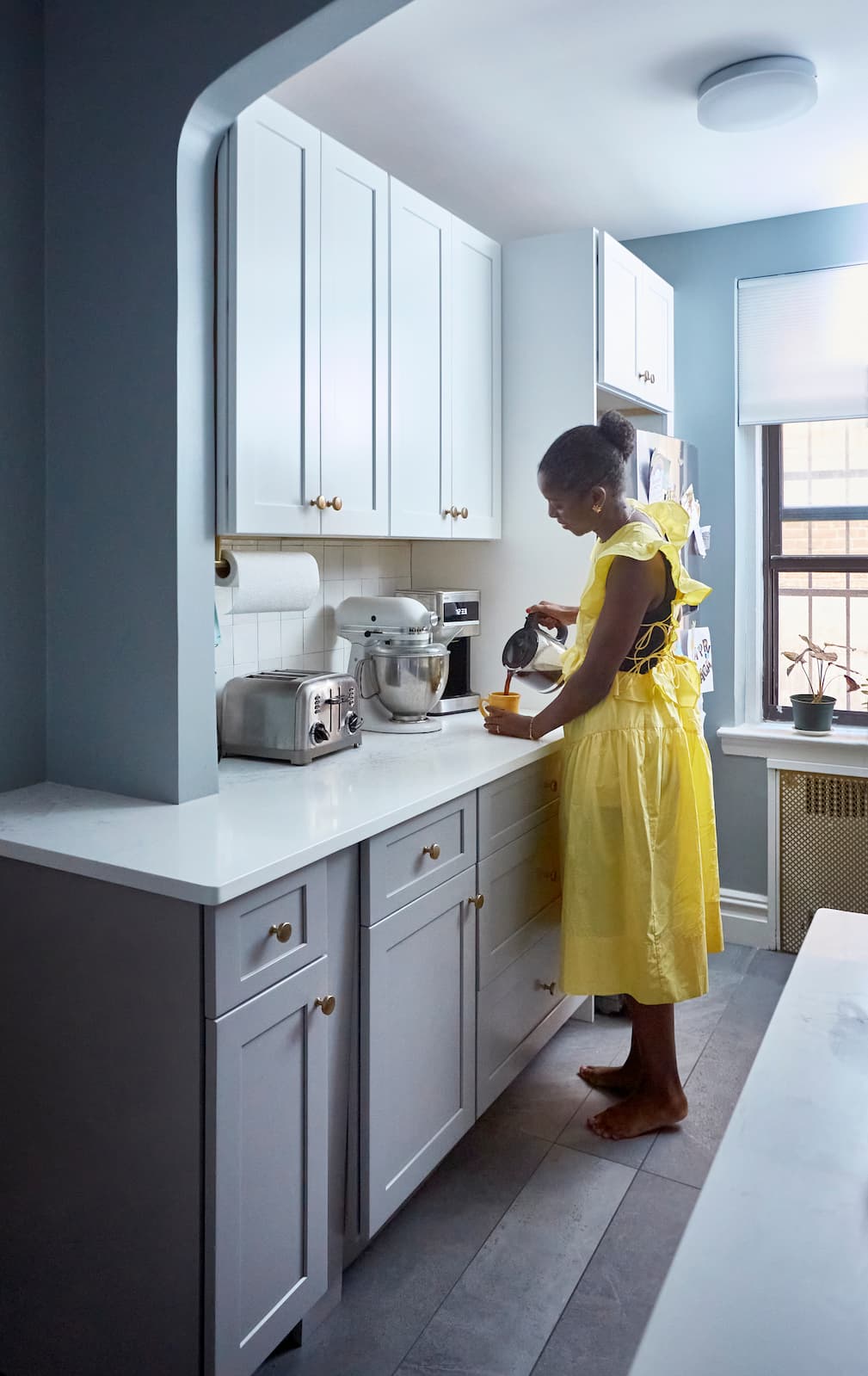
    Familty enjoying coffee in their newly renovated modern ktchen

    Enjoy peace of mind throughout your renovation

    Secure payment system puts you in control and protects your remodel

    Get Started

    Frequently asked questions

    What role would an interior designer play in a custom home build?

    An interior designer on a Jacksonville custom home build typically engages after architectural drawings are substantially complete, taking ownership of the finish selections that determine the home's aesthetic character and how enjoyable it is to live in day to day. Their scope covers flooring materials, tile design and layout, cabinetry style and hardware, paint and stain palettes, lighting fixtures, plumbing fixtures, and often furniture planning for primary rooms—a cumulative set of decisions that, done well, creates a unified experience and done poorly, feels disjointed despite significant spending. In Jacksonville's market, where custom homes often incorporate coastal material vocabularies—whitewashed oak floors, shiplap wall treatments, aged brass or matte black fixtures—a designer's ability to manage these references with restraint and sophistication is particularly valuable; the coastal aesthetic is easy to overdo and easy to execute generically, and a strong designer prevents both outcomes. Designers also bring product knowledge that helps clients navigate Florida-specific performance requirements—moisture-resistant flooring for homes with significant indoor-outdoor traffic, mold-resistant wall materials in humid spaces, and durable exterior finish choices that hold up in a salt-air environment. Many Jacksonville builders and architects work with established local design studios and can facilitate introductions, though homeowners should feel comfortable hiring based on portfolio alignment and personal chemistry as long as clear communication channels between the design and construction teams are established early in the project.

    What custom home features should I incorporate to boost resale value?

    In Jacksonville's custom home market, resale value is most consistently supported by features that address Florida's climate realities, the region's outdoor lifestyle, and the practical concerns of buyers in a coastal market with evolving flood and insurance dynamics. A well-designed pool with year-round functionality—heating for winter use, good circulation, and integration with the covered outdoor living area—is essentially expected in the custom segment and its absence will be noticed by buyers who've toured comparable homes. Impact-resistant windows and doors that exceed Florida's code minimums carry insurance premium advantages and appeal to buyers who understand the difference between code-compliant and genuinely resilient construction. Elevated foundation systems—designed to sit well above base flood elevation rather than merely at it—provide meaningful flood insurance savings and long-term insurability in an insurance market that is increasingly scrutinizing coastal and near-coastal properties. High-performance building envelopes with spray foam insulation reduce year-round air conditioning costs in a market where cooling runs from April through November—a concrete selling point to buyers who understand Jacksonville's utility cost environment. Screened enclosures, outdoor kitchens, and covered living areas that extend the outdoor season to twelve months add perceived value that translates directly into buyer enthusiasm during the showing process.

    Is it realistic to move into the home while part of it is still being built?

    In Florida, a certificate of occupancy is required before legal habitation, and Duval County and the surrounding county building departments enforce that requirement consistently—so early occupancy isn't a regulatory gray area but an actual legal boundary. Even after a CO is issued for a substantially complete home, moving into a space with active construction continuing elsewhere creates daily disruptions that most homeowners find more difficult than anticipated: construction dust that infiltrates finished spaces despite containment efforts, subcontractor traffic that compromises privacy and security, noise from ongoing work that disrupts remote work and sleep schedules, and the practical difficulty of organizing and furnishing a home that still doesn't feel finished. Florida's humidity adds a specific dimension—construction dust in a humid environment can create cleaning challenges that extend well beyond the final construction day, and moisture introduced during construction through open framing or incompletely dried concrete can affect indoor air quality in finished spaces if ventilation isn't managed carefully. The approach that experienced Jacksonville builders consistently recommend when timeline is genuinely constrained is phased occupancy—completing the primary bedroom wing, bathrooms, kitchen, and main living areas to full certificate of occupancy while deferring secondary spaces, garage finishing, landscape, and outdoor construction to a clearly defined subsequent phase with scope, timeline, and payment terms agreed to before occupancy begins. This approach keeps the lived-in portions of the home functional and organized while providing the construction team unimpeded access to remaining work.