





Working with Contractors
Is a Property Renovation Company Worth the Cost?
06.24.2026
.jpg?width=640&name=b97c58e1-30d5-4c11-980a-d6a4a41b7b30%20(1).jpg)
01.06.2026


In This Article
Bathroom remodels are often described as “small but expensive,” and labor is the main reason why. Even though bathrooms are among the smallest rooms in a home, they demand an outsized amount of skilled labor, coordination, and precision. Plumbing, electrical, tile installation, waterproofing, ventilation, drywall, carpentry, and inspections all converge in one tight space, often on a rigid sequence that leaves little room for error.
For most homeowners, labor represents roughly 40% to 65% of the total cost of a bathroom remodel, and in more complex projects, that percentage can climb higher. Understanding where that labor cost comes from—and why it varies so widely—is essential to planning realistically and evaluating contractor estimates with confidence.
Labor in a bathroom remodel is not just the visible work happening on-site. It includes a wide range of time-intensive tasks that are necessary to execute the project safely and correctly.
Labor costs typically cover:
Demolition and site protection: Removing old finishes, fixtures, and tile while protecting surrounding rooms, controlling dust, and handling debris.
Trade labor: Licensed plumbing, electrical, tile setting, carpentry, drywall, ventilation, and finishing work.
Preparation and substrate work: Framing adjustments, leveling floors and walls, cement board installation, waterproofing membranes, and surface prep.
Finish installation: Setting tile, grouting, painting, installing fixtures, trim, mirrors, and accessories.
General contracting and project management: Scheduling trades, coordinating inspections, supervising quality, managing timelines, and resolving issues.
Redesign and pre-construction planning: Layout revisions, construction drawings, code compliance adjustments, and permitting coordination.
Bathrooms require tight sequencing. One missed step—like an inspection delay or an incorrectly placed rough-in—can pause multiple trades and quickly increase labor hours.
Most full bathroom remodels are priced as a fixed bid. Contractors estimate labor hours by trade, factor in supervision and coordination time, and include contingency for unknowns. This approach provides predictability for homeowners but depends heavily on accurate upfront planning.
Hourly labor is more common for partial remodels, repairs, or exploratory work. Typical hourly rates include:
General labor or demo: $50–$100/hour
Licensed plumbers: $75–$150/hour
Licensed electricians: $65–$140/hour
While flexible, hourly pricing can escalate quickly if scope expands.
Bathroom labor costs are driven far more by scope and complexity than by square footage.
Light refresh (labor only): $3,000–$7,000: Includes limited demo, fixture swaps, painting, and minimal plumbing or electrical work.
Mid-range remodel (labor only): $7,000–$15,000: Full demo, retiling floors and shower, updated plumbing and electrical, ventilation work.
Full gut remodel with layout changes (labor only): $15,000–$30,000+: Extensive demo, plumbing relocation, full waterproofing, complex tile work, multiple inspections, and heavy coordination.
These ranbges vary significantly by region and by the amount of tile and waterproofing involved.
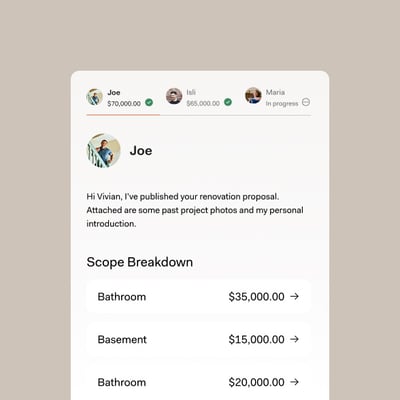
Compare Proposals with Ease
General contractor labor: the backbone of the project
A general contractor (GC) is responsible for far more than swinging a hammer. In a bathroom remodel, GC labor often includes:
Creating and managing the construction schedule
Coordinating plumbers, electricians, tile setters, and inspectors
Supervising workmanship and sequencing
Managing inspections and code compliance
Handling change orders and problem-solving
GC labor is often priced as 10%–25% of total project cost, or embedded into a fixed bid. While this can feel abstract, strong GC oversight reduces costly inefficiencies like trade conflicts, rework, and extended timelines.
In labor-heavy rooms like bathrooms, good coordination reduces total labor hours, even if it adds a dedicated management layer.
Redesign labor happens before construction but has a major downstream impact on labor costs.
Redesign labor may include:
Revising layouts or fixture placement
Producing construction-ready drawings
Adjusting plans for code compliance
Coordinating changes with permitting requirements
When redesign happens mid-project—after demolition or rough-in—it multiplies labor costs across multiple trades. Walls may need to be reopened, plumbing reworked, or tile layouts rethought. Investing in early planning is one of the most effective ways to control labor overall.
Bathroom labor costs are best understood by looking at the individual trades involved. While the exact mix varies by project, most bathroom remodels rely on the same core set of professionals, each contributing distinct labor requirements and costs.
Demolition labor in a bathroom remodel involves far more than removing finishes. Crews must carefully dismantle tile, fixtures, and flooring while protecting surrounding spaces from dust and damage. In older bathrooms, demolition often reveals thick mortar beds, multiple layers of flooring, or cast-iron tubs, all of which require additional time and effort to remove safely. These unknowns are a significant source of stress; 16% of homeowners identify the fear of 'surprise issues' behind walls as a major barrier to starting their project, as noted in how America renovates in 2026.
Labor for demolition and site preparation typically ranges from $1,000 to $3,000, depending on complexity, access, and disposal requirements.
Plumbing labor is one of the most significant contributors to bathroom remodeling costs. Even when fixtures remain in their original locations, plumbers must disconnect and reconnect supply lines, drains, and vents, often across multiple visits for rough-in and final installation. When fixtures are relocated, labor increases substantially due to added piping, venting adjustments, inspections, and coordination with other trades.
Plumbing labor commonly falls between $1,500 and $4,000, with higher costs for layout changes or older systems requiring upgrades.
Electrical labor in bathrooms must meet strict safety standards, including GFCI protection, moisture-rated fixtures, and proper ventilation wiring. Electricians typically handle lighting upgrades, outlet placement, exhaust fan wiring, and circuit adjustments, often returning for multiple phases of the project. Labor costs increase when new circuits are required or when existing wiring must be brought up to code. Electrical labor generally ranges from $1,000 to $3,500, depending on scope and site conditions.
Tile installation is often the single largest labor expense in a bathroom remodel. Tile setters are responsible for surface preparation, waterproofing steps, layout planning, cutting, setting, grouting, and curing time, all of which are labor-intensive. Small-format tile, mosaics, niches, benches, and fully tiled bathroom walls significantly increase labor hours due to the precision required.
Labor for tile installation typically runs $8 to $15 per square foot, with shower tile labor frequently landing between $2,000 and $5,000 or more for complex installations.
Drywall and finishing labor may appear minimal in a small bathroom, but the detail level required makes it time-consuming. This work includes repairing walls and ceilings after rough-ins, creating clean transitions where tile stops, and achieving smooth finishes suitable for paint. Carpentry labor covers vanity installation, trim work, door adjustments, and occasional framing corrections.
Combined drywall and carpentry labor often ranges from $1,000 to $3,000, depending on the extent of repairs and custom work.
Painting labor in bathrooms involves extensive preparation due to moisture exposure, tight corners, and frequent transitions between materials. Proper sanding, priming, caulking, and multiple finish coats are necessary to achieve a durable, even result. While the painted area may be limited, the labor intensity is relatively high.
Painting labor typically falls between $500 and $1,500, depending on wall condition and finish requirements.
Ventilation labor is commonly underestimated in bathroom remodels. Replacing or installing an exhaust fan may require attic access, new duct routing, roof or exterior wall penetration, and electrical coordination. Labor costs rise when duct runs are long or access is restricted.
Ventilation labor generally ranges from $500 to $2,500, depending on the complexity of the installation and building conditions.
Bathroom labor costs vary significantly across regions due to differences in wages, permitting requirements, market demand, and construction norms. In higher-cost metro areas, labor rates are driven up by cost of living, stronger union presence, and tighter competition for licensed trades, all of which increase hourly rates and minimum job costs. Permitting complexity and inspection timelines also play a role—regions with stricter building codes or longer approval processes require more administrative and coordination labor, even when the physical work is similar.
For example, a mid-range bathroom remodel in Tampa may benefit from lower average labor rates and fewer regulatory hurdles, helping keep labor costs comparatively moderate. In contrast, a similar bathroom project in Seattle often involves higher trade wages, stricter electrical and plumbing codes, and longer inspection timelines, all of which add labor hours. These differences illustrate how labor pricing is shaped as much by local conditions and regulatory environments as by the scope of the bathroom itself.
Renovation Studio is a planning and visualization tool designed to help homeowners make critical decisions before construction begins. Users can explore different materials, fixture placements, and tile coverage options upfront, ultimately providing clarity and reducing the likelihood of mid-project changes that drive up labor hours.
Just as importantly, Renovation Studio creates a shared reference point between homeowners, designers, and contractors. Clear visuals and defined layouts reduce miscommunication, help contractors price labor more accurately, and support tighter scheduling across trades. When everyone is working from the same plan, labor is spent on execution—not on clarifying intent or correcting misunderstandings.
Know the Cost Before You Start
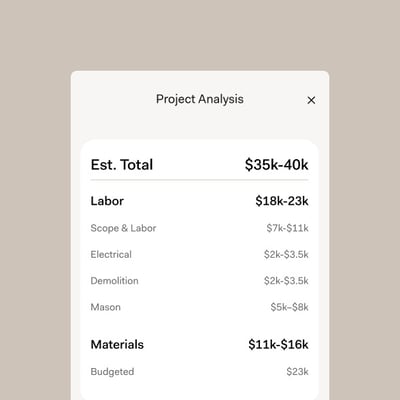
Why labor costs vary so much between similar bathrooms
Two bathrooms of similar size and layout can carry very different labor costs once real-world conditions are considered.
Layout changes versus existing layout: Keeping plumbing and electrical in their original locations significantly reduces labor because trades can work more efficiently and avoid rework. Moving fixtures introduces additional rough-in labor, inspections, and finish adjustments that quickly compound across trades.
Tile coverage and complexity: A bathroom with floor tile only requires far fewer labor hours than one with fully tiled bathroom walls or intricate shower surrounds. Small-format tile, mosaics, niches, and benches increase cutting, setting, and waterproofing time, driving labor costs upward.
Access and site conditions: Bathrooms located in walk-up buildings, condos with restricted work hours, or homes with limited staging space require more daily setup and cleanup. These logistical constraints add labor hours without increasing visible progress.
Age and condition of the home: Older homes often hide out-of-level floors, outdated wiring, or non-code plumbing that must be corrected once walls are opened. Addressing these issues adds unplanned labor that newer homes may not require.
Quality expectations and tolerance: Higher expectations for precision—tight grout lines, perfect tile alignment, flush transitions—require slower, more deliberate work. Labor costs rise when craftsmanship standards increase, even if the bathroom appears similar at first glance.
For related reading, check out Average Small Bathroom Renovation Costs and Budget Ranges.
Managing labor costs isn’t about finding the cheapest crew—it’s about making decisions that reduce unnecessary work and prevent expensive rework. Thoughtful planning, realistic expectations, and experienced oversight all play a role in keeping labor efficient without sacrificing quality.
Finalize layout and design before demolition: Locking in fixture locations, lighting plans, and tile layouts early prevents mid-project changes that force trades to redo completed work.
Keep plumbing locations when possible: Relocating drains and supply lines is one of the fastest ways to increase labor hours. Maintaining the existing layout allows plumbers and tile installers to work more efficiently.
Choose tile layouts with labor in mind: Intricate patterns and small tiles require significantly more installation time. Selecting layouts that balance aesthetics with practicality helps control tile labor costs.
Plan lighting and ventilation early: Electrical and ventilation changes affect multiple phases of construction. Early decisions reduce return visits and sequencing delays that add labor hours.
Work with experienced professionals who coordinate well: Skilled general contractors and trade partners minimize downtime between phases. Good coordination reduces wasted labor and keeps the project moving smoothly.
At Block Renovation, labor efficiency starts with planning. By aligning homeowners with vetted general contractors, Block helps keep labor focused on execution rather than correction. Clear timelines, defined scopes, and proactive coordination reduce the inefficiencies that drive labor costs upward.
Labor will always be a major part of a bathroom remodel—but with the right planning and oversight, it can also be the most predictable.
Remodel with confidence through Block

Connect to vetted local contractors
We only work with top-tier, thoroughly vetted contractors

Get expert guidance
Our project planners offer expert advice, scope review, and ongoing support as needed

Enjoy peace of mind throughout your renovation
Secure payment system puts you in control and protects your remodel


Renovate confidently with Block
Easily compare quotes from top quality contractors, and get peace of mind with warranty & price protections.
Working with Contractors
Is a Property Renovation Company Worth the Cost?
06.24.2026
Working with Contractors
What Renovation Experts Do Behind the Scenes
06.18.2026
Working with Contractors
Find the Right Gut Renovation Contractor For Your Project
06.11.2026
Working with Contractors
Pros and Cons of Hiring a General Contractor
06.01.2026
Working with Contractors
Six Alternatives to Angi (Formerly Angie’s List)
03.05.2026