




Maine
Lewiston Basement Renovation Costs, Options & Tips
03.19.2026
-1.png?width=640&name=u5821215421_a_slimline_basement_bar_with_mirrored_accents_com_e8ad2abc-9f7f-48ee-b25d-0f848a62caa5_2%20(1)-1.png)
02.18.2026


In This Article
In Portland, a basement renovation can turn underused square footage into a warmer, quieter place to work, host, or tuck away household clutter—especially in neighborhoods like Deering Center, Rosemont, and Munjoy Hill where lots can feel tight. The upside is real: a finished lower level can add function without changing your home’s footprint or yard.
That said, basement renovations Portland homeowners plan often run into the same recurring constraints: moisture, uneven slabs, low ceiling heights, and older mechanical layouts that were never designed around finished rooms. A smart plan anticipates those realities early so the “pretty” decisions—flooring, lighting, built-ins—don’t get derailed later by waterproofing or rerouting ductwork.
Turn your renovation vision into reality
Get matched with trusted contractors and start your renovation today!
Find a Contractor
Most Portland basements fall into one of three categories, and your current starting point heavily influences cost and timeline. Rough costs below assume typical Portland labor rates and materials for a 500–800 sq. ft. basement, but your specific home, scope, and existing conditions will push numbers up or down.
|
Basement type |
One sentence definition |
Cost range in Portland |
|---|---|---|
|
Unfinished |
Structural and utility space with exposed concrete, framing, and mechanicals. |
$10,000–$35,000 |
|
Partially finished |
A mix of finished zones and utility/storage areas, often with some existing walls or flooring. |
$35,000–$85,000 |
|
Fully finished |
Code-compliant living space with finished floors, walls, ceiling, lighting, and safe egress where required. |
$85,000–$175,000+ |
Unfinished basements keep the focus on durability and access rather than comfort. You might clean and seal the concrete floor, paint masonry walls, add brighter, safer lighting, and build sturdy shelving so you can actually use the space for storage, a workshop, or a small home gym without committing to full build-out. In Portland, this approach can be a practical first step if you are still monitoring seasonal dampness, dealing with minor seepage along the Back Cove side of town, or want to prioritize air sealing and mechanical upgrades before closing anything in.
Partially finished basements carve out one “real room” while protecting utility functions. A common Portland-friendly version is a media nook or office behind a moisture-tolerant wall system, with LVP flooring in the main activity area and a separate mechanical/storage bay left accessible with a simple painted ceiling. This option lets you invest in comfort—better lighting, more warmth underfoot, acoustic separation from the floor above—without paying to finish every last square foot, which can help keep costs in the mid-range rather than upper tier.
Fully finished basements are designed to feel like the rest of the home, but with basement-specific detailing. That usually means a continuous subfloor or insulated slab strategy, moisture-resistant drywall or wall panels, thoughtfully placed supply and return vents, and a ceiling approach that balances headroom with future access. When homeowners plan a basement remodel Portland projects often aim for—guest space, family room, or ADU-like flexibility—this is the tier that supports it best and also triggers more permitting, egress, and code conversations with the city.
Before you choose paint colors or a sofa, you need a clear read on what your existing basement is already telling you—staining on the slab, salt deposits on foundation walls, or musty odors after a nor’easter. In Portland’s freeze-thaw cycle and coastal humidity, small water and air issues can snowball quickly once walls and floors are enclosed.
Start with water, radon, and structure, because those issues affect every layout and finish choice. In many Portland neighborhoods with older homes, you may be looking at original stone or early concrete foundations, and fixing drainage or adding interior perimeter drains can absorb a meaningful share of the budget but dramatically improve long-term comfort.
A knowledgeable contractor can help you sort which problems need full remediation versus simple detailing changes, like relocating a supply run, adding a dedicated dehumidifier, or using vapor-open wall assemblies. For basement renovations Portland homeowners are considering, getting multiple estimates that clearly separate waterproofing, mechanical work, and finish work makes it much easier to compare real scope—and avoid surprise change orders halfway through.

“A general contractor’s job is managing risk, schedules, and trades—not doing the labor themselves.”
Basements need materials that can handle cooler surfaces, occasional humidity spikes, and the reality that you may need future access to plumbing, wiring, or foundation walls. The aim is to build a space that feels like a true extension of your home while still behaving like a basement where it counts.
Basement floors in Portland often feel cool underfoot, and even a “dry” slab can transmit moisture vapor, especially in late summer. Flooring needs to be stable and forgiving. You also want to think about comfort: what will feel good in January, when the slab is cold and you are running heat hard.
Avoid traditional solid hardwood and most wall-to-wall carpet in below-grade spaces, because both can trap moisture and amplify odor if Portland’s summer humidity spikes or if groundwater levels rise. If you want softness, use washable area rugs over a resilient surface instead of committing to carpet padding that can hide slow leaks or condensation.
Basement walls in Portland benefit from assemblies that can dry and that do not rely on ideal conditions to stay healthy. Your best options also make it easier to service foundation walls or spot a problem early, which matters in older homes where foundations can move slightly over time.
In many Portland basements, it also makes sense to keep at least one wall “service-friendly,” especially on the side where your main water line, sewer cleanout, or oil lines enter, so you are not cutting through finished walls during a future emergency.
Ceilings are where many Portland basements either feel tight or feel surprisingly livable. Decide early what you are optimizing for: height, access, or acoustic control. In older homes in areas like Oakdale or Parkside, a couple of inches at the ceiling can be the difference between a space that feels compressed and one you actually enjoy using.
In Portland’s mixed housing stock, it is common to combine approaches: drywall over main living zones for a polished feel, with a coordinated drop or open ceiling over mechanical corridors and bathrooms where access matters most.
Basement design lives and dies by the details you do not notice at first glance: where air moves, how light spreads, and whether doors swing into tight spots. Those small decisions add up to a space that feels calm and “finished” instead of like an afterthought squeezed in around the boiler.
Compare Proposals with Ease
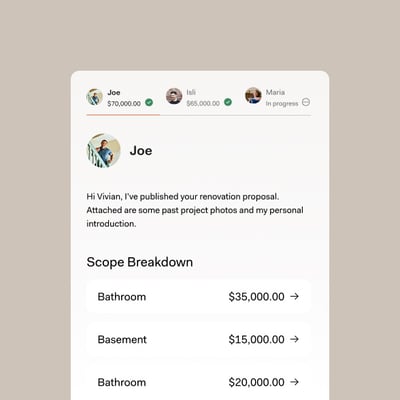
Renovation Studio is Block Renovation’s planning tool that helps you visualize and configure your renovation before construction begins. It lets you explore design options and layouts in a guided way, so you can make decisions earlier instead of guessing how pieces will come together. For a Portland basement renovation, that can mean testing different flooring and wall finish combinations, trying out lighting approaches, and comparing alternative layouts for a TV wall, desk area, or storage runs. You can also use it to align on a clear scope—what is included, what is optional—so expectations are set before the project moves forward.
Defining the basement’s purpose early forces the right tradeoffs: where to spend for comfort, where to stay flexible for access, and how to route lighting and mechanicals without sacrificing headroom. It also keeps the design from drifting into a generic “bonus room” that does not quite work for how Portland households actually live.
A basement office belongs downstairs because it is physically separated from the busiest parts of the home, which matters when calls overlap with cooking, pets, or kids getting ready. Portland homes with narrower footprints often do not have a spare bedroom to sacrifice, and carving out office space on the main floor can make traffic pinch points worse. A basement office sidesteps the cost and permitting complexity of an addition while still giving you a door you can close.
A basement guest setup makes sense because it can offer privacy for both hosts and visitors, especially when upstairs bedrooms are closely clustered. In Portland, where many early-20th-century homes have modest bedroom counts, a lower-level suite can handle holidays without forcing a main-floor reshuffle. Done carefully with egress and ventilation in mind, it can also be a less expensive alternative to moving for one extra bedroom.
Basements are well suited to laundry and storage because they are already where plumbing, drains, and mechanical systems tend to live in many Portland houses. When the main floor is tight and closets are limited, a well-designed basement utility zone can take pressure off every other room. It is also a practical way to avoid expensive main-floor reconfiguration—like stealing space from a kitchen or mudroom—just to gain cabinets and hampers.
Block Renovation matches you with a vetted contractor for your project, helping you find a pro who fits your scope and timeline in Portland. You will share your goals and constraints so the team can align the right expertise, whether you are finishing a damp-prone lower level or reworking an older layout. This approach can be especially helpful when a basement remodel Portland homeowners want depends on tight coordination between waterproofing, mechanicals, and finishes.
Block also offers Protections and a systemized payments process designed to make the renovation experience more predictable. Those structured payments are tied to the project so you are not guessing when and how funds move as work progresses.
Remodel with confidence through Block

Connect to vetted local contractors
We only work with top-tier, thoroughly vetted contractors

Get expert guidance
Our project planners offer expert advice, scope review, and ongoing support as needed
Enjoy peace of mind throughout your renovation
Secure payment system puts you in control and protects your remodel

Renovate confidently with Block
Easily compare quotes from top quality contractors, and get peace of mind with warranty & price protections.