




Flooring
Wood Floors in Bathrooms: Pros, Cons & Is It a Good Idea
07.14.2026
12.18.2025


In This Article
Finding the best flooring for your basement is about balancing practicality, durability, and style. Unlike above-ground spaces, basements face unique challenges, such as higher humidity, the potential for water intrusion, and limited natural light. Choosing the wrong material can lead to frequent repairs, uncomfortable living spaces, or even costly damage.
Fortunately, advances in flooring materials mean you don't have to compromise on appearance or comfort when selecting the ideal option. Taking factors like moisture resistance, maintenance requirements, and your planned use for the space into account is key to a successful remodel. With some planning, your basement can become as attractive and functional as any other room in your home.
Before investing in new basement flooring, it’s crucial to ensure your foundation is dry, stable, and prepared for installation. Even the highest quality flooring won’t last long if your basement has existing water issues or structural vulnerabilities. Taking the time to address preventive measures up front sets the stage for a durable, worry-free basement upgrade.
Check these before laying your basement floor:
Inspect your basement for water leaks or damp spots on floors and walls.
Ensure your sump pump and drainage systems are working properly.
Fill foundation cracks and repair damaged concrete.
Test for excess humidity and consider a dehumidifier if needed.
Use a moisture barrier if your flooring requires it.
Renovate with confidence every step of the way
Step 1: Personalize Your Renovation Plan
Step 2: Receive Quotes from Trusted Contractors
Step 3: Let Us Handle the Project Details

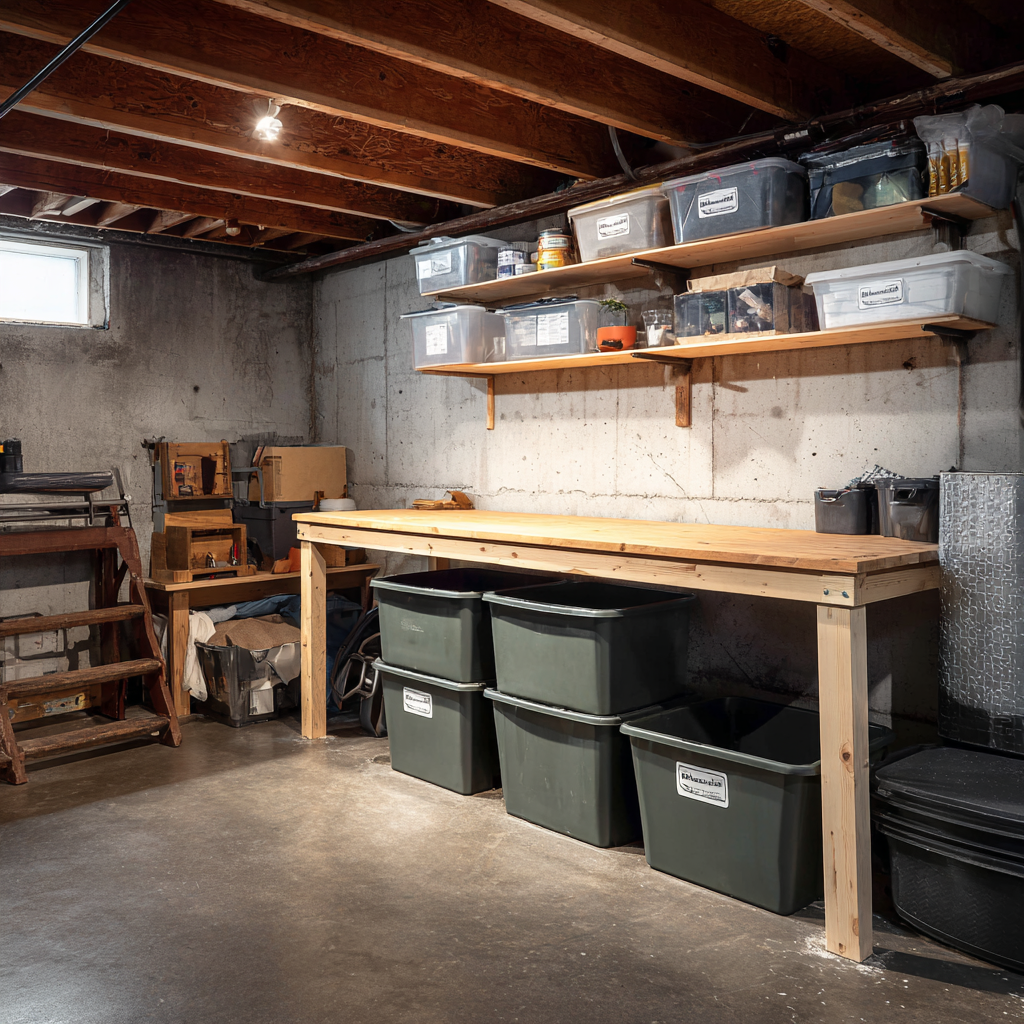
In unfinished or partially finished basements, moisture resistance and durability should be priorities for any flooring you choose. After all, these environments are prone to temperature fluctuations and occasional dampness, so flooring needs to stand up to challenging conditions while still looking presentable. The right materials make the space more functional—whether for laundry, storage, or a project workspace.
|
Basement Floor Material |
Pros |
Cons |
|
Stained/Sealed Concrete |
Durable, low-maintenance |
Hard, can feel cold |
|
Vinyl Plank/Flooring |
Water-resistant, versatile |
Needs smooth subfloor |
|
Ceramic or Porcelain Tile |
Waterproof, long-lasting |
Cold underfoot, grout can stain |
|
Epoxy Coating |
Seals concrete, easy to clean |
Professional installation required |
Stained or sealed concrete is a practical choice for unfinished basements due to its resilience and minimal upkeep requirements. By applying a stain, you can enhance the appearance of the bare concrete with subtle color and depth, while a quality sealer protects against moisture and staining.
This common basement flooring option stands up well to heavy use, makes clean-up simple, and doesn’t harbor mold or mildew. Its main drawback is comfort—concrete remains hard and often cold regardless of surface treatment, so it may not be ideal for spaces intended for frequent barefoot use. Still, for storage and work areas, its toughness is unmatched.
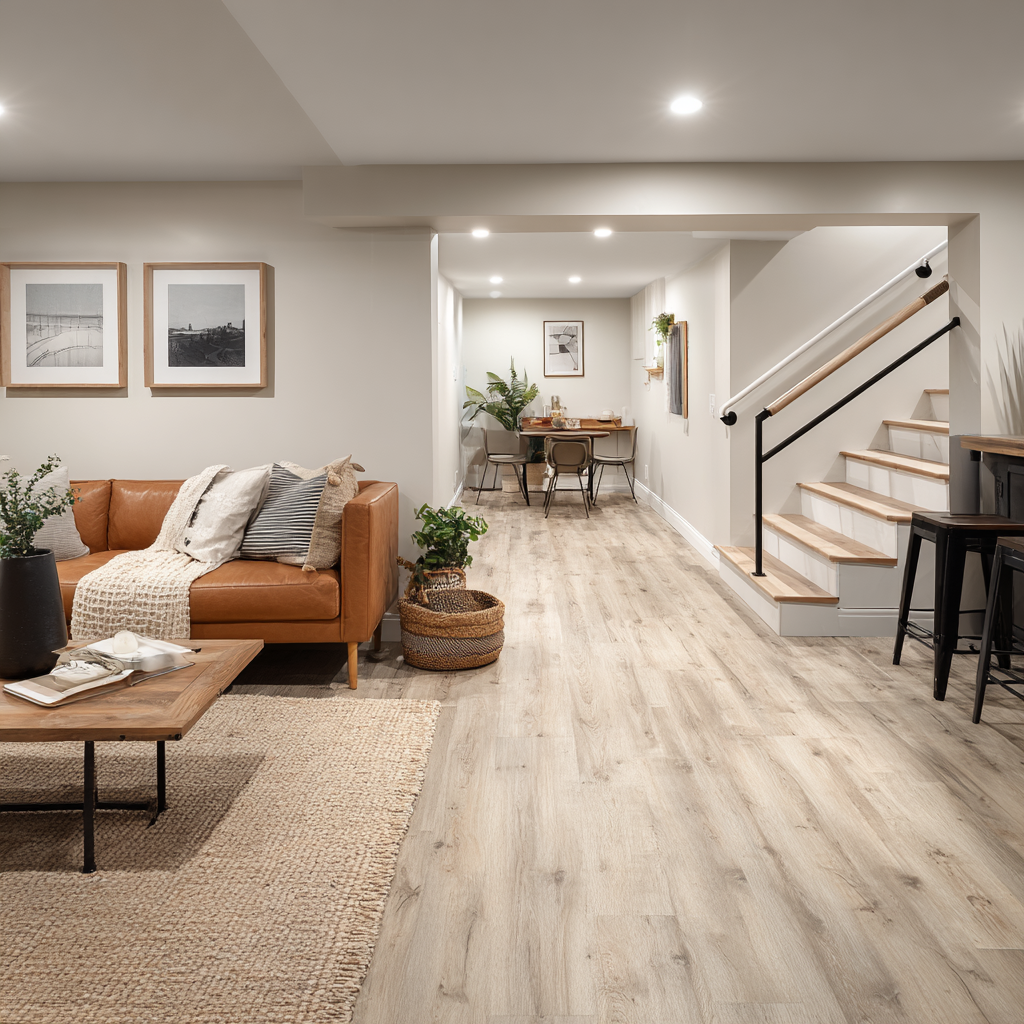
Vinyl flooring is a leading option for basements because of its water resistance, design flexibility, and relatively comfortable surface. Plank and sheet vinyl come in a wide variety of wood-look and stone-look finishes, allowing you to personalize your space’s appearance while knowing your flooring will withstand spills, humidity, and frequent cleaning.
Vinyl installs over a properly prepared, smooth subfloor; if your concrete is uneven or cracked, additional leveling may be necessary to ensure a flawless result. This flooring is also softer and warmer than bare concrete, but it can be punctured by sharp objects and may not mask subfloor imperfections.
For unmatched durability and true waterproofing, ceramic or porcelain tile is a smart investment for basements, especially in areas prone to standing water, like laundry rooms or utility spaces. These tiles come in many colors, textures, and sizes, making design customization nearly limitless.
Once installed, tile will last for decades and is virtually impervious to moisture when paired with waterproof grout. On the downside, tile is hard underfoot and feels especially cold in below-grade spaces, and grout lines may require occasional maintenance and sealing to prevent staining.
Epoxy is a robust, seamless flooring solution applied as a thick liquid that cures into a high-gloss, chemical- and water-resistant finish. A professionally-applied epoxy floor can dramatically brighten a basement with its reflective quality and custom color options, while offering easy cleaning and exceptional resistance to heavy wear. Because proper preparation and installation are vital, this option is best executed by experienced contractors. Epoxy can sometimes be slippery when wet and is unforgiving of imperfections in the underlying concrete unless these are corrected first.
Design a Home That’s Uniquely Yours
Block can help you achieve your renovation goals and bring your dream remodel to life with price assurance and expert support.
Get Started
Finished basements offer an opportunity to enhance your home’s usable living space with warmth, comfort, and style. With good waterproofing and climate control in place, homeowners can prioritize appearance and comfort while still considering long-term durability. The best basement flooring for finished spaces ideally balances resilience, design, and day-to-day comfort.
|
Basement Flooring Material |
Pros |
Cons |
|
Engineered Hardwood |
Stylish, dimensionally stable |
Not fully waterproof |
|
Luxury Vinyl Plank/Tile |
Realistic wood/stone aesthetics, water resistant |
Can scratch with heavy use |
|
Carpet (Synthetic fiber) |
Warm, sound dampening |
Susceptible to moisture/stains |
|
Laminate |
Budget-friendly, easy to maintain |
Not ideal for wet basements |
Engineered hardwood is a sophisticated choice ideal for dry, finished basements. With a veneer of real hardwood bonded over a stable plywood or fiberboard core, engineered wood tolerates humidity swings better than solid hardwood. When installed over an appropriate moisture barrier and subfloor, it provides authentic warmth, timeless appeal, and a comfortable walking surface.
However, it is not recommended for areas at risk of flooding or plumbing leaks, as significant water exposure can cause warping. Maintenance is similar to other hardwood floors—quickly wipe up spills and keep humidity controlled.
Luxury vinyl planks (LVP) and tiles (LVT) are among the most versatile and popular choices for finished basements. These products convincingly mimic the appearance and texture of natural wood or stone while offering superior water and scratch resistance. Luxury vinyl is easy to clean and maintain, available in a vast range of styles, and provides some cushion underfoot—making it especially suitable for family or entertainment spaces. While it stands up well to everyday use, dragging heavy furniture can leave permanent indentations or scratches. As with other resilient floors, a well-leveled subfloor enhances longevity and looks.
Indoor carpet is unbeatable for adding warmth, comfort, and sound absorption to a finished basement—making it an inviting choice for family rooms, bedrooms, or play spaces. Synthetic options like solution-dyed nylon or polyester resist moisture better than natural fibers and can be paired with moisture-resistant padding. Carpet tiles are worth considering for basements, since they allow for targeted replacement in case of minor spills or staining. However, all carpet is susceptible to absorbing moisture, raising concerns in basements where humidity isn’t well controlled, and regular cleaning is necessary to avoid odors or mildew.
Laminate flooring offers a cost-effective way to achieve the look of wood in below-grade spaces and has improved in resilience and design over the years. Its sturdy wear layer protects against scratches and fading, and its “floating” installation makes it compatible with basement subfloors. Nonetheless, even modern water-resistant laminate is not waterproof—prolonged moisture will cause swelling or damage. For best results, use laminate only in well-sealed, dry basements, and always use a vapor barrier underlayment to mitigate the risk of trapped moisture.
Transparent Pricing You Can Trust

When it comes to basements, there’s no one-size-fits-all answer for flooring. Evaluate your basement’s unique conditions, future maintenance needs, and the overall vision you have for the space before choosing a material.
Different basement uses call for different flooring priorities. A home gym, for example, benefits from shock-absorbing flooring that protects equipment and reduces noise, while a guest-bedroom conversion requires something warm, soft, and inviting—like carpet or luxury vinyl. If you’re building a family game room, resilience and easy cleaning may be your biggest concerns, making vinyl or tile excellent choices. Think through how each area will be used, since this impacts both comfort and long-term satisfaction with your investment.
Installing a bathroom in your basement makes flooring choices even more critical. Areas exposed to water or steam should receive truly waterproof options, such as ceramic tile or luxury vinyl tile, and an expertly installed subfloor and moisture barrier are essential. Considering these factors upfront will prevent water-related issues and costly repairs down the road. For more insights, read How To Build A Bathroom In A Basement.
Basements are naturally cooler and often have harder surfaces than above-ground rooms, which can impact comfort and energy efficiency. Selecting flooring with insulating qualities, such as carpet, luxury vinyl with attached underlayment, or even engineered wood, can significantly improve underfoot warmth. Some materials can also muffle sound and create a quieter, more enjoyable space for relaxing or entertaining. Adding area rugs or padded underlayments can further increase comfort, especially in spaces used for play or recreation.
Flooring brings both upfront and long-range costs—cheaper options may need earlier replacement, while more durable, higher-quality materials often prove a better investment over time. Consider installation, potential repairs, and the longevity of your chosen flooring as part of your budgeting process.
Fully renovating your basement can add valuable living space and boost your home’s comfort, but it comes with unique considerations from budgeting to design choices. Here’s what to know, along with practical guides and tools to make your project easier:
The Complete Guide to Basement Remodel Costs - This guide breaks down what drives the price of a basement renovation, including waterproofing, insulation, and finishing. It provides sample budgets, tips for saving, and explains how costs can vary widely depending on your layout and material choices.
Basement Ceiling Options: Ideas, Costs & Solutions - Explore different basement ceiling styles, from classic drywall to exposed beams and drop ceilings, along with their advantages and price ranges. The article also highlights moisture considerations and how the right ceiling choice affects lighting, sound, and maintenance.
Basement Remodel AI Designer Tool - Block’s AI-powered designer allows you to visualize and plan your basement renovation online, mixing different finishes and layouts before you start building. It generates instant previews and estimate ranges, making it easier to clarify your goals and share ideas with your contractor.
Upgrading your basement flooring is one of the most impactful ways to expand and elevate your home’s livable space. Block Renovation is here to connect you with trusted contractors who combine expert installation with quality materials. Our network extends nationally, allowing us to find the best basement contractors anywhere from St. Louis, Missouri to Portland, Maine.
Whether your vision is a cozy retreat, a family-friendly hangout, or a functional utility area, Block Renovation can help make your dream basement a reality—seamlessly, professionally, and with results you’ll enjoy for years to come.
Remodel with confidence through Block

Connect to vetted local contractors
We only work with top-tier, thoroughly vetted contractors

Get expert guidance
Our project planners offer expert advice, scope review, and ongoing support as needed
Enjoy peace of mind throughout your renovation
Secure payment system puts you in control and protects your remodel


Renovate confidently with Block
Easily compare quotes from top quality contractors, and get peace of mind with warranty & price protections.
Flooring
Wood Floors in Bathrooms: Pros, Cons & Is It a Good Idea
07.14.2026
Flooring
Cheap Flooring: Best Budget Options and the Risks
07.04.2026

Flooring
Engineered Wood Flooring vs Laminate: Cost & Durability
07.02.2026
Flooring
Flooring Made in USA: Hardwood & Engineered Wood Brands
07.01.2026
Cost
Radiant Floor Heating Cost in 2026: Bathrooms & More
06.27.2026