



Flooring
Cheap Flooring: Best Budget Options and the Risks
07.04.2026
01.06.2026


In This Article
Marble has long been associated with elegance, light, and timeless design. Its veining, variation, and natural depth give floors a sense of movement that few materials can replicate, making it a favorite in both classic and contemporary interiors. For many homeowners, marble represents a finish that immediately elevates a space.
That appeal often comes with tradeoffs. Natural marble flooring can cost $15–$40 per square foot for the material alone, with installed costs climbing significantly higher depending on slab selection and labor. Beyond price, marble requires regular sealing and is vulnerable to scratching, staining, and etching—especially in high-traffic areas.
Fortunately, there are alternative materials that deliver the visual effect of marble without many of its drawbacks. Advances in manufacturing have made faux marble flooring more convincing, durable, and accessible than ever. These materials allow homeowners to achieve a marble-like look while staying within budget and reducing maintenance demands.
Perfect Every Detail of Your Bathroom
Faux marble refers to materials that are designed to replicate the look of natural marble without being quarried stone. These alternatives use printing, casting, or engineered surfaces to mimic marble’s veining, color variation, and overall aesthetic. While faux marble doesn’t behave exactly like real stone, many options outperform marble in durability, moisture resistance, and ease of maintenance.
The right faux marble depends on what you’re prioritizing—cost, performance, or realism. This table offers a quick way to narrow down the best material for your needs.
|
Finding the marble alternative |
Faux marble recommendations |
What to look for |
|
For budget-conscious renovations |
Ceramic marble-look tile, laminate flooring |
Prioritize affordability and simple installation over ultra-realistic veining |
|
For waterproofing needs |
Porcelain marble-look tile, luxury vinyl tile (LVT) |
Choose non-porous materials rated for wet areas |
|
For high-traffic areas |
Porcelain tile, sintered stone |
Focus on hardness, scratch resistance, and slip ratings |
|
For low maintenance |
Porcelain tile, LVT |
Select materials that don’t require sealing or specialty cleaners |
|
For realistic marble appearance |
Porcelain slab tile, sintered stone |
Larger formats and high-resolution printing improve realism |
|
For comfort underfoot |
Luxury vinyl tile, resin flooring |
Softer materials feel warmer and reduce fatigue |
To learn more about flooring options, read The Best Materials for Bathroom Floor Tiles and Design Ideas That Incorporate Black Bathroom Floor Tiles.
Porcelain tile is one of the most popular faux marble flooring options available today. Advanced printing technology allows manufacturers to closely replicate marble veining, tonal variation, and depth. Large-format porcelain tiles also minimize grout lines, helping floors read more like stone slabs.
How this faux marble compares to real marble:
Porcelain is far more durable than marble and resists staining, scratching, and moisture. While it lacks marble’s natural crystallization, it performs better in kitchens, bathrooms, and entryways.
Cost range:
$5–$15 per square foot (material only)
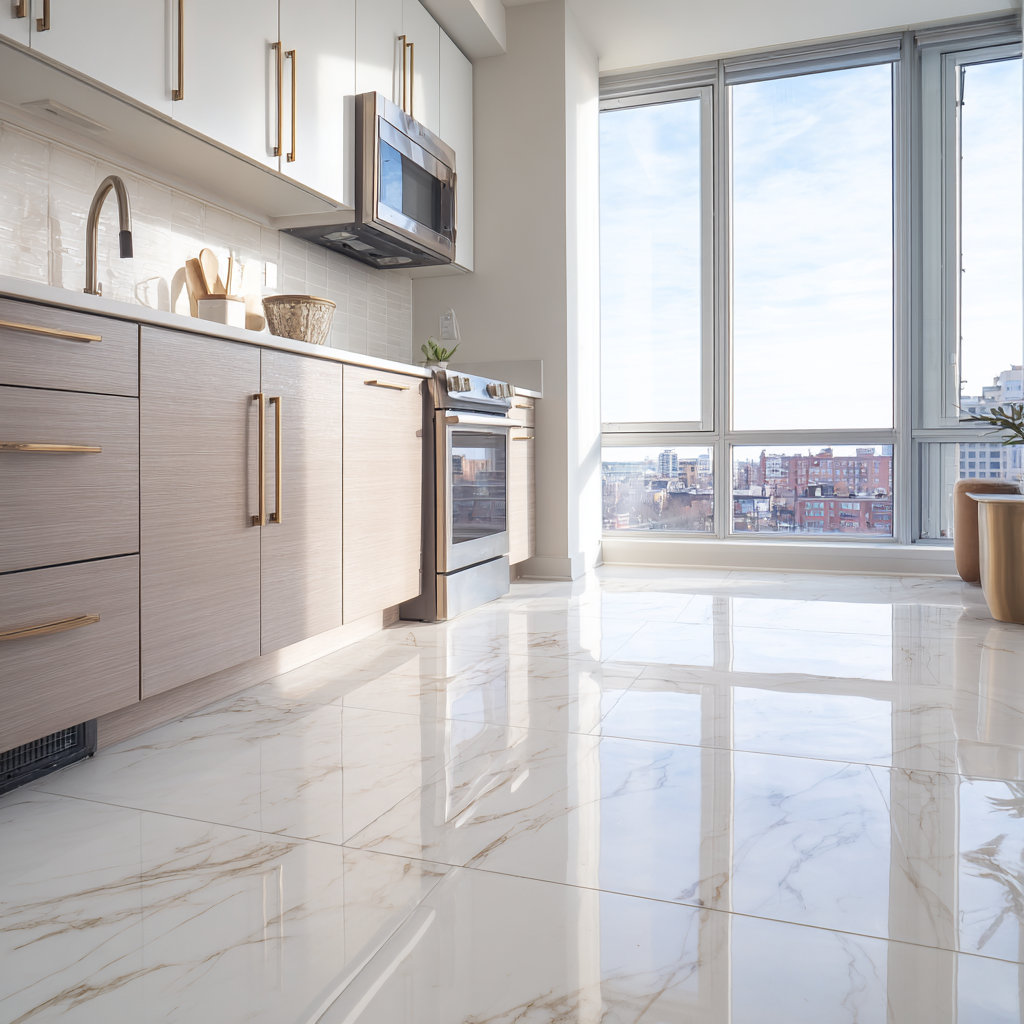
Ceramic marble-look tile
Ceramic marble-look tile offers a lighter-weight and often more affordable alternative to porcelain. It’s commonly used in spaces where extreme durability isn’t required. Styles range from subtle Carrara-inspired looks to bold, high-contrast patterns.
How this faux marble compares to real marble: Ceramic tile captures marble’s visual style but is less dense and more prone to chipping. It’s best suited for lower-traffic areas rather than heavy-use floors.
Cost range: $3–$10 per square foot (material only)
Luxury vinyl tile has become increasingly popular for faux marble flooring due to its versatility. It’s water-resistant, comfortable underfoot, and easier to install than tile. Marble-patterned LVT is often used in basements, apartments, and multi-level homes.
How this faux marble compares to real marble: LVT offers superior moisture resistance and comfort but doesn’t replicate the cool feel or sharp detail of stone. It’s visually convincing from a distance but less so up close.
Cost range: $2–$8 per square foot (material only)
Laminate flooring can be manufactured with marble-inspired designs using a printed surface layer. It’s frequently chosen for budget-driven renovations where moisture exposure is limited. Installation is typically faster and less expensive than tile.
How this faux marble compares to real marble: Laminate is far less durable than marble and sensitive to water, but it delivers a marble-like appearance at a low price point. It works best in dry, low-traffic spaces.
Cost range: $1.50–$6 per square foot (material only)
Sintered stone is created by compressing minerals under extreme heat to form dense slabs. Many products are designed to closely resemble marble, including dramatic veining patterns. These materials are often used in high-end residential and commercial spaces.
How this faux marble compares to real marble: Sintered stone is harder, non-porous, and significantly more durable than marble. While it lacks natural variation, it excels in performance and longevity.
Cost range: $12–$30 per square foot (material only)
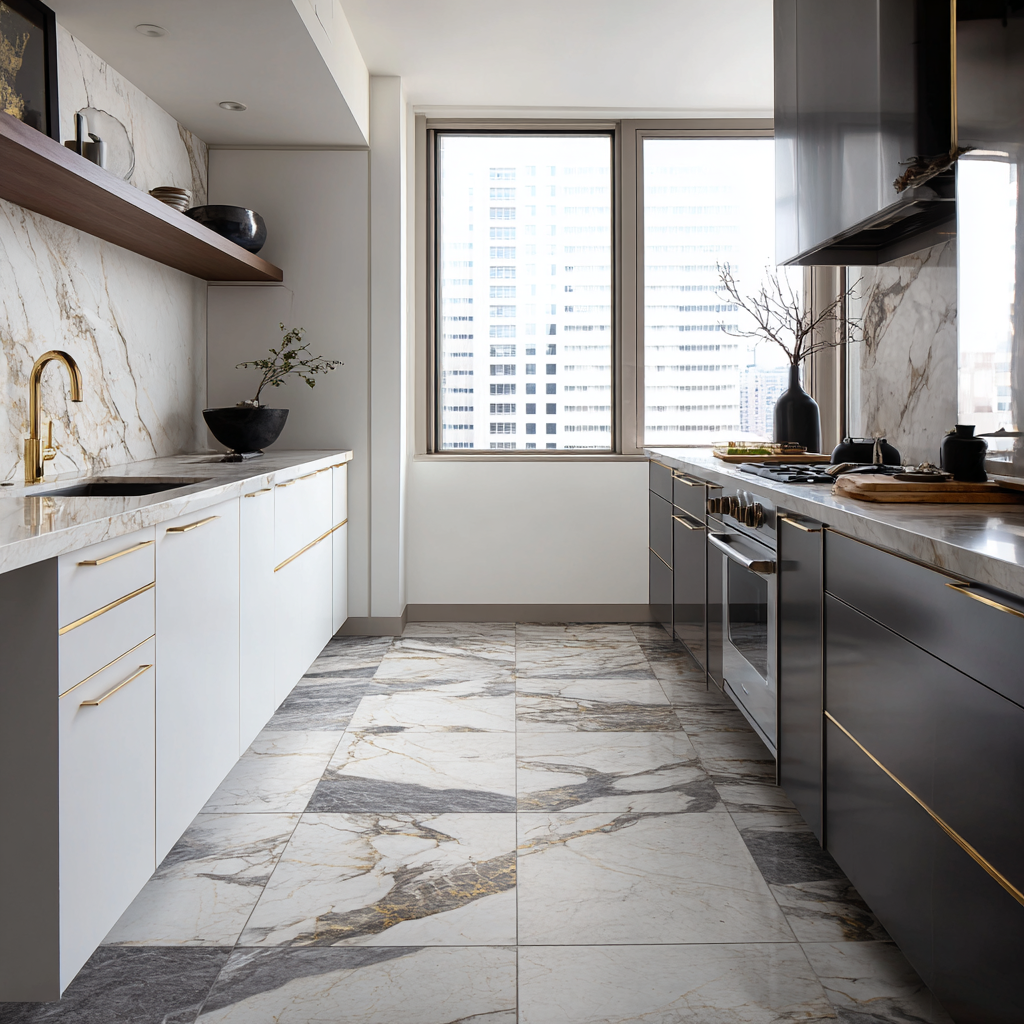
Epoxy and resin flooring systems can be poured and manipulated to create flowing, marble-like patterns. These floors are seamless and often used in contemporary or industrial interiors. The final look depends heavily on installer skill.
How this faux marble compares to real marble: Resin floors mimic marble’s movement but not its texture or feel. They are waterproof and durable, though distinctly modern in appearance.
Cost range: $7–$20 per square foot (installed)
Solid surface flooring is made from a blend of minerals and resins that create a dense, uniform material. While traditionally used for countertops, some manufacturers produce solid surface slabs and tiles suitable for flooring applications. Marble-inspired versions feature soft veining and tonal variation rather than high-contrast patterns, giving them a clean, modern look.
One of the biggest advantages of this faux-marble flooring is its seamless appearance. Joints can be minimized or nearly invisible, which helps the floor read as a continuous surface rather than individual tiles. The material is also non-porous, making it resistant to stains and easy to clean.
How this faux marble compares to real marble:
Solid surface flooring lacks the natural crystallization and depth of real marble, but it offers far greater consistency and predictability. It doesn’t require sealing, is less prone to staining, and can often be repaired if scratched, making it more forgiving for everyday use.
Cost range:
$10–$25 per square foot (material only)
Faux marble works best when it’s treated as a foundational design element rather than a background finish. Because the veining already introduces movement, the surrounding materials should support it instead of competing for attention. Thoughtful restraint helps faux marble feel intentional and elevated rather than busy.
Let faux marble act as the visual anchor. When marble-look flooring is present, it should set the tone for the rest of the room. Keep other surfaces—like cabinetry fronts or large furniture pieces—relatively simple so the veining has space to read clearly.
Balance cool tones with warmth. Faux marble often leans cool, especially whites and grays. Introducing warm woods, woven textures, or brass and bronze finishes helps prevent the space from feeling sterile or overly sleek.
Be selective with pattern mixing. Pair faux marble with solids or subtle textures rather than bold prints. If you introduce additional patterns, keep them smaller in scale and secondary in placement to maintain visual hierarchy.
Choose grout that supports the illusion. Grout that closely matches the base color of the tile creates a more continuous, slab-like look. High-contrast grout tends to break up the surface and emphasize the fact that it’s tile rather than stone.
Scale veining to the room size. Larger, more dramatic veining works best in spacious rooms where it can be appreciated from a distance. Smaller rooms benefit from finer, quieter patterns that don’t overwhelm the space.
Coordinate finishes across the room. Echo the marble’s undertones in paint colors, hardware, or accessories to create cohesion. Pulling subtle gray, cream, or taupe notes from the tile helps everything feel connected.
Mind the finish level. Matte or honed-look faux marble tends to feel more contemporary and forgiving, while polished looks skew more formal. Choose a finish that aligns with the overall mood of the space.
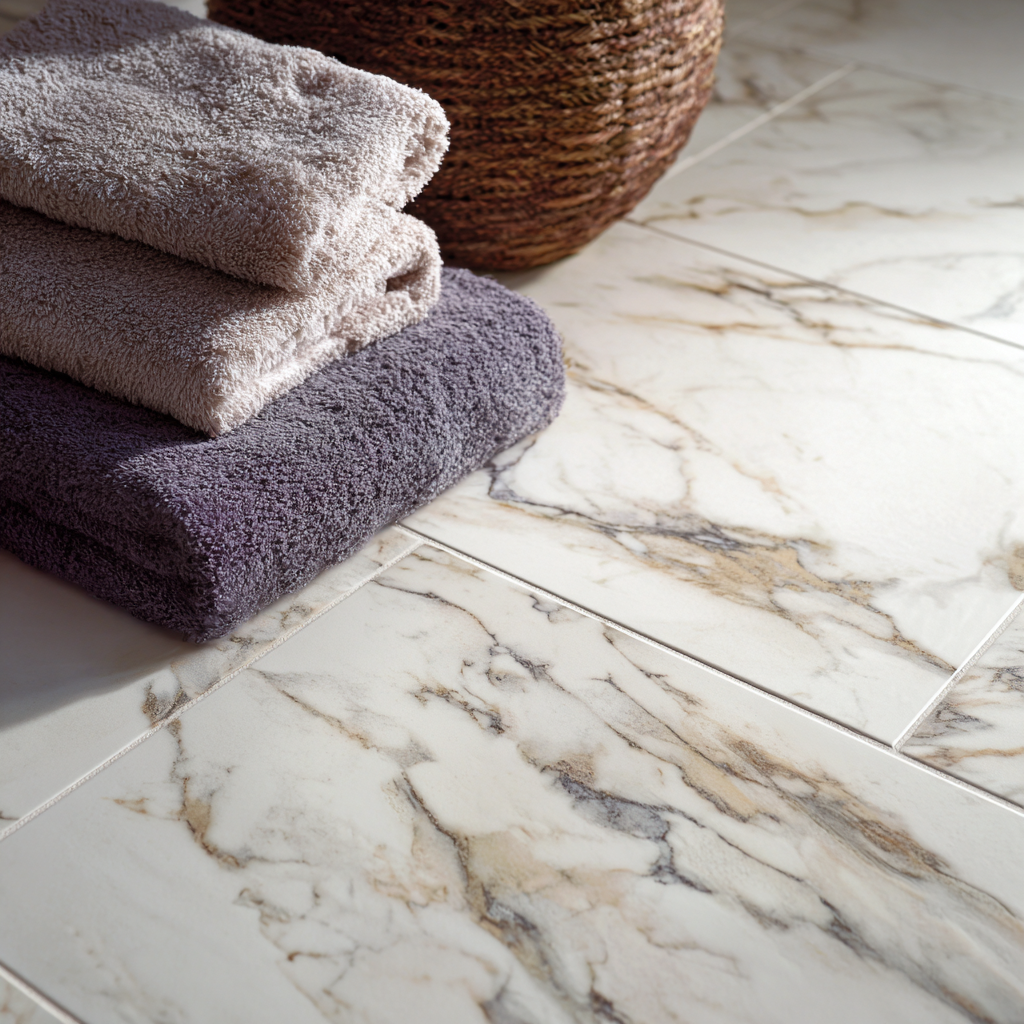
Visualizing materials in context can make decision-making easier. Renovation Studio allows homeowners to see how faux marble flooring looks in kitchens, bathrooms, living spaces, and beyond. This helps compare finishes, lighting, and layout before committing to materials. Seeing options side by side reduces uncertainty and supports confident design choices.
Selecting the right flooring is only part of a successful renovation. Proper installation, coordination, and planning determine how materials perform over time. Block Renovation connects homeowners with vetted contractors and clear project scopes, helping ensure your faux marble flooring looks polished and intentional. With the right execution, marble-inspired floors can deliver both style and practicality for years to come.
Remodel with confidence through Block

Connect to vetted local contractors
We only work with top-tier, thoroughly vetted contractors
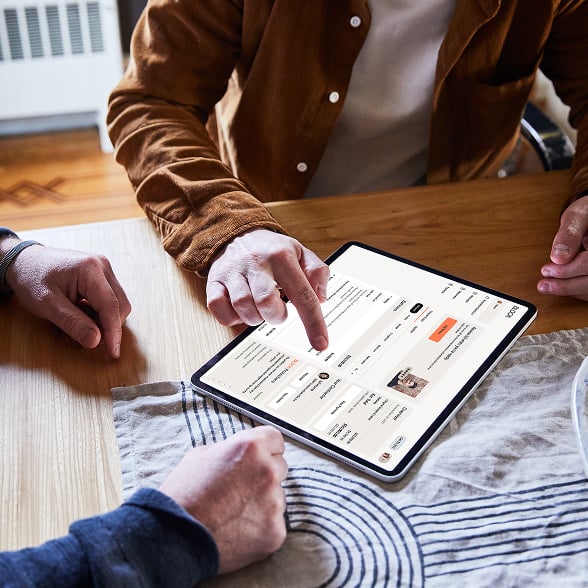
Get expert guidance
Our project planners offer expert advice, scope review, and ongoing support as needed
Enjoy peace of mind throughout your renovation
Secure payment system puts you in control and protects your remodel

Renovate confidently with Block
Easily compare quotes from top quality contractors, and get peace of mind with warranty & price protections.
Flooring
Cheap Flooring: Best Budget Options and the Risks
07.04.2026

Flooring
Engineered Wood Flooring vs Laminate: Cost & Durability
07.02.2026
Flooring
Flooring Made in USA: Hardwood & Engineered Wood Brands
07.01.2026
Cost
Radiant Floor Heating Cost in 2026: Bathrooms & More
06.27.2026

Flooring
Carpet to Hardwood Before and After: 8 Rooms
06.24.2026