




Bathroom Floor Plans
Single Wall Bathroom Layout: Pros, Cons, and Tips
07.22.2026
02.17.2026


In This Article
A 6x8 bathroom gives you 48 square feet. That’s enough for a toilet, a vanity, and a standard bathtub—the three fixtures that define a full bath—with a bit of floor left over. Not a lot of floor, but enough to stand comfortably, dry off without bumping an elbow, and feel like you’re in a real room rather than a utility closet.
This is one of the most common bathroom sizes in American homes. You’ll find it in postwar Capes and colonials, suburban split-levels, older apartments, and newer builds where the hall bath was given a standard footprint. It’s the default full bathroom—not cramped in the way a 5x7 can feel, but not generous enough to absorb a bad layout. Where you put the tub, how the door swings, and whether the vanity has 24 or 36 inches of counter all have a direct impact on whether the room works or fights you every morning.
The 8-foot wall is your friend. That’s where the tub typically lives, because a standard alcove tub is 60 inches long and the 8-foot dimension gives you room to place it with a partition or transition beside it. The 6-foot width is the constraint—it’s tight enough that the toilet, vanity, and any remaining floor space need to share the opposite zone carefully.
A 6x8 bathroom is a standard full bath, and its renovation cost reflects the fact that you’re working with all three major plumbing fixtures: a toilet, a sink/vanity, and a tub or shower. The total depends less on the room’s size—48 square feet doesn’t require much material—and more on whether you’re keeping fixtures in place or moving them, and how far you take the finishes.
Basic refresh: $8,000–$15,000. New tile over the existing footprint, updated fixtures and hardware, a fresh vanity, and a coat of paint. The tub stays, the toilet stays, the plumbing stays. You’re changing what the room looks and feels like without opening any walls. At this level, a retile of the tub surround, new flooring, and a vanity swap can shift the bathroom from dated to current in a matter of weeks.
Mid-range renovation: $15,000–$30,000. Higher-quality tile, a better vanity with stone or quartz top, improved lighting, and potentially one fixture relocation—moving the toilet to a less visible position, for instance, or replacing an alcove tub with a standing shower. Plumbing modifications at this level typically add $1,500–$4,000 depending on how far the new fixture sits from the existing rough-in.
High-end renovation: $30,000–$50,000+. Custom tilework (floor-to-ceiling, specialty materials), a freestanding tub, frameless glass shower enclosure, premium fixtures, heated floors, and full layout reconfiguration. At this budget you’re gutting to the studs, replacing the subfloor and waterproofing membrane, and potentially upgrading supply lines and drain positions. Permit costs at this level typically run $500–$2,000 depending on your municipality.
In a bathroom this size, labor is the dominant cost. The room is small, but the trades are the same as a larger bath—plumber, electrician, tile installer, painter—and their minimums don’t shrink with square footage. Expect labor to account for 60–70% of the total in a typical 6x8 renovation.
Turn your renovation vision into reality
Get matched with trusted contractors and start your renovation today!
Find a Contractor
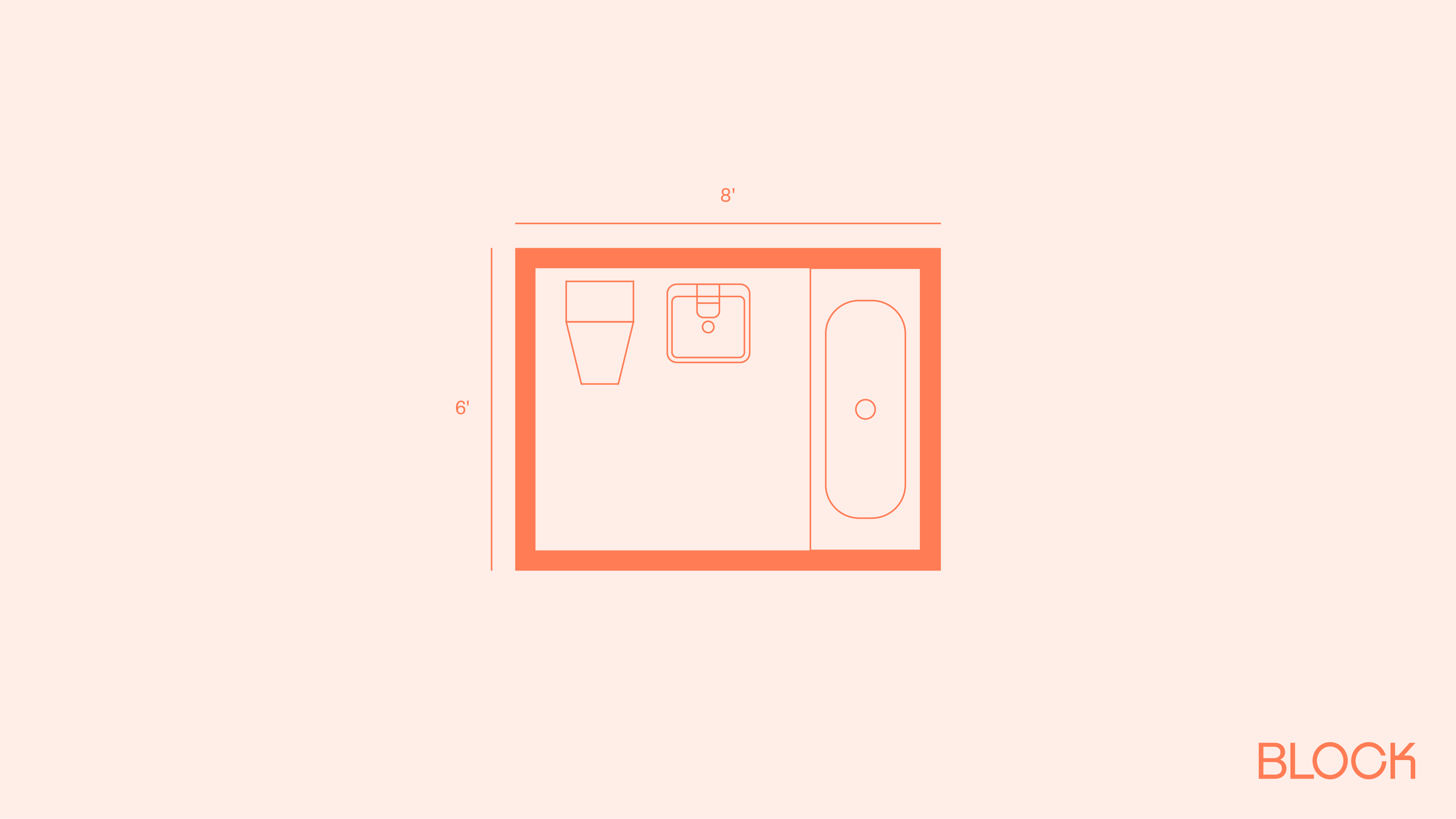
The toilet and single vanity line the left side of the upper wall. The bathtub occupies the right half of the room, running along the 8-foot wall from top to bottom.
This is the layout most 6x8 bathrooms start with, and there’s a reason it persists: it works. The tub gets the long wall, which accommodates a standard 60-inch alcove model with room for a shower curtain rod or glass panel. The toilet and vanity share the remaining width on the opposite side, with the vanity positioned between the toilet and the door for a natural sequence when you walk in—you see the vanity first, not the toilet.
The open floor between the vanity and the tub is roughly 24–30 inches wide in this configuration. That’s enough to stand, turn, and use a bath mat. It’s not spa-like, but it’s functional—and in a 6x8 bath, functional is the first thing to get right.
From a cost perspective, this is the most economical layout because it keeps all plumbing on the same wall or in close proximity. No fixture relocations, no extended drain lines. If you’re doing a refresh rather than a gut renovation, this layout lets you upgrade every surface and fixture without touching the rough-in.
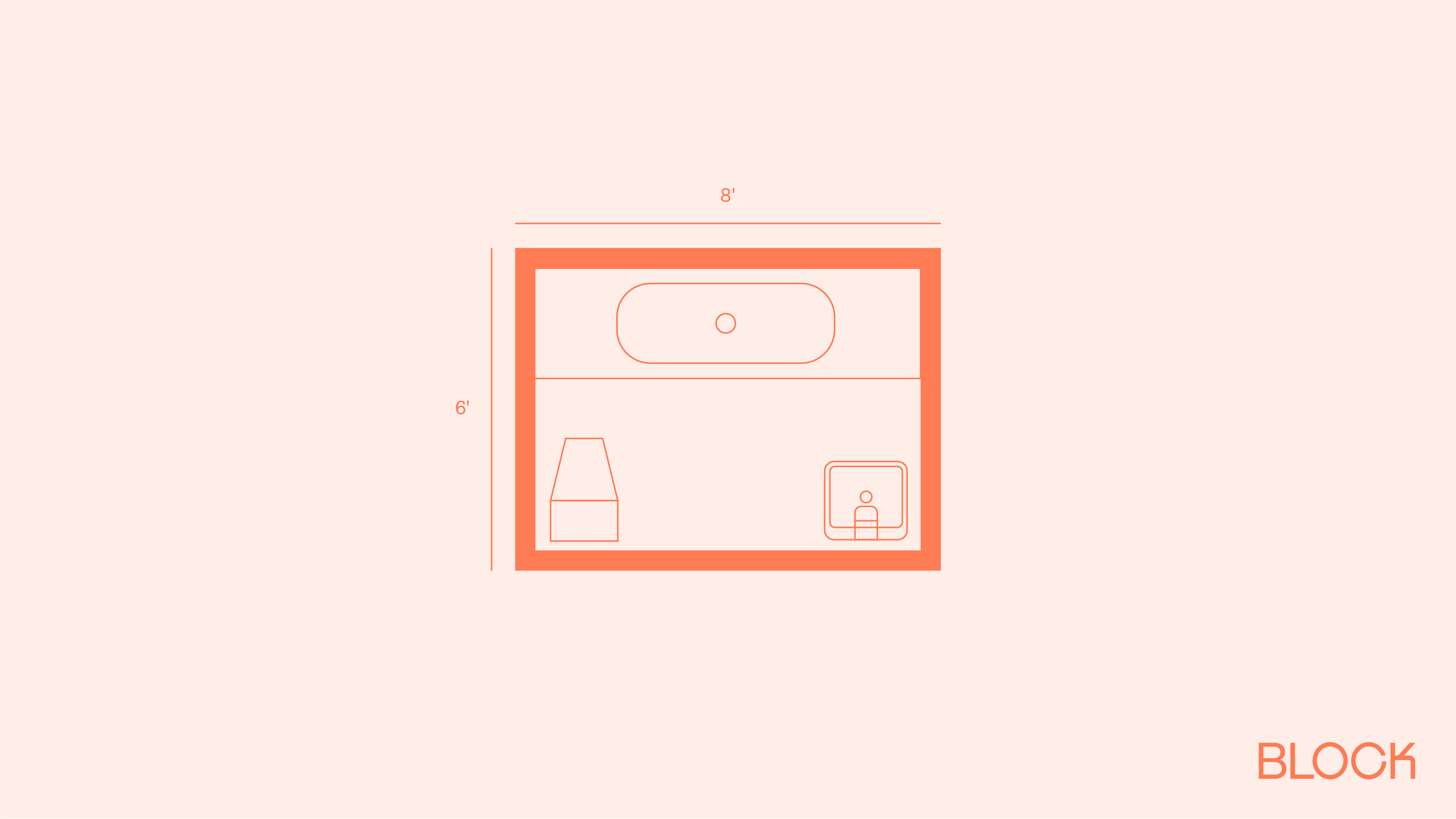
The bathtub spans the full 8-foot upper wall. The toilet sits on the lower-left, and the vanity occupies the lower-right. The center of the room is open floor.
Rotating the tub to run along the 8-foot wall instead of the 6-foot wall changes the room’s proportions. The tub becomes a horizontal element that anchors the far end of the bathroom, and the lower half of the room opens up for the toilet and vanity to sit on opposite sides with clear space between them. That separation is the key advantage here—the toilet and vanity each get their own zone rather than sharing a wall.
The open center is more generous than in the classic layout. You get a wider landing area when stepping out of the tub, and the vanity has room for a person to stand squarely in front of the mirror without being adjacent to the toilet. For households where two people use the bathroom in the same morning window, that breathing room makes a noticeable difference.
The cost trade-off is the tub’s plumbing. If your existing tub drain is on a side wall and you’re moving it to the far wall, expect to add $1,500–$3,500 for the new drain position and supply line extension. If the room’s original plumbing already supports this configuration, the cost stays comparable to the classic layout.
.png?width=4001&height=2251&name=Block_Plans_Bathrooms_Block_Plans_Bathroom_6x8-05%20(3).png)
Two vanity sinks are stacked vertically along the left wall. The toilet sits on the upper wall between the vanities and the tub. The bathtub occupies the right side of the room from top to bottom.
A double vanity in a 6x8 bathroom sounds ambitious, and it is—but this layout makes it work by running the two sinks along the 8-foot wall instead of trying to fit a wide countertop across the 6-foot dimension. Each sink gets its own compact vanity with a mirror above, creating two distinct grooming stations without the width penalty of a traditional double.
The toilet is positioned on the upper wall, tucked between the vanity run and the tub—the least visible spot when you walk through the door. That placement is worth noting because in most small bathrooms, the toilet is the first thing you see. Pushing it to the back wall changes the room’s first impression.
This is a higher-cost configuration. Two vanities mean two sink drains, two supply line pairs, and twice the countertop and mirror hardware. The additional plumbing typically adds $1,000–$2,500 over a single-vanity setup. But for a shared bathroom—a couple’s primary bath, or a hall bath that two kids use simultaneously—the second sink eliminates the morning bottleneck that a single vanity creates.
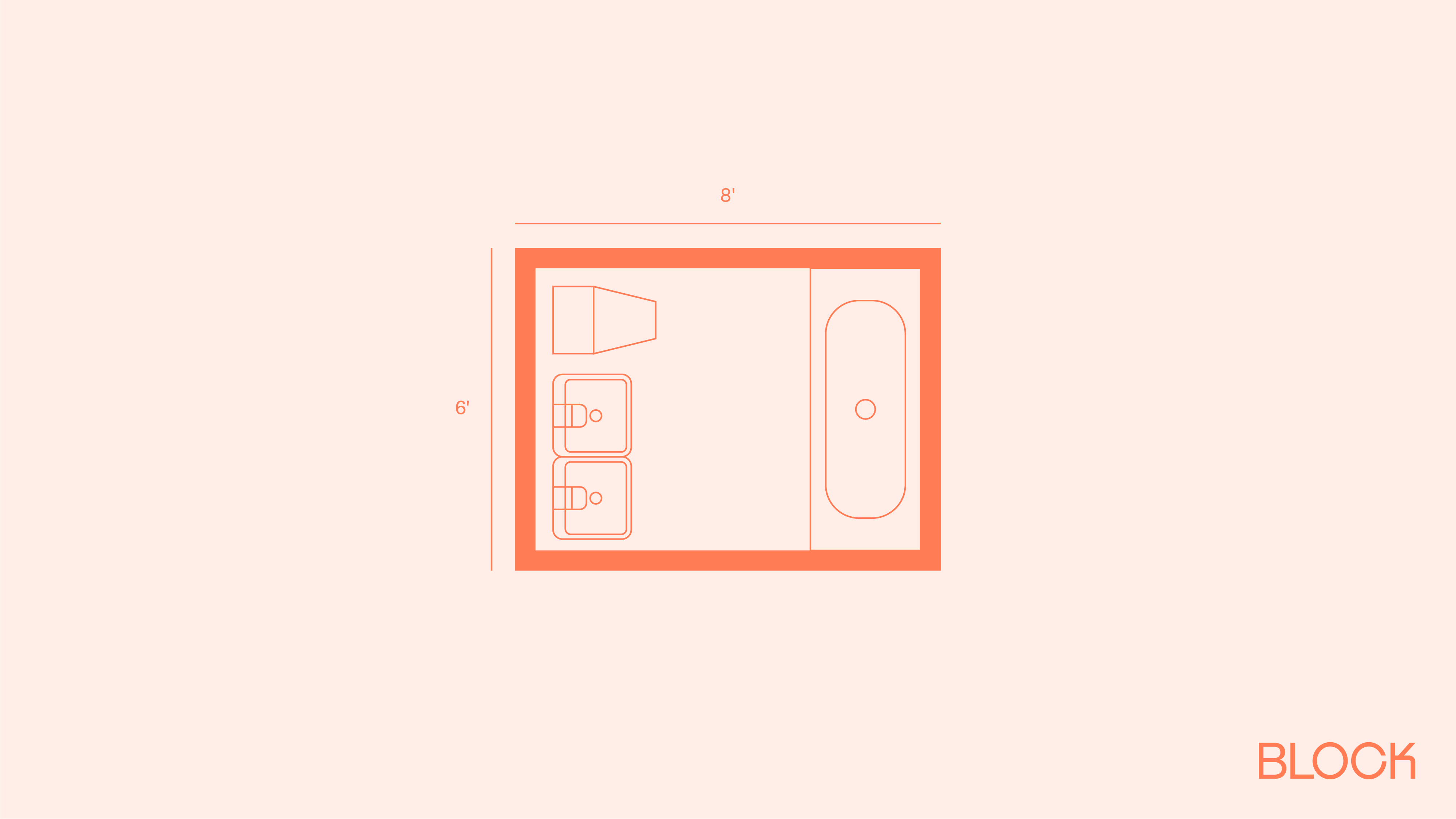
The toilet sits on the upper-left wall. Two vanity sinks are stacked vertically below it along the left wall. The bathtub occupies the right side of the room.
This is a variation on the double-vanity layout that moves the toilet to the upper-left corner, creating a clearer separation between the wet zone (tub) and the dry zone (vanity and toilet). The vanities occupy the lower two-thirds of the left wall, giving each sink a bit more elbow room and placing them closer to the door—which is where you naturally gravitate first thing in the morning.
The toilet’s corner position is the most private placement in the set. It’s behind the door swing, partially shielded by the vanity run, and away from the tub. In a bathroom that two or more people share, that privacy matters more than most layout diagrams suggest.
Cost-wise, this layout is nearly identical to the other double-vanity option. The toilet relocation to the upper corner may require a short drain extension if the existing rough-in is centered on the wall, but that’s typically a modest $500–$1,200 addition. The real investment is in the double vanity plumbing and fixtures, which remains the same.
Renovate with confidence every step of the way
Step 1: Personalize Your Renovation Plan
Step 2: Receive Quotes from Trusted Contractors
Step 3: Let Us Handle the Project Details

In a room this size, every material choice is amplified. There’s not enough surface area for mistakes to hide, and not enough square footage for expensive upgrades to feel proportional if they’re not well chosen. The upgrades that work best in a 6x8 bath are the ones you notice every time you use the room—not the ones that photograph well but add friction to your morning.
A 6x8 bathroom doesn’t have room for indecision. Every fixture, every finish, every six inches of floor space is doing a job. The layouts that succeed at this size are the ones where the tub has a proper home, the toilet isn’t the first thing you see, and the vanity gives you enough counter to set down a toothbrush without knocking over a bottle.
With Block Renovation, you can test different configurations and finish levels through the free Renovation Studio—seeing how each decision affects your budget before any demolition begins. When you’re ready, Block connects you with vetted local contractors who provide detailed, comparable proposals backed by progress-based payments and a one-year workmanship warranty.
Remodel with confidence through Block

Connect to vetted local contractors
We only work with top-tier, thoroughly vetted contractors

Get expert guidance
Our project planners offer expert advice, scope review, and ongoing support as needed

Enjoy peace of mind throughout your renovation
Secure payment system puts you in control and protects your remodel


Renovate confidently with Block
Easily compare quotes from top quality contractors, and get peace of mind with warranty & price protections.
Bathroom Floor Plans
Single Wall Bathroom Layout: Pros, Cons, and Tips
07.22.2026
.jpg?width=640&name=5301c89b-3165-4f83-af34-a6b02eaa6c48%20(2).jpg)
Bathroom Floor Plans
Long, Narrow Bathroom Floor Plans: Layouts That Work
07.21.2026
.jpg?width=640&name=2a430d6c-5cf0-4596-9a89-601f3d2d6391%20(7).jpg)
Bathroom Floor Plans
Square Bathroom Floor Plans & Layout Tips
07.18.2026
Bathroom Floor Plans
300 Sq Ft Bathroom: 7 Large Master Bath Layouts
06.05.2026
Bathroom Floor Plans
100 Square Foot Bathroom Layout: Make It Work
06.02.2026