



Tile
Made in USA Tiles: 15 Brands to Love
07.11.2026
01.02.2026


In This Article
Instead of tiling walls from floor to ceiling, tile is installed partway up the wall—often at vanity height, chair-rail height, or aligned with architectural features—while the upper portion is finished with paint, wallpaper, plaster, or another surface treatment.
This layered approach offers protection where moisture is most common while keeping the overall space feeling lighter and more expressive, especially compared to fully tiled rooms. What's not to love?
The broad choice to tile only part of your bathroom walls is step one. There's other decisions you'll need to make regarding placement and decorative elements, all which will heavily influence the space's overall aesthetic. Yes, there's a right and wrong way to pull off the half-tile look.
Half wall tile designs are often chosen for more than just appearance. They solve practical challenges while offering room for creativity.
Targeted durability where moisture is most common: Tile protects the lower portion of bathroom walls from splashes, humidity, and daily wear. This is especially valuable around sinks, tubs, and toilets where water exposure is unavoidable. Over time, this targeted protection can reduce repainting and wall repairs.
Greater design flexibility: Leaving the upper wall untiled allows for paint, wallpaper, plaster, or specialty finishes that would feel overwhelming if used floor to ceiling. This flexibility makes it easier to update the look later without removing tile. It also allows homeowners to experiment with trends in a more controlled way.
The savings are real and worth understanding: In a standard 5 by 8 foot bathroom (the most common layout in American homes), tiling full-height requires roughly 160 square feet of tile. Stopping at 48 inches drops that to about 85 square feet. At $8 to $15 per square foot for mid-range tile, that's $600 to $1,125 saved on materials alone. Labor drops proportionally because there's less tile to set, usually another $400 to $800 in savings. Most homeowners who go the half-tile route reinvest some of that into a better tile for the lower section, which is where it actually matters, and use the rest to upgrade something else in the room.
Why it looks good in practice: full-tiled bathrooms can read as cold, especially in small spaces with limited natural light. Stopping the tile partway up gives your eye a horizontal line to rest on and lets you introduce a softer material, like paint or wallpaper, into the upper half of the room. Your bathroom will feel more like a real room and less like a hotel shower stall.
A successful half tile wall depends on how the lower and upper portions of the wall interact. Material choice, alignment, and transitions all play a role in making the design feel intentional rather than unfinished. These ideas show how different combinations can work across styles and bathroom sizes.
Using white tile on the lower wall with white paint above creates an all-white bathroom that still feels layered. Differences in texture, sheen, and grout lines provide visual depth without introducing color contrast. This approach works well in bathrooms that aim for a clean, timeless look. It’s especially effective when paired with warm metals or natural wood accents. Find inspiration in our guide How to Get the Details Right in a Small White Bathroom.
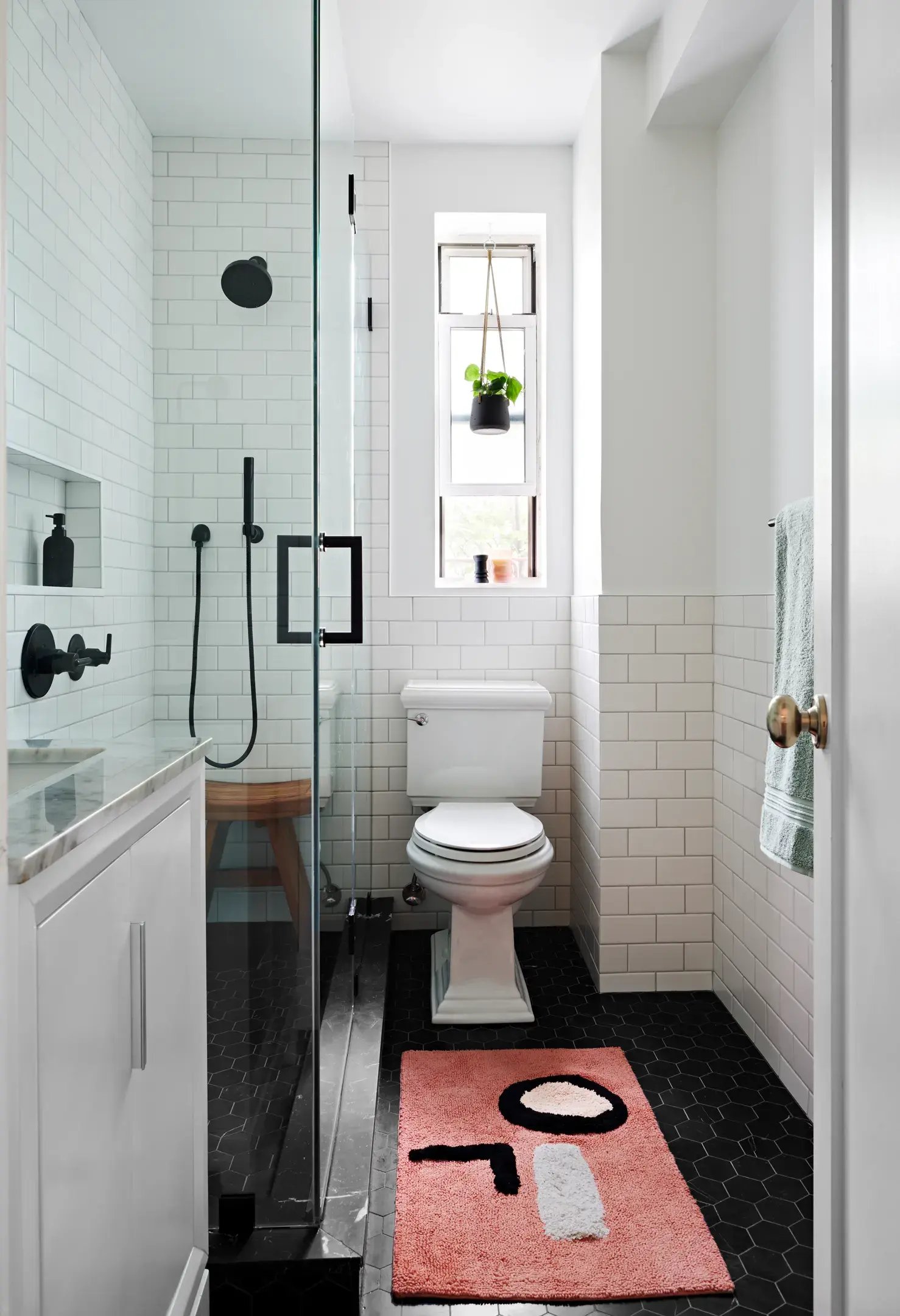
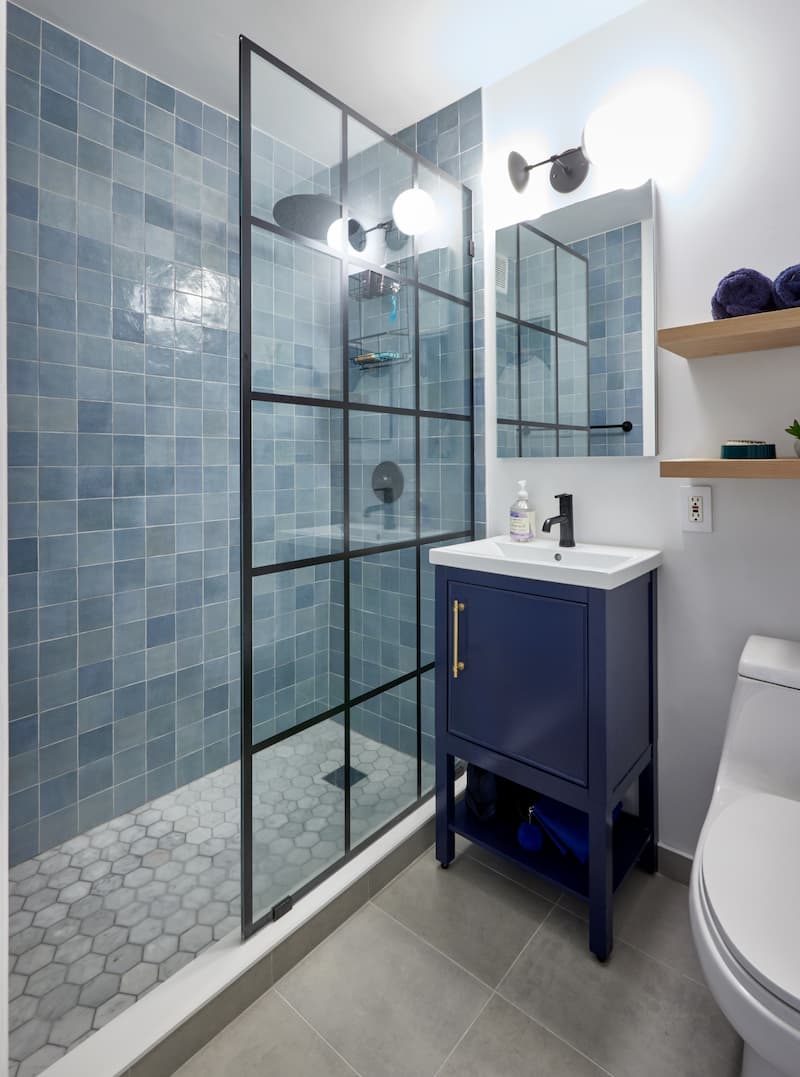
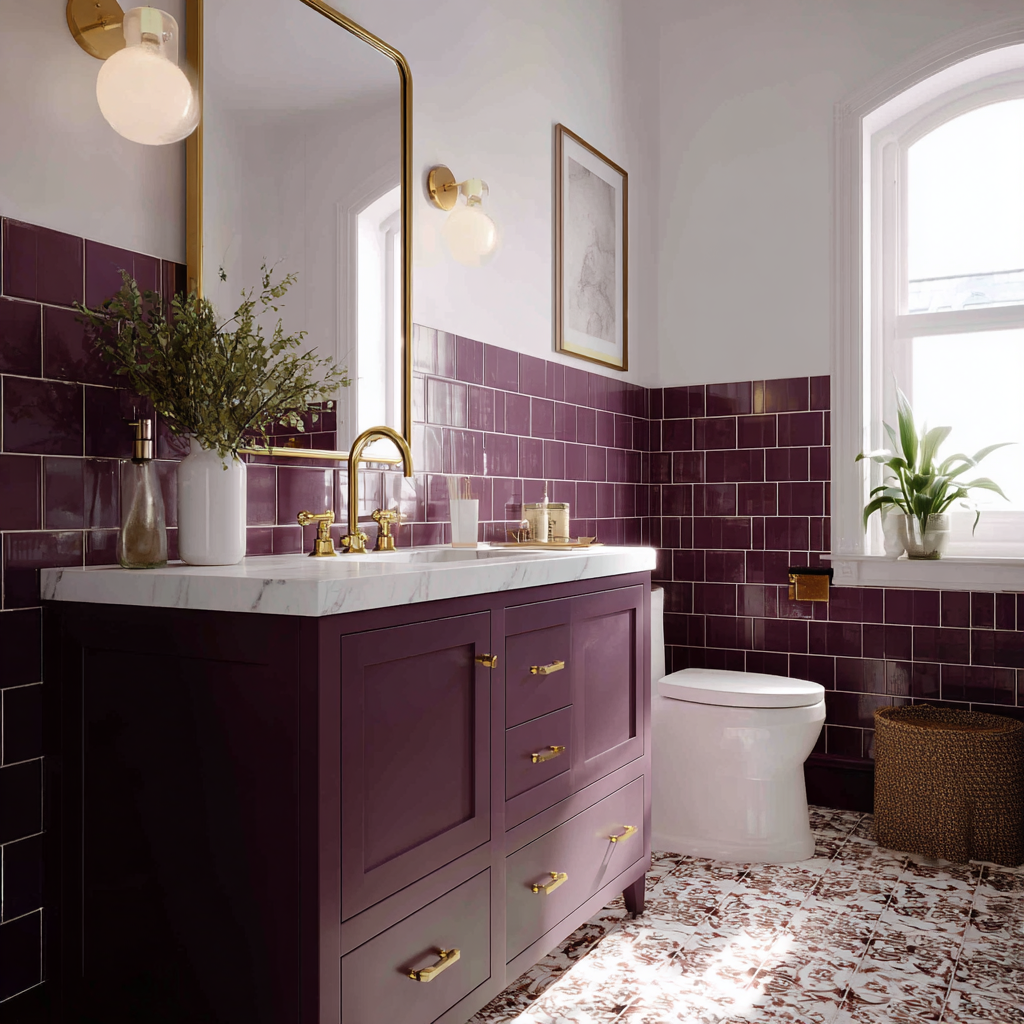
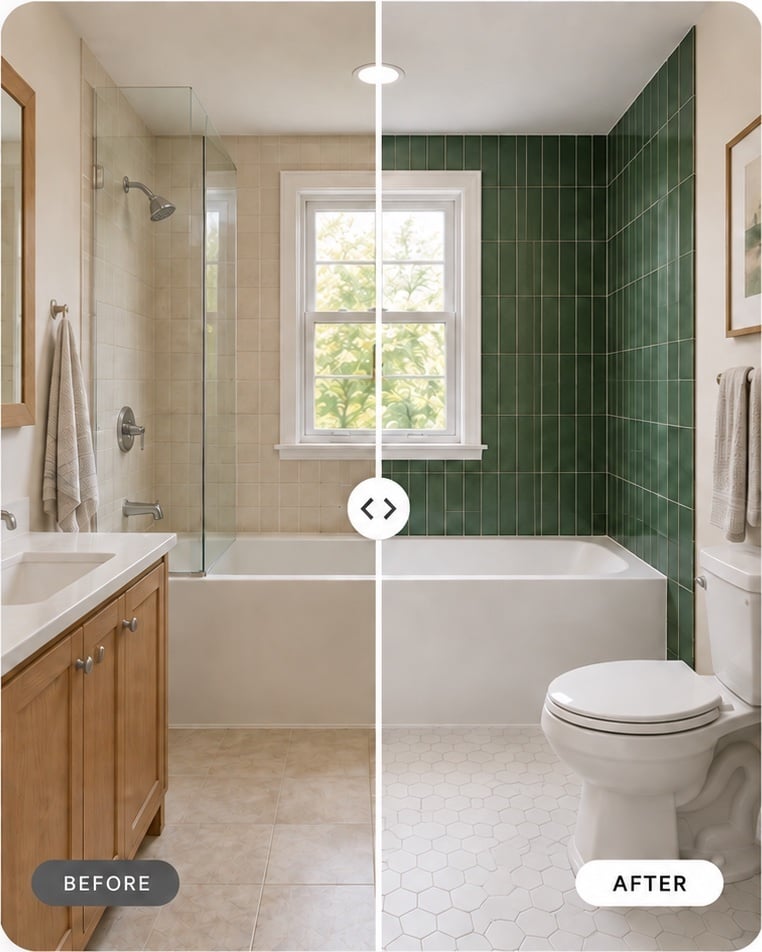
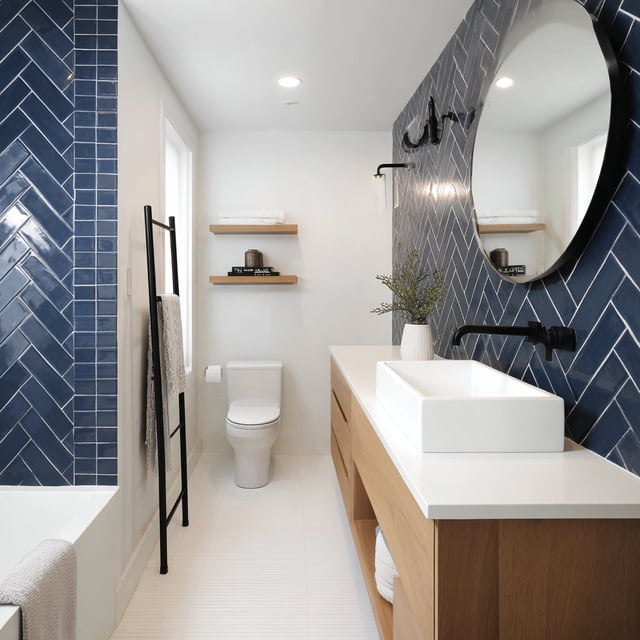
A half tiled bathroom wall is a great place to introduce color without committing to it everywhere. Deep blues, greens, or earthy tones can anchor the room visually. Keeping the upper wall crisp and light prevents the space from feeling closed in. This strategy works well in smaller bathrooms that still need personality.
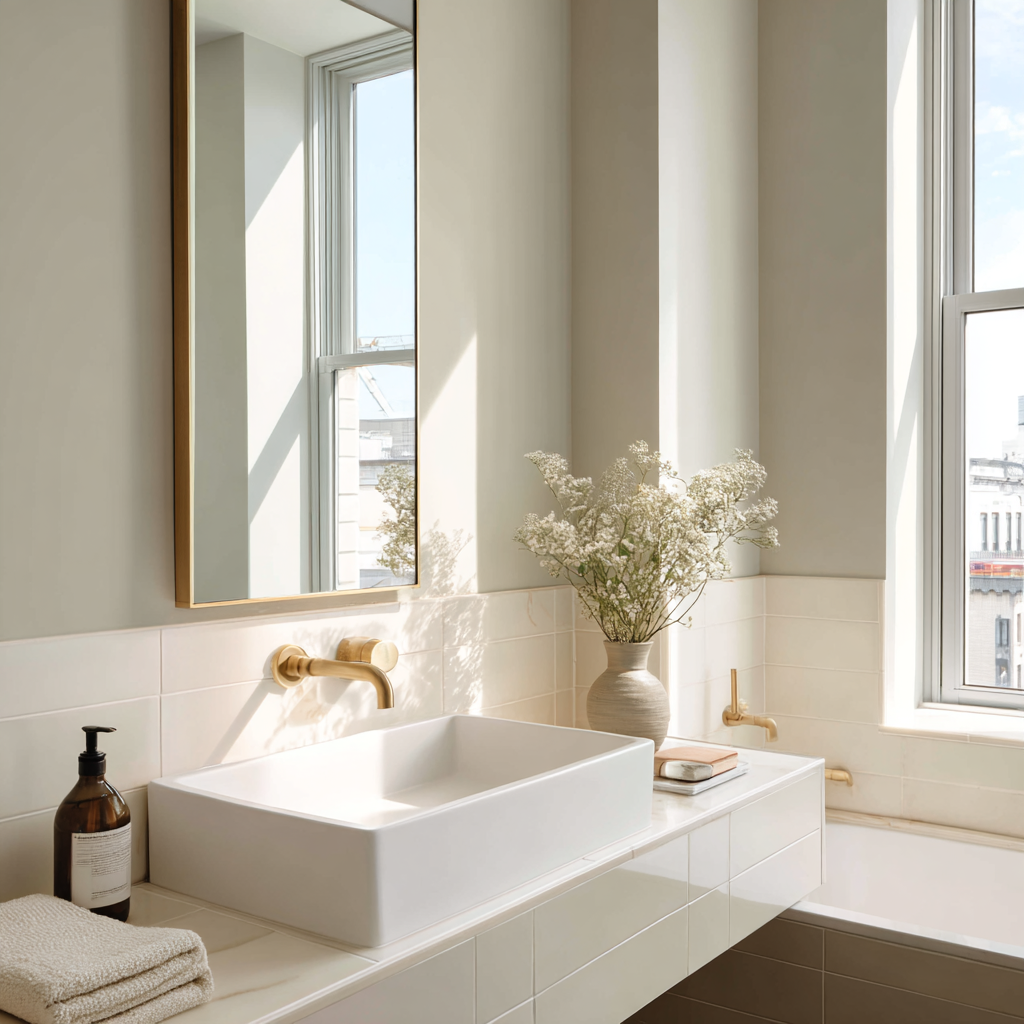
White tile paired with warm neutral walls for quiet contrast
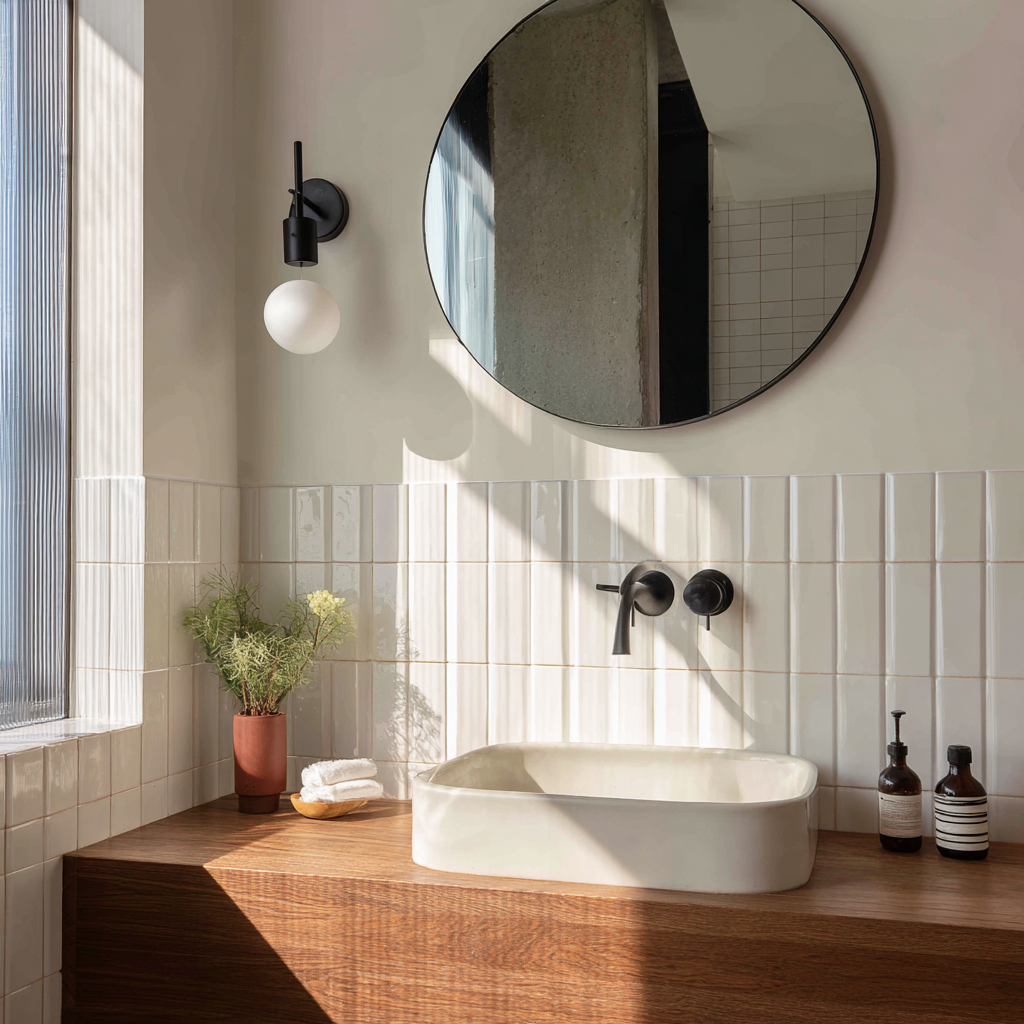
White tile on the lower wall paired with a warm cream or soft linen-toned paint above creates a bathroom that feels classic without defaulting to stark. The slight shift in tone between tile and wall keeps the space from reading as flat, while the difference in material—glossy or satin tile against matte paint—adds just enough visual texture to hold interest.
This half-wall idea is especially well suited to modern bathrooms with good natural light, where the subtle interplay between surfaces shifts throughout the day.
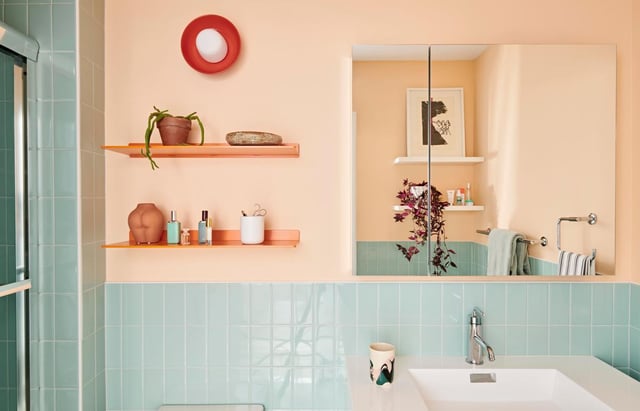
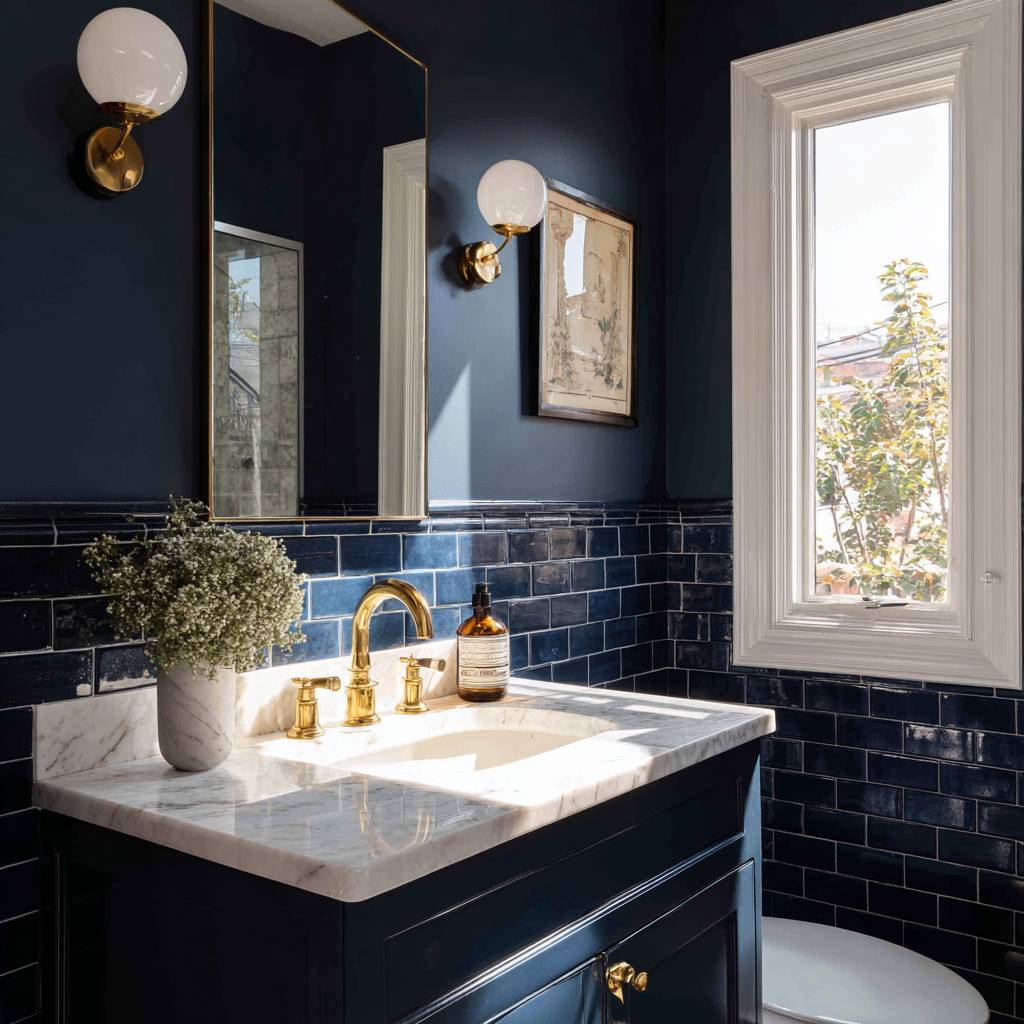
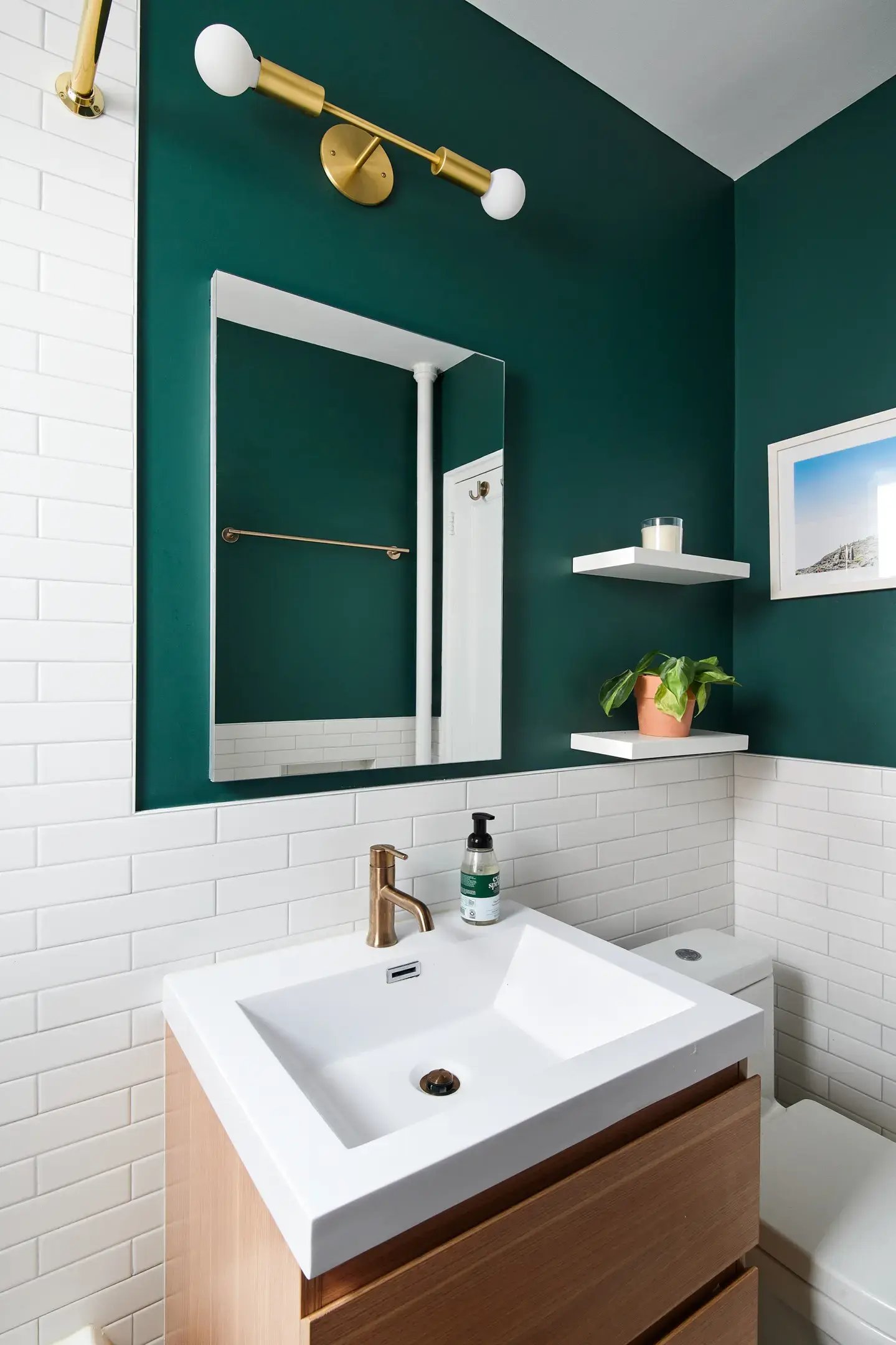
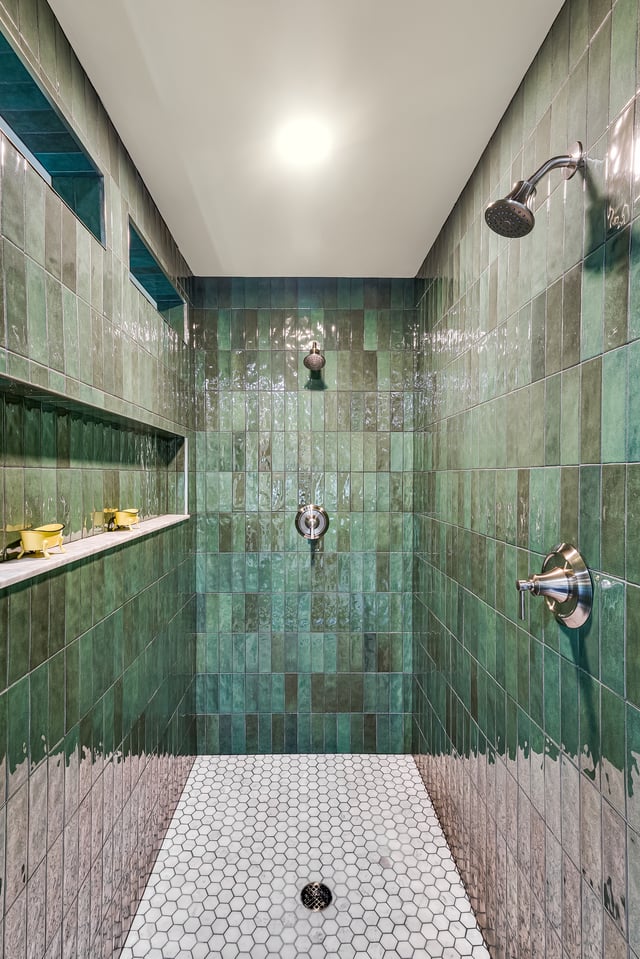
Color drenching—using a single hue across both tile and painted surfaces—creates a seamless, enveloping effect that feels both bold and cohesive. Choosing tile and paint in the same color family for the lower and upper walls eliminates contrast at the transition line, letting texture and material change carry this responsibility instead. The result is a half-tile bathroom that feels immersive without being overwhelming.
Deep greens, warm terracottas, and dusty blues all work well for this approach. It's a confident design move that reads as intentional and designer-led, especially when paired with fixtures in a complementary metal tone.
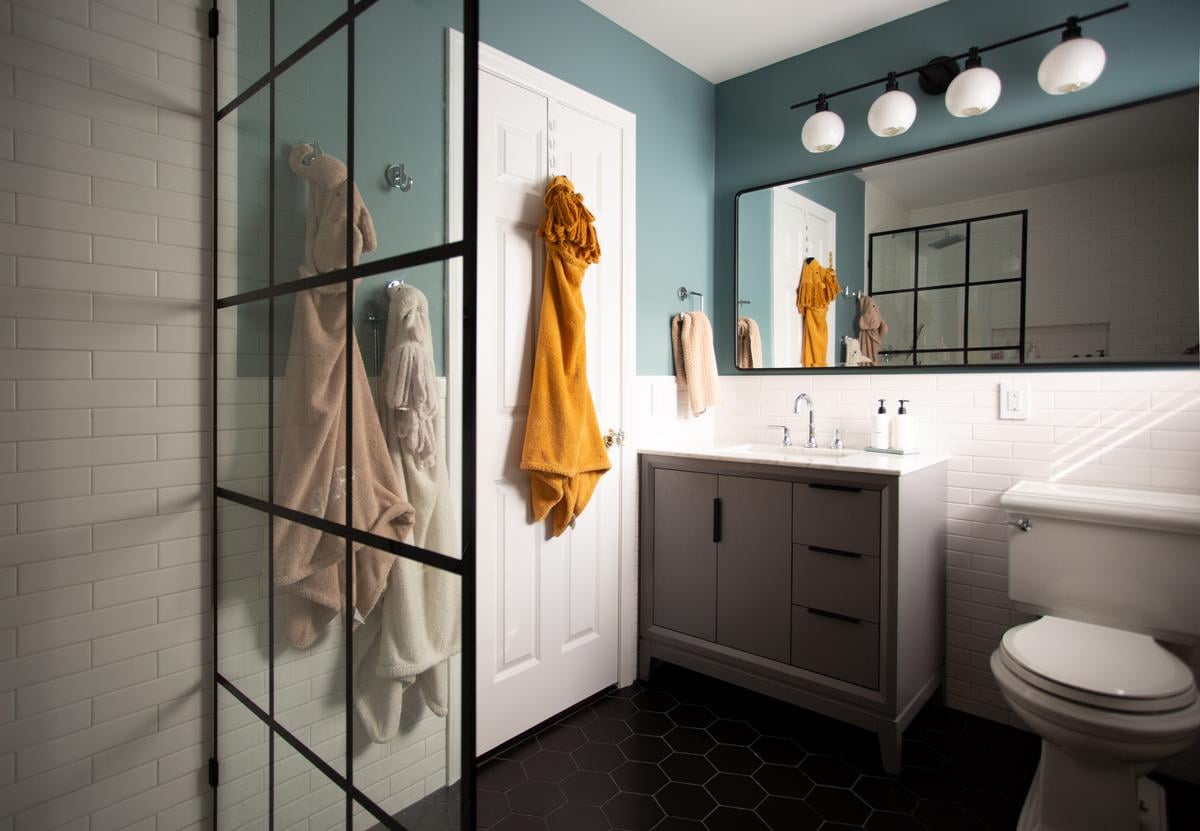
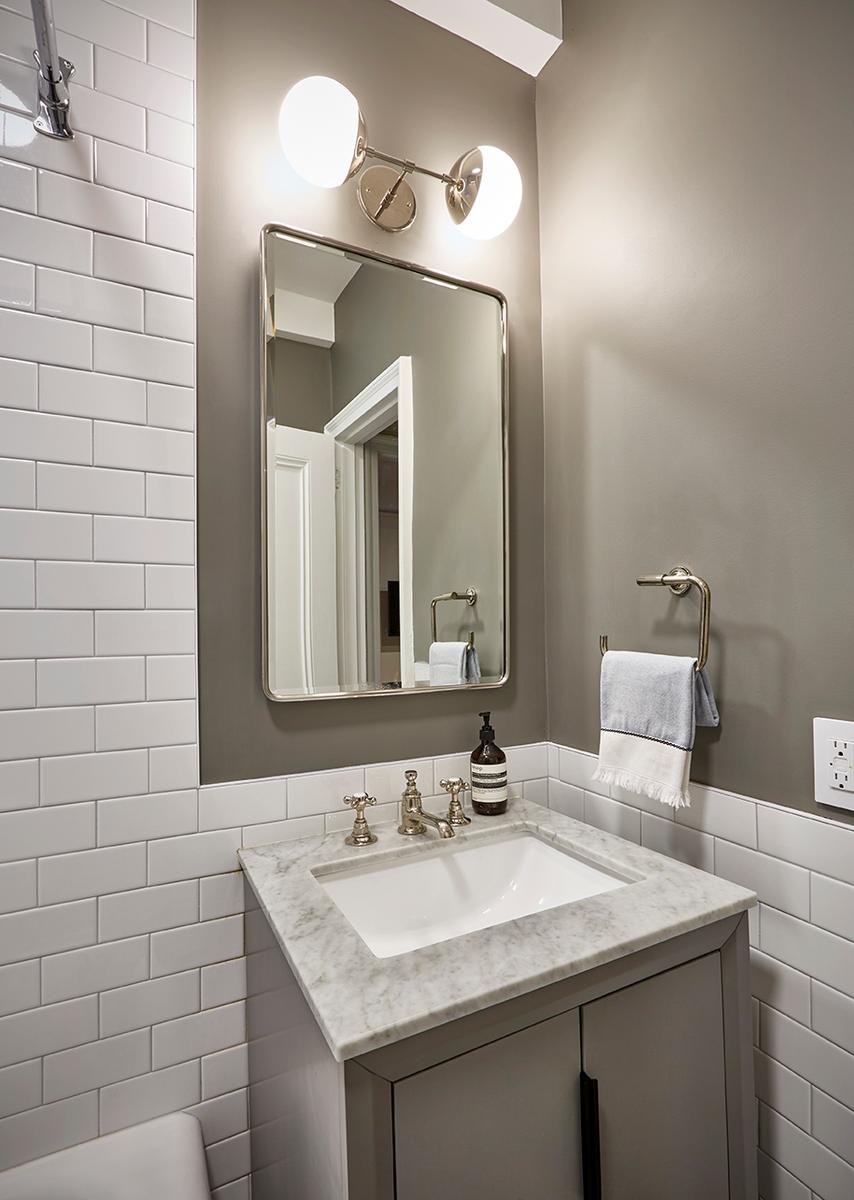
Subway tile remains a popular choice for a bathroom half tile wall because it offers structure without visual noise. Installing it up to vanity height or slightly above creates a clear, architectural stopping point. Above the tile, soft neutral paint or a subtle plaster finish adds warmth and softness. This pairing works especially well in bathrooms where simplicity and longevity are priorities.
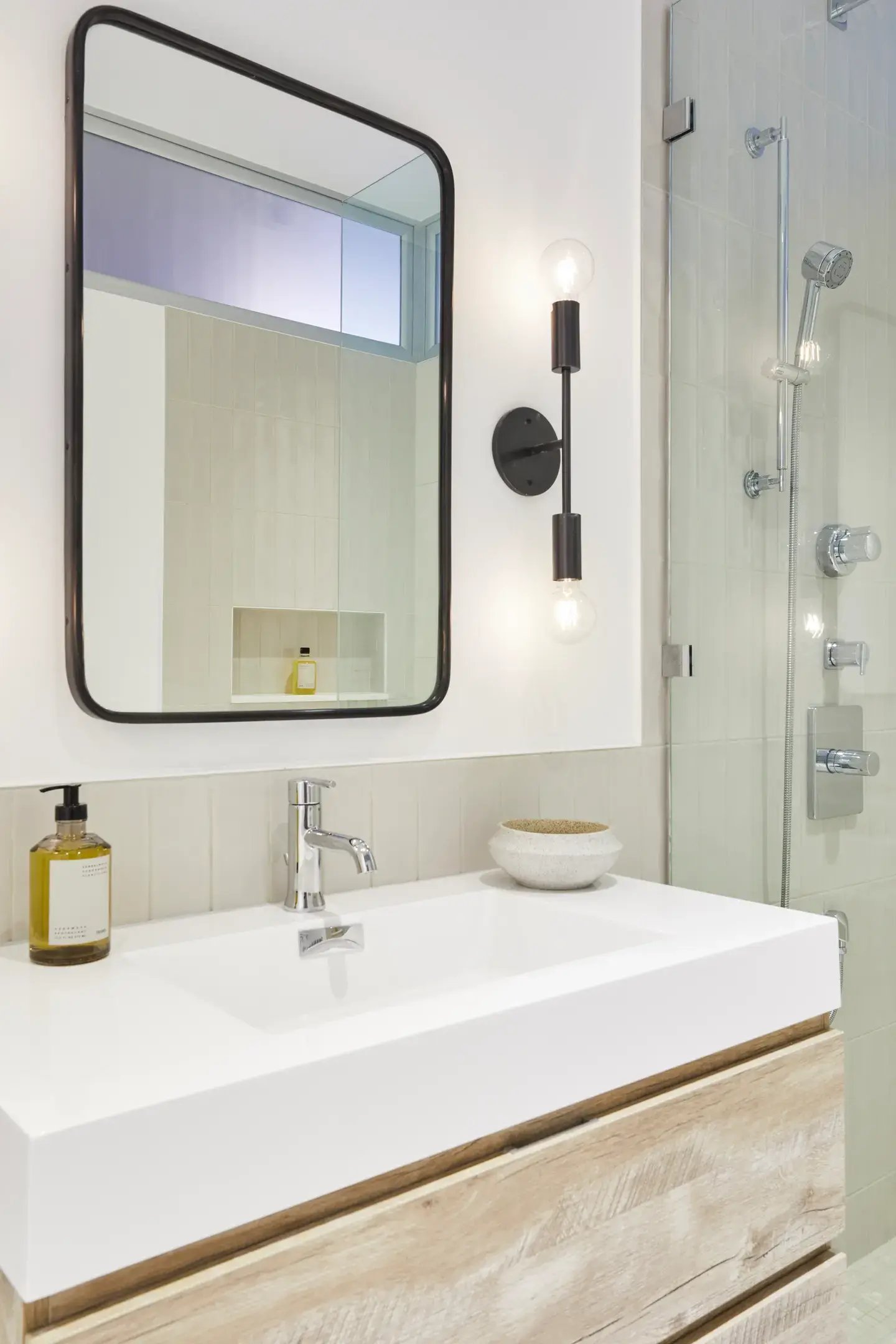
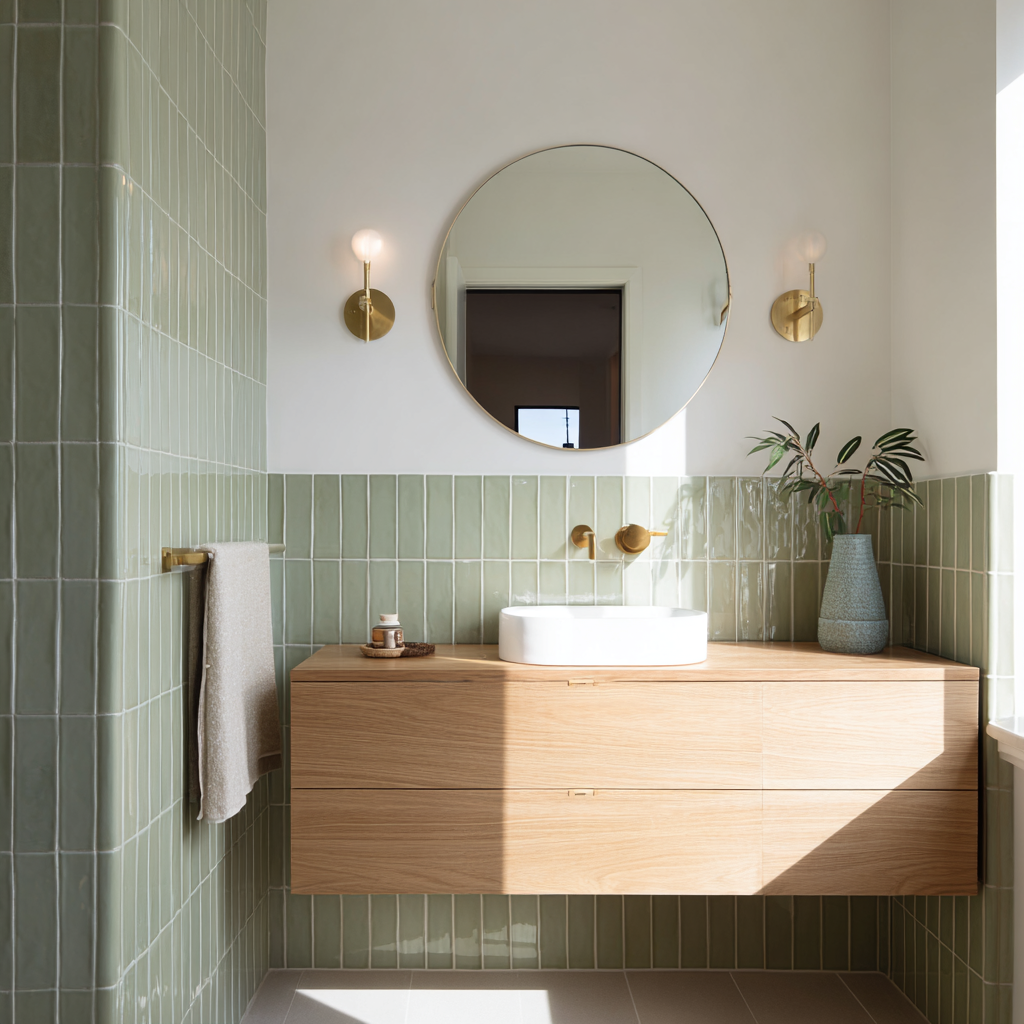
Stacked vertical tile on the lower half of the wall draws the eye upward and subtly emphasizes ceiling height. This layout feels especially current when paired with smooth, matte paint above. The contrast between structured tile and soft wall finish keeps the space from feeling rigid. It’s a strong option for contemporary or minimalist bathrooms.
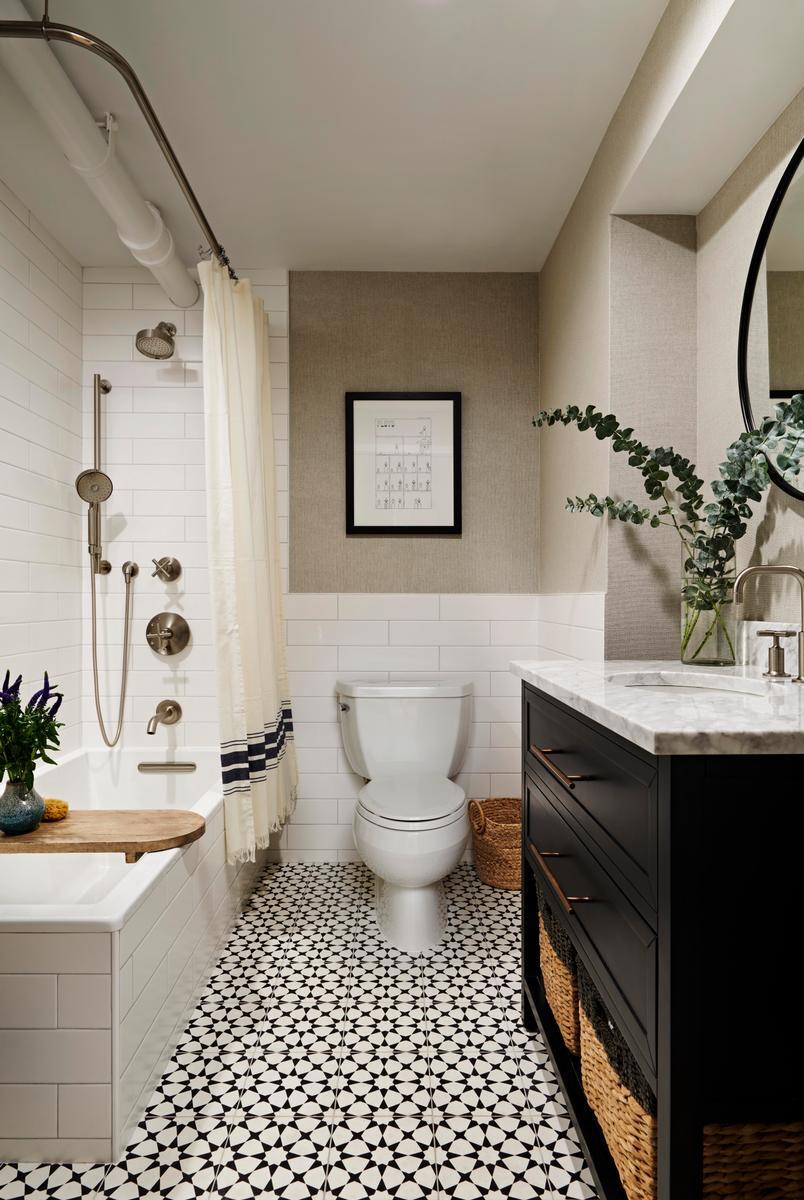
Tile can absolutely work with wallpaper when the layout is intentional. A half tiled bathroom wall creates a natural break that keeps wallpaper safely away from splash zones. Subtle patterns, textured papers, or muted florals add personality without overwhelming the space. This approach works particularly well in powder rooms and guest bathrooms where visual interest is welcome.
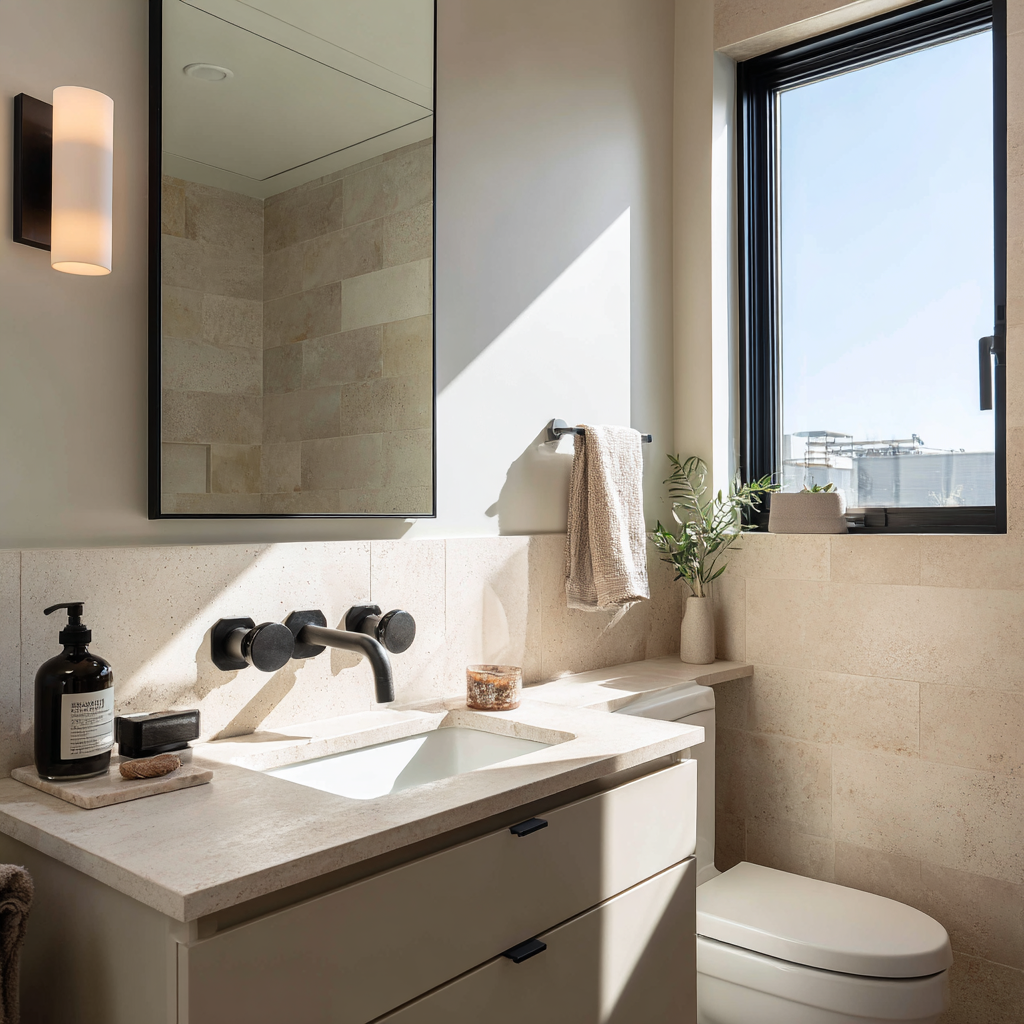
Natural stone or stone-look porcelain tile adds weight and texture to the lower portion of the wall. Pairing it with plaster, limewash, or softly textured paint above creates a layered, organic look. The upper wall finish introduces movement that balances the solidity of the tile. This combination suits bathrooms with warm, natural palettes.
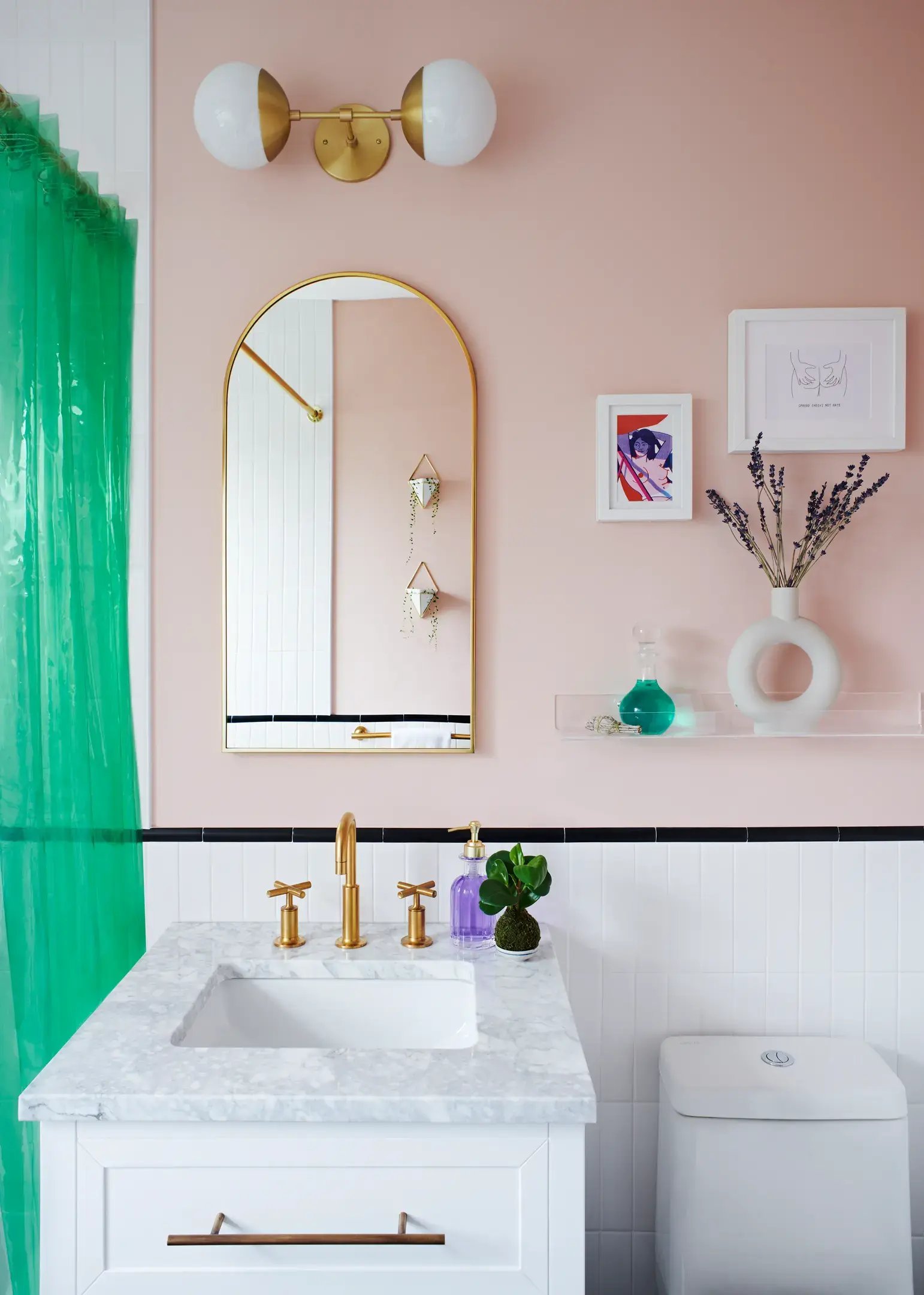
Decorative tiles can be used as a horizontal band or trim piece where tile meets the upper wall. This adds visual interest while clearly defining the transition point. Even a single row of patterned or contrasting tile can elevate an otherwise simple half tile wall. It’s a subtle way to add personality without overwhelming the space. If you like the look as shown in this photo, check out The Best Paint Color Options for Black and White Tile Bathrooms.
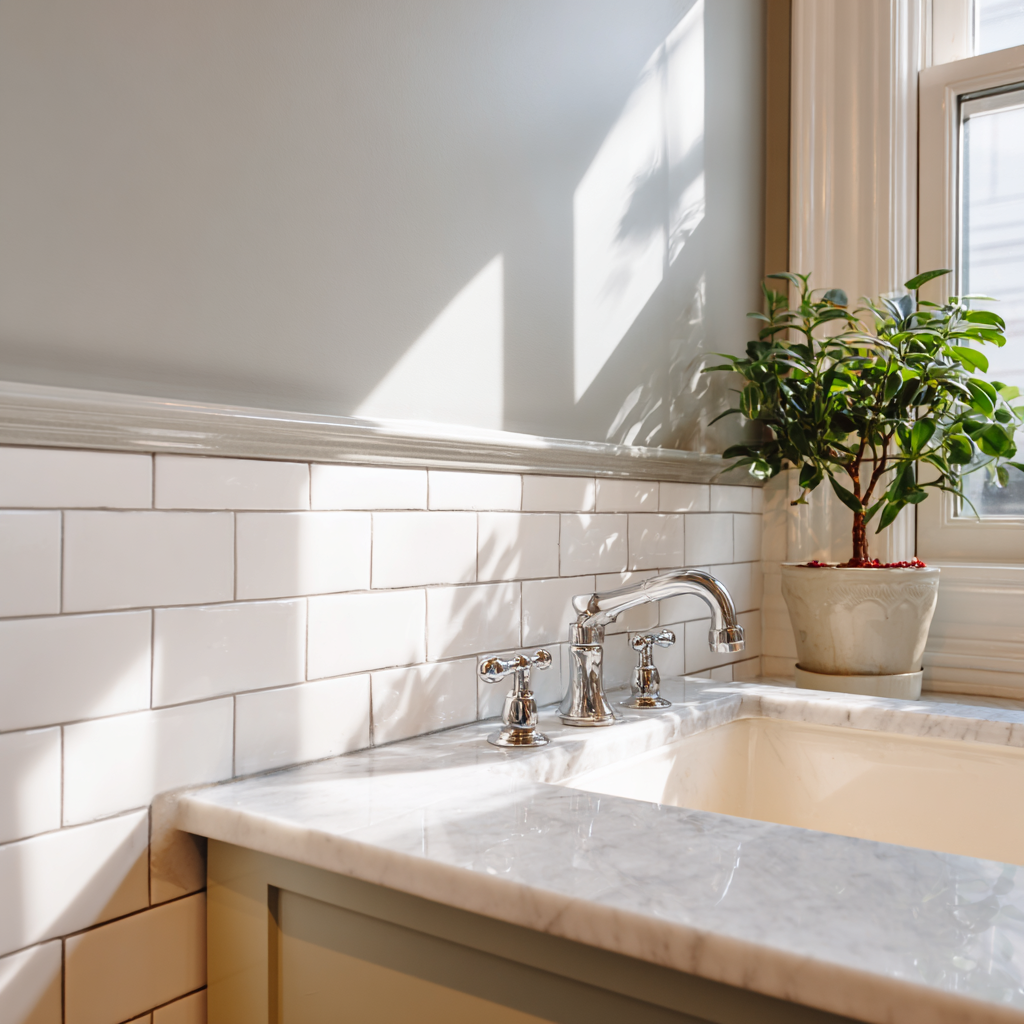
Adding a trim piece or narrow ledge at the tile transition helps the design feel finished. This detail can be purely decorative or serve as a functional surface for small items. It reinforces that the tile height was intentional rather than arbitrary. This approach works well in classic and transitional bathrooms.
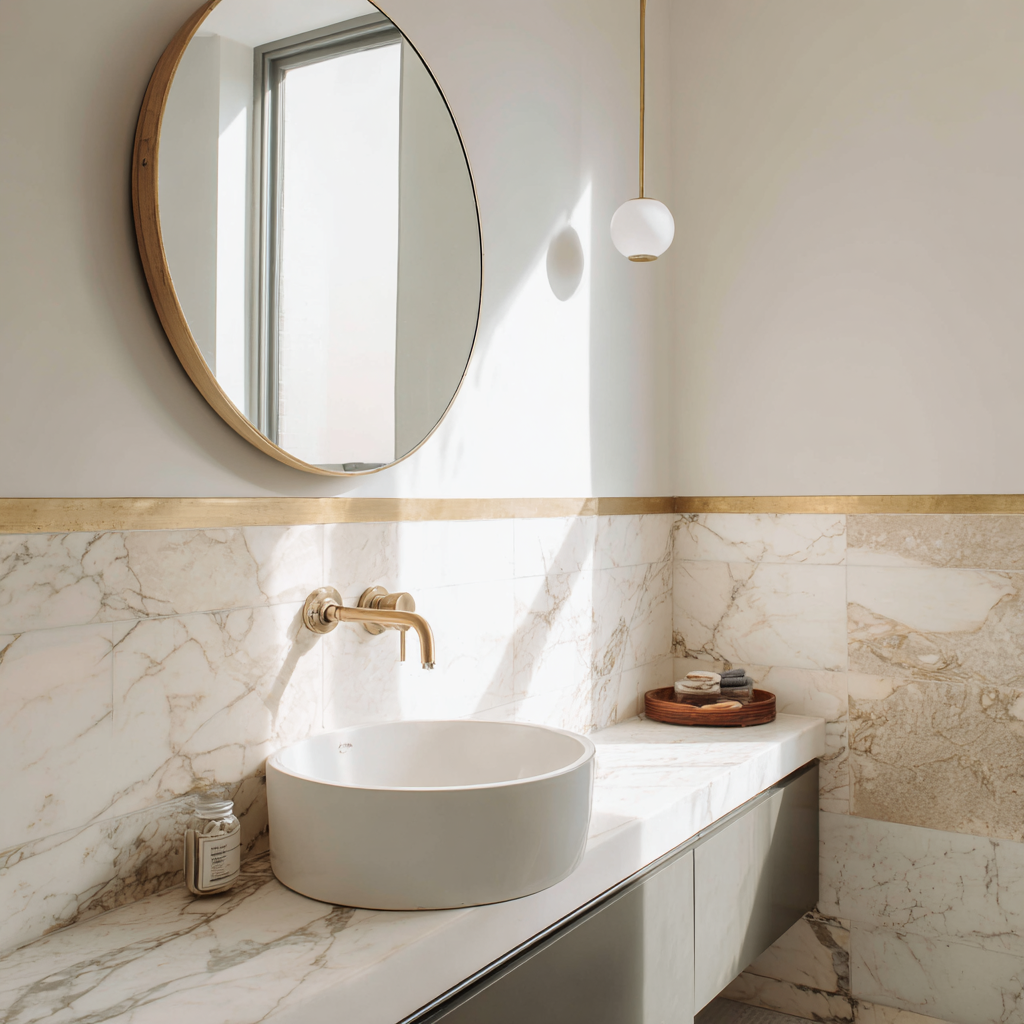
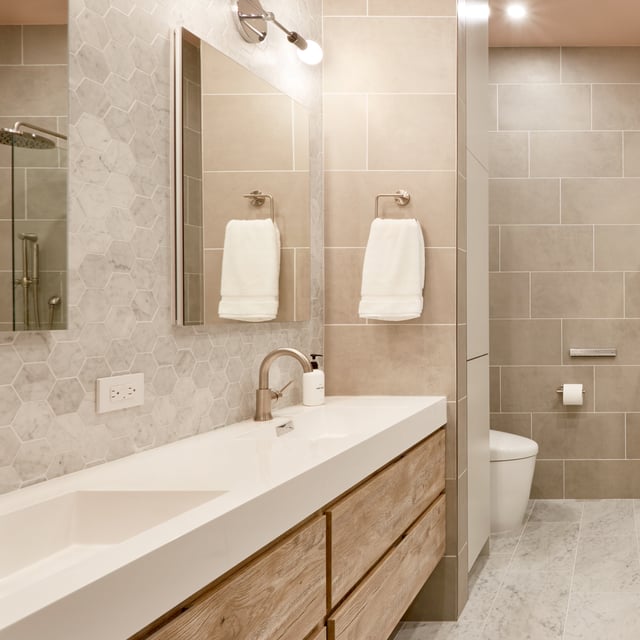
Large-format tiles—12x24 inches or bigger—create a clean, contemporary half wall with far fewer grout lines than smaller tile. The result is a lower wall that reads almost like a solid surface, letting the transition between tile and paint feel sharp and architectural. This streamlined look pairs well with simple, matte-painted walls above and modern fixtures. This is a particularly smart design idea homeowners who want the protection of tile without the busier rhythm of subway or mosaic layouts.
Using a different tile shape on the lower half of the wall helps clearly define the tiled zone without relying on color contrast. For example, pairing rectangular subway tile with square floor tile or a small-scale mosaic creates subtle variation while keeping the palette cohesive. This approach works well in bathrooms that aim for interest through texture rather than bold color. Keeping grout color consistent across shapes helps the design feel intentional. Click here to read more tips on how to mix bathroom tiles successfully.
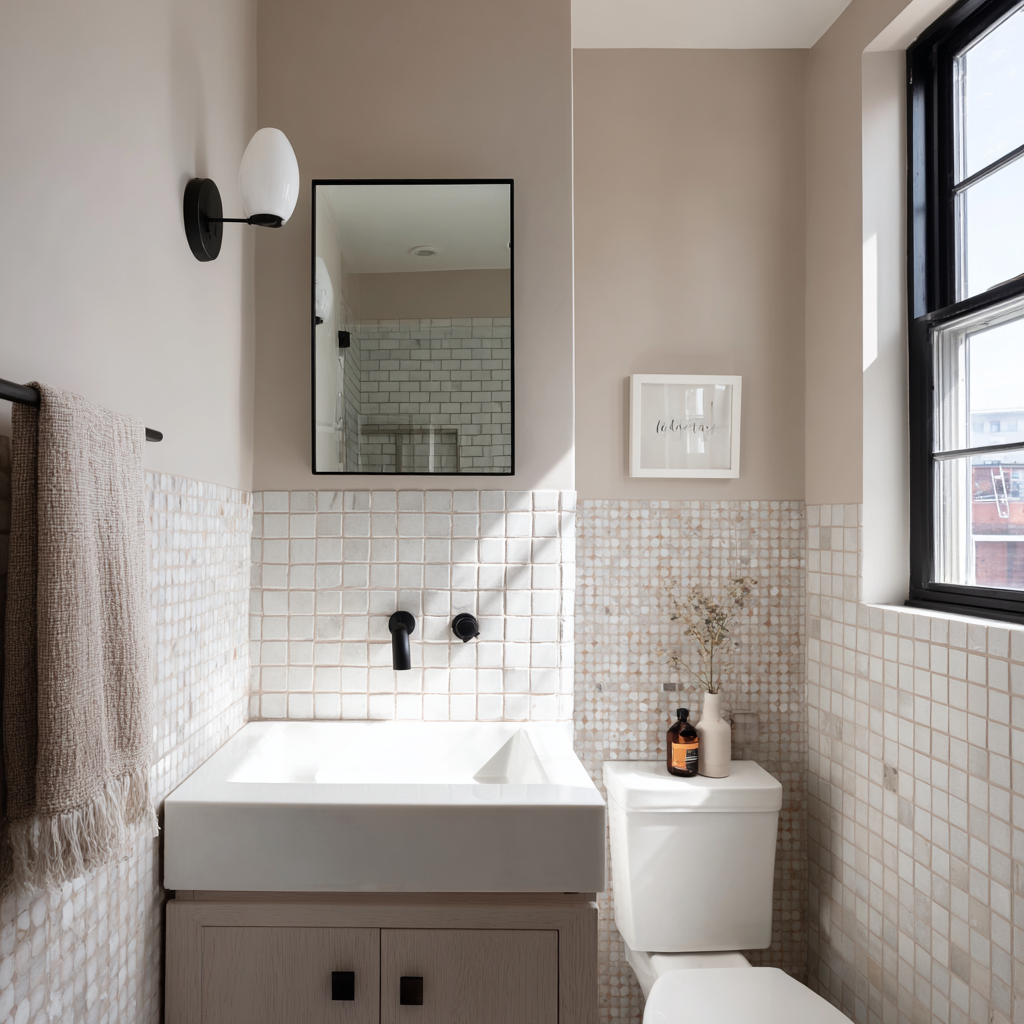
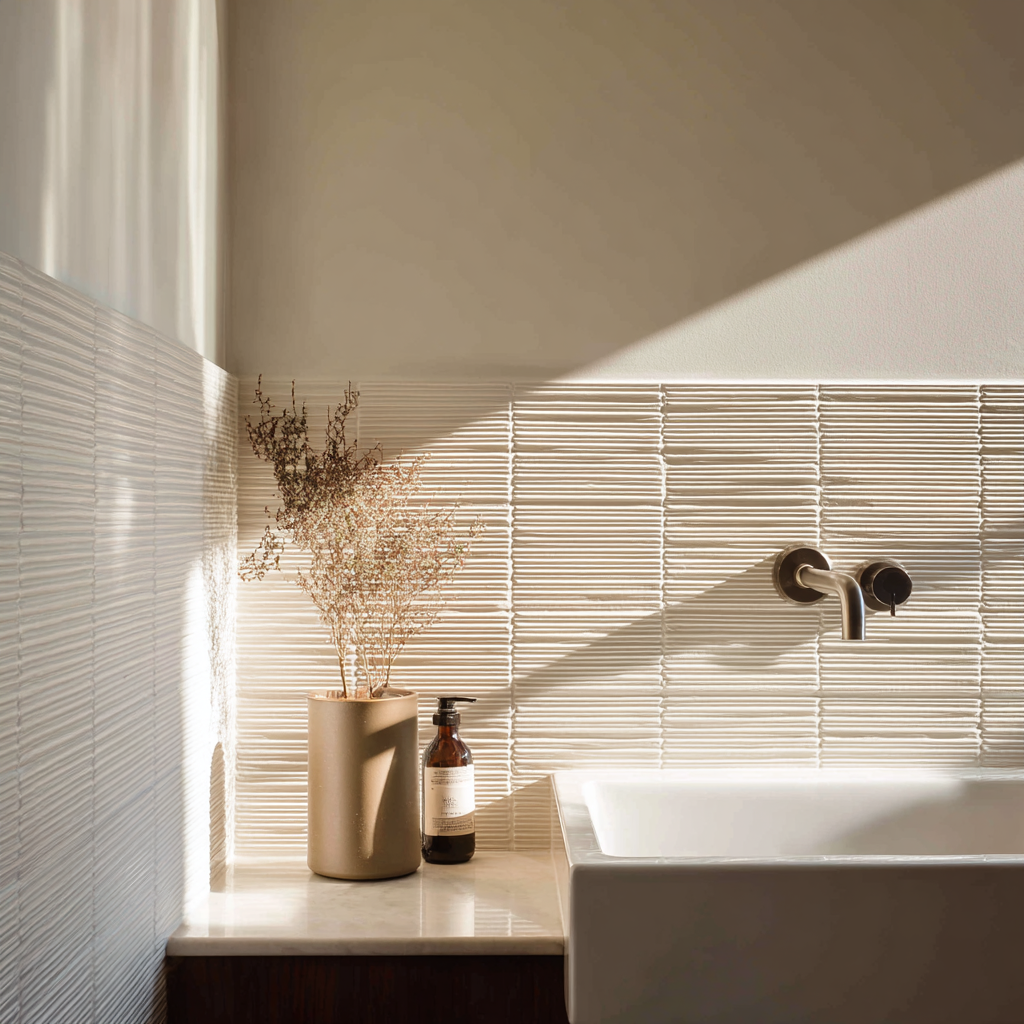
Fluted, ribbed, or dimensional tile on the lower half adds tactile interest and shadow play without introducing additional color. Paired with a flat, matte-painted upper wall, the contrast becomes entirely about surface quality. It's a sophisticated, modern idea that gives a half-tiled bathroom a boutique or hotel-inspired feel.
Ending tile at window sills, door casings, or built-in elements creates visual cohesion. The half tile wall feels integrated into the room rather than applied afterward. Above the tile, paint or wallcovering can follow the same alignment. This approach rewards careful planning and precise execution.
The three most common approaches each create a different visual effect.
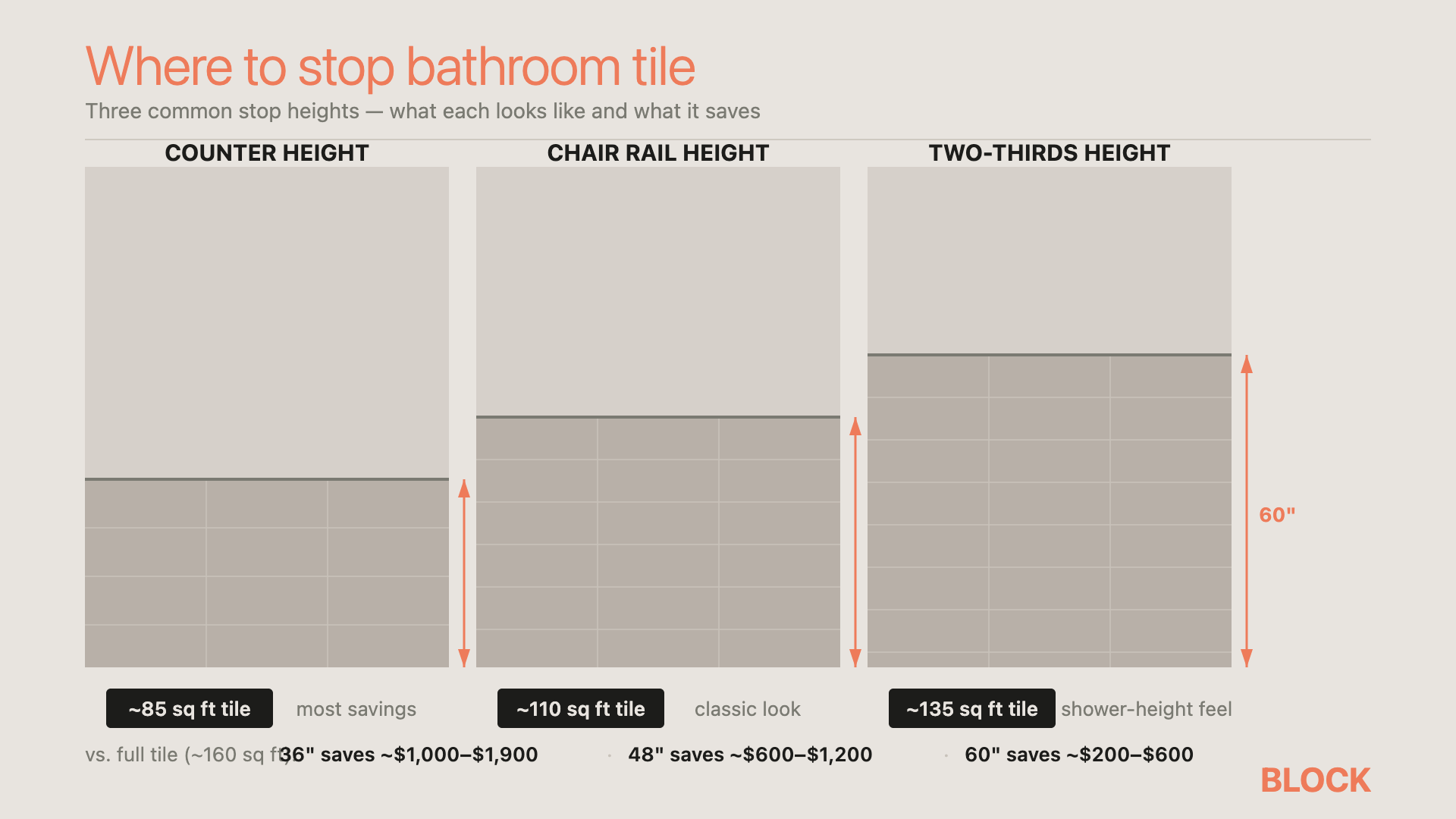
Here's the truth: chair-rail height it's the default recommendation for half-tile walls but, many times, it's the wrong call for a modern bathroom. Chair-rail proportions were built for traditional rooms with ornate trim, not for contemporary spaces with clean fixtures and flat walls. 48" tall doesn't read quite as "designed" or "intentional" as the other two options.
Whichever height you choose for your half-tile walls, the key is alignment. Tile that ends at a window sill, door casing, mirror frame, or fixture edge will almost always look more intentional than tile that stops at an unrelated point on the wall. When in doubt, hold a level at the proposed height and check how it relates to everything else in the room before committing.
Half tile walls can elevate a bathroom, but small missteps can undermine the effect. Because two finishes meet on the same wall, there’s also a higher risk of visual clutter if elements aren’t coordinated carefully.
Ending tile at an arbitrary height: Tile should stop at a logical architectural or functional point, such as vanity height or a window sill. Random cutoffs can make the wall feel unfinished or accidental. Measuring against fixtures and sightlines helps avoid this issue.
Ignoring transitions: Skipping trim, edge profiles, or clean transitions between tile and wall finish can make the half wall look abrupt. A defined edge signals intention and craftsmanship. This is especially important when tile thickness differs from the wall finish.
Overcomplicating patterns and finishes: Busy tile paired with bold wallpaper or strong paint above can overwhelm the room. When one surface is visually active, the other should be calmer. Balance keeps the design readable and cohesive.
Watch out for mismatched undertones: A "warm white" tile next to a "cool white" paint will look fine in the showroom and wrong on your wall. The fix is simple but most homeowners skip it: tape your tile sample and a painted paper sample directly to the bathroom wall, then check them at 8 a.m., 2 p.m., and under the bathroom light at night. If any of the three looks off, one of the samples has to go. Bathroom lighting is usually cooler than showroom lighting, which is why choices that felt safe in the store start looking green or pink once they're installed.
Plan the transition edge before you buy the tile: Thin tile (anything under about 3/8 of an inch) sits nearly flush with the drywall above it, which sounds like a feature but looks rough once it's installed. You'll want to decide upfront how that edge gets finished: a metal trim profile (Schluter is the standard), a matching bullnose tile if the line is available, or a wood chair rail that covers the transition entirely. Pick one before you order, not after. Trying to improvise a clean edge on site is where half-tile installations usually go wrong.
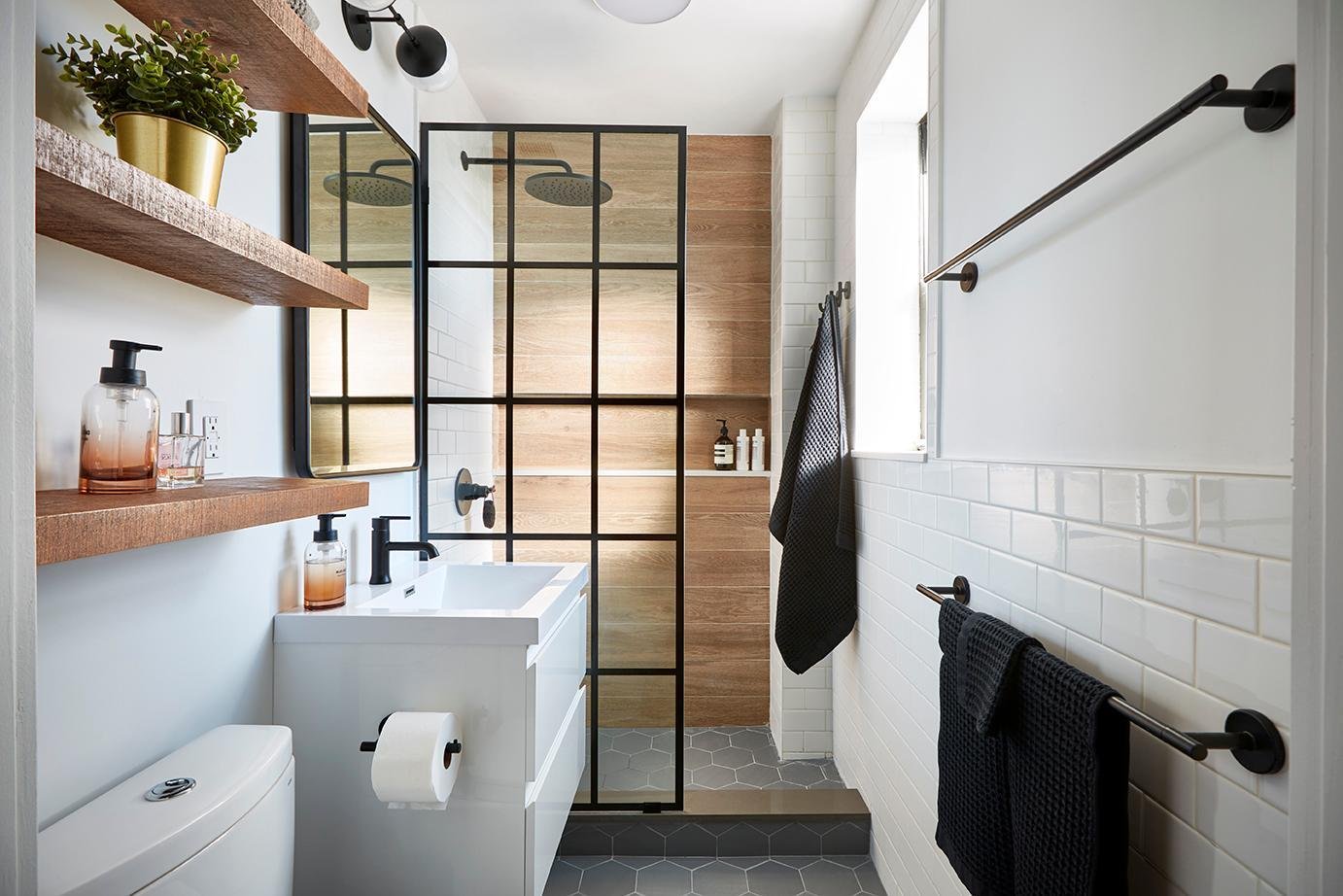
The hardest part of a half-tile design is imagining the finished room from a handful of samples on a counter. A 4-inch tile chip next to a paint swatch tells you almost nothing about how the proportions will feel at 36 inches up a 9-foot wall. Our free bathroom visualizer lets you build a to-scale render of your bathroom and test different tile heights, materials, and upper-wall finishes before you commit to an order. Seeing the room at actual proportions usually makes the right answer obvious in about five minutes.
Half-tile is one of those designs that looks easy and is not. The entire effect depends on the transition line being dead level around the entire room, which is harder than it sounds in older homes where floors slope and ceilings wave. A tile installer who's rushing will set the line off the floor (which will look crooked because the floor is) instead of off a laser level. When you're hiring for this job, ask directly how they plan to level the tile line and what trim profile they're planning to use at the top edge. If you don't get a confident, specific answer, keep looking. Block matches you with contractors who've done this work before and have the references to prove it.
Remodel with confidence through Block
Connect to vetted local contractors
We only work with top-tier, thoroughly vetted contractors

Get expert guidance
Our project planners offer expert advice, scope review, and ongoing support as needed
Enjoy peace of mind throughout your renovation
Secure payment system puts you in control and protects your remodel

Renovate confidently with Block
Easily compare quotes from top quality contractors, and get peace of mind with warranty & price protections.
Tile
Made in USA Tiles: 15 Brands to Love
07.11.2026
Tile
Bathroom Accent Wall Ideas: A Practical Tile Guide
04.24.2026
Tile
Best Tile Brands for Porcelain, Vinyl & More
03.20.2026
Tile
2026 Bathroom Tile Trends for Walls & Floors
03.03.2026
Tile
Mixing Bathroom Tiles for a Contemporary Look
02.25.2026