



Tile
Made in USA Tiles: 15 Brands to Love
07.11.2026
12.12.2025


In This Article
The typical cost to install a kitchen backsplash is $900 to $3,500 for most 20 to 40 square foot areas. Price ranges tend to vary from $25 to $90 per square foot installed, depending on the material.
But that's not the full story. A backsplash is one of the cheapest surfaces in a kitchen remodel and one of the most visible, which is exactly why so many homeowners spend more on theirs than they should. The difference between the cheapest defensible choice and the most expensive one is usually about $2,000 on a typical 30 square foot run. That $2,000 could be buying you a dramatically better-looking kitchen, or it could be buying you a marginal upgrade you'll stop noticing within six months.
Backsplash materials can vary significantly in both appearance and price. Below are the most popular options, including estimated costs for materials and installation. Your final price depends on the tile you select, the installation pattern, the amount of prep work, your grout choice, and your local labor market.
|
Material |
Materials Cost (per sq. ft.) |
Labor Cost (per sq. ft.) |
Total Cost (per sq. ft.) |
|
Ceramic tile |
$2–$10 |
$10–$35 |
$12–$45 |
|
Porcelain tile |
$4–$20 |
$12–$40 |
$16–$60 |
|
Glass tile |
$7–$30 |
$15–$45 |
$22–$75 |
|
Natural stone tile |
$8–$40 |
$15–$45 |
$25–$90 |
|
Mosaic sheets |
$8–$35 |
$15–$45 |
$25–$80 |
|
Peel-and-stick tile |
$5–$15 |
$5–$15 |
$10–$30 |
|
Stainless steel panels |
$10–$30 |
$10–$30 |
$20–$60 |
|
Solid-surface or quartz slab |
$45–$120 |
$25–$60 |
$70–$180 |
Ceramic tile is affordable, versatile, and easy to maintain. This material is available in a range of shapes, sizes, and finishes to fit nearly any kitchen style. Materials usually cost $2–$10 per square foot, and labor typically ranges from $10–$35 per square foot. Subway configurations and other classic layouts are usually straightforward to install, while decorative patterns and premium trim pieces can increase the total cost.
Porcelain tile stands out for its durability and resistance to stains and moisture. It is a great choice for busy kitchens and can also mimic the look of natural stone, often with less upkeep. Materials cost $4–$20 per square foot; labor generally falls between $12–$40 per square foot due to the extra effort required for cutting and setting porcelain. Homeowners often choose porcelain for both style and resilience.
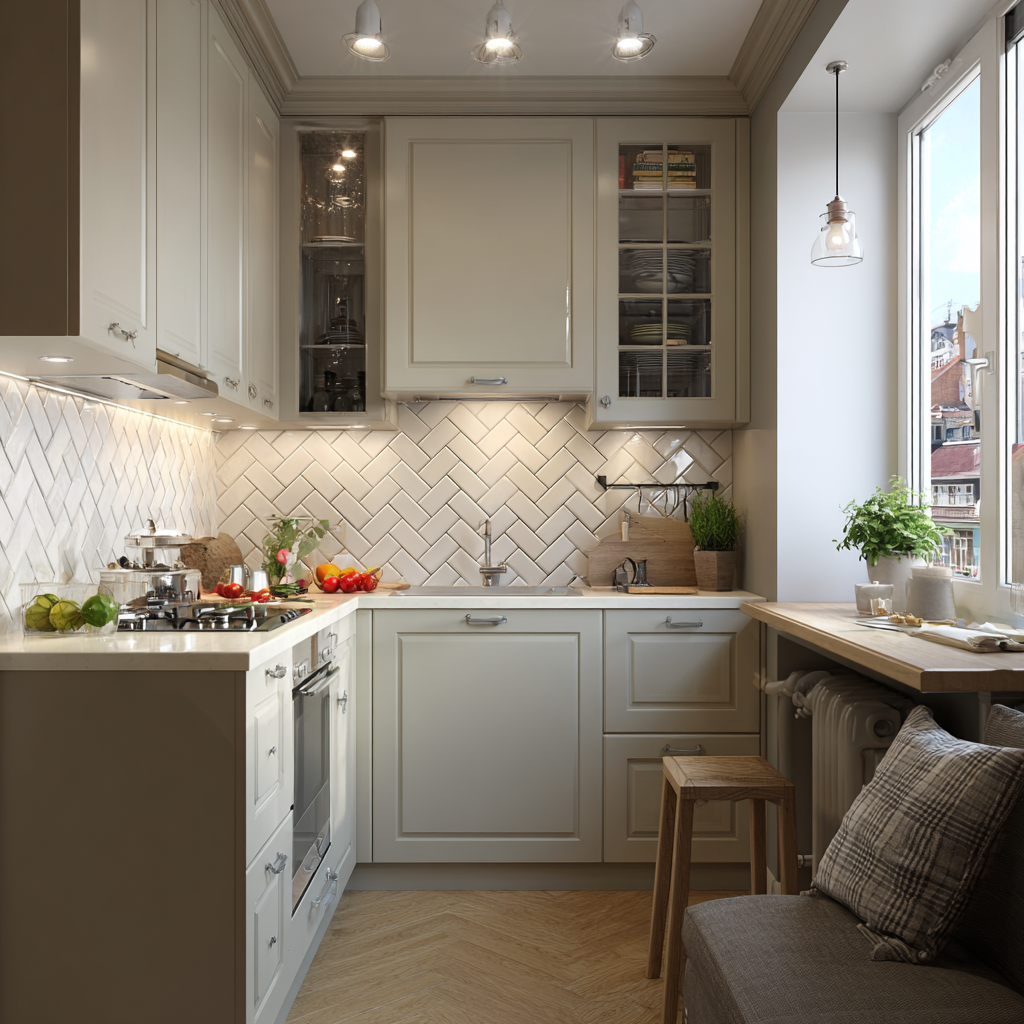
Glass tile creates a glossy, colorful accent and reflects light beautifully, making kitchens feel brighter and more vibrant. Materials cost $7–$30 per square foot, while labor is usually $15–$45 per square foot. This type of tile requires precision in installation to ensure smooth edges and even spacing, especially with transparent or iridescent options. A glass backsplash offers a dramatic impact but comes with a higher price for both materials and expert installation.
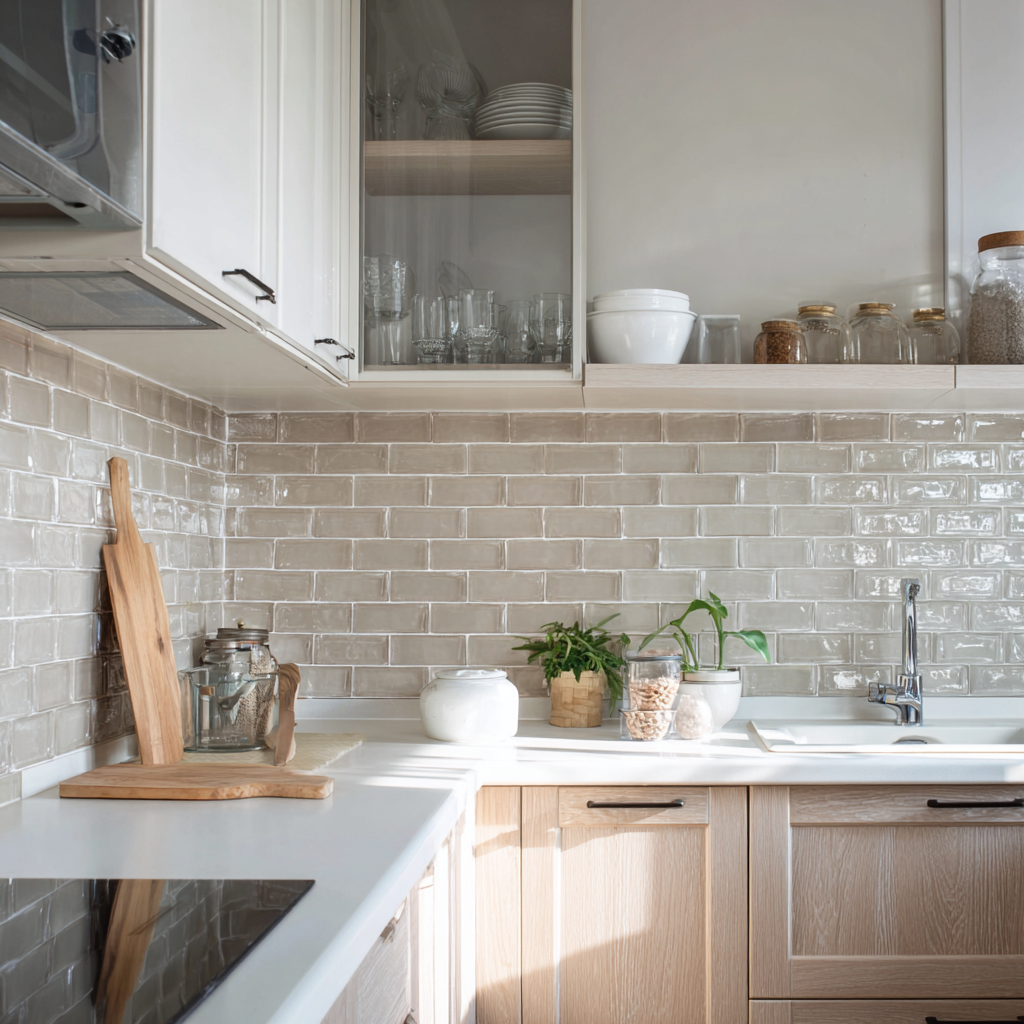
Natural stone, like marble, travertine, or slate, provides a unique pattern and texture to every space. Materials usually range from $8–$40 or more per square foot. Labor typically adds $15–$45 per square foot, as stone requires leveling and extra care in sealing and finishing. Many choose natural stone for its warmth and character, though it does require more maintenance to keep looking its best.
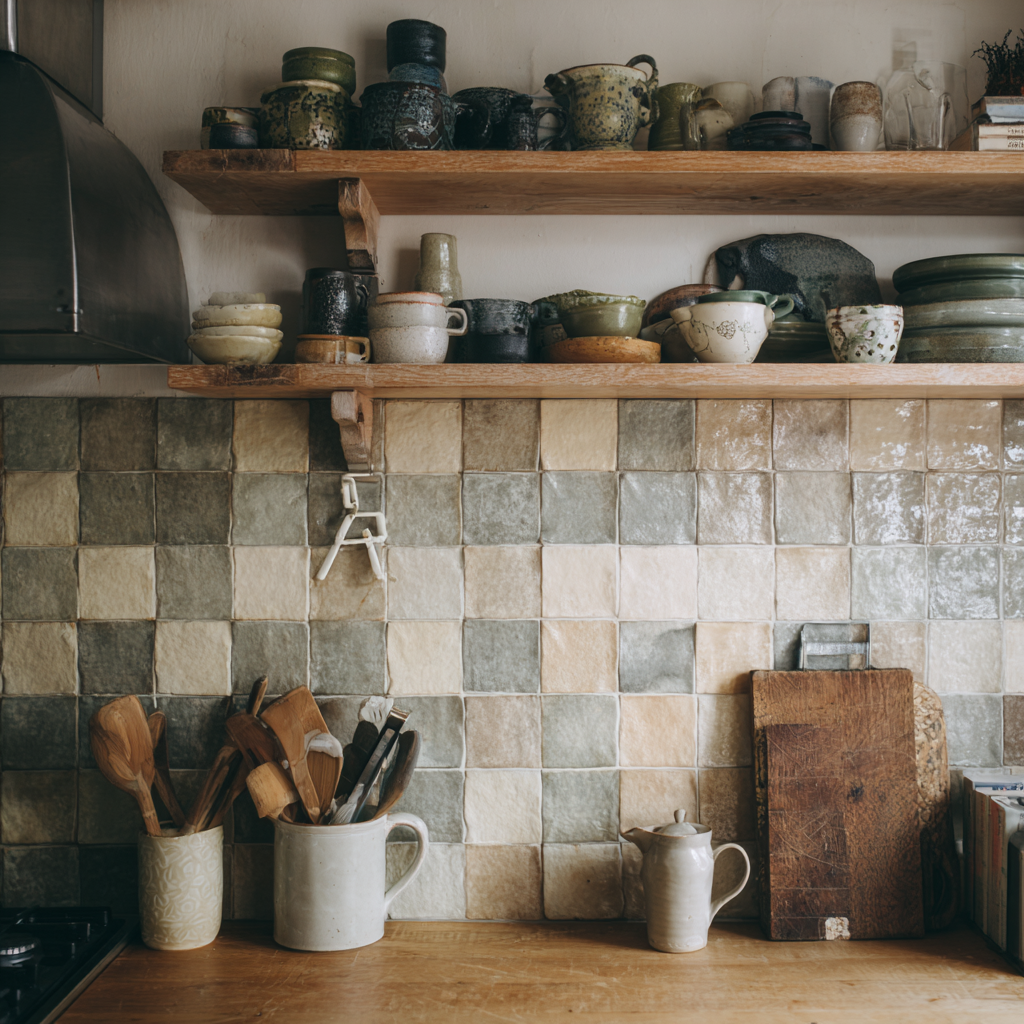
Mosaic sheets come as pre-arranged small tiles on a mesh backing, typically in ceramic, glass, or stone, which lets an installer set a square foot of intricate pattern at a time instead of placing each tile individually. This backsplash materials run $8 to $35 per square foot, and labor runs $15 to $45.
Mosaic tiles are not the optimal choice for resale value because they are so distinct and steals attention. Some would even go as far as to call this look "dated" if not styled correctly. If you're in love with the color and verve of this look, pair this backsplash with gray or white cabinets to confirm the overall aesthetic isn't too busy.
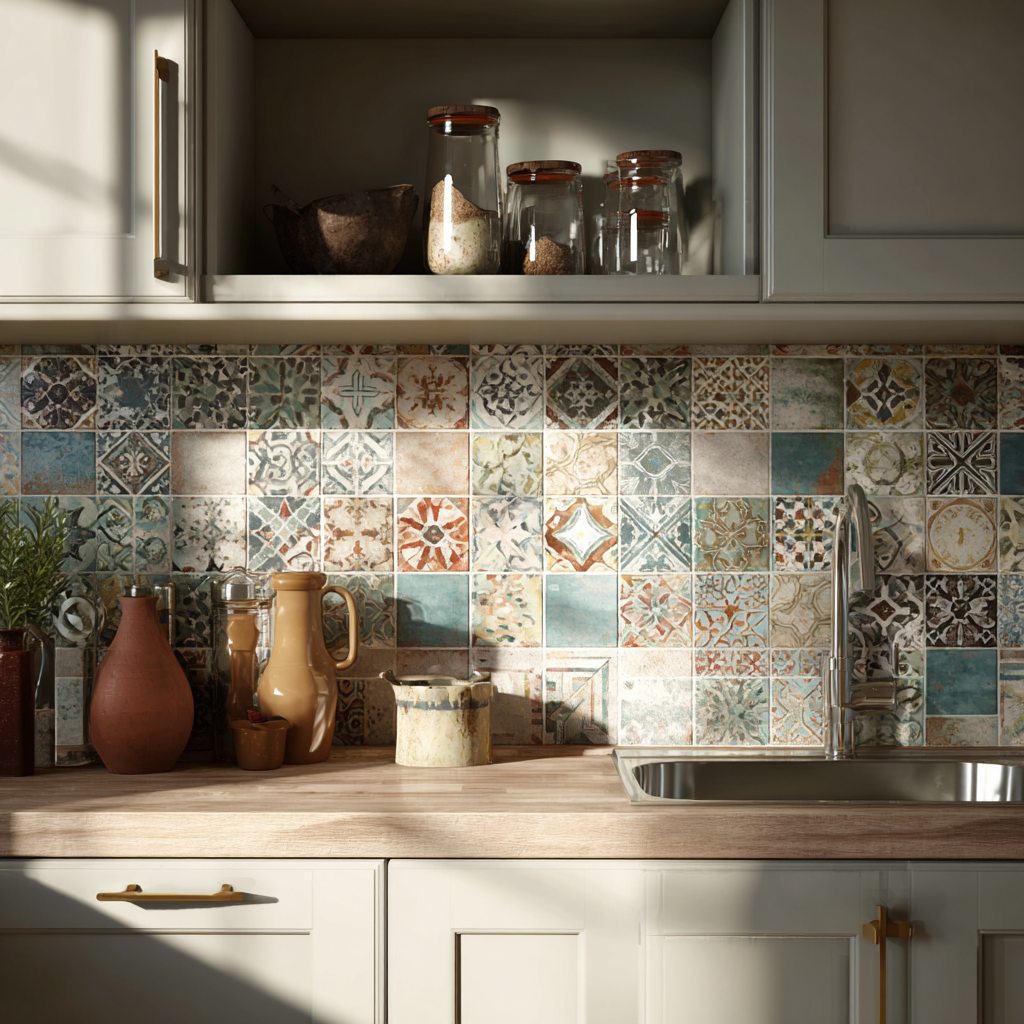
Peel-and-stick tiles are a fast, budget-friendly solution for a quick kitchen refresh. Materials are usually $5–$15 per square foot, and installation can often be done by homeowners, with professional labor typically costing $5–$15 per square foot. These products are easier to remove and replace, making them appealing for renters or anyone seeking a temporary update. Note that peel-and-stick tile may not stand up to long-term wear,heat, and grease as well as traditional options.
Stainless steel panels offer a clean and modern look, and their heat resistance makes them a smart choice behind ranges and stoves. Materials average $10–$30 per square foot, with labor coming in at $10–$30 per square foot. Stainless is easy to clean, though installation may require specialized cuts to fit around outlets or corners.
Stainless steel backsplashes make the most sense in a residential context: behind a serious range where the homeowner actually cooks at high heat, uses a wok, or has a gas burner that throws flame. Outside that specific use case, stainless is a design affectation borrowed from commercial kitchens that doesn't translate to most homes. It shows every fingerprint, every water spot, and every smudge, which means it demands more daily maintenance. If you're not actually cooking at commercial intensity, skip it.
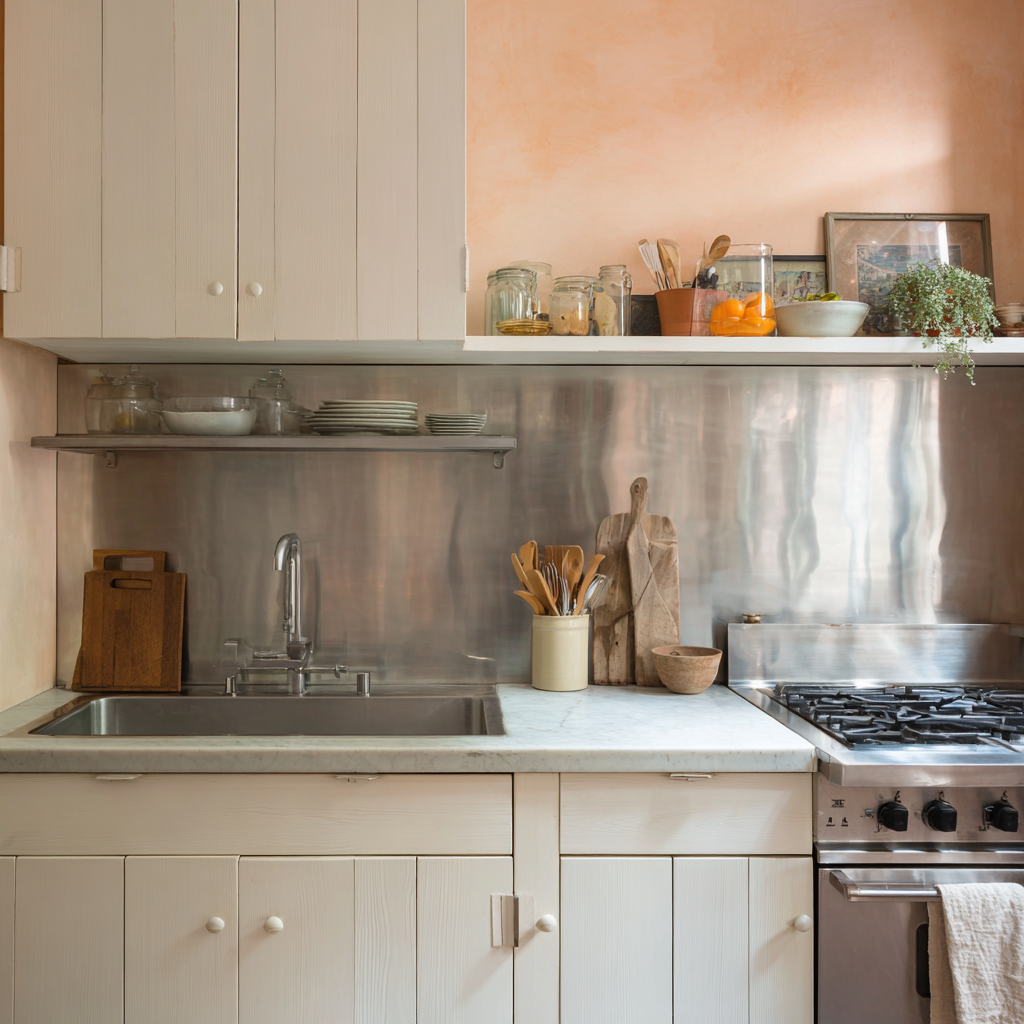
A solid-surface or quartz slab backsplash delivers a seamless appearance with minimal joints and easy care. These materials are premium options, with slabs costing $45–$120 or more per square foot and labor typically adding $25–$60 per square foot for installation and finishing.
A full-slab backsplash that continues the countertop up the wall is one of the best design moves available in a contemporary kitchen, and paying $70 to $180 per square foot for it is usually a deal given what it does for the room. But paying the same money for a slab backsplash that doesn't match the countertop is one of the worst value decisions. If you're going to install it as a standalone surface with different material below, you're paying premium prices for a look you could get from 12x24 porcelain at a third of the cost.
Know the Cost Before You Start
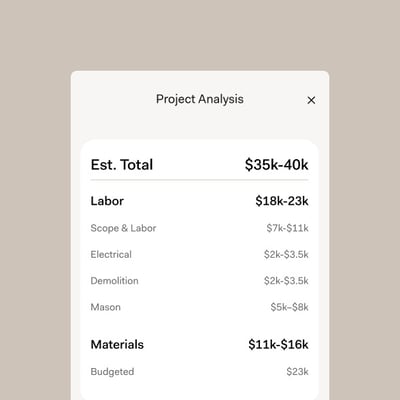
In general, straightforward installations with larger tiles are usually more budget-friendly, while layouts with small, detailed tiles tend to raise both material and labor expenses.
Large-format tiles often require fewer grout lines and can speed up the installation of your kitchen backsplash, which may lower labor costs for simple layouts. However, cutting large tiles to fit around outlets or corners can take extra time and sometimes leads to more material waste. Smaller tiles, especially mosaics or intricate patterns, may cost more to install because they demand greater precision and more time to ensure accurate spacing and alignment.
Homeowners ask about DIYing a backsplash constantly, and the honest answer is that the math is worse than it looks. The labor cost you're trying to save is typically $500 to $1,200 on a standard 30 square foot installation, but the tool investment alone eats a meaningful chunk of that: a usable wet saw runs $150 to $400, a tile nipper and spacers add another $50, and premium thinset and grout add $75 to $150 on top of your material costs. Before you've laid a single tile, you've already spent $275 to $600 of your projected $500 to $1,200 in savings.
Then there are the mistakes. A first-time tile installer almost always makes at least one of the following: uneven grout lines that are visible for the life of the kitchen, tiles set proud of the wall that catch shadows from the under-cabinet lighting, cuts around outlets that are slightly off and leave gaps, and mitered corners that crack within six months because the installer didn't account for thermal expansion. None of these are catastrophic, but all of them are visible every single time you cook.
Fixing them after the fact usually means tearing out the entire run and starting over. The real cost of a botched DIY backsplash is the $2,000 to $4,000 you spend redoing it professionally a year later.
The best way to save money on a kitchen backsplash install is to plan ahead. Before you start calling in tile samples, consider the following.
The single hardest part of choosing a backsplash is imagining the finished wall from a 4-inch sample chip at the tile store. Small samples lie. A tile that looks muted on a sample card often reads as busy at full scale, and a tile that looks boring in the showroom often becomes the best part of the room once it's installed.
Block’s Renovation Studio lets you render your actual kitchen with different backsplash materials at real proportions, so you can see how a glass mosaic reads against your specific cabinet color before you commit to a $3,000 order. Spending 15 minutes in the Studio has saved countless homeowners from making a tile choice they'd regret for the next decade.
Block matches you with vetted local tile installers who've done this specific kind of work before, and every contractor in the network backs their installation with a one-year workmanship warranty. You'll receive detailed proposals you can compare side by side, with expert scope review from a Block project planner who flags unrealistic line items before you commit.
Payments are held securely and released as work is completed against approved milestones, so your installer stays accountable and your money stays protected. Get started in under five minutes and have matched contractor proposals in your dashboard within the week.
Remodel with confidence through Block

Connect to vetted local contractors
We only work with top-tier, thoroughly vetted contractors

Get expert guidance
Our project planners offer expert advice, scope review, and ongoing support as needed
Enjoy peace of mind throughout your renovation
Secure payment system puts you in control and protects your remodel

Renovate confidently with Block
Easily compare quotes from top quality contractors, and get peace of mind with warranty & price protections.
Tile
Made in USA Tiles: 15 Brands to Love
07.11.2026
Backsplash
Rustic Backsplash Ideas That Survive a Real Kitchen
06.17.2026
Tile
Bathroom Accent Wall Ideas: A Practical Tile Guide
04.24.2026
Paint & Color
Backsplash Ideas to Flatter Gray Cabinets
04.17.2026

Backsplash
Wallpaper as a Kitchen Backsplash: Ideas & Practical Advice
04.14.2026