



Tile
Bathroom Accent Wall Ideas: A Practical Tile Guide
04.24.2026
03.03.2026


In This Article
Tile is the single most defining decision in a bathroom renovation. It sets the mood before a single fixture is chosen, shapes how the space feels at every hour of the day, and determines how the room will hold up—and hold its appeal—for years to come. Getting it right is one of the most rewarding parts of a bathroom project. Getting it wrong is expensive to fix.
The bathroom tile trends heading into 2026 reflect a broader shift in how homeowners think about the spaces they live in. The cool, minimal, all-white bathroom that dominated the last decade is giving way to something warmer, more personal, and more expressive. Natural materials, handmade finishes, earthy color palettes, and bold pattern choices are all gaining ground—and the result is bathrooms that feel genuinely designed rather than simply finished.
Turn your renovation vision into reality
Get matched with trusted contractors and start your renovation today!
Find a Contractor
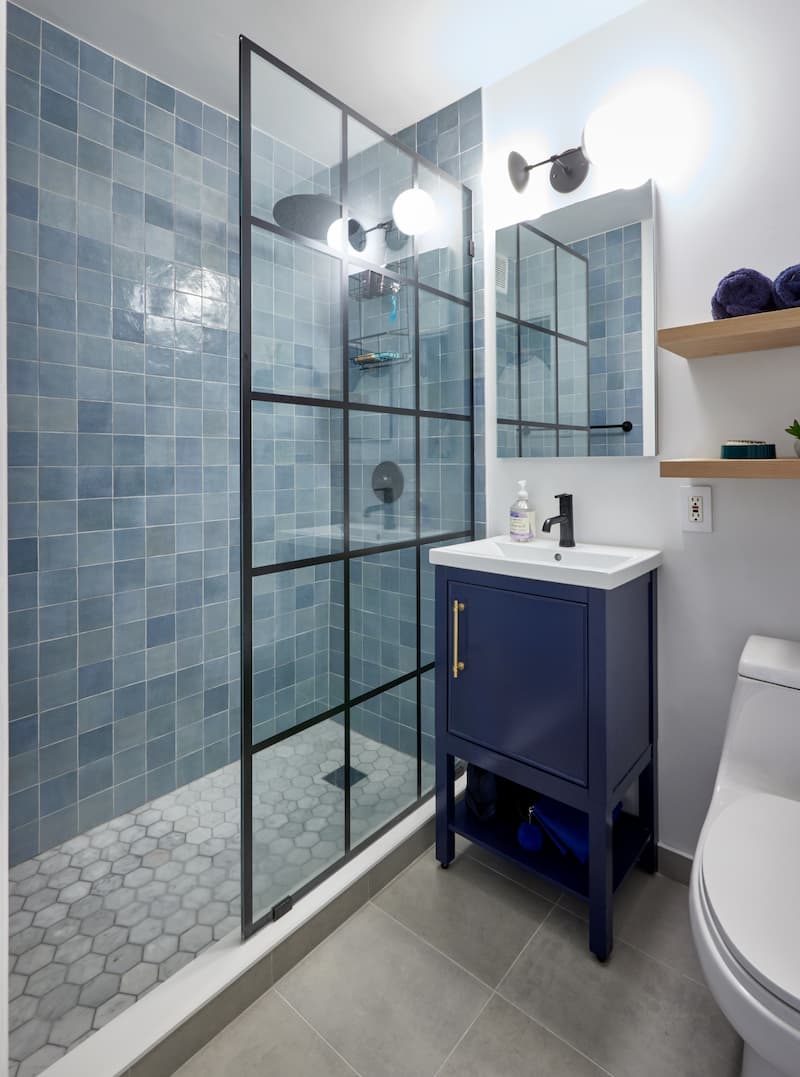
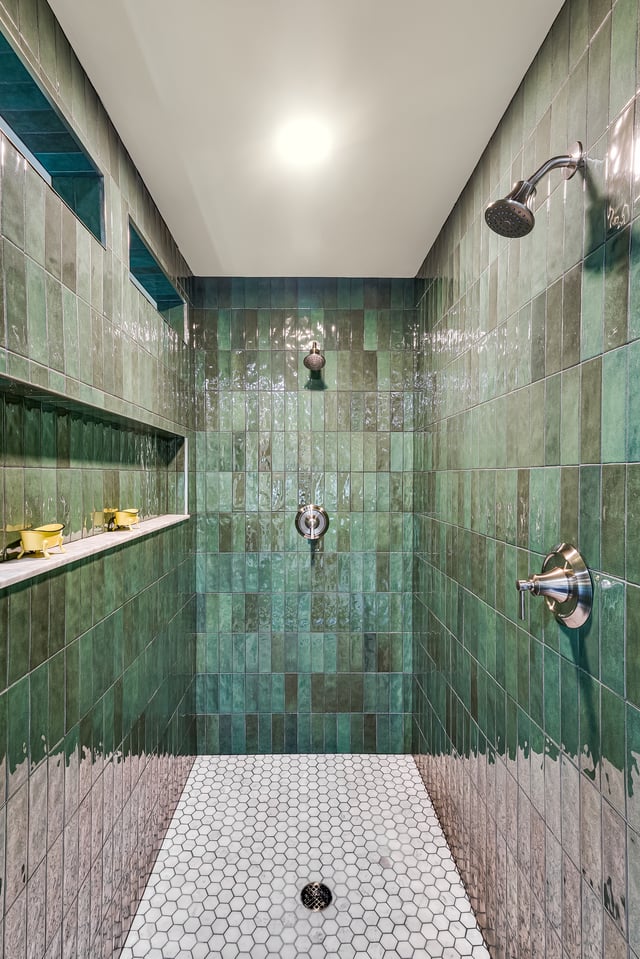
One of the strongest bathroom tile trends for 2026 is the move toward zellige and handmade-style tiles—square tiles with subtle glaze variation, slightly uneven edges, and a handcrafted quality that mass-produced tile can't replicate. No two tiles are exactly alike, which is precisely the point. They work particularly well paired with an oak vanity, brass fixtures, and plaster or limewash painted walls above.
One practical note: because this tile trend involves natural variation in thickness and surface, installation requires an experienced tiler. This affects both timeline and labor cost, so discuss it with your contractor before selecting.
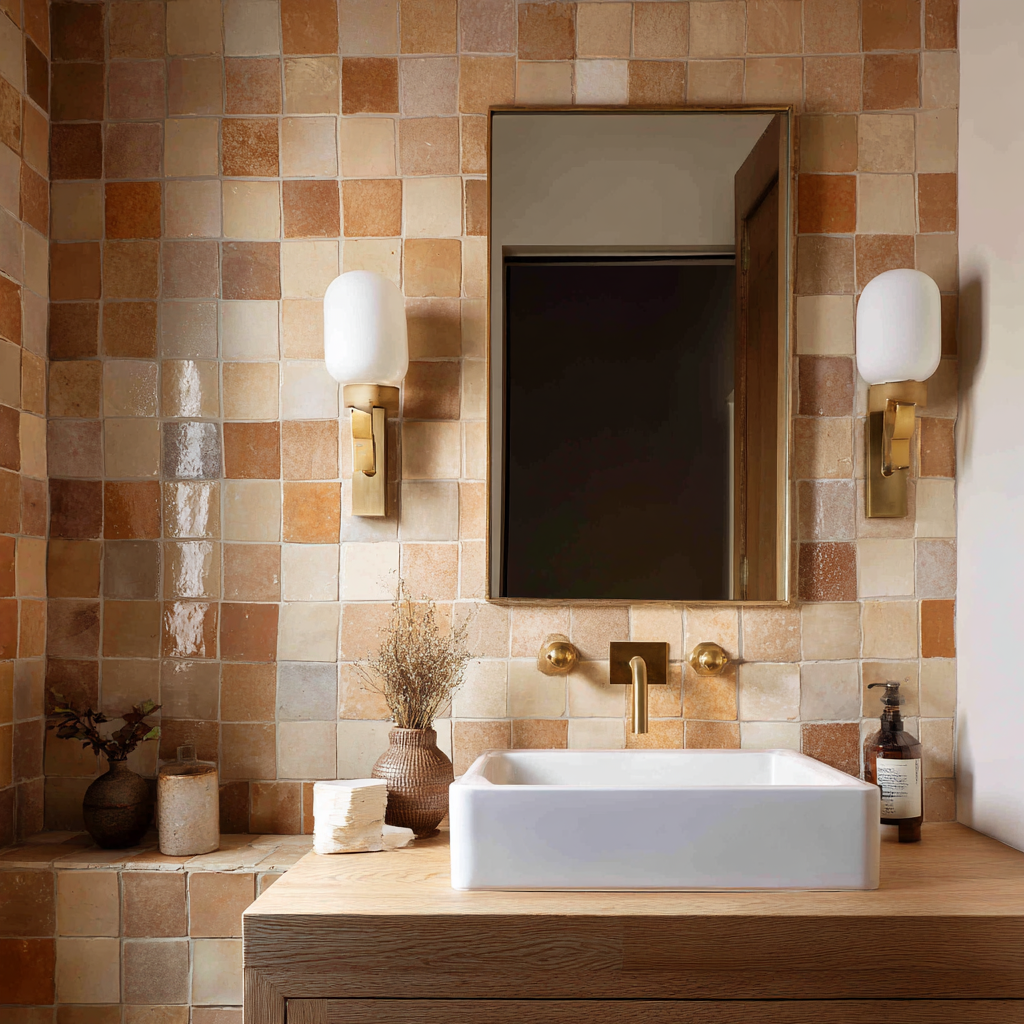
Among the most significant current bathroom tile trends is the shift away from cool gray and stark white toward warmer, earthier palettes. Terracotta, sandy beige, warm taupe, dusty amber, and muted sage are all gaining ground—colors that feel grounded and connected to the natural world. These tones respond beautifully to natural light and pair naturally with brass fixtures, wood vanities, and organic accessories.
Lighter sandy and beige tones keep smaller bathrooms feeling open while still delivering warmth. Deeper terracotta and amber work best in larger bathrooms or powder rooms where you can afford to go bolder.
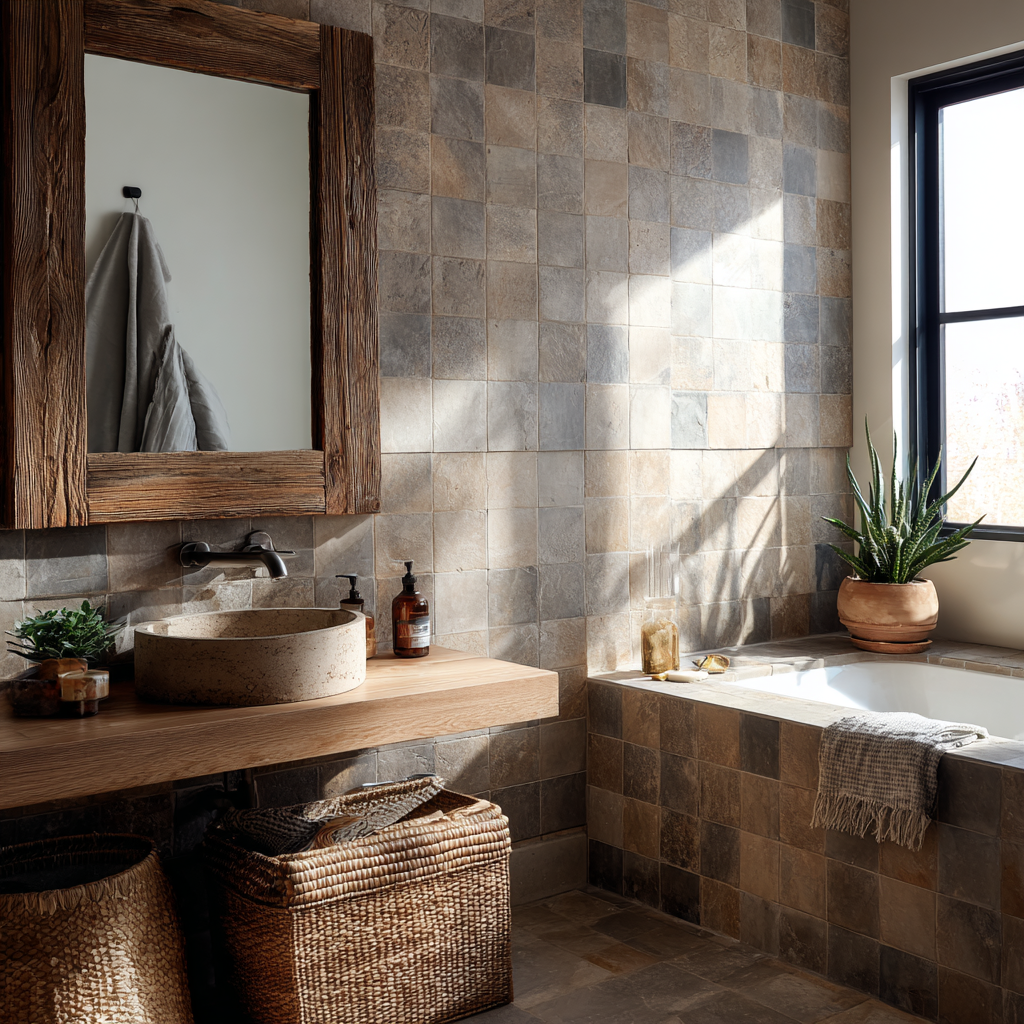
Tile drenching is one of the most talked-about bathroom tile trends for 2026—running the same tile continuously across the floor, walls, and shower area to create a cohesive, immersive space. The look works especially well with terracotta or earthy square tiles, where the warm tone wraps the entire room in a consistent mood. Grout color matters enormously: a close-matched grout reinforces the effect, while a contrasting grout will break it.
This trending approach works better with matte or honed tiles than high-gloss finishes, which can feel overwhelming when applied to every surface. Your contractor will need to plan the layout carefully to ensure tiles align cleanly across the transitions between floor and wall.
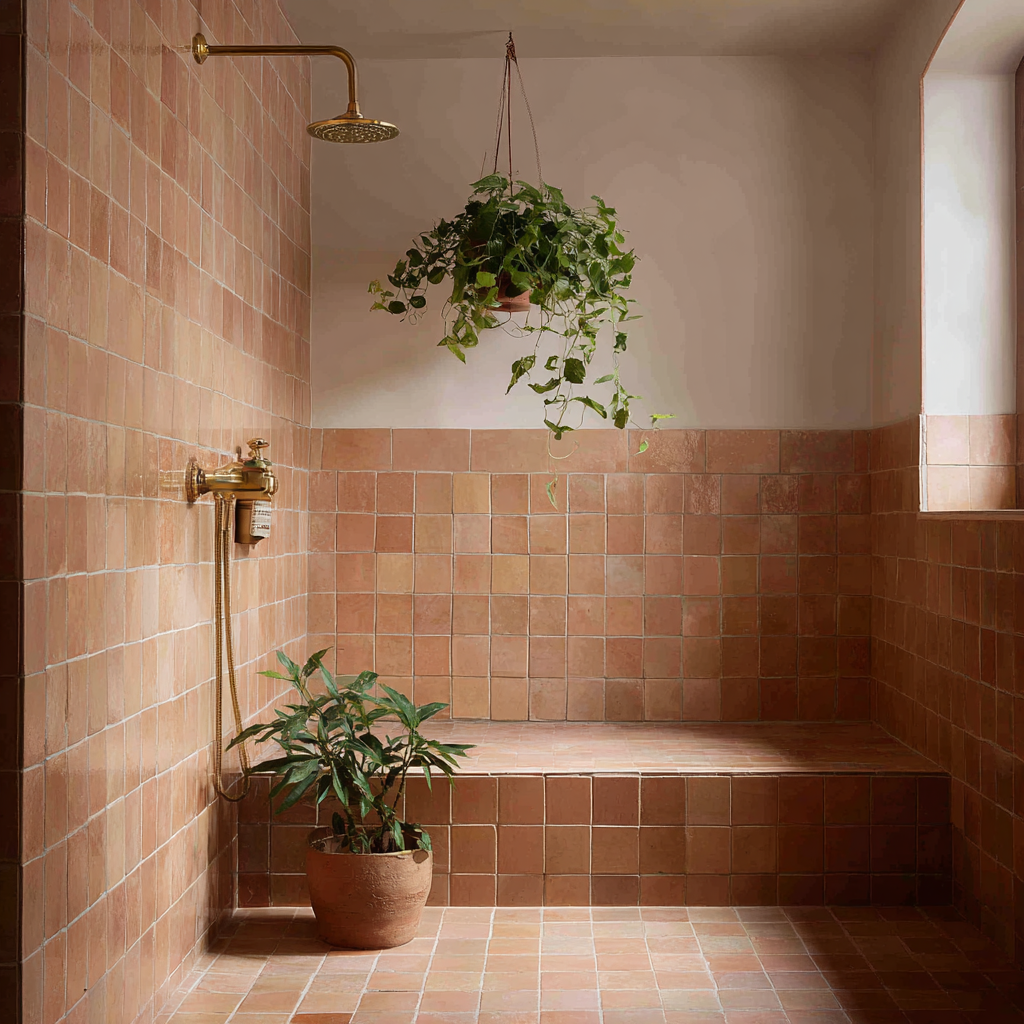
Large-format porcelain tile—typically 24x24 inches or larger—continues to be one of the most popular bathroom tile trends for homeowners who want a space that feels open and refined. Fewer grout lines mean fewer places for dirt and moisture to accumulate, and the visual continuity makes even a modest bathroom feel more spacious.
The key is careful installation: grout color should be closely matched to the tile, and the layout should be planned so cuts are consistent and symmetrical. Discuss the layout plan with your contractor before the tile is ordered—precision is what makes this trend work.
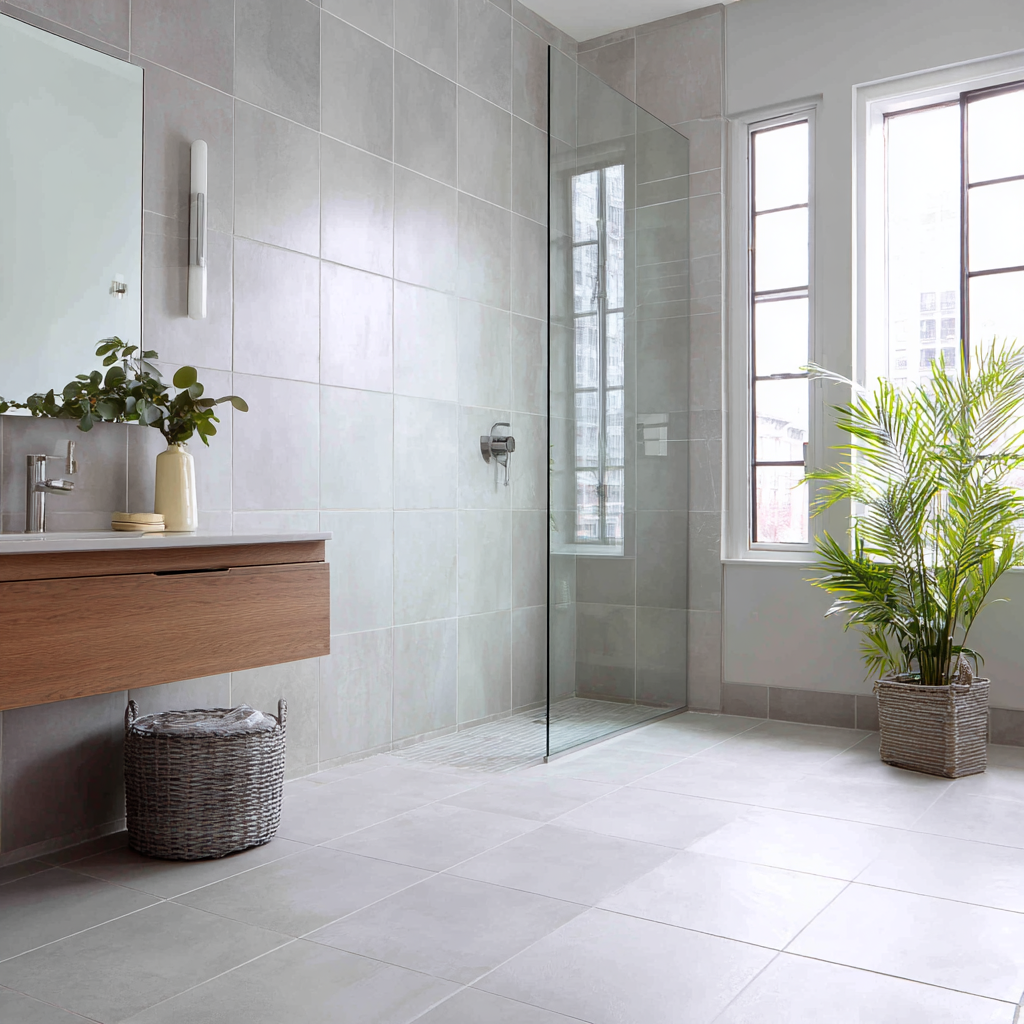
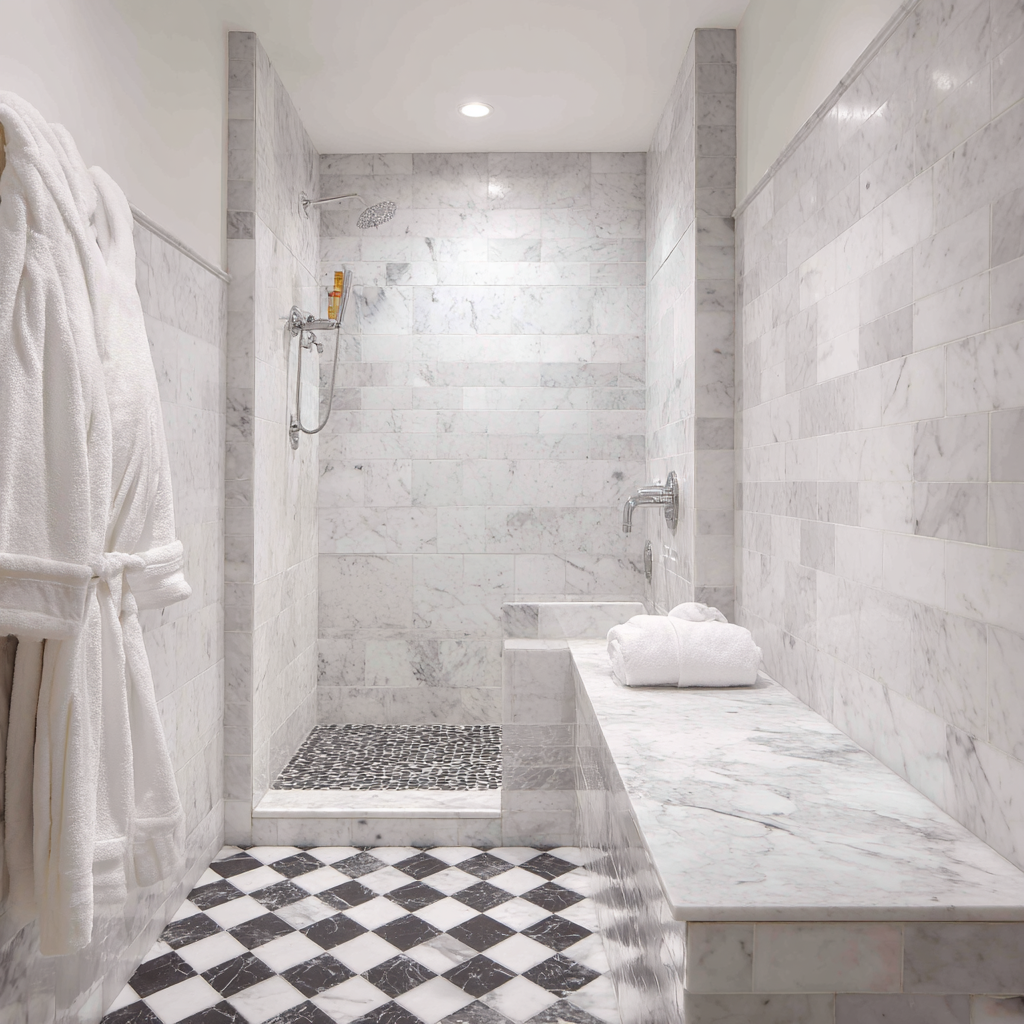
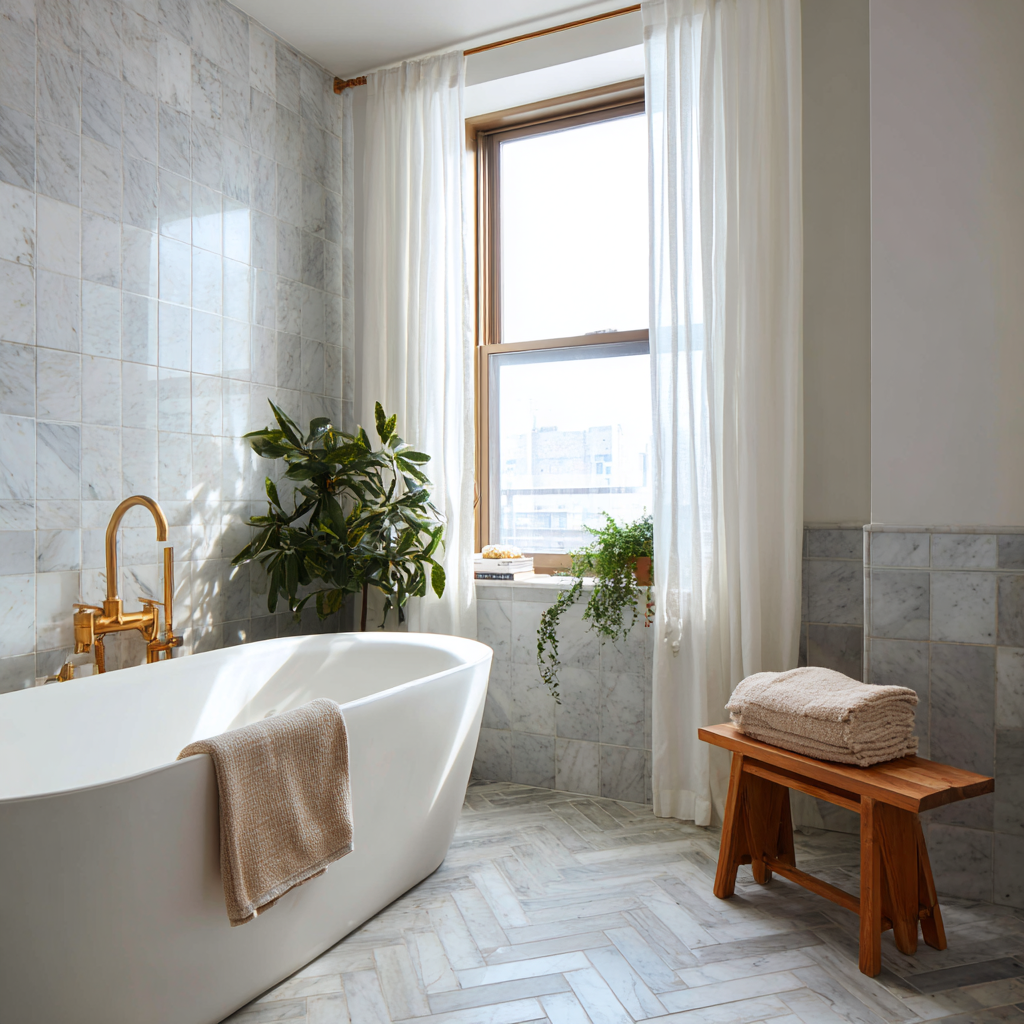
Marble is enjoying a particularly strong moment in current bathroom tile trends. Square marble tiles on walls paired with a classic checkerboard marble floor is showing up across a range of styles—from traditional to contemporary spaces that want pattern without committing to color. High-quality porcelain alternatives have closed the gap significantly for homeowners who want the look without the maintenance demands of natural stone.
The checkerboard floor pairing is one of the most versatile expressions of this theme—it adds rhythm and personality without introducing color. Keep the checkerboard to the floor and let the walls breathe in a simpler format, and the combination feels classic rather than busy.
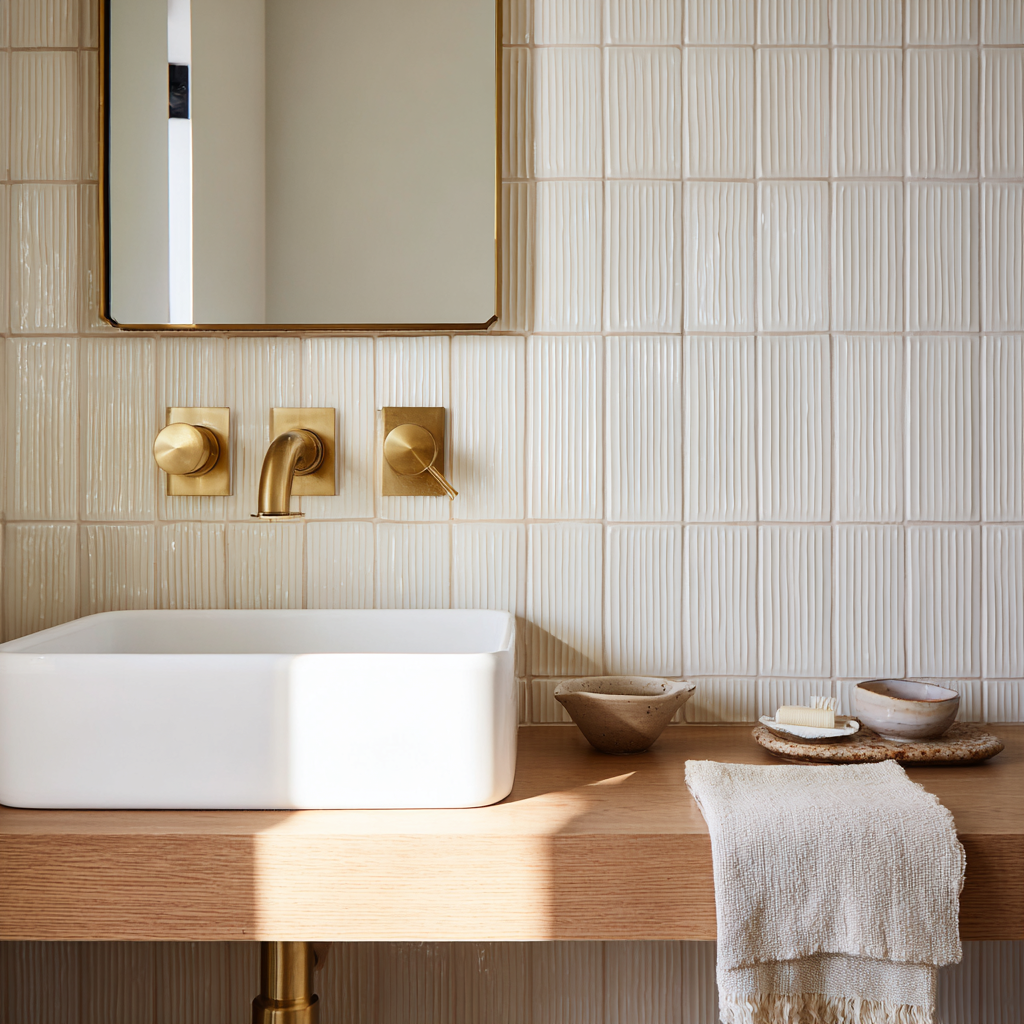
The all-matte era in bathroom tile is softening, and glazed square tiles are emerging as one of the notable bathroom tile trends for 2026. Tiles with a hand-applied quality and gentle sheen catch light differently throughout the day, creating a surface that feels alive rather than flat. Paired with unlacquered brass fixtures and a simple oak vanity shelf, this trending finish strikes a balance between refined and approachable that smooth matte tile rarely achieves.
These tiles work well as a full wall treatment or focused behind a vanity, where light from a sconce or overhead fixture can play across the surface. They're particularly effective in neutral palettes that might otherwise feel too quiet.
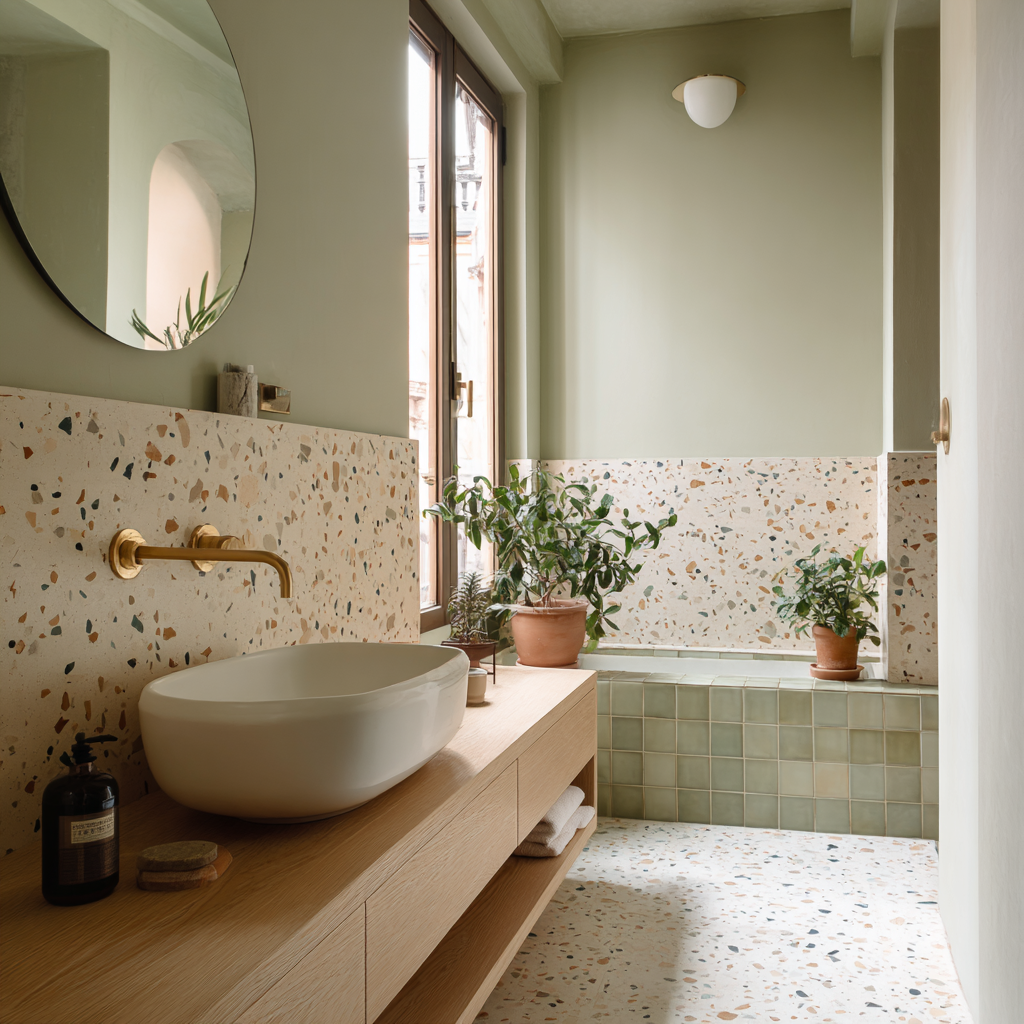
Terrazzo has been building momentum for several years, and in 2026 this tile trend is arriving in a more refined form. The large-chip, primary-color terrazzo of the past has given way to something warmer and more residential: cream, soft green, clay, and dusty sage chips in a lighter ground, with a palette that feels considered rather than retro.
As both a floor and wall tile trend, terrazzo creates a bathroom with genuine personality and warmth. It's durable, water-resistant, and relatively low maintenance—and its speckled surface hides everyday wear in a way that solid-color tile simply doesn't.
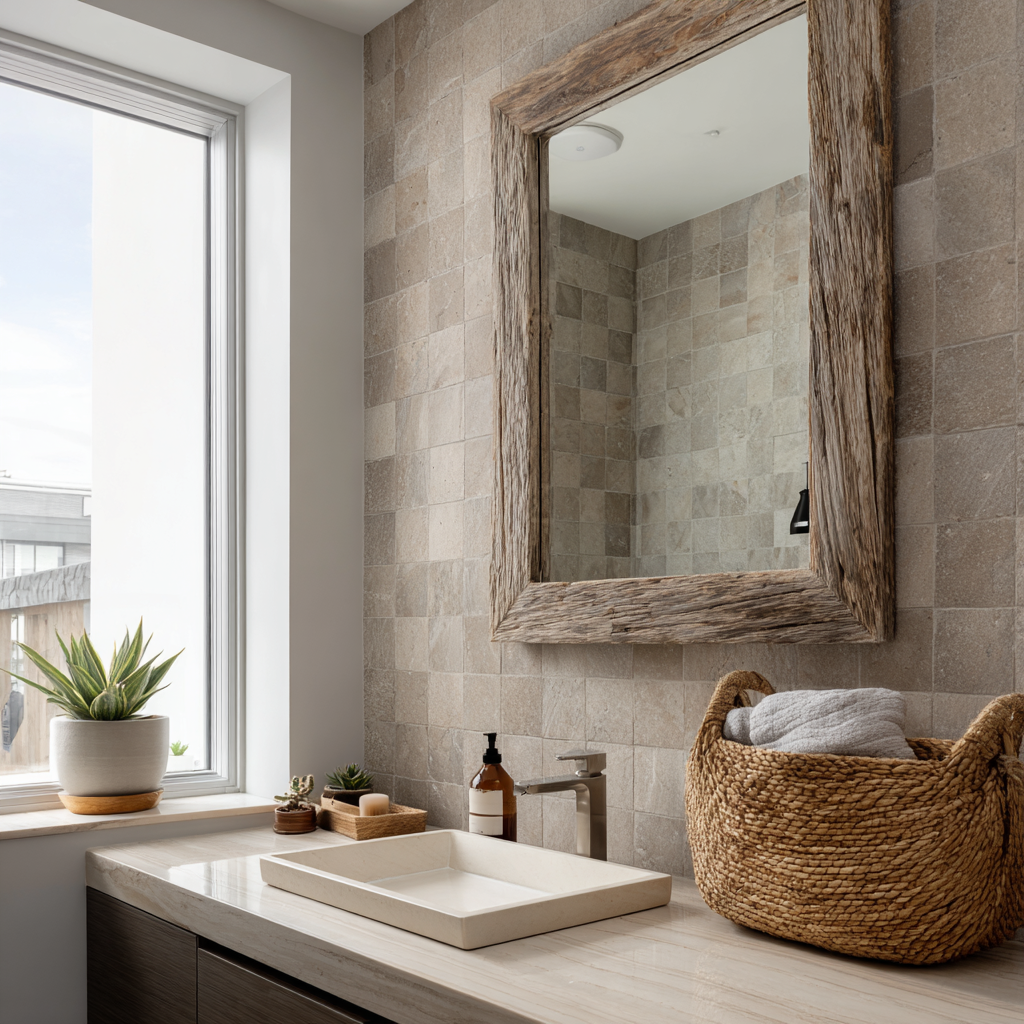
Among the latest bathroom tile trends, the move toward sustainable materials is one of the most meaningful. Porcelain tiles made with recycled content, terrazzo incorporating reclaimed stone, and tiles that convincingly mimic natural stone without the extraction impact are all gaining ground as the industry responds to growing demand. For most homeowners, the practical appeal aligns with the environmental one: better durability, lower maintenance, and more consistent sizing than natural stone.
When selecting tile in this category, ask your supplier about recycled content and production certifications. The quality and visual range of sustainable tile options has expanded significantly, and the best choices are genuinely difficult to distinguish from the natural materials they reference.
For homeowners who want their bathroom to feel genuinely expressive, bold geometric tile—particularly Art Deco-influenced patterns in black, white, and gold—is one of the more daring bathroom tile trends gaining traction for 2026. The key to this trend is containment: a geometric patterned floor and bold feature wall need to be balanced by restraint elsewhere—white walls, simple cabinetry, and minimal accessories let the tile make its statement.
This tile trend works particularly well in larger bathrooms or powder rooms, where the scale of the space can absorb the visual energy of a complex pattern. In a smaller bathroom, a bold geometric floor with plain walls delivers the same personality without overwhelming the room.
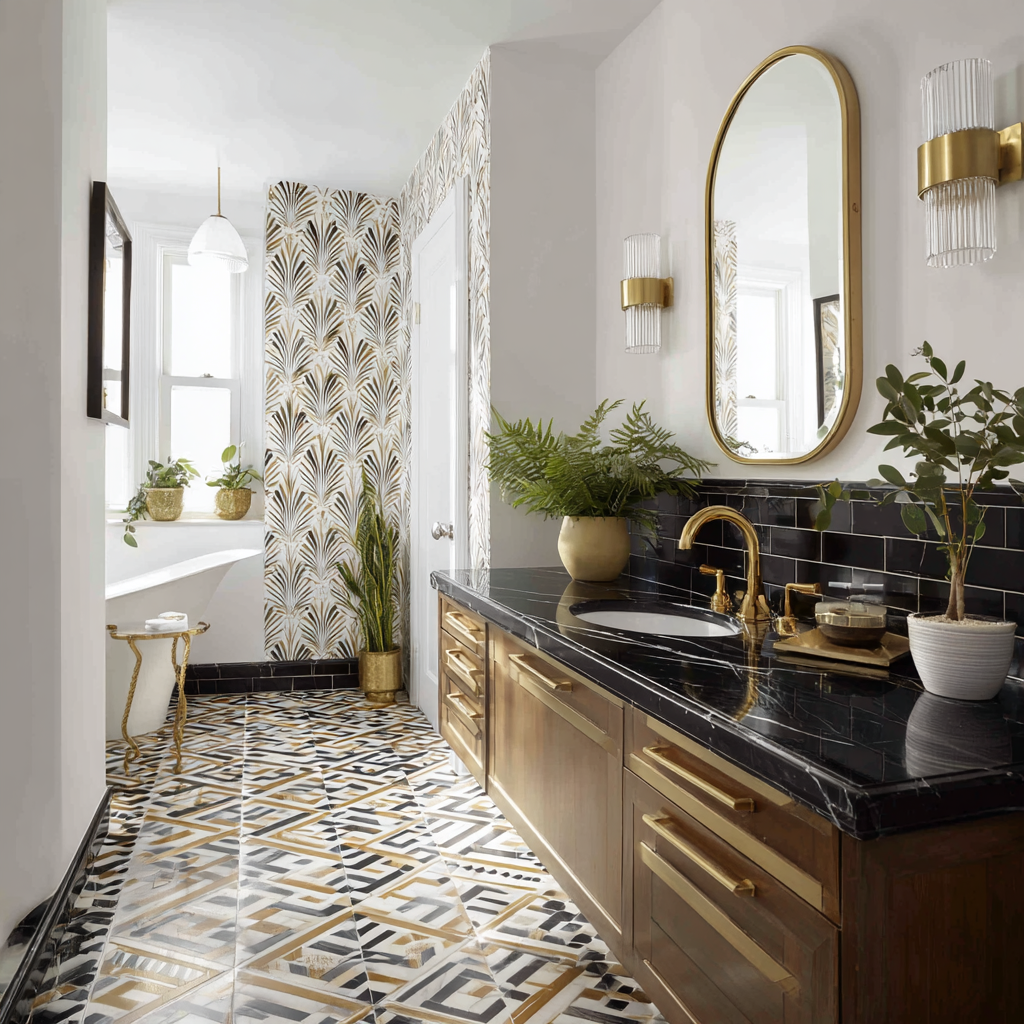
Color drenching—using a single bold color across floors, walls, and cabinetry—is one of the more adventurous bathroom tile design gaining traction for 2026. When executed with tile, the effect is striking: a bathroom where color is the architecture, not just an accent. A mid-century sensibility suits this approach naturally, pairing bold tile panels with warm wood vanities and terrazzo floors for a space that feels completely personal.
This tile trend is best suited to homeowners with a committed, confident vision. It's harder to evolve over time than a more neutral bathroom, and it requires careful attention to how colors relate to each other and to the fixed elements in the room.
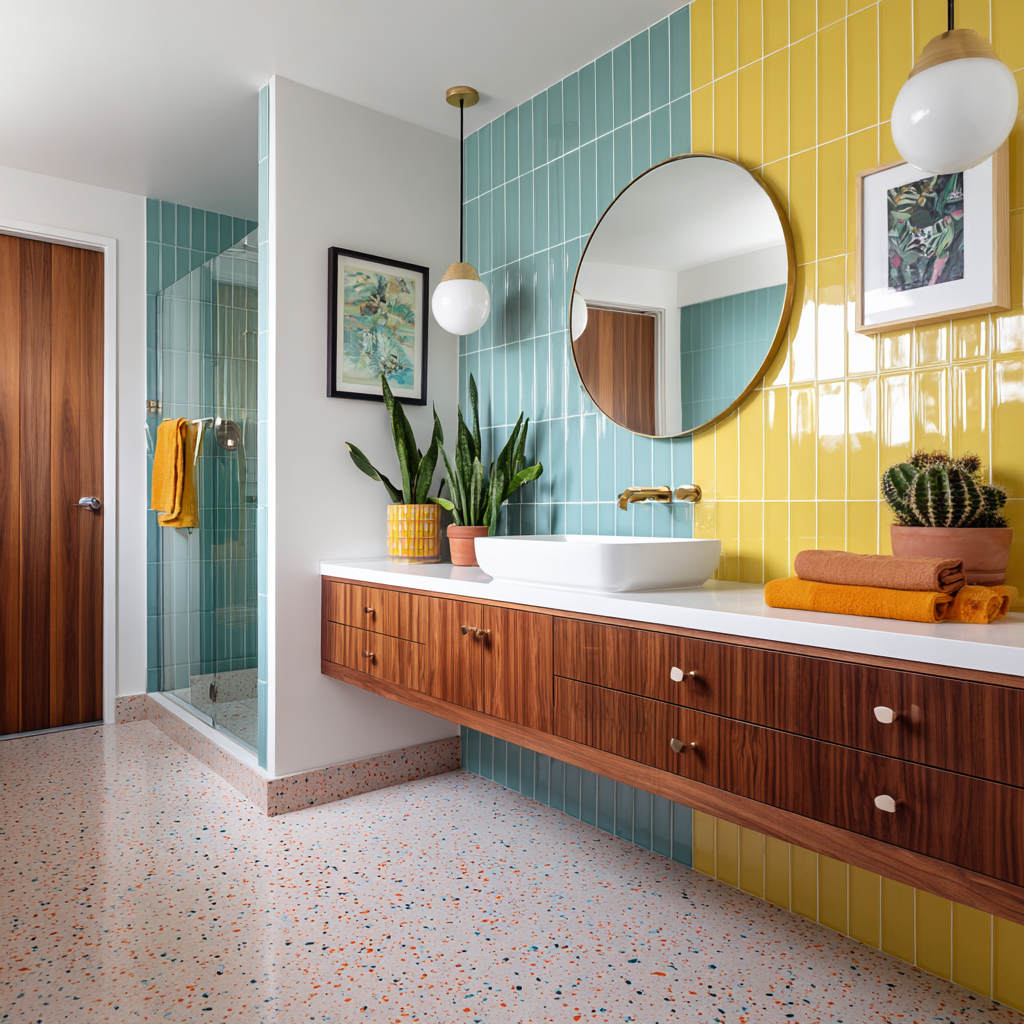
Where most bathroom tile trends focus on a single material or finish applied consistently, this look takes a different approach entirely: using two bold, contrasting tile colors in distinct vertical columns to create a color-blocked effect across the entire wall. Teal and yellow panels running floor to ceiling alongside a walnut floating vanity and terrazzo floor create a bathroom that borrows its energy from mid-century modern design while feeling entirely current.
What's distinctive about this trend is that the grout lines become part of the composition—the clean vertical division between colors gives the wall a graphic, almost architectural quality that standard tile layouts don't achieve. The terrazzo floor ties the colors together without repeating them, and warm pendant lighting keeps the boldness from tipping into harshness. For homeowners who have always wanted a bathroom with real personality, this is one of the most direct ways to get there.
One of the quieter but most interesting bathroom tile trends emerging for 2026 is the rise of limewash and plaster-effect tile—porcelain tile designed to mimic the soft, mottled depth of a limewashed or Venetian plaster wall. The appeal is the best of both worlds: the warmth and organic variation of a plaster finish with the durability and water resistance of tile, making it practical for shower walls and wet areas where actual plaster wouldn't hold up.
What makes this trend distinct from standard stone-look tile is the softness of the surface. Rather than replicating the veining or grain of a natural material, plaster-effect tiles replicate the atmosphere—the way a limewashed wall seems to glow slightly differently depending on the light, or how a plaster surface reads as both textured and smooth at the same time.
Choosing between tile trends is one thing—seeing how they'll actually look in your specific bathroom is another. Block's free Renovation Studio lets you experiment with different tile styles, colors, and materials while getting real-time cost estimates tailored to your space. You can test how a warm zellige wall tile feels against your vanity finish, or whether large-format porcelain or a terracotta drench better suits your layout—all before talking to a contractor or committing to a single sample.
The right tile trend is only as good as the contractor installing it. Zellige, handmade tiles, and complex geometric patterns all require a level of craft and experience that not every remodeler brings to the job—and a poorly executed installation can undermine even the most thoughtful material selection. Block Renovation matches you with vetted, experienced bathroom contractors based on your project's specific scope, style, and location, so you're not taking a chance on who shows up.
You'll receive detailed proposals to compare side by side, with guidance from a dedicated project planner who can help you evaluate scopes and make sure your tile vision translates into an accurate, fair bid.
Remodel with confidence through Block
Connect to vetted local contractors
We only work with top-tier, thoroughly vetted contractors
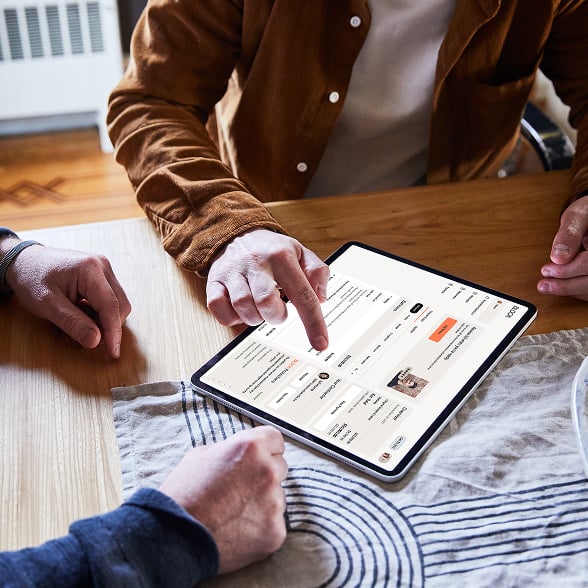
Get expert guidance
Our project planners offer expert advice, scope review, and ongoing support as needed
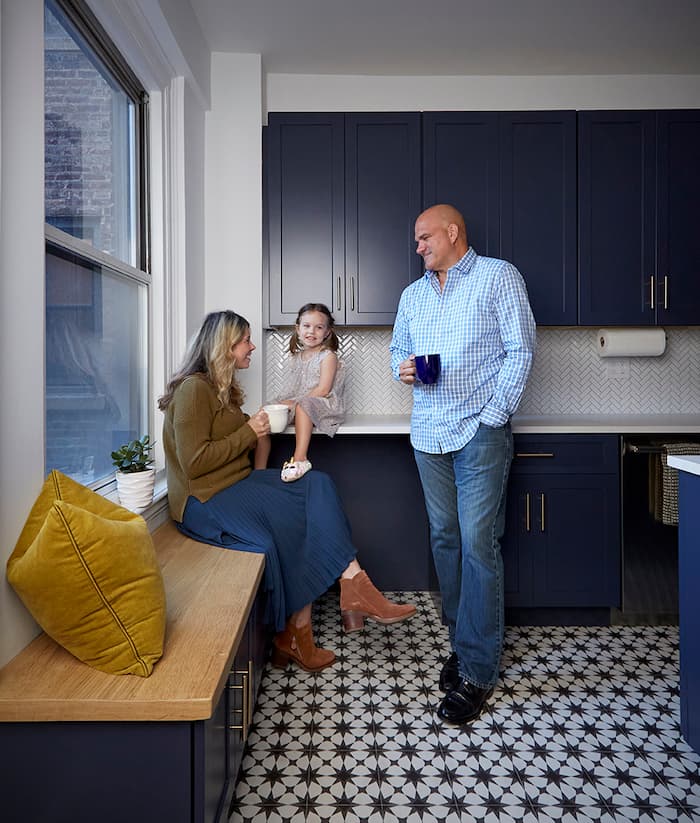
Enjoy peace of mind throughout your renovation
Secure payment system puts you in control and protects your remodel

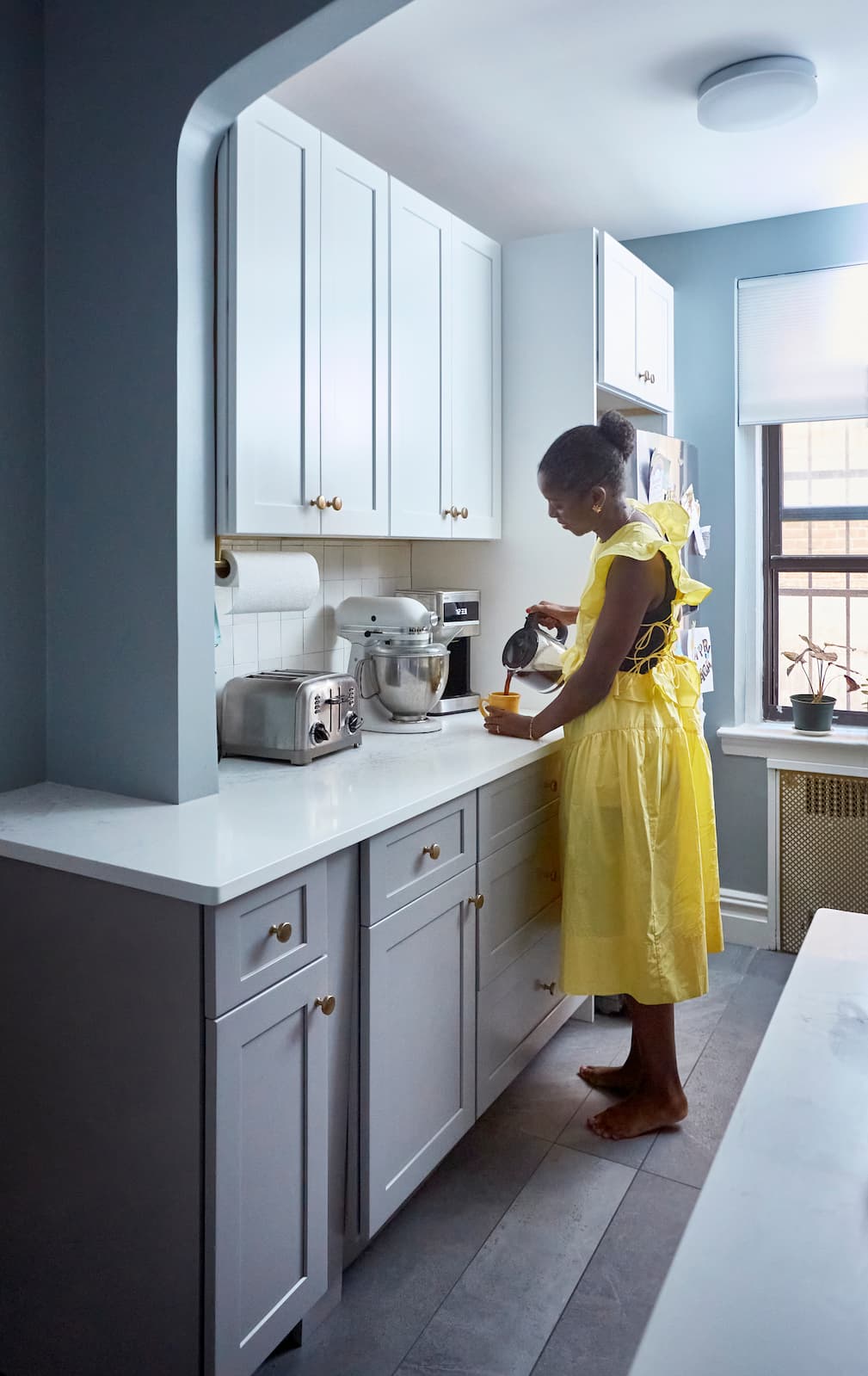
Renovate confidently with Block
Easily compare quotes from top quality contractors, and get peace of mind with warranty & price protections.
Tile
Bathroom Accent Wall Ideas: A Practical Tile Guide
04.24.2026
Tile
Best Tile Brands for Porcelain, Vinyl & More
03.20.2026
Tile
2026 Bathroom Tile Trends for Walls & Floors
03.03.2026
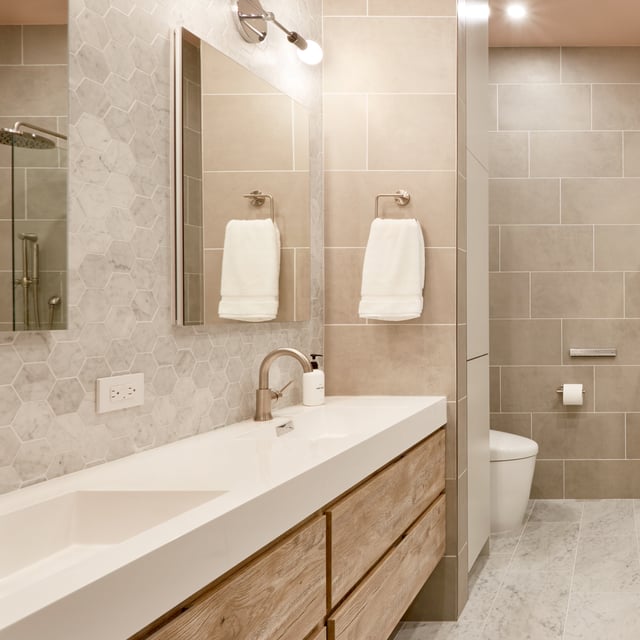
Tile
Mixing Bathroom Tiles for a Contemporary Look
02.25.2026
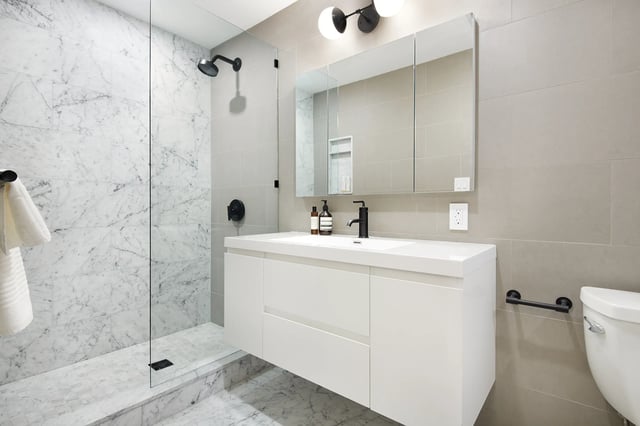
Tile
Fully Tiled Bathroom Design - Pros and Cons
01.06.2026