



Paint & Color
Two Tone Bathroom Walls: 15 Ideas & Where to Split
08.14.2026
03.30.2026


In This Article
Most walls get painted and forgotten. A coat of flat white or agreeable gray goes up, furniture gets arranged in front of it, and the wall recedes into the background. Present, but not contributing. That's smooth walls at their most honest: a neutral, forgiving default that works everywhere and excites no one.
Textured walls are a different commitment entirely, as they require more planning, more budget, more conviction. And in return they do something smooth walls simply cannot do; they make a room feel like it was designed, not just decorated. The shadow that moves across a plaster finishes as the afternoon light shifts. The way a fluted panel wall gives a small room an architectural identity it had no right to have. These are the qualities that make a home feel genuinely personal rather than assembled.
The question worth asking isn't whether textured is better than smooth smooth walls. It's whether you're ready to use it well.
Texture isn't right for every room or aesthetic but, in the right context, it can add depth—both figuratively and literally—to your home. Examples include:
Understanding what you're gaining and what you're giving up is the foundation of any good renovation decision. Textured walls offer genuine design advantages, but they come with real trade-offs worth thinking through carefully before you commit.
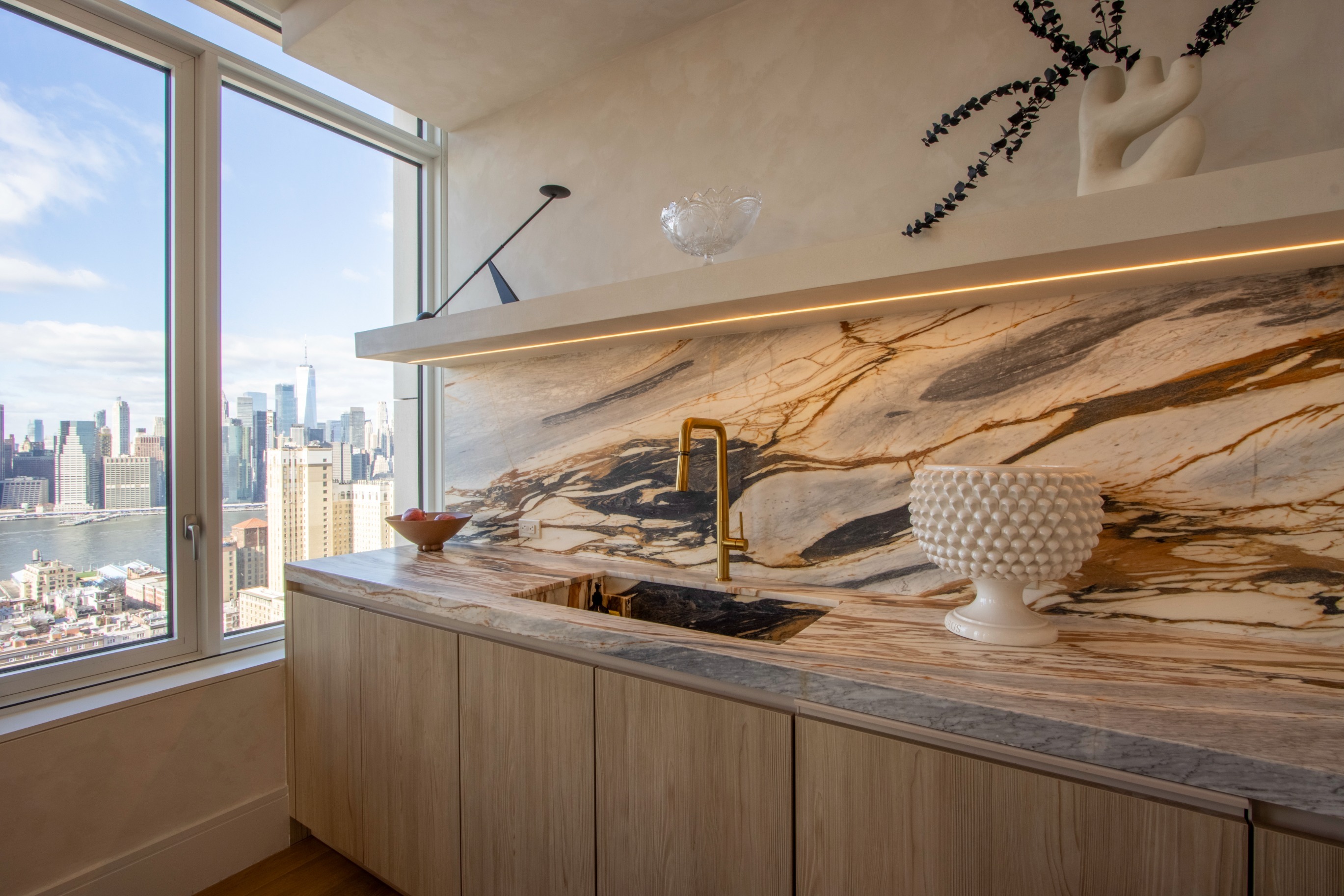
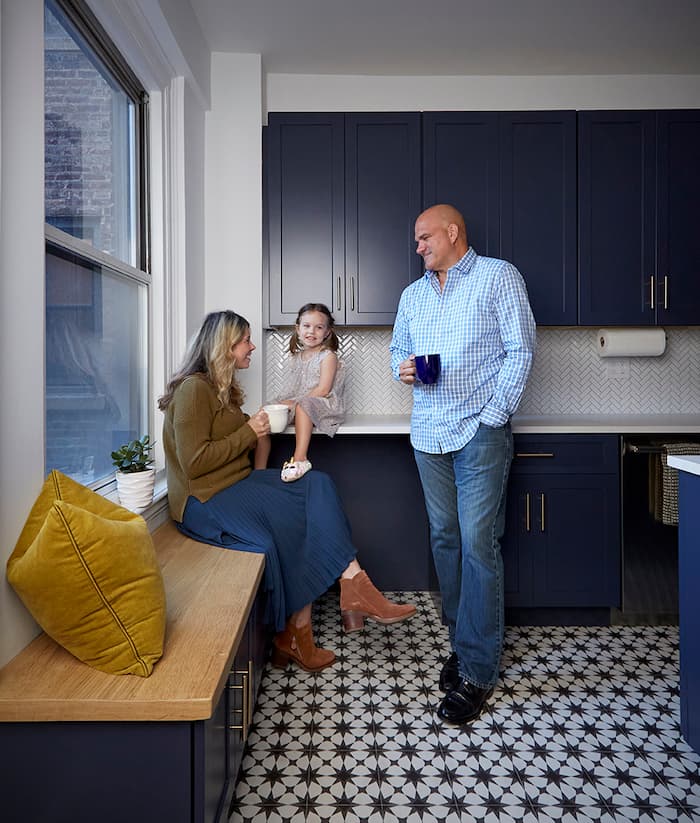
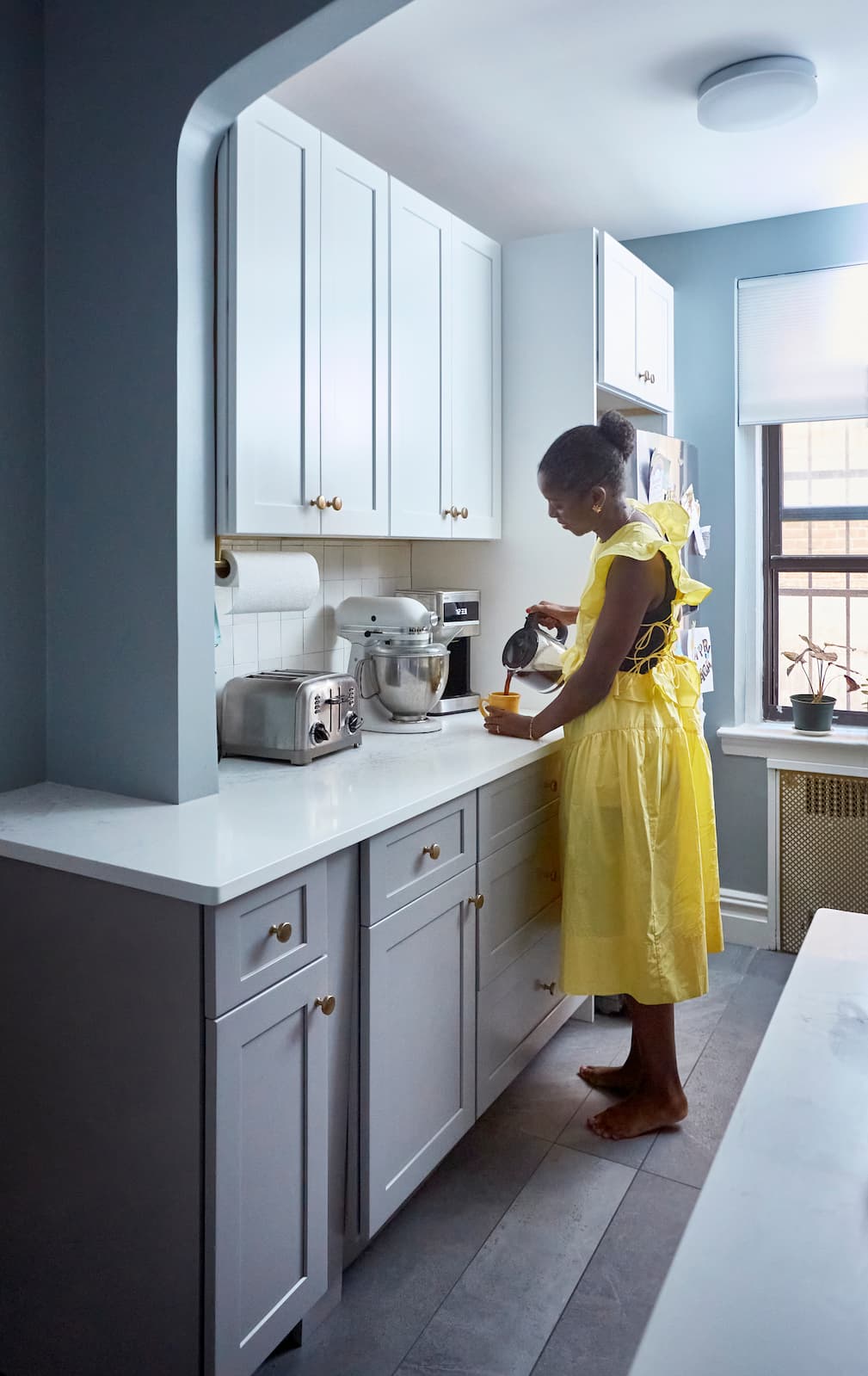
When writing about their use of textured surfaces when remodeling this Brooklyn kitchen, Ion of Art Deco Enterprises wrote, "This soft, textured finish added a layer of depth and warmth to the spaces, making them feel both contemporary and timeless."
Design a Home That’s Uniquely Yours
Block can help you achieve your renovation goals and bring your dream remodel to life with price assurance and expert support.
Get Started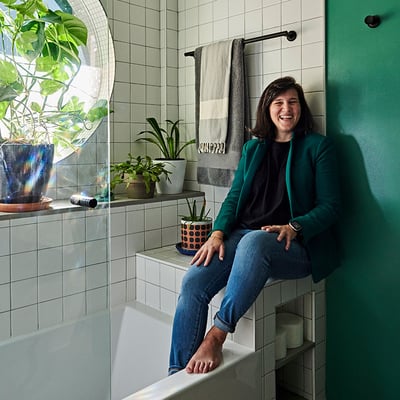
Knowing which finish to choose is only half the equation. How you use texture, where you apply it, what you pair it with, and what design purpose it serves is what separates a thoughtful renovation from one that just has an interesting wall. The principles below show up again and again in rooms that get texture genuinely right.
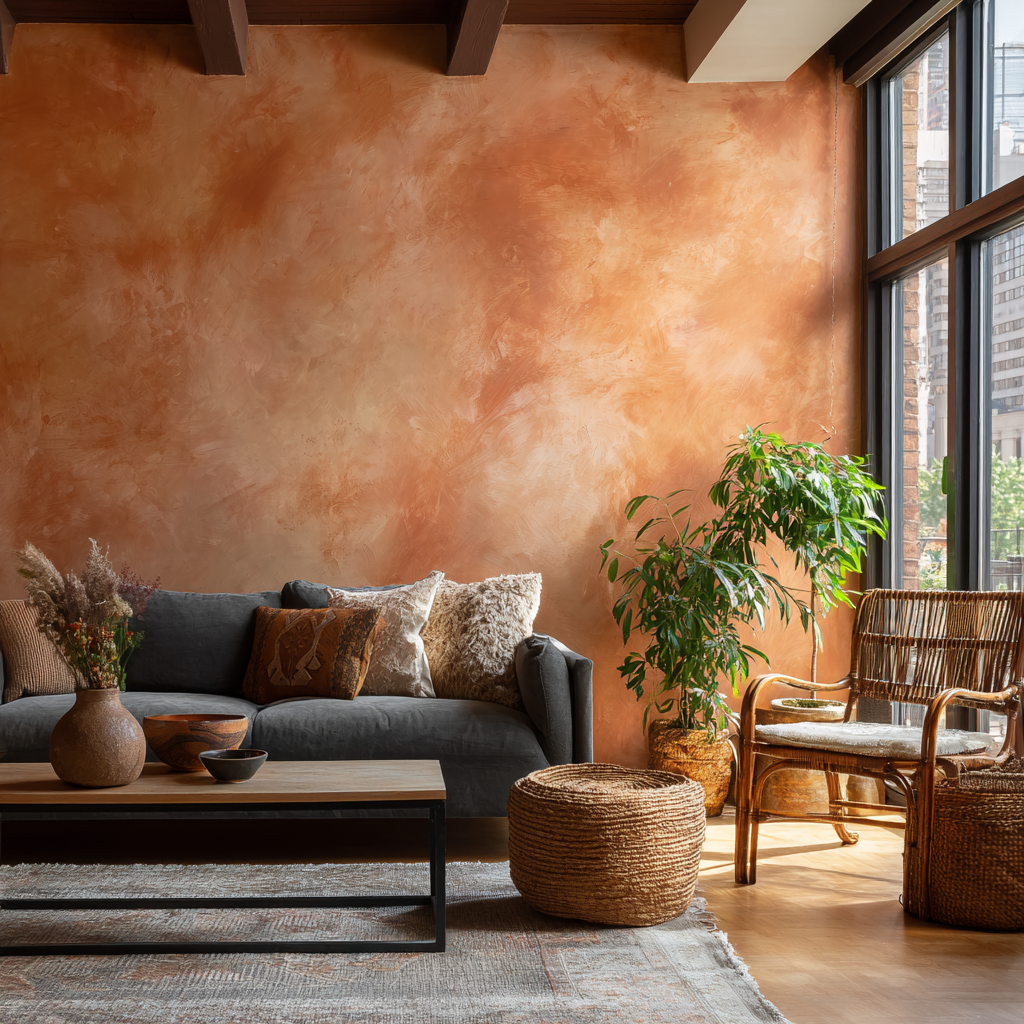
The most common mistake with textured walls isn't the finish itself; it's applying it to every surface and watching the effect dissolve into noise. A single textured wall becomes the room's natural focal point: the thing your eye moves to first and returns to throughout the space.
In the example above, the warm Venetian plaster wall here works precisely because it stands alone. It anchors the sofa, gives the rattan furniture and natural accessories something to respond to, and establishes a clear visual hierarchy without any of those elements competing for attention. When you concentrate texture in one place, the whole room becomes more organized.
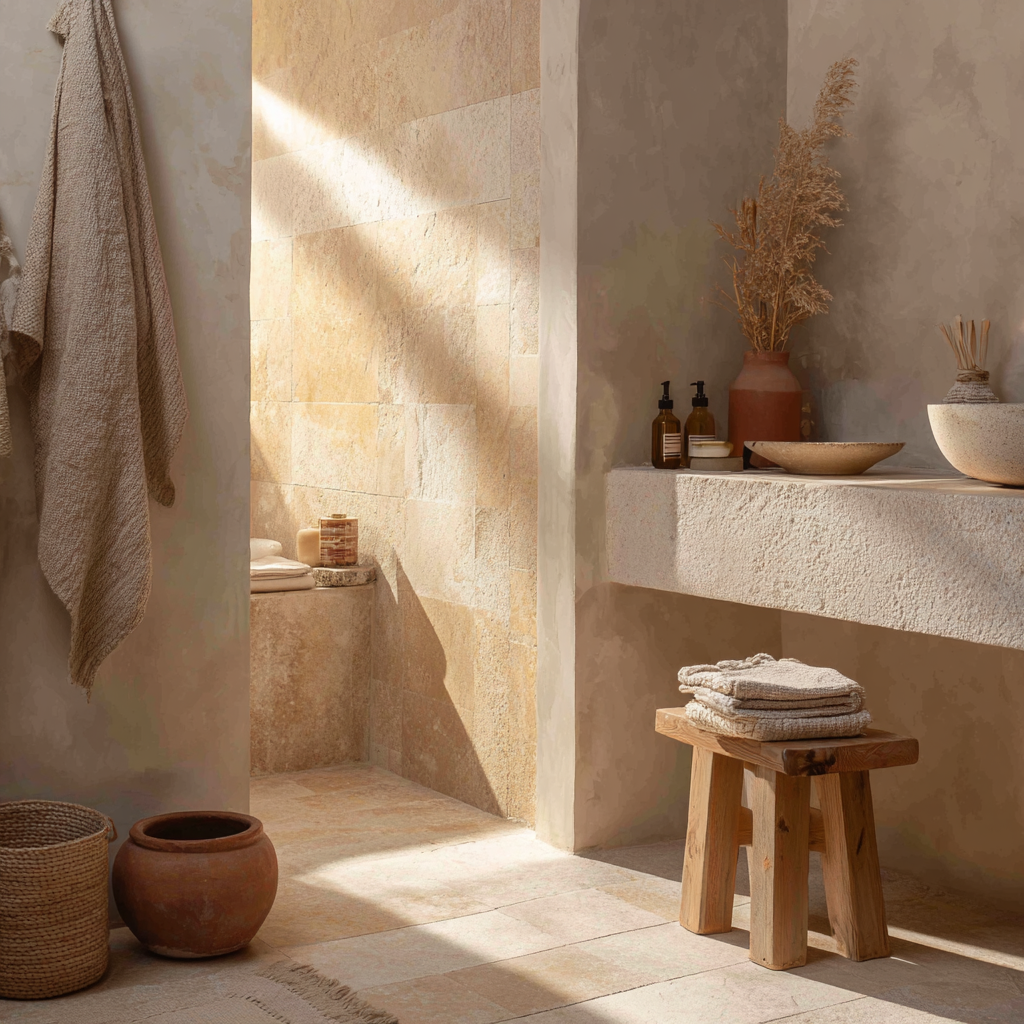
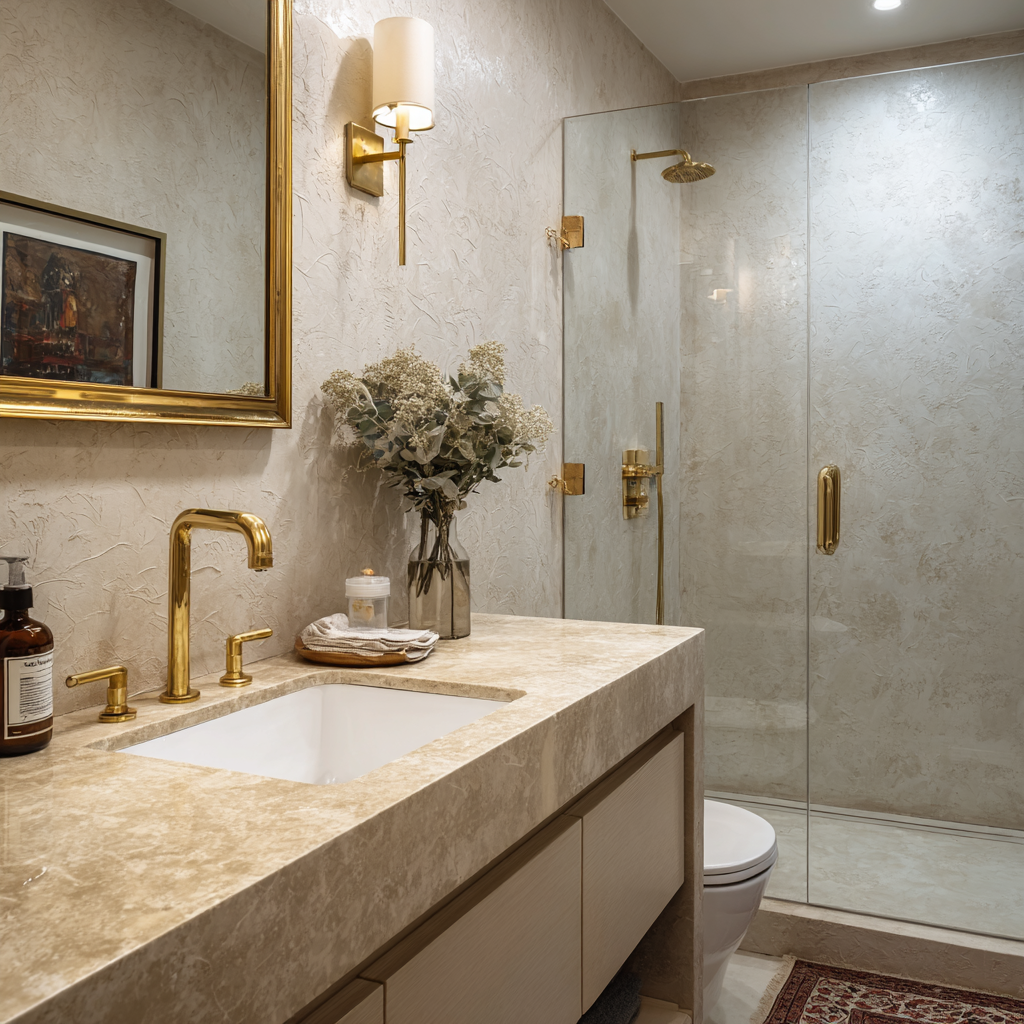
Bathrooms are treated as utilitarian rooms far more often than they should be, and that's exactly what makes texture such a high-impact choice in them. Stone tile and plaster finishes introduce a material honesty that polished surfaces don't achieve. The slight variation in tone across a natural stone or handmade tile surface means no two sections of wall look exactly the same, and that quiet irregularity reads as warmth rather than imprecision. More practically, a textured wall in a bathroom gives the room enough visual weight that very little else is needed to make it feel complete.
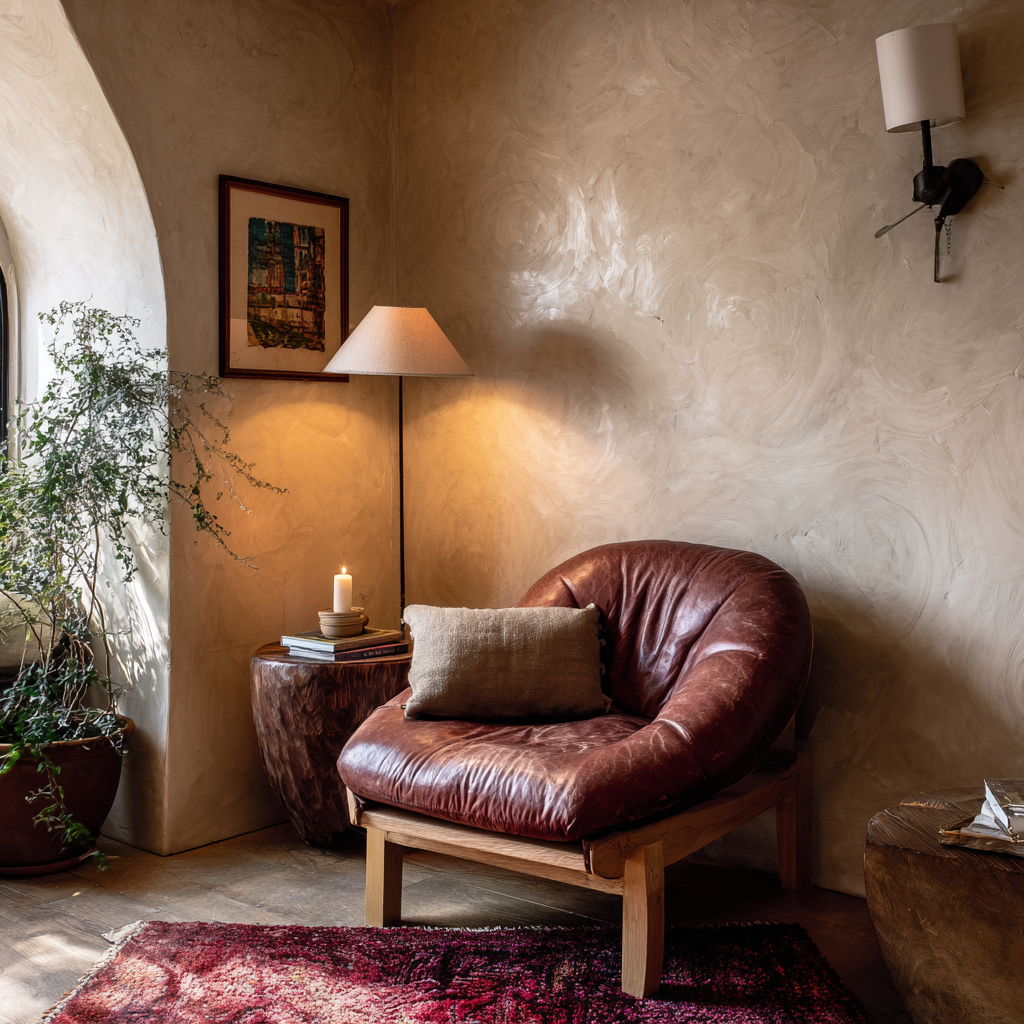
Not all textured finishes perform the same way across different lighting conditions, and the best choices are made with that in mind from the start. Skip trowel and swirl plaster techniques create surfaces that read almost neutral in bright morning light and come fully alive with depth and shadow as the day dims. In a reading nook, bedroom, or any room you use most in the evening, that responsiveness to changing light becomes one of the most valuable qualities a wall can have. Flat painted walls look the same at noon as they do at midnight. A plaster finish tuned to warm lamplight makes the room feel genuinely different at different hours, and that is a quality worth designing for deliberately.
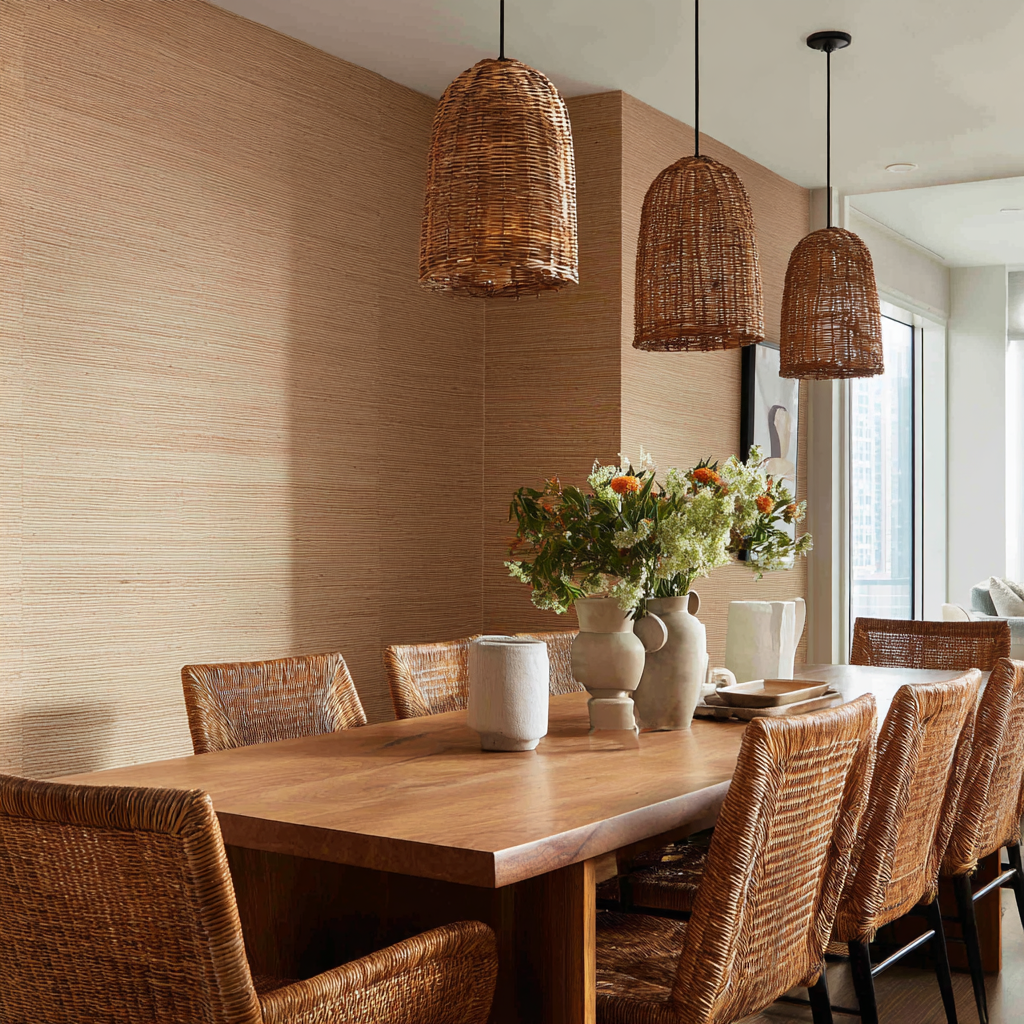
One of the strongest practical arguments for texture is how much decorating pressure it removes from everything else in the room. This dining space works because the wall is already doing real visual work.
The woven grasscloth surface carries enough material interest that the furniture and objects alongside it don't need to compensate. They simply coexist with it.
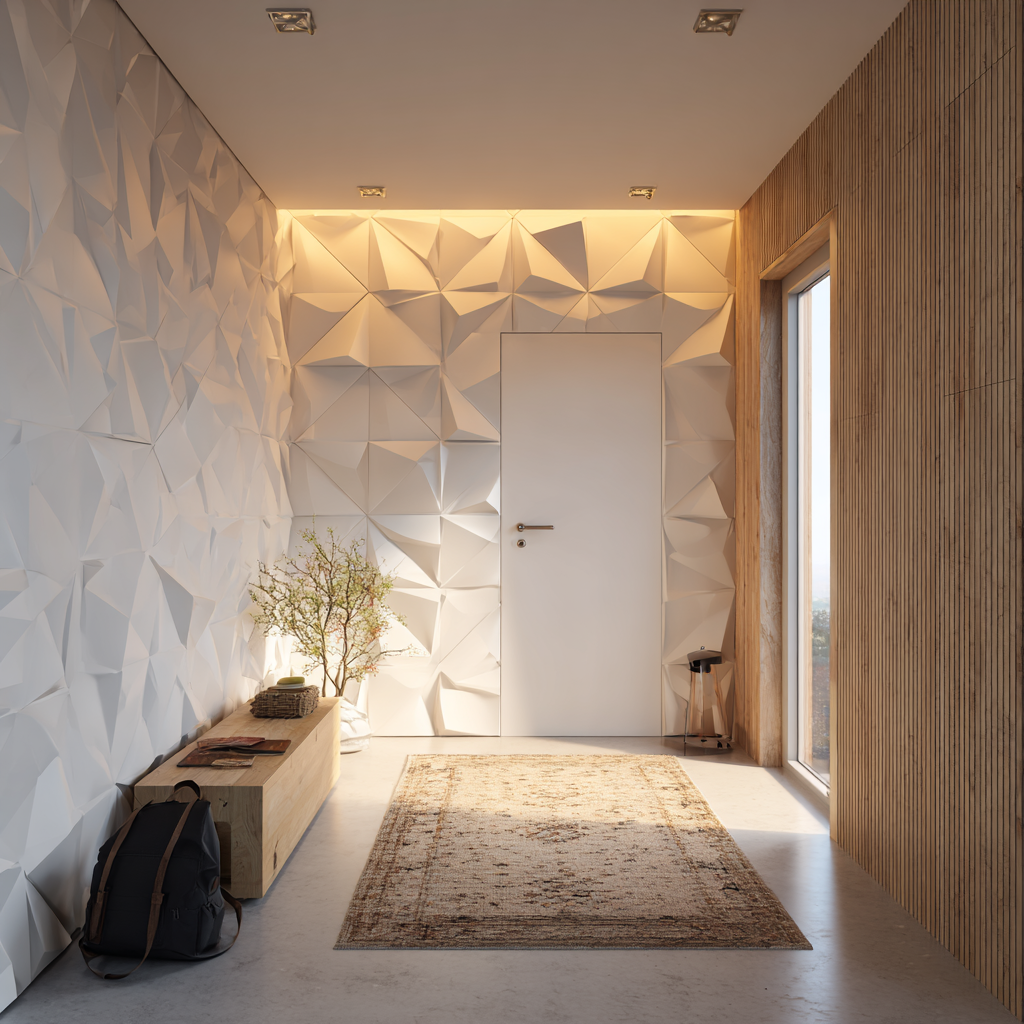
Entryways occupy an awkward position in most homes. They're too small and functional to furnish meaningfully, but too prominent to leave without any design intention. Sculptural 3D wall panels resolve this tension effectively. They establish a clear visual statement without requiring furniture, art, or accessories to support them, which makes them one of the most efficient choices for spaces where you have limited room to work with. The angular, faceted surface here catches directional light dramatically and communicates a design point of view the moment you walk through the door.
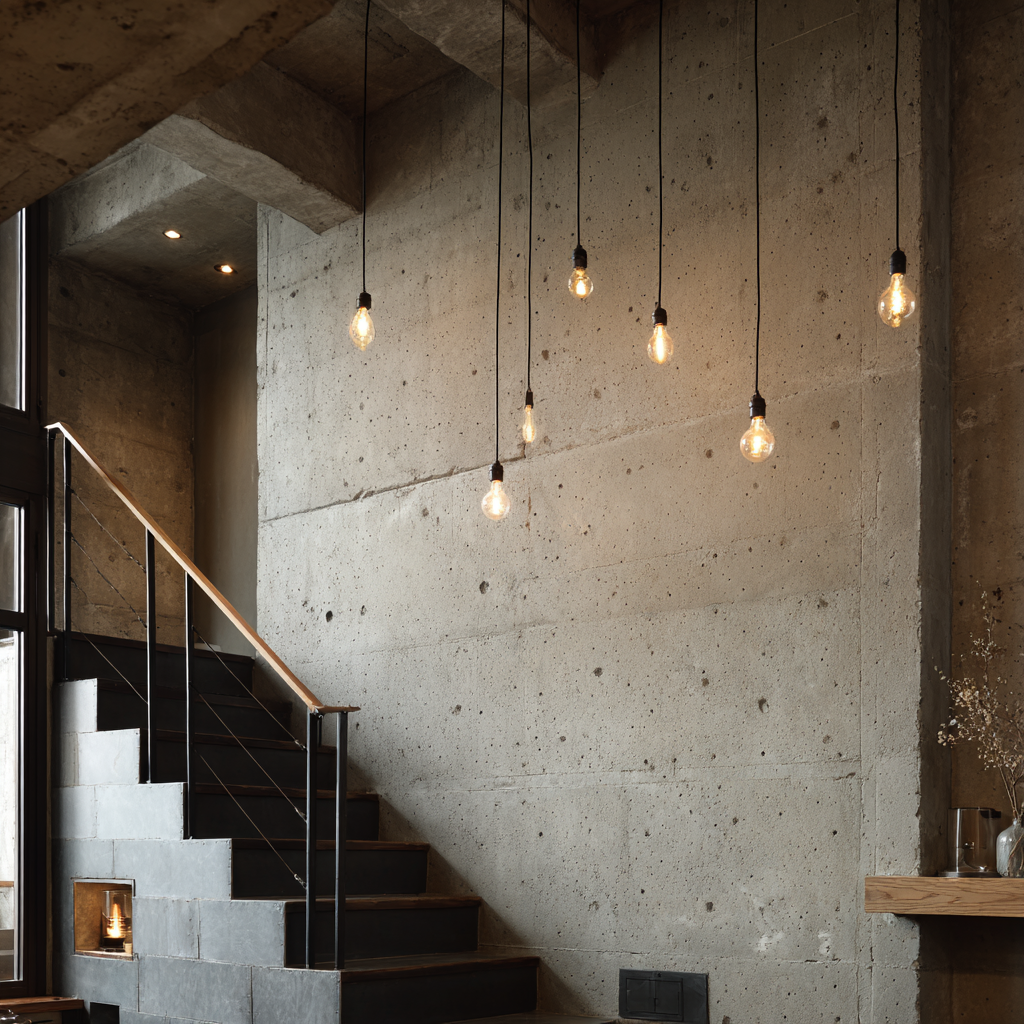
Exposed concrete adds texture through its natural variations, subtle imperfections, and unfinished appearance. Pair it with warm lighting and softer furnishings to keep an industrial space from feeling cold.
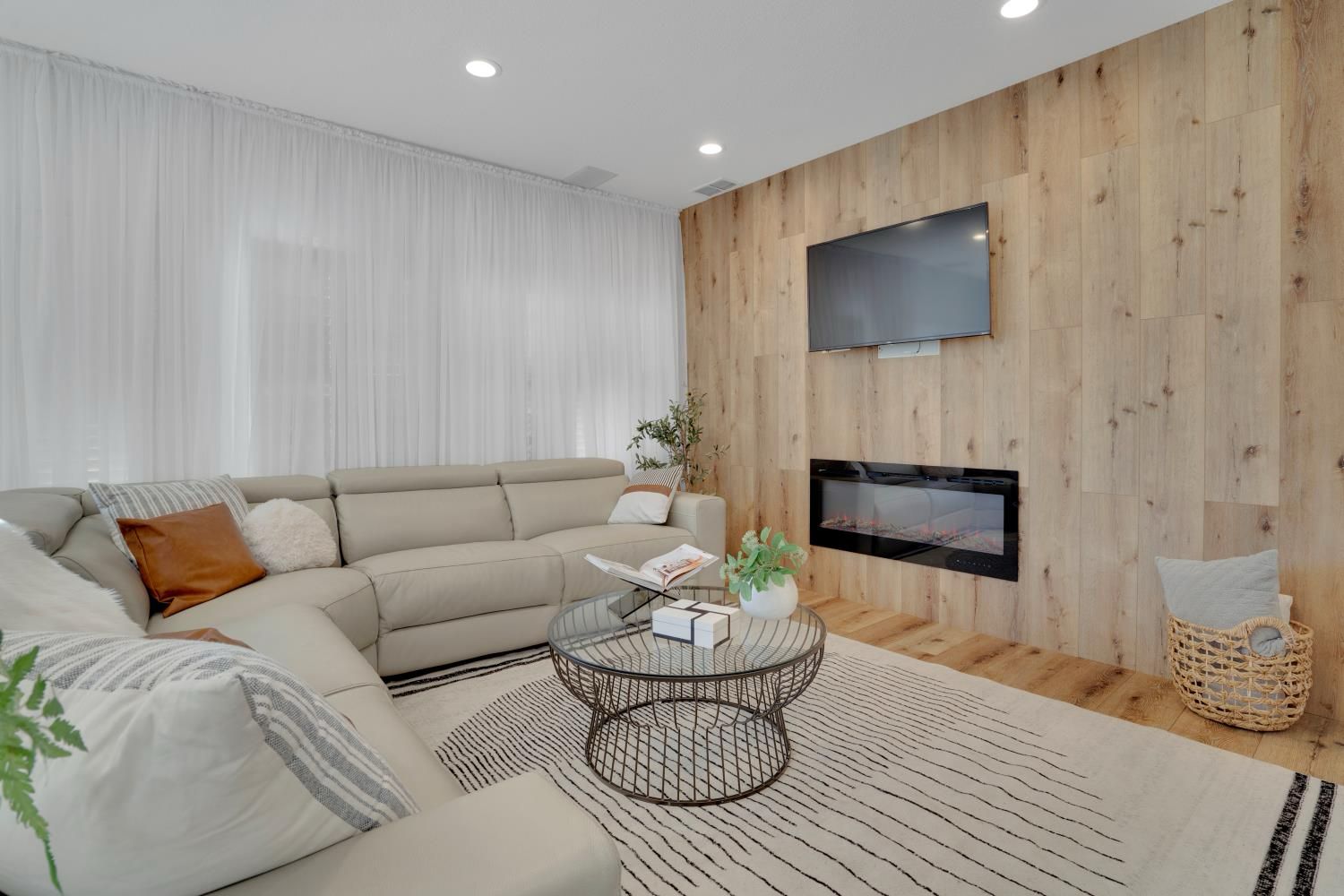
Wood offers a warmer approach. A floor-to-ceiling accent wall with visible grain and knots brings dimension to an otherwise smooth, neutral room while giving a fireplace or television a more distinctive backdrop. If you gravitate toward the inspiration above, you can view the full home's remodel from IY Development & Renovation Inc at this link.
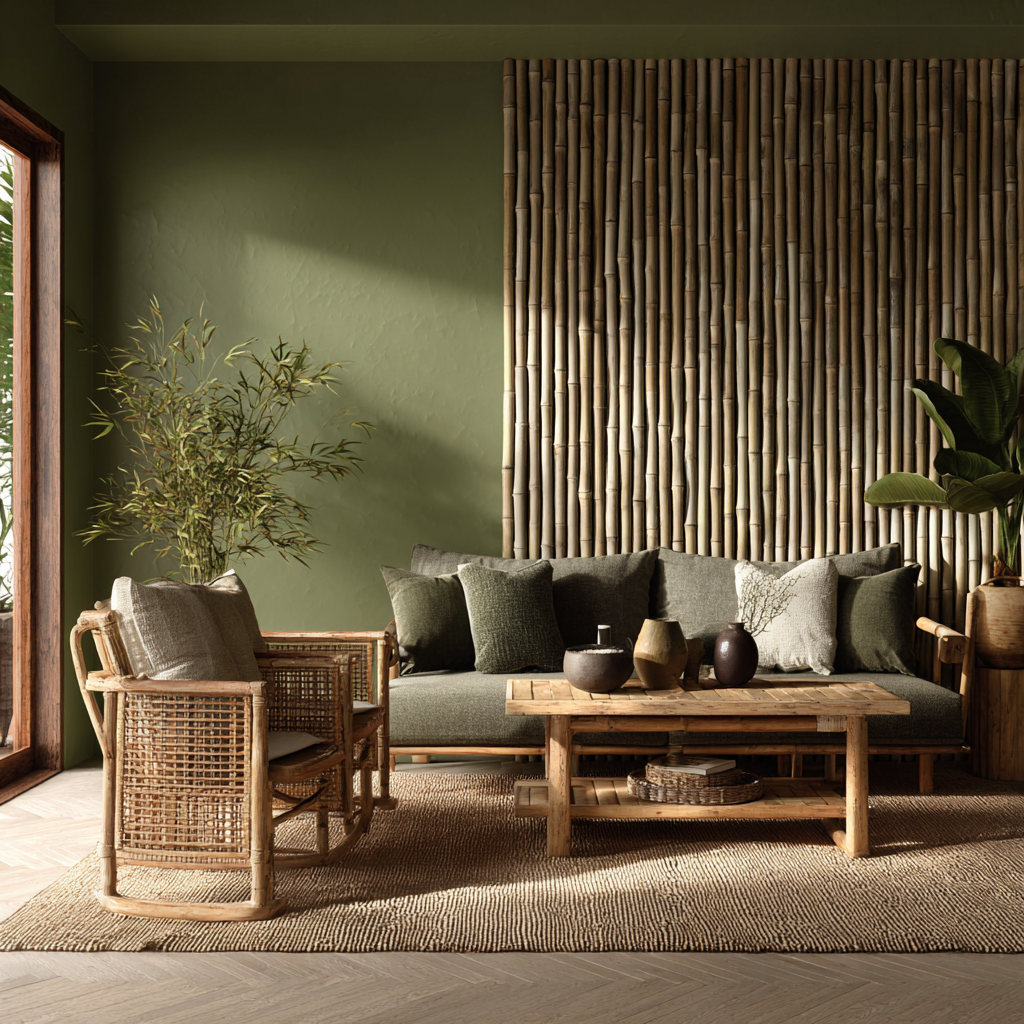
The most interesting textured walls aren't always made from plaster or engineered panels. Natural materials including bamboo, reclaimed wood, bundled reed, and cork bring a quality of texture that manufactured surfaces don't replicate, because they carry the irregularity and variation that comes from being grown rather than fabricated. Used as a feature wall, tightly bundled bamboo poles create rhythmic vertical shadow lines that shift throughout the day and bring a genuinely organic presence into the room.
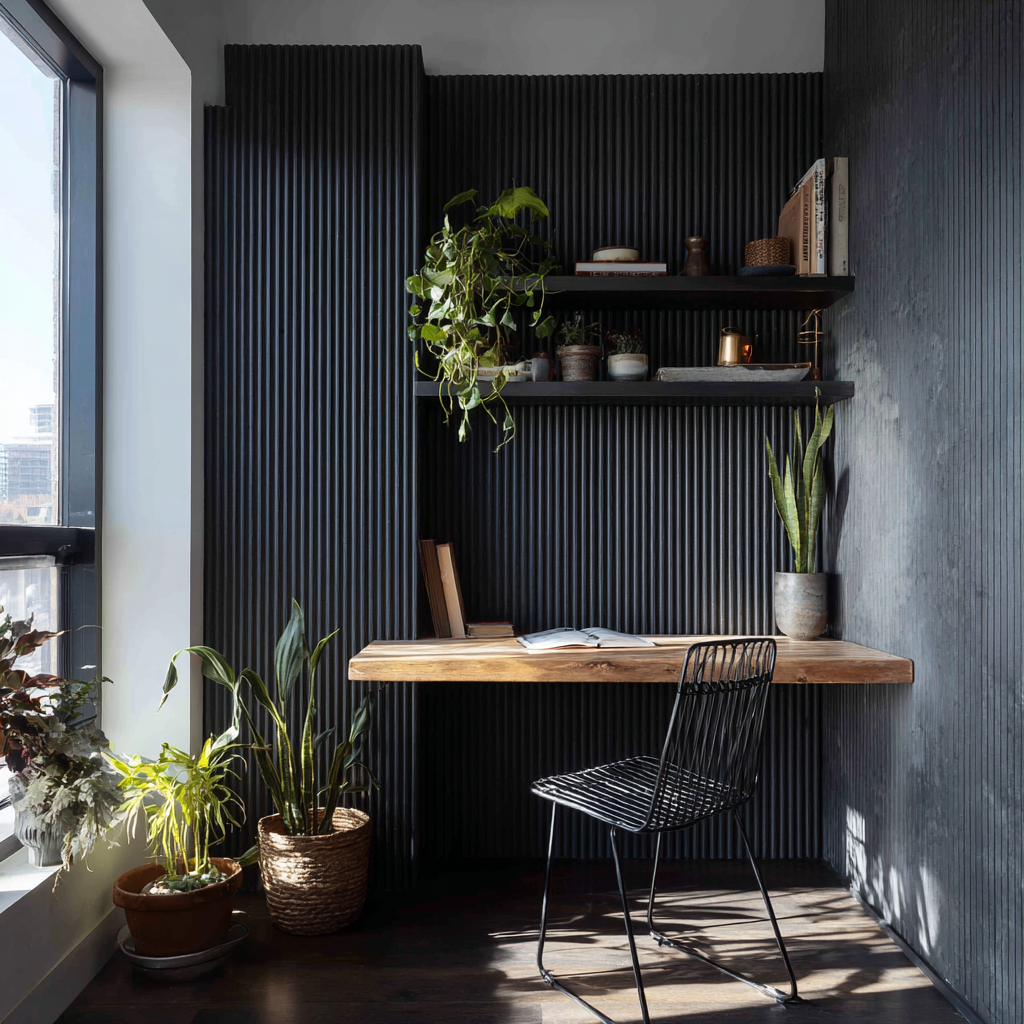
Fluted wall panels add significant architectural interest while keeping the overall feeling clean, structured, and disciplined. Unlike more organic or painterly finishes, fluting has a precision that works across a wide range of styles. Contemporary, transitional, and traditionally furnished rooms can all absorb it without strain. In compact spaces, that structure is particularly valuable. Rather than making a tight room feel smaller, dark fluted panels give it a defined sense of place, turning what might otherwise be a repurposed corner into a room with a real identity.
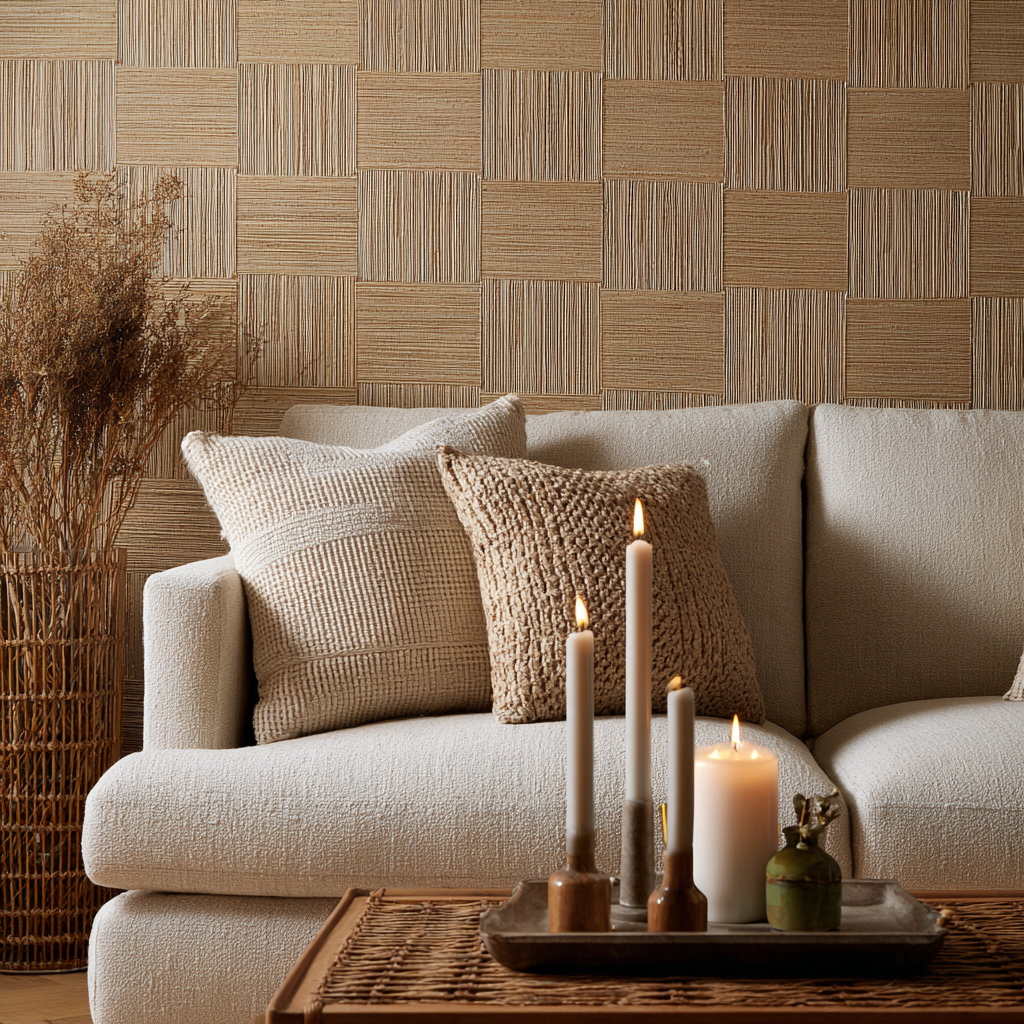
Some of the most successful textured rooms aren't built around a single bold statement. They're built around a family of materials that share the same spirit. When a woven wall surface, a sofa, textured throw pillows, and a rattan tray occupy the same space, the effect isn't redundant. It's additive. Each element reinforces the others, and the room reads as genuinely warm rather than styled.
Smooth walls don't have to mean flat, predictable ones. For homeowners who want the look of texture cost, permanence, or maintenance that comes with true textured finishes, there are a handful of approaches worth knowing about.
Choosing between smooth and textured walls feels like a small decision until you live with the result. The finish you choose shapes how your home absorbs light, how it sounds, how much decorating work it asks of you, and how it makes you feel walking into a room at the end of the day. Getting it right means choosing the right technique, finding the right contractor, and having the clarity to execute with intention rather than impulse.
Block Renovation connects homeowners with thoroughly vetted, experienced contractors who understand wall finishes and can execute them to a high standard. From personalized cost estimates in Block's free Renovation Studio to dedicated project planner support throughout your build, the goal at every stage is the same: a renovation that feels right for your home, done by people you can trust.
Remodel with confidence through Block

Connect to vetted local contractors
We only work with top-tier, thoroughly vetted contractors

Get expert guidance
Our project planners offer expert advice, scope review, and ongoing support as needed
Enjoy peace of mind throughout your renovation
Secure payment system puts you in control and protects your remodel

Renovate confidently with Block
Easily compare quotes from top quality contractors, and get peace of mind with warranty & price protections.
Paint & Color
Two Tone Bathroom Walls: 15 Ideas & Where to Split
08.14.2026
Design
Bathtub to Shower Conversion: Cost, Ideas, Examples & More
08.11.2026
Design
Open Shelving Bathroom Design Ideas & Optimal Placement
08.08.2026

Design
Dining Room Dimensions: Minimums and Standard Sizing
08.07.2026
Design
Split Foyer Renovation: Ideas, Costs & What Pays Off
07.16.2026