



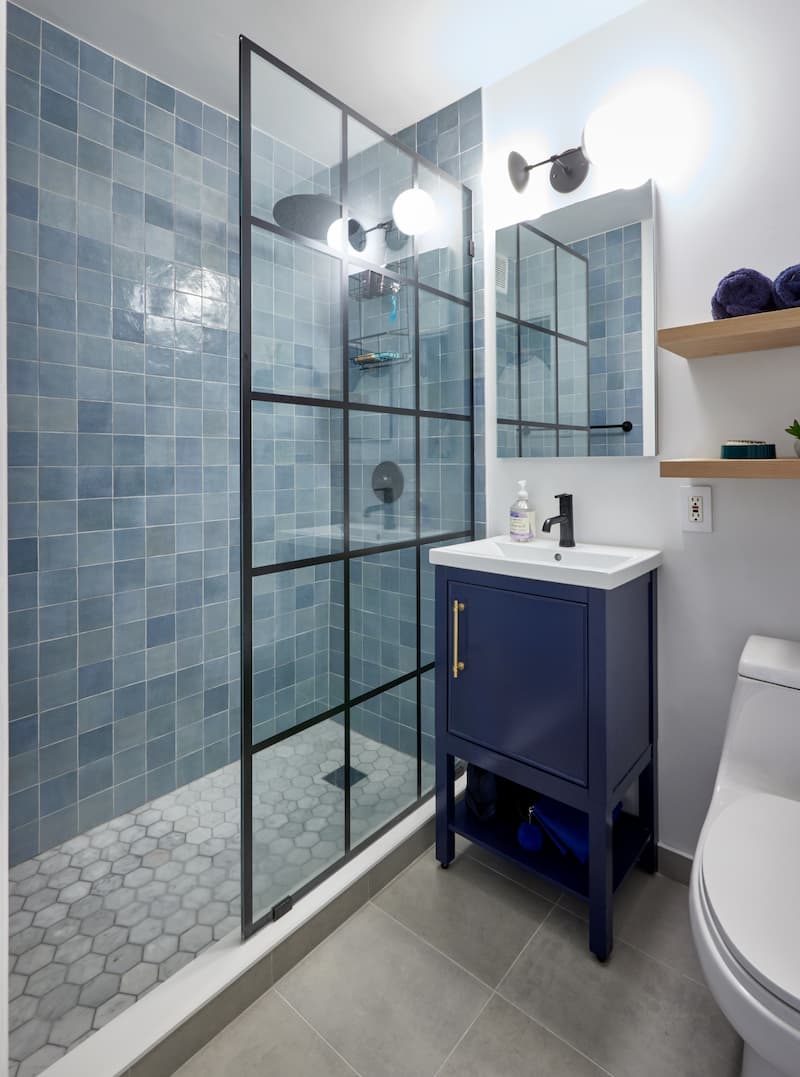
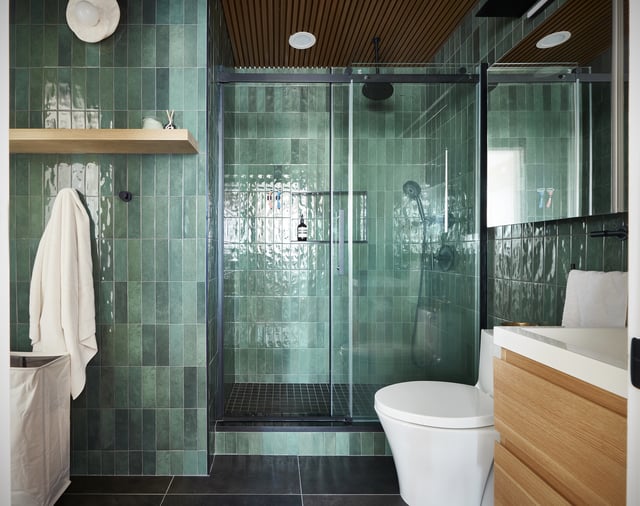
Design
Bathtub to Shower Conversion: Cost, Ideas, Examples & More
08.11.2026
04.02.2026


In This Article
Craftsman homes have an enduring appeal that goes well beyond nostalgia. With their low-pitched rooflines, wide front porches, exposed rafter tails, and an unmistakable commitment to natural materials and handcrafted detail, they represent one of the most beloved architectural styles in the country.
Built largely between 1905 and 1930—though revived steadily ever since—Craftsman homes are concentrated in neighborhoods where the character of the streetscape has been carefully preserved.
Seattle is one of the country's great Craftsman cities: the Capitol Hill, Madrona, and Wallingford neighborhoods are lined with bungalows and foursquares that showcase the style at its best. But Craftsman homes are equally at home in Portland's Sellwood-Moreland, Chicago's Wicker Park, Atlanta's Inman Park, Pasadena's bungalow heaven, and the tree-lined streets of Cleveland Park in Washington D.C.
What unites all of them is a design philosophy rooted in handcraft, natural materials, and a quiet rejection of ornament for its own sake. Remodeling a Craftsman home means working within that philosophy—making the home more comfortable and functional for modern life while staying true to the vision that made it worth preserving in the first place.
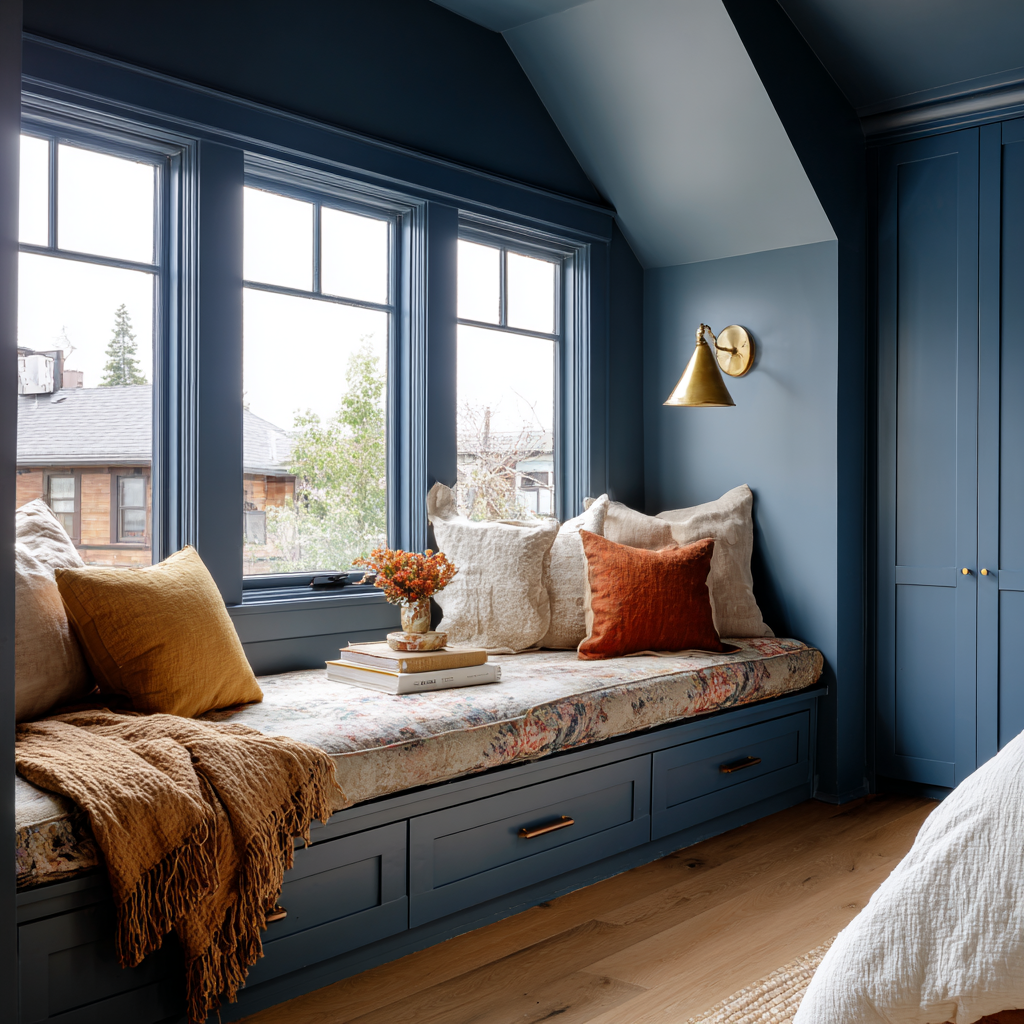
Wood is the defining material of Craftsman architecture, and no renovation decision carries more weight than how you treat it. If your home has original built-in cabinetry, window seats, bookshelves, or wainscoting, restoring those elements—rather than replacing them—should be the first priority.
Stripping decades of paint to reveal original oak, fir, or chestnut millwork is one of the most rewarding investments a Craftsman homeowner can make. What lies beneath is often in better condition than expected, and the grain and warmth of old-growth wood is simply not replicable with new materials.
Where original details have been lost or damaged, skilled millwork reproduction can fill the gaps convincingly. Craftsman profiles are characteristically simple—flat panels, square edges, straight lines—which makes replication more achievable than ornate Victorian or Tudor detailing.
.png?width=1024&height=1024&name=u5821215421_Heres_an_image_prompt_tailored_to_that_vibe_A_fre_7f166dbe-306f-4675-b04d-1fc482e5aebf_0%20(1).png)
The Craftsman aesthetic is built on a philosophy of honest materials—wood, stone, brick, and tile used straightforwardly and without pretense. When making finish selections for your remodel, that principle is a useful guide.
Wide-plank hardwood or fir floors, river stone fireplace surrounds, ceramic or hand-glazed tile in the kitchen and bath, and unpainted wood trim all feel at home here in a way that more synthetic or high-gloss finishes do not.
Exterior renovations call for the same approach. If your home has original cedar shingles or clapboard siding, repair and repaint rather than replace with fiber cement or vinyl where possible. For example, in Seattle, many Craftsman homes have original cedar detailing that, properly maintained, will outlast most modern substitutes—a good reminder that the original builders often chose better materials than what is available today.
The original Craftsman palette draws from nature: warm taupes, olive greens, earthy ochres, deep rusts, and rich browns, anchored by creamy off-whites on trim. These colors were chosen deliberately to make the home feel like it grew out of its landscape rather than being imposed on it. In the Pacific Northwest, for instance, Craftsman homes in Seattle and Portland often seem to take their palette directly from the surrounding Douglas fir forests and grey winter skies—but the same principle applies anywhere, from the red clay neighborhoods of Atlanta to the sun-bleached streetscapes of Pasadena.
For interiors, the same principles apply. Muted, complex colors—colors that shift with the light and feel aged rather than freshly painted—work far better than bright or saturated hues.
Warm white on ceilings and trim, deeper tones on walls, and natural wood left as close to its original state as possible is a combination that has worked for over a century.
Our final tip? Avoid the temptation to lighten everything up with bright whites and pale grays. Those choices tend to drain the life out of Craftsman interiors, flattening the very warmth and depth that make these homes so appealing.
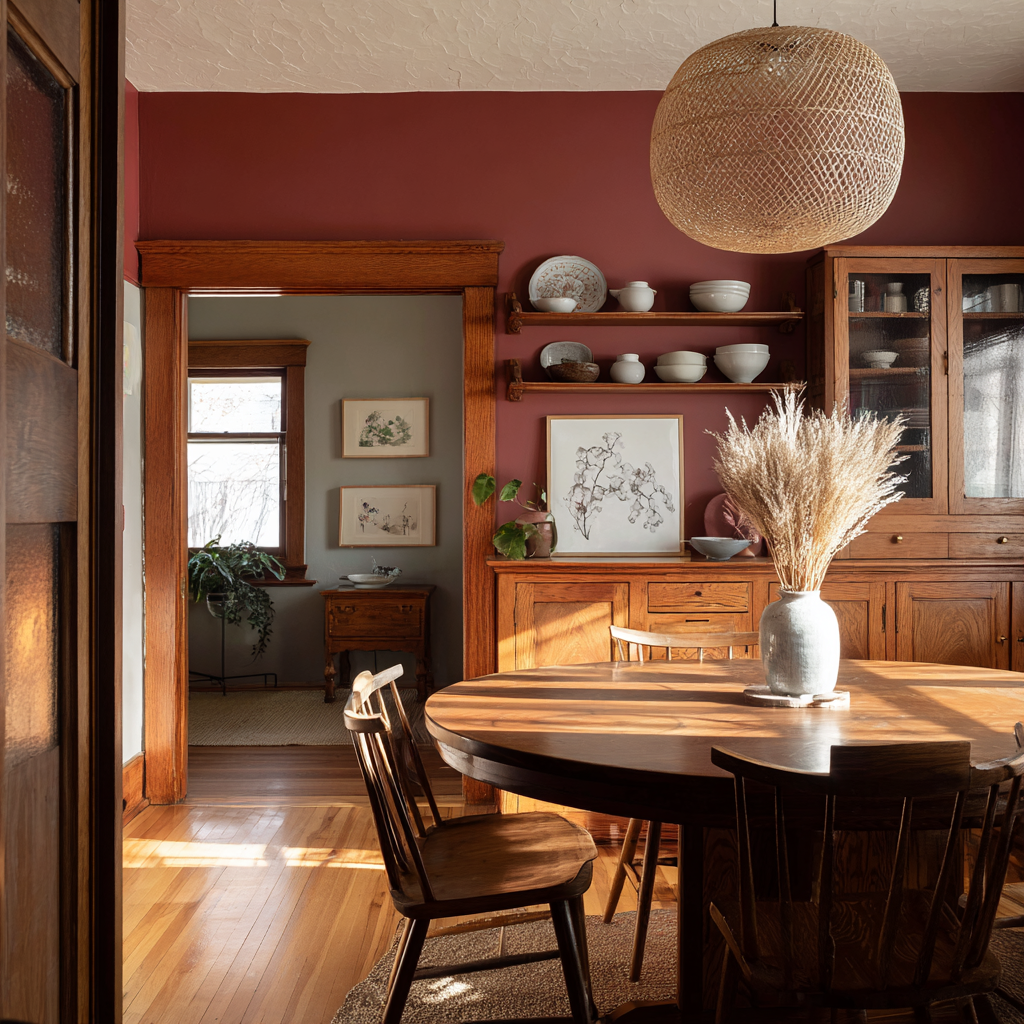
The exterior of a Craftsman home is an ensemble of carefully considered details: tapered columns on masonry piers, deep overhanging eaves with exposed rafter tails, decorative knee braces under the roofline, and a front porch that signals welcome long before a visitor reaches the door.
When any of these elements have been removed, simplified, or covered up—as often happens over decades of well-meaning but misguided updates—restoring them transforms the home's curb appeal and reconnects it to its architectural identity.
Craftsman kitchens were originally modest and utilitarian, which means most need meaningful updating to function well today. But the style offers a surprisingly good framework for a kitchen that feels both historic and current—the key is staying true to the material palette while introducing modern performance.
If your kitchen is small and compartmentalized, as many Craftsman kitchens are, and opening it to an adjacent room makes sense, do it with a wide, cased opening rather than the full wall removal that a more contemporary remodel might call for. Preserving some sense of enclosure is consistent with the Craftsman ideal of rooms that have distinct purposes and identities.
For more kitchen layout inspiration, read Great Kitchen Configurations: Ideas to Transform Your Layout.
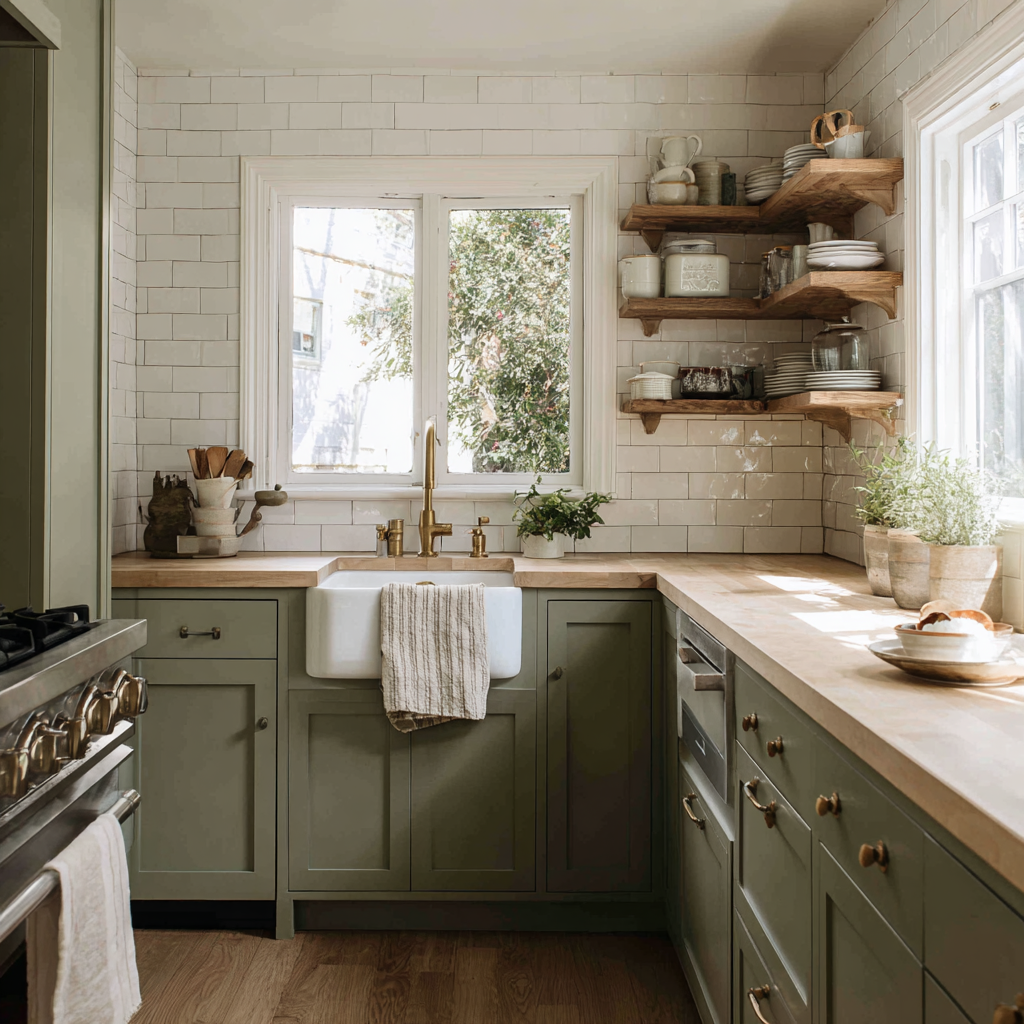
Original Craftsman bathrooms were small but beautifully detailed, and the best renovations use that original sensibility as their starting point rather than abandoning it for a more contemporary look. If your budget allows for only one splurge, make it the tile—nothing does more for a Craftsman bathroom than well-chosen, well-installed period-appropriate material.
Avoid large-format tile, vessel sinks, and floating vanities. They sit awkwardly against Craftsman millwork and hardware, and the effect is one of two design sensibilities in competition rather than conversation.
Built-in cabinetry is perhaps the single most characteristic interior feature of Craftsman architecture—these elements were not incidental to the design; they were the point. If your home is missing built-ins that it should logically have, adding them is one of the best investments you can make both for livability and period character.
Work with a contractor who understands the profile details: square-edged shelving, simple face frames, flat panel doors, and hardware that does not draw attention to itself.
In cities with a high concentration of Craftsman bungalows—Seattle and Portland among them—there are contractors who specialize in exactly this kind of work, and the quality difference is immediately apparent.
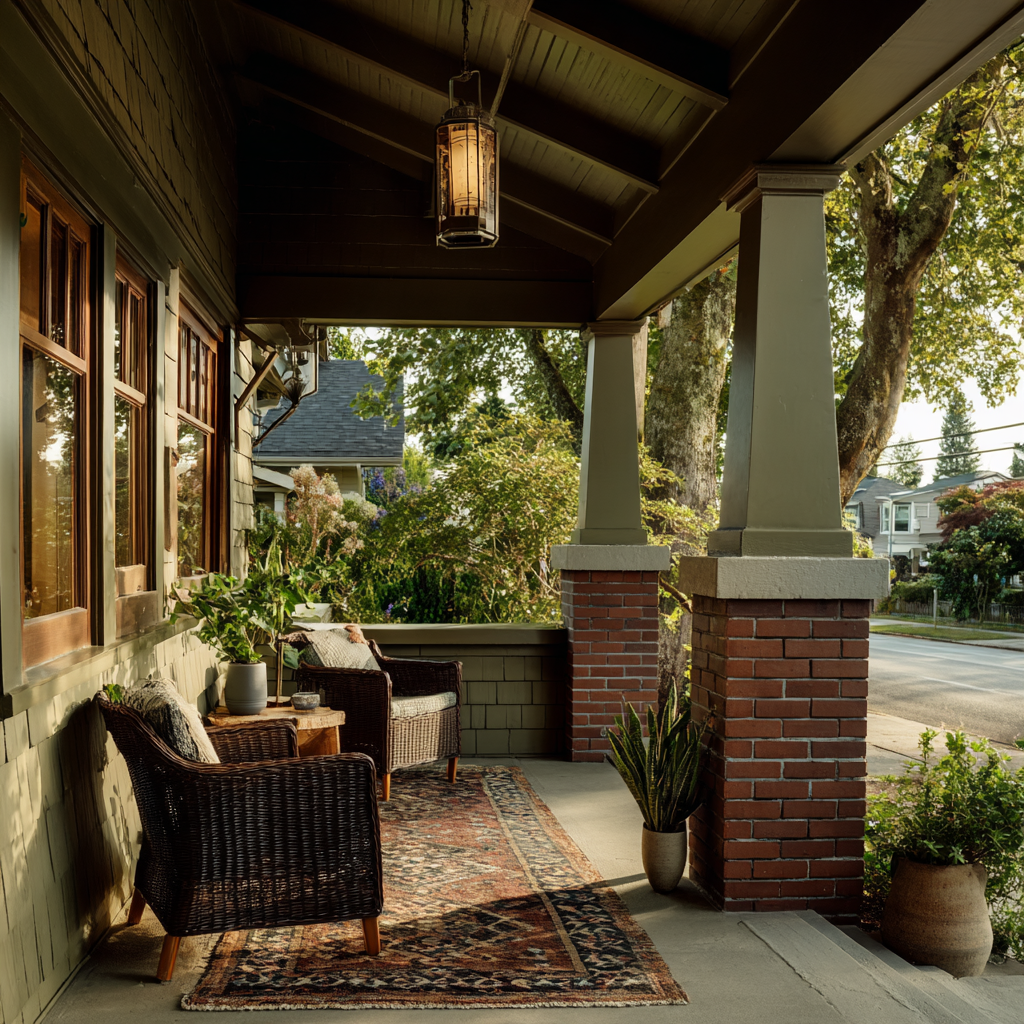
The front porch is the most public expression of the Craftsman home's values: an invitation to slow down, sit, and connect with the neighborhood. In Craftsman-dense cities like Seattle, these porches are part of the fabric of the street—and a well-restored porch contributes as much to the block as it does to the individual home. Many have been enclosed, screened, or otherwise diminished over the years, and restoring them to their original character is almost always worth the investment.
For homes whose porches were reduced or removed entirely, a sensitive reconstruction using period-appropriate proportions and materials can be one of the most impactful renovations possible. In mild climates like Seattle's, a covered front porch extends the season considerably—but even in colder or hotter regions, a well-proportioned porch adds a kind of outdoor living that a back deck simply cannot replicate.
Craftsman bungalows often have more vertical potential than they first appear, and both the attic and basement are worth evaluating early in any renovation plan. In cities where lot sizes in older neighborhoods tend to be modest and adding square footage outward is constrained by setback requirements—Seattle's Wallingford and Green Lake neighborhoods are good examples—going up or down is frequently the most practical path to more space.
A well-executed dormer addition that respects the home's roofline and detailing can feel like it was always there. For detailed guidance, read The Complete Guide to Attic Renovation Costs and Remodeling Ideas to Turn Your Basement Into a Bedroom.
Design a Home That’s Uniquely Yours
Block can help you achieve your renovation goals and bring your dream remodel to life with price assurance and expert support.
Get Started
Craftsman homes built in the early twentieth century were not designed with modern mechanical systems in mind, and bringing them up to current standards is less glamorous than a kitchen renovation but every bit as important. A thorough mechanical assessment before any other work begins can prevent costly surprises mid-project.
Climate plays a real role in which systems deserve the most urgent attention. For example, in Seattle, where winter rain and dampness put consistent pressure on building envelopes, moisture management deserves specific attention. In drier climates, HVAC and insulation may take precedence. Either way, addressing these systems as part of a broader renovation is far more cost-effective than returning to do them later.
One of the most common impulses in Craftsman remodeling is to open up the floor plan, and it is worth approaching that impulse with some care. The original bungalow layout—with distinct dining rooms, parlors, and separate kitchens—can feel segmented by contemporary standards, but those room divisions were not accidental. They create acoustic separation, define how the home flows, and give each space a sense of enclosure and purpose that fully open-plan homes often lack.
Where walls do need to come down, work with a contractor experienced in older construction. Walls in homes of this age often contain surprises—knob-and-tube wiring, outdated plumbing, or structural elements that are not always documented—and an experienced team will know how to handle them without derailing the project.
Craftsman homes reward craftsmanship in their renovation as much as in their original construction. Finding contractors who understand the difference between a well-executed built-in and a mediocre one—or between a properly proportioned column and one that merely fills the space—makes all the difference in the outcome.
Block Renovation connects homeowners with thoroughly vetted, experienced contractors who are handpicked for your specific project. In cities with a high concentration of Craftsman homes, like Seattle, Portland, and Chicago, Block's network includes contractors who have worked extensively on homes of this era and understand what they require. Every contractor has been screened for license, insurance, workmanship quality, and professional track record.
Remodel with confidence through Block

Connect to vetted local contractors
We only work with top-tier, thoroughly vetted contractors

Get expert guidance
Our project planners offer expert advice, scope review, and ongoing support as needed
Enjoy peace of mind throughout your renovation
Secure payment system puts you in control and protects your remodel

Renovate confidently with Block
Easily compare quotes from top quality contractors, and get peace of mind with warranty & price protections.
Design
Bathtub to Shower Conversion: Cost, Ideas, Examples & More
08.11.2026
Design
Open Shelving Bathroom Design Ideas & Optimal Placement
08.08.2026

Design
Dining Room Dimensions: Minimums and Standard Sizing
08.07.2026
Design
Split Foyer Renovation: Ideas, Costs & What Pays Off
07.16.2026
Design
Wainscoting vs Board and Batten: How to Choose
07.06.2026