




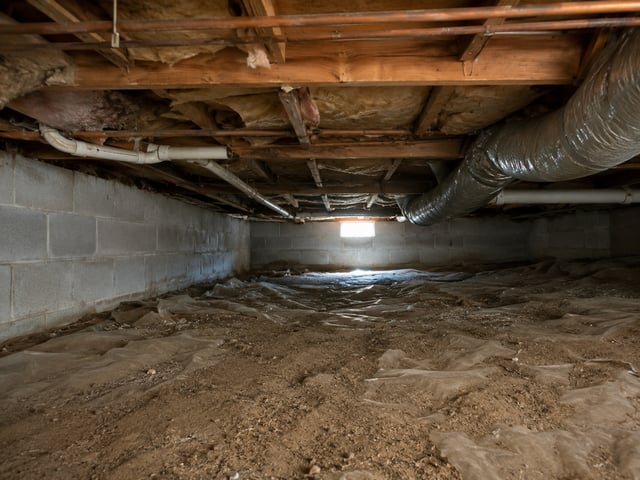
Basement
Crawl Space to Basement Conversion: Cost, Process & Planning
07.24.2026
03.04.2026


In This Article
There's a lot of potential hiding beneath your feet. A basement that currently stores old furniture and forgotten sports equipment could become a proper bedroom, one that's quiet, private, and genuinely comfortable to sleep in. Whether you're creating a guest suite, an in-law apartment, a teenager's domain, or a primary bedroom with more space than the floors above, a basement conversion is one of the most rewarding renovations you can do.
It does require thinking through some things that don't come up in above-grade renovations: egress windows, moisture control, ceiling height, and building codes chief among them. But with the right planning—and the right contractor—none of that has to feel overwhelming. This guide walks you through everything you need to know, from the legal requirements to the design choices that make a basement bedroom feel like a real home.
Before falling in love with any design ideas, confirm what your local building department requires for a basement to qualify as a legal bedroom. The specifics vary by municipality, but most jurisdictions require the same three things.
If you live in a condo, co-op, or HOA community, you may also need board approval before work begins, particularly for structural changes or exterior modifications like window wells.
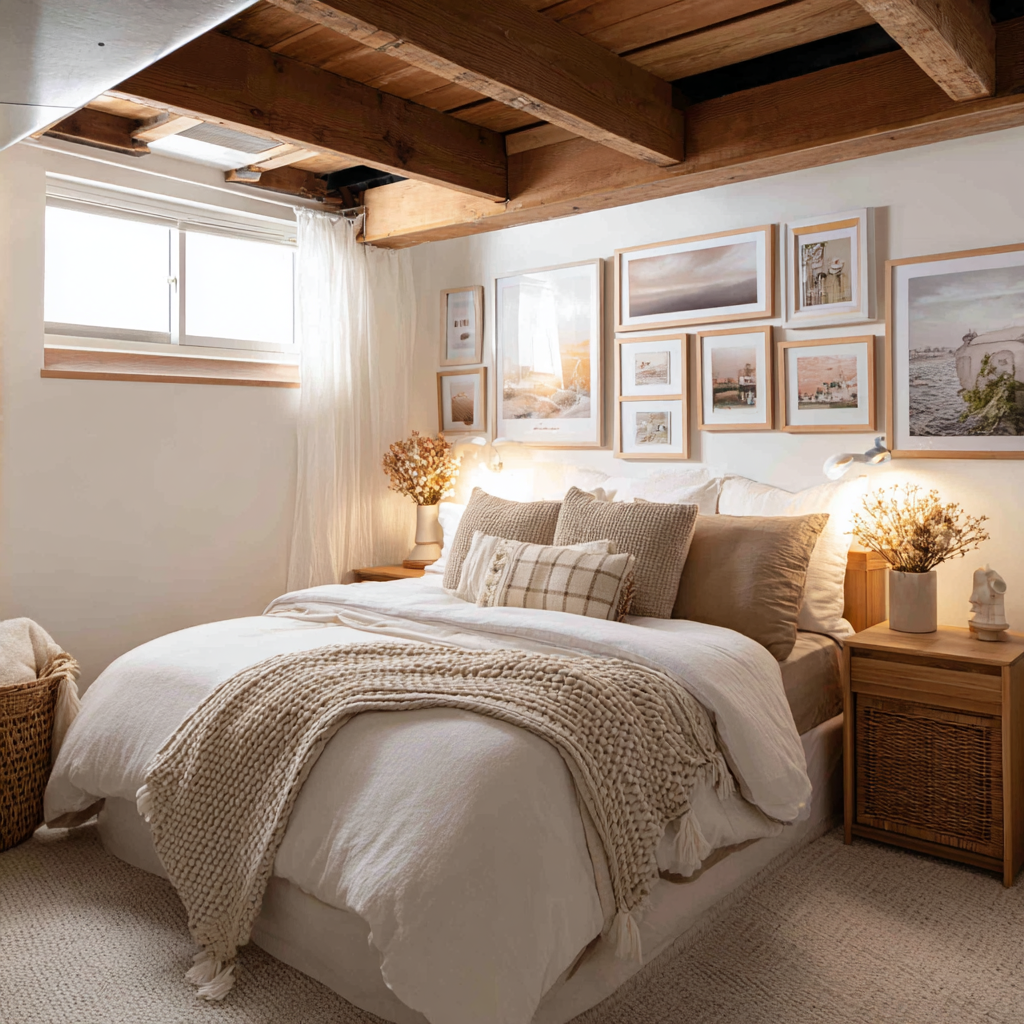
If your joists are in good condition and have an appealing natural look, leaving them exposed is a design move worth considering. Painting the beams—along with any visible mechanical elements—in a single warm tone creates a cohesive, intentional look that reads as a deliberate choice rather than an unfinished space. Warm wood overhead paired with soft textiles below contributes to a cozy, cabin-like atmosphere that no drywall ceiling can replicate.
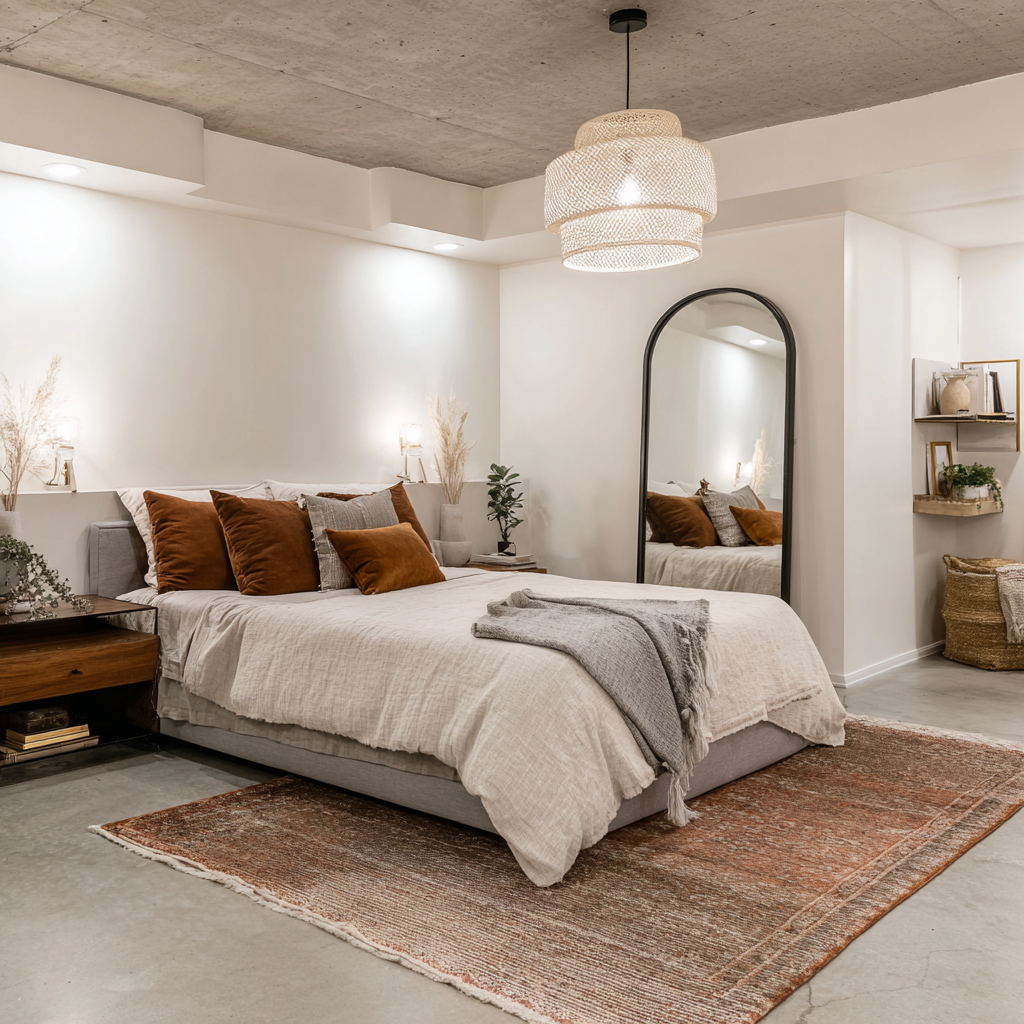
For a more urban, loft-inspired take, exposed concrete works just as well. The key is balancing the rawness of the ceiling with warmth elsewhere in the room—think woven pendant lights, a large arched mirror, and rich textile layers. An industrial ceiling can feel genuinely inviting when the furnishings do the softening work.
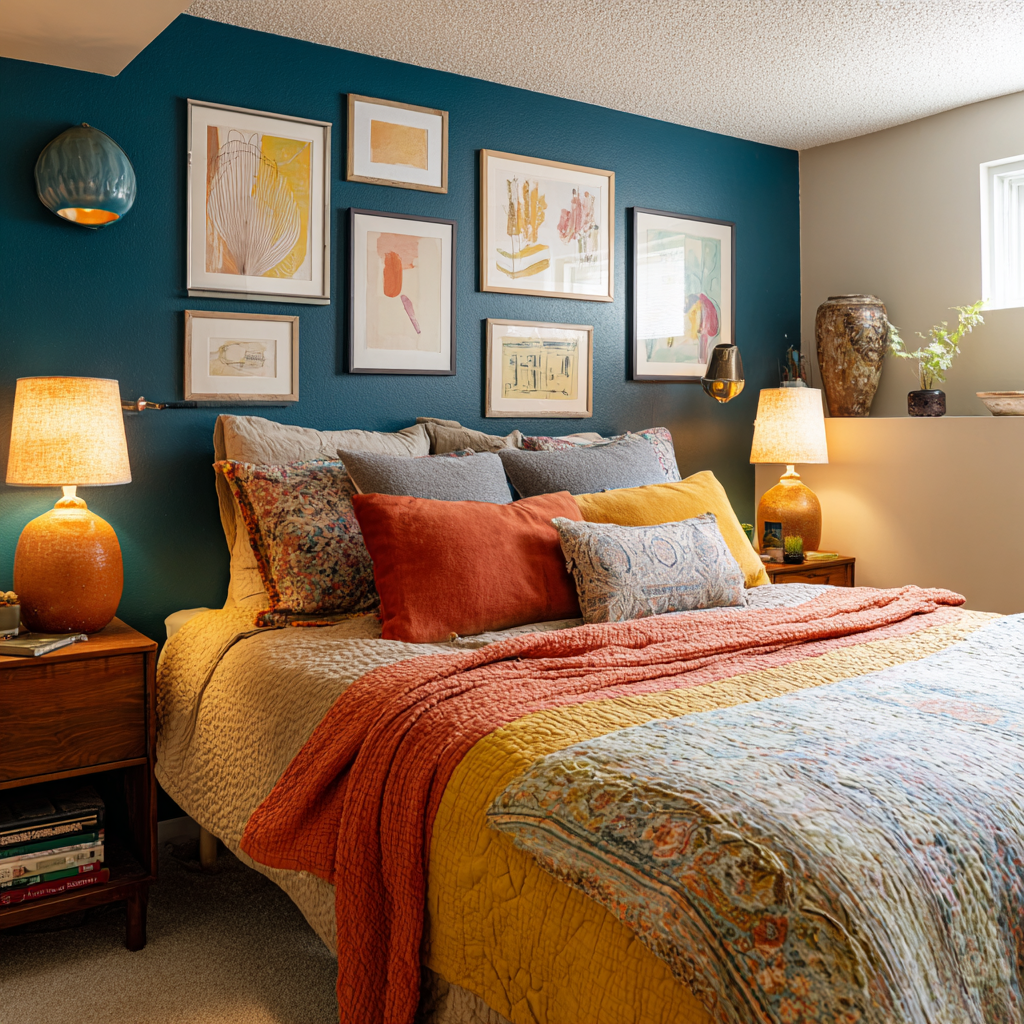
Low natural light doesn't have to mean playing it safe. A saturated accent wall—deep teal, burnt orange, forest green—can make a basement bedroom feel more intentional and energized than a neutral palette ever would. Rich colors add depth and personality, and when paired with warm lamps and layered textiles, they create a room that feels cozy rather than dark. A gallery wall of prints or artwork adds another layer of visual interest without requiring any structural work at all.
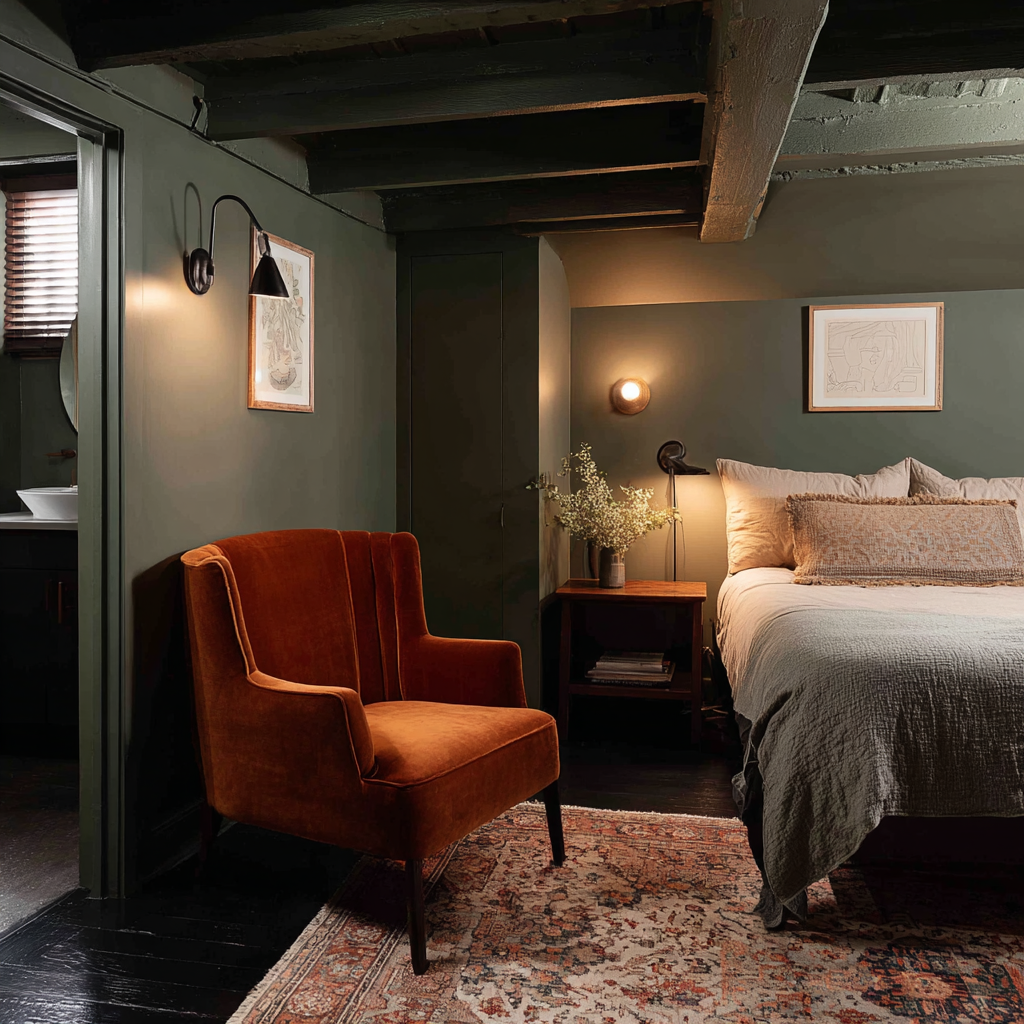
For a more enveloping effect, consider painting walls and ceiling in the same deep color. Applying a single shade to every surface—walls, ceiling, and exposed beams—gives the space a rich, jewel-box quality that makes low ceilings feel atmospheric rather than limiting.
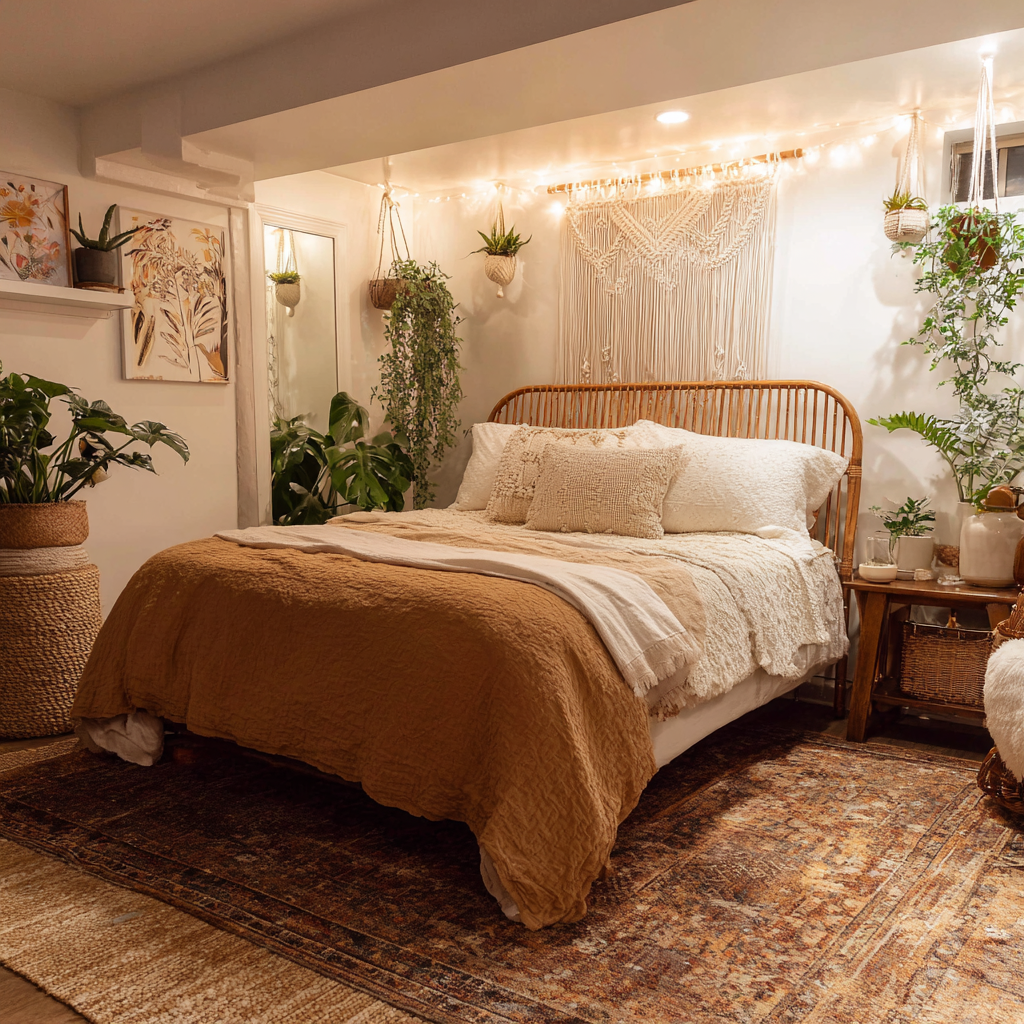
A simple white basement bedroom can feel lush and alive with the right layering of materials: a rattan bed frame, a vintage-style rug, macramé wall art, hanging plants, and string lights. Plants are particularly effective in basements because they signal life and vitality in a space that can otherwise feel underground. This approach requires very little structural renovation—most of the magic is in how the room is styled.
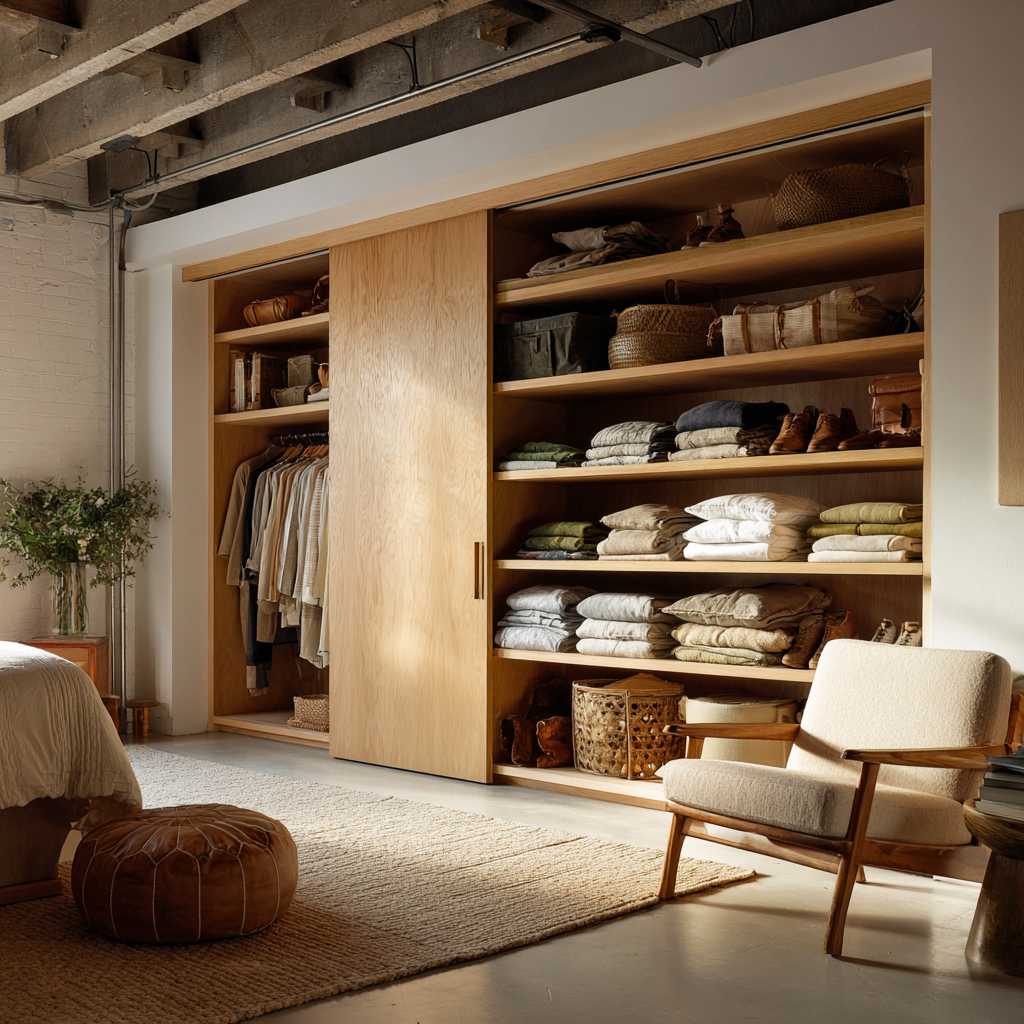
Basements rarely have the closet infrastructure of above-grade bedrooms, and that storage gap is one of the first things to solve. When renovating your basement, consider adding a floor-to-ceiling built-in wardrobe wall to address the problem beautifully while adding real architectural interest.
Open shelving, sliding panels, and a hanging rod can all be incorporated into one clean unit that runs wall to wall—a particularly satisfying contrast against a raw concrete or beam ceiling above it.
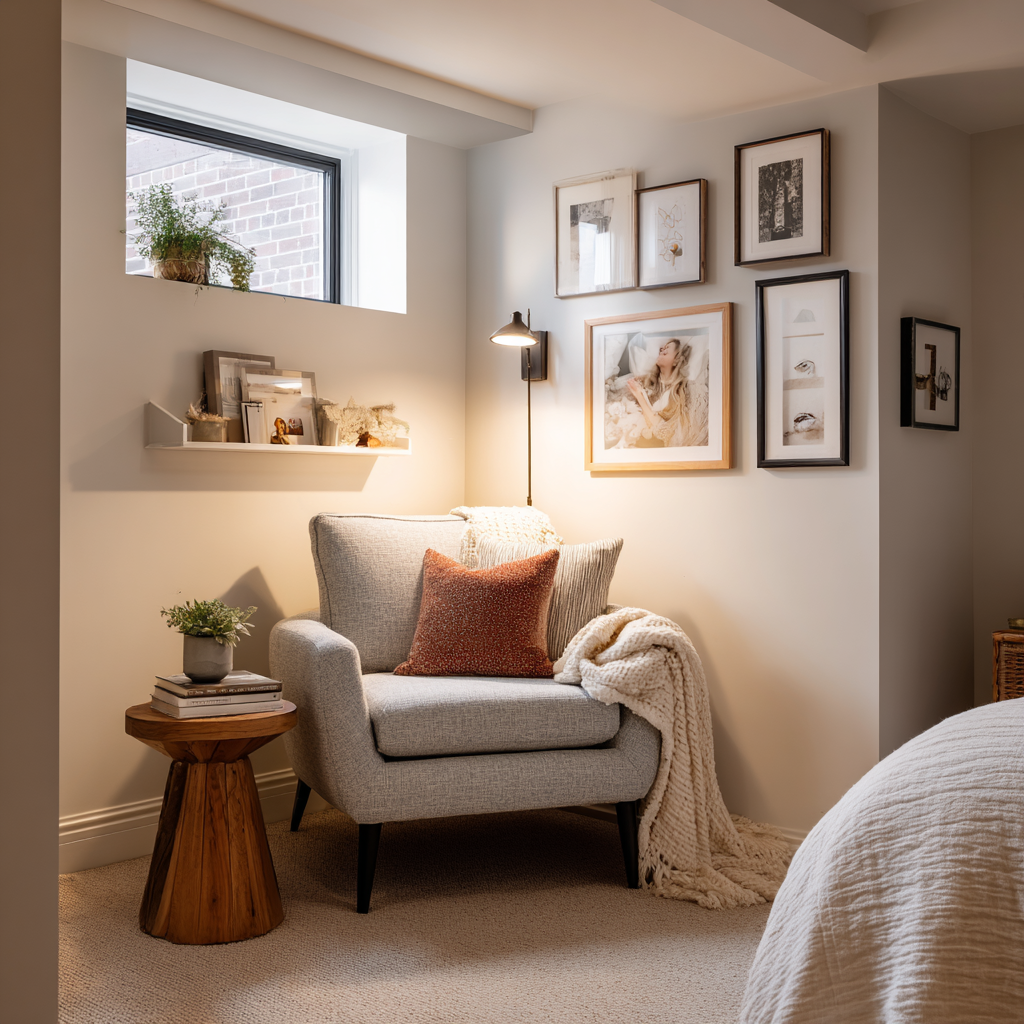
Basement bedrooms often have an alcove, an odd corner, or a stretch of wall beside an egress window that begs to become a dedicated reading spot. A single armchair, a small side table, a swing-arm sconce, and a gallery wall are all it takes to transform an unremarkable corner into the most inviting part of the room. Position it near your egress window to capture whatever natural light comes in, and let a warm lamp do the rest after dark.
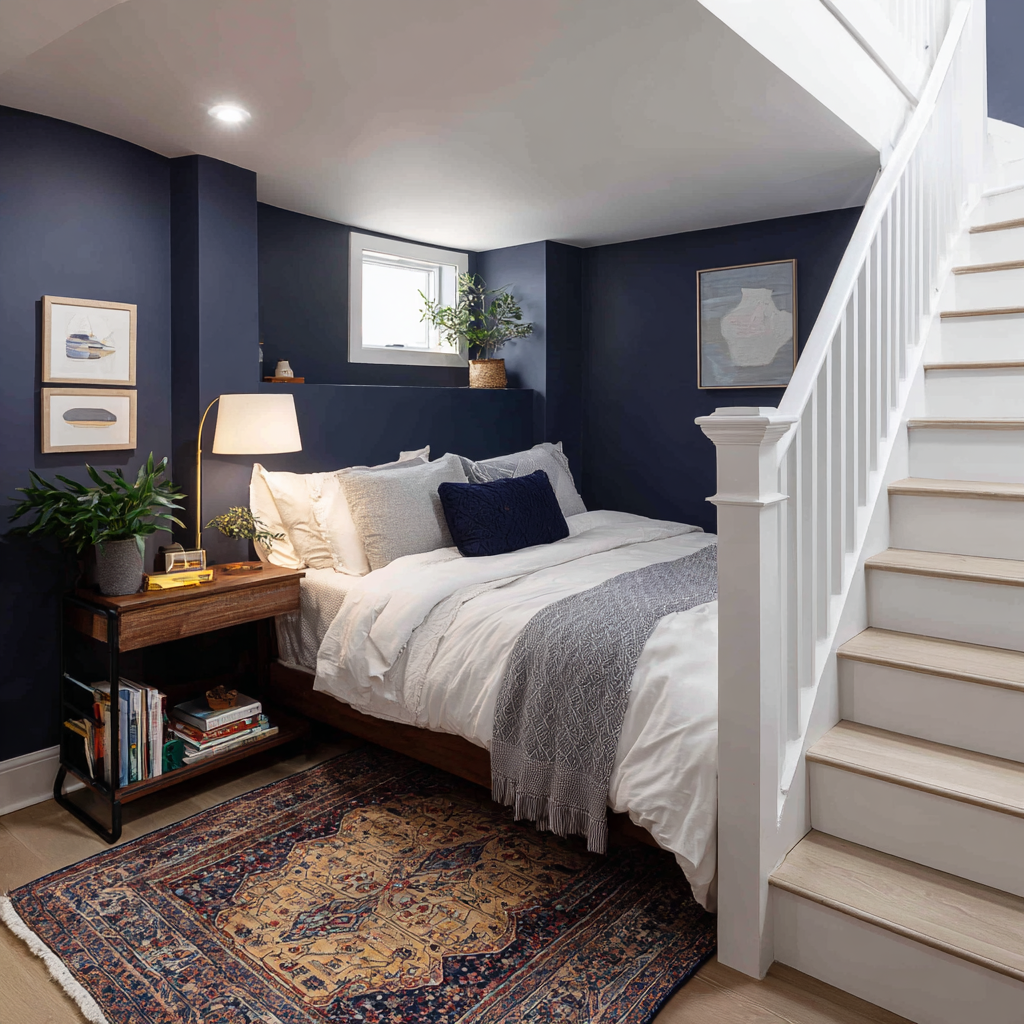
Basements often come with constraints—staircases that cut into the floor plan, support columns, low soffits over ductwork. Rather than fighting these features, the most successful basement bedroom remodels find ways to incorporate them.
A staircase wall becomes a backdrop for a moody, defined sleeping nook. An exposed column becomes an opportunity for a built-in headboard or bookshelf on either side. Working with the architecture you have results in a space that feels curated rather than compromised.
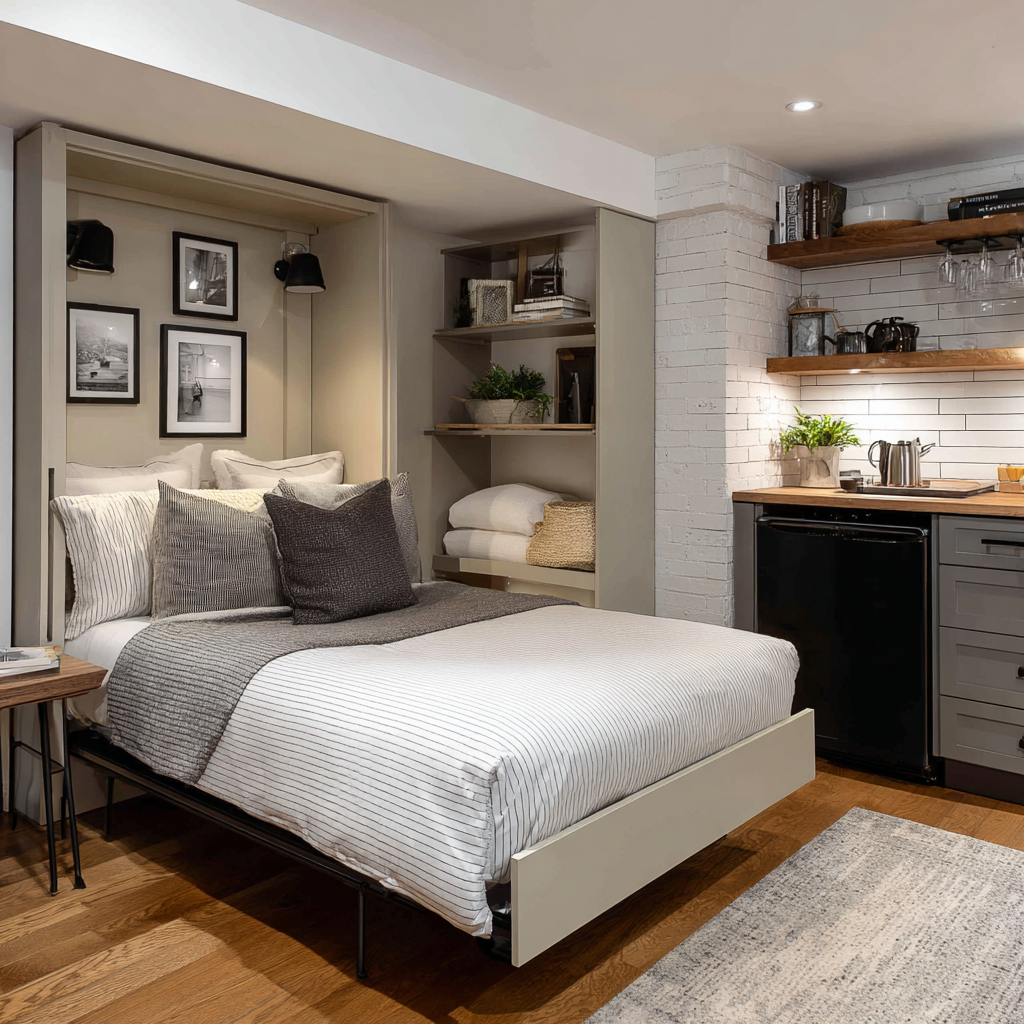
A Murphy bed is one of the smartest investments for a multi-purpose basement space. When folded up, it frees the room for other uses—a home office, a workout space, a sitting room for guests. When deployed, it provides a proper, comfortable sleeping surface. Flanking it with integrated shelving and art niches makes it feel like a considered design feature rather than a space-saving workaround.
Add a compact kitchenette—mini-fridge, counter space, and a simple backsplash—and the space functions like a studio apartment, with everything a guest or resident needs for independent living.
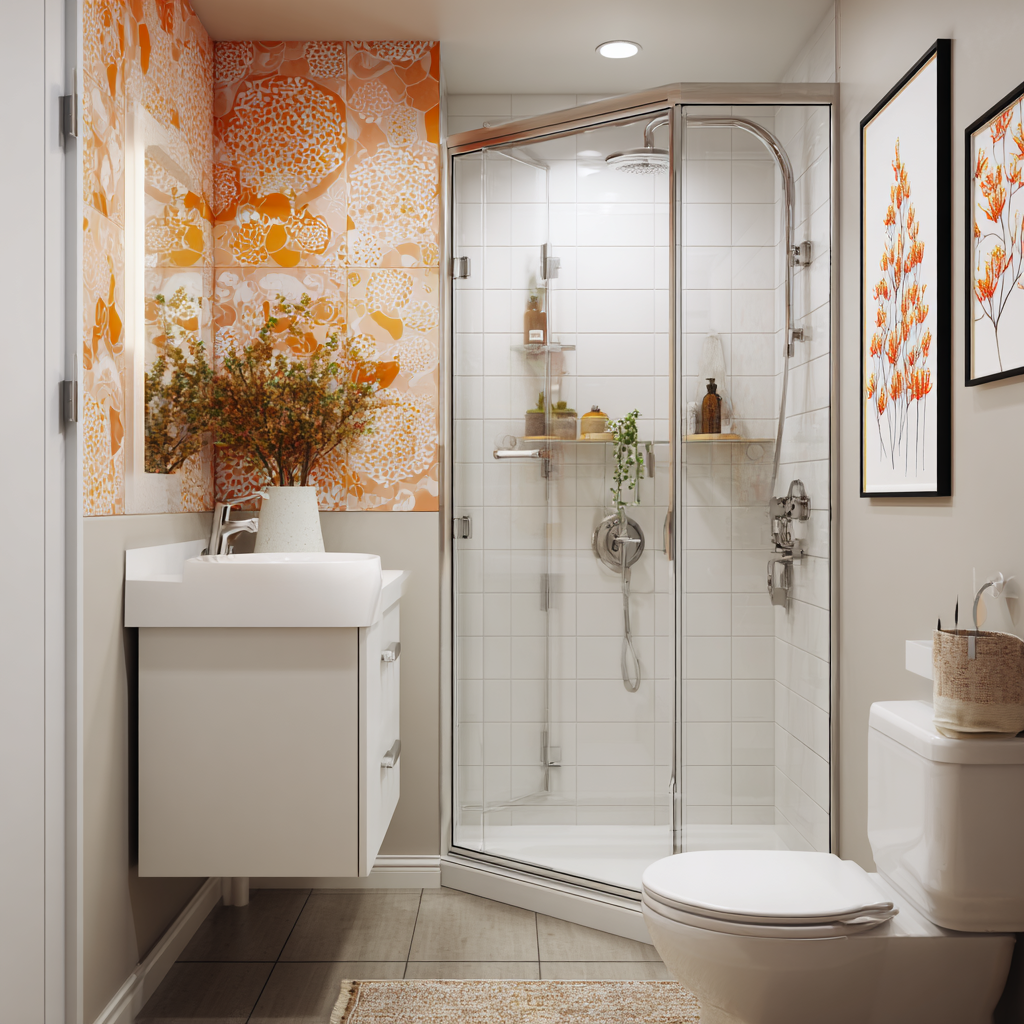
A basement bathroom adds significant value to your bedroom renovation, both for everyday livability and for resale. The key challenge is that drainage lines need to connect to the main sewer line, which typically runs higher than your basement floor. This means either breaking into the concrete slab to run new drain lines or installing a macerating toilet system that pumps waste up to the existing drain without excavation. Your contractor can assess your specific situation and recommend the right approach.
For the bathroom design itself, a smaller footprint can still pack a real punch. A compact neo-angle corner shower makes smart use of a tight layout, and a wall-mounted vanity frees up floor space while keeping the room easy to clean. A single bold tile choice—on an accent wall, behind the vanity, or in the shower—does more design work than covering every surface, and costs less to install. A properly ventilated exhaust fan, ideally ducted to the exterior, is critical for moisture management and is required by most building codes.
Design a Home That’s Uniquely Yours
Block can help you achieve your renovation goals and bring your dream remodel to life with price assurance and expert support.
Get Started
Basement bedroom renovation costs vary widely depending on your location. After all, turning a St. Louis basement into a bedroom will cost differently than doing the same project in Broomfield, Colorado.
The condition of your existing space and how much you're taking on will also majorly influence your remodeling costs. A basic finishing project—framing, drywall, flooring, lighting, and paint—can run anywhere from $20,000 to $40,000 in most markets. A more involved renovation that includes egress window installation, electrical upgrades, and a full ensuite bathroom can push costs to $60,000–$100,000 or more.
A few of the biggest cost drivers to plan around:
Labor will make up the majority of your total cost, typically 50–60% of the budget. Permit fees are an additional line item most homeowners overlook; expect $500–$2,000 depending on your scope and municipality. For more cost insights, look to our guides about budgeting basement and bedroom remodels.
A basement bedroom renovation rewards careful preparation—and the right contractor makes all the difference. Block Renovation connects you with vetted, licensed professionals who have real experience with the specific challenges of below-grade renovations: moisture, egress, plumbing, and permits. Every project scope is reviewed by renovation experts before work begins, and Block's progress-based payment system means funds are only released as work is completed.
Remodel with confidence through Block

Connect to vetted local contractors
We only work with top-tier, thoroughly vetted contractors

Get expert guidance
Our project planners offer expert advice, scope review, and ongoing support as needed

Enjoy peace of mind throughout your renovation
Secure payment system puts you in control and protects your remodel


Renovate confidently with Block
Easily compare quotes from top quality contractors, and get peace of mind with warranty & price protections.
Basement
Crawl Space to Basement Conversion: Cost, Process & Planning
07.24.2026
Bathroom
Small Basement Bathroom Layouts & Floor Plans
07.19.2026

Basement
Basement Remodel Cost Per Square Foot (2026)
07.19.2026
Basement
21 Basement Remodeling Ideas on a Budget
07.18.2026

Cost
Cost to Finish a Basement in 2026: Prices & Estimates
07.17.2026