



Design
Bathtub to Shower Conversion: Cost, Ideas, Examples & More
08.11.2026
01.17.2026


In This Article
Built-in bookcases bring order and intention to a room while creating storage that feels permanent and tailored. Because they’re designed for the exact dimensions of your home, they can solve layout challenges that standard furniture can’t. Built-ins are especially effective in smaller spaces, where thoughtful millwork can replace multiple pieces of furniture. With the right design choices, they become part of the architecture rather than an afterthought.
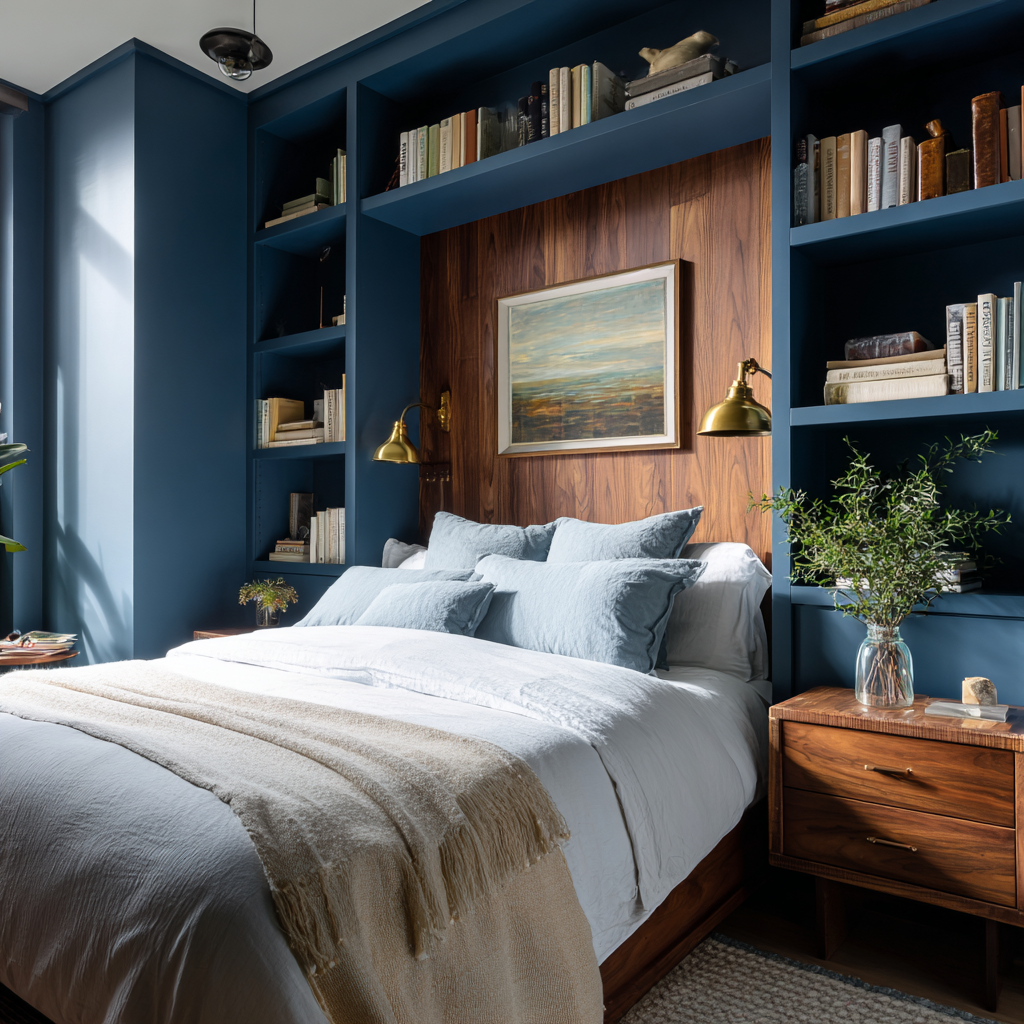
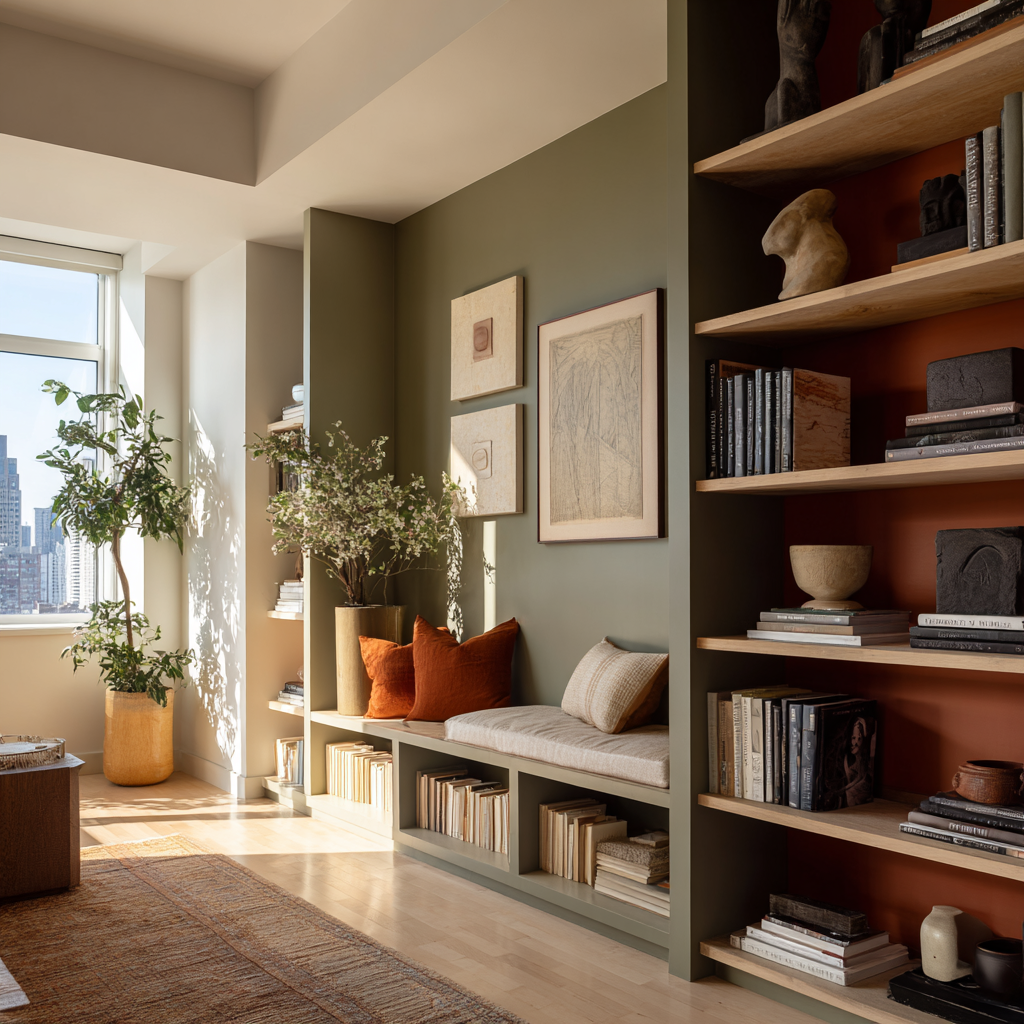
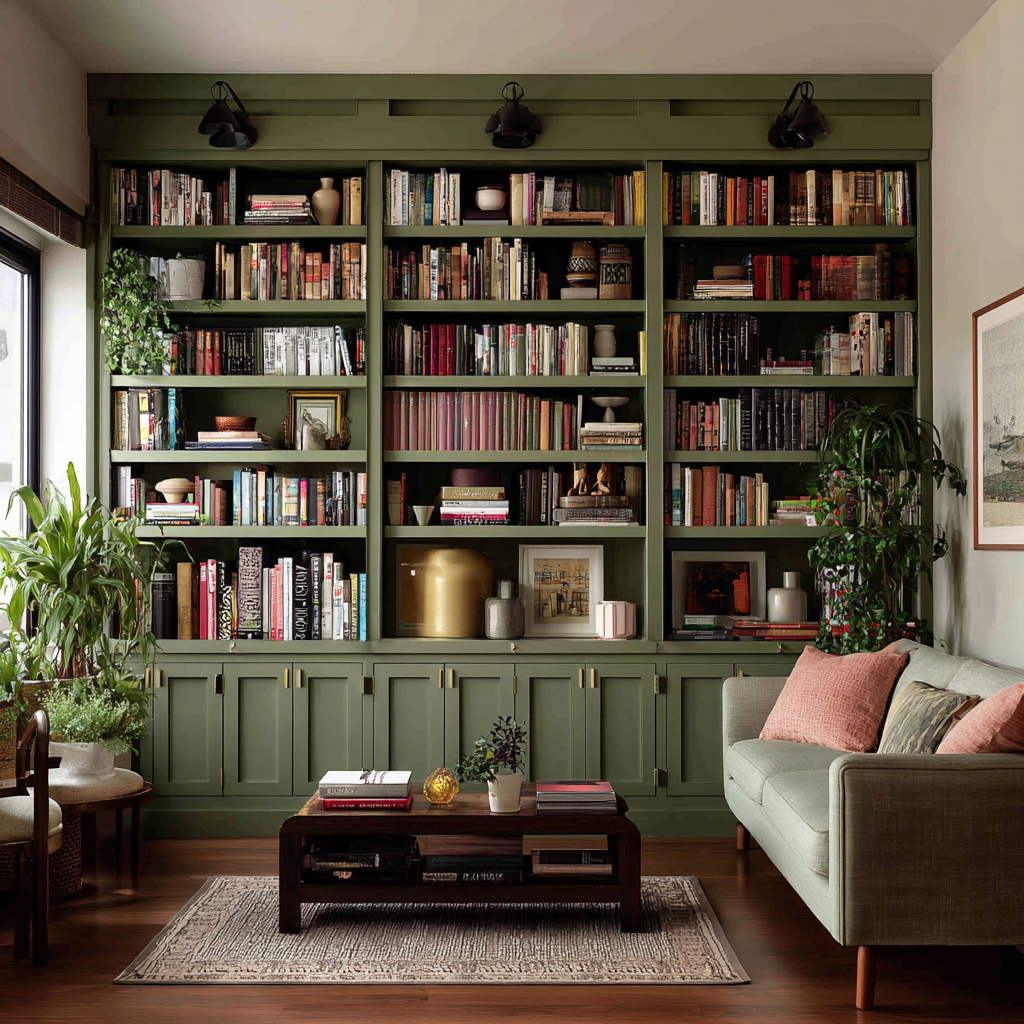
Color-drenched bookcases are painted to match the surrounding walls, trim, and sometimes even the ceiling. This works particularly well in shades like soft white, warm taupe, slate blue, or muted olive, where the shelving recedes visually. Using the same finish across walls and shelves minimizes visual breaks and keeps the room feeling cohesive. Matte or eggshell finishes tend to hide wear better than high-gloss in high-touch areas.
Floor-to-ceiling bookcases maximize vertical space and create a strong architectural presence. Shelves near the ceiling can be slightly deeper to accommodate larger objects or storage bins. Crown molding or a simple drywall return at the top helps the unit feel built-in rather than furniture-like. Keeping the deepest shelves lower maintains visual balance.
Built-in bookcases introduce curved lines that soften millwork-heavy walls. The arches can be subtle or dramatic depending on ceiling height and spacing. Plaster or drywall arches create a seamless look, while wood-trimmed arches feel more traditional. Keeping shelf interiors simple allows the shape to remain the focal point.
Closed lower cabinets anchor built-in bookcases visually and provide concealed storage. Flat-panel doors keep the look clean, while Shaker-style doors add definition. Cabinet depths of 16–18 inches work well for storing larger items without protruding into the room.
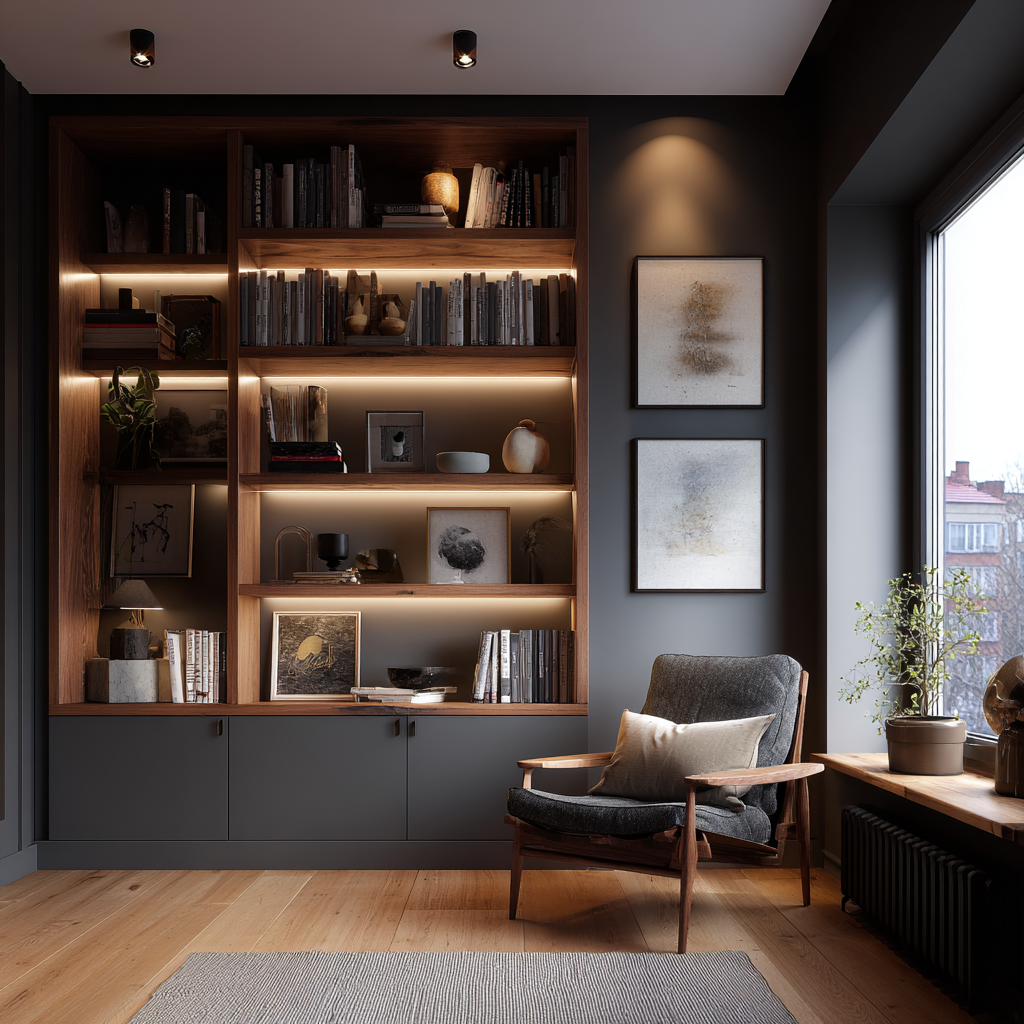
Integrated lighting adds depth and function to built-in bookcases. LED strip lighting hidden under shelves creates even illumination, while puck lights add more focused highlights. Warm white lighting (around 2700K–3000K) keeps shelves from feeling clinical. Wiring should be planned early to avoid visible cords or surface-mounted fixtures.
Media wall bookcases integrate shelving with a television and surrounding storage. Recessing the TV slightly helps it sit flush with the shelves. Using closed cabinetry below the screen keeps equipment hidden. Matching shelf finishes to nearby millwork or flooring helps the entire wall read as one element.
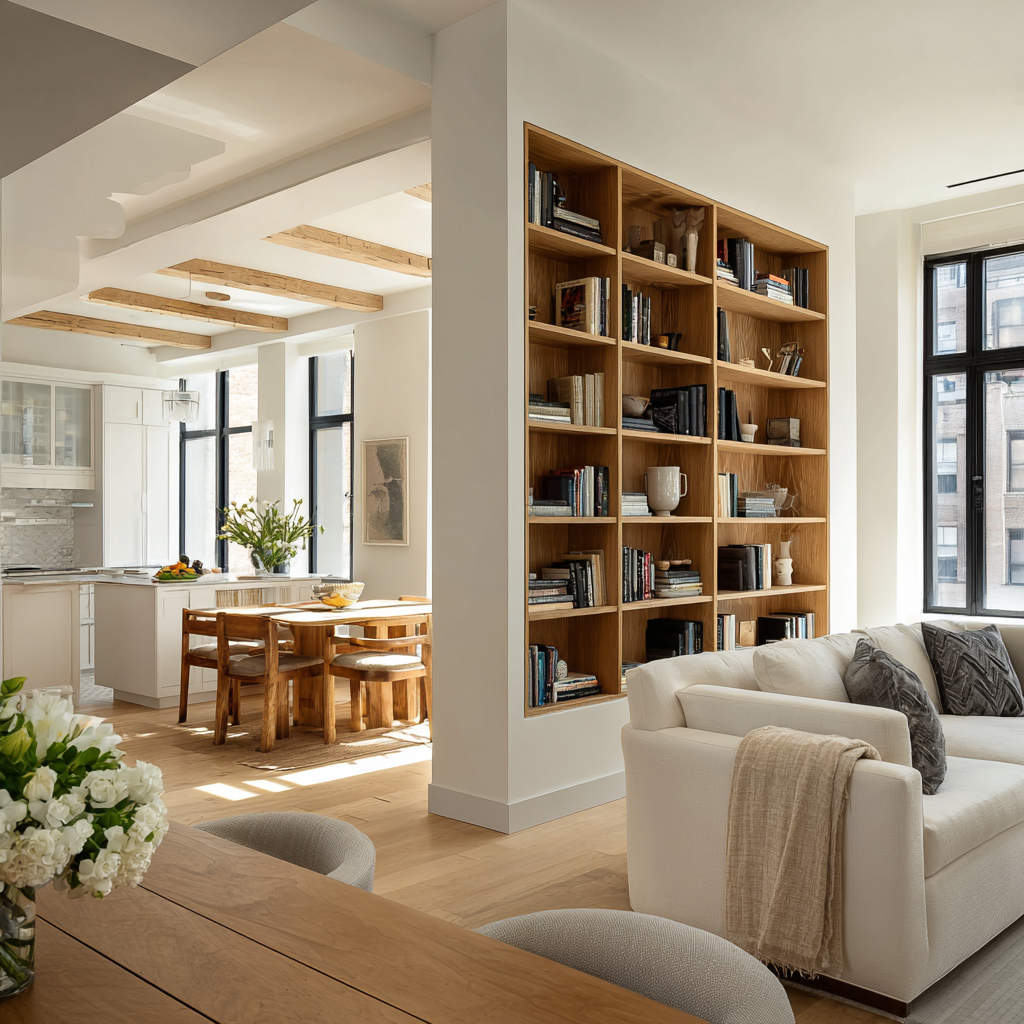
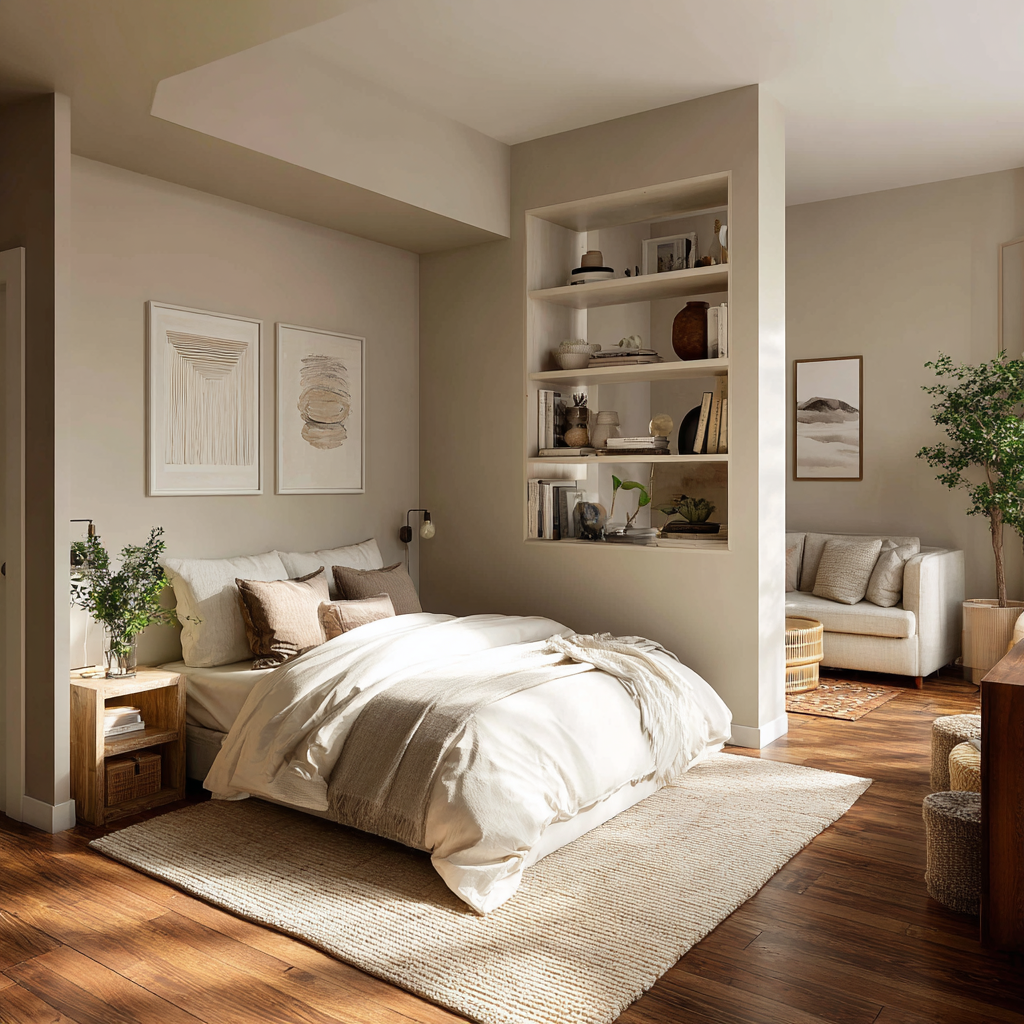
Pony walls with built-in bookcases create separation without fully closing off a space. These partial-height walls typically rise 42–48 inches and can support shelving on one or both sides. Wood or painted finishes help the bookcase feel integrated with nearby millwork. This approach works well in open layouts where you want definition while keeping light and sightlines intact.
Asymmetrical shelving breaks away from uniform grids by varying shelf widths and heights. This allows space for taller books, framed art, or sculptural objects. Planning the layout around specific item sizes leads to better proportions. Consistent spacing between vertical dividers keeps the design from feeling chaotic.
Bookcases placed on either side of a fold-down bed help the wall read as a single, cohesive unit. Shelving should stay shallow enough to allow the bed to open and close comfortably without feeling crowded. Matching the bookcase finish to the bed cabinetry or surrounding trim keeps the design visually calm. This approach works especially well when the bed is centered on the wall and used daily.
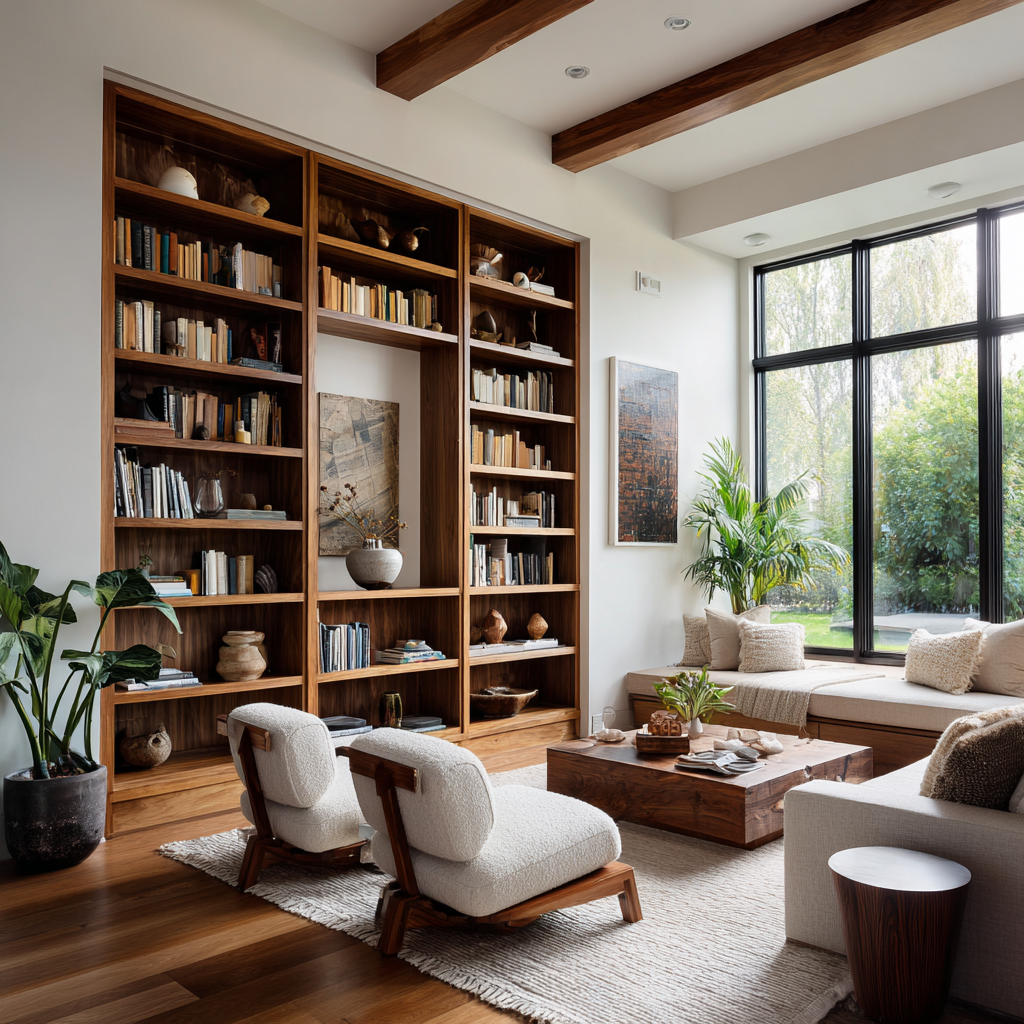
Alcoves are ideal candidates for custom shelving. Bookcases can be inset flush with surrounding walls to avoid protruding edges. Using the same paint color as the room helps them blend in. Adjustable shelves allow flexibility as storage needs change.
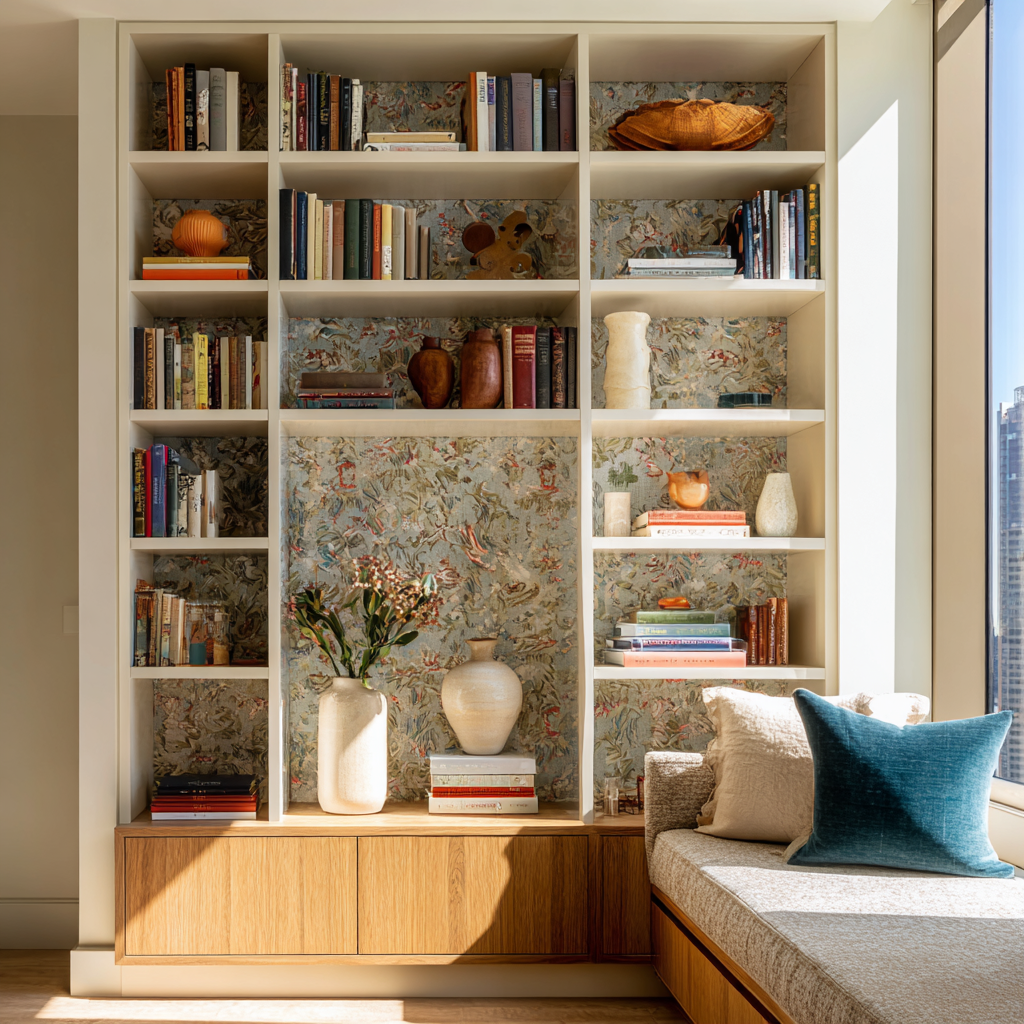
Modern built-ins favor clean lines and minimal detailing. Flat shelves with concealed fasteners create a streamlined look. Light wood tones like white oak or ash pair well with neutral walls. Consistent spacing between shelves reinforces the simplicity of the design.
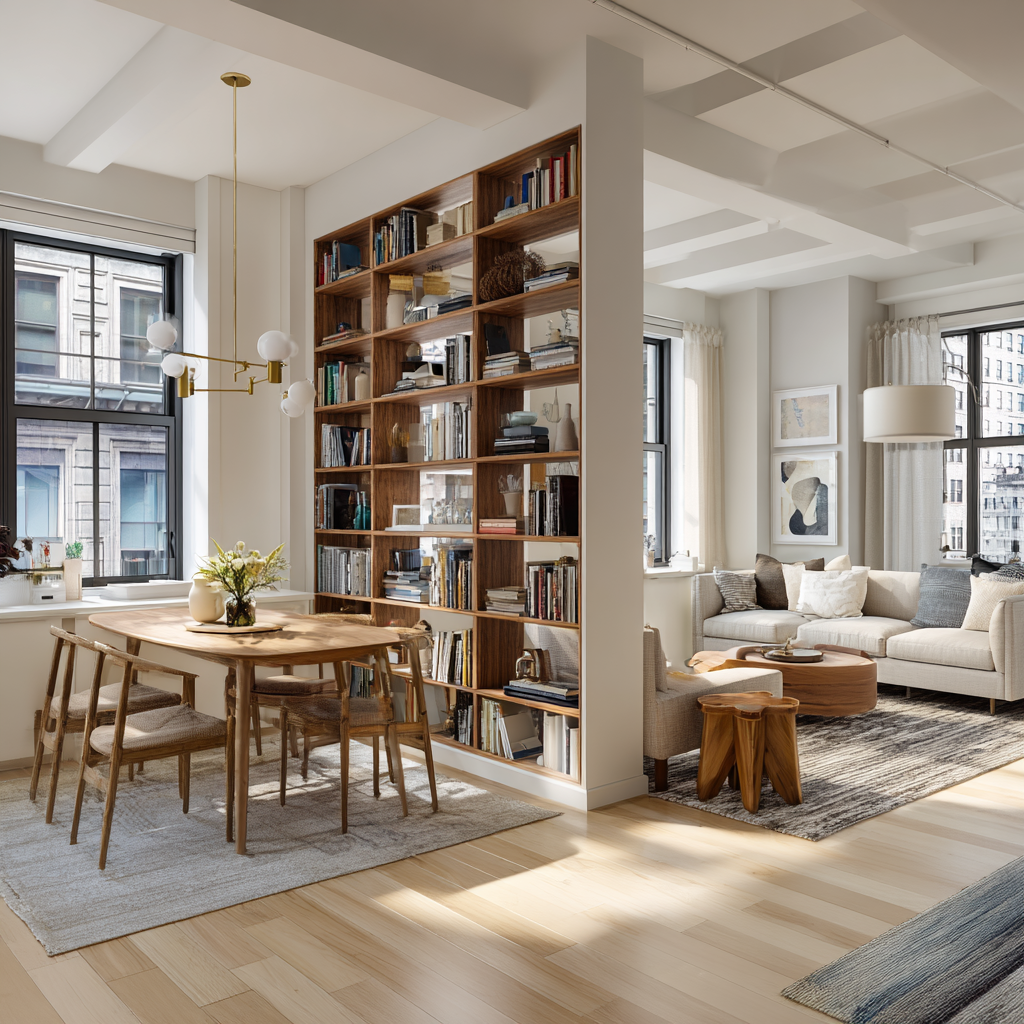
Built-in bookcases can define zones without fully separating them. Open-back designs allow light and sightlines to pass through. Lower solid sections can provide structural stability while upper shelves remain open. This approach works best when the shelving aligns with adjacent walls or columns.
Adding wallpaper to the back of built-in bookcases introduces patterns without overwhelming the room. Subtle geometrics, grasscloth, or soft florals work well behind open shelving. Keeping the shelving finish simple allows the wallpaper to stand out. This approach adds depth and contrast while keeping the bookcase itself restrained.
Mixing materials adds contrast and texture to built-in bookcases. Painted frames paired with wood shelves create visual depth. Metal shelf brackets or trim can introduce subtle industrial elements. Limiting the number of materials keeps the design cohesive.
Below-stairs built-ins take advantage of sloped, often-unused space. Shelving can follow the angle of the stairs for a tailored look. Lower sections can include drawers or cabinet doors for concealed storage. Durable materials are important here due to foot traffic nearby. For similar ideas, read our guide to under stairs storage.
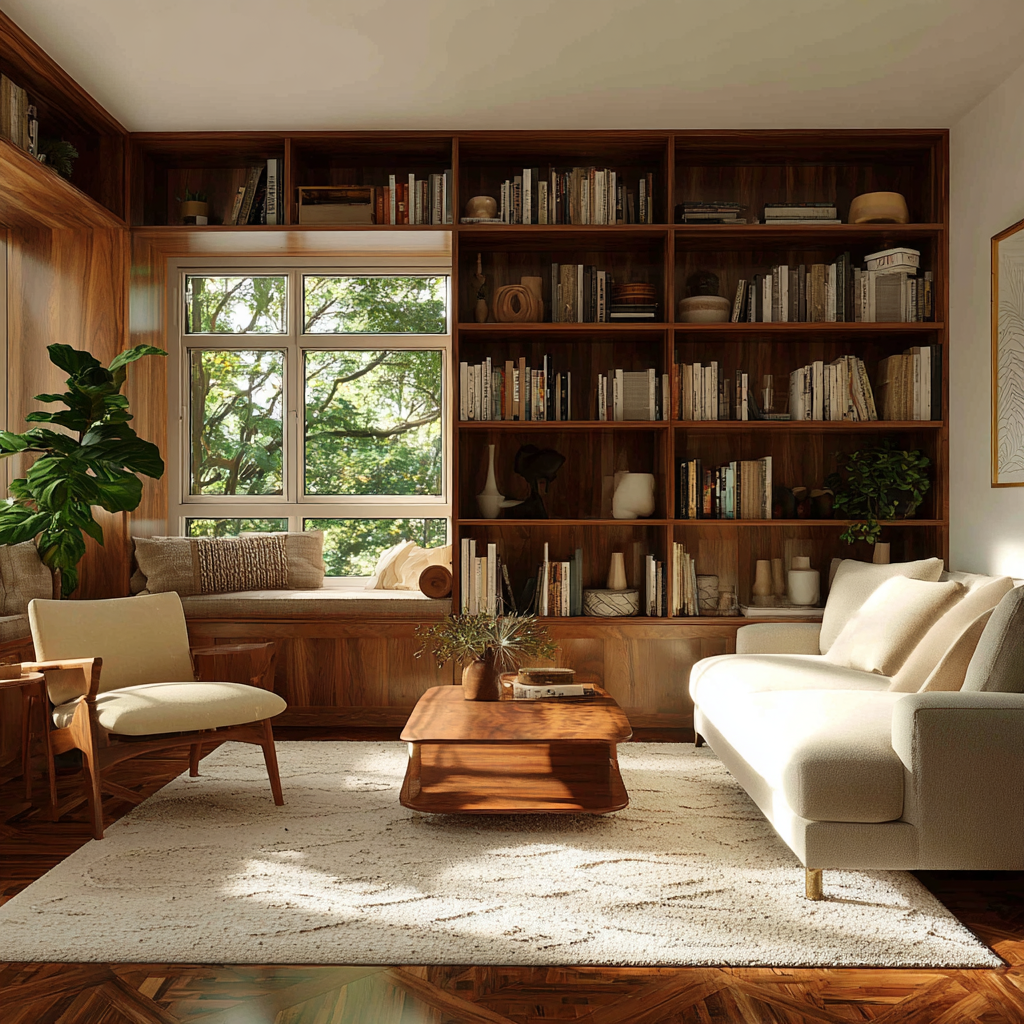
Built-in shelving can frame a window to create a strong focal point while preserving natural light. Keeping shelves shallow and stopping them just shy of the window casing prevents the design from feeling crowded. Matching the shelving finish to nearby trim helps the window feel intentionally anchored within the wall. This approach works well when the window is centered or when you want to turn a plain wall into a reading or display zone.
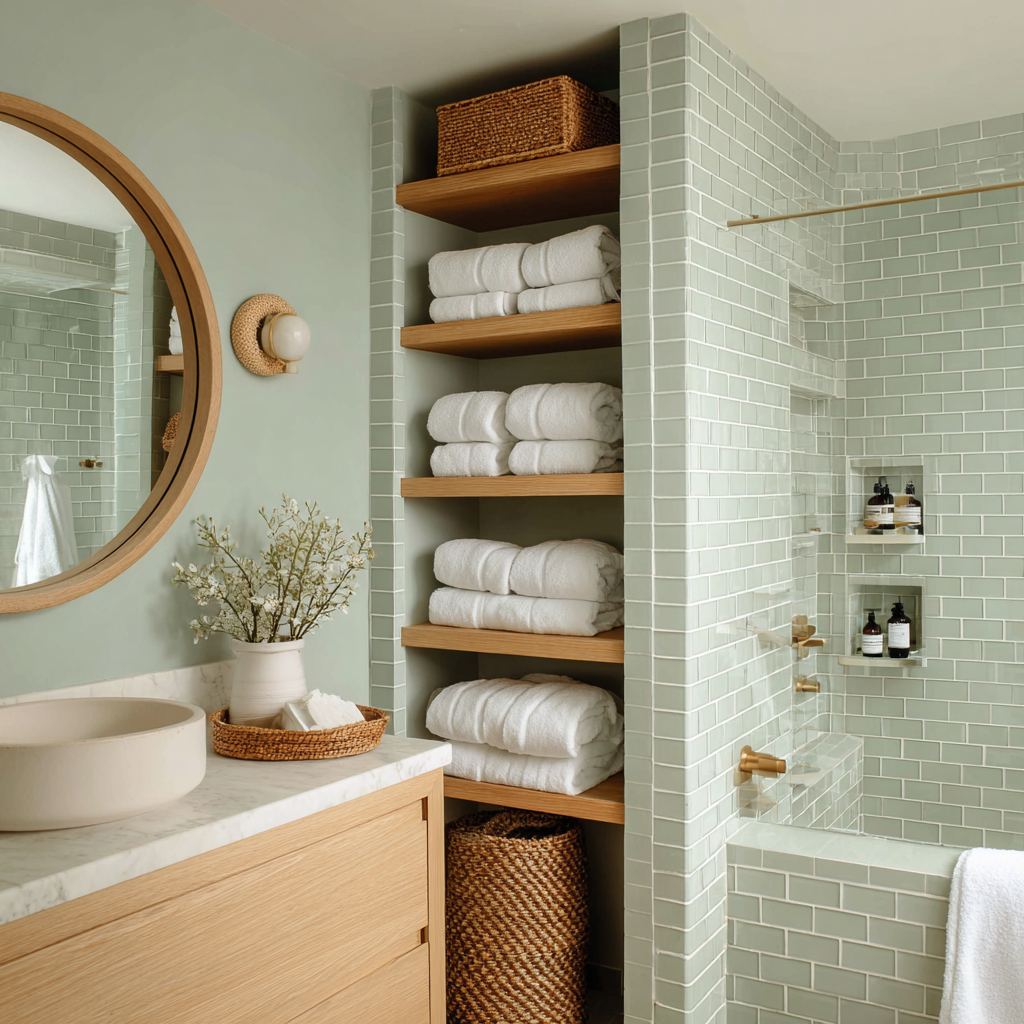
Bathroom built-ins work best when designed with moisture in mind. Painted MDF with proper sealing or solid wood alternatives hold up well in humid conditions. Narrow shelving can store towels, toiletries, or decorative accents. Recessed designs help maintain clear circulation paths.
Low built-in bookcases can trace the edge of a sunken living room to create a clear visual boundary. Keeping the height below seating level preserves openness while subtly separating the space. Continuous shelving in wood or painted finishes helps the sunken area feel intentional rather than sunken by accident. Styling with books and low-profile objects reinforces the room’s horizontal lines.
Turn your renovation vision into reality
Get matched with trusted contractors and start your renovation today!
Find a Contractor
Designing built-in bookcases requires more than choosing shelves and finishes. Small missteps early on can affect how the bookcases function and feel long term.
Ignoring shelf depth. Shelves that are too deep can feel bulky and collect clutter, while shelves that are too shallow limit usability. Standard book shelves typically work well at 10–12 inches deep. Deeper shelves should be reserved for lower sections or specific storage needs.
Poor shelf spacing. Evenly spaced shelves may look neat but don’t always work in practice. Books, art, and objects vary in height, and rigid spacing can make styling difficult. Mixing tighter and taller sections creates more flexibility.
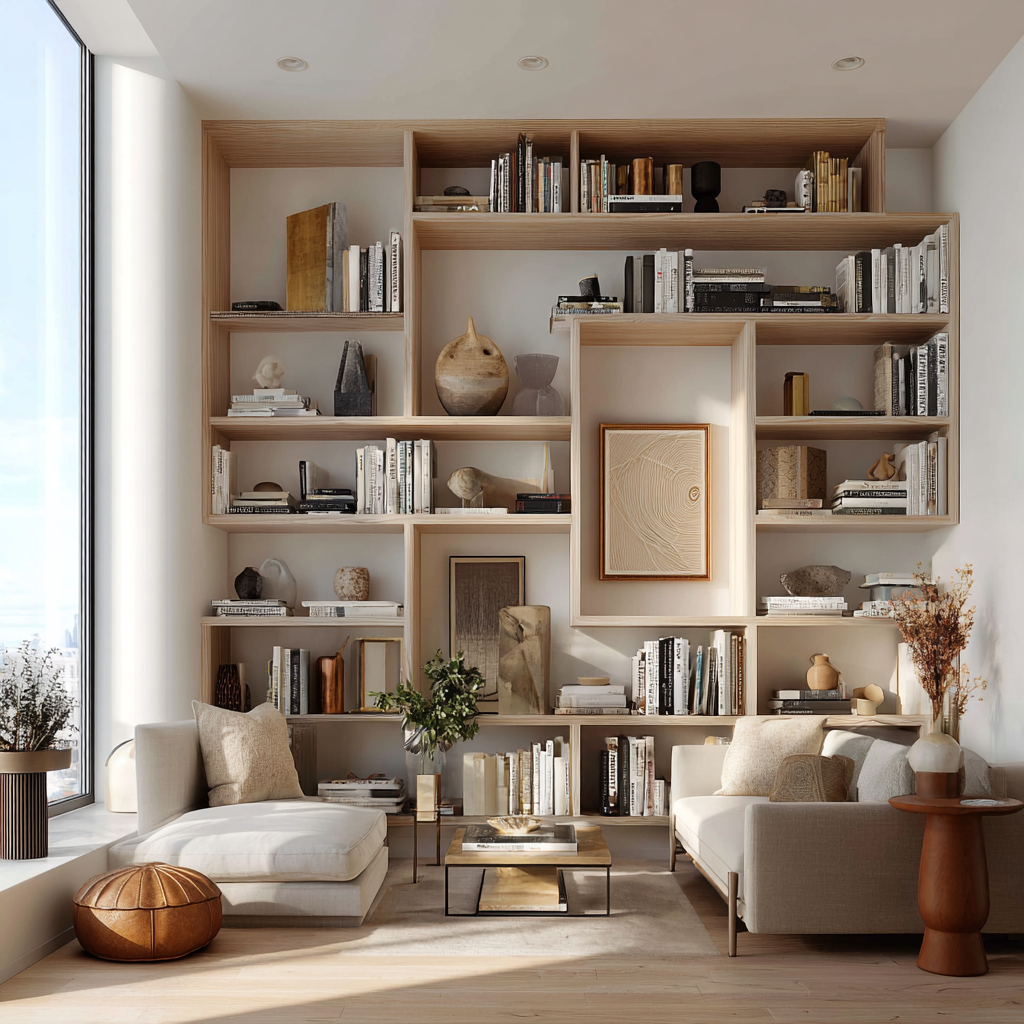
Skipping lighting entirely. Without lighting, bookcases can feel flat, especially in darker rooms. Relying solely on overhead lighting often leaves shelves in shadow. Built-in lighting adds depth and makes the shelving easier to use.
Overloading the design with details. Too many trim profiles, finishes, or materials can overwhelm a wall. Built-ins tend to look best when the design is restrained. Let proportion and alignment do most of the work.
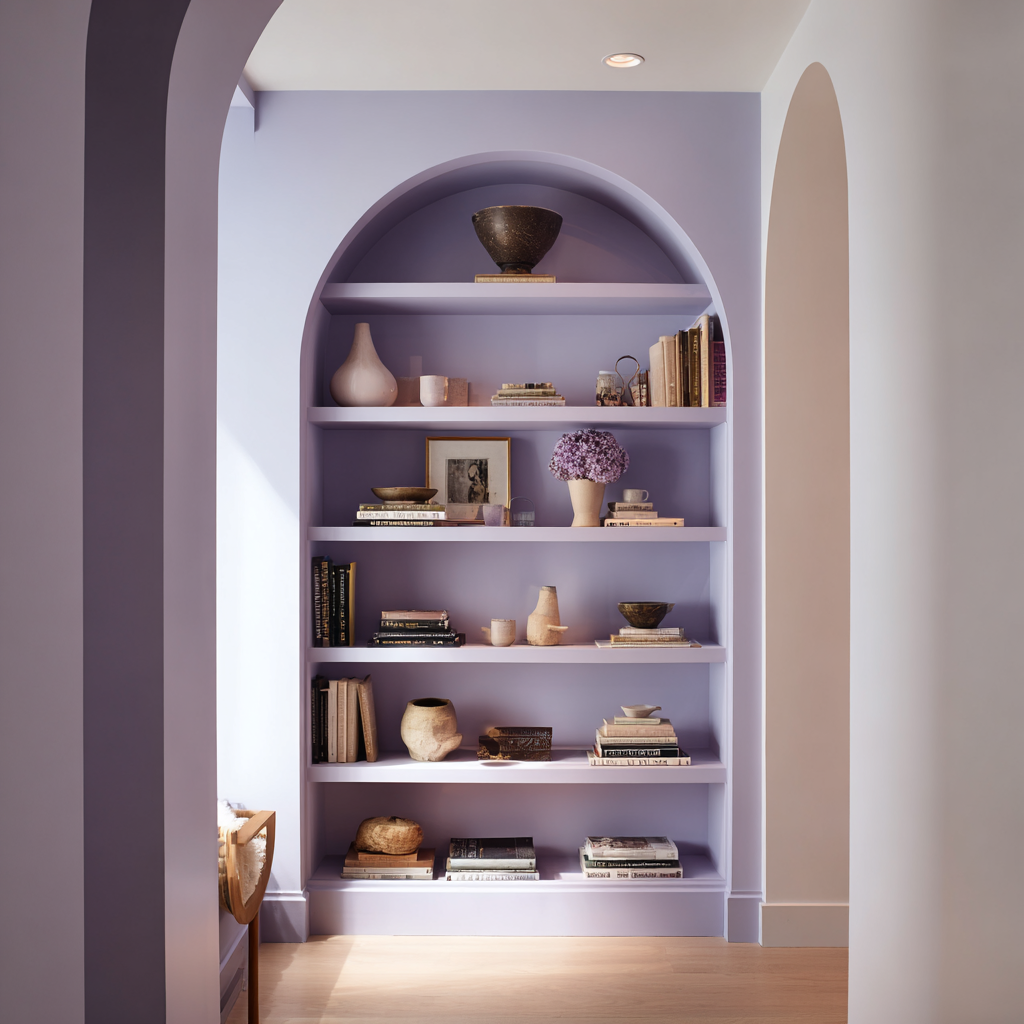
Not planning for future use. Storage needs change over time. Fixed shelving without adjustability can become limiting. Including adjustable shelves or concealed storage allows the bookcases to evolve with the space.
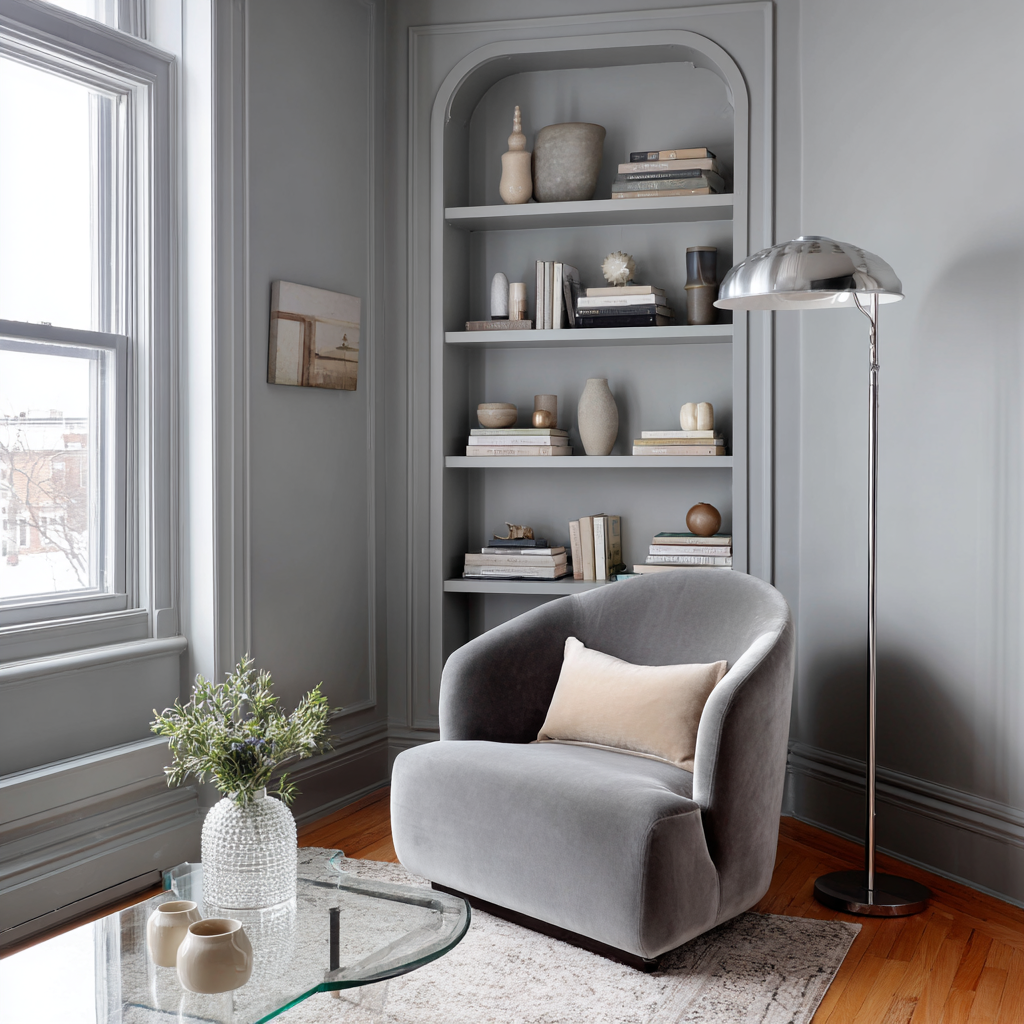
Built-in bookcases require precise measurements, careful coordination, and quality execution. A contractor with strong design awareness can ensure shelves align cleanly with walls, ceilings, and adjacent features. Block Renovation connects homeowners with vetted contractors experienced in custom millwork and interior construction. With clear planning and expert guidance, built-ins can feel like a natural extension of your home.
Remodel with confidence through Block
Connect to vetted local contractors
We only work with top-tier, thoroughly vetted contractors

Get expert guidance
Our project planners offer expert advice, scope review, and ongoing support as needed
Enjoy peace of mind throughout your renovation
Secure payment system puts you in control and protects your remodel

Renovate confidently with Block
Easily compare quotes from top quality contractors, and get peace of mind with warranty & price protections.
Design
Bathtub to Shower Conversion: Cost, Ideas, Examples & More
08.11.2026
Design
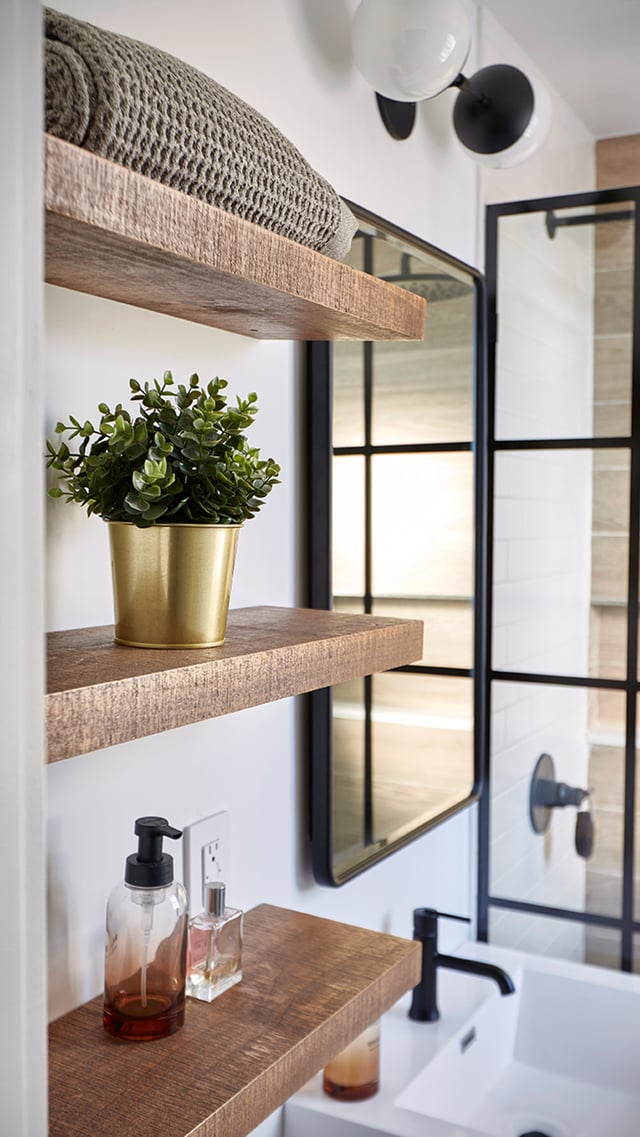
Open Shelving Bathroom Design Ideas & Optimal Placement
08.08.2026

Design
Dining Room Dimensions: Minimums and Standard Sizing
08.07.2026
Design
Split Foyer Renovation: Ideas, Costs & What Pays Off
07.16.2026
Design
Wainscoting vs Board and Batten: How to Choose
07.06.2026