




Backsplash
Rustic Backsplash Ideas That Survive a Real Kitchen
06.17.2026
02.27.2026


.png?width=640&name=u5821215421_A_bright_airy_kitchen_with_natural_wood_backsplas_7a7db28d-cc4f-42f5-bdec-7a0e452f10b2_0%20(2).png)
In This Article
There's something a tile backsplash just can't replicate: the grain, the warmth, the quiet texture of real wood behind your countertops. A wood backsplash brings an organic, grounding quality to a kitchen that feels personal in a way few other materials can. Whether you're drawn to the clean geometry of slatted panels or the lived-in charm of reclaimed barn wood, this is a design choice that says something about the way you want your home to feel.
Wood backsplash ideas are having a serious moment in kitchen design—and not just in farmhouse-style homes. They're showing up in sleek modern kitchens, Scandinavian-inspired spaces, and everything in between. The key is choosing the right wood species, finish, and installation style for your space and your lifestyle.
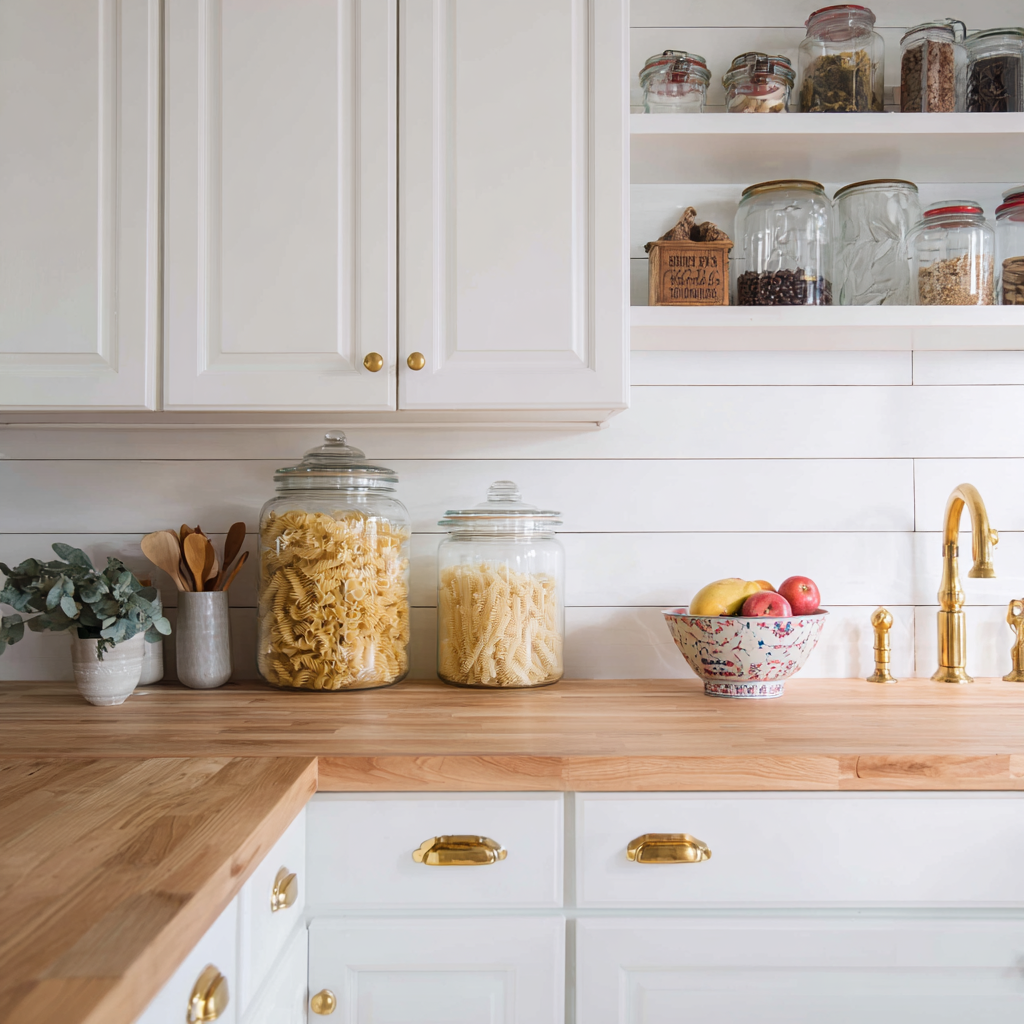
Shiplap isn't just for living rooms and mudrooms. Painted in a crisp white or soft cream, horizontal shiplap planks make a gorgeous kitchen backsplash that feels fresh, airy, and full of character. The horizontal lines draw the eye across the wall, making a smaller kitchen feel wider—a real advantage in urban apartments and galley layouts.
This wooden backsplash idea works especially well when paired with butcher-block countertops, open shelving, and warm metallic hardware in brass or unlacquered gold. The contrast between a painted wood wall and natural wood countertop creates depth without competing textures. If you're leaning toward a cottage or coastal aesthetic, this is one of the most approachable wood backsplash ideas to start with. Make sure your contractor applies a moisture-resistant primer before the topcoat, especially in the zone directly behind the sink and stove—this extra step protects the wood from steam and splashes and helps the finish last longer between touch-ups.
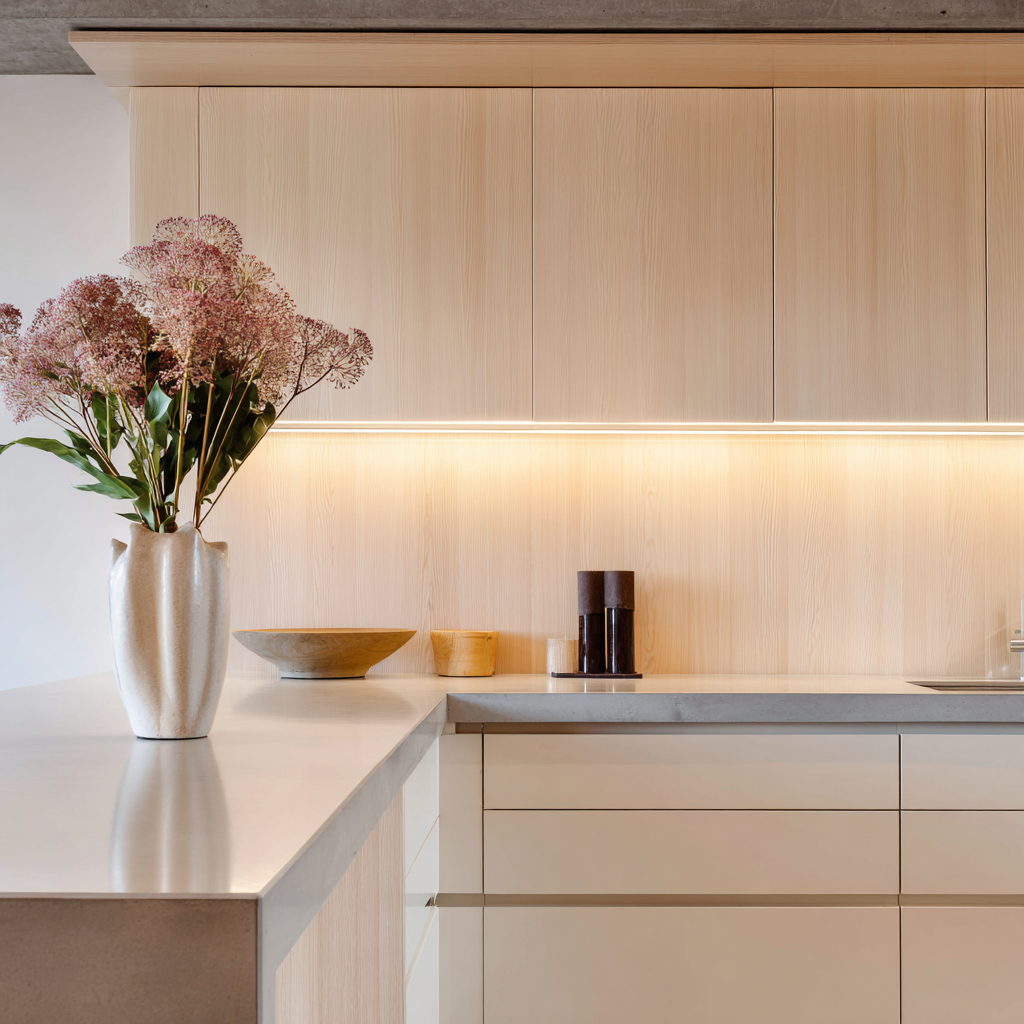
If your design sensibility leans more toward clean lines and understated materials, a smooth light ash panel backsplash might be exactly the right move. Ash has a subtle, even grain that reads as refined without feeling cold—it adds warmth to a minimalist kitchen without introducing visual clutter.
In this style, the wood backsplash becomes almost architectural, functioning as a continuous surface that wraps behind the countertop and up to the cabinetry. Pairing it with concrete or quartz countertops and glossy white or matte gray cabinets creates a calming, Mid-Century modern vibe that still feels completely current. Integrated LED strip lighting beneath the upper cabinets brings out the wood's natural tone and makes the whole space glow. Ask your contractor about using full-height panels rather than individual planks for this look—larger panels minimize seam lines and create a more polished, uninterrupted surface, which is exactly what a minimalist design demands.
.png?width=1024&height=1024&name=u5821215421_Minimalist_kitchen_with_a_smooth_light_ash_wood_b_f4e053cf-4058-4ab5-9948-fe848d09e9b7_1%20(1).png)
One of the most striking approaches to a wooden backsplash is extending the same (or a very similar) wood tone from your cabinets right onto the backsplash surface. The result is a warm, cocoon-like kitchen where everything feels intentionally connected. It's a look that draws heavily from Japanese and Scandinavian design traditions, and it's increasingly popular in high-end renovations.
The trick here is subtlety: you don't need an exact grain match, but the color temperature should be close. Light birch cabinets paired with a pale ash backsplash, for example, creates a tonal harmony that's visually soothing. This approach also lets you skip a separate decorative backsplash material entirely, which can simplify your materials list and potentially reduce costs.
.png?width=1024&height=1024&name=u5821215421_Artisan_kitchen_with_hand-finished_oak_panel_back_8c9a8d1e-a82e-43ff-adb8-6cdedbcf111d_1%20(1).png)
Want your wood backsplash to be a true showpiece? Frame it. Placing a natural oak panel between rich, dark-painted cabinets—navy, charcoal, deep forest green—turns the backsplash into a focal point that catches your eye the moment you walk in. The oak's golden grain practically glows against a darker surround, especially when natural light hits it throughout the day.
This combination brings a modern Tuscan warmth to the kitchen without feeling heavy or dated. It works beautifully with marble or honed stone countertops and aged brass fixtures. If you're considering this approach, keep the rest of the kitchen's palette relatively restrained so the contrast between the dark cabinetry and the warm wood can do its work. When pairing natural wood with painted cabinetry, coordinate your finish consultations early—seeing the actual cabinet paint color next to the actual wood sample, in your kitchen's lighting, is the best way to confirm the combination feels right before committing.
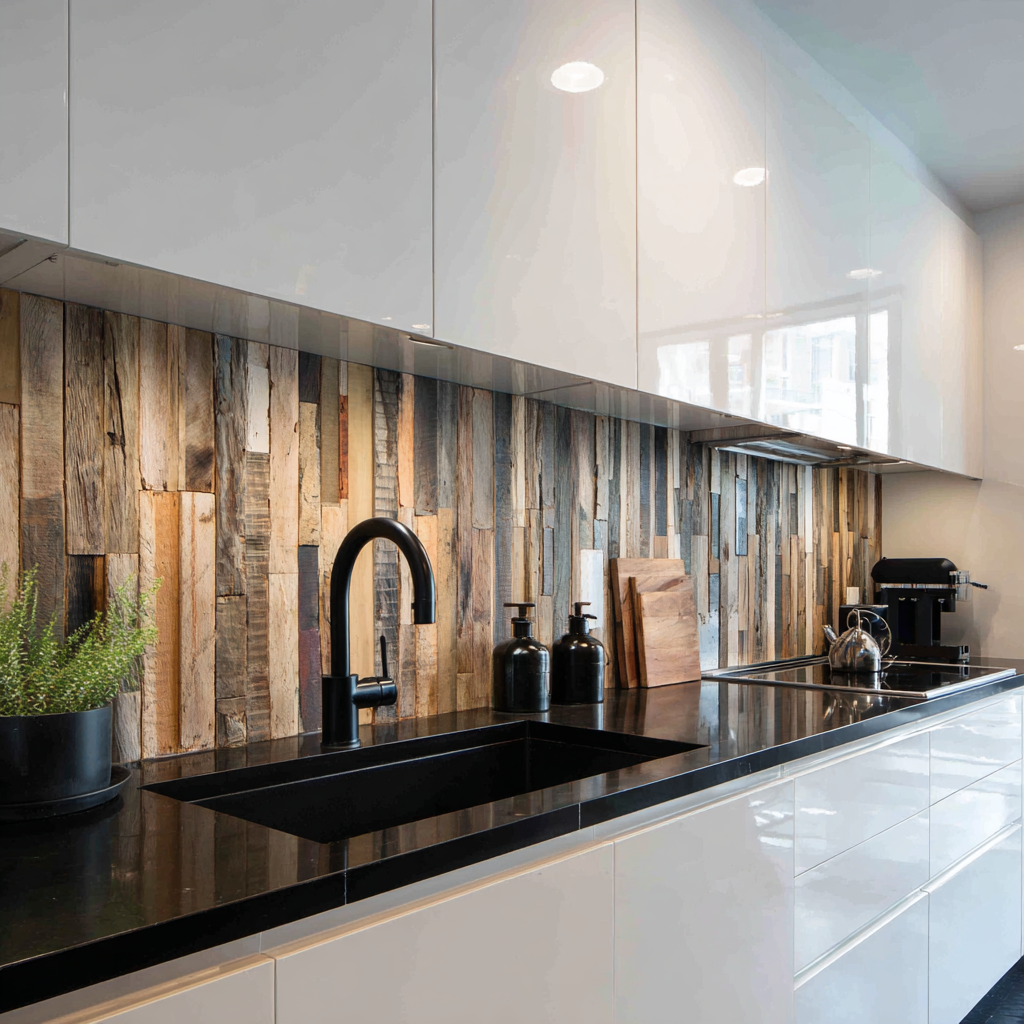
Reclaimed wood—salvaged from old barns, warehouses, or shipping pallets—carries a history you just can't replicate with new materials. Installed vertically, this wooden backsplash idea creates an unexpected visual rhythm that draws the eye upward, making low ceilings feel taller and giving a compact kitchen more presence.
The natural variation in color, texture, and patina that comes with reclaimed wood is what makes this look so compelling. No two boards are alike, and the imperfections are the point. This style pairs especially well with sleek, modern cabinets and dark countertops—the contrast between the rough, weathered wood and the polished surfaces around it gives the kitchen a curated, collected feel that's hard to achieve any other way.
One important note: work with your contractor to verify that any reclaimed material has been properly cleaned, dried, and treated for use in a kitchen environment. Some salvaged wood may contain old paint, adhesives, or pest damage that needs to be addressed before installation.
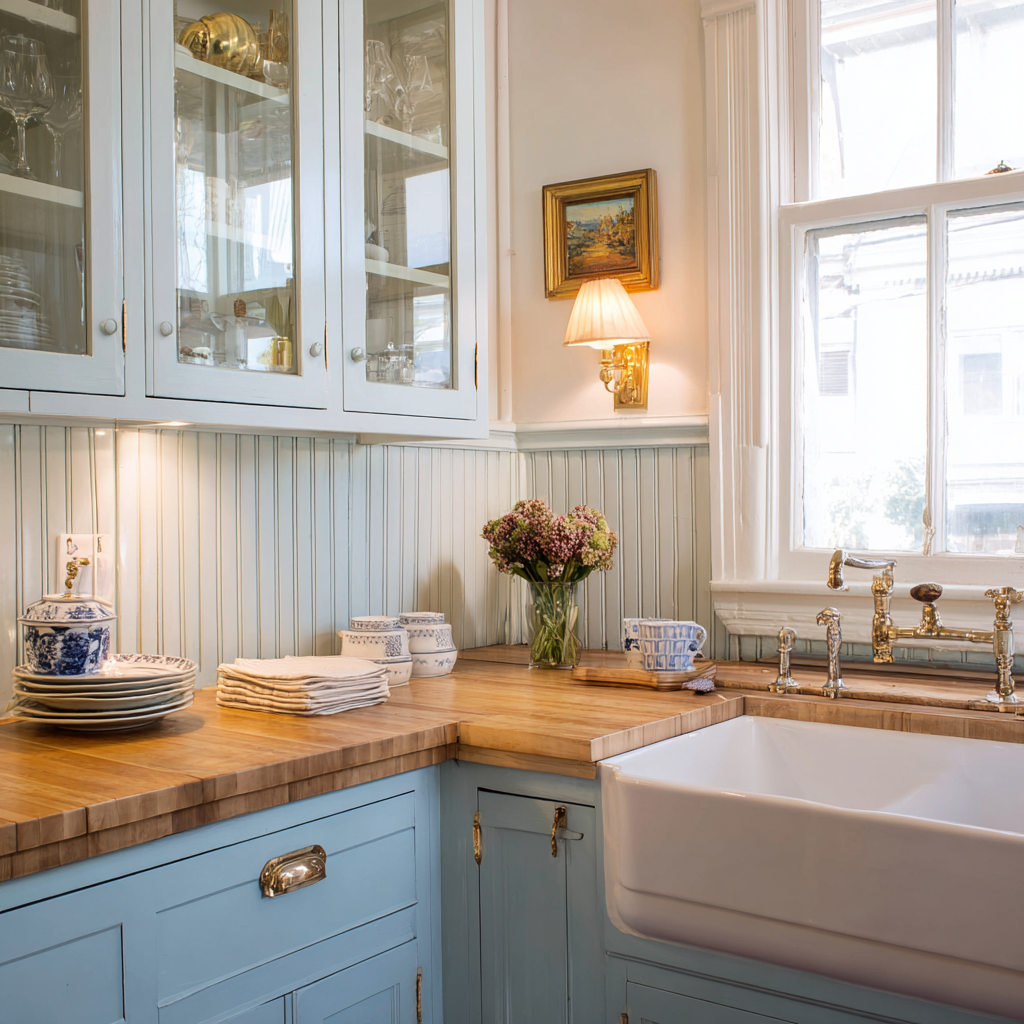
Beadboard backsplashes have a nostalgic, enduring charm that makes them a natural fit for cottage and farmhouse kitchen styles. The narrow vertical grooves add dimension and shadow lines to the wall, creating texture that's quiet but never boring.
Painted in a soft color—pale blue, sage green, warm cream—beadboard pairs beautifully with butcher-block countertops, apron-front sinks, and glass-front cabinetry. It's a style that feels inherited, like something you'd find in a well-loved family kitchen. And because beadboard is widely available in pre-primed MDF or PVC options, you can get this look at a range of price points depending on your material preferences.
.png?width=1024&height=1024&name=u5821215421_A_small_city_kitchen_featuring_a_patchwork_wooden_2e916035-9135-47c9-8c4e-8837c87b6e11_3%20(1).png)
If you want your kitchen backsplash to be a conversation piece, a patchwork wood mosaic makes a bold, artistic statement. Small blocks or tiles cut from different species and stain colors are arranged in an irregular grid, creating a surface that feels handmade and one-of-a-kind.
This idea works best when the rest of the kitchen acts as a neutral backdrop—matte gray or white cabinetry, a simple quartz countertop, minimal hardware. Let the backsplash be the star. It's an especially effective approach in smaller kitchens, where a single bold element can define the entire room's character without overwhelming the space.
Patchwork mosaics require precise craftsmanship and careful planning, so ask your contractor whether they've worked with multi-species wood installations before, and request to see examples of previous projects with similar complexity.
.png?width=1024&height=1024&name=u5821215421_A_Scandinavian-inspired_kitchen_with_a_honey-tone_2370eaaa-1577-40f5-bd1b-ebcd61bb5812_0%20(1).png)
Slatted or ribbed wood panels have become one of the defining design trends of recent years, and they translate beautifully to a kitchen backsplash. The repeating vertical lines create rhythm and visual interest without pattern overload—a perfect match for Scandinavian-inspired spaces that value light, simplicity, and natural materials.
In a kitchen setting, slatted panels work particularly well behind a sink area, where the dimensional surface catches light in interesting ways throughout the day. Pair them with white or cream cabinets, marble or light quartz countertops, and brass fixtures for a look that feels both current and enduring. If you have a windowsill nearby, potted herbs and trailing plants soften the geometry and bring the whole composition to life.
.png?width=1024&height=1024&name=u5821215421_A_bright_airy_kitchen_with_natural_wood_backsplas_74c25054-0ed8-4d03-be43-65755fd6df1f_1%20(1).png)
Herringbone is one of those patterns that works in almost any context—from classic Parisian apartments to modern loft kitchens. Applied as a wood backsplash, it brings a sense of movement and craftsmanship that flat panels simply can't achieve. The angled cuts create a dynamic, V-shaped pattern that adds energy to the wall without feeling busy.
This is a particularly strong idea for kitchens where the backsplash area is the primary visual feature, such as behind open shelving or in an L-shaped layout where a full wall is exposed. Light oak or whitewashed wood in a herringbone pattern keeps the mood airy, while darker walnut or stained varieties create a more dramatic effect. Either way, the craftsmanship speaks for itself.
Keep in mind that herringbone layouts are more labor-intensive to install than straight planks. The angled cuts mean more waste and more precision required, so discuss this with your contractor during the scoping phase to make sure it's reflected accurately in your project estimate.
.png?width=1024&height=1024&name=u5821215421_Minimalist_kitchen_featuring_a_warm_wood_plank_ba_6d156e12-fde1-4849-810e-8bc40f187313_1%20(1).png)
Sometimes the simplest approach is the most effective. Horizontal wood planks in a warm, medium tone—like honey oak, natural walnut, or cedar—make a beautiful, easygoing backsplash that's versatile enough to work in almost any kitchen style. Paired with floating shelves in a complementary wood, this look creates the kind of effortless, lived-in warmth that makes a kitchen feel like the heart of the home.
This style gives you the flexibility to accessorize and evolve over time. The shelves become a place to display ceramics, cookbooks, plants, or artwork—things that make your kitchen feel uniquely yours. And because the wood tones are warm but neutral, you can easily swap out countertop materials, hardware, or paint colors down the road without rethinking the entire backsplash.
A wood backsplash can completely change the feel of your kitchen—but like any material, it comes with trade-offs worth understanding before you commit. Here's an honest look at both sides.
Not every wood is equally suited to life behind a kitchen counter. The species you choose affects the backsplash's durability, appearance, and how much maintenance it will need. Here are some of the most popular options and what to expect from each.
Oak is one of the most popular choices for wood backsplashes—it's hard, durable, and has a prominent grain that adds visual interest to any style of kitchen. White oak is naturally more water-resistant than red oak, making it the better choice for areas near the sink. Its golden-to-amber tones complement everything from modern Tuscan kitchens with stone countertops to contemporary spaces with matte black hardware.
Walnut brings a rich, dark tone and a smooth, refined grain that works beautifully in kitchens with a more sophisticated or moody palette. It's a medium-hardness wood—softer than oak but still appropriate for a backsplash application. Be aware that walnut can lighten over time with UV exposure, so consider a UV-protective finish if your backsplash receives direct sunlight.
Cedar is naturally resistant to moisture and decay, which gives it a practical advantage in a kitchen environment. It has a warm, reddish tone and a pleasant aroma that mellows over time. Cedar is a softer wood, so it's more prone to dents and scratches—but for a backsplash (which doesn't take the same physical impact as a floor or countertop), this is rarely an issue.
Ash is prized for its light, even grain and blonde color, which makes it a favorite in Scandinavian and minimalist kitchen designs. It's a strong, flexible wood that takes finishes well. However, ash isn't as naturally water-resistant as oak or cedar, so a quality sealant is essential in kitchen applications.
Pine is an affordable, readily available option that works well for painted or whitewashed backsplashes. It's soft and can dent easily, but for a backsplash application, character marks add to the appeal rather than detracting from it. Reclaimed pine and other salvaged softwoods carry unique patina and history—just ensure they've been properly treated and kiln-dried before installation.
Design a Home That’s Uniquely Yours
Block can help you achieve your renovation goals and bring your dream remodel to life with price assurance and expert support.
Get Started
A wood backsplash will reward you with years of beauty if you stay on top of a few simple maintenance habits. Here's what to keep in mind after installation.
The finish is your backsplash's first line of defense. A marine-grade polyurethane or food-safe hardwax oil will protect against moisture, stains, and grease. Your contractor should apply the initial finish before or shortly after installation.
Plan to reseal the surface every one to three years, depending on how much cooking and moisture exposure the area gets. High-traffic zones—behind the sink and stove—may need attention sooner.
Wipe up splashes and spills as they happen, especially anything acidic like lemon juice, tomato sauce, or vinegar. For routine cleaning, a soft cloth dampened with warm water and a drop of mild dish soap is all you need. Avoid abrasive sponges, bleach-based cleaners, or anything that could strip the finish. Once a week, give the backsplash a full wipe-down and dry it completely with a clean cloth.
If your backsplash is adjacent to a cooktop or range, monitor the area for discoloration or finish breakdown. Using a range hood and keeping the ventilation fan running during cooking helps reduce heat and steam buildup on the wood surface. For the section directly behind the stove, some homeowners install a heat shield or a small tile inset to give the wood extra protection.
Minor scratches and surface marks can usually be buffed out with fine-grit sandpaper and a fresh coat of finish. For deeper damage or persistent stains, a light sanding and full refinishing of the affected area will bring the wood back to life. One advantage of a wood backsplash over tile: you can refinish it rather than replace it, which saves money over the long run.
A wood backsplash is the kind of detail that makes a kitchen feel less like a showroom and more like a home. But getting it right—choosing the right species, finish, and installation method for your space—takes planning and the right professional guidance.
Block Renovation connects homeowners with vetted, experienced contractors who understand kitchen materials and can help you navigate decisions like these with confidence. Use Block's free Renovation Studio to experiment with different backsplash styles, visualize your kitchen layout, and get instant cost estimates—all before talking to a contractor.
Remodel with confidence through Block

Connect to vetted local contractors
We only work with top-tier, thoroughly vetted contractors

Get expert guidance
Our project planners offer expert advice, scope review, and ongoing support as needed

Enjoy peace of mind throughout your renovation
Secure payment system puts you in control and protects your remodel


Renovate confidently with Block
Easily compare quotes from top quality contractors, and get peace of mind with warranty & price protections.
Backsplash
Rustic Backsplash Ideas That Survive a Real Kitchen
06.17.2026
Paint & Color
Backsplash Ideas to Flatter Gray Cabinets
04.17.2026

Backsplash
Wallpaper as a Kitchen Backsplash: Ideas & Practical Advice
04.14.2026

Backsplash
Backsplash Ideas for White Cabinets & Granite Countertops
04.06.2026

Backsplash
Solid Slab Backsplashes - Cost & Other Design Considerations
03.12.2026