




Backsplash
Backsplash Same as Countertop: Ideas, Costs and Upkeep
09.18.2026
04.06.2026


In This Article
White cabinets and granite countertops give you one of the more forgiving foundations in kitchen design. Neutral enough to work with almost anything, substantial enough that whatever you put next to them will look considered. The backsplash is where that latitude either gets used well or wasted.
The problem most people run into isn't indecision about color. It's that they choose a backsplash in isolation, on a screen or in a showroom, rather than against the actual granite they're living with. Granite is not neutral. Even a slab that photographs as "gray" or "beige" usually carries threads of green, gold, or rust that will harmonize with your backsplash or fight it.
Two principles worth holding onto before you look at anything else: read the undertones in your granite first. And decide whether you want the backsplash or the countertop to lead. If your granite has bold veining, a simpler backsplash gives it room. If your granite is subtle, the backsplash is your opportunity to introduce pattern or texture the countertop isn't providing.
Before jumping into specific backsplash ideas for white cabinets and granite countertops, it helps to understand a few principles that make these pairings work.
With those principles in mind, here are backsplash ideas for white cabinets and granite countertops that are grounded in real design approaches you can make your own.
Design a Home That’s Uniquely Yours
Block can help you achieve your renovation goals and bring your dream remodel to life with price assurance and expert support.
Get Started
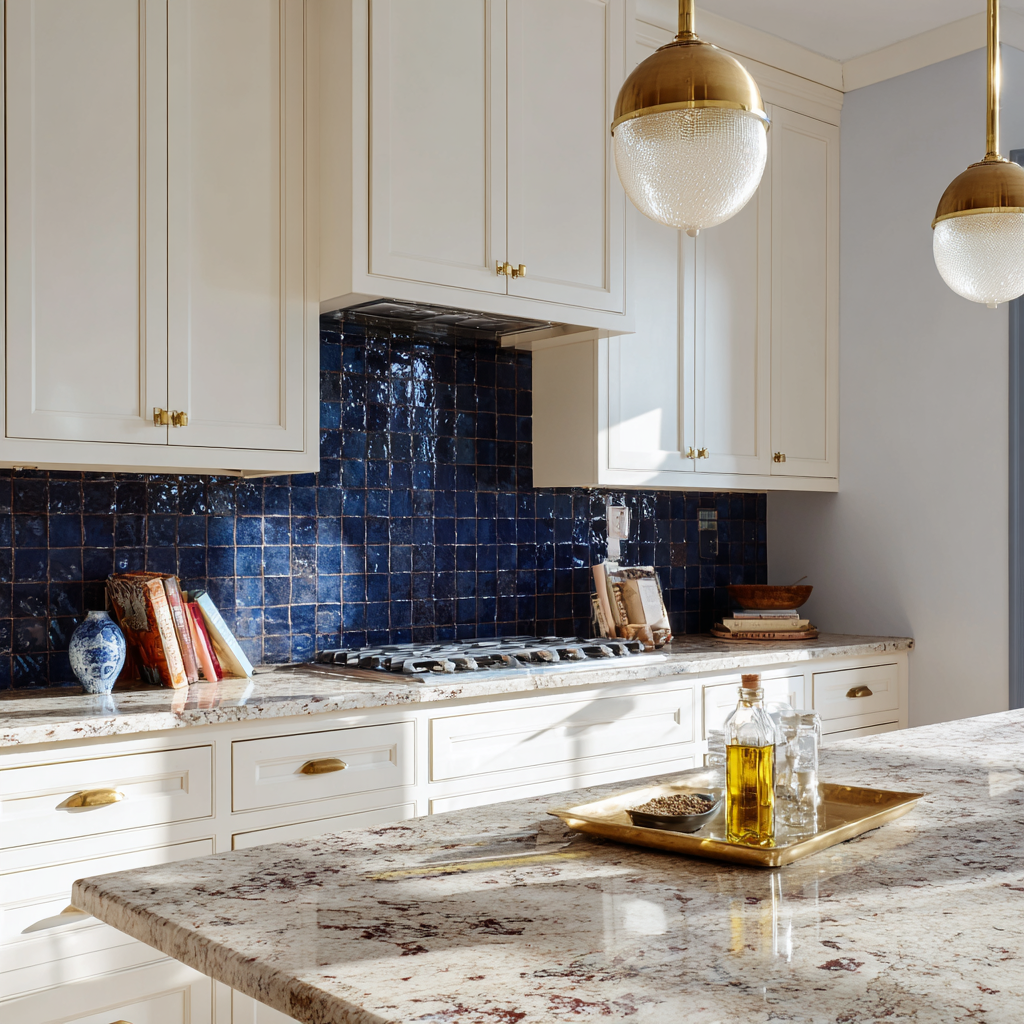
White cabinets and granite give you a neutral stage. A backsplash in a saturated color, like deep navy, forest green, or rich cobalt, becomes the thing the whole room orbits around.
This idea works especially well when your granite has warm undertones. A deep blue backsplash against creamy white cabinets and gold-flecked granite creates a contrast that feels both intentional and a little unexpected. The warmth in the stone keeps the bold tile from reading cold, and the white cabinets prevent the color from feeling heavy.
The key is committing to the color rather than hedging. A confident, saturated tone in a handmade tile reads as collected and personal. If you're going to bring color in, let it lead.
Practical tip: When choosing a bold backsplash color, bring your actual granite sample (not just a photo) to the tile showroom. Colors that look perfect on a screen can clash with the real undertones in your stone.
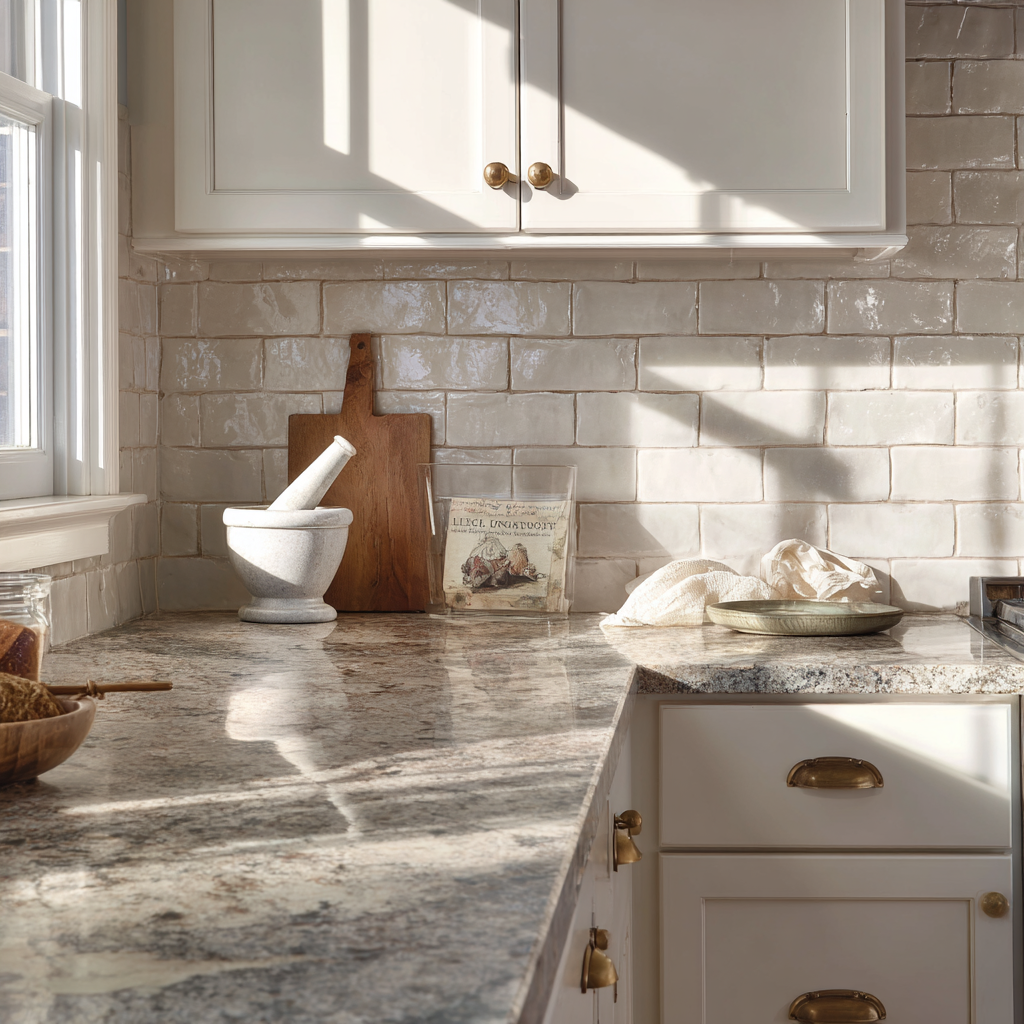
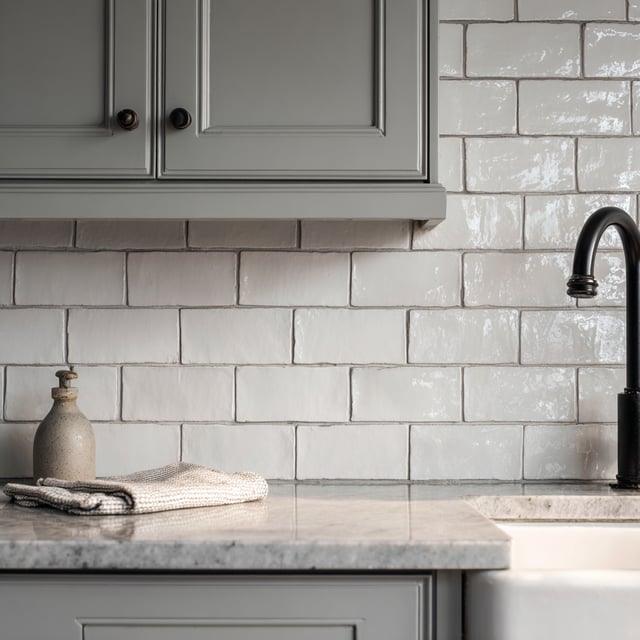
In a kitchen with white cabinets and granite countertops, you've already got two surfaces with very different textures: the smooth matte of painted wood and the polished depth of stone. A handmade tile backsplash introduces a third layer that bridges the two.
Handmade tiles (whether zellige, hand-glazed ceramic, or artisan subway) have slight variations in surface and glaze that catch light differently across the wall. Even in a neutral color, that irregularity gives the backsplash a sense of warmth and movement that machine-cut tile can't replicate. Against the precision of granite and the clean lines of white cabinetry, those small imperfections feel like a deliberate counterpoint, not a flaw.
This backsplash idea is particularly effective if you want to keep your palette quiet but still want the kitchen to feel layered and interesting. A handmade tile in a warm white or soft cream lets the granite stay in the spotlight while the backsplash adds richness through texture alone.
Practical tip: Handmade tile typically has more variation in thickness, so installation takes more care and time. Factor in slightly higher labor costs compared to standard tile, and work with an installer who has experience setting uneven-surfaced tile. To dive deeper into potential expenses, read our guide to backsplash installation costs.
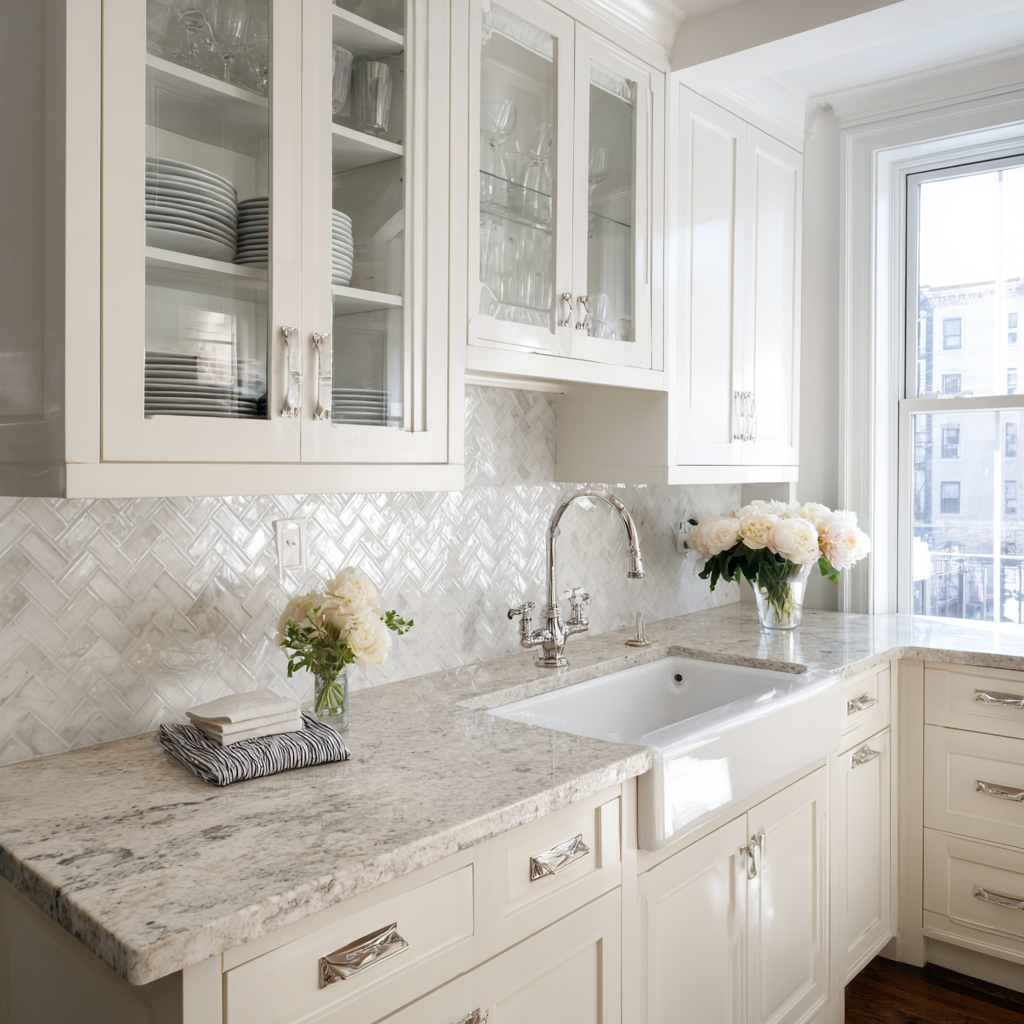
When your kitchen's color palette is mostly whites, creams, and grays, pattern becomes one of the most powerful tools you have. A herringbone or chevron layout can give a neutral backsplash real visual energy without introducing a single new color.
This is a smart backsplash idea when you're working with granite that has its own subtle patterning. A herringbone marble backsplash adds directional movement that plays off the organic veining in the stone. The two patterns are different enough to be interesting together but similar enough in tone to feel unified.
Pattern also has a way of elevating familiar materials. A standard white marble subway tile in a running bond looks fine. The same tile in a herringbone layout looks like a deliberate design choice. If you're investing in natural stone for both your countertops and backsplash, the pattern is what turns that investment into a design moment.
Practical tip: Intricate tile patterns like herringbone require more cuts and more time to install, which means higher labor costs and more material waste from angled cuts. Ask your contractor for a realistic estimate before committing to a complex layout.
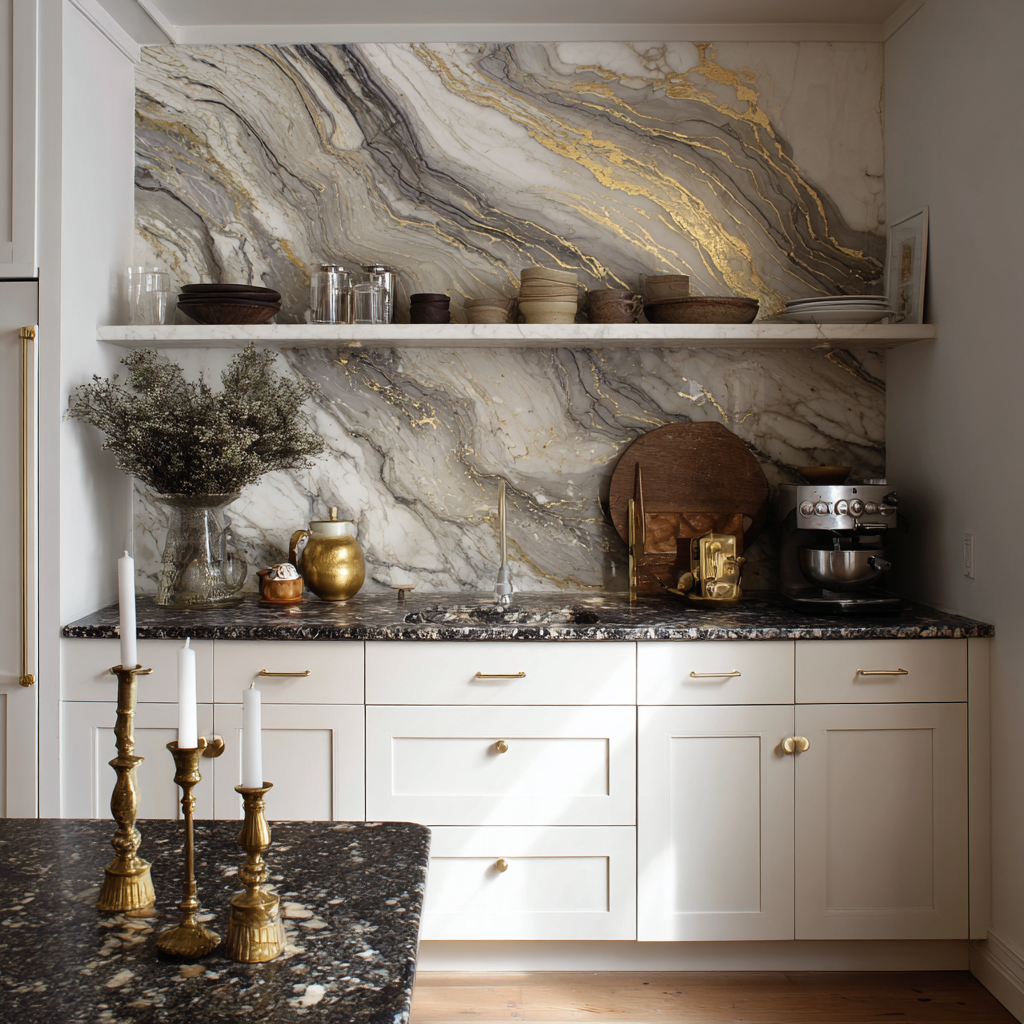
If you want your finish to make a statement that competes with nothing else in the room, a full-height stone slab is one of the most in-demand choices for non-tile backsplashes. Counter-to-ceiling stone turns the backsplash wall into a single, unbroken surface.
This approach works beautifully with white cabinets and granite countertops because the slab creates a focal point that the cabinets and countertops frame cleanly. It's especially effective when the slab and the granite are complementary but not identical. A dramatically veined marble backsplash against a darker, more uniform granite countertop creates a layered look where each stone gets its moment.
The visual impact is hard to replicate with tile. Because there are no grout lines interrupting the surface, the veining reads as one continuous sweep of pattern. It's a move that can make even a modestly sized kitchen feel elevated.
Practical tip: Slab backsplashes require precise templating and professional installation. Seams need to be carefully planned, especially around outlets and switches, so discuss placement with your fabricator early since where they fall can significantly affect the final look.
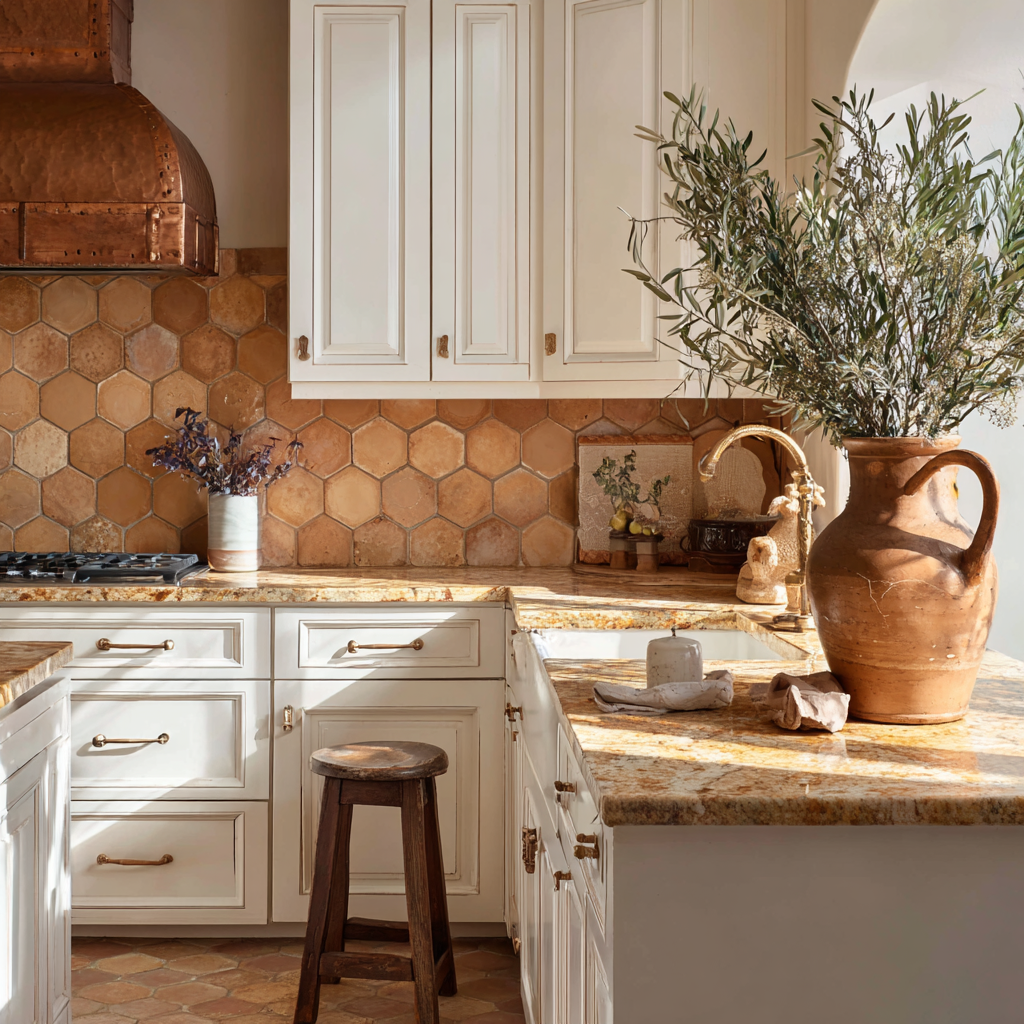
White cabinets can sometimes skew cool or clinical, especially in a kitchen with a lot of hard surfaces. Earthy backsplash tones like terracotta, ochre, and warm clay counteract that immediately, giving white cabinets a warmth and groundedness that makes the whole room feel inviting.
This backsplash idea is particularly natural with granite that has warm movement running through it. A golden or amber-toned granite next to terracotta tile creates a kitchen that feels rooted in place, like it's been gathering character over time rather than being installed all at once. Add in organic materials like a copper hood or wood accents, and the space starts to feel like a kitchen with a real point of view.
Hexagonal or other non-rectangular tile shapes amplify this effect. The geometry adds visual interest without competing with the stone, and the handmade quality of many terracotta tiles means no two are exactly alike, which echoes the natural variation in granite itself.
Practical tip: Terracotta and other porous clay tiles typically need to be sealed before and after grouting. Ask your tile supplier about the right sealant and reapplication schedule to keep the surface protected, especially near the stove and sink.
[IMAGE: (Image 7)]
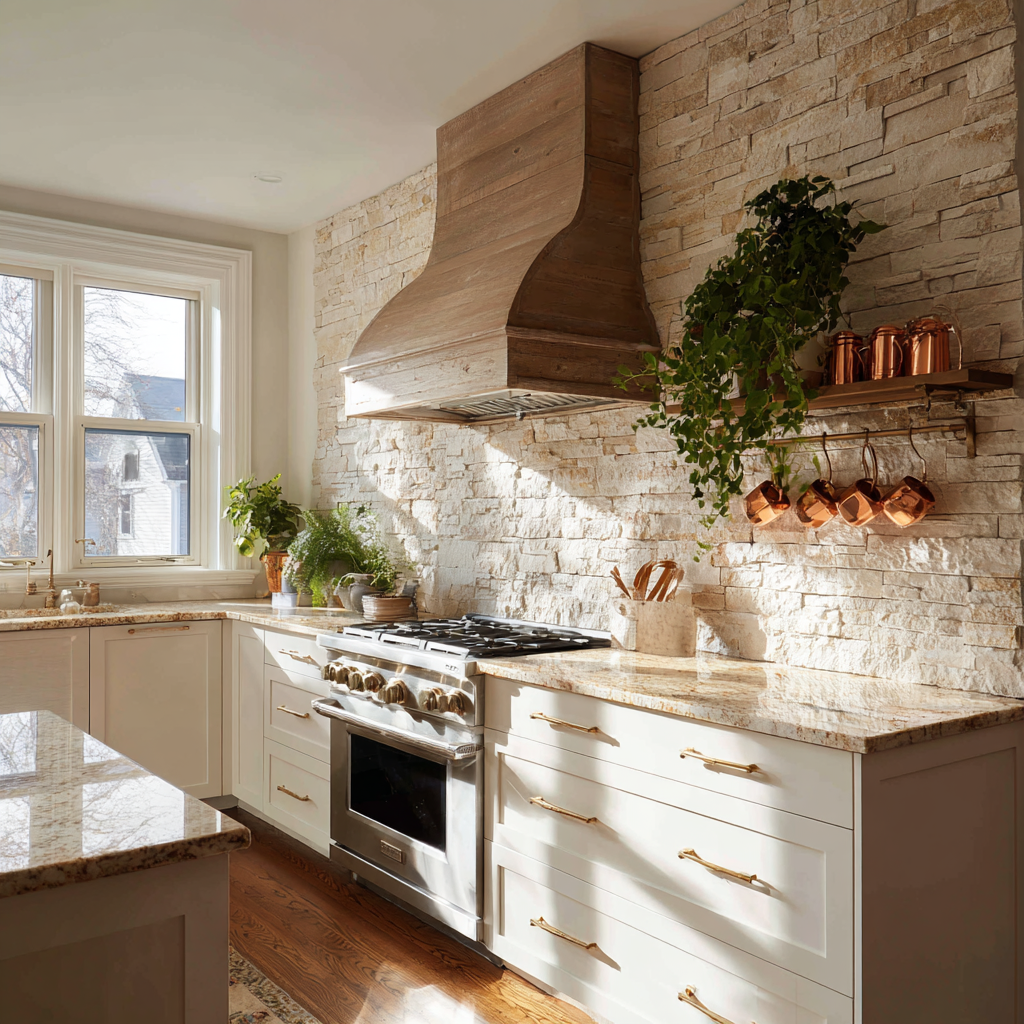
Tile isn't the only option for a backsplash, and in a kitchen with granite countertops, using another natural material on the wall can create a textural richness that tile alone doesn't always achieve.
Stacked stone or reclaimed brick behind the range can turn the backsplash zone into something that feels architectural rather than decorative. When you pair these materials with white cabinets and granite, the kitchen takes on a warmth and dimensionality that reads as personal and intentional. The stone introduces a different scale of texture than the granite (rougher, more tactile, more varied), and the white cabinets keep everything feeling bright and balanced.
This backsplash idea works best when you let the natural material cover a generous area rather than confining it to a small strip between counter and cabinet. A stacked stone wall that runs from countertop to ceiling, wrapping behind a range hood, creates an immersive focal point that makes the rest of the kitchen feel like it grew up around it.
Practical tip: Natural stone and reclaimed materials can be heavier than tile and may require additional wall support. They also tend to have more variation in depth, so discuss installation logistics with your contractor early, particularly around outlets and areas that need to stay flush for appliances.
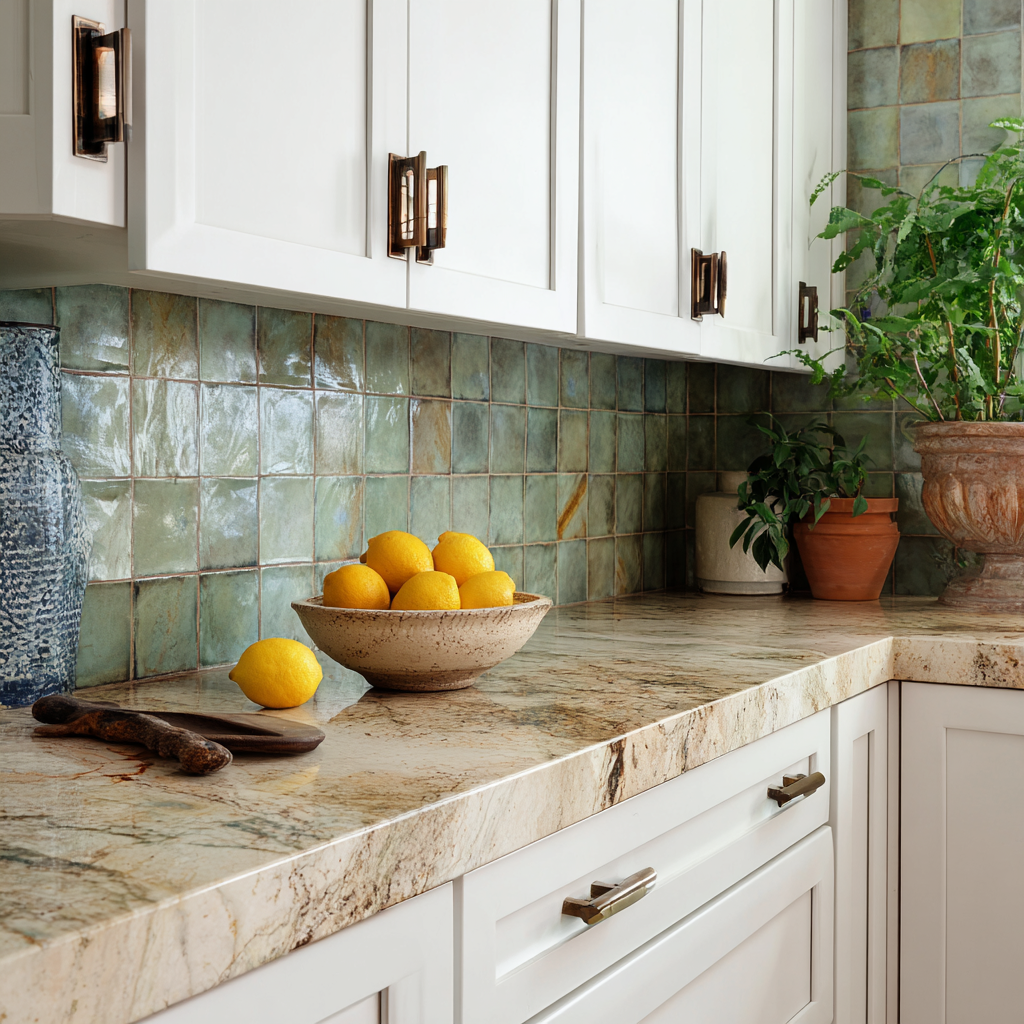
Here's a backsplash idea that sounds simple but produces one of the most polished-looking results: instead of choosing a tile that matches the dominant color in your granite, pick up one of its secondary tones.
Granite is a complex stone. Even a slab that reads as "beige" or "gray" from a distance usually contains threads of green, gold, or rust when you look closely. Choosing a backsplash tile that echoes one of those quieter undertones creates a pairing that feels deeply intentional without being obvious. A warm granite with flecks of sage and gold, paired with a green zellige backsplash, suddenly looks like a palette that was curated rather than defaulted to.
This approach also helps your granite look more interesting. When the backsplash draws out a specific tone, it highlights colors in the stone that might otherwise go unnoticed.
Practical tip: To find the secondary tones in your granite, look at the slab in both natural and artificial light. Different lighting can bring out different mineral colors. Bring small tile samples home and set them directly on the countertop at various times of day before making a final decision.
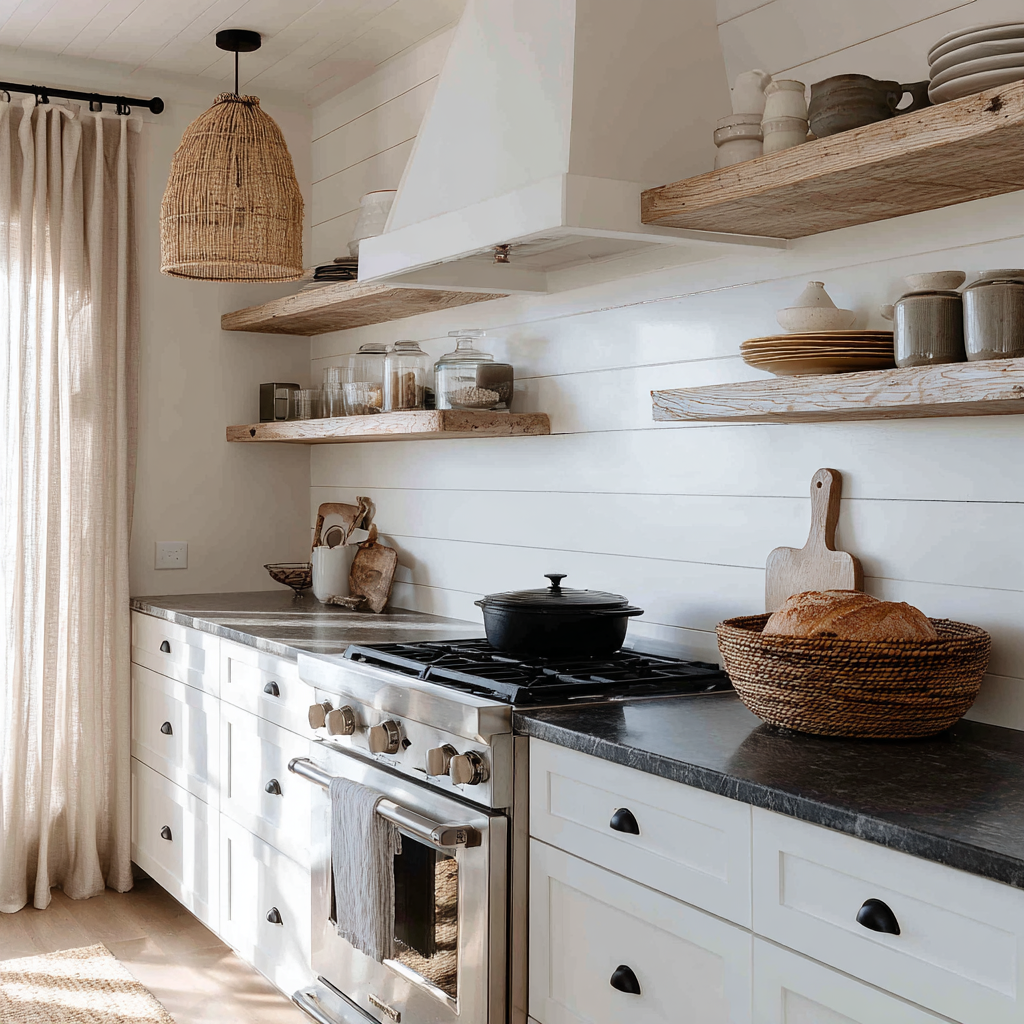
Upper cabinets do important work in a kitchen, but they also cover up your backsplash. When you swap some or all of them for open shelving, you expose a larger stretch of the backsplash-to-countertop relationship, letting both materials breathe and be seen together.
This is especially worth considering when you've invested in a granite with beautiful variation and a backsplash with real character. Open shelves let your eye travel from the countertop surface up through the backsplash to the shelf and beyond, creating a more continuous visual experience. The backsplash becomes part of the room's atmosphere, not just a sliver of tile peeking out between cabinets.
A simpler backsplash material (horizontal paneling, shiplap, or a clean subway tile) often works best with this approach, since the shelves and whatever you display on them will add visual complexity. The white cabinets that remain on the lower half ground the look, while the granite countertop provides the anchor of texture and pattern below.
Practical tip: Open shelves mean more of your backsplash is exposed to grease, steam, and splashes. Choose a material that's easy to wipe down, and make sure whatever finish or sealant you use can handle regular cleaning near the cooking zone.
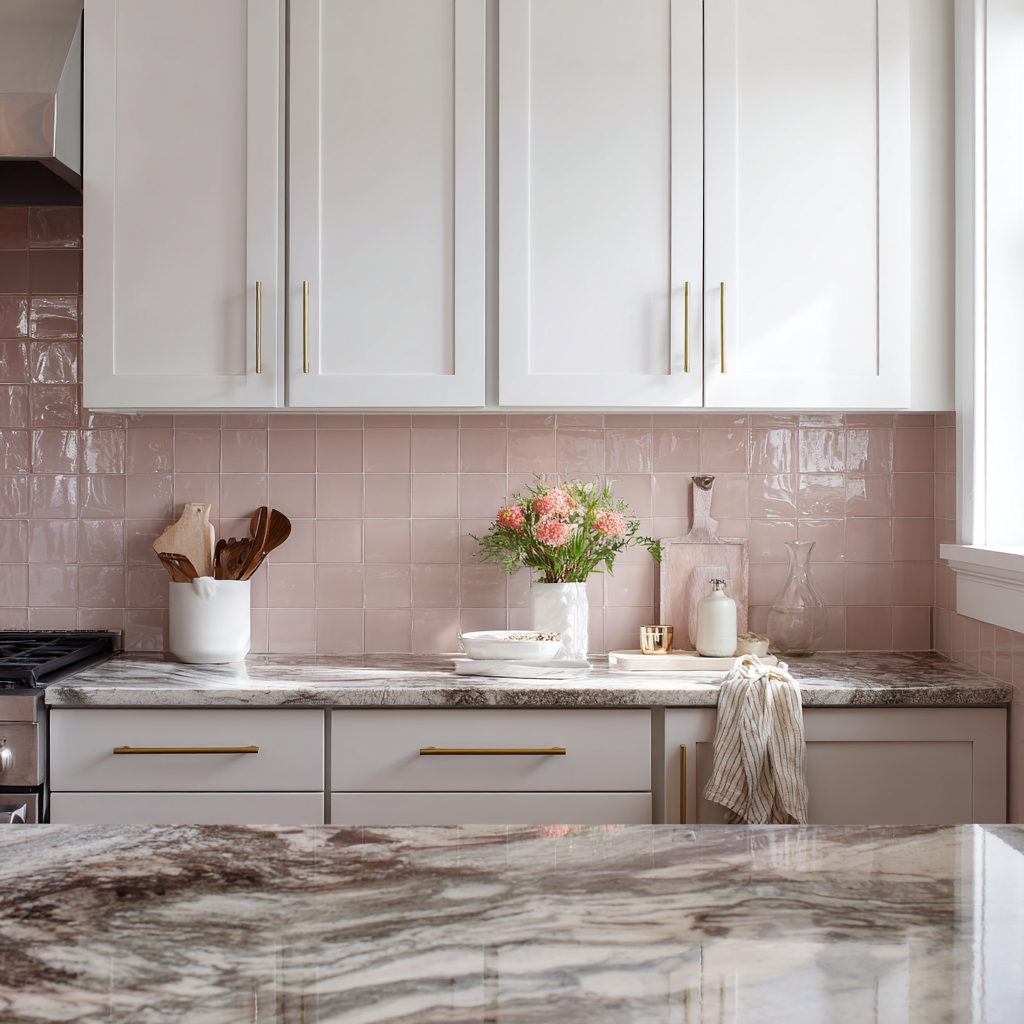
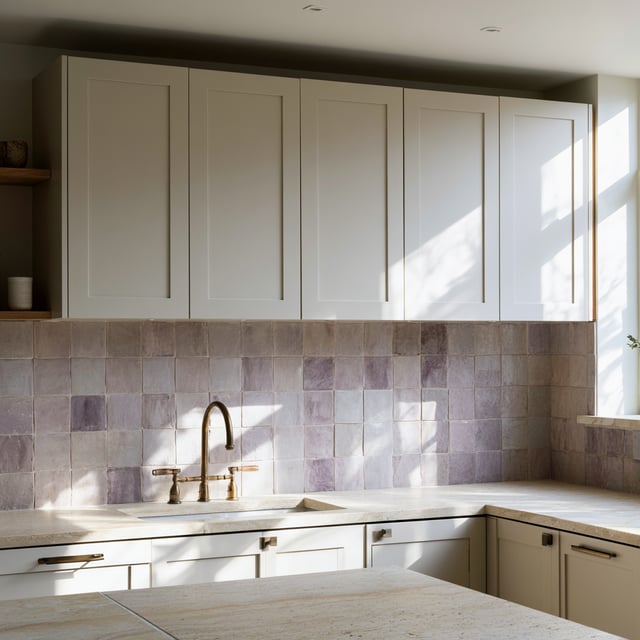
Not every impactful backsplash needs to be bold. Sometimes the most sophisticated move is a color that's quiet but unexpected: a dusty blush, a muted lavender, a soft celadon. Against white cabinets and granite, these subtle tones add personality without demanding attention, creating a kitchen that feels refined and a little bit surprising.
This backsplash idea works because white cabinets and granite do most of the structural work in the room. They establish the bones. A soft, unconventional color adds the mood. A blush backsplash with warm-veined granite and brass hardware creates a kitchen that reads as elegant and personal in a way that an all-neutral palette simply can't.
The trick is choosing a color that has enough depth to hold its own next to granite's natural complexity. A flat, chalky pastel can look washed out. A glazed or textured tile in the same hue, with variation in its finish, will feel richer and more deliberate alongside the movement in the stone.
Practical tip: Soft, unusual tile colors can be harder to source and may have longer lead times, especially if you're working with handmade or imported tile. Start your tile search early in the planning process so material availability doesn't hold up your project timeline.
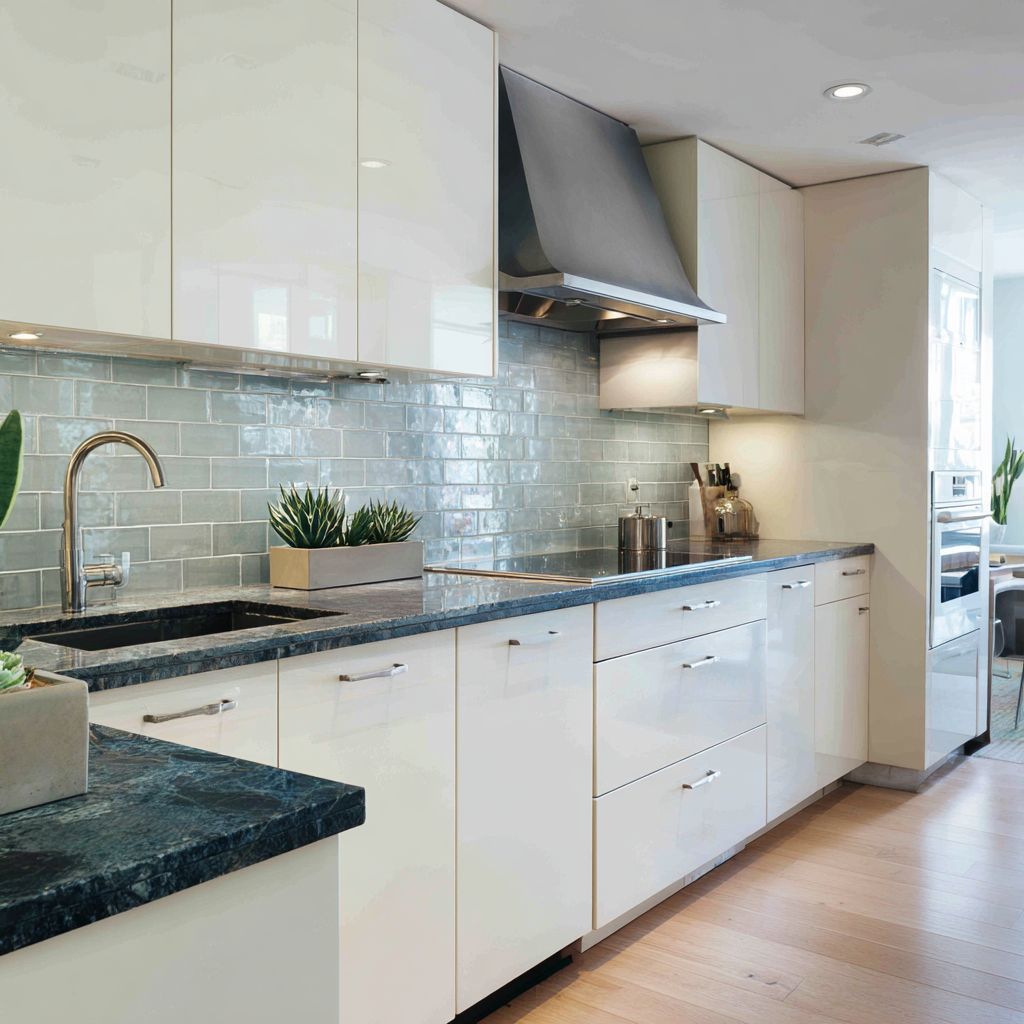
If you're working with dark granite countertops (deep charcoal, blue-black, or espresso), your backsplash has an opportunity to bridge the high contrast between dark stone and white cabinets. A cool-toned tile in the mid-range, like a glossy blue-gray or smoky sage, creates a visual gradient that makes the transition feel intentional rather than abrupt.
This approach is especially effective in modern and contemporary kitchens where clean lines and a streamlined material palette are doing most of the design work. A glossy, reflective backsplash tile catches light and adds dimension to the space, keeping a dark-countertop kitchen from feeling heavy. The white cabinets stay crisp, the dark granite stays dramatic, and the backsplash connects the two.
The glossy finish matters here. In a kitchen with dark granite, you want the backsplash to bounce light around the room. A matte tile in the same color could absorb light instead of reflecting it, which works against you when the countertops are already pulling the palette darker. If you're exploring backsplash ideas for white cabinets and dark countertops, prioritizing a light-reflective finish is one of the simplest ways to keep the room feeling open.
Practical tip: Glossy tile shows water spots and grease splashes more readily than matte finishes. Plan on wiping down the backsplash near your stove and sink more frequently to keep it looking its best.
One of the trickiest parts of choosing a backsplash is imagining how it will actually look alongside your granite, your cabinets, and the rest of your kitchen, all at once, in your actual space. Tile samples and stone swatches only tell you so much when you're looking at them under showroom lighting.
Visualize your kitchen’s backsplash and countertop to experiment with different materials and finishes in a realistic setting so you can see how your choices work together before you commit.
A backsplash might seem like a straightforward project until you're dealing with tricky tile cuts around outlets, seam placement on a stone slab, or a handmade tile that requires specialized installation. The quality of the finished product depends heavily on who's doing the work.
Block Renovation connects you with thoroughly vetted, licensed contractors who are matched to your specific project type and location. You'll receive detailed proposals you can compare side by side, and your dedicated project planner can walk you through every scope and estimate so you feel confident before any work begins. Block also provides built-in protections, including price assurance, progress-based payments, and a one-year workmanship warranty, so your investment is protected from start to finish.
Remodel with confidence through Block

Connect to vetted local contractors
We only work with top-tier, thoroughly vetted contractors

Get expert guidance
Our project planners offer expert advice, scope review, and ongoing support as needed

Enjoy peace of mind throughout your renovation
Secure payment system puts you in control and protects your remodel


Renovate confidently with Block
Easily compare quotes from top quality contractors, and get peace of mind with warranty & price protections.
Backsplash
Backsplash Same as Countertop: Ideas, Costs and Upkeep
09.18.2026
Backsplash
Rustic Backsplash Ideas That Survive a Real Kitchen
06.17.2026
Paint & Color
Backsplash Ideas to Flatter Gray Cabinets
04.17.2026

Backsplash
Wallpaper as a Kitchen Backsplash: Ideas & Practical Advice
04.14.2026
Backsplash
Backsplash Ideas for White Cabinets & Granite Countertops
04.06.2026