





Countertops
Unique Kitchen Countertop Ideas: Alternatives to Boring
05.22.2026
01.16.2026


In This Article
White cabinets have earned their place as a kitchen classic. They’re bright, versatile, and work beautifully across a wide range of design styles—from cozy farmhouse kitchens to sleek, contemporary spaces. But while white cabinets create a flexible foundation, the countertop you pair with them ultimately defines the kitchen’s personality.
Before narrowing down countertop materials and colors, it’s important to understand a detail that often gets overlooked: not all white cabinets are the same.
White is not a single, uniform color. Cabinet whites can lean warm, cool, or neutral, and identifying which category yours falls into is one of the most important steps in selecting countertop colors for white kitchen cabinets.
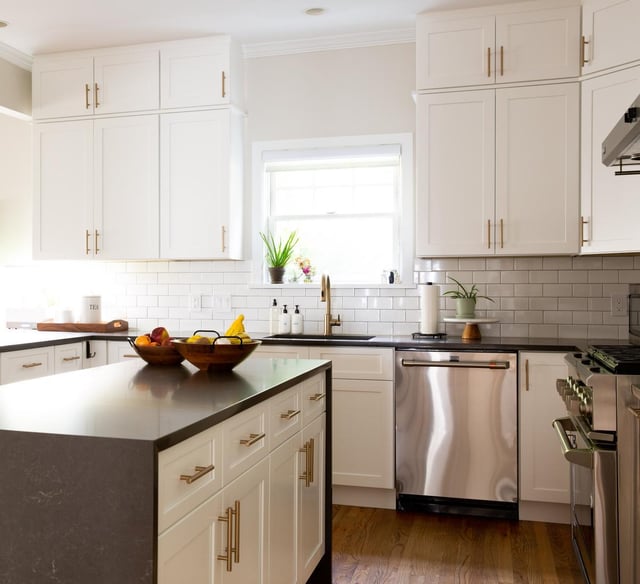
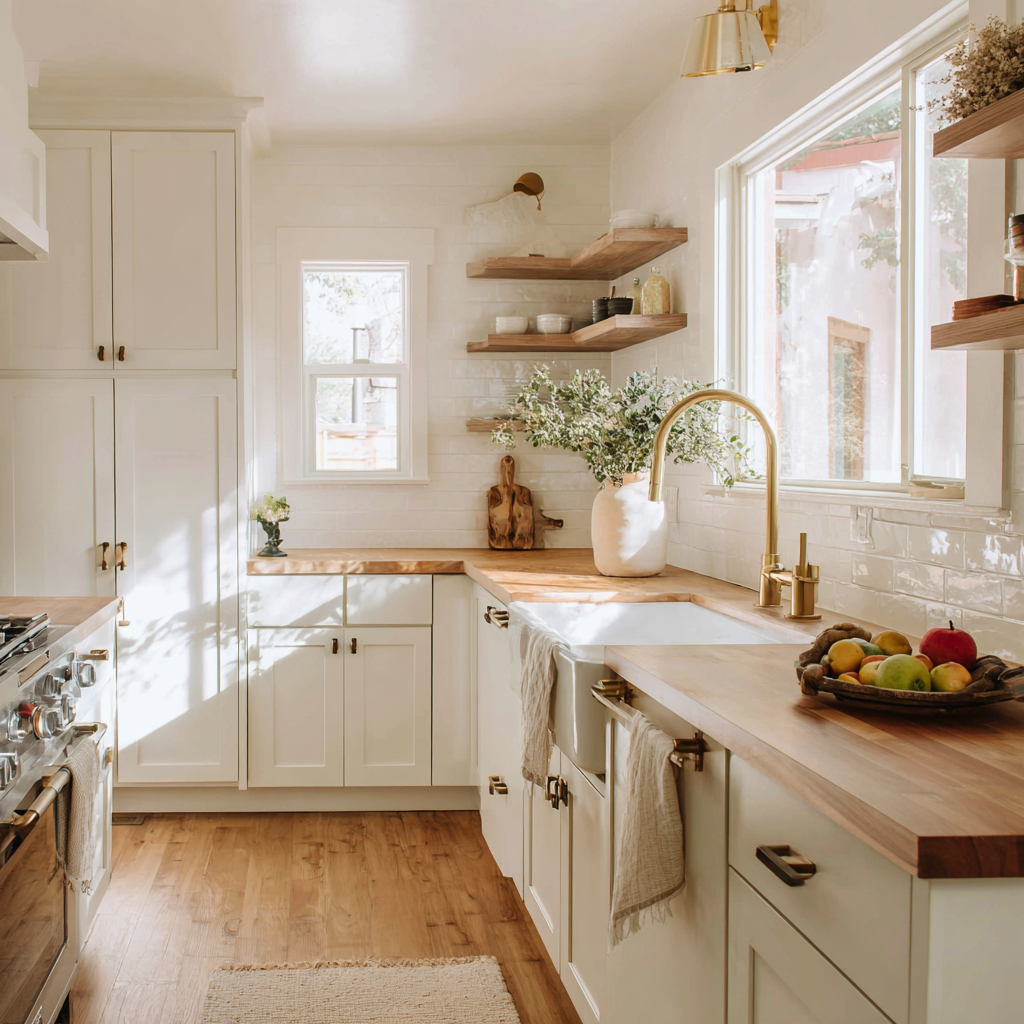
Warm white cabinets have yellow, beige, or cream undertones. These are common in farmhouse, traditional, and many transitional kitchens. Warm whites tend to pair best with countertops that share similar undertones, such as beige or taupe quartz, granite with gold or brown flecks, soft warm gray stone, or butcher block and other wood surfaces. Pairing warm white cabinets with cool, blue-toned countertops often makes both materials feel dull or slightly mismatched.
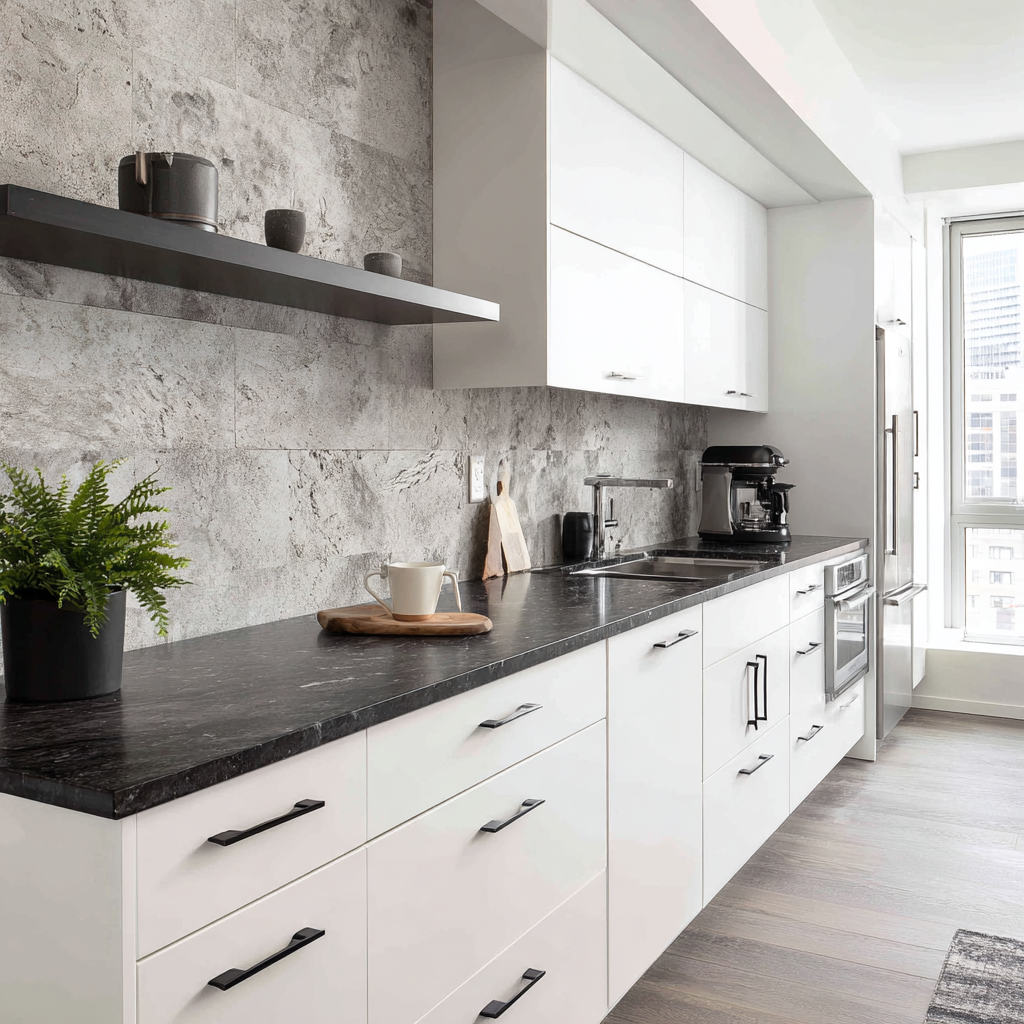
Cool white cabinets lean toward blue, gray, or crisp neutral undertones and are frequently used in modern or contemporary kitchens. These cabinets pair best with gray or charcoal countertops, black stone, concrete-look quartz, or marble with cool gray veining. Crisp white quartz with minimal warmth can also work well. Warm, creamy countertops next to cool white cabinets can make the cabinets look stark by comparison.
Design a Home That’s Uniquely Yours
Block can help you achieve your renovation goals and bring your dream remodel to life with price assurance and expert support.
Get Started
Neutral white cabinets sit between warm and cool and offer the most flexibility. They work across a wide range of countertop colors, as long as the rest of the kitchen finishes are consistent. If your cabinets are neutral white, you can confidently explore both warm and cool countertop options.
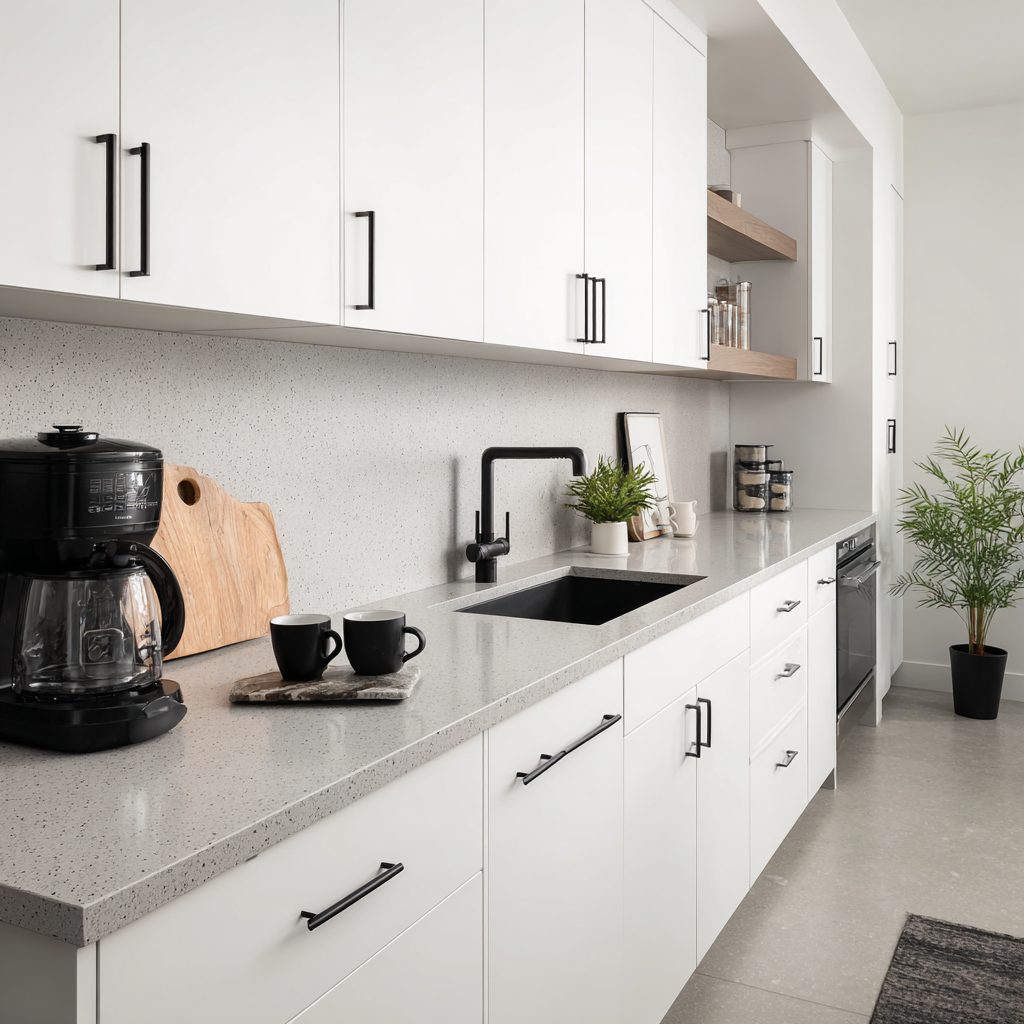
Finish changes how white reads in a space. Glossy white cabinets reflect more light and often feel more modern, which pairs well with sleek or high-contrast countertops. Matte or satin finishes feel softer and often work best with natural stone, subtle veining, or warmer materials. A simple rule: the shinier the cabinets, the more the countertop can lean crisp and streamlined; the softer the cabinets, the more natural texture tends to feel right.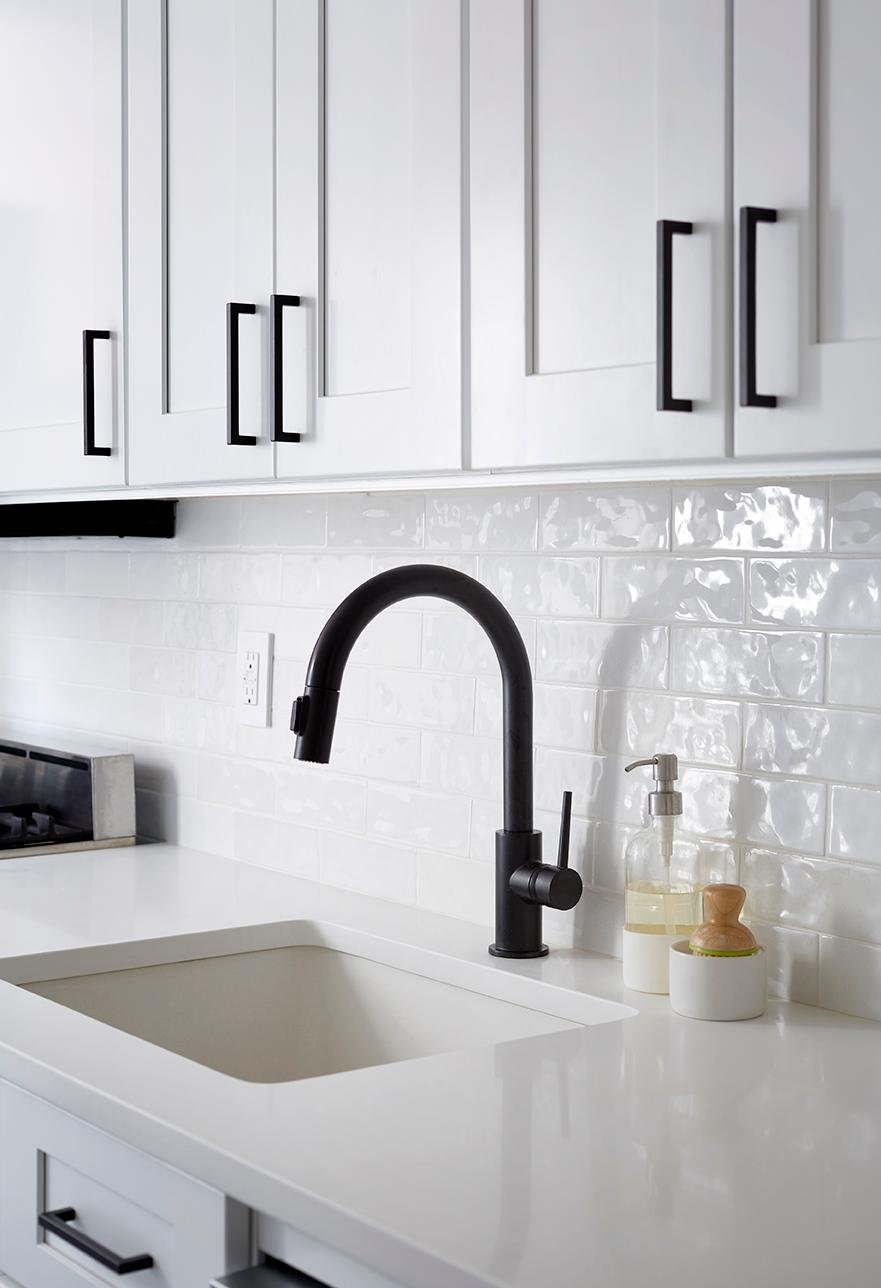
Farmhouse kitchens are built around warmth, texture, and comfort. White cabinets in these spaces typically lean warm or neutral, and the countertop plays a major role in grounding the design.
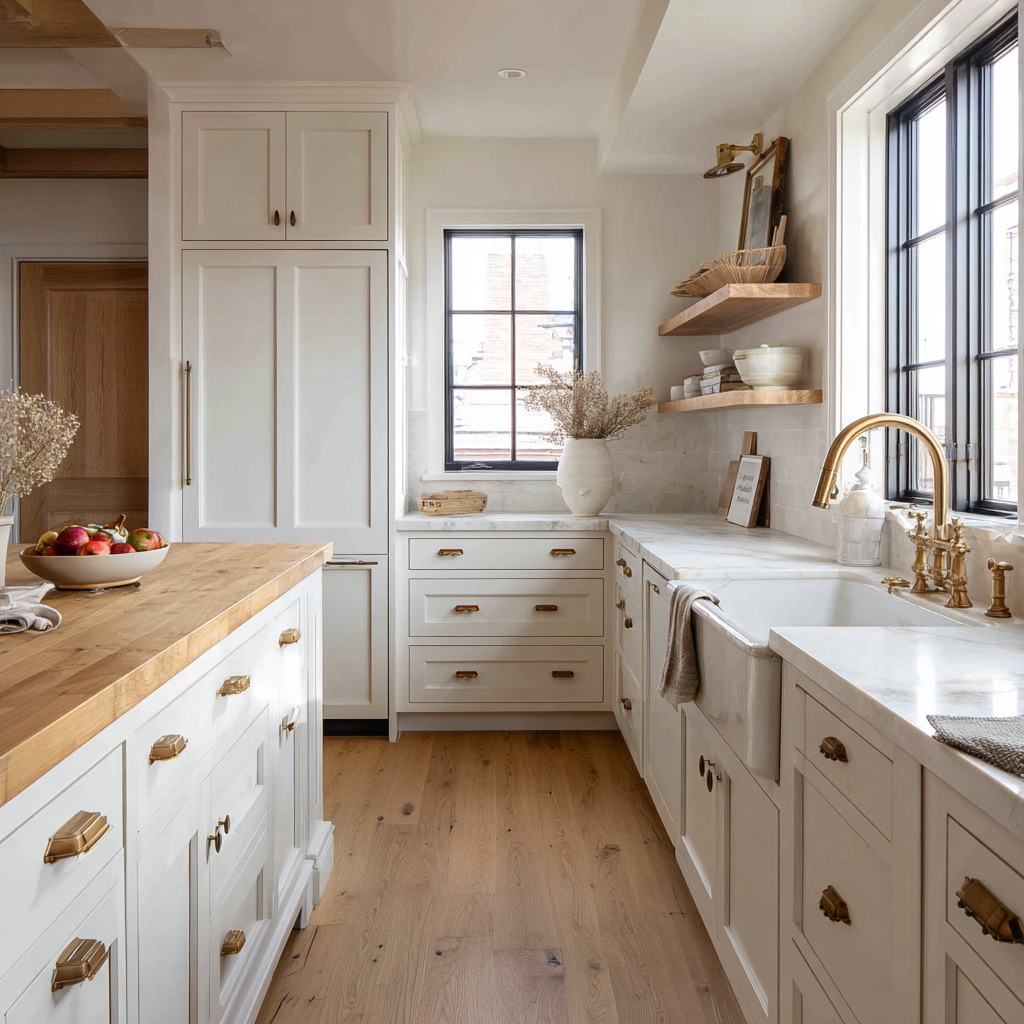
Butcher block countertops are a natural counterpoint to white cabinets because they bring immediate warmth to a white palette. Maple and oak keep things light and casual, while walnut adds richer contrast and can make white cabinets look even brighter.
For practicality, many homeowners use butcher block on the island and a more durable surface like quartz or granite around the sink and stove. If you love wood but worry about maintenance, consider a wood-look quartz on perimeter counters and real butcher block only where it’s easiest to care for.
If you want a cleaner look than wood, warm-toned quartz is one of the most dependable countertop colors for white cabinets in a farmhouse setting. Look for creamy bases (not bright paper-white) with soft taupe or warm gray veining. This subtle movement adds character without fighting classic farmhouse details like shaker doors, apron-front sinks, or open shelving.
Granite works beautifully in farmhouse kitchens because it has natural depth and variation. Stones with warm beige, honey, or brown speckling feel especially at home, and they’re forgiving in high-traffic kitchens. If your cabinets are a warmer white, these granites keep everything cohesive; if your cabinets are neutral, granite introduces warmth so the room doesn’t feel too crisp.
Soapstone delivers contrast while still feeling old-world and authentic. Its deep charcoal tone and soft veining look gorgeous against white cabinets, and the surface develops a patina over time that suits farmhouse style. This is a great option if you want darker countertops for white cabinets without going full modern-black-and-glossy.
In contemporary kitchens, white cabinets are often used as a minimalist backdrop for strong design statements. Countertops become a focal point rather than a supporting element.
Black and near-black countertops create one of the boldest looks you can pair with white cabinets. Polished black granite feels sleek and reflective, while honed black quartz feels softer and more modern. This pairing works especially well with flat-panel cabinets, minimal trim, and streamlined lighting. If you want the contrast but worry about fingerprints, a honed or matte finish tends to be more forgiving.
Gray is a favorite family of countertop colors for white kitchen cabinets because it can lean warm or cool and still feel contemporary. Light gray quartz keeps a modern kitchen bright, while charcoal adds depth and a moodier feel. Concrete-look quartz is popular because it introduces texture without the staining and sealing concerns of real concrete.
If you want the countertop to be the star, go for dramatic veining. Quartz slabs with bold gray or black movement across a white or light base look striking next to simple white cabinetry. The trick is to keep other elements calm—minimal hardware, quiet backsplash tile, and clean lines—so the countertop reads intentional rather than busy.
Yes, white-on-white can work in contemporary kitchens, but the details matter. If you’re choosing a white countertop with white cabinets, make sure there’s a visible difference in either undertone (slightly warmer or cooler) or texture (subtle veining, flecks, or a honed finish). Without contrast, the kitchen can look flat, so you’ll want interest elsewhere—like lighting, hardware, or a strong backsplash.
Turn your renovation vision into reality
Get matched with trusted contractors and start your renovation today!
Find a Contractor
Traditional and transitional kitchens focus on balance and timeless appeal. White cabinets in these spaces often feature more detail, and countertops should complement that craftsmanship rather than compete with it.
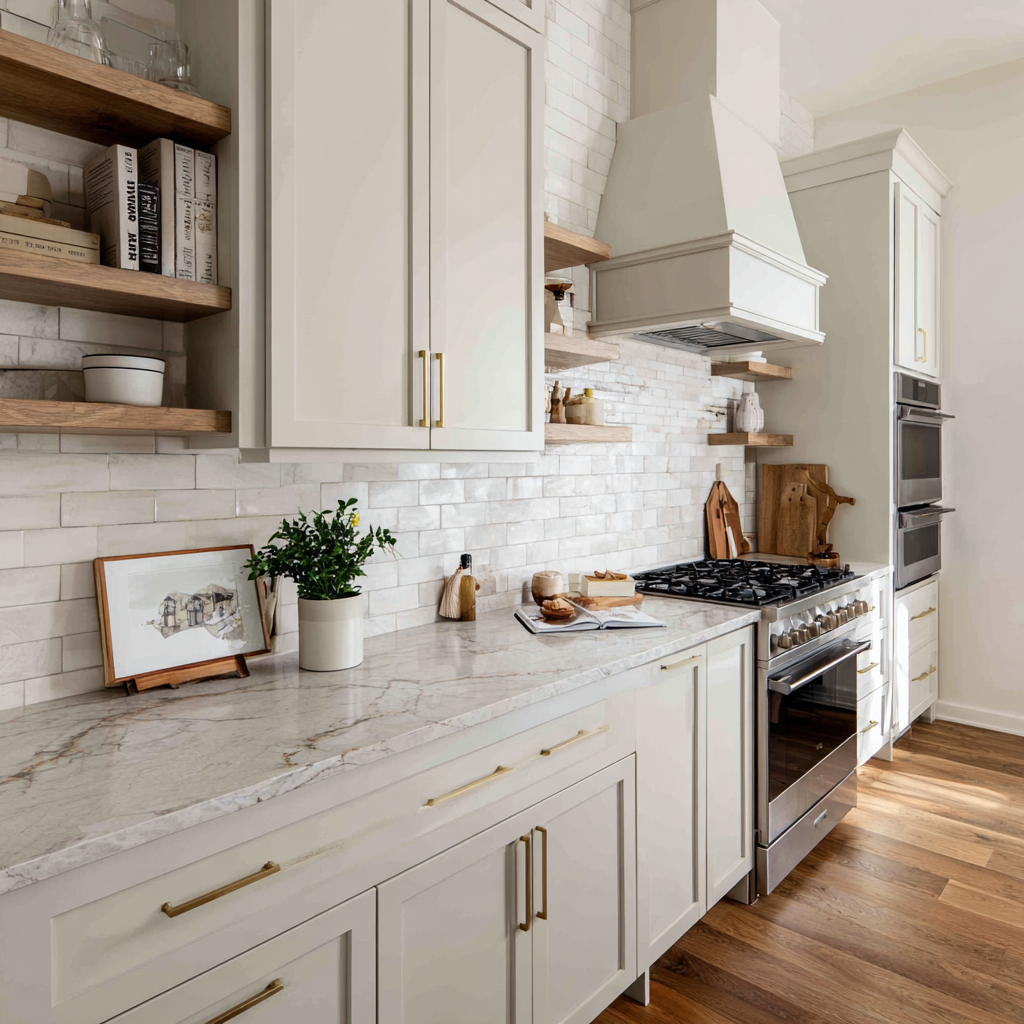
Marble is a classic pairing with white cabinets because it looks refined without feeling trendy. Soft gray veining is especially popular in traditional kitchens, and marble-look quartz can offer a similar look with less maintenance. If your cabinets are warm white, look for marble patterns that lean slightly warm; if your cabinets are cool white, stick with cooler gray veining.
Transitional kitchens benefit from countertops that blend warm and cool tones. A quartz with a neutral base and soft mixed veining can connect traditional elements like crown molding with modern touches like updated pendants or simpler cabinet fronts. This is a great approach if you want your kitchen to feel current now, but still classic five or ten years down the road.
Granite remains a strong option in traditional kitchens, particularly varieties with warm undertones. Beige, gold, and brown flecks pair well with warm white cabinets and wood flooring, adding depth and visual interest without overwhelming the space. These countertop colors for white cabinets are also a good fit if you want a surface that’s more forgiving for everyday cooking and entertaining.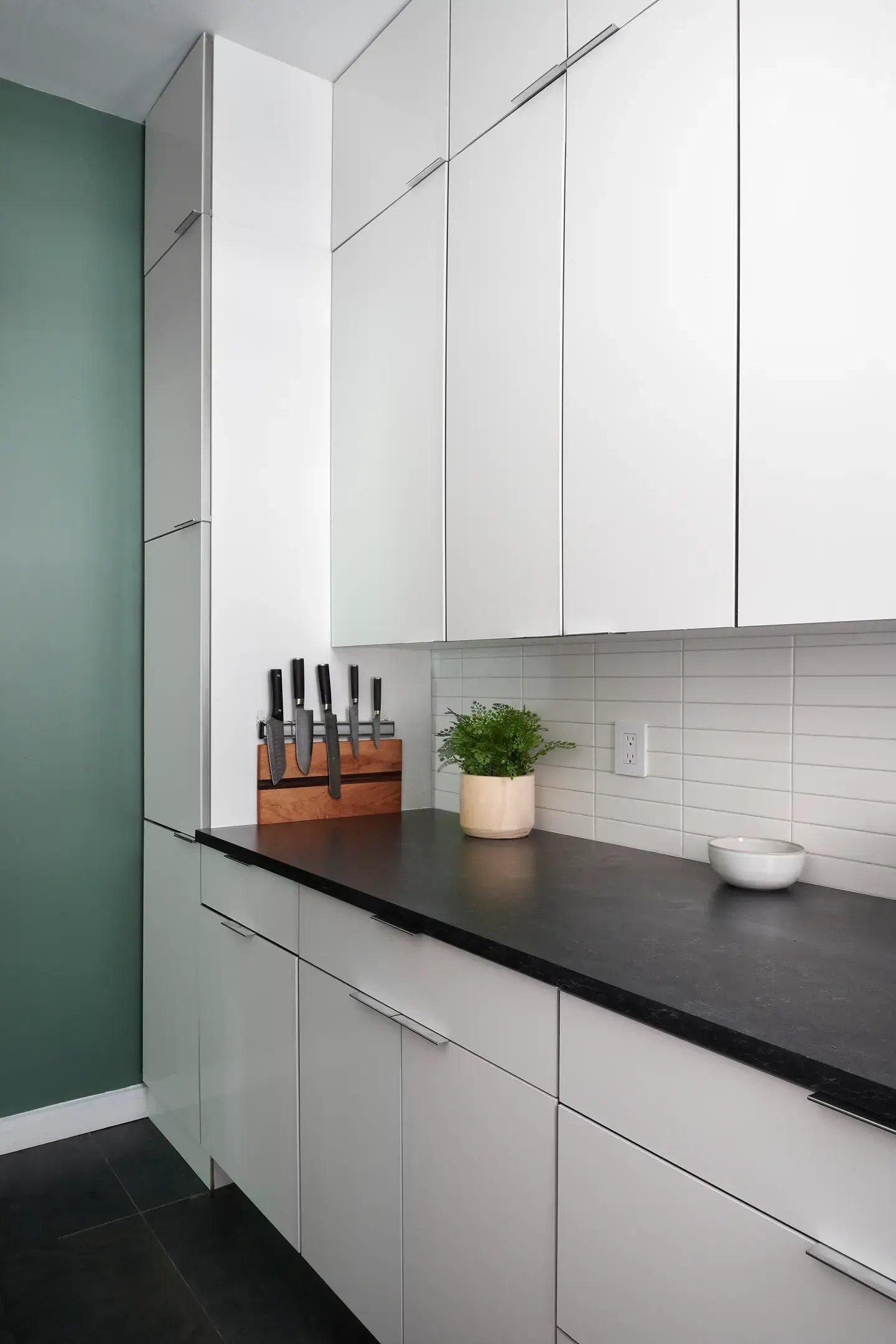
The best countertop choice is the one that works with the whole kitchen, not just the cabinets. Hardware, backsplash, and flooring all influence which countertop colors will feel right with white cabinets.
Cabinet hardware might seem like a small detail, but it significantly affects how your countertops read. Black or matte black hardware naturally complements darker countertops and reinforces a modern or bold aesthetic. Brushed brass or bronze hardware adds warmth and pairs well with creamy quartz, beige granite, and wood countertops. Polished chrome or nickel hardware leans cooler and works best with crisp white, gray, or marble-inspired countertops. If you’re torn between two countertop options, consider choosing hardware first—it often clarifies the direction instantly.
.png?width=1024&height=1024&name=u5821215421_A_sunlit_apartment_kitchen_with_soft_white_cabine_0e9ee577-6e0b-4c39-9f20-596d909a3723_1%20(1).png)
The backsplash sits directly between the cabinets and countertops, making it a crucial connecting element. Simple backsplashes like white subway tile give you freedom to choose bolder countertops.
If your backsplash is patterned, colorful, or textured, your countertop should usually be calmer so the space doesn’t feel visually noisy. Slab backsplashes, where the countertop material continues up the wall, create a seamless, high-end look and are especially popular in contemporary kitchens with white cabinets. For more ideas, read our guide about Countertop and Backsplash Ideas to Elevate Any Kitchen Remodel.
Flooring anchors the whole room and influences undertones more than people expect. Warm wood floors pair best with warm-toned countertops, while cool tile or concrete floors work better with gray, black, or cool white surfaces. If your flooring has lots of variation, choose a countertop with simpler patterning so the kitchen doesn’t feel overly busy. When in doubt, match undertones first (warm with warm, cool with cool), then choose contrast level (light, medium, dark).
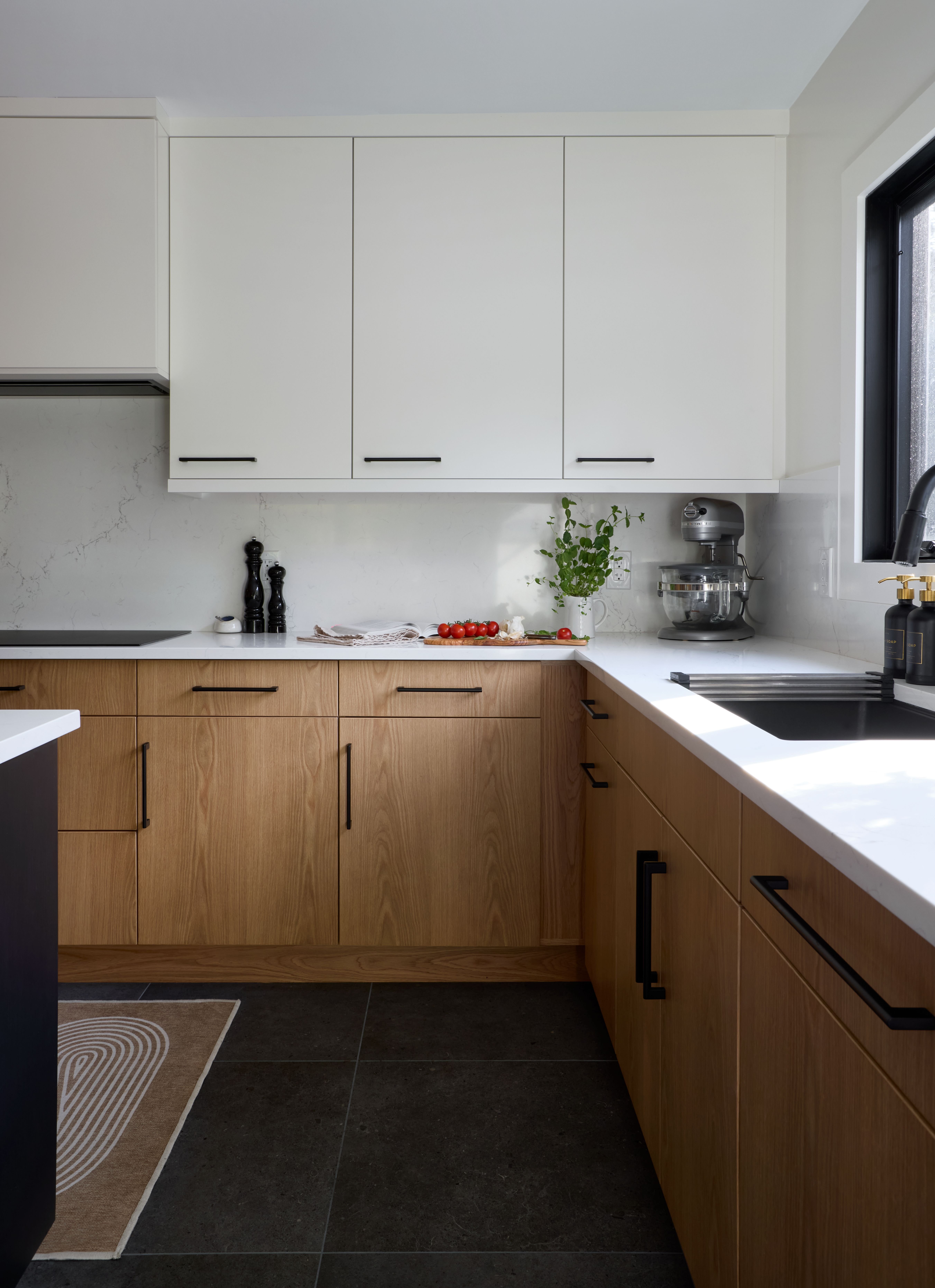
One of the biggest challenges in selecting countertops for white cabinets is visualizing how everything will work together. Samples are helpful, but they don’t fully capture lighting, layout, or the way materials interact across a full kitchen.
With Renovation Studio, you can view cabinetry, countertops, backsplash, and flooring together before construction begins. Comparing countertop colors for white kitchen cabinets side by side helps remove uncertainty and makes it much easier to commit to a direction that feels cohesive.
Choosing the right countertop color is a key step in creating a kitchen that feels cohesive and personal, but it’s only one part of a successful remodel. Coordinating finishes, keeping decisions organized, and executing everything correctly can get complicated fast.
Partnering with Block gives you expert guidance at every stage of your kitchen renovation. From exploring countertop colors that go well with white cabinets to bringing the full design to life, the process becomes clearer and more manageable—so you can end up with a kitchen that looks great, functions beautifully, and feels like it truly fits your home.
Remodel with confidence through Block

Connect to vetted local contractors
We only work with top-tier, thoroughly vetted contractors

Get expert guidance
Our project planners offer expert advice, scope review, and ongoing support as needed

Enjoy peace of mind throughout your renovation
Secure payment system puts you in control and protects your remodel


Renovate confidently with Block
Easily compare quotes from top quality contractors, and get peace of mind with warranty & price protections.
Countertops
Unique Kitchen Countertop Ideas: Alternatives to Boring
05.22.2026

Countertops
Mixing Two or More Countertops in Kitchen
03.03.2026

Countertops
Corian vs Quartz Countertops
02.16.2026

Countertops
Laminate Countertops vs Granite
02.12.2026

Countertops
Corian Countertops vs Granite
02.12.2026