Here's what nobody tells you when you're choosing countertops: the decision has almost nothing to do with which material is "better."
It's about whether you're the kind of person who finds satisfaction in monthly maintenance rituals or someone who wants to install once and mostly forget. Whether you prioritize a surface that invites you to chop vegetables directly on it or one that laughs off forgotten hot pans. Whether your design vision leans toward materials that warm a space instantly or those that anchor it with permanence and polish.
Butcher block and granite represent opposite ends of the spectrum on nearly every dimension that matters. Understanding where you fall on that spectrum—honestly, without romanticizing who you wish you were—determines which material will actually serve you well rather than creating constant friction in your daily life.
What is butcher block?
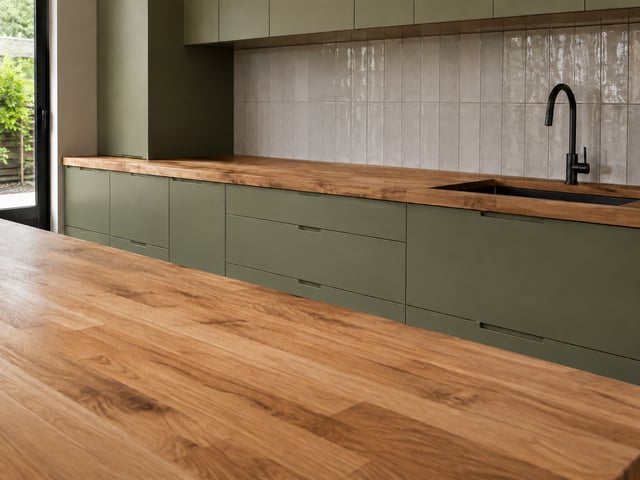
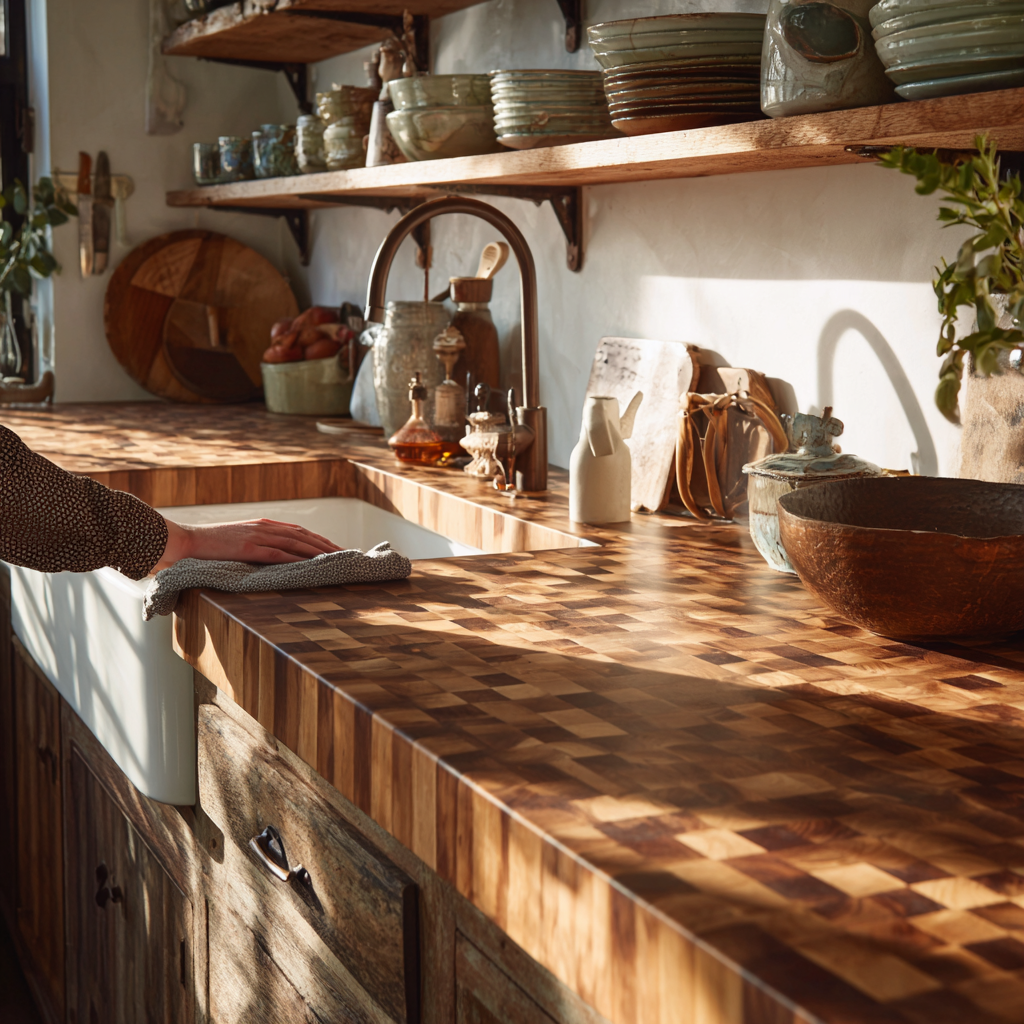
Butcher block is wood strips glued together into a solid counter surface. Made from hardwoods like maple, walnut, cherry, or oak, it comes in edge-grain (strips on their side) or end-grain (wood fibers pointing up, creating that checkerboard pattern). It's warm, tactile, and brings an unmistakable handcrafted quality no other material can touch.
What is granite?
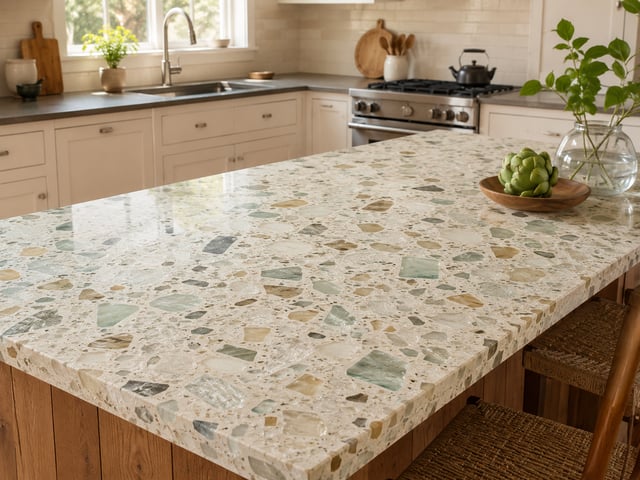
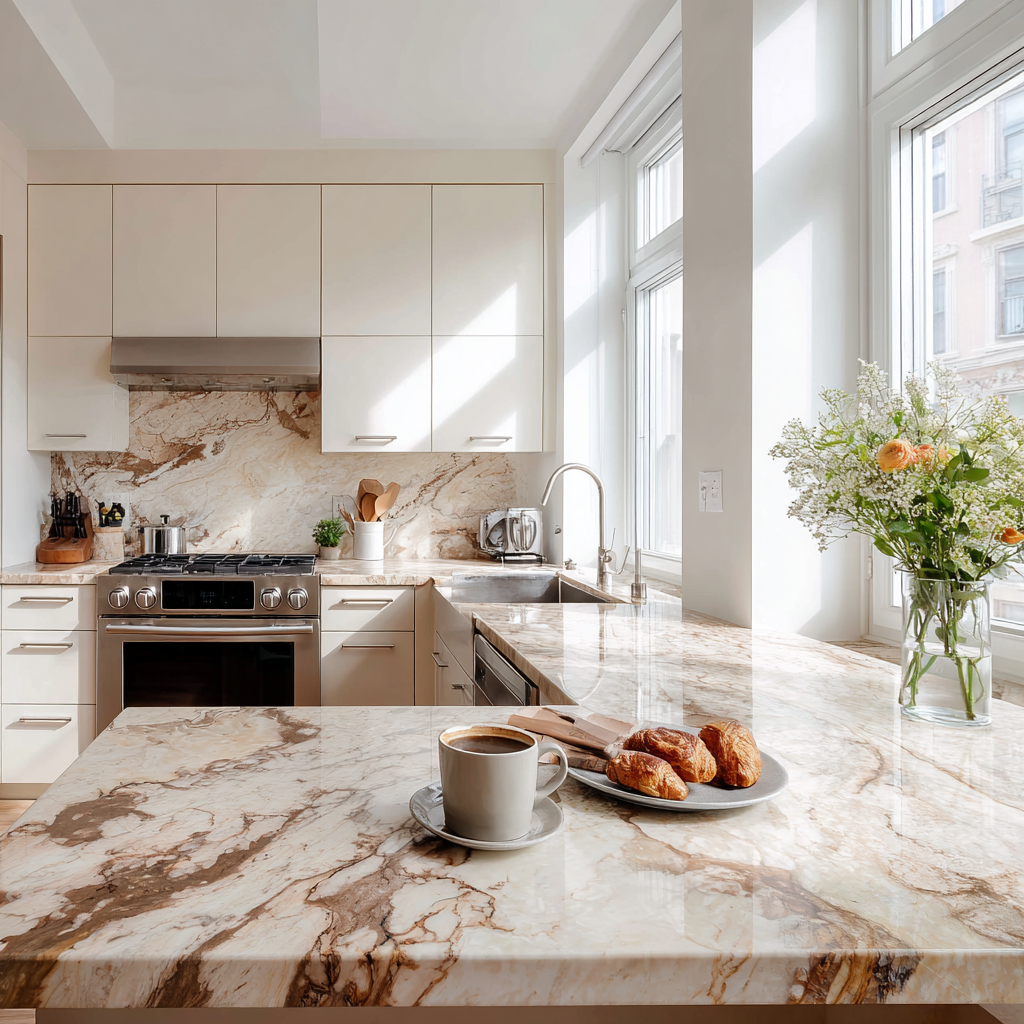
Granite is igneous rock formed from cooled magma, composed mainly of quartz and feldspar with mineral deposits creating varied patterns. It's been quarried for thousands of years and dominated kitchen countertops for the past few decades because it's nearly indestructible and requires minimal fussing once installed.
Comparing the functionality of butcher block vs. granite
|
Action
|
Butcher Block
|
Granite
|
|
Place hot pans directly on surface
|
No—causes scorch marks and cracking
|
Yes—handles heat without damage
|
|
Cut directly on the counter
|
Yes—designed for this
|
No—dulls knives, can chip stone
|
|
Let water sit without wiping
|
No—causes swelling and rot
|
Mostly fine when properly sealed
|
|
Skip monthly maintenance
|
No—wood dries out and cracks
|
Yes—only needs annual sealing
|
|
Use acidic cleaners
|
No—damages finish
|
No—breaks down sealer
|
|
Expect it to look the same in 10 years
|
No—develops patina and wear
|
Yes—maintains original appearance
|
|
Repair damage yourself
|
Yes—sand and refinish at home
|
No—requires professional repair
|
|
Install in humid environments
|
Not recommended—wood movement issues
|
Yes—unaffected by humidity
|
Where both butcher block and granite succeed
- Long functional lifespan: Both can serve your kitchen for decades. Butcher block lasts 20+ years with refinishing; granite pushes past 50 easily. Either choice transcends the disposable mentality of cheaper materials that need replacement after a decade. You're investing in longevity regardless of which you pick.
- Repairable when damaged: Butcher block can be sanded and refinished, essentially creating a brand-new surface. Granite chips can be filled with color-matched epoxy. Neither material forces complete replacement when localized damage occurs, which saves money and waste over time.
- Proven track record: Both materials have been used in kitchens long enough that their behavior is predictable. There are no surprises about how they age, what fails, or what maintenance they require. You're choosing known quantities rather than experimental materials with uncertain longevity.
- Genuine material authenticity: Both are real materials—actual wood, actual stone—not composites pretending to be something else. For homeowners who value authenticity and dislike synthetic alternatives, both deliver that connection to natural materials formed over years (wood) or millennia (stone).
Where both butcher block and granite struggle
- Neither suits hands-off homeowners: Butcher block needs monthly oiling. Granite needs annual sealing. Both degrade without this maintenance—wood dries and cracks, stone stains and etches. If you want truly zero-maintenance counters, engineered quartz is your only real option. Both of these materials demand at least minimal engagement.
- Installation requires professionals: Both materials require professional fabrication and installation. Granite weighs hundreds of pounds per slab and requires precision cutting and seam management. Butcher block needs proper joinery, leveling, and finishing. You're paying for skilled labor regardless of which you choose.
- Limited color customization: Butcher block gives you wood tones—honey to chocolate brown, occasionally gray if finished creatively. Granite offers more variety but you're still selecting from what nature produced rather than specifying custom colors. If you have a specific color scheme requiring an exact match, both materials might disappoint.
- Resale value remains debatable: Granite has broader appeal but feels expected rather than special in many markets. Butcher block delights some buyers and worries others concerned about maintenance. Neither guarantees better resale than the other—market preferences and overall kitchen quality matter more than countertop material alone.
Who should choose butcher block
- Home cooks who prep constantly: If you're the person chopping vegetables nightly, breaking down chickens, rolling dough—butcher block becomes an extension of your process. You can work directly on the surface without hunting for cutting boards. The wood gives slightly under your knife, which is easier on your wrists during marathon prep sessions. It's designed for exactly this kind of active cooking, making it ideal for modern rustic kitchens where function and warmth intersect.
- People drawn to patina and character: Some homeowners panic at the first scratch or stain. Others see those marks as evidence of a life well-lived. If you're the type who prefers worn leather jackets to pristine ones, butcher block will appeal to you. The nicks, the slight color shifts, the way high-use areas darken over time—these become part of the material's appeal rather than flaws to fix.
- Renovators working within tighter budgets: At $40 to $100 per square foot installed, butcher block costs substantially less than granite while still delivering a premium look. That price difference can fund better appliances, more storage, or upgraded lighting. You're not settling—you're making a strategic choice that looks intentional rather than cheap.
- Kitchens leaning Scandinavian, farmhouse, or cottage: Wood counters feel intrinsically right in spaces emphasizing natural materials, craft, and coziness. They anchor these aesthetics in ways stone can't, providing textural warmth that keeps the space from feeling cold or institutional. The material reads as inviting rather than formal.
- Homeowners comfortable with regular maintenance: If you find satisfaction in caring for your belongings and don't mind monthly tasks, butcher block's demands won't bother you. Monthly oiling takes fifteen minutes. Refinishing every few years can be handled by professionals. For people who already maintain their possessions thoughtfully, this attention feels normal rather than burdensome.
- Anyone wanting sustainable, renewable materials: Wood is biodegradable, renewable, and often sourced domestically, reducing transportation impacts. For homeowners prioritizing environmental considerations, butcher block aligns with those values better than stone quarried overseas and transported thousands of miles.
Who should steer clear of butcher block
- Households that rarely cook or prep: If you mostly reheat takeout or use meal kits, butcher block's maintenance-to-use ratio doesn't pencil out. You'll be oiling and caring for a surface you barely engage with. The material shines when it's actively worked; idle, it just demands attention without delivering value.
- Anyone who forgets or resents upkeep tasks: Butcher block isn't set-and-forget. Skip the monthly oiling and it dries out, cracks, or stains more easily. Neglect water pooling near the sink and you'll get swelling or rot. If you're the person who forgets routine home maintenance, butcher block will frustrate you. It needs consistency you might not provide.
- Homes with hard water or leak-prone plumbing: Water is wood's enemy. If your faucet drips, your dishwasher occasionally leaks, or your hard water leaves mineral deposits everywhere, butcher block multiplies your problems. The constant moisture exposure accelerates wear and creates maintenance headaches. Granite shrugs off these issues entirely.
- Perfectionists who can't tolerate visible wear: Butcher block will show its age. Knife marks accumulate. Hot pans leave scorch marks if you're careless. Spilled wine can stain if you don't catch it immediately. If you need your counters looking showroom-fresh indefinitely, this material will drive you crazy. It's meant to evolve; if that evolution feels like damage to you, choose something else.
- Kitchens near pools or in humid climates: Excessive humidity makes wood swell and contract more dramatically, leading to warping, splitting, or finish failure. Coastal areas, homes without air conditioning, or properties near water features create challenging environments for wood counters. Granite doesn't care about humidity levels.
- Renovators prioritizing resale over personal preference: Butcher block divides buyers. Some see it as charming and warm; others view it as high-maintenance or dated depending on current trends. Granite reads as safe and premium to nearly everyone. If your primary goal is maximizing resale value rather than creating a kitchen you'll love, granite's universal appeal serves you better. For more insights, read Kitchen Remodel ROI & Upgrades for High Resale Value.
Who should choose granite
- Busy households that cook frequently: If your kitchen is command central—multiple people cooking simultaneously, constant activity, heavy use—granite takes it all without complaint. Set hot pans down without thinking. Let kids do homework on the island. Spill wine during dinner parties. Granite doesn't flinch. It's the workhorse for families that genuinely live in their kitchens.
- Homeowners wanting decades of hands-off performance: Seal it once a year (a thirty-minute task), and granite asks nothing else. It doesn't dry out, crack, warp, or demand refinishing. For people whose time is limited or who simply don't want to think about countertop care, granite's minimal maintenance is freeing. Install it and mostly forget about it.
- Anyone prioritizing heat resistance: Serious bakers pulling hot sheet pans from the oven every weekend. Home chefs managing six burners during holiday meals. People who forget where they set down hot cookware. Granite tolerates all of this without damage. You can cook instinctively rather than carefully, which changes how the kitchen functions.
- Kitchens in luxury or traditional styles: Granite signals quality and permanence in ways that buyers and guests immediately recognize. It anchors traditional kitchens with architectural detail, complements high-end appliances, and provides the visual weight that formal spaces need. It works beautifully in modern Tuscan-style kitchens where natural stone feels essential to the aesthetic. The material communicates investment without announcing it loudly.
- Homeowners in humid or water-prone environments: Coastal homes, basement kitchens, properties near lakes—anywhere moisture is constant—granite performs beautifully. It doesn't absorb water, won't swell or rot, and handles humidity without issue. For challenging environments where other materials struggle, granite just works.
- People who prefer their counters pristine: If you want surfaces that look essentially the same in year ten as they did on installation day, granite delivers. It doesn't evolve or develop patina—it maintains. For homeowners whose satisfaction comes from unchanging perfection, granite's stability is psychologically comfortable.
Who should steer clear of granite
- Budget-limited renovations with competing priorities: Starting around $60 per square foot installed and climbing quickly for interesting patterns, granite consumes budget. If that money would be better spent on layout improvements, better appliances, or addressing structural issues, cheaper countertop options free up funds for higher-impact changes. Sometimes good-enough counters and a great layout beat premium counters and a compromised plan.
- Minimalists wanting warmth in stark spaces: Granite is undeniably cold—both literally and visually. In kitchens with lots of steel, glass, and hard surfaces, adding more stone compounds the institutional feel. If your space already skews clinical and you're trying to introduce softness, wood counters or other warmer materials serve you better.
- Kitchens in vintage or eclectic homes: Granite's ubiquity in 2000s–2010s construction can make it feel generic in older homes with character. In a 1920s bungalow or quirky 1970s ranch, granite might clash with the home's personality. Materials with more patina or unconventional choices often feel more authentic to these spaces.
- Anyone frustrated by visible seams: Granite slabs have size limits, so larger kitchens need multiple pieces. The seams between them are visible—sometimes subtly, sometimes obviously depending on the pattern. If your aesthetic demands uninterrupted surfaces, this will bother you every time you look at it. Other materials handle this challenge differently.
- Homeowners wanting counters as active work surfaces: Cutting directly on granite dulls your knives immediately and can chip the stone. You need cutting boards constantly. If your cooking style involves lots of knife work and you dislike interrupting your flow to grab boards, granite's hardness becomes an obstacle rather than an asset.
- People philosophically opposed to quarrying: Extracting granite involves blasting rock, heavy equipment, and significant environmental disruption. Transportation adds carbon footprint. If your values prioritize minimizing extraction industries or reducing material transportation, granite's supply chain conflicts with those principles. More sustainable alternatives exist.
Test your decision before committing
Samples tell you texture and approximate color, but they don't communicate how a material will feel spanning your entire workspace or how it interacts with your specific lighting and cabinet colors.
Block's Renovation Studio lets you visualize both butcher block and granite in your actual kitchen. Toggle between materials, adjust other elements, and watch cost estimates shift in real time. You'll see what you're getting—and what you're spending—before contractors start measuring or fabricators start cutting.
Partner with the right remodeler with Block Renovation
Butcher block and granite require different expertise. The fabricator who excels with stone might not understand wood's movement and finishing requirements. Block connects you with up to four vetted professionals experienced specifically with your chosen material.
You'll get itemized proposals covering fabrication, installation, finishing (for wood) or sealing (for stone), and any edge details or special configurations. Our project planners walk you through bid comparisons, explain what drives price differences, and confirm nothing's missing. Block's milestone-based payment system keeps your project progressing without financial risk.

Written by
Shahe Demirdjian
Shahe Demirdjian
Shahe supports clients and builders throughout the full project lifecycle, from early planning and scoping through execution and closeout, ensuring clear communication, alignment on timelines, and successful delivery across both residential and commercial projects.