



Countertops
What Color Cabinets Go With Black Granite Countertops?
08.16.2026
02.05.2026


In This Article
Choosing countertops means balancing what you love with what works for your life. Some homeowners are drawn to the natural beauty and permanence of stone. Others value flexibility, seamless design, and easier maintenance. Both solid surface and granite have loyal followings, and for good reason—each brings distinct advantages to different kitchen styles and budgets.
Understanding how these materials compare helps you make a choice that supports not just your design vision, but how you actually use your kitchen every day.
Solid surface countertops are manufactured from acrylic or polyester resins mixed with mineral fillers. The color and pattern run all the way through the material, meaning scratches don't expose a different layer underneath. Brands like Corian pioneered this category in the 1960s and remain popular for their ability to create seamless, custom configurations.
Solid surface works beautifully in contemporary, minimalist, and modern kitchens where clean lines and seamless surfaces take priority. The ability to create integrated sinks and invisible seams makes it ideal for sleek, uninterrupted designs. It's particularly well-suited to:
Granite is a natural igneous rock formed from cooled magma deep in the earth's crust. Each slab is unique, with variations in color, veining, and mineral patterns that can't be replicated. Granite has been used in construction for thousands of years and remains one of the most sought-after countertop materials for its durability and timeless aesthetic.
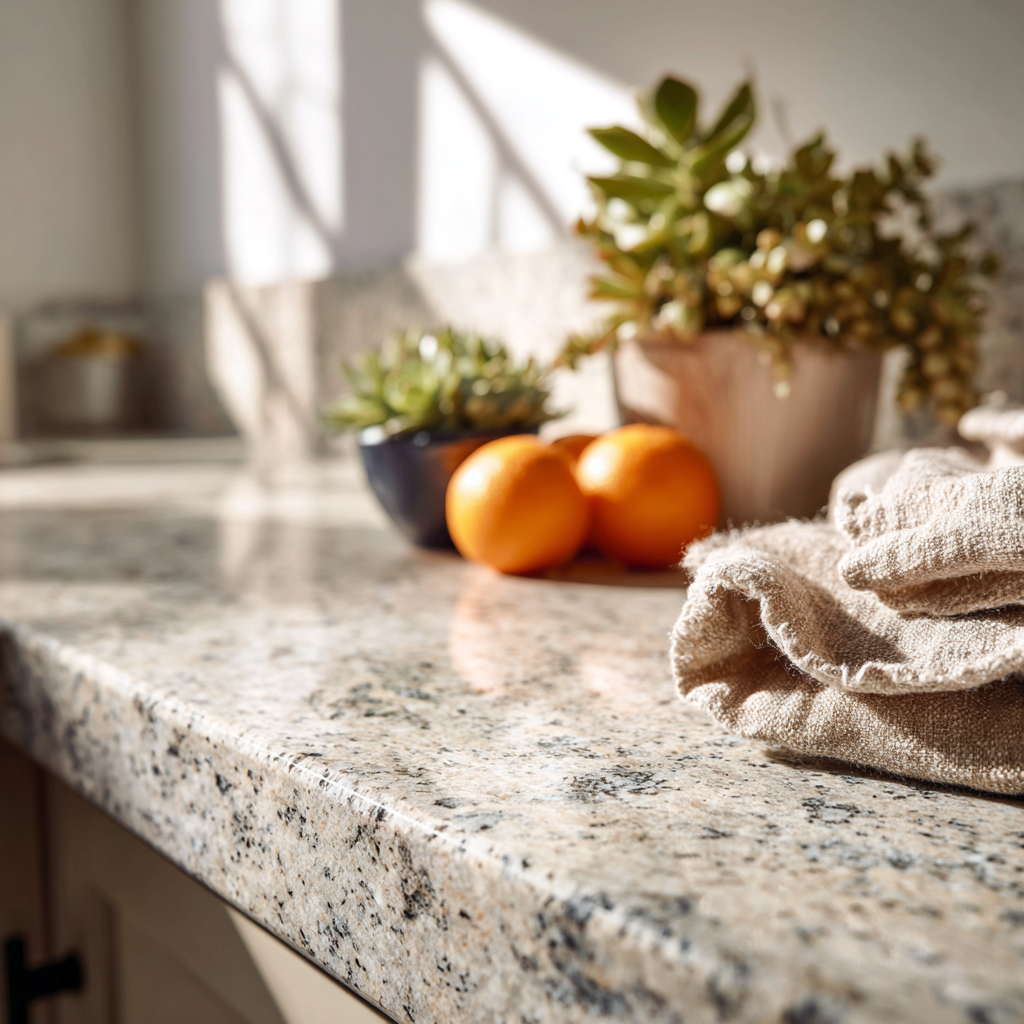
Granite shines in traditional, transitional, and upscale contemporary kitchens where natural materials and timeless elegance are priorities. Its durability and heat resistance make it practical for serious home cooks, while its visual complexity adds character to the space. It's particularly well-suited to:
|
Feature |
Solid Surface |
Granite |
|
Cost (installed) |
$50–$100 per sq ft |
$60–$150+ per sq ft |
|
Lifespan |
20+ years |
50+ years |
|
Heat resistance |
Moderate (use trivets) |
High (brief contact okay) |
|
Maintenance |
Low (no sealing) |
Moderate (annual sealing) |
|
Repairability |
Can be sanded/refinished |
Chips can be filled |
|
Seams |
Nearly invisible |
Visible |
|
Aesthetic |
Uniform, contemporary |
Natural, unique |
Solid surface offers more predictable pricing and better budget flexibility, while granite's cost varies widely based on rarity and visual drama.
Granite typically costs between $60 and $150 per square foot installed, though exotic or rare slabs can push well above $200. The wide price range reflects the variety available—common colors like black or beige cost less, while dramatic veining or unusual colorations command premium pricing. You're also paying for the quarrying, cutting, and transportation of heavy natural stone.
Solid surface sits in the $50 to $100 per square foot installed range, making it slightly more accessible than mid-range granite options. The price is more predictable because you're working with manufactured materials rather than natural stone subject to supply and rarity. Custom fabrication—like integrated sinks or curved edges—adds cost to both materials, though solid surface offers more design flexibility in this area.
For budget-conscious renovations, solid surface often provides more room to allocate funds elsewhere in your kitchen. If you're willing to invest more upfront for a material that can last generations, granite's longevity can justify the higher price, making it a wiser choice for your kitchen’s ROI.
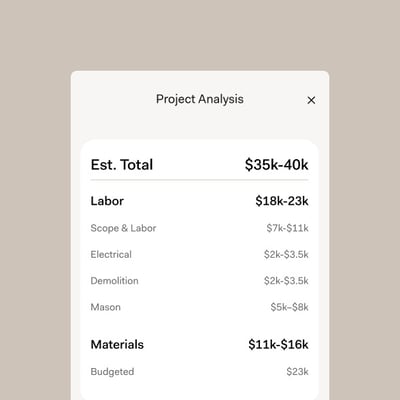
Know the Cost Before You Start
Granite outlasts solid surface by decades, resisting scratches and impacts better, though solid surface damage can often be repaired.
Granite is one of the most durable countertop materials available. It resists scratches, chips, and heat better than most alternatives. You can set hot pans directly on granite for brief periods without causing damage, though trivets are still recommended for prolonged contact. Granite's hardness means it won't dent or wear down from daily use, and properly sealed granite can last 50 years or more without needing replacement.
Solid surface holds up well but doesn't match granite's long-term resilience. It's more susceptible to scratches from knives and can be damaged by hot pans. The advantage is that minor damage can be sanded and buffed out, restoring the surface to near-original condition. Expect solid surface to last 20 years or more with proper care, though it may show wear sooner in high-traffic kitchens.
Granite handles high heat with ease, while solid surface requires consistent caution and protective measures.
Granite handles heat exceptionally well. Its natural composition makes it one of the most heat-resistant countertop materials you can choose. You can place hot pots and pans directly on the surface without causing discoloration or damage, though using trivets extends the life of your sealer and protects against potential thermal shock in extreme cases.
Solid surface has moderate heat resistance but requires more caution. Hot cookware can cause scorching, melting, or discoloration. Trivets and hot pads aren't optional—they're essential. For homeowners who cook frequently with high heat or tend to multitask in the kitchen, this limitation can feel restrictive.
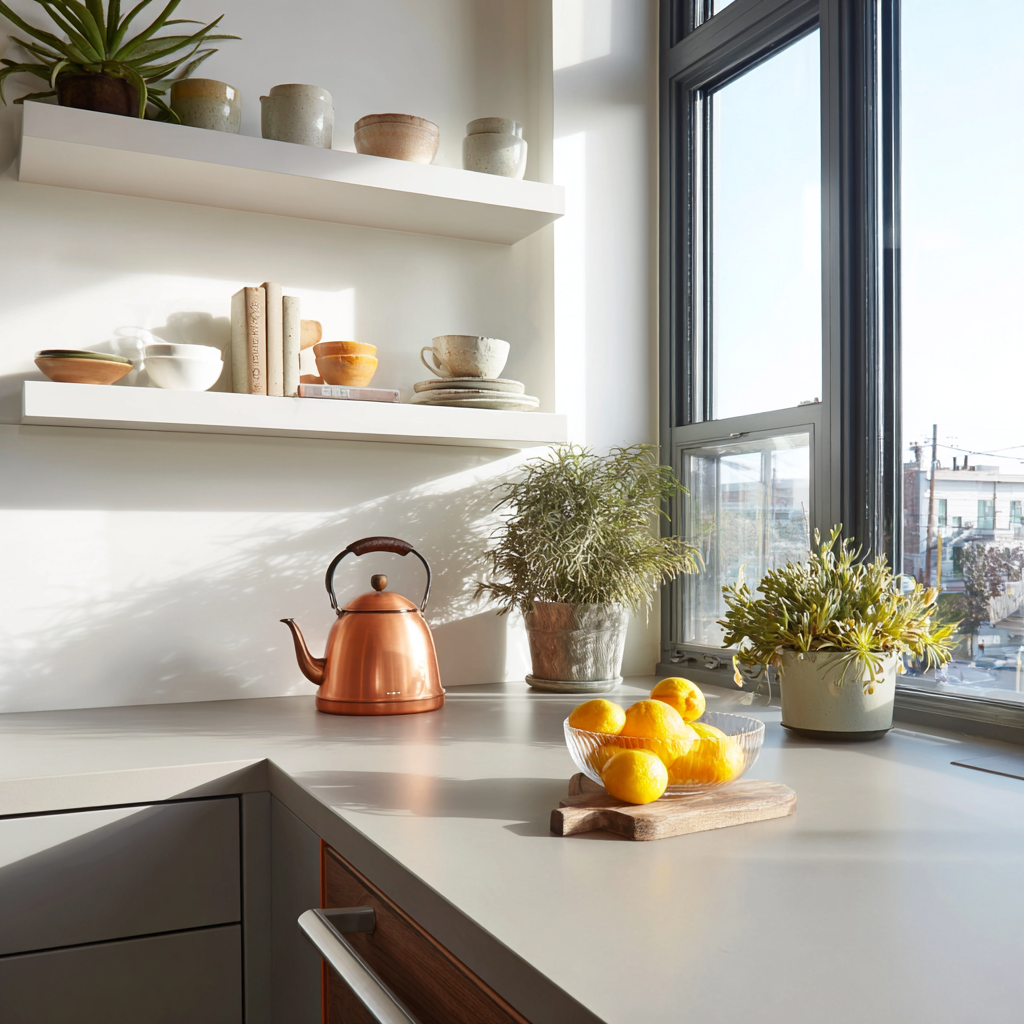
Solid surface needs only soap and water, while granite requires annual sealing and more careful cleaning.
Solid surface needs minimal upkeep. Daily cleaning with soap and water handles most situations, and the non-porous surface doesn't require sealing. Spills won't penetrate if you wipe them up reasonably quickly, and you don't need specialized cleaners. This simplicity appeals to homeowners who want to spend less time maintaining their countertops.
Granite requires more attention. The stone is porous and needs sealing at installation, then resealing annually or every few years depending on the specific granite and how heavily you use your kitchen. You'll need to use pH-neutral cleaners to avoid breaking down the sealer, and acidic substances like lemon juice or vinegar should be wiped up promptly to prevent etching. The maintenance isn't difficult, but it's an ongoing commitment.
Granite delivers unique natural beauty with visual depth, while solid surface creates seamless modern installations with uniform appearance.
Granite offers unmatched natural beauty. Each slab is one of a kind, with unique veining, color variations, and mineral deposits that create visual depth and complexity. This makes granite particularly compelling for homeowners who value organic materials and want their countertops to feel distinctive. The range of available colors and patterns is vast—from dramatic black with gold veining to subtle whites with gray flecks.
Solid surface provides a clean, uniform appearance with a wide range of colors and subtle patterns. The material can be thermoformed into custom shapes and seamless configurations that granite can't achieve. Seams are nearly invisible when installed correctly, creating that uninterrupted modern look. However, solid surface lacks the depth and organic variation of natural stone, which can make it feel manufactured or too uniform for some design sensibilities.
Solid surface can be sanded and refinished to remove damage, while granite chips require color-matched epoxy that may remain visible.
Solid surface wins on repairability. Minor scratches, burns, and stains can be sanded out by a professional, and deeper damage can often be repaired invisibly because the color runs through the material. This means your countertops can be restored to near-original condition even after years of use, extending their functional life.
Granite chips and cracks are more challenging to repair. Small chips can be filled with color-matched epoxy, but the repair is often visible up close. Deep cracks may be impossible to fix without replacing the entire slab. The good news is that granite's hardness means it's less prone to damage in the first place, so repairs are needed less frequently.
Perfect Every Detail of Your Bathroom

Non-porous options available: Solid surface is naturally non-porous, and properly sealed granite resists moisture and bacteria, making both hygienic choices for food preparation. Neither will harbor mold or mildew when maintained correctly.
Long functional lifespan: Both materials can serve your kitchen for decades. While granite lasts longer, solid surface still delivers 20+ years of use, which outlasts many homeowners' tenure in a single property.
Wide color and pattern selection: Whether you want subtle neutrals or dramatic statements, both materials offer extensive options. Granite provides natural variation, while solid surface offers consistent, predictable results across a broader spectrum of manufactured colors.
Professional installation standards: Both require skilled fabricators and installers, which means you're getting professional-grade workmanship regardless of which material you choose. This level of expertise ensures proper fit, finish, and longevity.
Higher cost than budget alternatives: Both solid surface and granite cost significantly more than laminate or tile. If you're working with a tight budget, these materials may require trade-offs elsewhere in your renovation or extend your timeline while you save.
Seams remain a consideration: While solid surface seams are less visible than granite's, both materials typically require seams in larger kitchens or L-shaped layouts. Neither can match the uninterrupted surface of poured concrete or large-format engineered quartz slabs.
Installation complexity: Both materials require professional fabrication and installation. You can't DIY these countertops the way you might with butcher block or tile, which adds to the total project cost and timeline.
Weight and structural requirements: Granite is extremely heavy and may require additional cabinet reinforcement, particularly in older homes. Solid surface is lighter but still heavier than laminate, which can be a consideration for some installations.
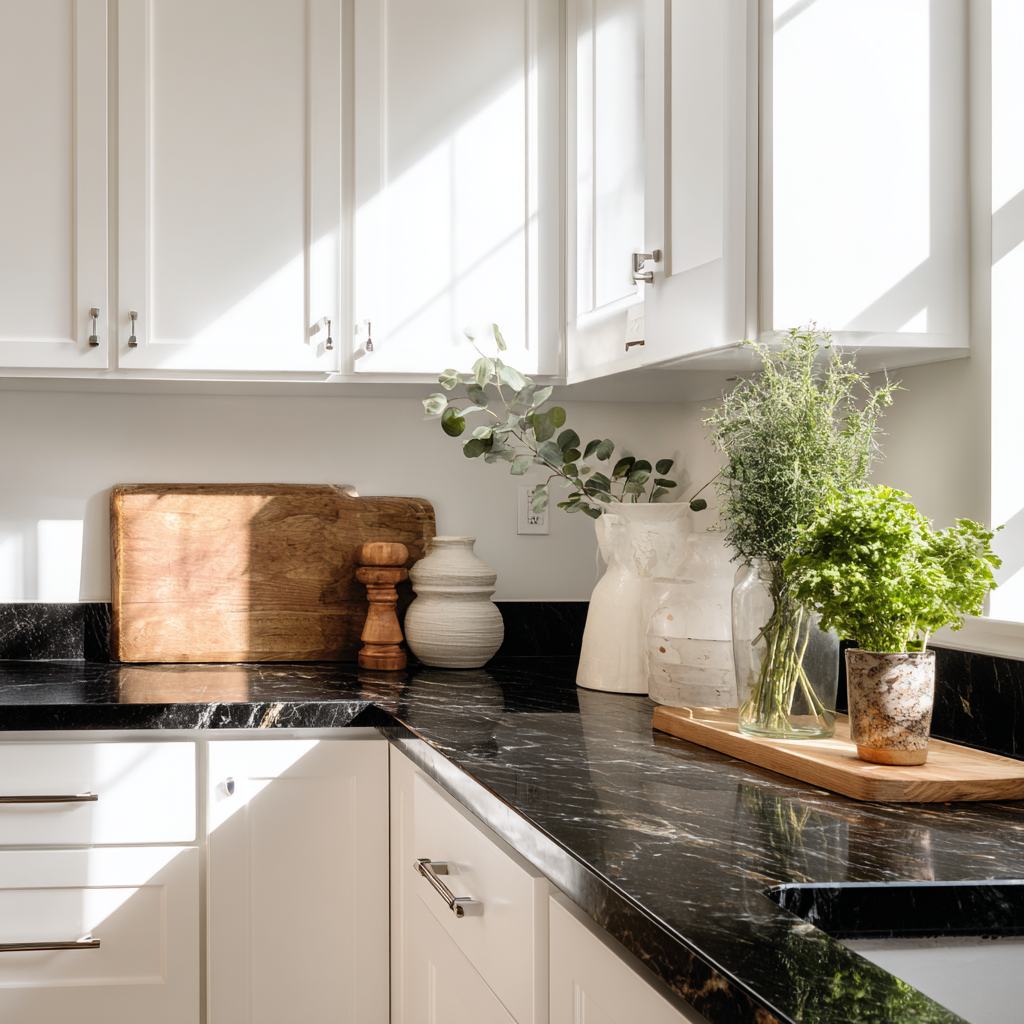
The difference between solid surface and granite becomes clearer when you can visualize each material in your actual space. Color samples only tell part of the story—you need to see how the material interacts with your cabinets, lighting, and overall layout.
Block's free Renovation Studio lets you test both solid surface and granite in your kitchen design. You can switch between materials, compare how each affects your budget in real time, and see which option delivers the look you're after. The tool shows instant cost estimates as you make changes, giving you a clear picture of what you're committing to before any work begins.
Once you've decided between solid surface and granite, Block connects you with thoroughly vetted local contractors who specialize in countertop installation. We match you with up to four licensed, insured professionals based on your project scope, location, and material choice.
You'll receive detailed proposals that break down fabrication costs, installation labor, and any additional work like sink cutouts or backsplash integration. Our project planners help you compare bids side by side, identify any missing elements, and ensure you're getting competitive pricing. Block's progress-based payment system and built-in protections keep your project moving smoothly from template to final installation.
Remodel with confidence through Block

Connect to vetted local contractors
We only work with top-tier, thoroughly vetted contractors

Get expert guidance
Our project planners offer expert advice, scope review, and ongoing support as needed

Enjoy peace of mind throughout your renovation
Secure payment system puts you in control and protects your remodel

Renovate confidently with Block
Easily compare quotes from top quality contractors, and get peace of mind with warranty & price protections.
Countertops
What Color Cabinets Go With Black Granite Countertops?
08.16.2026
Countertops
Green Cabinets With Butcher Block: 12 Design Ideas
08.10.2026
Countertops
Recycled Glass Countertops: Cost, Durability & More
08.06.2026

Countertops
Cheapest Countertop Materials That Still Last
07.17.2026

Countertops
Unique Kitchen Countertop Ideas: Alternatives to Boring
05.22.2026