



Countertops
Laminate Countertops vs. Quartz: How to Choose
09.15.2026
01.21.2026


In This Article
Engineered stone has become an established choice for kitchens seeking both resilience and a broad palette of design options.
This countertop material blends finely ground natural quartz with advanced resins and stable pigments. It is then shaped into dense, uniform slabs.
In turn, engineered countertops come in a variety of looks, all showing remarkable control over color, veining, and finish. Homeowners can present aesthetics of rare marbles, artisan concrete, or bold modern patterns.
For homeowners and designers, this means the surface you fall in love with in the showroom is exactly what you’ll see installed at home, free from nature’s quirks and unpredictable variation.
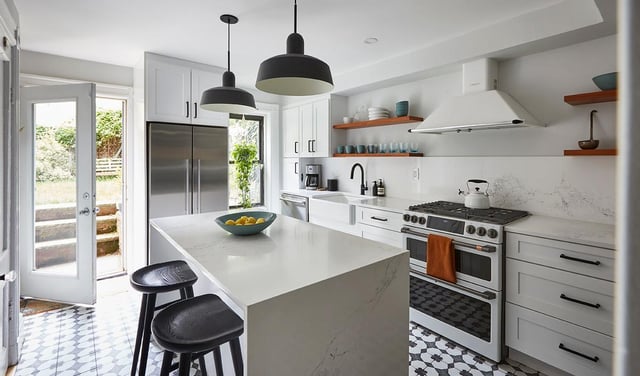
Whether you’re hoping for a showstopping waterfall island, a super-durable prep space, or a countertop that integrates seamlessly into a contemporary kitchen, engineered stone offers both reliable performance and exceptional creative freedom.
Bring Your Dream Bathroom to Life
Engineered stone appeals to a wide range of homeowners, but understanding its success—and its quirks—will help you set realistic expectations.
Engineered stone yields consistency. Quartz slabs are man-made by binding natural quartz with resin and color, so every piece is highly uniform in color and pattern. Large kitchens can have nearly invisible seams, and buying more material down the line means a guaranteed match.
Sealing is never required. Engineered stone is nearly non-porous so common kitchen stains, household acids, and oils simply don’t soak in. Maintenance is minimal: mild soap and water do the trick.
Engineered stone is highly resistant to mold and bacteria growth. Its non-porous nature means it won’t harbor moisture in microcracks or pores like some natural surfaces, helping keep your kitchen surfaces hygienic with basic cleaning alone.
The surface stands up well to cuts and abrasions, but it is not invincible. Bumping a corner with a heavy pan, or dropping a pot near the sink, can chip the resin-based edge—repairs are possible, but rarely invisible.
Unlike natural stone, engineered quartz shouldn’t be exposed to high heat. A hot pot straight from the stove, or a slow cooker left for hours, can mar the finish or discolor the resin. Always use a trivet or heat pad.
Can be seen as lacking unique personality. The appearance is controlled and predictable, but some people find engineered quartz lacks the “soul” or tactile warmth of natural materials like marble, soapstone, or even butcher block. You get reliability and peace of mind in daily life, at the slight cost of that natural material variance.
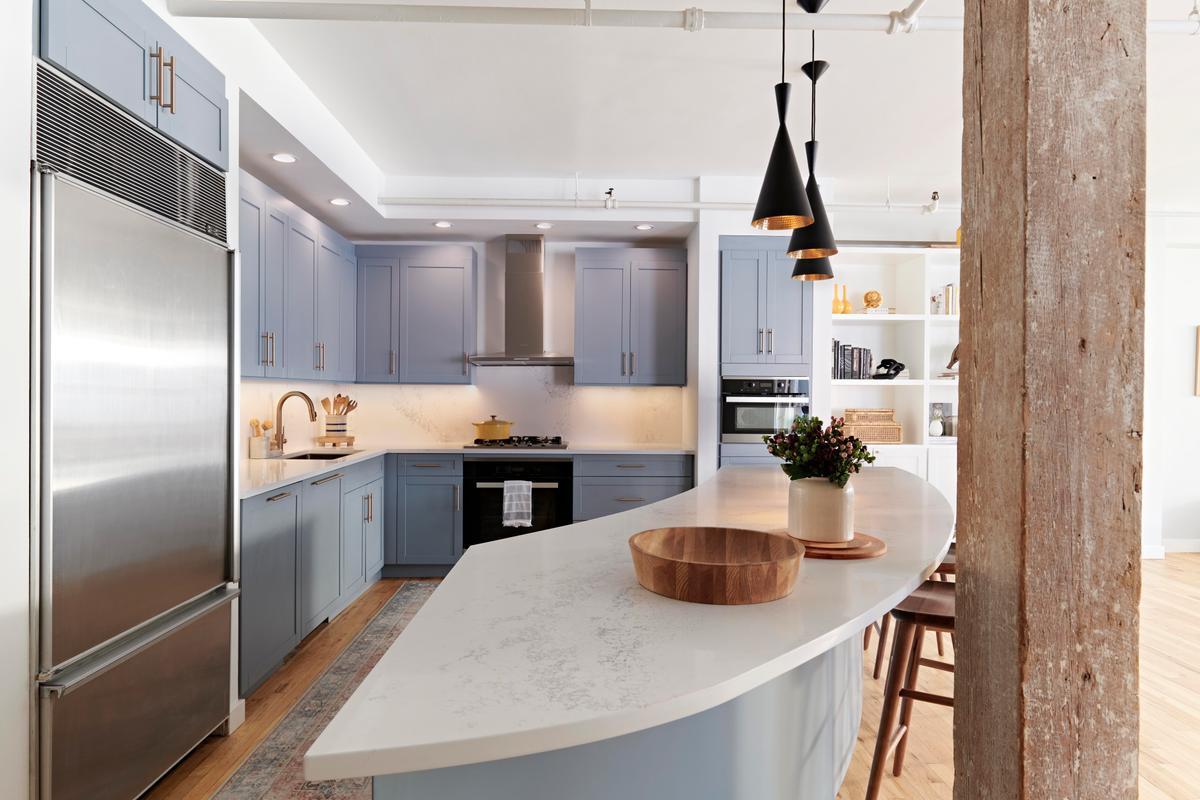
Engineered stone countertops generally cost between $60 and $120 per square foot installed. This range places them above entry-level surfaces like laminate or butcher block—materials typically priced between $20 and $60 per square foot.
However, it falls below many luxury natural stones, which can surpass $150 to $200 per square foot for rare granites or exotic marbles. Even more notably, engineered stone often mimics the look of premium marble (like Carrara or Calacatta), soapstone, and concrete, providing that aesthetic for a fraction of the price and without the unpredictability or demanding care routines of those materials.
Cast concrete countertops—sometimes pursued for their modern, seamless appearance—can start around $100 per square foot and climb sharply with specialty finishes or reinforcement, all without offering the non-porous, low-maintenance appeal of quartz. Even midrange stones like soapstone or certain limestones often cost more in the long run due to regular oiling or surface repairs.
|
Material |
Typical Installed Cost (per sq ft) |
Noteworthy Considerations |
|
Engineered Stone (Quartz) |
$60–$120 |
Uniform, low maintenance, consistent slab matching |
|
Laminate |
$20–$60 |
Inexpensive, less durable, can’t mimic depth or veining |
|
Butcher Block |
$30–$80 |
Warm look, needs regular sealing, prone to staining |
|
Granite (Common) |
$60–$130 |
Varied pattern, moderate maintenance, may stain/etch |
|
Granite (Exotic/Rare) |
$150–$200+ |
One-of-a-kind, costly, requires expert fabrication |
|
Marble (Natural) |
$100–$200+ |
Luxurious, porous, high maintenance, unpredictable veining |
|
Soapstone |
$70–$120 |
Soft, repairable, needs oiling, scratches and dents |
|
Concrete |
$100–$150+ |
Bespoke, heavy, porous, can crack without expert install |
Ultimately, engineered stone countertops offer homeowners much of the drama, depth, and color of luxury materials with more predictable costs, easier installation, and virtually no aftercare—making it a truly economical selection for those who want looks, performance, and longevity in one investment.
Quartz slabs are engineered for uniformity, which makes installation more efficient and helps minimize waste. Because the appearance is so consistent, you avoid some of the added expenses or labor that can come from matching veining in marble or granite, or dealing with unanticipated flaws hidden inside natural slabs.
A major financial plus is quartz’s near-zero maintenance. Quartz surfaces never need resealing and remain resistant to everyday stains, meaning you avoid recurring costs for sealing products or professional stain removal. The finish won’t erode with basic cleaning, adding up to a reliably low cost of ownership over the lifespan of the surface.
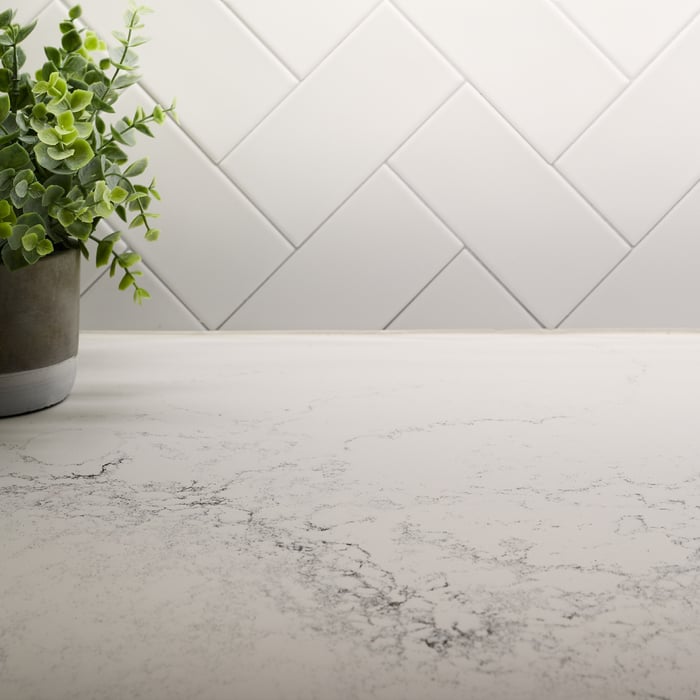
Engineered stone’s main advantage is flexibility, so use design intent—not habit—to bring out its best features.
Go matte or honed if your kitchen is especially bright or busy. These engineered stone countertop finishes help hide streaks and fingerprints, and lend warmth to open-concept spaces.
Bold, dramatic veined slabs look richest against neutral, unadorned cabinetry and classic hardware. Let the counter be the art; keep backsplash tile minimal and textured, not patterned.
Use waterfall edges or mitered aprons to strengthen a modern look without extra material weight. A clean pencil or eased edge helps soften a traditional kitchen without overwhelming the space.
Take advantage of quartz’s fabrication precision. This is particularly practical for long countertop runs, integrated drain boards, or matching slab backsplashes—seamless looks that natural stone often struggles to deliver.
Place and align seams thoughtfully. The uniformity of engineered stone means seams hide well, but keeping them out of major visual areas (like sink cutouts or island fronts) yields the most high-end result.
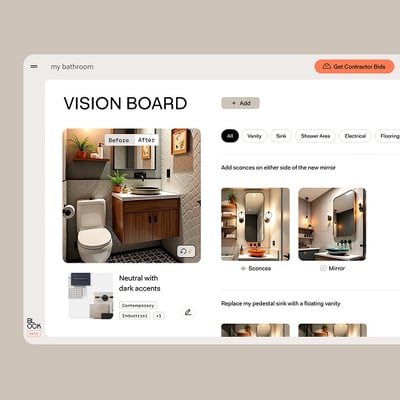
Making final countertop decisions can be paralyzing with small samples and showroom displays. Block’s Renovation Studio lets you upload your own kitchen or use a template to see engineered stone patterns, colors, and finishes applied to your exact layout. You can instantly try dozens of combinations of colors, edge shapes, and finishes. Adjust for lighting—day, night, or custom setups—to see which material is versatile and beautiful all day long. Best of all, you get live cost estimates for each choice, which supports budget realism and fast decision-making. It’s a tool that brings your ideas to life—before you invest a dime in material or labor.
A countertop only reaches its full potential when it’s templated, fabricated, and installed by detail-minded pros. Block matches homeowners with thoroughly vetted contractors experienced in engineered stone. Their experience ensures clean seams, smart edge finishing, reliable templating in out-of-square rooms, and seamless integration of sinks or specialty features. Block’s transparent communications and pricing platform puts every milestone, payment, and conversation right at your fingertips. The result: a remodel that runs to schedule, controls surprises, and produces a countertop that performs for years without regret.
Remodel with confidence through Block

Connect to vetted local contractors
We only work with top-tier, thoroughly vetted contractors

Get expert guidance
Our project planners offer expert advice, scope review, and ongoing support as needed
Enjoy peace of mind throughout your renovation
Secure payment system puts you in control and protects your remodel

Renovate confidently with Block
Easily compare quotes from top quality contractors, and get peace of mind with warranty & price protections.
Countertops
Laminate Countertops vs. Quartz: How to Choose
09.15.2026
Countertops
Kitchen Counter Overlay: Cost, Durability and More
09.13.2026
Countertops
What Color Countertops Go With Oak Cabinets?
09.01.2026
Countertops
Walnut Cabinets With White Countertops
08.24.2026
Countertops
What Color Cabinets Go With Black Granite Countertops?
08.16.2026