





Countertops
Slate Countertops vs. Granite, Quartz and Soapstone
09.20.2026
01.06.2026


In This Article
Marble is often talked about as if it’s a single material, but in reality, it’s anything but a monolith. Different types of marble vary dramatically in color, veining, density, and performance, which directly affects how they look and how they behave over time. Some marbles are soft and subtle, others bold and high-contrast, and each responds differently to wear, light, and finishes.
These differences matter in practical ways, influencing how marble performs as kitchen countertops, bathroom vanities, backsplashes, floor tiling, and more. Understanding these variations is key to choosing marble that works for both your design vision and your lifestyle, whether you’re prioritizing durability in a kitchen or visual impact in a decorative application.
Turn your renovation vision into reality
Get matched with trusted contractors and start your renovation today!
Find a Contractor
Carrara marble
Defining characteristics: Carrara marble is one of the most widely used marbles, known for its white to light gray background and soft, linear veining. Compared to more dramatic marbles, its patterning is restrained and consistent, which gives it a calm, classic appearance. Carrara is quarried in large quantities in Italy, making it more readily available than rarer marbles. Its relative abundance is the primary reason it sits at the lower end of the marble cost spectrum.
Cost range:
$40–$70 per square foot installed
Tips for decorating with Carrara marble:
Choose Carrara when you want a marble that blends rather than dominates, since its subtle veining won’t compete with cabinetry or finishes.
Pair it with warm materials like oak or walnut to offset its cool undertones and keep the space from feeling stark.
Opt for a honed finish in high-use areas, as it disguises etching and light scratches better than polished surfaces.
Use Carrara in larger surface areas, where its consistency creates a cohesive, uninterrupted look.
Keep grout lines minimal to preserve the marble’s clean, continuous appearance.
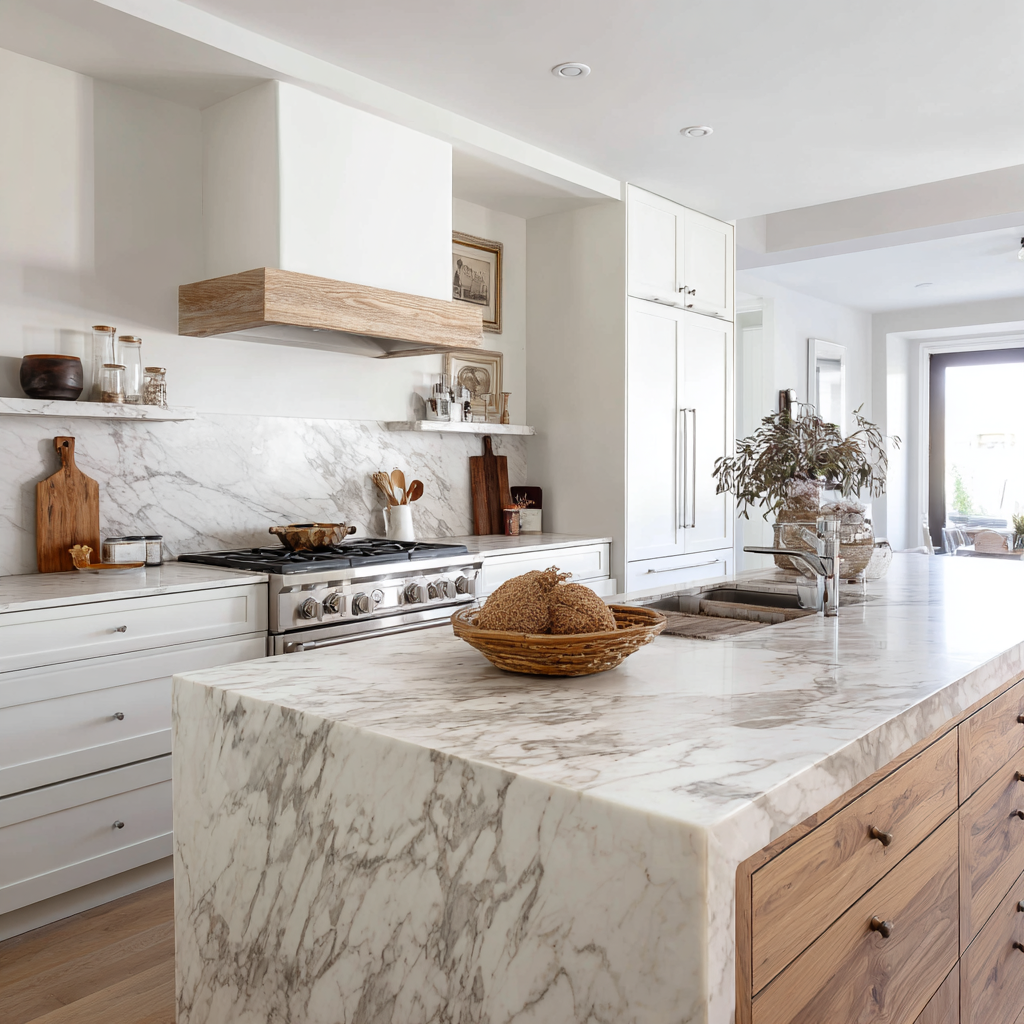
Defining characteristics: Calacatta marble features a bright white background with bold, dramatic veining that often includes gray and gold tones. Unlike Carrara, its veining is thicker, more irregular, and more visually dominant. Calacatta is quarried in smaller quantities, which makes each slab feel more distinctive. Its rarity and visual impact place it significantly above average in cost.
Cost range:
$120–$180 per square foot installed
Tips for decorating with Calacatta marble:
Use Calacatta as a focal point, since its veining is meant to be seen and appreciated.
Limit competing patterns nearby so the marble remains the visual anchor of the space.
Choose larger slabs to showcase uninterrupted veining rather than breaking it into smaller pieces.
Pair it with simple, solid-colored cabinetry to avoid visual overload.
Consider bookmatching when possible to create a symmetrical, intentional look.
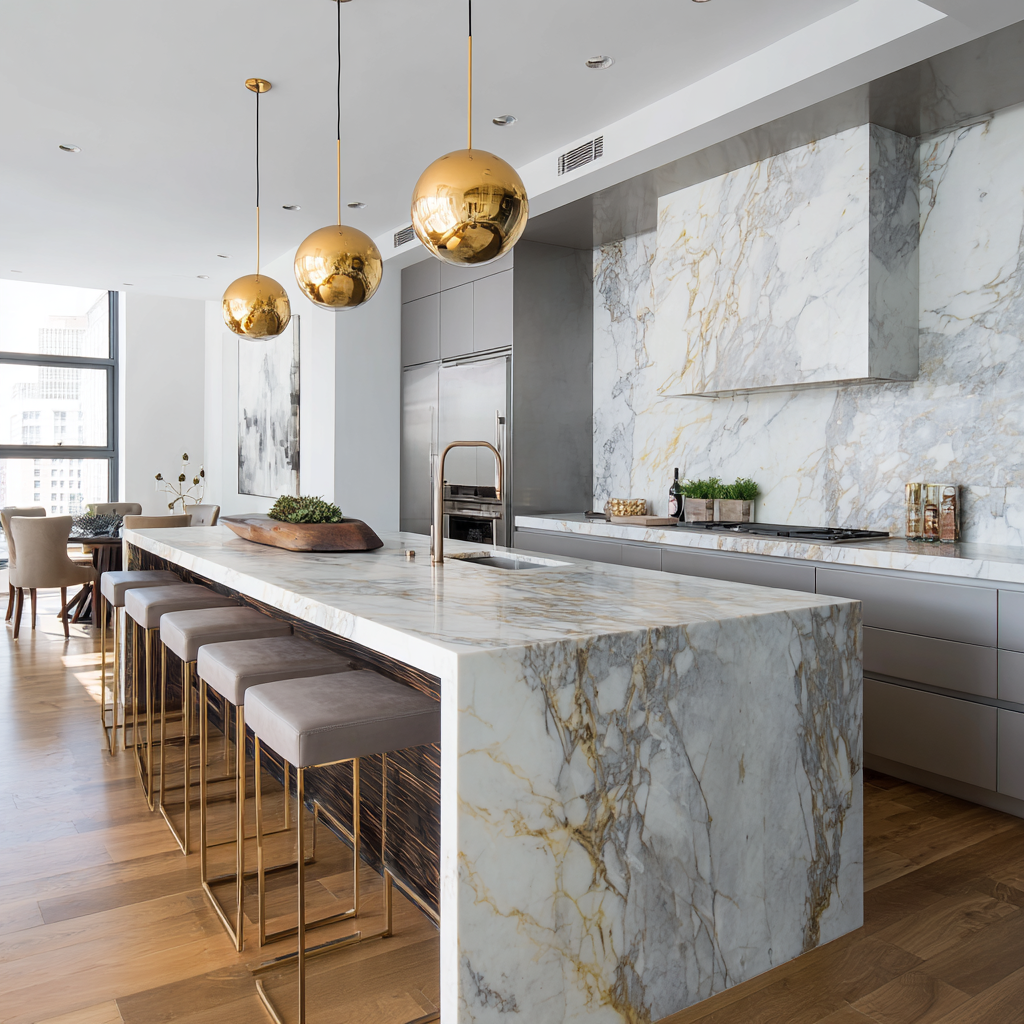
Defining characteristics: Statuario marble is prized for its crisp white background and high-contrast gray veining. It is rarer than both Carrara and Calacatta, with a more sculptural, refined appearance. The veining tends to be bold but balanced, giving it a sense of movement without chaos. Its limited availability and high demand explain why it sits at the very top of the marble price range.
Cost range:
$150–$200+ per square foot installed
Tips for decorating with Statuario marble:
Reserve Statuario for spaces where it can remain visually uncluttered and fully appreciated.
Pair it with minimal hardware and clean-lined cabinetry to emphasize its sculptural quality.
Use it in lower-traffic areas to preserve its appearance over time.
Let natural light highlight its contrast by placing it near windows or well-lit zones.
Avoid overly busy backsplashes or wall treatments nearby.
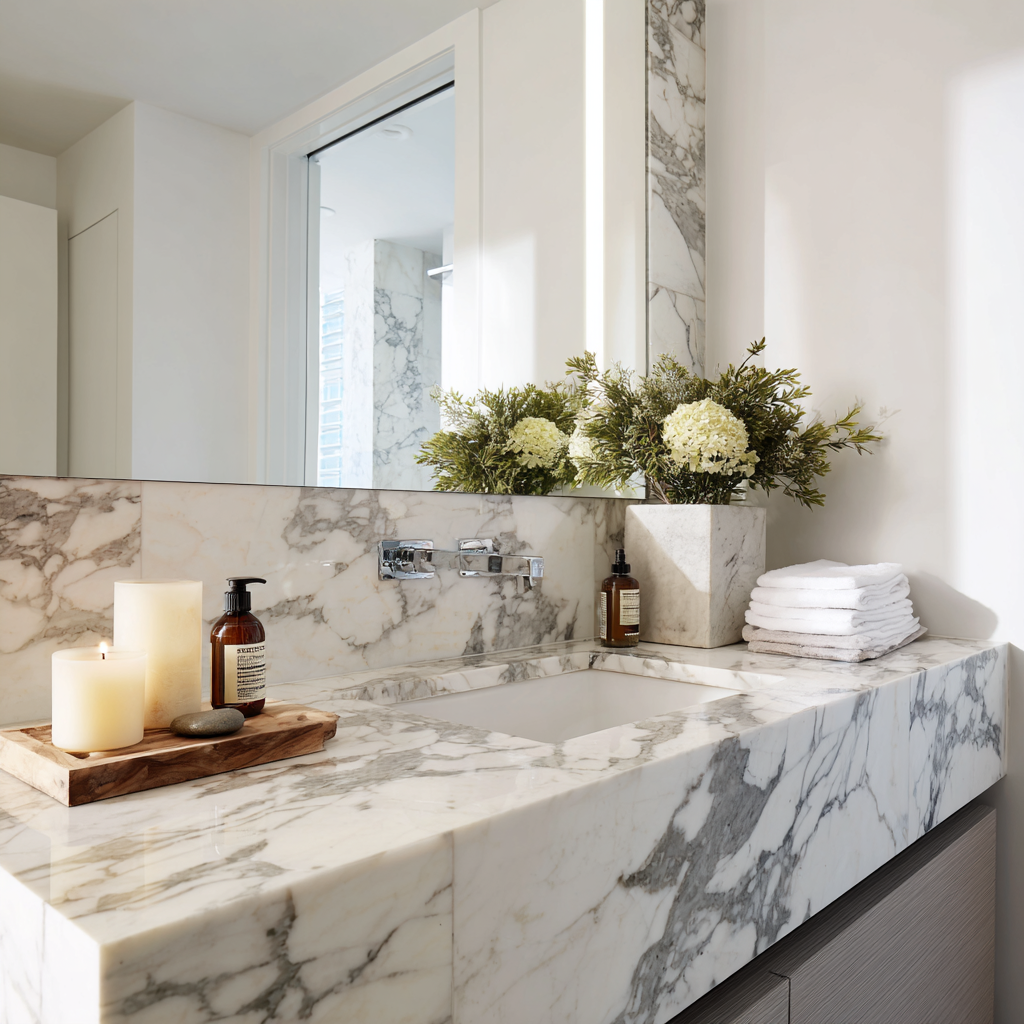
Defining characteristics: Arabescato marble is known for its swirling, expressive veining that creates a sense of movement. Its white background is typically warmer than Carrara, with darker gray patterning. Each slab feels dynamic and slightly unpredictable. Its mid-range pricing reflects both its visual complexity and moderate availability.
Cost range:
$90–$140 per square foot installed
Tips for decorating with Arabescato marble:
Use Arabescato where visual texture adds interest, such as backsplashes or accent walls.
Balance its movement with solid-colored surfaces to keep the space grounded.
Consider bookmatched layouts to turn the veining into a design feature.
Keep surrounding finishes matte to avoid competing reflections.
Let the marble dictate the palette by pulling tones from its veining.
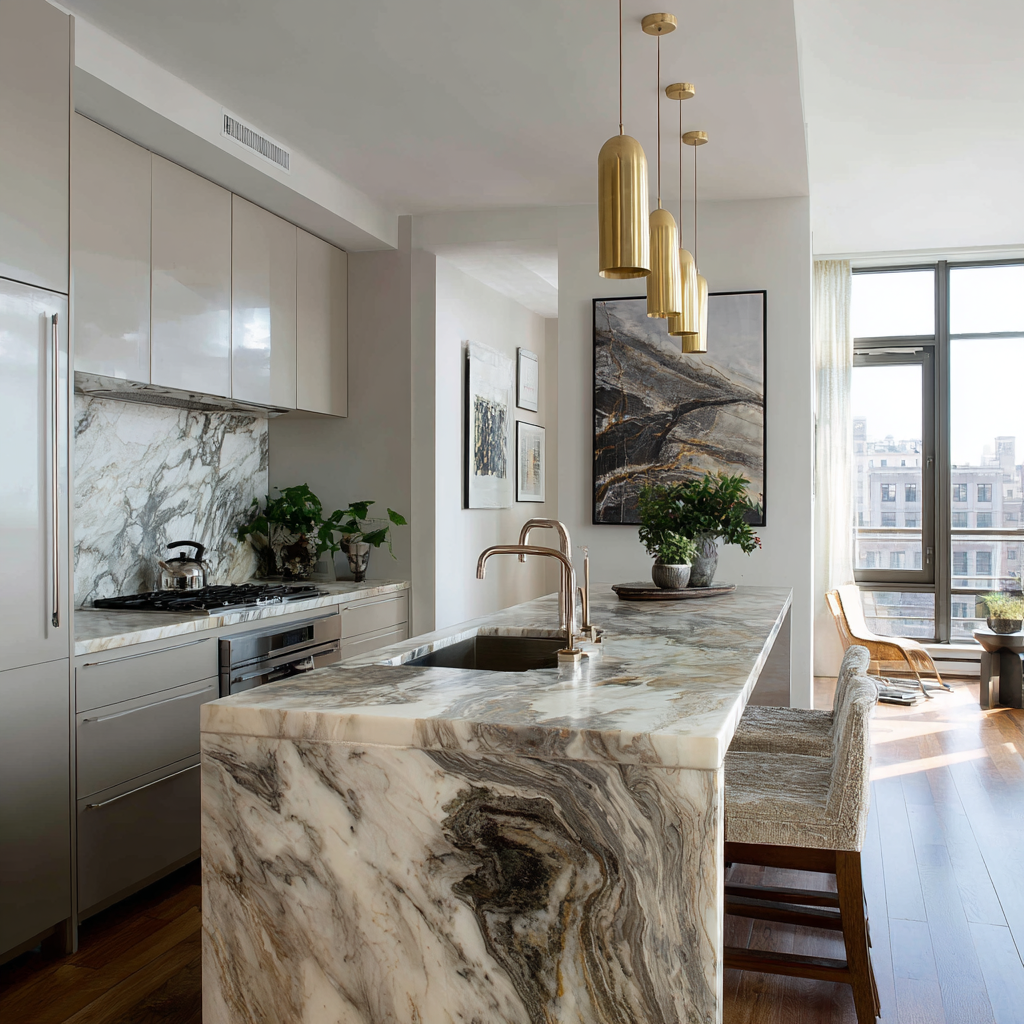
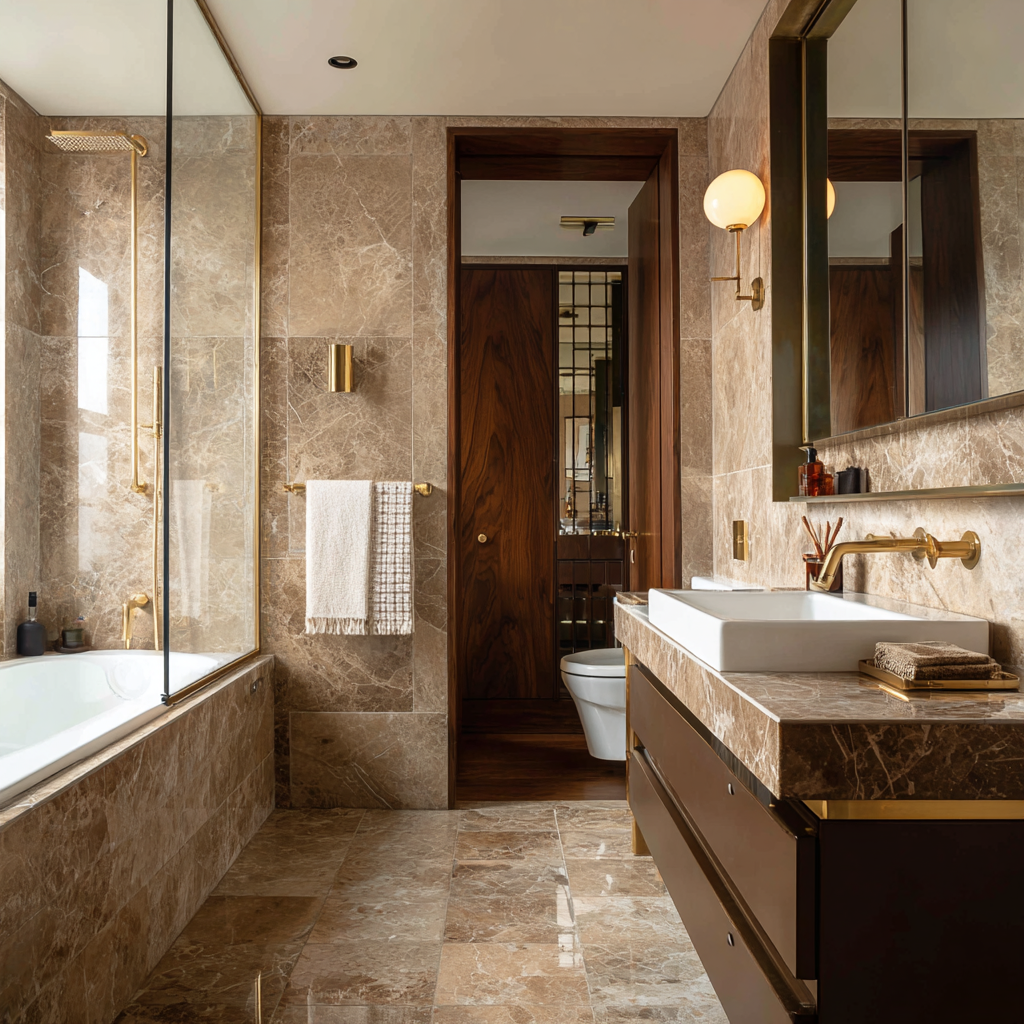
Defining characteristics: Emperador marble stands apart with its rich brown tones and lighter veining. Available in both light and dark variations, it offers warmth uncommon in marble. Its color variation tends to be more consistent across slabs. Because it’s more abundant and less trend-driven, it remains moderately priced.
Cost range:
$50–$90 per square foot installed
Tips for decorating with Emperador marble:
Use Emperador to add warmth to spaces that feel overly cool or neutral.
Pair it with brass or bronze finishes to enhance its richness.
Use strategic lighting to bring out depth and variation in the stone.
Avoid overly dark rooms, where its tones may feel heavy.
Balance it with lighter surfaces to maintain contrast.
Defining characteristics: Nero Marquina marble features a deep black background with sharp white veining. The contrast is bold and graphic, making it visually striking even in small applications. Its dramatic appearance makes it popular for statement pieces rather than large expanses. Its mid-range cost reflects steady availability and high demand.
Cost range:
$70–$110 per square foot installed
Tips for decorating with Nero Marquina marble:
Use it sparingly so its contrast feels intentional rather than overwhelming.
Pair it with lighter stones or finishes to maintain visual balance.
Choose honed finishes if you want a softer, more contemporary look.
Emphasize clean lines to complement its graphic nature.
Ensure adequate lighting to prevent the surface from feeling flat.
Choosing marble works best when you match the stone to both your design goals and how the space will actually be used. Different marbles excel for different reasons, from cost and durability to visual impact.
Best type of marble for budget renovations: Carrara marble is the most accessible option for budget-focused projects. Its wide availability keeps material costs lower, and its softer veining reduces the need for highly selective slab sourcing. Carrara also works well across many styles, which helps avoid additional design costs.
Best type of marble for statement features: Calacatta marble is ideal for statement applications where the stone is meant to command attention. Its bold veining and bright background create strong visual contrast, even in smaller installations. Using it selectively—on an island, backsplash, or feature wall—maximizes impact without requiring large quantities.
Best type of marble for traditional design themes: Statuario marble fits naturally into traditional and classic interiors. Its balanced veining and refined appearance pair well with detailed cabinetry, molding, and heritage finishes. This marble feels formal without being overly ornate, which helps it age gracefully.
Best type of marble for contemporary style: Nero Marquina marble works well in contemporary spaces that favor contrast and clean lines. Its black background and crisp veining create a graphic effect that complements modern layouts. Used thoughtfully, it adds drama without relying on excess detail.
Best type of marble for low maintenance: Honed Carrara or Arabescato marble tends to perform best for homeowners prioritizing ease of care. Honed finishes disguise etching and surface wear better than polished ones. Choosing marbles with more movement also helps conceal everyday marks over time.
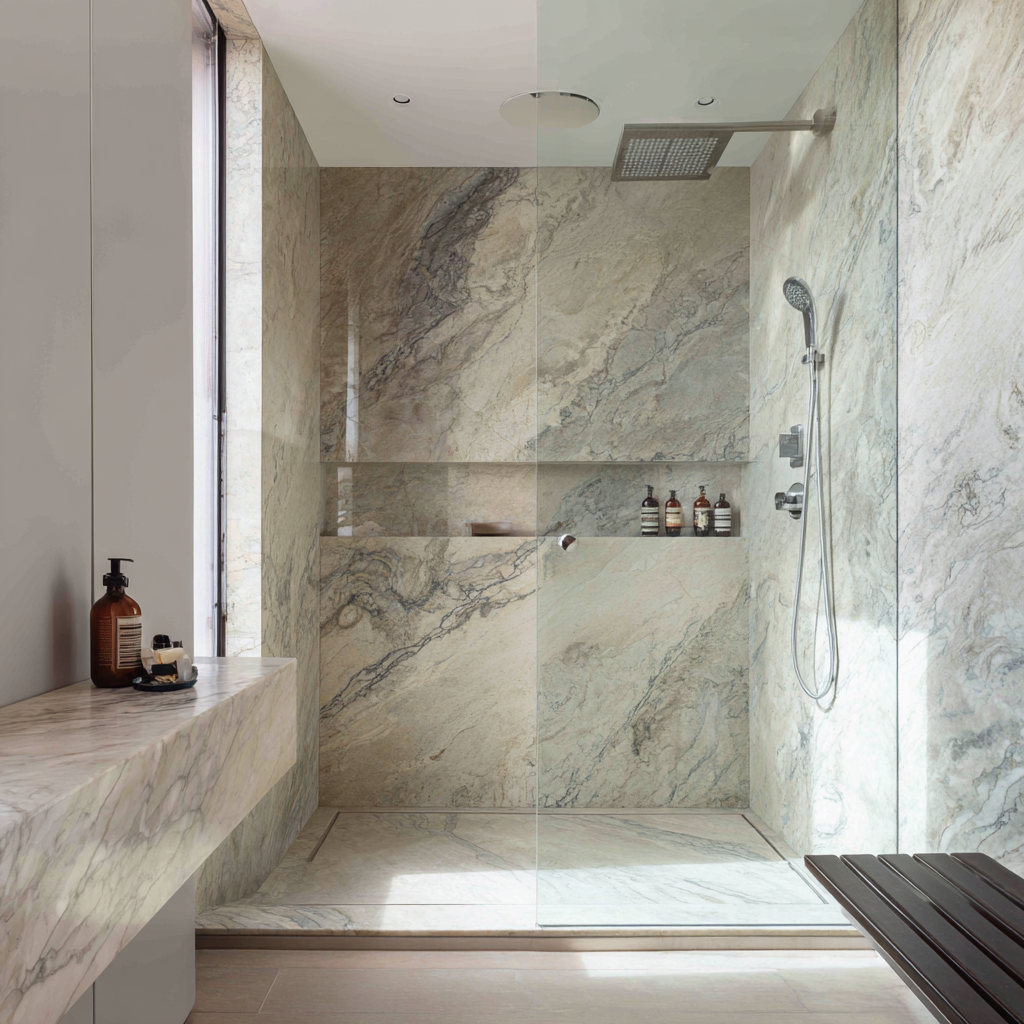
Marble performs best when it’s treated as a feature, not just a surface. Thoughtful context and restraint allow its natural beauty to stand out.
Limit surrounding patterns so the stone remains the focal point.
Use directional lighting to highlight veining and surface texture.
Choose finishes deliberately, as polish versus honed changes how light interacts with the stone.
Keep edges and detailing clean to avoid distracting from the material itself.
Allow negative space around marble installations to give them visual breathing room.
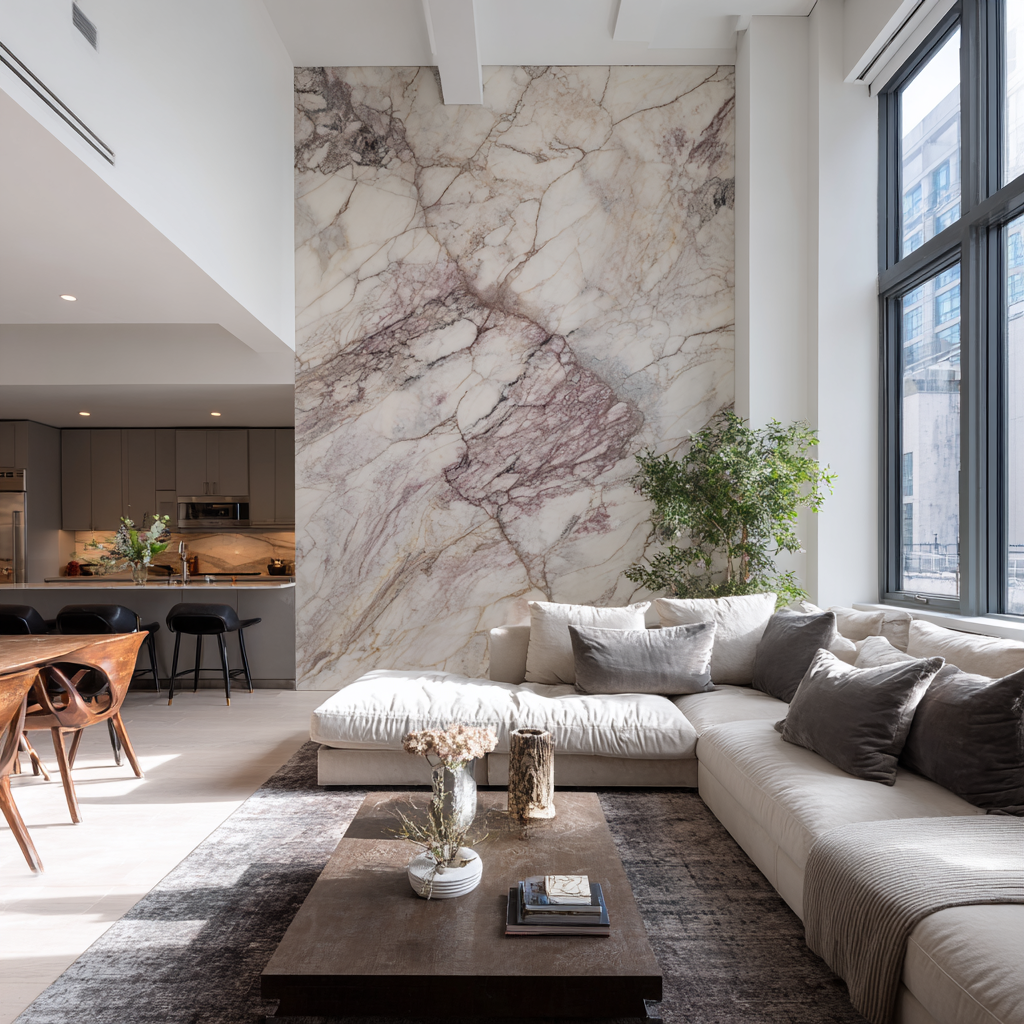
Seeing marble in context makes selection easier and more confident. Renovation Studio allows you to compare different marble types within kitchens, bathrooms, and other spaces. Visualizing scale and contrast helps avoid surprises during installation. This step is especially useful when working with high-variation stone. Explore Renovation Studio now.
Choosing marble is only part of the equation. Proper fabrication, installation, and sealing all affect long-term performance. Block Renovation connects homeowners with vetted professionals who understand how to work with natural stone. Clear planning and execution help ensure your marble looks as good years later as it does on day one.
Remodel with confidence through Block

Connect to vetted local contractors
We only work with top-tier, thoroughly vetted contractors

Get expert guidance
Our project planners offer expert advice, scope review, and ongoing support as needed
Enjoy peace of mind throughout your renovation
Secure payment system puts you in control and protects your remodel


Renovate confidently with Block
Easily compare quotes from top quality contractors, and get peace of mind with warranty & price protections.
Countertops
Slate Countertops vs. Granite, Quartz and Soapstone
09.20.2026
Countertops
Laminate Countertops vs. Quartz: How to Choose
09.15.2026
Countertops
Kitchen Counter Overlay: Cost, Durability and More
09.13.2026
Countertops
What Color Countertops Go With Oak Cabinets?
09.01.2026
Countertops
Walnut Cabinets With White Countertops
08.24.2026