



Countertops
What Color Cabinets Go With Black Granite Countertops?
08.16.2026
02.04.2026


In This Article
Countertops are one of those decisions that quietly shapes your entire kitchen experience. You'll interact with them every single day—prepping meals, setting down groceries, gathering with family—so getting the right fit matters more than you might think.
Two materials that often come up in budget-conscious renovations are solid surface and laminate. Both offer practical benefits, and both have their limitations. Understanding how they compare on durability, maintenance, cost, and aesthetics helps you make a choice that supports both your vision and your budget.
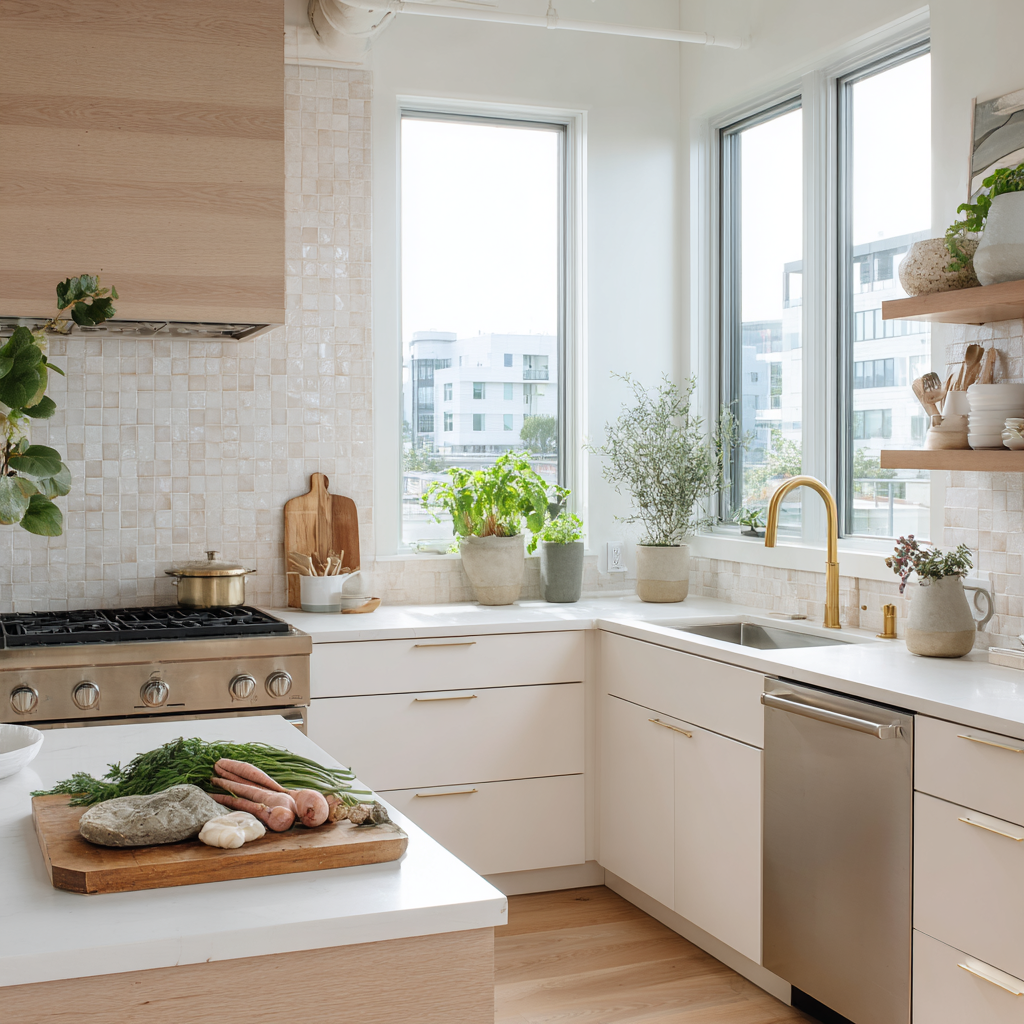
Solid surface countertops are manufactured from acrylic or polyester resins mixed with mineral fillers. The material is non-porous, and the color runs all the way through—scratch it, and you're not exposing a different layer underneath. Brands like Corian have been around since the 1960s and remain popular for their clean, seamless look and repairability.
Laminate countertops are made by bonding layers of kraft paper with resin, then applying a decorative surface layer over a particle board core. It's affordable, versatile, and available in hundreds of colors and patterns. Modern laminate has improved dramatically from earlier generations, with options that mimic stone, concrete, or wood grain—though the decorative layer is thin, so deep scratches expose the core underneath.
|
Feature |
Solid Surface |
Laminate |
|
Cost (installed) |
$50–$100 per sq ft |
$20–$50 per sq ft |
|
Lifespan |
20+ years |
10–20 years |
|
Heat resistance |
Moderate (use trivets) |
Low (always use trivets) |
|
Repairability |
Can be sanded/buffed |
Damage is permanent |
|
Seams |
Nearly invisible |
Visible |
|
Maintenance |
Low (no sealing needed) |
Low (avoid abrasives) |
|
Aesthetic |
Clean, contemporary |
Wide range of patterns |
Solid surface holds up well to the chaos of daily cooking. Minor scratches and burns can be sanded out by a professional, and because the material is consistent throughout, repairs blend in. Deeper damage takes more work, but it's fixable. Expect solid surface to last 20 years or more.
Laminate is less forgiving. Sharp knives cut through the decorative layer. Hot pans can scorch or bubble the surface. Once damaged, you're stuck with it—there's no sanding down laminate. It can last 10 to 20 years, but it tends to show its age faster, especially in kitchens that get heavy use.
Winner: Solid surface
Solid surface needs soap and water or a mild cleaner for daily upkeep. Tougher stains can handle a slightly abrasive pad. No sealing required, and spills won't penetrate if you wipe them up with reasonable speed. This is one of the best countertop options for an easy to clean kitchen.
Laminate is also easy to clean, but you need to watch your methods. Abrasive scrubbers dull the finish. Standing water along seams swells the particle board core, so keeping edges dry matters. Never cut directly on laminate—cutting boards aren't optional.
Both handle everyday messes fine, but solid surface gives you more room for error.
Winner: Solid surface
Laminate is one of the most budget-friendly countertop materials you can choose. Installed costs run between $20 and $50 per square foot, depending on the brand and finish. If you're working with a tight budget, laminate delivers visual variety without financial strain.
Solid surface sits in the mid-range at $50 to $100 per square foot installed. That's more than laminate but significantly less than natural stone or engineered quartz. The ability to repair damage and create seamless installations can justify the price difference for many homeowners.
Installation complexity affects pricing for both materials. Custom edges, integrated sinks, or intricate layouts add to the total regardless of which option you choose.
Winner: Laminate
Solid surface offers a smooth, uniform appearance with a wide range of colors and subtle patterns. The material can be thermoformed into curved shapes or custom configurations, and seams are nearly invisible when installed correctly. If you're drawn to a minimalist or contemporary look, solid surface delivers that clean, uninterrupted style.
Laminate's design range is broader. You can find options mimicking marble, granite, butcher block, or concrete—sometimes convincingly, sometimes less so. The key is seeing samples in person and under different lighting. What looks great online might read as artificial in your actual kitchen. Laminate seams are visible, which can interrupt the flow of your design.
Winner: Tie (depends on your aesthetic priorities)
Solid surface has moderate heat resistance, but hot pots and pans can still cause damage. Trivets or hot pads remain necessary. If you do accidentally scorch the surface, a professional can often sand it out.
Laminate has lower heat tolerance. Direct contact with hot cookware causes discoloration, bubbling, or delamination—and those issues can't be repaired. Always use trivets, and stay vigilant when moving hot items around your kitchen.
Neither material handles impacts as well as stone. Dropping a heavy pot can cause damage to both, though solid surface chips can sometimes be repaired.
Winner: Solid surface
Perfect Every Detail of Your Bathroom

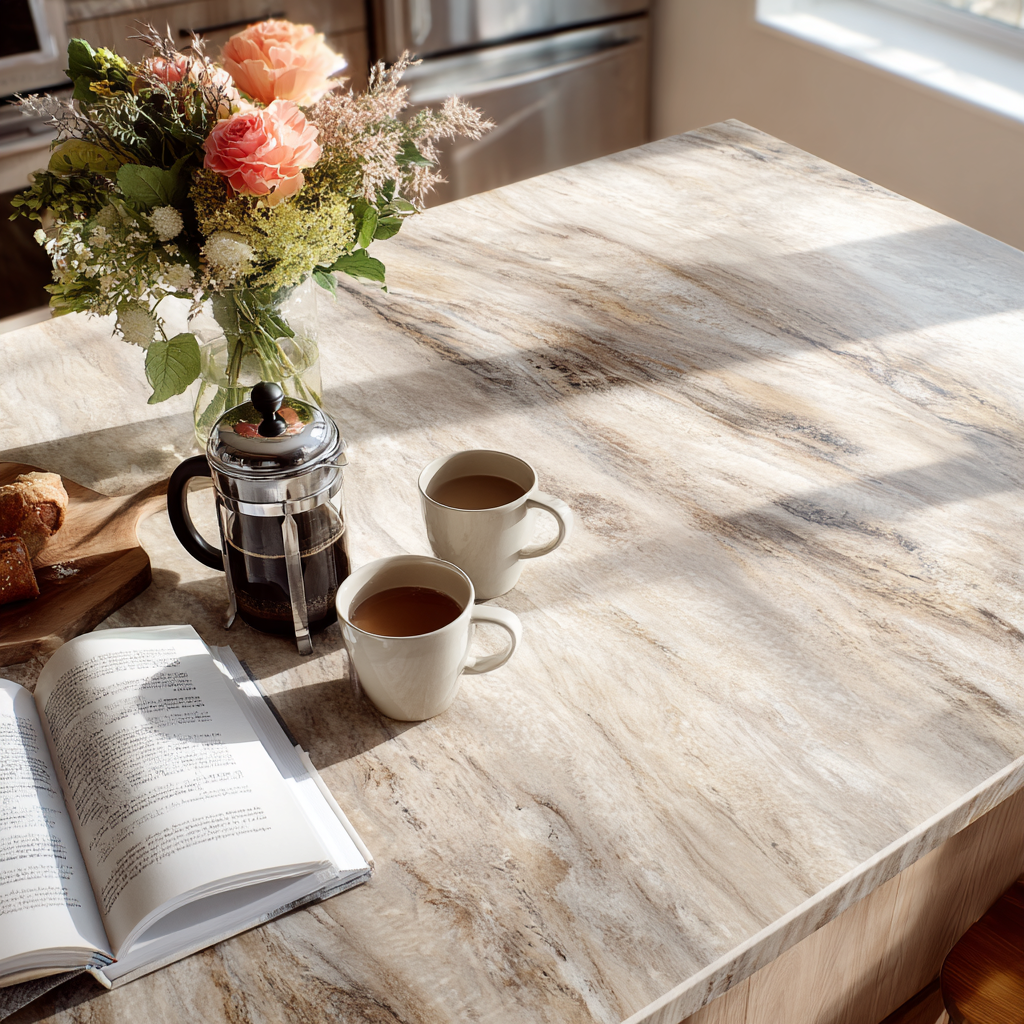
The strongest countertop decisions come from seeing how your choice actually looks in your space—not just on a sample chip under fluorescent lighting.
Use Block's free Renovation Studio to visualize how countertop materials in your actual kitchen layout. You can switch between solid surface and laminate, compare how each affects your budget in real time, and see which option delivers the look you're after. The tool shows you instant cost estimates as you make changes, so you understand exactly what you're committing to before any contractor sets foot in your home.
Once you've landed on your countertop choice, Block connects you with thoroughly vetted local contractors who understand how to install your selected material correctly. We match you with up to four licensed, insured professionals based on your project scope, location, and style preferences.
You'll receive detailed proposals that break down every cost—demolition, materials, installation, and finishing work. Our project planners help you compare bids side by side, flag any missing line items, and make sure you're getting fair pricing. From there, Block's progress-based payment system and built-in protections keep your project moving smoothly from first demo to final walkthrough.
Remodel with confidence through Block

Connect to vetted local contractors
We only work with top-tier, thoroughly vetted contractors

Get expert guidance
Our project planners offer expert advice, scope review, and ongoing support as needed

Enjoy peace of mind throughout your renovation
Secure payment system puts you in control and protects your remodel

Renovate confidently with Block
Easily compare quotes from top quality contractors, and get peace of mind with warranty & price protections.
Countertops
What Color Cabinets Go With Black Granite Countertops?
08.16.2026
Countertops
Green Cabinets With Butcher Block: 12 Design Ideas
08.10.2026
Countertops
Recycled Glass Countertops: Cost, Durability & More
08.06.2026

Countertops
Cheapest Countertop Materials That Still Last
07.17.2026

Countertops
Unique Kitchen Countertop Ideas: Alternatives to Boring
05.22.2026