




Kitchen
50k Kitchen Remodel: What $50,000 to $60,000 Buys
09.21.2026
12.23.2025


Transitional kitchens blend the warmth and detail of classic design with the clean lines and relaxed feel of modern style. This approach feels both inviting and current—featuring subtle color palettes, balanced proportions, mixed textures, and just enough decorative detail to give each space personality without feeling cluttered or ornate.
Transitional kitchens stand out for their flexibility, making them an ideal choice if you want timeless appeal that works with your changing tastes and the way real people live.
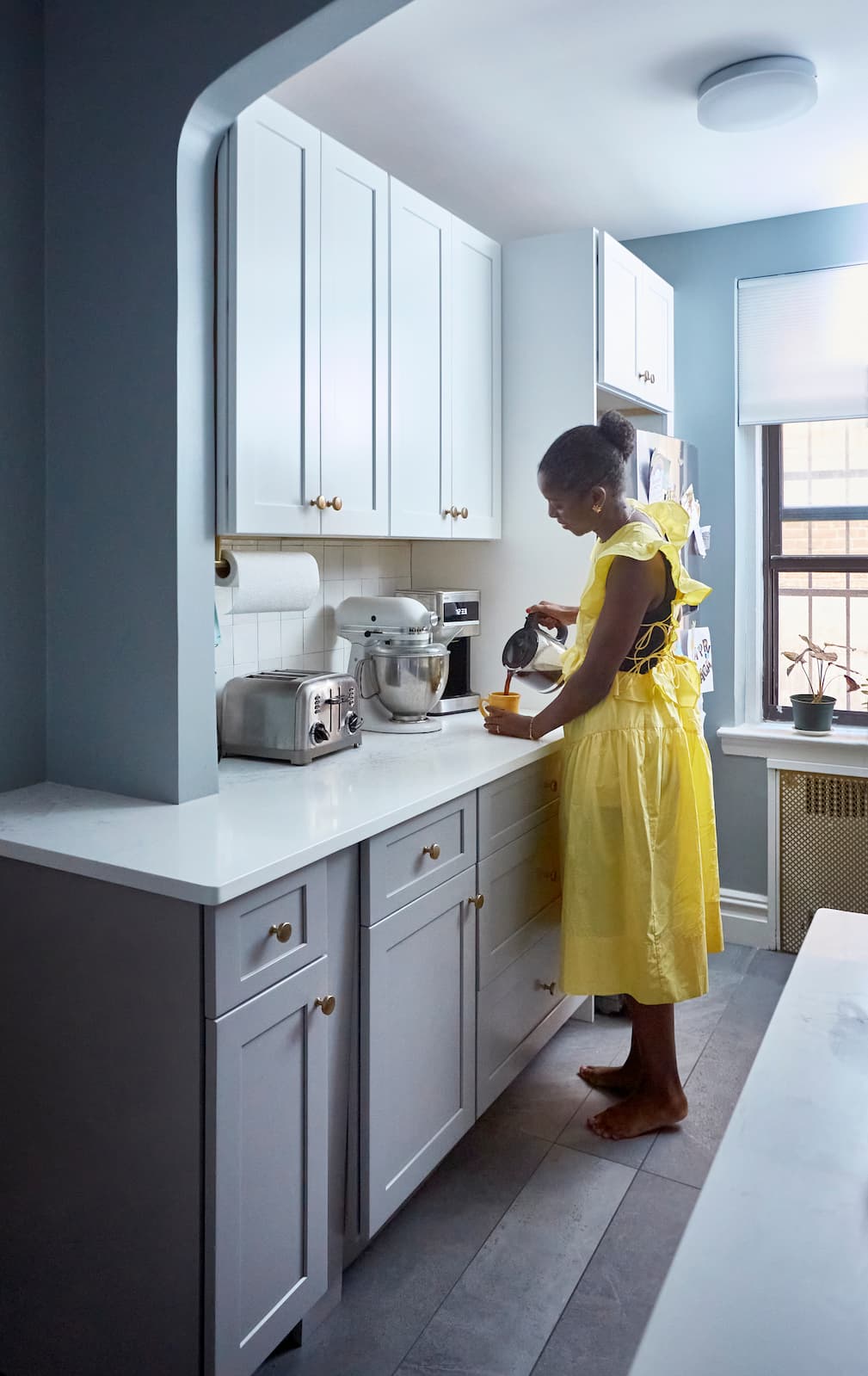
Soft whites, pale grays, or subtle greige tones can help your transitional kitchen feel open and serene, forming a versatile base for changing trends. These shades work especially well in smaller spaces, lending an airy, uncluttered mood that welcomes natural light. Layer natural textures into the transitional design—like wood or stone—to keep your kitchen from feeling sterile.
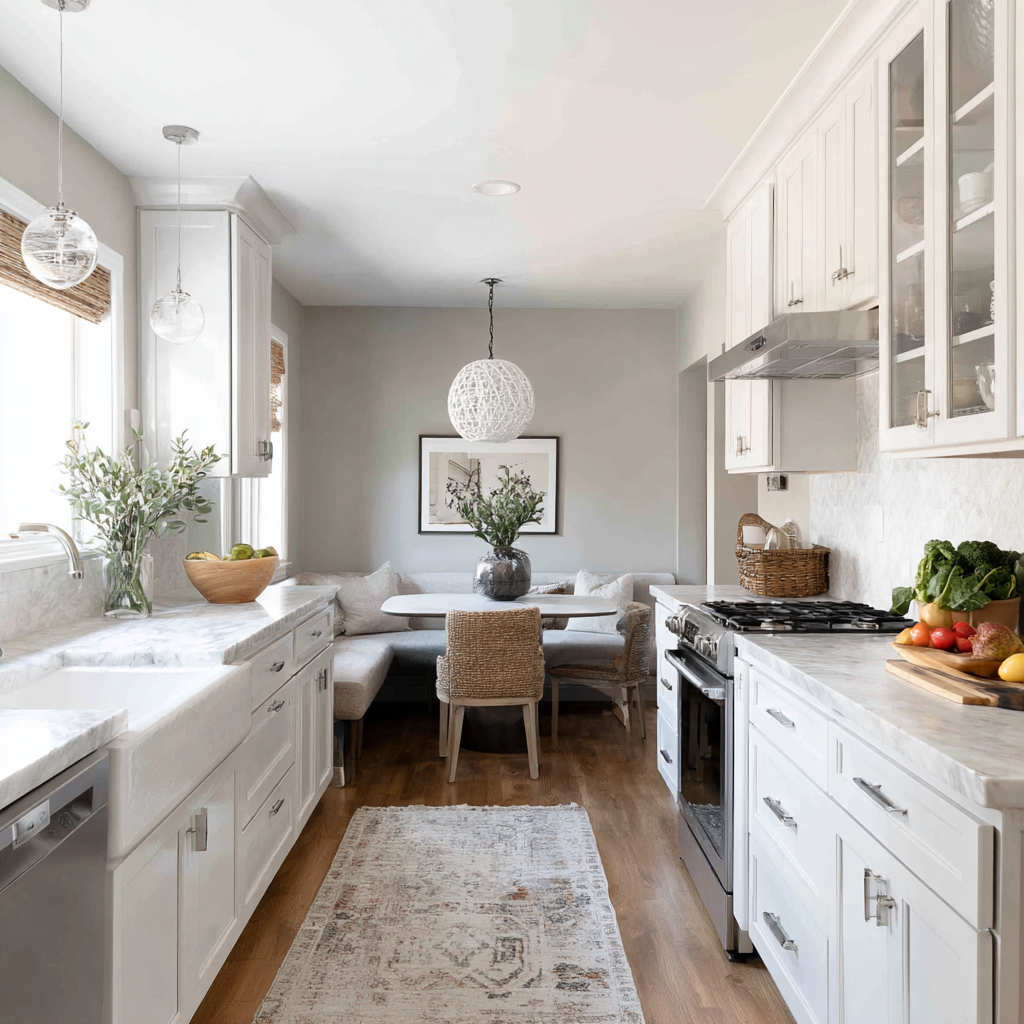
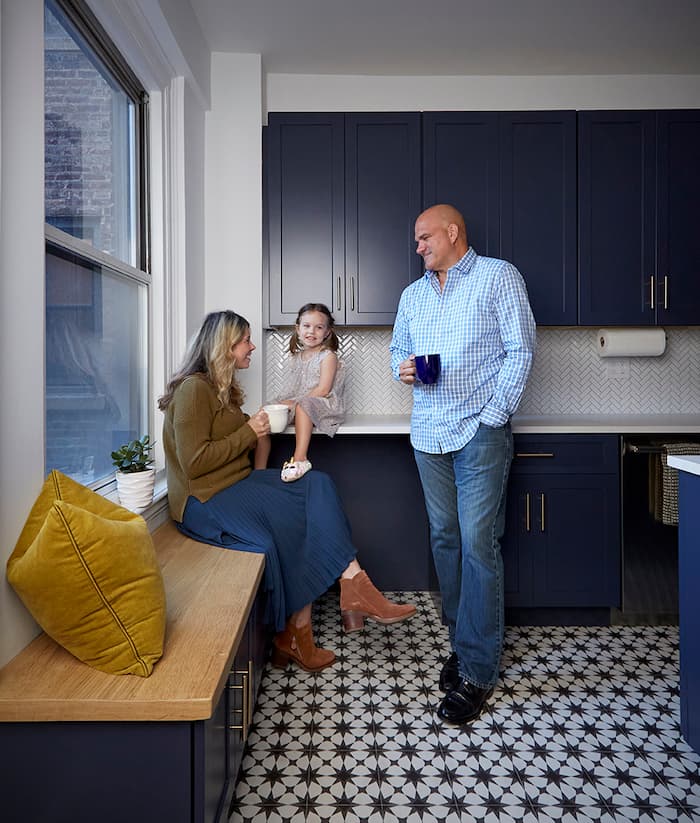
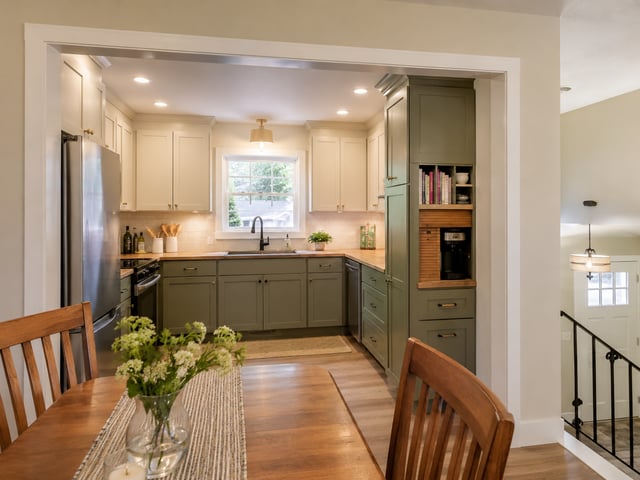
A two-tone approach—pairing lighter upper cabinets with deeper base cabinets—adds interest and a modern twist to classic transitional kitchen design. Try navy or deep green lowers and crisp white uppers for contrast that feels both sophisticated and timeless. This look lets you play with color while staying true to the seamless spirit of transitional kitchens. For more inspiration, check out our guide to Mixing Natural Wood and Painted Kitchen Cabinets.
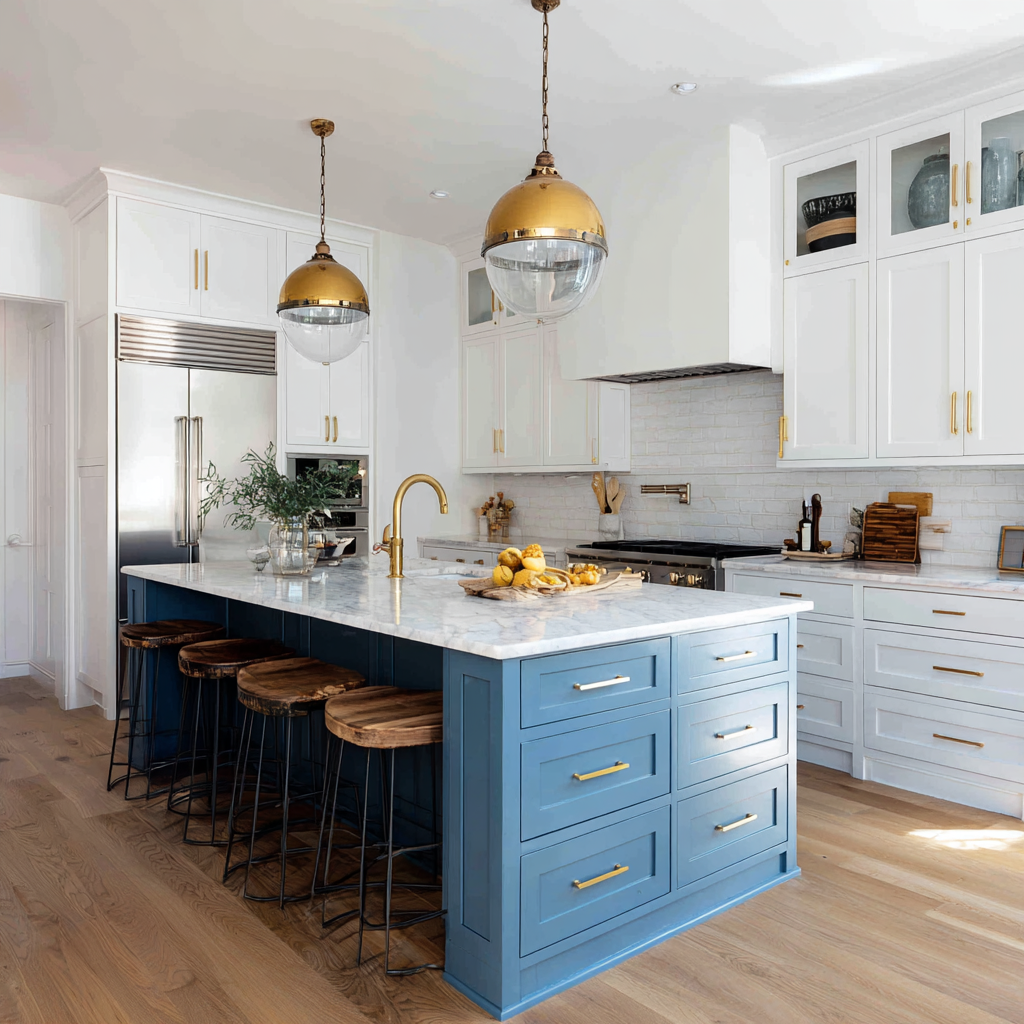
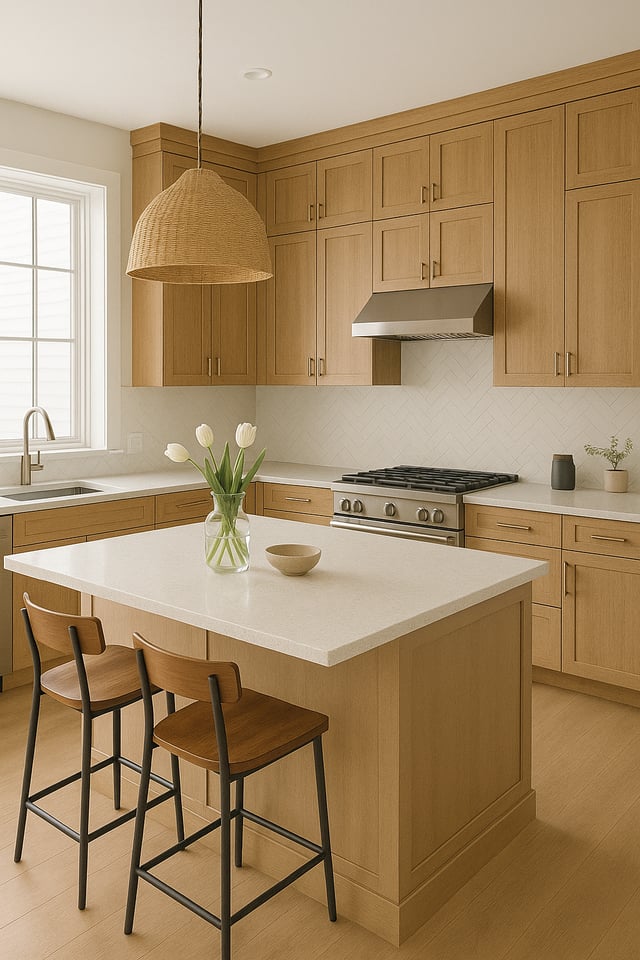
Blending white cabinetry with warm wood shelving or counters adds depth and a cozy, approachable feel. This pairing works across many design eras, bridging contemporary lines with natural character. Introduce wood on open shelves, a butcher block island, or even flooring for an inviting effect.
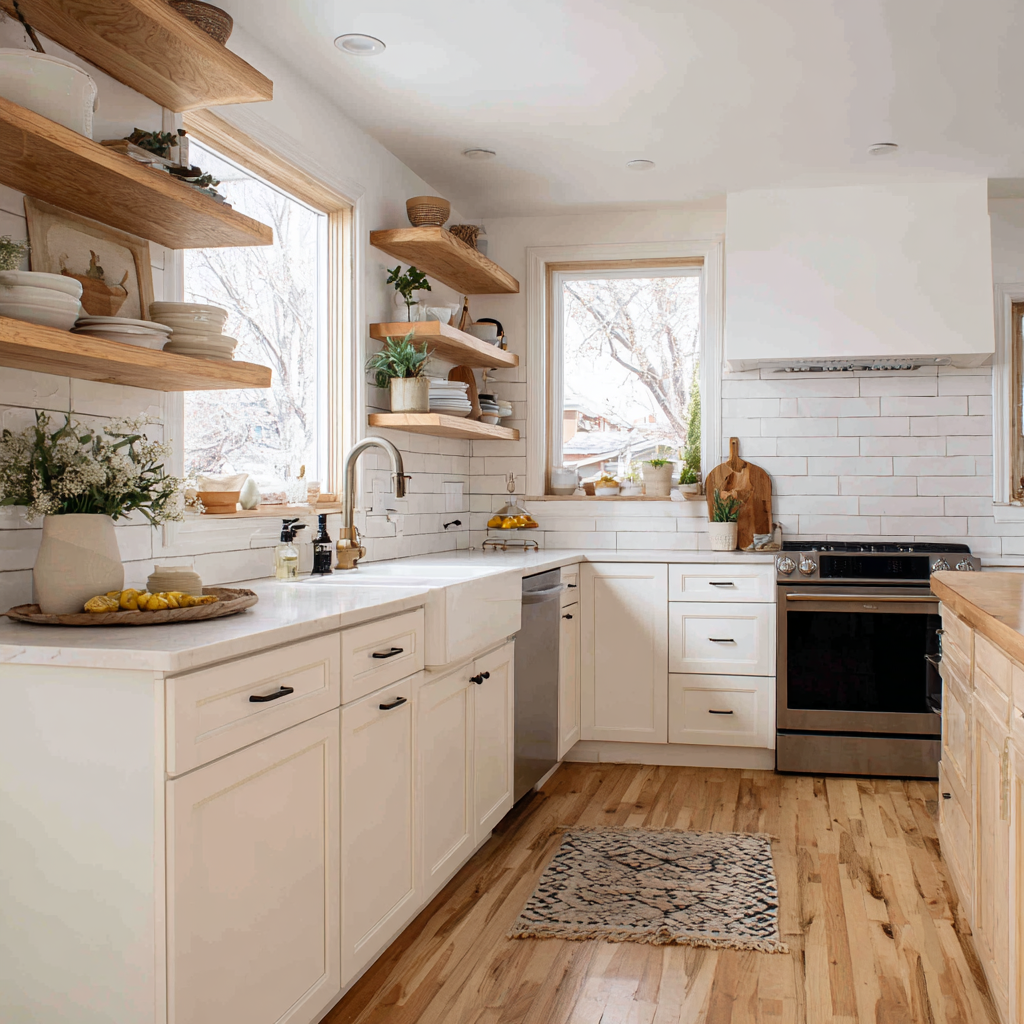
Shaker cabinets—with their clean lines and simple paneling—act as a perfect backdrop for both traditional and modern kitchen decor. They pair easily with almost any countertop, hardware, or backsplash, making future updates a breeze. Their versatility is a defining feature of transitional design.
.png?width=1024&height=1024&name=u5821215421_a_transitional_kitchen_with_white_shaker_cabinets_803dae9f-7ea8-405a-b5ce-dfbef9d5ac8f_2%20(1).png)
Glass-front upper cabinets lighten up a transitional kitchen design and give you space to display beautiful dishes, glassware, or decoration. They keep the kitchen feeling open and help break up long stretches of solid cabinetry. Consider using them for just a few upper cabinets or a dedicated hutch area.
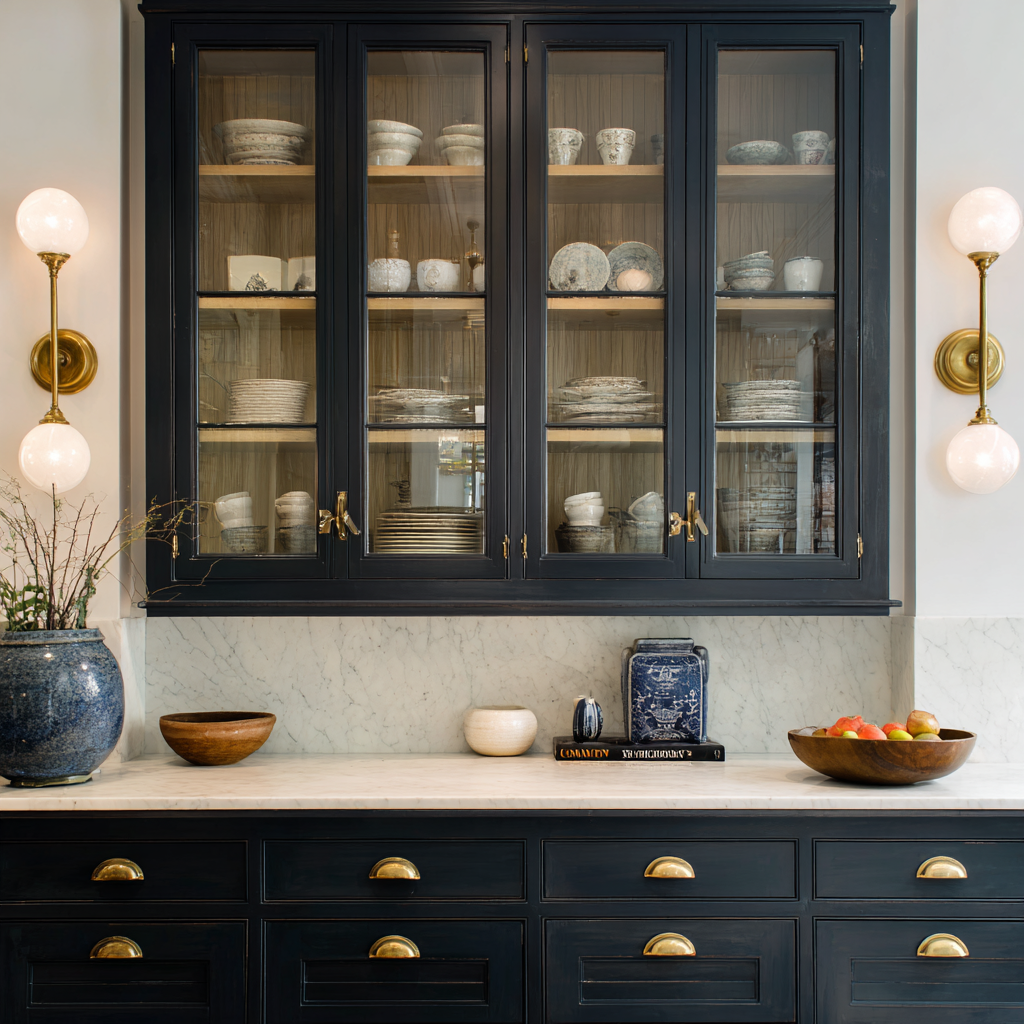
Pendant lighting above an island or dining area makes any kitchen feel more inviting while acting as a subtle statement piece. Choose clear glass, brushed metals, or natural materials for fixtures that feel understated but special. In transitional spaces, elegant pendants bridge the gap between traditional and modern.
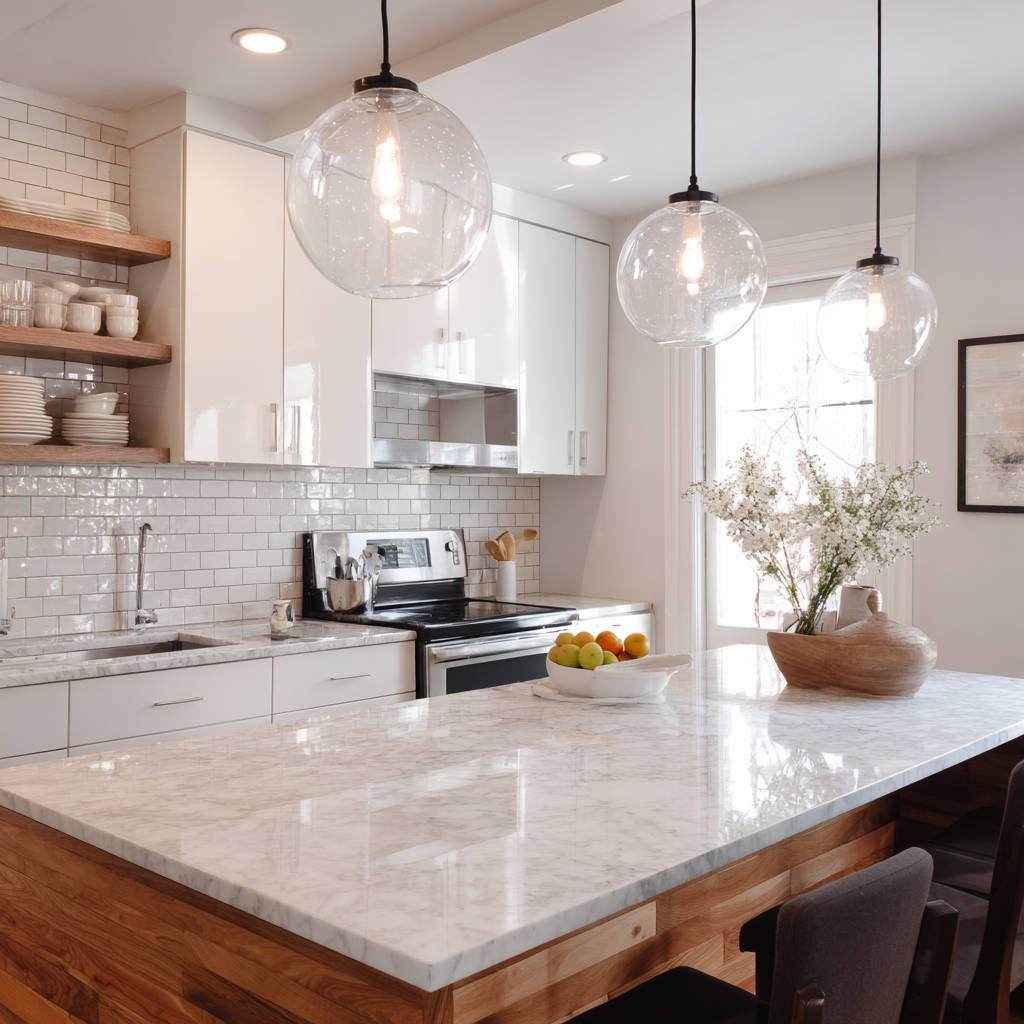
Recessed ceiling lights provide even illumination and keep the kitchen feeling open and streamlined. This lighting layer minimizes visual clutter, supplementing pendants or under-cabinet lighting for task zones. It's a favorite solution in open-concept transitional kitchens where simplicity is key.
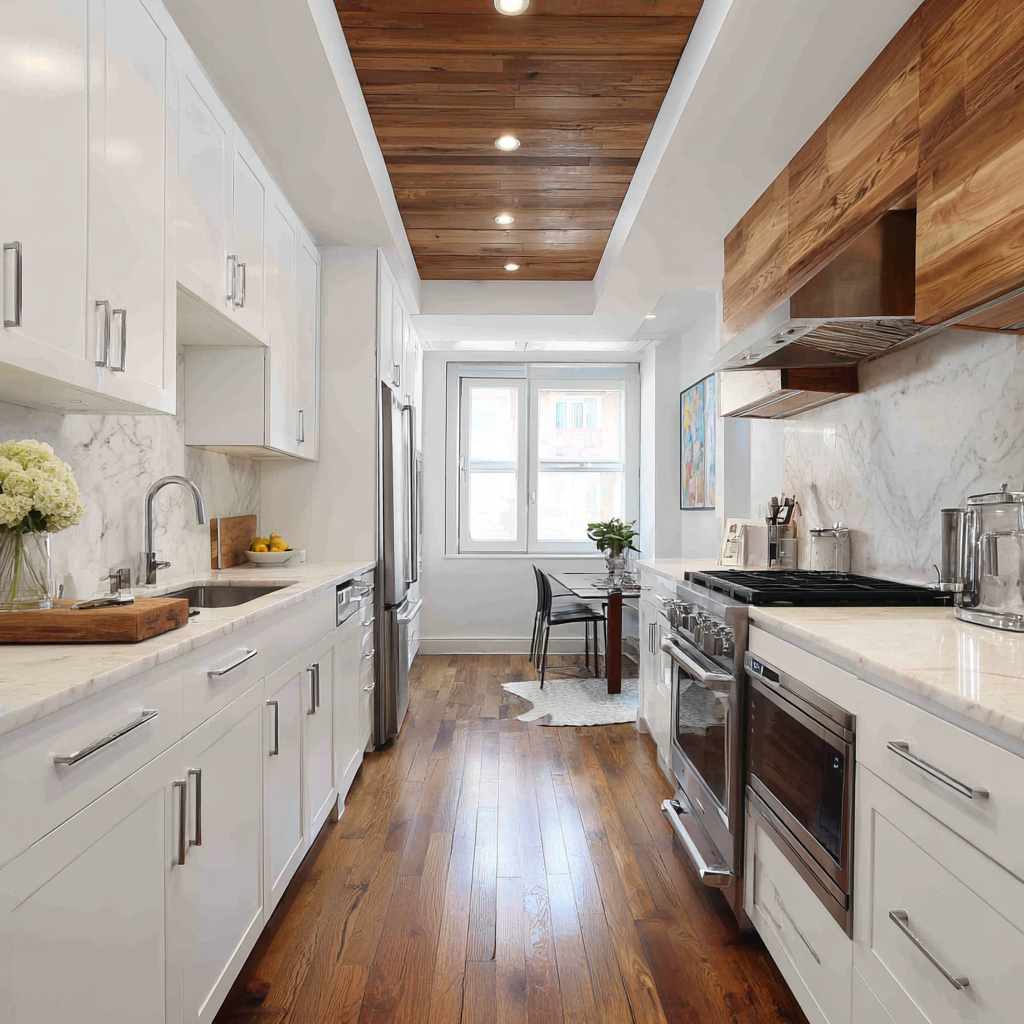
Wide-plank oak or maple floors ground your design and are as comfortable as they are timeless. The natural grain and warmth of real wood complement both classic and modern cabinets. Hardwood floors add enduring value and pair effortlessly with area rugs or runners for added comfort.
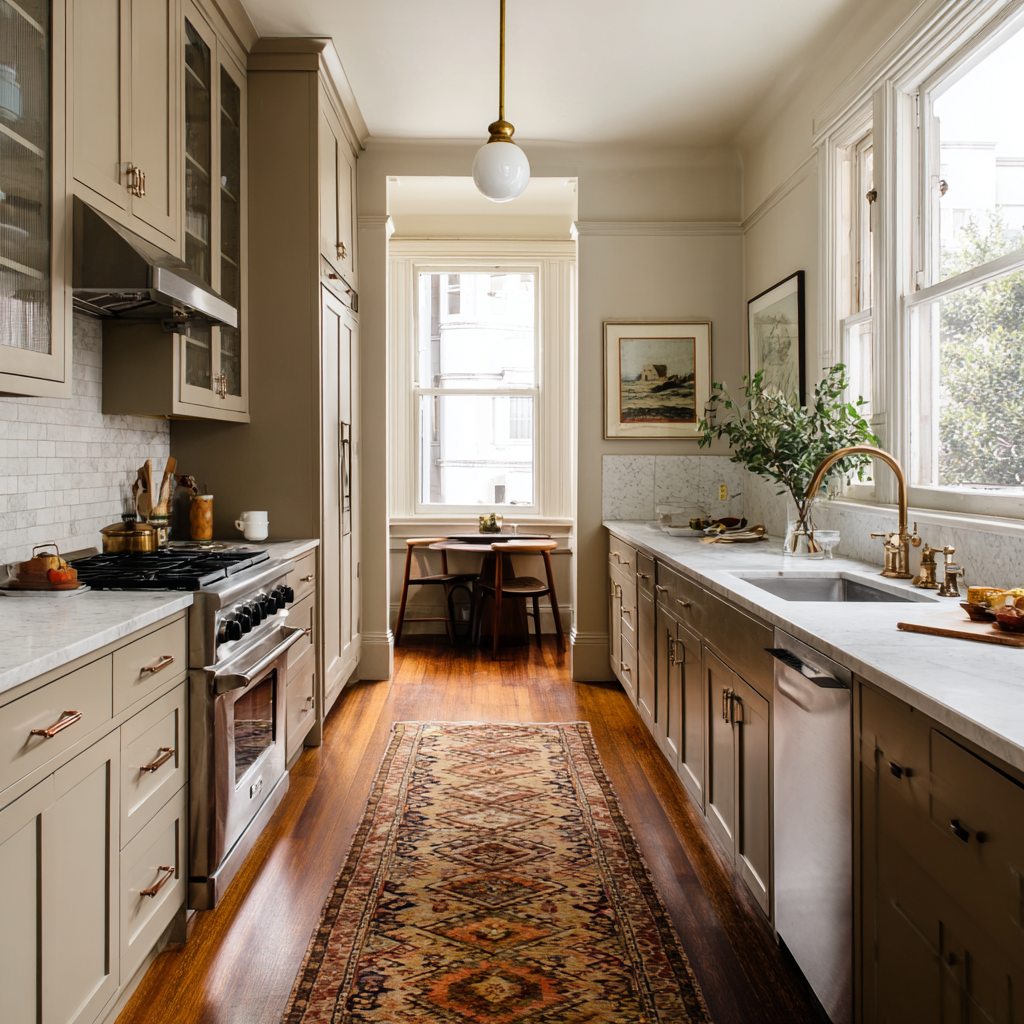
LVP flooring emulates the look of natural wood but is highly durable and resilient, perfect for families and busy kitchens. It resists scratching and moisture, so your transitional kitchen keeps its elegant look with less worry. Choose wide planks and a subtle grain for a modern yet welcoming base.
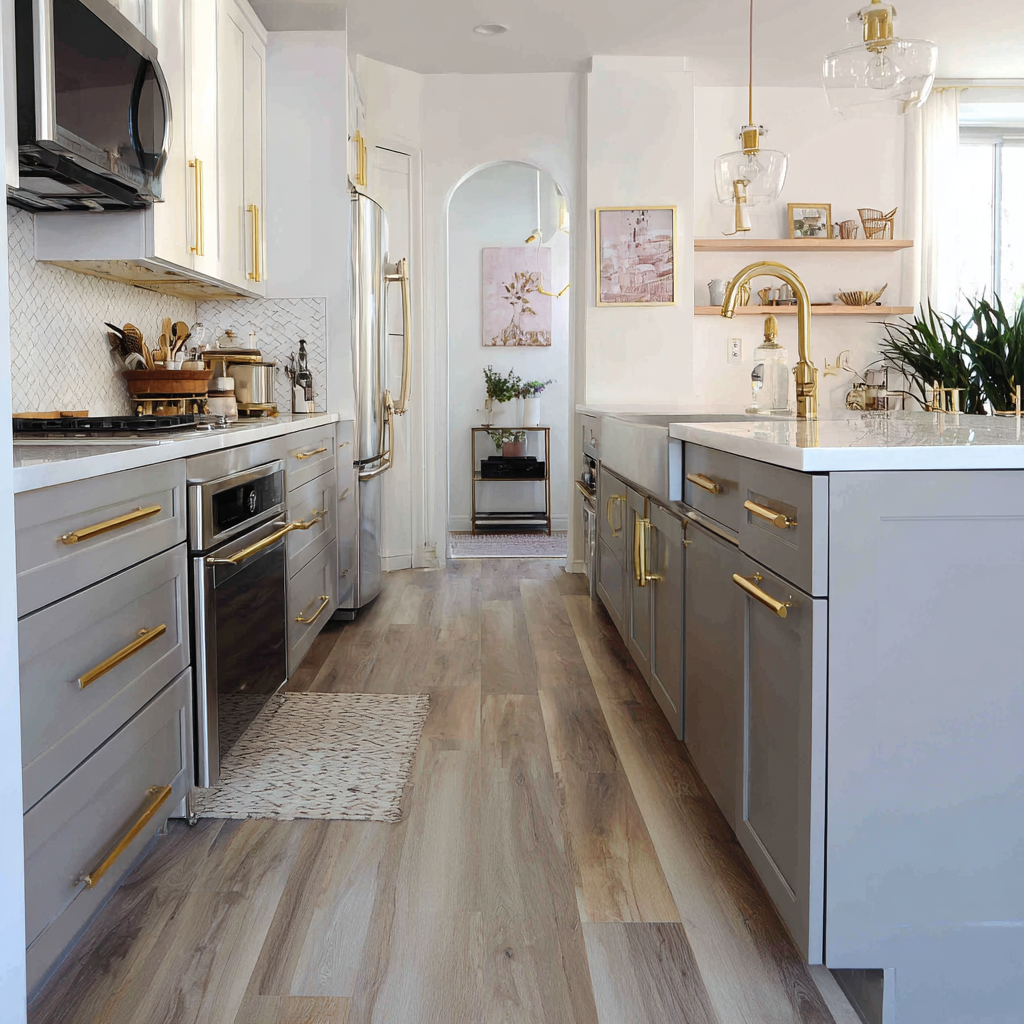
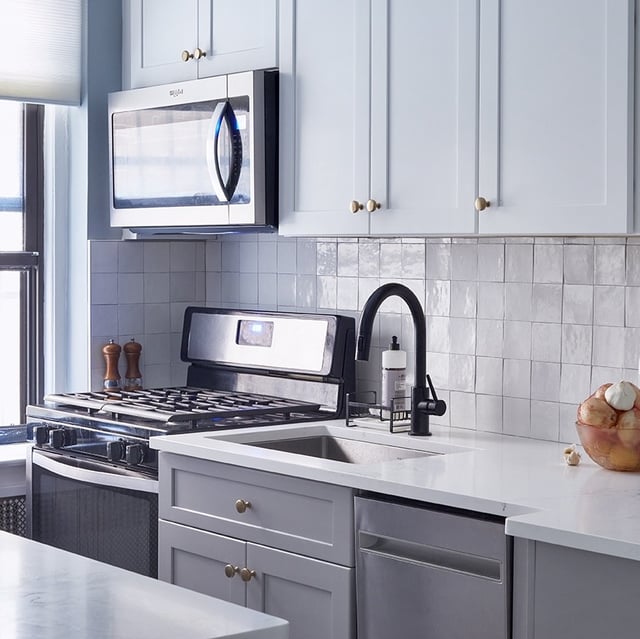
Unique knobs and handles in finishes like matte black, antique brass, or sleek geometric shapes turn transitional kitchen cabinetry into a focal point. Statement hardware is an easy way to inject personality and update your look over time. It balances the clean lines of transitional cabinetry, making the space feel curated and intentional.
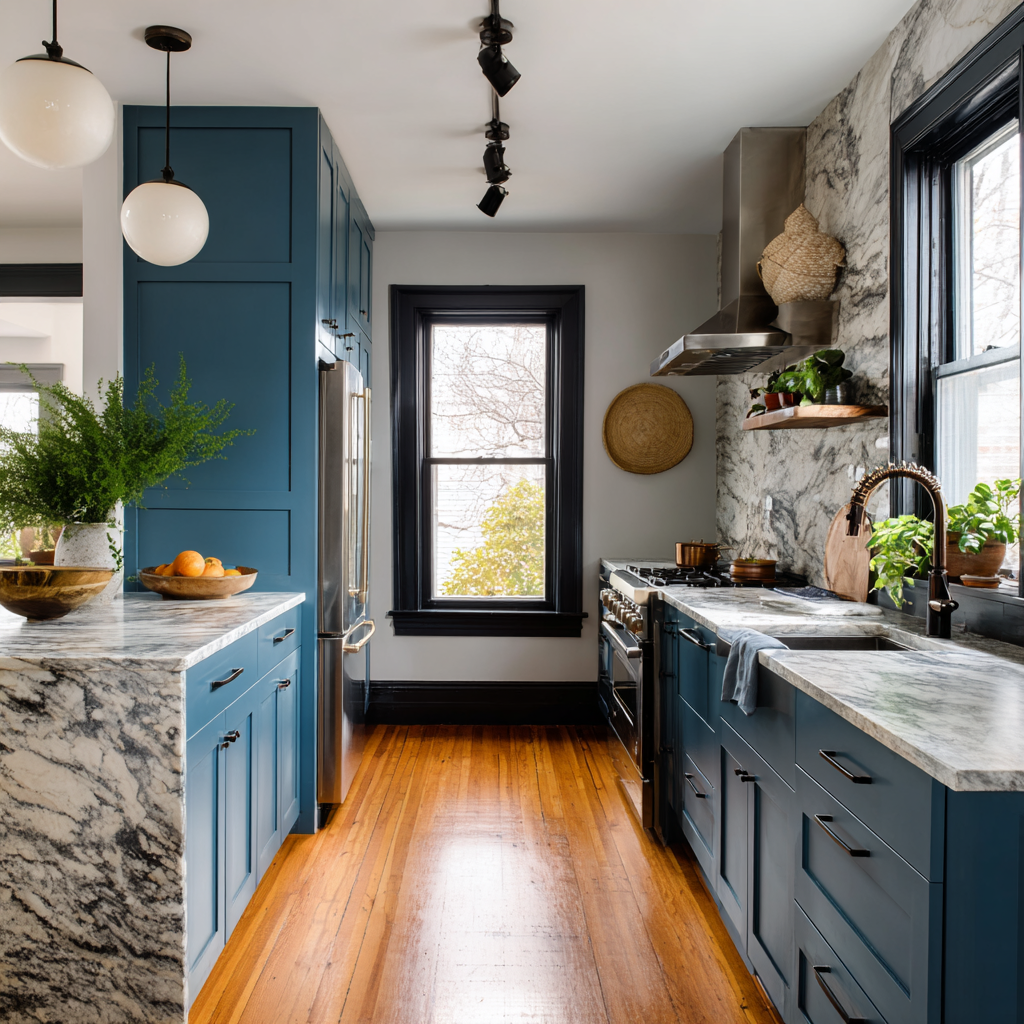
Combining glossy tiles, matte cabinetry, and metallic fixtures gives your kitchen visual depth and a layered look. This tactile variety keeps the atmosphere lively without overwhelming the senses. Textured surfaces invite touch while maintaining a polished, coordinated vibe.
White subway tile delivers a fresh, clean look that matches almost every cabinet and countertop combination. It's a transitional classic for its understated simplicity and versatility. For a twist, try a contrasting grout color, a herringbone configuration, or another distinct subway tile patterns.
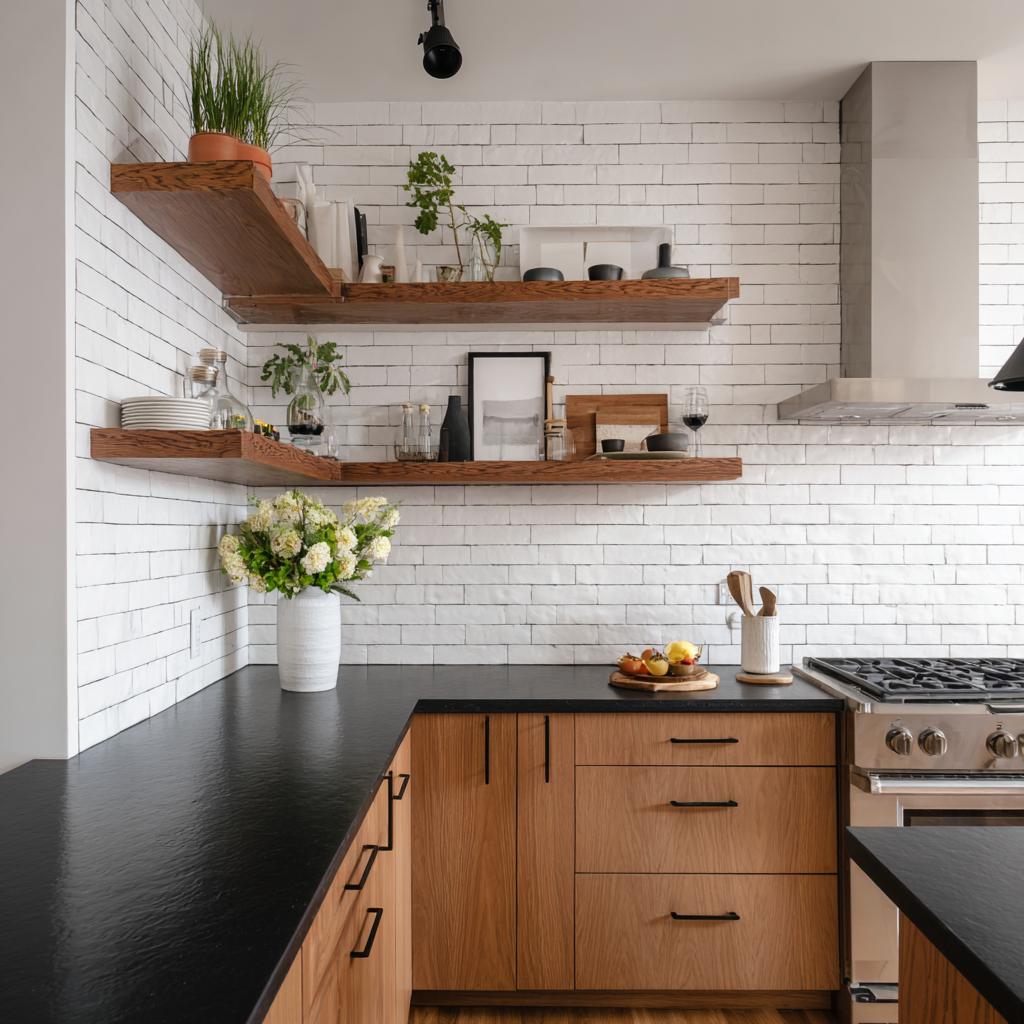
Patterned cement or encaustic tile can define your kitchen’s focal wall with just the right dose of artfulness. Use these behind the stove or sink for a special “moment” in an otherwise calm design. Accent colors from the tile are a perfect way to build cohesion with hardware or accessories.
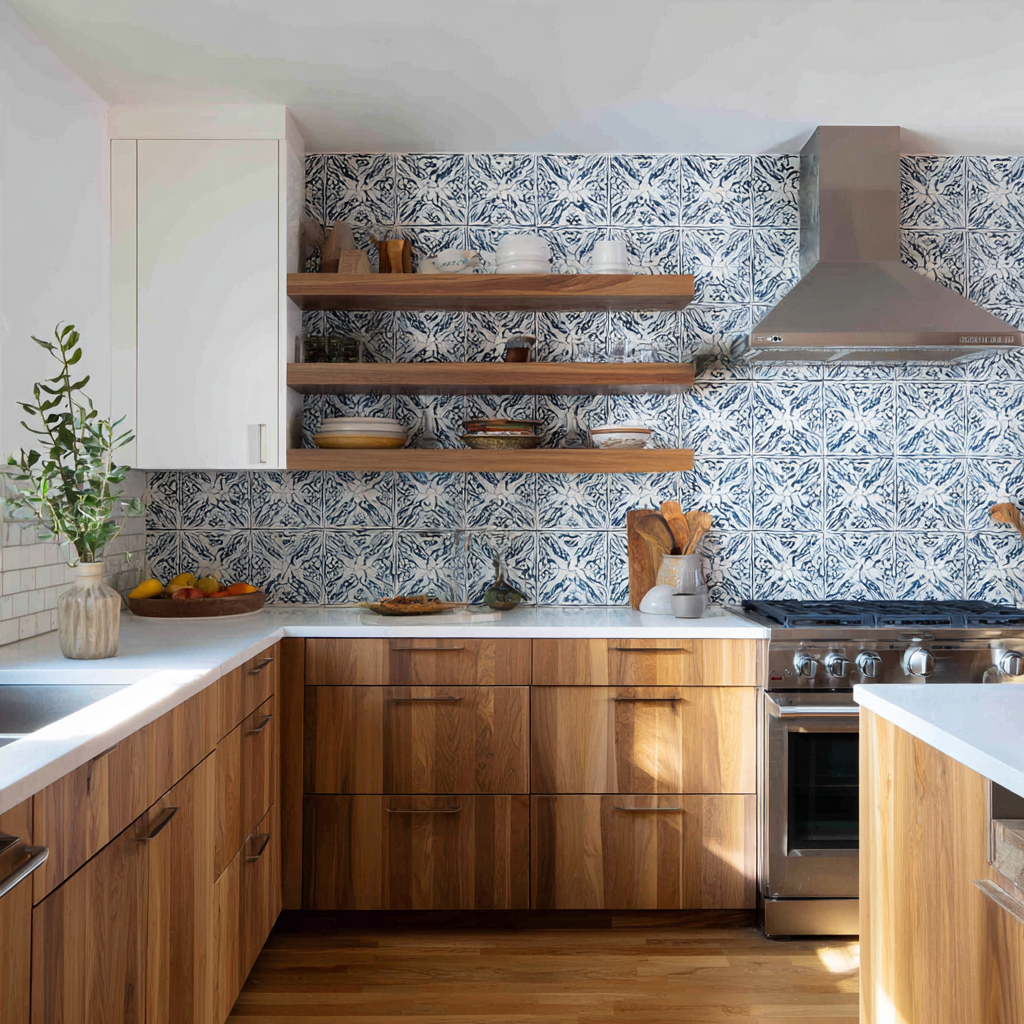
Display only what you use and love—think beautiful mugs, glass jars, or easy-care greenery. Keep the shelves uncluttered and coordinated for a curated, everyday look. Open shelving also offers an airy visual break from kitchen cabinets, key to the transitional aesthetic.
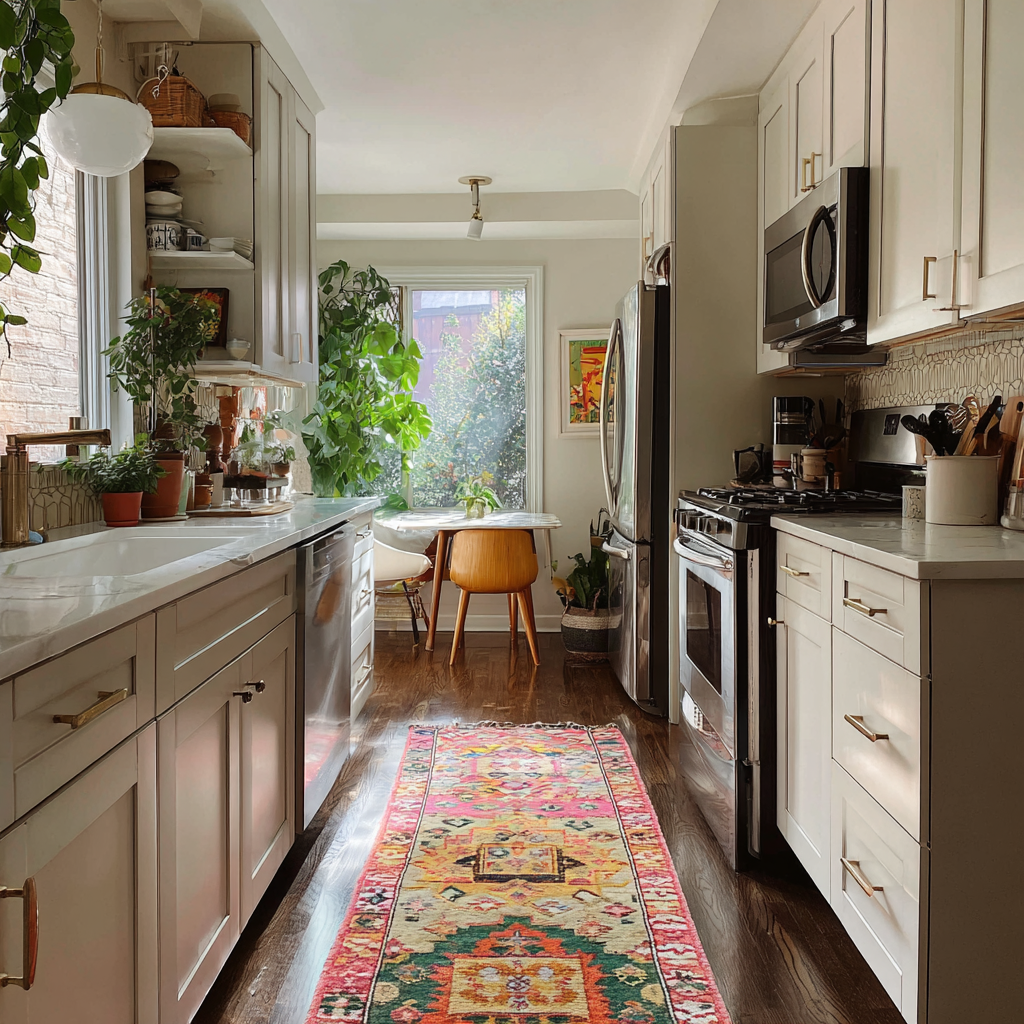
A kitchen runner adds visual interest and comfort underfoot, welcoming you to linger longer in your transitional kitchen. Choose a durable, stain-resistant fabric to withstand spills and foot traffic. Patterns or muted hues can echo your color scheme and tie the entire space together.
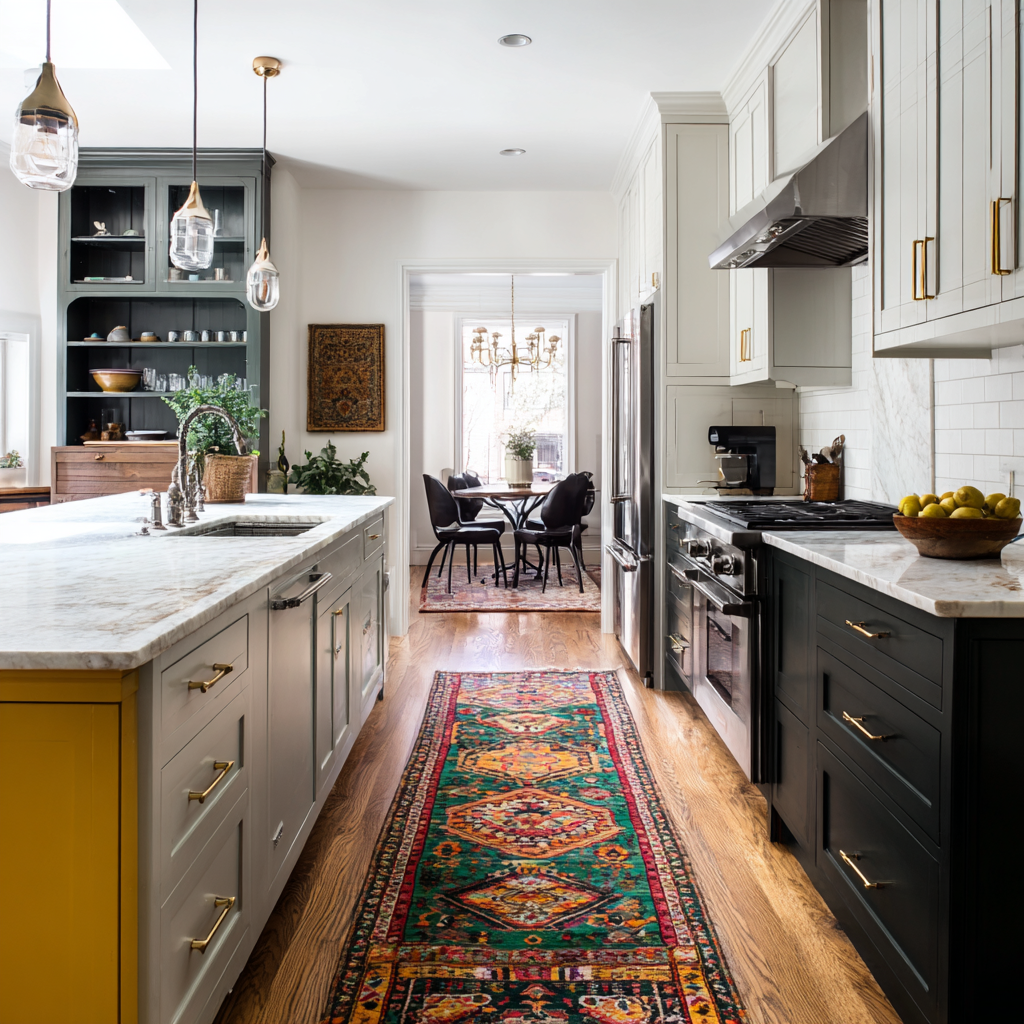
Simple crown molding at the ceiling or atop cabinets bridges the gap between traditional and modern, delivering a finished look. This small upgrade draws the eye up and brings a touch of craftsmanship into your transitional kitchen. Opt for understated profiles to maintain the room’s clean, approachable feel.
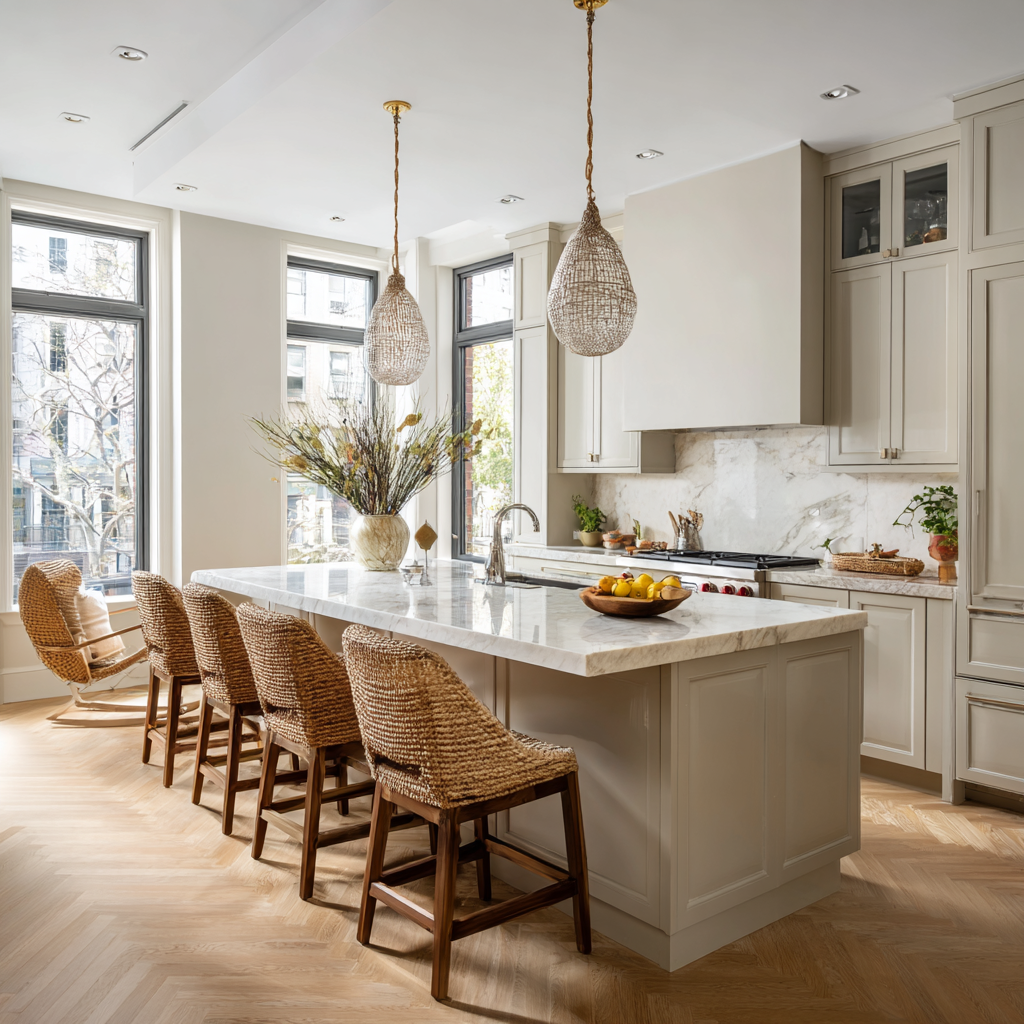
An island with seating creates a natural hub for gathering, dining, or extra prep. Choose stools that balance comfort and style, with upholstery or sleek lines to match your transitional kitchen’s character. The island design also offers storage or display space beneath, making it as practical as it is inviting.
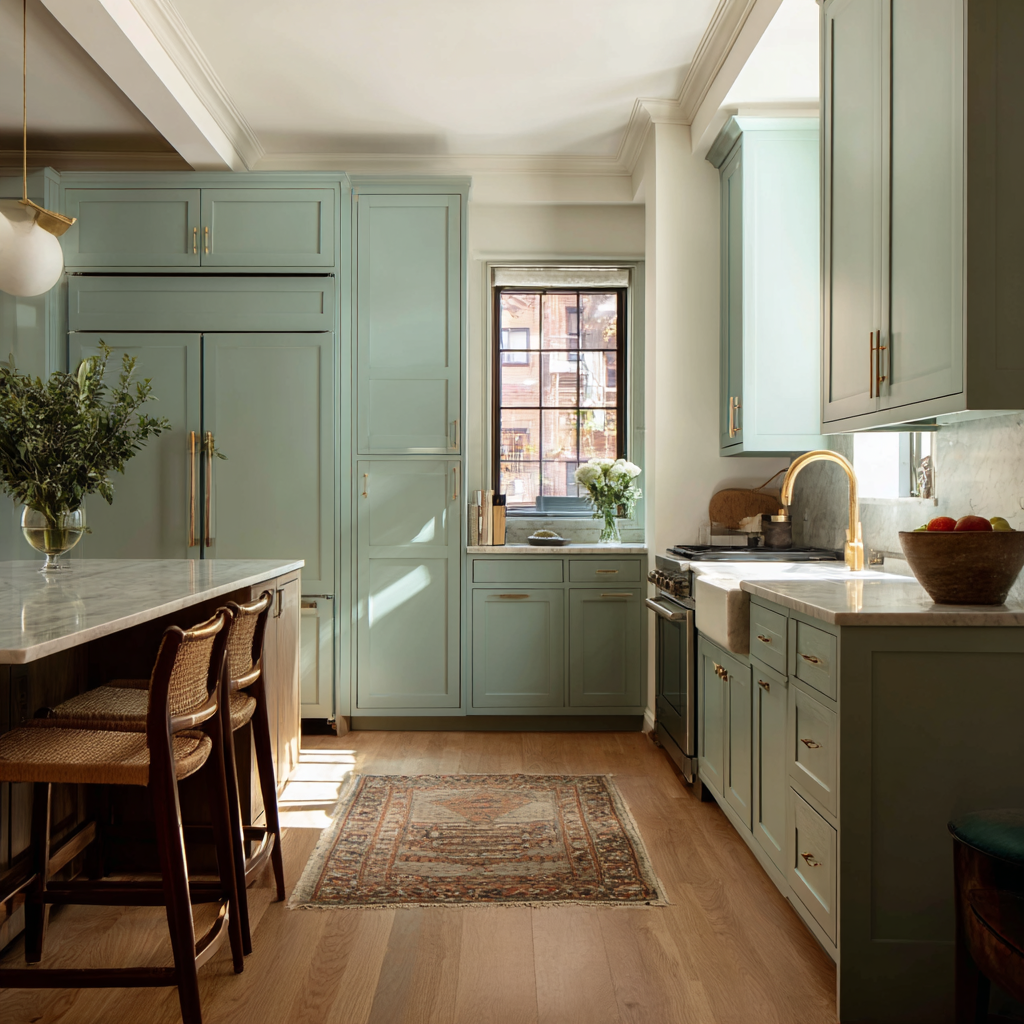
Appliances that blend in behind custom panels or cabinetry keep visual clutter at bay and contribute to a cohesive, modern-traditional style. Integrated options are especially useful in kitchens with an open-plan layout. This seamless look feels intentional and uncluttered, perfect for transitional design.
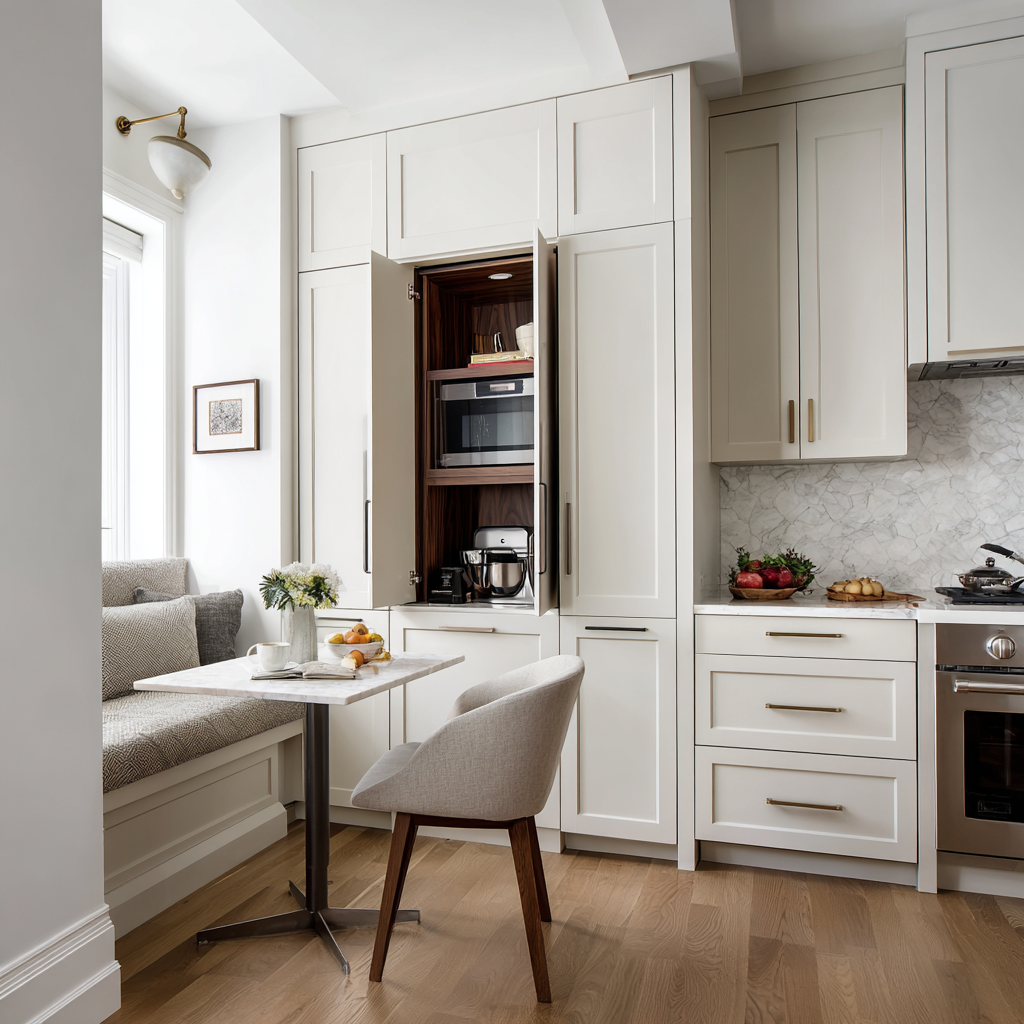
Combining finishes—like brushed nickel with matte black, or bronze with gold—adds interest and makes the space feel less “matchy.” This approach feels organic and contemporary, showcasing a space evolved over time. Limit the palette to two or three metals for harmony and visual flow.
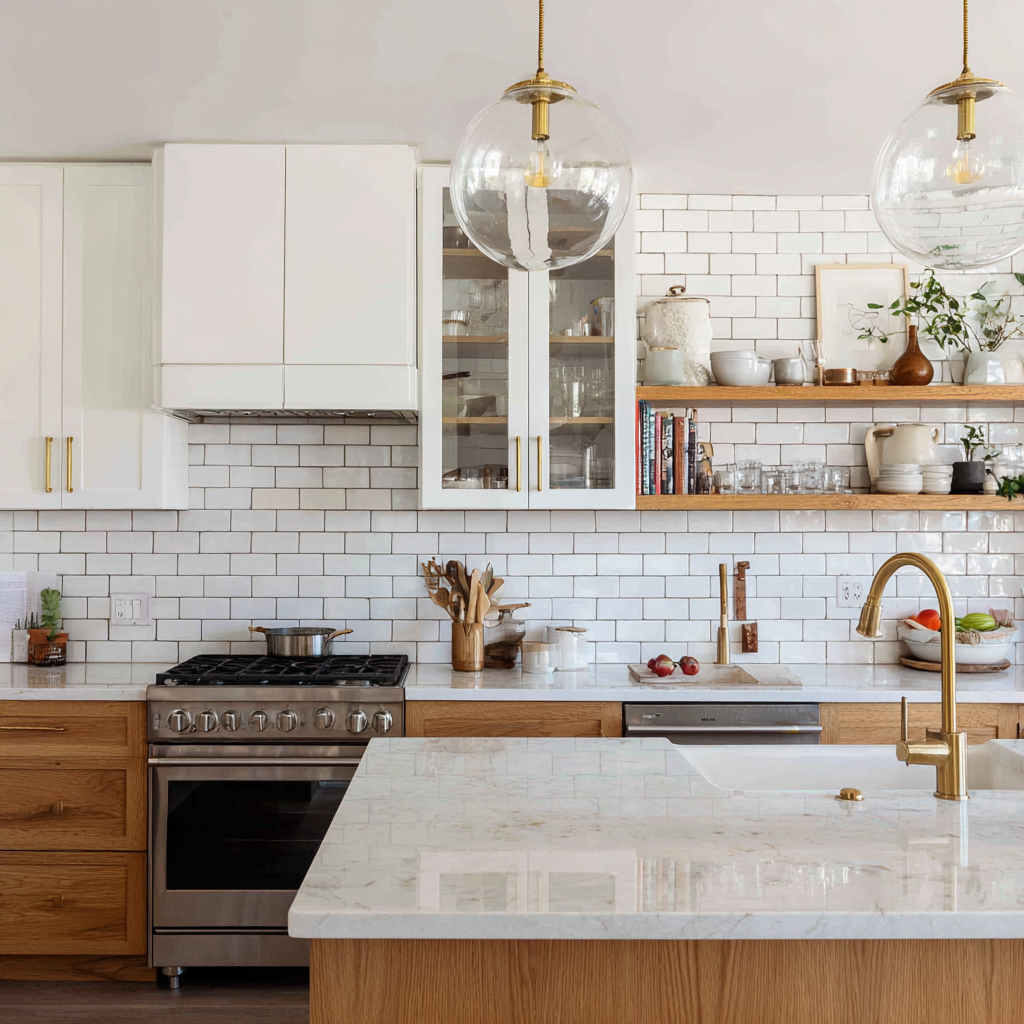
Planning a transitional kitchen requires bringing together design inspiration, practical needs, and your unique taste. Block Renovation’s Renovation Studio lets you experiment with layouts, color palettes, and finishes in an interactive, guided environment—helping you imagine the possibilities before making any commitment. The result is a kitchen plan that feels true to your vision and tailored to your everyday life.
Your kitchen renovation deserves expertise, transparency, and care from start to finish. Block Renovation will pair you with vetted contractors that have experience renovating kitchens similar to yours. Achieve a transitional kitchen that balances style, comfort, and value—crafted and managed by professionals every step of the way.
Remodel with confidence through Block
Connect to vetted local contractors
We only work with top-tier, thoroughly vetted contractors

Get expert guidance
Our project planners offer expert advice, scope review, and ongoing support as needed
Enjoy peace of mind throughout your renovation
Secure payment system puts you in control and protects your remodel

Renovate confidently with Block
Easily compare quotes from top quality contractors, and get peace of mind with warranty & price protections.
Kitchen
50k Kitchen Remodel: What $50,000 to $60,000 Buys
09.21.2026
Kitchen
New York City Kitchen Remodels: Cost, Permits & Contractors
09.18.2026
Kitchen
20k Kitchen Remodel: What $20,000 to $30,000 Buys
09.07.2026
Kitchen
Best Time to Remodel Your Kitchen Plumbing & Other Projects
09.05.2026
Kitchen
Kitchen Remodel Mistakes to Avoid When Planning
08.13.2026