



Kitchen
Kitchen Remodel Mistakes to Avoid When Planning
08.13.2026
02.02.2026


.png?width=640&name=u5821215421_ndustrial_loft_kitchen_with_exposed_steel_beams_m_2ee82435-dc1f-4c66-b21b-878cad8b5359_3%20(1).png)
In This Article
There's something undeniably fresh about a kitchen that confidently mixes metals. Gone are the days when everything had to match—when your cabinet hardware, faucet, light fixtures, and appliances all had to be the same finish or risk looking "off." Today's kitchens are more interesting, more personal, and frankly more fun when they layer different metal finishes with intention.
But here's the thing: mixing metals can feel risky if you've never done it before. Too much variety and your kitchen looks chaotic. Too little contrast and the whole effect falls flat. The sweet spot? A balanced mix that feels curated rather than accidental—where each metal has a purpose and the overall effect is cohesive, not confused.
In this guide, we'll show you exactly how to pull off mixed metals in your kitchen, which design styles embrace this approach best, and specific metal combinations that consistently work beautifully together.
Kitchens are complex spaces with a lot of visual elements competing for attention—cabinetry, countertops, backsplashes, appliances, lighting, and hardware all vie for your eye. When every metal finish is identical, the space can feel flat and one-note, almost sterile.
But when you introduce intentional contrast through different metal finishes, you create depth and visual interest.
Think of mixed metals like layering textures in a room. You wouldn't make every surface in your living room the same fabric—you'd mix linen, velvet, wood, and leather to create richness. Metals work the same way.
A warm brass faucet against cool stainless steel appliances, or matte black cabinet pulls paired with polished nickel lighting, adds dimension that a single finish simply can't achieve.
Mixed metals also make your kitchen feel less staged and more collected over time, as if each element was chosen individually rather than ordered from a single catalog. There's an ease to it, a sense that the space evolved organically rather than being assembled all at once.
.png?width=1024&height=1024&name=u5821215421_Close-up_detail_shot_of_kitchen_cabinet_hardware__7439cb81-3738-4eb5-b28b-812533bc5661_1%20(1).png)
While you can technically mix metals in any kitchen style, certain aesthetics are particularly well-suited to this approach.
Design a Home That’s Uniquely Yours
Block can help you achieve your renovation goals and bring your dream remodel to life with price assurance and expert support.
Get Started
Choose one metal to be your primary finish—this should cover the largest surface areas or most prominent features. Typically, this is your appliances (often stainless steel) or your cabinet hardware if you have a lot of cabinets. Your dominant finish anchors the space and gives everything else a reference point.
Once you've established your dominant metal, you can introduce one or two accent finishes in smaller doses. The 70-20-10 rule works well here: 70% dominant metal, 20% secondary metal, 30% accent metal (if you're using three finishes).
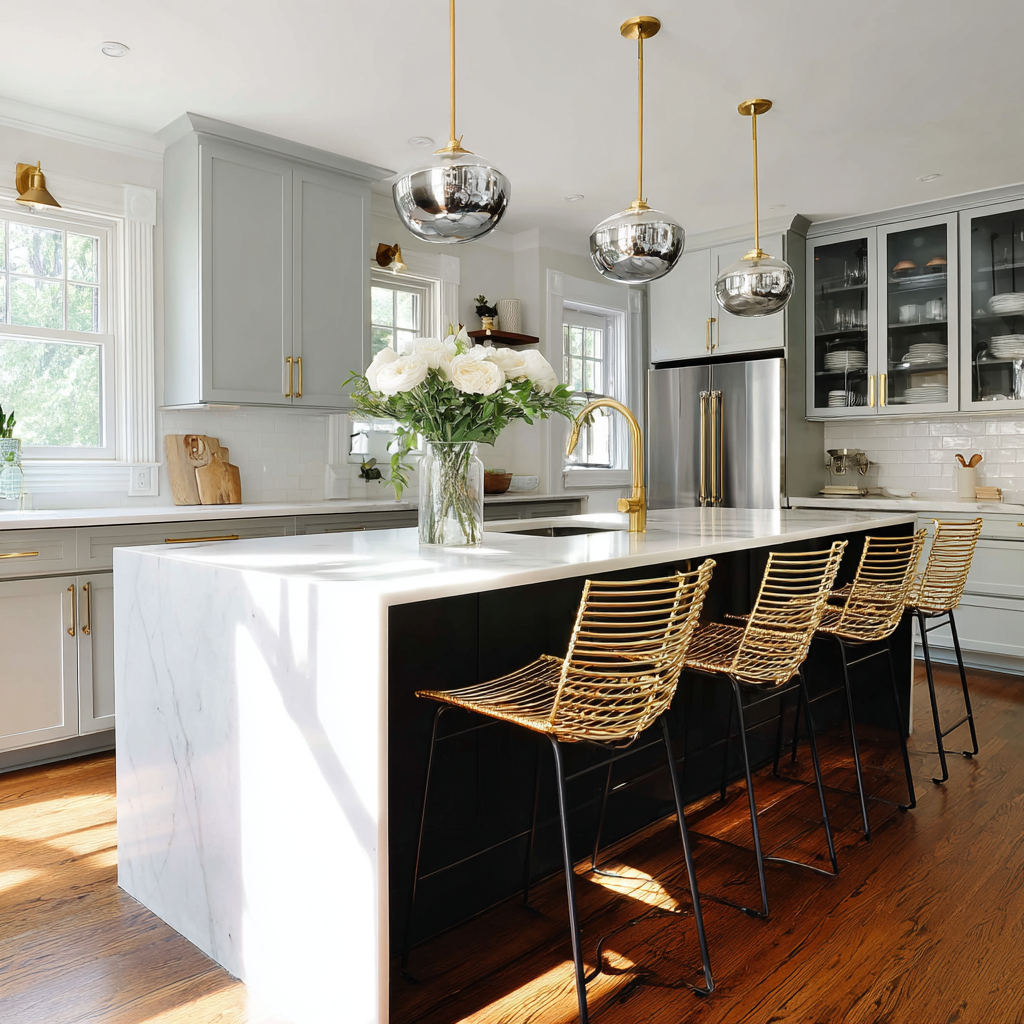
More than three different metal finishes starts to feel busy and unintentional. Two finishes is often the sweet spot—it creates contrast without overwhelming the space. Three finishes can work beautifully if you're confident in your choices, but four or more crosses into chaotic territory unless you're deliberately going for an eclectic, maximalist look.
Don't cluster all of one finish in one area. If your faucet is brass, don't also make all the hardware near the sink brass while everything across the room is chrome. Spread each finish throughout the kitchen so your eye moves around the space and sees a cohesive whole rather than distinct zones.
For example: if you choose brass and black as your two finishes, you might use brass for your faucet, some cabinet pulls, and a pendant light, while black appears in other cabinet pulls, the range hood, and bar stools. This distribution creates rhythm and balance.
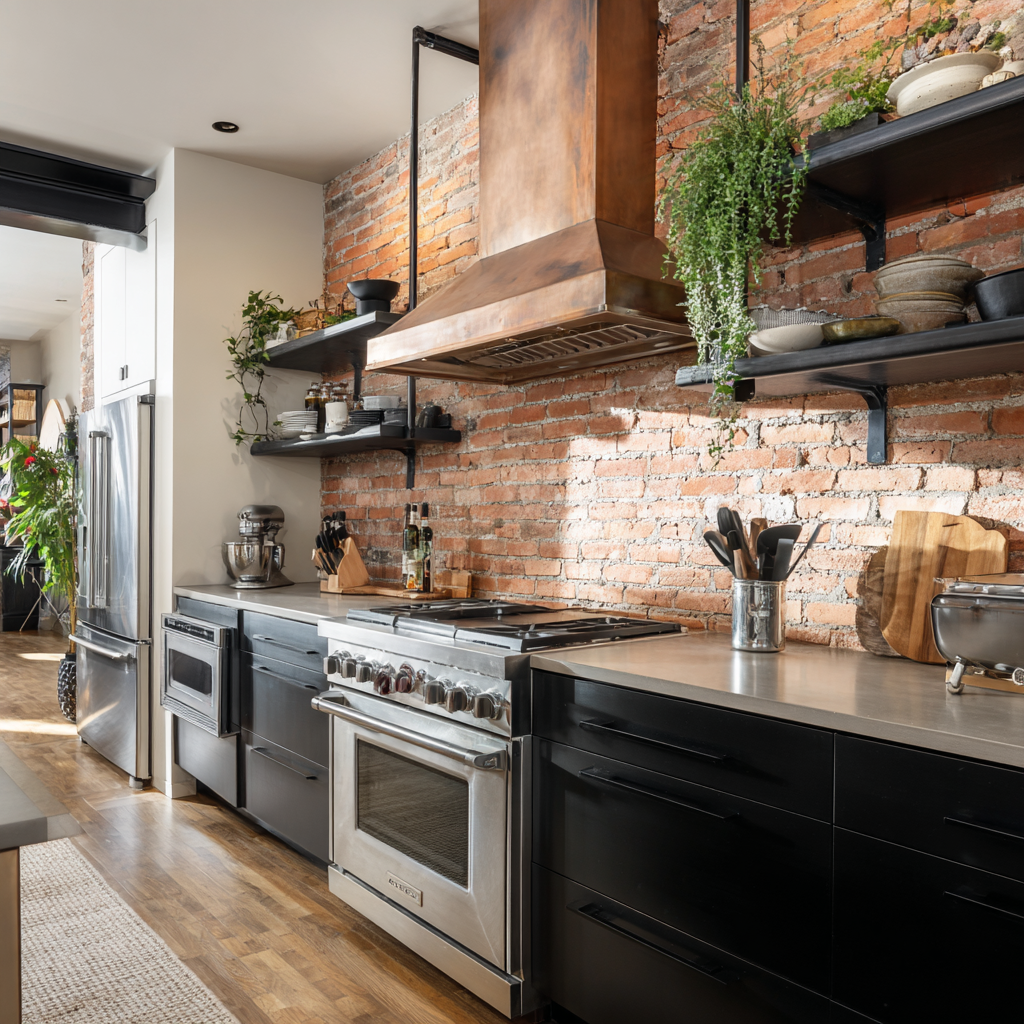
Metals have warm or cool undertones, and this matters when you're combining them. Warm metals include brass, gold, copper, and oil-rubbed bronze. Cool metals include chrome, stainless steel, polished nickel, and pewter.
You can absolutely mix warm and cool metals—in fact, this creates the most striking contrast. But pay attention to how many of each you're using. If you have cool stainless steel appliances as your dominant finish, adding warm brass accents creates beautiful contrast. But adding warm brass and warm copper and warm gold might feel unbalanced unless you're deliberately creating a warm, layered look.
Sheen matters as much as color. Polished, shiny finishes feel more formal and traditional. Matte and brushed finishes feel more contemporary and relaxed. Mixing a polished brass faucet with matte black cabinet hardware creates visual interest through contrasting sheens, but combining polished brass, brushed nickel, and hammered copper in the same space might feel too varied.
A good rule: if you're mixing three finishes, keep at least two at similar sheen levels. For instance, brushed brass, matte black, and brushed stainless all have a similar soft finish, so they work together even though their colors differ.
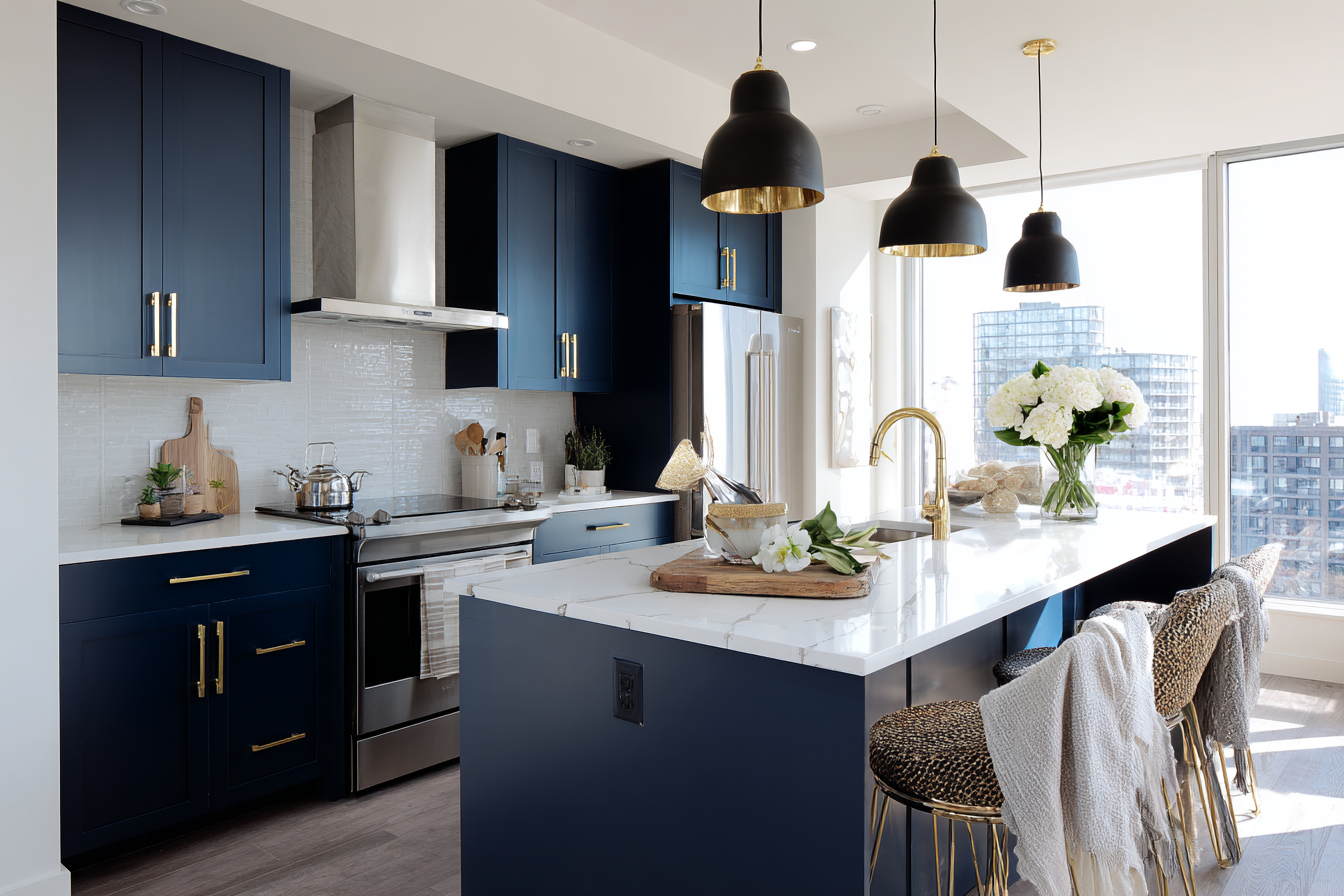
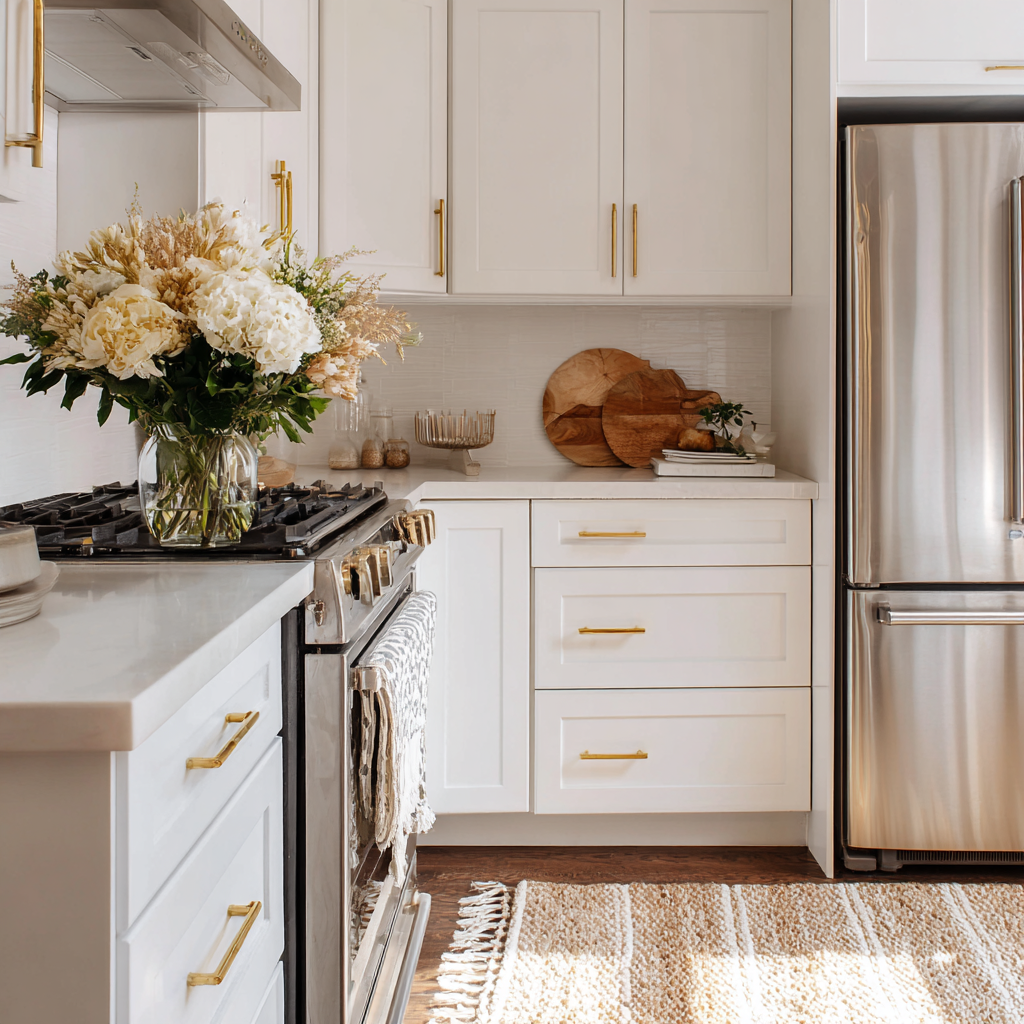
Your cabinet hardware offers one of the easiest ways to introduce a secondary metal. If your appliances are stainless steel (dominant finish), you don't have to match your hardware to them. In fact, choosing a contrasting finish for pulls and knobs—like warm brass or matte black—immediately elevates your kitchen from predictable to designed.
You can even mix metals within your hardware itself. Use one finish for upper cabinet knobs and a different finish for lower cabinet pulls, or alternate finishes in a pattern. Just make sure there's logic to the choice—alternating randomly looks accidental, but using one finish on perimeter cabinets and another on an island creates intentional distinction.
Perfect Every Detail of Your Bathroom
Let's get specific. Here are proven metal pairings that consistently create sophisticated, well-balanced kitchens.
This combination is a contemporary classic. Warm brass (whether polished, brushed, or antique) paired with matte black creates a striking contrast that feels both modern and timeless. The warmth of brass softens the severity of black, while black grounds brass and prevents it from feeling too ornate.
How to use it: Matte black for your faucet and cabinet hardware on lower cabinets or island, brass for lighting fixtures and upper cabinet hardware. Or reverse it—brass faucet with black hardware throughout.
Works best in: Modern, transitional, and industrial kitchens.
If your appliances are stainless steel, unlacquered brass accents bring warmth and character without fighting for attention. Unlacquered brass develops a natural patina over time, which adds depth and keeps the combination from feeling too polished or matchy.
How to use it: Keep stainless as your dominant (appliances, possibly sink), add unlacquered brass for faucet, cabinet hardware, and one or two light fixtures.
Works best in: Transitional, modern farmhouse, and eclectic kitchens.
This pairing works because both metals sit in a similar mid-tone range—neither is extremely warm nor extremely cool—but they offer enough contrast to create interest. Polished nickel has a soft sheen while oil-rubbed bronze is darker and more matte, giving you textural variety.
How to use it: Polished nickel for your faucet and lighting, oil-rubbed bronze for cabinet hardware. This keeps the eye-level elements brighter while grounding the space with darker hardware.
Works best in: Transitional, traditional, and farmhouse kitchens.
Chrome's mirror-like finish feels crisp and clean, while brushed gold (or brushed brass) adds warmth and softness. This combination feels luxurious without being stuffy—the brushed finish on the gold keeps it from veering into overly formal territory.
How to use it: Chrome for appliances or plumbing fixtures, brushed gold for hardware and lighting. Keep the gold to smaller doses so the chrome's coolness dominates but the gold warms strategic touchpoints.
Works best in: Modern, contemporary, and transitional kitchens.
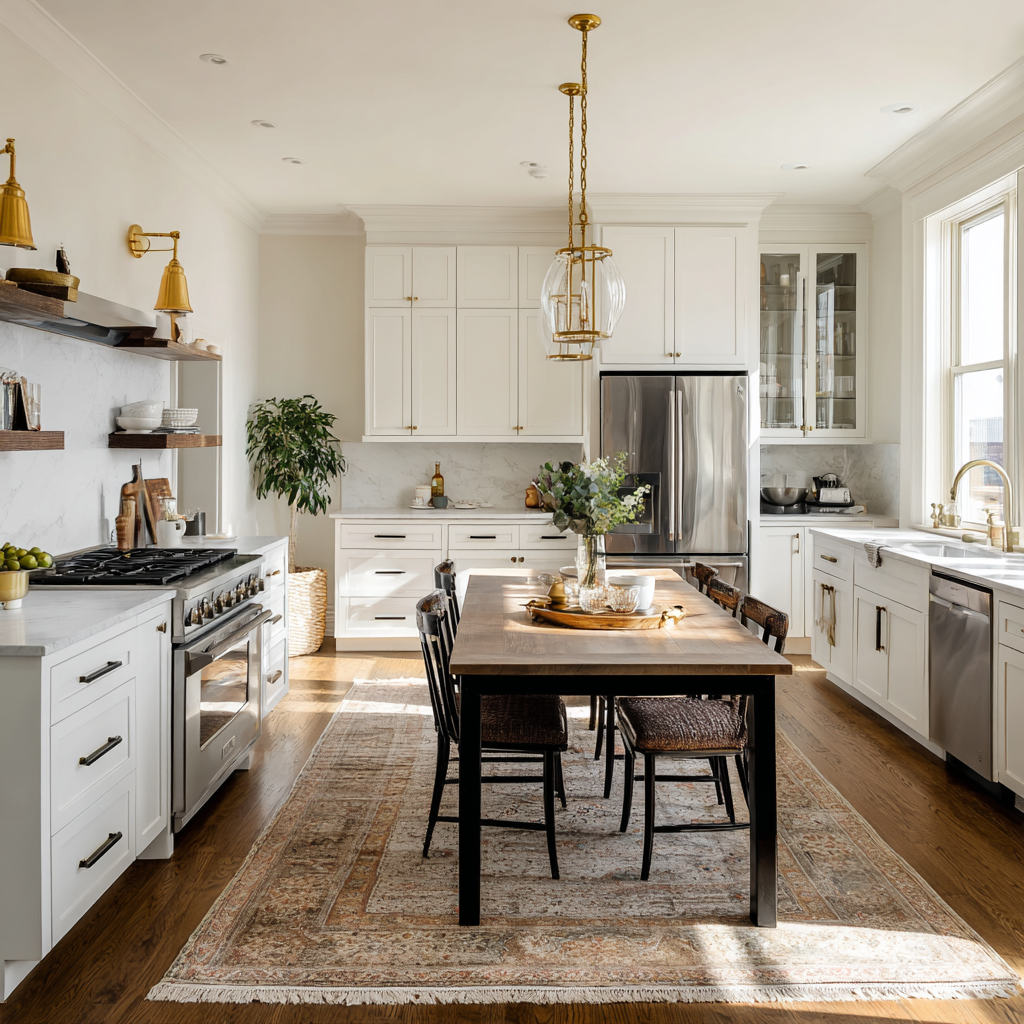
Copper brings a warm, almost rosy tone that plays beautifully against the neutral coolness of stainless steel. Because copper is such a statement metal, use it sparingly—too much can overwhelm a space.
How to use it: Stainless steel for appliances, copper for a farmhouse sink or range hood, and possibly one pendant light. Keep other accents neutral or in stainless to let the copper shine.
Works best in: Industrial, eclectic, and modern farmhouse kitchens.
Both of these finishes are soft and matte, so they share a similar sheen level even though their colors differ. This creates a subtle, sophisticated mix that never feels jarring.
How to use it: Matte black for plumbing fixtures and some hardware, brushed nickel for lighting and remaining hardware. The similar texture keeps them feeling cohesive.
Works best in: Modern, contemporary, and minimalist kitchens.
This is a pairing for those who love aged, collected looks. Both finishes have a soft patina and sit in similar mid-tones—neither too shiny nor too dark. Together they create a sense of layered history.
How to use it: Antique brass for cabinet hardware and faucet, pewter for lighting or bar hardware. Keep the palette muted with these softer metals as the stars.
Works best in: Farmhouse, rustic, and eclectic kitchens.
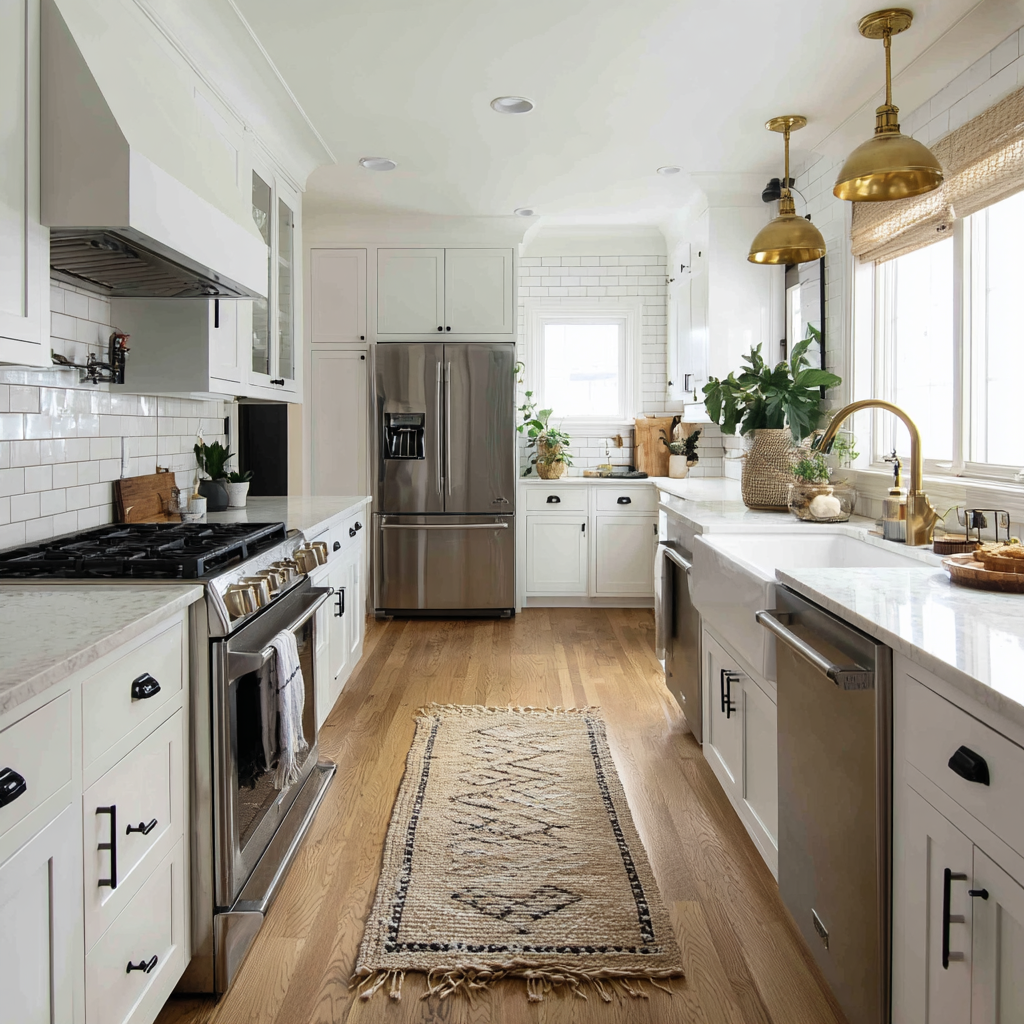
Matching everything to your appliances: Your stainless steel appliances don't dictate that everything else must be stainless. In fact, keeping hardware and fixtures in stainless when your appliances are already stainless often makes the space feel cold and monotonous.
Mixing too many finishes: Three is typically the maximum. More than that and your kitchen starts to feel like a showroom where someone's testing every option.
Ignoring the rest of your home: If your adjacent dining or living spaces have a strong metal presence (like a brass chandelier or black iron railings), consider echoing those finishes in your kitchen for flow.
Being too timid: Mixing metals is supposed to create contrast. If you choose two finishes that are too similar—like brushed nickel and brushed chrome—you lose the benefit of the mix. Commit to the contrast.
Forgetting about lighting: Light fixtures are some of the most visible elements in your kitchen, and they're a perfect opportunity to introduce a secondary metal. Don't default to matching them to your hardware or plumbing—use them strategically to balance the space.
Small kitchens benefit from mixed metals just as much as large ones, but you need to be slightly more intentional to avoid visual clutter.
Stick to two finishes maximum in a small space. Choose one warm and one cool for maximum contrast—this actually makes the space feel larger by adding depth. Distribute both finishes evenly rather than clustering one on each side of the room, which can make a small kitchen feel divided.
Keep sheen levels similar. In tight quarters, mixing matte black with polished brass with brushed nickel can feel busy. Instead, try matte black with brushed brass—the similar texture keeps things calm while the color contrast adds interest.
Mixing metals is ultimately about creating a kitchen that feels personal and intentional rather than formulaic. The "rules" we've outlined aren't meant to constrain you—they're guideposts to help you make confident choices.
If you're drawn to a combination that breaks conventional wisdom but feels right to you, trust that instinct. Your kitchen should reflect your taste, and part of what makes mixed metals so appealing is that there's room for interpretation and personality.
Start with one or two combinations you love, distribute them thoughtfully throughout the space, and don't overthink it. The beauty of mixed metals is that they're surprisingly forgiving—even unconventional pairings can work if you commit to them with confidence.
Ready to create a kitchen that reflects your style, with mixed metals and all the details that make it uniquely yours? Block Renovation connects you with vetted designers and contractors who understand how to balance aesthetics with functionality.
From selecting the perfect metal finishes to coordinating every element of your kitchen renovation, Block's experts help you make confident decisions that result in a space you'll love for years to come.

Renovate confidently with Block
Easily compare quotes from top quality contractors, and get peace of mind with warranty & price protections.
Kitchen
Kitchen Remodel Mistakes to Avoid When Planning
08.13.2026
Kitchen
Rental Kitchen Renovation: Smart Materials & Design Choices
08.08.2026
Kitchen
Wall Oven Installation Cost & Are Wall Ovens Worth It?
08.07.2026
Kitchen
Wet Bar Installation Cost: A Line-by-Line Breakdown
08.01.2026
Kitchen
Kitchen Remodel Tips & Advice From the Pros
07.28.2026