



Backsplash
Backsplash Same as Countertop: Ideas, Costs and Upkeep
09.18.2026
04.14.2026


In This Article
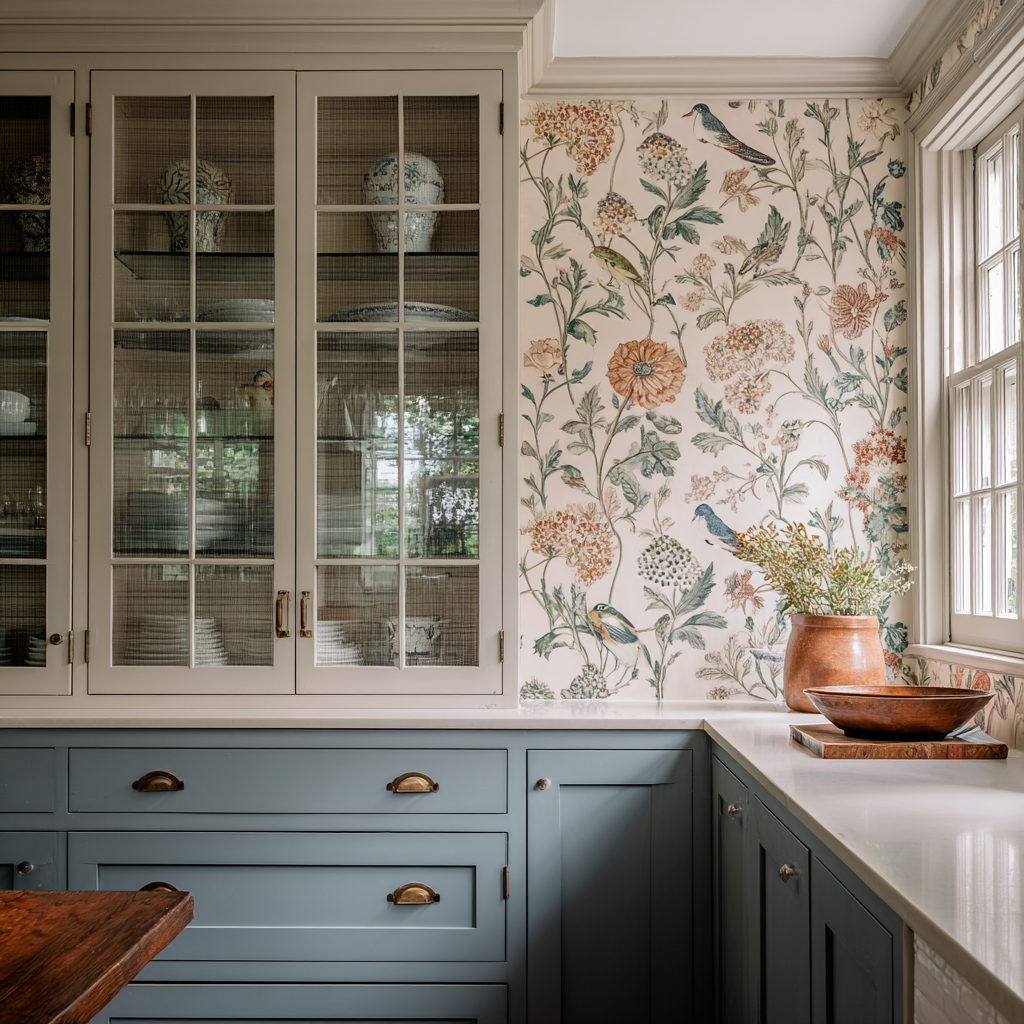
Wallpaper as a kitchen backsplash is one of those ideas that looks genuinely brilliant in the right kitchen and genuinely questionable in most others. The difference usually comes down to one thing: how honest you're willing to be about the kitchen you actually have, not the one you have in your head.
That's not a reason to dismiss the idea. When it works, it gives a kitchen something that tile almost never does. It gives the space a sense that someone with a real point of view made real choices about this room. But it's a decision that deserves more than Pinterest inspiration. There are real practicalities to work through, and a few honest truths about who this idea actually suits.
Tile is durable and functional, but it tends toward the expected. Wallpaper offers something tile almost never can: pattern, personality, and the sense that a real person made real choices about this room. Done well, it functions a bit like art that also happens to be architecture, introducing color, scale, and character into a space that might otherwise feel generic. It also tends to cost significantly less than a full tile installation, which makes it appealing for homeowners who want high visual impact without the materials budget to match.
Here's the honest version of this conversation: most kitchens aren't a great fit for wallpaper, and most homeowners aren't either.
Wallpaper, especially a bold or patterned one, adds visual complexity to a room that is already, by nature, a fairly chaotic place. Dishes, appliances, groceries, the mess of daily cooking. A kitchen is one of the hardest-working rooms in a home, and a busy pattern can tip the balance from lively to overwhelming. The kitchens where wallpaper backsplashes look the way they do in photographs tend to be ones where the counters are clear, the dishes are put away, and nothing is out of place. If that doesn't describe your kitchen on a Tuesday evening, it's worth sitting with that honestly before you commit.
It's also not the strongest choice if resale value is part of your thinking. A wallpaper backsplash is a personal statement, and personal statements narrow your buyer pool.
That said, for the right person in the right kitchen, a wallpaper backsplash one of the more enlivening things you can do to the space. If you're naturally tidy, drawn to a minimal surrounding aesthetic, and renovating a kitchen you intend to live in for years, a wallpaper backsplash can give your kitchen something most renovated kitchens lack entirely: a genuine point of view.
If you want to steer clear of tried-and-true styles but don’t want an option as bespoke as wallpaper, check out these other ideas for non-tile backsplashes.
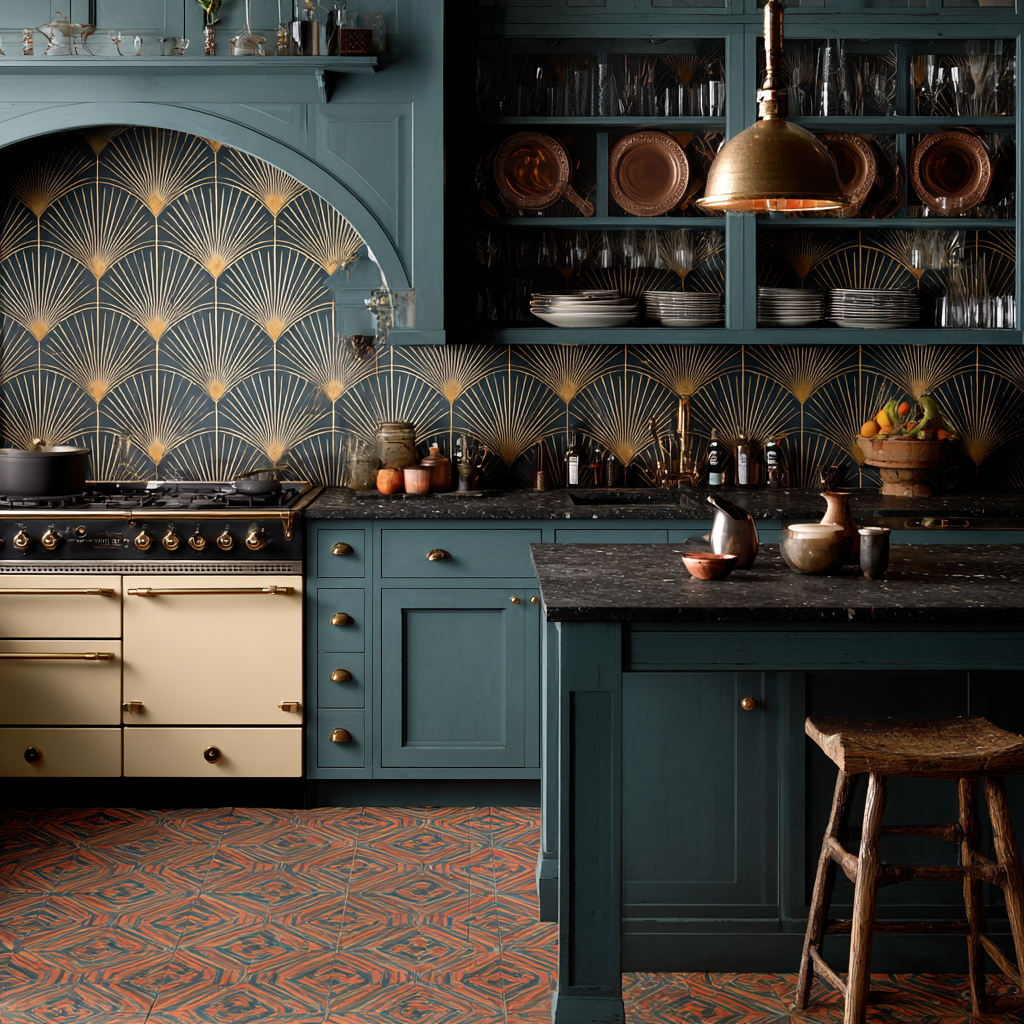
The kitchen is one of the most demanding environments in the home. Heat, steam, grease, and water are constants, and standard wallpaper was not designed for any of them. Before committing, these are the limitations worth understanding clearly.
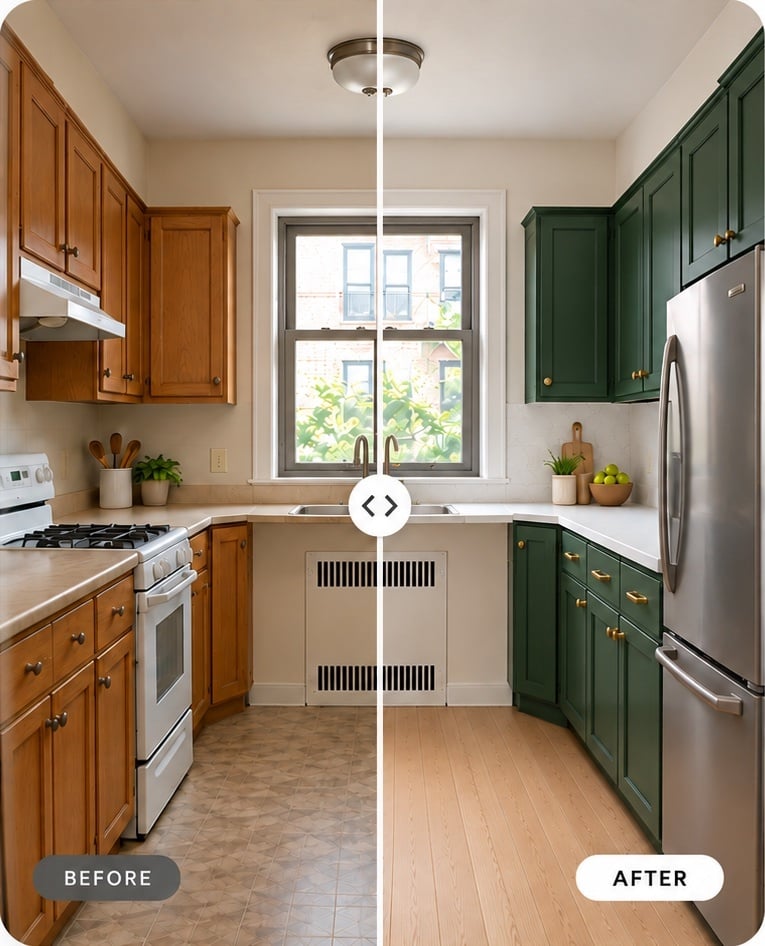
This is where a lot of otherwise good intentions go sideways. The wallpaper market is enormous, and the vast majority of it is not designed for kitchen conditions. Narrowing the field requires thinking about material, finish, and pattern in equal measure, and being honest about what a particular paper can and cannot withstand.
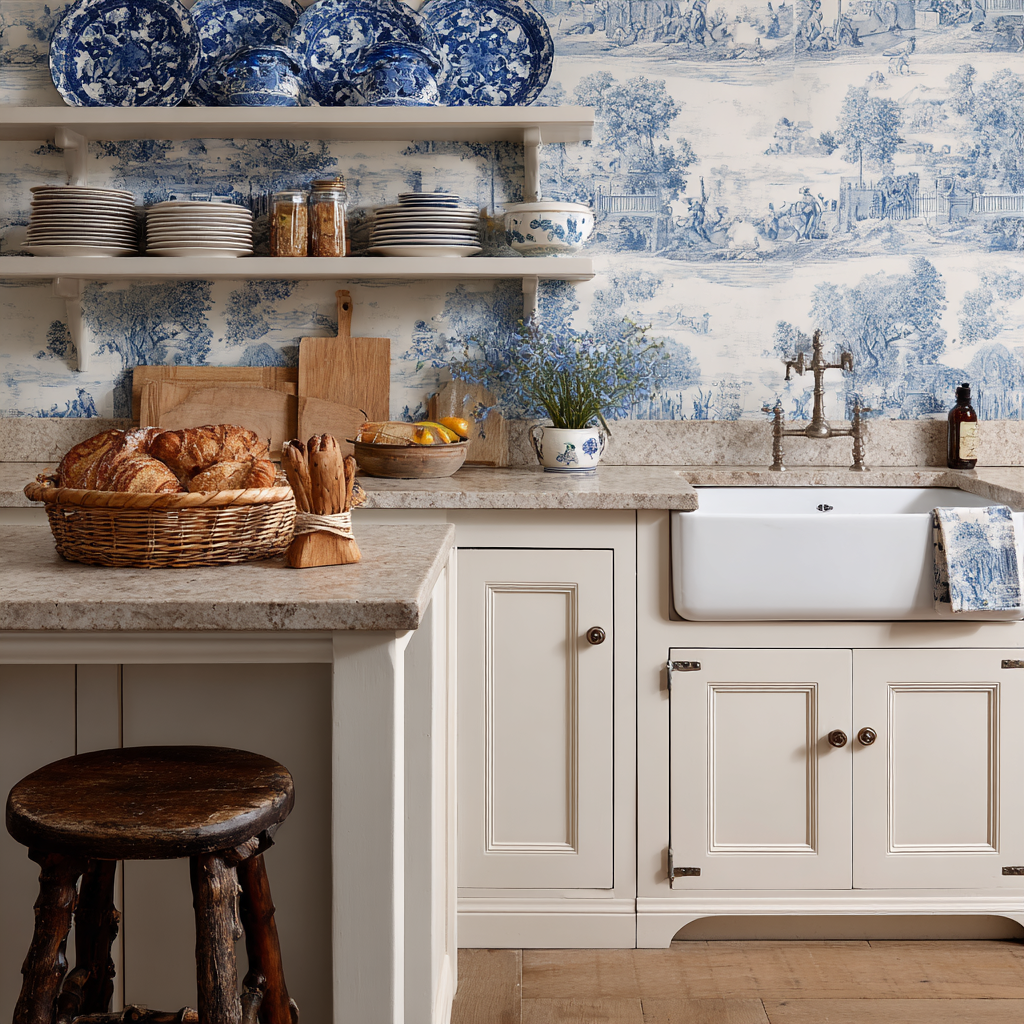
This type of wallpaper the most moisture-resistant option available and the most appropriate for a backsplash application. Vinyl-coated paper has a thin protective film over a paper backing; solid vinyl is more durable still, with a vinyl face bonded to a fabric or paper backing. Both can be wiped down without damage and hold up to humidity far better than paper or fabric-based alternatives.
Graham & Brown's kitchen-specific wallpaper line is one of the few from a major design brand that is explicitly antibacterial and washable, designed with the realities of kitchen use in mind. It's a useful starting point if you want access to a range of prints without sacrificing practicality. For homeowners who prioritize design pedigree, many broader vinyl collections exist across the wallpaper market. The key is confirming the washability rating before committing to any specific paper.
Look specifically for papers rated scrubbable rather than just washable. The distinction matters: washable papers can handle a damp cloth; scrubbable papers can handle mild detergents and more rigorous cleaning, which is what a kitchen actually demands.
One important note on a brand that comes up often in design circles: Farrow & Ball wallpaper, as beautiful as it is, is vinyl-free and paper-based, finished with a fine wipeable glaze. By Farrow & Ball's own description, that glaze handles minor smudges and splatters. It is not a scrubbable surface and is not engineered for the sustained moisture and grease exposure of a kitchen backsplash. If you love a Farrow & Ball pattern enough to use it, glass panel protection isn't optional. It's the only thing that makes the installation viable.
When choosing a wallpaper to serve as a backsplash, grasscloth, linen, jute, and sisal are not appropriate under any circumstances. They're beautiful in other rooms and will absorb moisture, warp, stain, and degrade in a kitchen. No sealant changes this meaningfully.
Standard unpasted paper wallpapers are similarly unsuitable for direct kitchen use. If a paper you love is only available in a non-vinyl finish, your best option is to use it and commit fully to glass panel protection, which creates a sealed environment between the paper and the kitchen air.
Matte finishes look beautiful but offer less inherent moisture resistance than satin or semi-gloss. In a kitchen application, a paper with some sheen is a more practical choice. It reflects rather than absorbs, and it's easier to wipe clean even before you factor in additional protection. Some vinyl wallpapers are available in a range of finishes; if you have the option, lean toward satin.
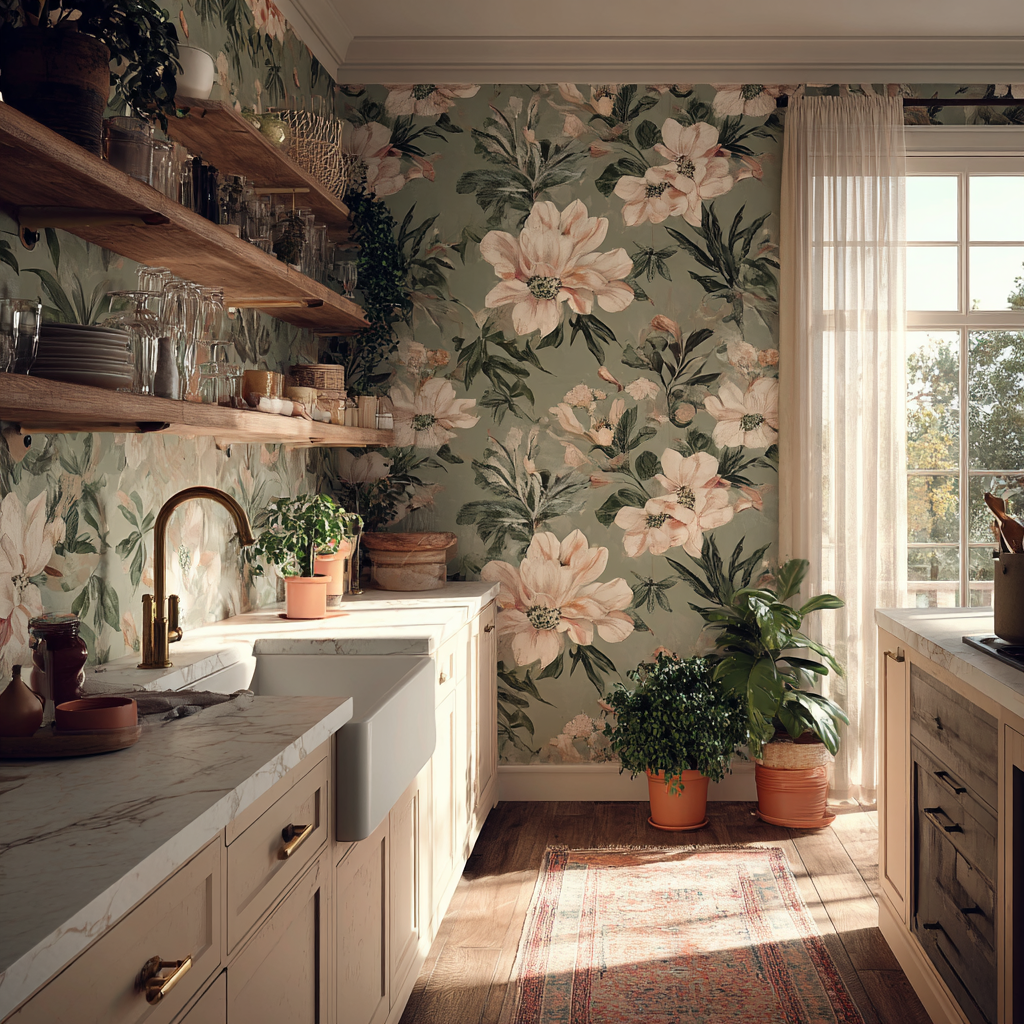
Scale is where a lot of wallpaper backsplash decisions go wrong. A large-scale print that reads beautifully in a showroom, or in a photograph of a kitchen with nothing on the counters, can become genuinely oppressive in a narrow kitchen with limited sightlines and the visual noise of daily life layered on top of it. Conversely, a very small or dense pattern can dissolve into undifferentiated texture from across the room, losing the impact that made it appealing in the first place.
Before committing to any pattern, print a large sample and tape it to the wall. Live with it for several days, in different light conditions, with your actual kitchen items around it. It will tell you more than any mood board.
A few pattern principles that tend to hold:
Design a Home That’s Uniquely Yours
Block can help you achieve your renovation goals and bring your dream remodel to life with price assurance and expert support.
Get Started
Not every stretch of backsplash wall carries the same risk. The backsplash area directly behind the range is exposed to the most heat and grease. The wall immediately around the sink sees the most water. These are the highest-risk zones and require the most protection, or at minimum an honest conversation about whether wallpaper belongs there at all.
If you're concerned about durability, a hybrid approach is worth considering: tile or stone directly behind the range and sink, with wallpaper in the lower-risk stretches of wall in between or to the sides. It's a way to introduce the personality of wallpaper while protecting the areas most likely to cause problems.
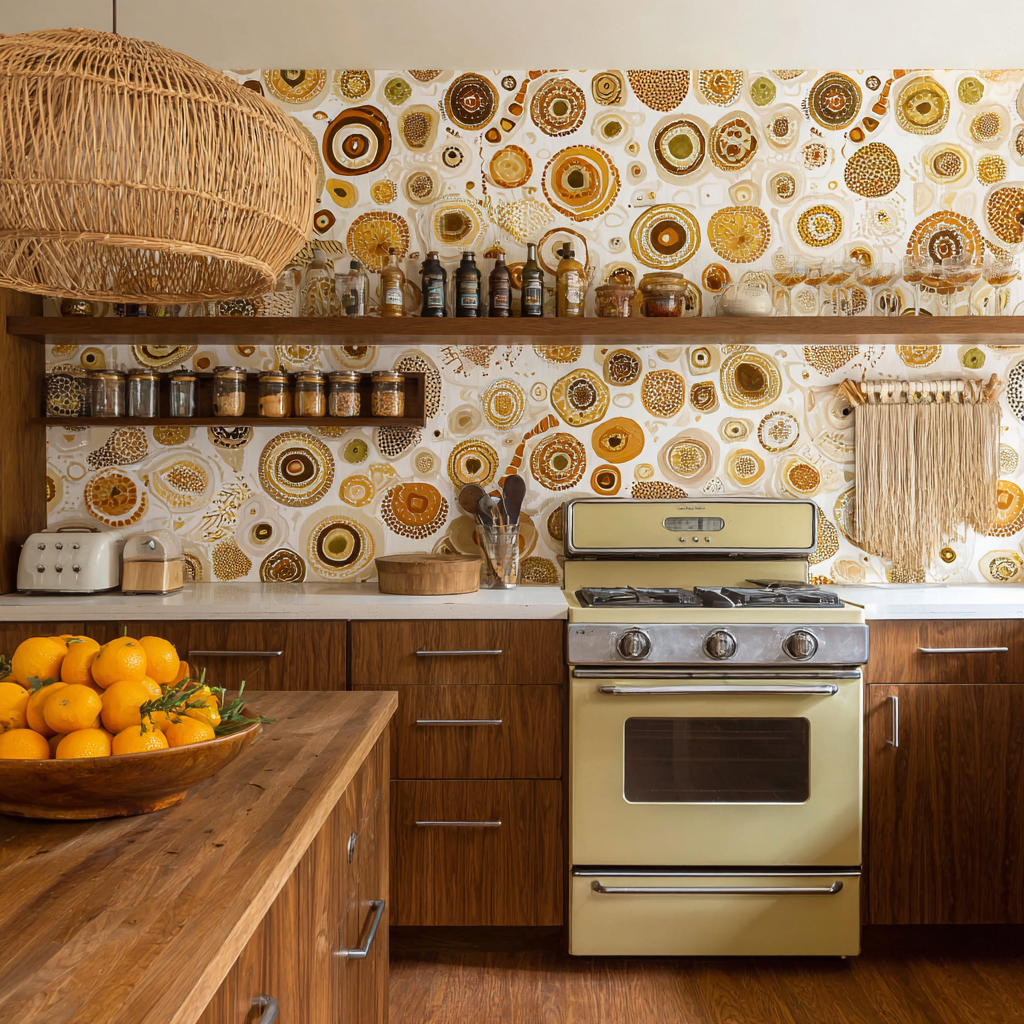
A wallpaper backsplash involves more contractor coordination than most homeowners expect, and the conversations worth having aren't administrative. They're the ones that determine whether the installation actually holds up.
Start with the wall itself. Before any paper goes up, your contractor needs to assess what's behind your existing backsplash. If there's tile to remove, the wall underneath is often in worse shape than expected: adhesive residue, damaged drywall, patches from previous work. The smoother and more consistent the surface, the better the wallpaper will look and perform. This isn't a step to rush through, and it's worth understanding the full scope of prep work before the project budget is locked in.
If you're planning to install tempered glass over the wallpaper, that decision needs to be made at the start of the project, not the end. Glass panels require precise measurement and custom fabrication, and they go in after the wallpaper is fully hung and dried. A contractor who finds out about the glass at the last minute is going to have a harder time coordinating the timeline and the fit. Get it into the plan early.
The range hood conversation is also worth having now, even if it feels unrelated. An undersized or underperforming hood is the single biggest environmental threat to a wallpaper backsplash. If your current hood isn't capturing grease and steam effectively, no amount of glass or sealant fully compensates. A kitchen renovation is the right moment to address ventilation, both for the longevity of the wallpaper and for the air quality of the kitchen generally.
Finally, ask your installer specifically about seam placement. An experienced wallpaper installer will plan seams to fall at corners or behind appliances rather than in the center of a prominent wall. In a backsplash application where the paper is cut to a relatively narrow horizontal band, seam placement matters more than it might in a full-room installation. It's a detail worth discussing before work begins rather than noticing afterward.
A wallpaper backsplash is not the right choice for most kitchens. It requires more planning than tile, more maintenance than tile, and offers less inherent protection against the realities of a working kitchen. For anyone with an eye on resale, it introduces a variable that a neutral tile backsplash simply doesn't.
But for someone who cooks with intention, keeps a tidy kitchen, and wants their home to feel genuinely like theirs, it's one of the more interesting things you can do with that stretch of wall. The kitchens that carry it best tend to be the ones where every other decision was made just as deliberately.
If you're planning a kitchen renovation and want to think through your backsplash options before committing, Block Renovation's project planners can help you work through what makes sense for your space. And if you want to see what different materials and finishes actually look like in your kitchen before anything gets installed, Block's free Renovation Studio lets you visualize those decisions in real time.
Remodel with confidence through Block

Connect to vetted local contractors
We only work with top-tier, thoroughly vetted contractors

Get expert guidance
Our project planners offer expert advice, scope review, and ongoing support as needed
Enjoy peace of mind throughout your renovation
Secure payment system puts you in control and protects your remodel

Renovate confidently with Block
Easily compare quotes from top quality contractors, and get peace of mind with warranty & price protections.
Backsplash
Backsplash Same as Countertop: Ideas, Costs and Upkeep
09.18.2026
Backsplash
Rustic Backsplash Ideas That Survive a Real Kitchen
06.17.2026
Paint & Color
Backsplash Ideas to Flatter Gray Cabinets
04.17.2026
Backsplash
Wallpaper as a Kitchen Backsplash: Ideas & Practical Advice
04.14.2026

Backsplash
Backsplash Ideas for White Cabinets & Granite Countertops
04.06.2026