




Cost
Attic Renovation Costs in 2026: Finish or Convert an Attic
07.20.2026
12.18.2025


In This Article
A pull-down ladder works until it doesn't — until someone carries something heavy up there, until a kid uses it alone, until you decide the attic is actually livable space. At that point it's not a storage solution anymore, it's a liability. A permanent staircase is what makes the difference between an attic you visit and one you actually use. If you’re ready to make your attic genuinely livable or simply want your home to work smarter, a permanent staircase is essential.
This guide walks you through the main options—spiral, straight, and U-shaped staircases—plus design tips and cost insights to help you decide on the right solution for your space and budget.
| Prove the attic works | Check floor load, headroom, dormer needs, insulation, and HVAC before opening the ceiling. Once the stairwell is framed, a bad location becomes expensive to unwind. |
| Clear permits first | A prefab spiral can install in 3 to 5 days, while custom stairs may take 1 to 3 weeks. Permit review can take a week to a month, so hold off on booking the crew until approval is in hand. |
| Spiral stairs have limits | A spiral still needs 5 to 6 feet of clear diameter and may narrow to 7.5-inch treads. That footprint can save space, but it makes furniture moves harder and may weaken resale appeal. |
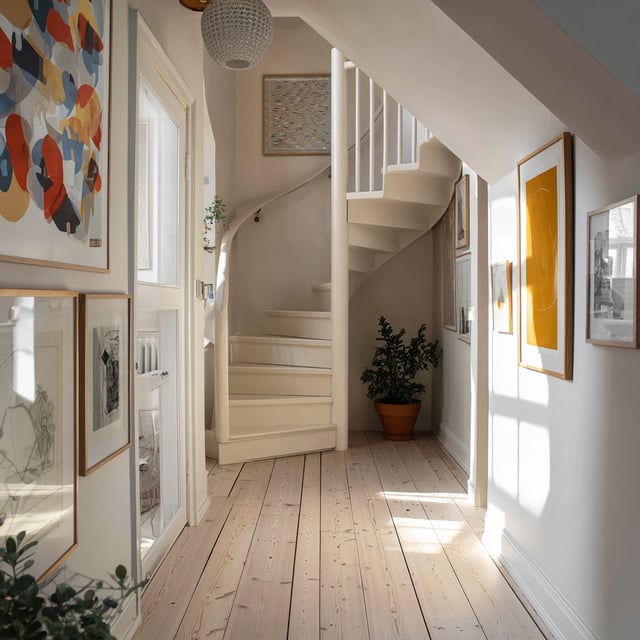
Spiral staircases solve one problem really well: they fit where nothing else does. A 5-foot diameter footprint is workable in hallways that would rule out any other option. That's the appeal; not the look, which is polarizing, but the geometry.
.png?width=1024&height=1024&name=Floating%20Stairs%20to%20Attic%20With%20Pink%20Banister%20(1).png)
|
Pros of Spiral Staircases |
Cons of Spiral Staircases |
|
Compact footprint saves valuable floor space |
Not ideal for hauling large furniture |
|
Eye-catching focal point with design options |
Can feel steep or tricky for some users |
|
Customizable with metal, wood, or mixed finishes |
May not meet local code in every jurisdiction |
|
Often less invasive to install in small areas |
Less comfortable for people with mobility concerns |
The footprint is smaller, but it may not be small enough. A spiral typically needs 5 to 6 feet of clear diameter on both floors, not just at the base. That opening in your attic floor eats into usable square footage above, which matters if headroom is already tight.
Ceiling height at the entry point is the first thing to measure for your spiral staircase. You need enough clearance for someone to step onto the first tread without ducking. This is where a lot of spirals fail inspection — not because of the climb, but because the entry is too low.
Check the path to the stairs, not just the stairs themselves. A spiral tucked into a hallway corner sounds efficient until the hallway narrows to 28 inches at that exact point. The approach needs to work, not just the footprint.
The minimum tread width is not realistic for daily use. Code-minimum spirals can have treads as narrow as 7.5 inches at the walking line. While this is fine for occasional attic access, it's not comfortable as a daily stair for a finished room.
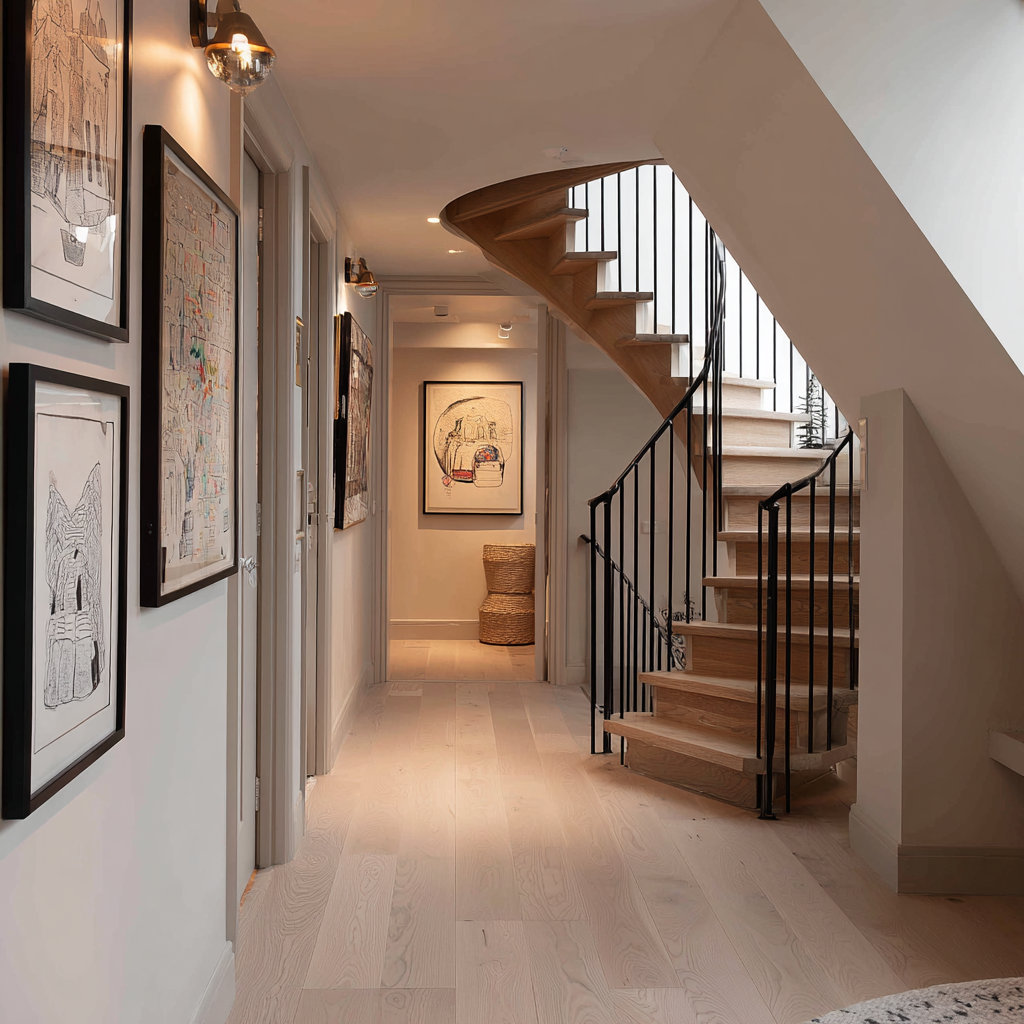
A quality spiral staircase to your attic can range from $3,000 to $9,000 (all in, including materials and installation). Custom designs, premium finishes, or more labor-intensive installs can push costs higher. Prefab kits may be more affordable but offer less flexibility in terms of tread width, height, or style. Local permit prices and required code upgrades can add to the final bill.
Renovation cost calculator
Start with a realistic budget
Get an initial estimate based on your space and project details.
Confirm that they’ll be used solely by able adults and older children - Spiral staircases—particularly those designed for smaller spaces—will ultimately be more challenging to use than those with straighter paths and wider treads.
Go custom for small spaces - Opt for a spiral designed specifically for your opening to maximize headroom and comfort.
Choose durable, grippy treads - For attic access, especially with family or guest use, sided or textured materials raise safety.
Pick railing designs that match your interiors - A sleek metal or minimalist cable can make the staircase feel more open.
Light it up - Spirals often feel tucked away; adding strip lighting along the rails or below treads makes steps safer and more welcoming.
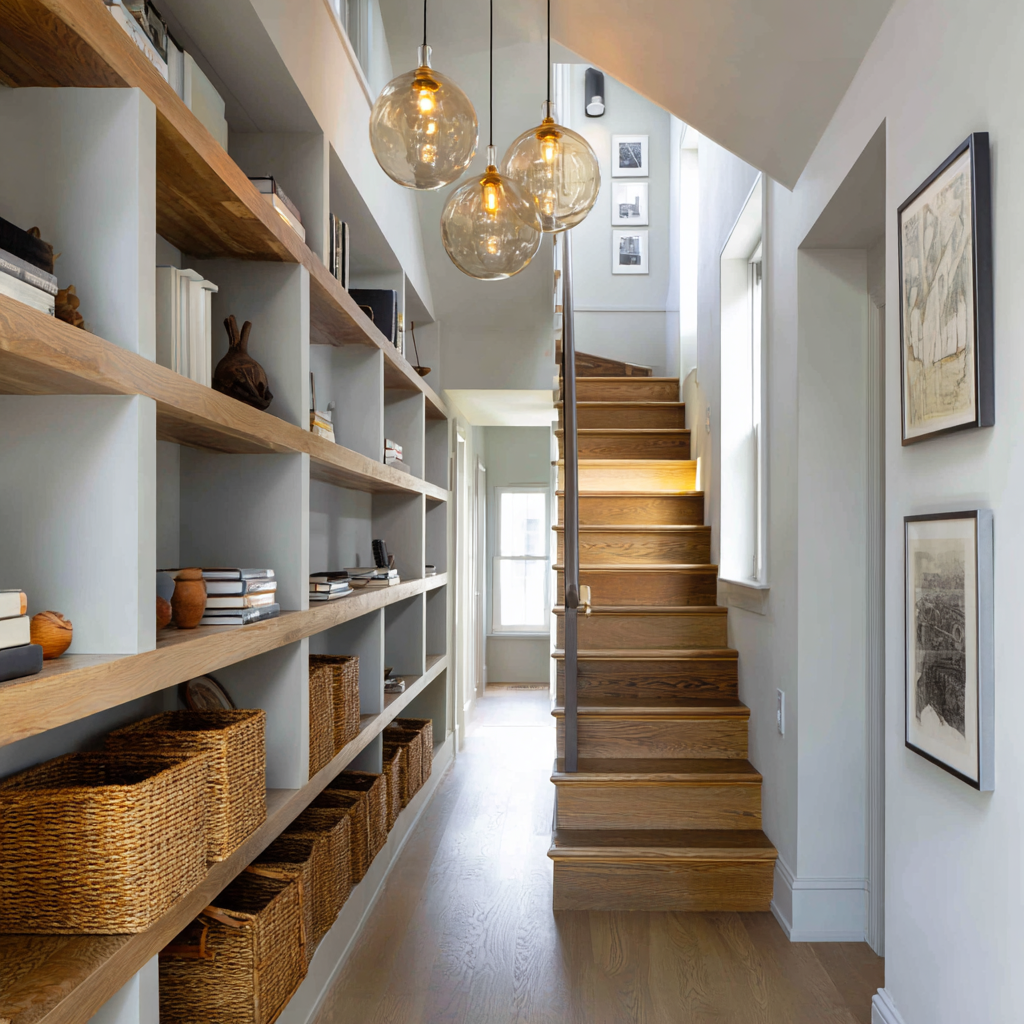
Straight and U-shaped staircases offer the most familiar, easy-to-navigate way up and down. If you have the space to spare, these solutions can blend right into your home’s architecture.
|
Pros of this style of staircase |
Cons of this style of staircase |
|
Comfortable and intuitive to climb |
Needs more linear or square footage |
|
Easy for children, guests, and pets |
Can be visually dominant in smaller homes |
|
Supports moving furniture to the attic |
May require structural changes below |
|
Plenty of options for finishes and materials |
Construction can be disruptive |
|
Under-stair storage unlocks extra functionality |
Cost can be higher for custom layouts |
Both straight and U-shaped staircases need more room—often at least 9–12 linear feet for straight or an L/U-shaped footprint that fits your home’s layout. Ceiling height and head clearance are crucial. Consider where the base of the stairs meets your main floor, avoiding pinch points in your hallway or blocking access to other rooms.
Costs for these stairs generally start around $5,000 and can easily climb beyond $12,000 for custom work (including design, permits, and build-out). The size, finish, need for new framing, and structural work all move the needle on price. Custom railings, storage features, or intricate carpentry will land in the higher range.
Turn your renovation vision into reality
Get matched with trusted contractors and start your renovation today!
Find a Contractor
Thoughtfully chosen details can make your attic staircase feel right at home—from the hallway below to the room above.
Keep the palette cohesive and understated. In a narrow hallway, a bold railing or contrasting paint color draws the eye straight to the tightest part of your home. Match the trim, match the wall color, and let the staircase disappear.
Use light to your advantage. Consider adding wall sconces, LED strips along the handrail, or even a small skylight above the stairwell. Good lighting not only improves safety but also creates an inviting, open feeling in tight or windowless hallways.
Opt for open or perforated stair treads. Spiral stairs with open risers or cutout treads allow more light to pass through, making the staircase appear lighter and less imposing.
Select slim, minimalist railings. Choosing cable or glass railings, or simply a narrow handrail, keeps sightlines clear through your hallway. In a compact space, these sleeker styles can make the whole stairway seem less bulky and more integrated with the surrounding architecture. Find more inspiration with our guide Stair Banister Remodeling Ideas for Both Modern & Traditional Homes.
Consider adding a pony wall beside your stairs. A pony wall is a half-height barrier that replaces traditional balusters and helps define the stairwell without boxing it in. This feature delivers safety and separation while maintaining a bright, open, and connected feeling between your staircase and the hallway.
Blend flooring materials between levels. Matching the hallway floor treatment (such as wood or tile) to the treads of your spiral can foster a smooth transition between spaces.
Continue wall paneling or molding along the stairwell. Extending the hallway’s architectural details, like wainscoting, panel molding, or even wallpaper, up the stairwell brings visual continuity and a polished, custom look.
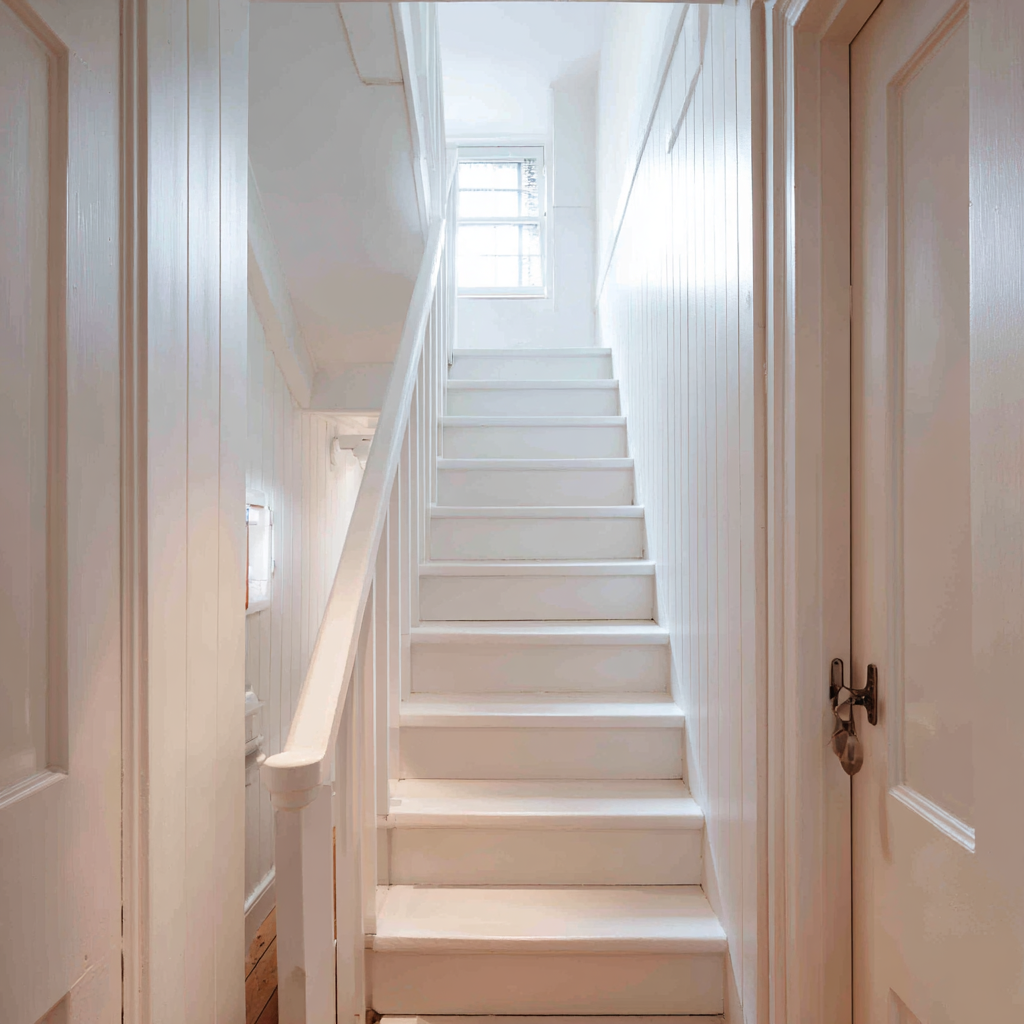
Let's say you've measured the space and ran the numbers, and a permanent attic staircase simply doesn't seem to be in the cards . Here's how to make the ladder less of a liability.
Replace the builder-grade ladder if that's what you have. Most pull-down ladders installed during construction are lightweight aluminum with narrow rungs and a wobble at the top that erodes confidence fast. A heavier wood or telescoping ladder with wider treads and a weight rating above 250 pounds runs $150–$400 and is worth it.
Add a grab bar at the opening. The transition from the top rung onto the attic floor is the most dangerous moment on a pull-down ladder. A mounted grab bar on the framing around the hatch gives you something to hold while you make that step. Most people skip it.
Light the opening from above. A battery-powered light near the hatch that triggers when the ladder drops takes thirty minutes to install.
Insulate the hatch. An uninsulated attic hatch leaks more heat than most people expect. An insulated cover on the attic side with weatherstripping around the frame is a two-hour project that pays for itself.
Keep the landing zone clear. Pull-down ladders fail most often because someone was carrying something while navigating around a box or a piece of furniture at the base. That area needs to stay open.
The staircase decision usually comes down to one question: who's using it, and how often? A spiral is fine if it's two adults accessing storage twice a month. It's a mistake if you're finishing the attic as a bedroom and your parents visit every Thanksgiving. Get that part right first, then work backwards to style and cost.
A skilled contractor from Block will guide you through your options, explain what’s possible in your specific space, and ensure every detail is handled to code. That means you get a final result that makes your attic accessible, attractive, and ready for whatever you have planned next.
Remodel with confidence through Block

Connect to vetted local contractors
We only work with top-tier, thoroughly vetted contractors

Get expert guidance
Our project planners offer expert advice, scope review, and ongoing support as needed
Enjoy peace of mind throughout your renovation
Secure payment system puts you in control and protects your remodel

Renovate confidently with Block
Easily compare quotes from top quality contractors, and get peace of mind with warranty & price protections.
Cost
Attic Renovation Costs in 2026: Finish or Convert an Attic
07.20.2026

Stairs
Staircase Remodel Ideas to Enhance Your Home
07.05.2026
Stairs
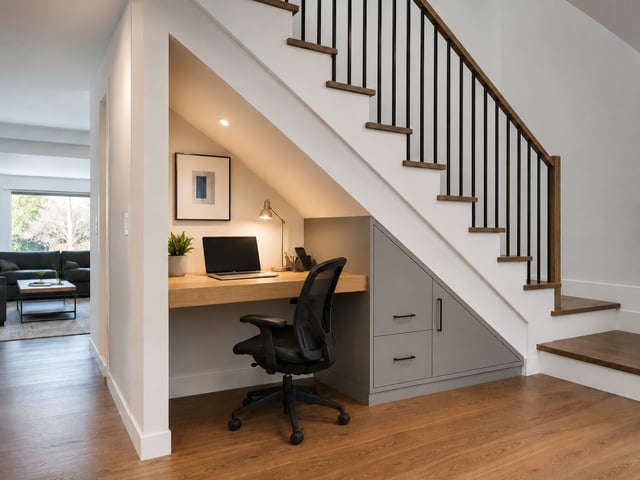
Under-Stairs Office & Desk: Design and Prep | Block
07.03.2026
.webp?width=640&name=bathroom%20custom%20shower%20remodeled%20small%20attic%20(1).webp)
Attic
Convert Attic to Living Space: Costs and Code
06.18.2026
.jpg?width=640&name=images%20(2).jpg)
Stairs
Stairs Remodeling: Cost, Ideas & What to Expect
05.21.2026