



Cost
The Cost to Add a Half Bath & How to Plan for It
09.04.2026
Budget your upcoming kitchen remodel with help from Block
05.02.2026


In This Article
A kitchen remodel is one of the most popular renovations a homeowner can take on. Block's How America Renovates 2026 report found that 39% of homeowners renovating this year are working on their kitchen, second only to bathrooms, and the reasons are easy to understand. Few rooms shape day-to-day life the way a kitchen does, and few projects deliver such a visible return when it's time to sell.
The average kitchen remodel cost in 2026 ranges from $15,000 to $100,000+, with most homeowners spending $30,000 to $50,000 on a mid-range project. Minor cosmetic refreshes can come in below $20,000, and full luxury renovations in coastal metros routinely exceed $150,000.
But that's not the full story. How much it costs to remodel a kitchen depends on three things: the size of your kitchen, the scope of the work, and where you live. The rest of this guide walks through each of them, with specific numbers for what your budget actually buys.
Two questions shape every kitchen remodel cost: how big is your kitchen, and how much work are you doing? The matrix below covers the range, with detailed breakdowns by size further down the page.
|
Cosmetic refresh |
Mid-range remodel |
Gut renovation |
|
|
Small (under 100 sq ft) |
$12K–$20K |
$25K–$40K |
$50K–$80K |
|
Medium (100–200 sq ft) |
$18K–$30K |
$35K–$65K |
$75K–$130K |
|
Large (200+ sq ft) |
$25K–$45K |
$55K–$100K |
$120K–$250K+ |
A few quick definitions before we go further:
Renovate with confidence every step of the way
Step 1: Personalize Your Renovation Plan
Step 2: Receive Quotes from Trusted Contractors
Step 3: Let Us Handle the Project Details

National averages will only get you so far when you're trying to picture your own project. The breakdowns below show what $15K, $30K, and $60K cover in each size kitchen, drawing on Block platform data and 2026 industry benchmarks.
A small kitchen remodel costs $12,000 to $80,000, depending on scope. Galley, one-wall, or tight L-shape layouts have 10 to 20 linear feet of cabinetry, and you'll find this footprint in pre-war urban apartments, older row homes, and starter houses.
|
$15,000 |
$25,000 |
$40,000+ |
|
|
Scope |
Cosmetic refresh |
Full mid-range remodel |
Near-gut renovation |
|
Cabinets |
Paint or reface existing boxes; new hardware |
New stock cabinets with soft-close |
Semi-custom with pull-outs and deep drawers |
|
Countertops |
Laminate or entry-tier quartz |
Mid-tier quartz or granite |
Premium quartz; butcher block accents |
|
Appliances |
Keep existing; swap one aging piece |
Full mid-tier package (~$4K) |
Mid-to-upper package; paneled dishwasher possible |
|
Flooring |
Luxury vinyl plank over existing |
Tile or engineered wood |
Hardwood or large-format porcelain |
|
Layout / rough-ins |
No changes |
No changes |
Minor plumbing or electrical moves |
|
Best for |
Rental prep, quick refresh before listing |
Long-term homeowners |
Pre-resale upgrade or forever home |
|
Trade-offs |
No new cabinetry or layout work |
No custom cabinets or wall moves |
Pro-grade appliances and major structural work still out of reach |
A small kitchen is the one place where $15,000 stretches. There's less surface to cover, fewer linear feet of cabinetry to replace, and shorter runs for any tradework that does happen. The same $15,000 in a 200-square-foot kitchen barely funds new countertops.
A medium kitchen remodel costs $18,000 to $130,000, depending on scope. This is the American average. Most medium kitchens have an L-shape, U-shape, or single-island layout with 20 to 30 linear feet of cabinetry. If you're reading this article, this is most likely your kitchen.
|
$30,000 |
$55,000 |
$90,000+ |
|
|
Scope |
Tight mid-range remodel |
Full mid-range remodel |
Upper-tier with minor structural work |
|
Cabinets |
Reface boxes with new fronts; stock replacements |
Semi-custom shaker (KraftMaid, Fabuwood tier) |
Upper semi-custom or entry custom; inset doors |
|
Countertops |
Mid-tier quartz |
Premium quartz or granite |
Quartzite, marble, or stone-and-wood combo |
|
Appliances |
Selective upgrade (~$3K); keep refrigerator |
Full mid-tier package (~$6–8K) |
Upper-mid package with counter-depth fridge, induction range |
|
Flooring |
LVP or tile |
Hardwood or engineered wood |
Site-finished hardwood or premium tile |
|
Layout / rough-ins |
Keep footprint |
Keep footprint; minor electrical |
Sink or range can shift; new island circuits |
|
Best for |
Refreshing a kitchen that already works |
Most homeowners |
Homes you'll stay in 10+ years |
|
Trade-offs |
No new cabinets or appliances |
No custom cabinetry or wall removal |
Pro-grade appliances and full gut-to-studs still out of scope |
This is the size where budget creep does the most damage. A $30,000 plan turns into a $45,000 plan the moment you decide to replace the cabinets instead of refacing them, and once that domino falls, counters and appliances follow. Lock the cabinet decision before anything else; it's the single biggest swing factor in a medium kitchen budget.
A large kitchen remodel costs $25,000 to $250,000+, depending on scope. Open-concept, multi-island, or wall-through-to-dining layouts have 30+ linear feet of cabinetry and a pantry. This footprint is common in newer suburban builds and renovated lofts.
|
$60,000 |
$120,000 |
$200,000+ |
|
|
Scope |
Scaled-up mid-range remodel |
Upper-tier with layout changes |
Full luxury or gut renovation |
|
Cabinets |
Semi-custom shaker throughout |
Upper semi-custom or custom; specialty pantry |
Fully custom with paneled appliance fronts |
|
Countertops |
Quartz with waterfall island |
Premium quartz, quartzite, or marble |
Book-matched stone; slab backsplash |
|
Appliances |
Mid-tier suite (~$10K) |
Upper-mid suite with double ovens, wine fridge |
Sub-Zero / Wolf / Miele pro suite ($25K+) |
|
Flooring |
Engineered hardwood |
Site-finished hardwood |
Wide-plank oak or custom tile |
|
Layout / rough-ins |
Keep most of footprint |
Wall removal, relocated sink, new island |
Structural reconfiguration, new HVAC, smart home integration |
|
Best for |
Scaled-up mid-range in larger homes |
Long-term primary residence |
Luxury home or high-end resale market |
|
Trade-offs |
No major structural work or pro appliances |
Top-tier appliances, imported stone still out of reach |
Few trade-offs within a realistic scope |
In a large kitchen, labor and coordination costs climb faster than materials. An extra fifty square feet means more cabinetry runs, longer counter spans, additional electrical runs, and more trades to coordinate on site. For projects this size, plan on a 15 to 20% contingency rather than the standard 10%.
Compare Proposals with Ease

A typical mid-range kitchen remodel breaks down like this:
|
Line item |
Share of budget |
Spend on a $50K project |
|
Cabinetry + hardware |
25–35% |
$12,500–$17,500 |
|
Labor (GC, trades, installation) |
20–35% |
$10,000–$17,500 |
|
Appliances |
10–20% |
$5,000–$10,000 |
|
Countertops + backsplash |
10–15% |
$5,000–$7,500 |
|
Flooring |
5–10% |
$2,500–$5,000 |
|
Lighting, plumbing fixtures, paint |
5–10% |
$2,500–$5,000 |
|
Permits, design, contingency |
5–10% |
$2,500–$5,000 |
Ranges reflect typical variance from project to project; the seven categories sum to 100% on any given project. Budget a separate 15 to 20% contingency on top of these line items for surprises that surface once walls open up.
You'll notice that cabinetry is the largest line item in nearly every project, and that's not just because of the cabinets themselves. They're the most visible surface in the room and the most labor-intensive to install. Cabinet quality also pulls the rest of the budget along with it. Custom cabinets pair with premium counters, upgraded hardware, and more complex installation, which is why a single decision about cabinet tier can move the whole budget by tens of thousands.
Labor is the second-largest expense and the most regionally variable piece of the picture. Skilled trades in major metros run $75 to $120 per hour, while in lower-cost markets the same work runs $40 to $60. That's why a kitchen remodel in San Francisco can cost 30 to 60% more than the identical project in Memphis. The materials are similar, but the labor isn't.
Sorina Panfil of Art Deco Enterprises advised, "Whether you're working with a designer on a design-build project or doing it yourself, find a contractor who can walk you through the process clearly."

Make sure you handle permits, approvals, and material orders in advance so that once work begins, there's no costly downtime.
Within the ranges above, four variables determine where your project lands.
National averages are useful for ballpark planning, but the actual price of a kitchen remodel changes significantly depending on where you live. Local labor rates, housing stock, climate considerations, and contractor demand all shape what homeowners spend. A look across five very different markets makes the point.
|
City |
Mid-range cost |
|
$30,000–$70,000 |
|
|
$45,000–$85,000 |
|
|
$48,000–$85,000 |
|
|
$50,000–$100,000 |
|
|
$55,000–$110,000 |
The same scope of work can vary by tens of thousands of dollars from one city to the next, and even more dramatically when you compare neighborhoods within a single metro. The most reliable way to budget for your specific project is to estimate against your local market.
Know the Cost Before You Start
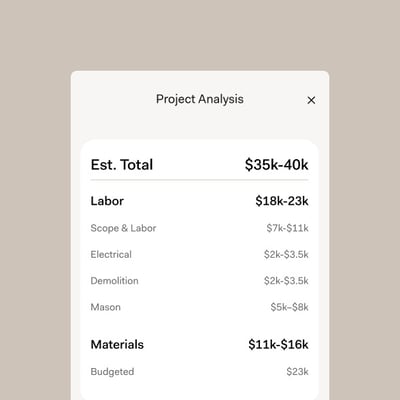
The line items above cover the project itself. A handful of expenses surface only once walls open up or permits get pulled, and they're worth budgeting for in advance.
The easiest places to save are the ones that won't show in five years. The wrong places to save are the ones that look like savings on day one and become problems by week three. Below are six rules that hold up in nearly every kitchen we've worked on.
Trends date quickly, so it's safer to keep them in low-cost categories like paint and hardware than to commit to them in tile or stone. A bold cabinet color is easy to repaint; an imported tile backsplash is not.
"The one thing I wish homeowners would stop doing when picking a backsplash is following current trends. Backsplashes are one of those things where, when a trendy one gets chosen, it can look terrible within a few years. Especially when it comes to selling a home; it's so obvious when you walk into a house and see a backsplash and think, 'there's 2019, there's 2022.' I really wish homeowners would look at longstanding, classic, timeless backsplashes, something that isn't too loud and in your face, something elegant and sophisticated, but still cohesive with the rest of the space." Mary Ryan, Senior Designer, MCR Designs.
Refacing or replacing cabinet fronts while keeping budget-tier boxes captures most of the visual upgrade for a fraction of the cost. This is one of the highest-leverage decisions a homeowner can make in a cosmetic remodel. The boxes themselves are usually structurally fine; what dates a kitchen is the door style, the finish, and the hardware. Replace those, and you've changed almost everything a guest will notice.
Almost anything that requires moving plumbing belongs in the "skip it" column unless the existing layout genuinely doesn't work. Keeping the sink, range, and refrigerator in their original locations cuts thousands in plumbing and electrical work. Most kitchens that "need" a layout change actually need better storage and lighting. Both are far cheaper to fix than walls and rough-ins. Learn more with our guide to rerouting plumbing costs.
Statement backsplashes are one of the most overpriced line items in a kitchen budget. Mid-tier tile installed well reads as premium to almost everyone, and the difference between a $15-per-square-foot tile and a $40-per-square-foot tile rarely shows in photos or in person. Spend the difference on installation quality instead. A perfect grout line on a $15 tile beats a sloppy install on a $40 tile every time.
It feels like savings to buy your own cabinets, fixtures, or appliances at a discount and have your contractor install them. It rarely is. Sizing mistakes, missing parts, and incompatible specs end up costing more than the savings, and the contractor's warranty usually doesn't cover homeowner-supplied materials. If you want to source something specific yourself, run it past your contractor before purchasing.

"When it comes to procurement, homeowners will often try to go a cheap route and pick out their own materials. But if they're working collaboratively with their general contractor, it's sometimes better to let the contractor handle it. Too often, homeowners go buy a cheap cabinet that won't even fit their kitchen dimensions, and they have to start from scratch."
The fastest way to blow a kitchen remodel budget is a stalled construction schedule. Cabinet lead times of 8 to 16 weeks are common in 2026, and counters, appliances, and tile all have their own lead times stacked on top. Every week of contractor downtime costs money in storage, rescheduled trades, and extended project management. Ordering everything before demolition starts is the cheapest decision in the project.
Block matches homeowners with vetted contractors who specialize in kitchen remodels, with transparent pricing, warranty protection, and project planners who help you compare quotes apples to apples. Use Renovation Studio to generate a real-time estimate based on your kitchen size, scope, and ZIP code, or get matched with contractors in your area.
Remodel with confidence through Block

Connect to vetted local contractors
We only work with top-tier, thoroughly vetted contractors

Get expert guidance
Our project planners offer expert advice, scope review, and ongoing support as needed
Enjoy peace of mind throughout your renovation
Secure payment system puts you in control and protects your remodel

Renovate confidently with Block
Easily compare quotes from top quality contractors, and get peace of mind with warranty & price protections.
Cost
The Cost to Add a Half Bath & How to Plan for It
09.04.2026

Cost
20x20 Room Addition Cost: What to Budget in 2026
07.28.2026

Cost
2026 Bedroom Remodel Cost Guide: Average Price, Tips & ROI
07.22.2026

Cost
Attic Renovation Costs in 2026: Finish or Convert an Attic
07.20.2026

Cost
Cost to Finish a Basement in 2026: Prices & Estimates
07.17.2026