



.png?width=640&name=u5821215421_A_bright_coastal_living_room_with_a_half_wall_rai_f928a036-9b29-41b7-9710-603210dbd9a4_3%20(1).png)
Georgia
Planning a Brookhaven Custom Home? Start Here
06.11.2026

04.15.2026


In This Article
Atlanta's housing market has been recalibrating since the frenzy of 2021 and 2022. Active inventory climbed above 20,000 homes by the end of 2024, a 42% year-over-year increase, and days on market stretched from roughly 55 days to 84 days in early 2025. The median sale price in Atlanta proper sits in the high $300Ks to mid-$400Ks depending on the neighborhood, and homes now sell at 2 to 3% below list price on average rather than above it.
For sellers, this is a market that rewards preparation, pricing discipline, and a clear understanding of what today's buyers are comparing your home against. It punishes overconfidence: homes priced more than 5% above realistic comparables are consistently sitting past the 90-day mark and ultimately selling below their original list price.
What makes Atlanta's renovation calculus genuinely interesting is the tension at the heart of the city's residential character. Atlanta's most desirable neighborhoods, including Virginia Highland, Candler Park, Inman Park, East Atlanta, Decatur, and Grant Park, are defined by early 20th-century bungalows, Craftsman homes, and Four Squares that buyers seek out specifically for their original details: the wide front porches, the built-in bookcases, the arched doorways, and the heart pine floors. But those same buyers want a kitchen that can handle a dinner party and a primary bathroom that does not require imagination to tolerate.
The renovation challenge in Atlanta is not about modernizing indiscriminately. It is about honoring what makes a Virginia Highland bungalow a Virginia Highland bungalow while delivering the functional modernity that buyers in 2025 expect at that price tier.
Neighborhoods like Virginia Highland, Candler Park, Inman Park, Kirkwood, East Atlanta, and Decatur are defined by Craftsman bungalows and Four Square homes built predominantly between 1910 and 1940. These homes have the architectural details, including original woodwork, hardwood floors, arched entries, and front porches, that command premiums in Atlanta's market. Median prices in these neighborhoods have held up better than suburban averages: Decatur and Kirkwood showed 6% appreciation even as the broader Atlanta market softened.
Renovation priorities here: preserve and highlight original character elements while modernizing kitchens and bathrooms in ways that feel sympathetic rather than jarring. A Shaker-style kitchen in warm tones feels right in a Craftsman bungalow. A high-gloss ultra-contemporary kitchen feels like a different house was dropped inside the original one.
The 1950s to 1970s ranch homes of Sandy Springs, Tucker, Chamblee, and Doraville represent a large share of Atlanta's housing stock and are among the most actively renovated. These homes often have good bones: solid construction, hardwood floors under carpet, and generous lot sizes. The renovation opportunity here is more straightforward: open the floor plan, update the kitchen and baths, and present a home that feels contemporary without pretending to be something it is not.
The largest share of Atlanta's overall housing inventory is 1980s to 2000s construction in Cobb, Gwinnett, Forsyth, and Cherokee counties: two-story Colonials and traditional ranches that absorbed the region's growth during those decades. These homes have dated in specific, predictable ways: popcorn ceilings, brass fixtures, laminate flooring, and original HVAC systems. They were not architecturally distinctive to begin with, which means they do not benefit from a preservation-minded approach. The renovation strategy here is simpler: clean, modern, and neutral.
Design a Home That’s Uniquely Yours
Block can help you achieve your renovation goals and bring your dream remodel to life with price assurance and expert support.
Get Started
In Atlanta's in-town bungalow neighborhoods, the original details are the product. Buyers pay the Virginia Highland premium specifically because the home has original hardwood floors, original built-ins, and a front porch with original columns. Renovation choices that preserve, restore, or complement these elements produce dramatically better outcomes than choices that cover or remove them.
Specific moves that consistently pay off: refinishing original hardwood floors rather than covering them with vinyl or engineered wood ($3 to $5 per square foot); stripping paint from original woodwork to reveal the natural grain; retaining and repairing original built-in bookcases and cabinetry rather than replacing them; and keeping original doors and hardware rather than substituting contemporary versions that fight the architecture. These are often low-cost interventions with disproportionate impact because they restore what buyers are actively seeking.
Kitchen updates in Atlanta's historic bungalows require more design thought than in a generic suburban colonial. An all-white Shaker kitchen with marble-look quartz and matte black hardware is a safe choice in most settings. In a 1920s Craftsman bungalow, it can feel both anonymous and incongruous. Slightly warmer choices, such as cream or sage Shaker cabinets, butcher block or honed stone countertops, and unlacquered brass hardware, produce kitchens that feel updated while also feeling native to the house.
For mid-range Atlanta bungalow neighborhoods, a kitchen refresh in the $12,000 to $25,000 range is typically the right investment level. For the highest-demand neighborhoods, including Inman Park, Virginia Highland, and Candler Park, buyers at prices above $600,000 expect a more complete renovation. A half-measure reads as under-investment against the competition.

“Kitchens, bathrooms, floors, and simple cosmetic updates deliver the strongest resale impact. You don’t always need a gut renovation to wow buyers.”
Atlanta's older housing stock presents a genuine bathroom challenge. Original bathrooms in 1920s to 1940s bungalows were small, often under 50 square feet, and typically served as the home's only bathroom. This is a real limitation in a market where buyers with children or frequent guests need at least a powder room option.
The highest-ROI bathroom investment for many in-town Atlanta sellers is adding a second bathroom, specifically a half-bath in a space that can accommodate one without significant structural work. Going from one full bath to one-and-a-half baths meaningfully expands your buyer pool and supports a price that justifies the investment. Understanding what that involves, including any plumbing rerouting required, is important before committing. For a complete picture of what bathroom additions involve at different scales, Block's guide on the cost to add a bathroom to a house covers the range from powder rooms to full suite additions.
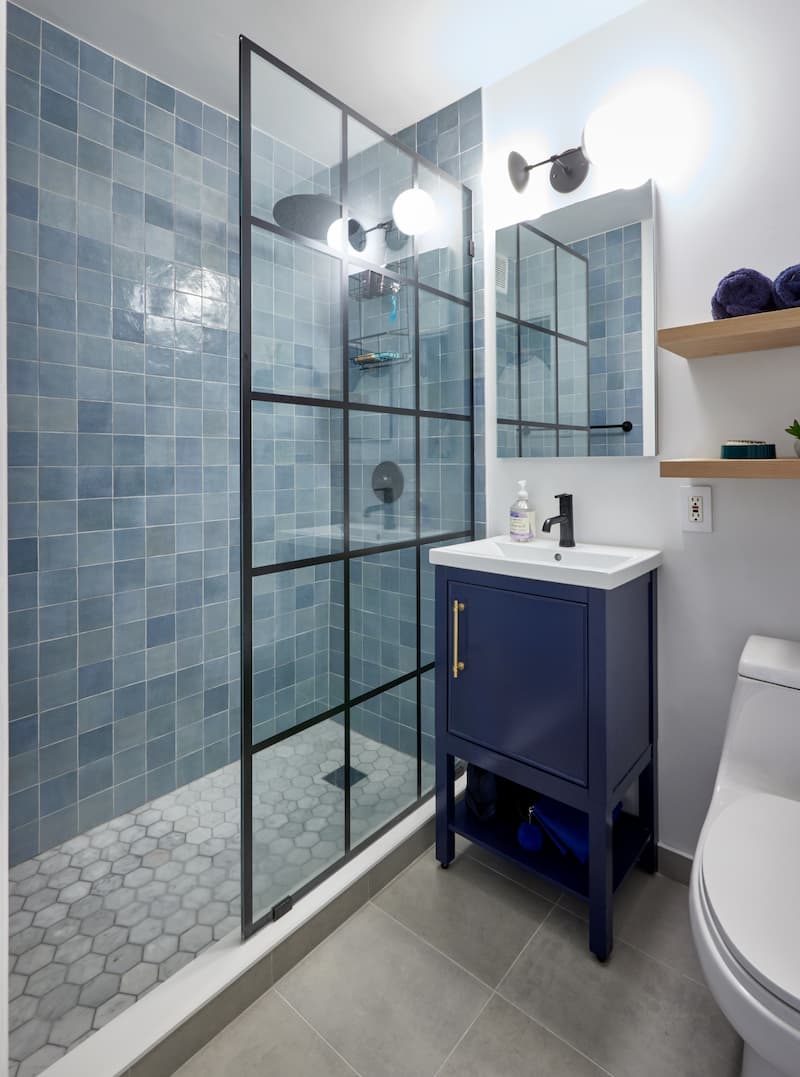
For the existing primary bathroom, the renovation principle matches the kitchen: modern function, sympathetic aesthetic. A new pedestal sink with period-appropriate fixtures, a retiled shower with subway tile in a classic pattern, and good lighting costs $8,000 to $16,000 and feels correct in an older Atlanta home in a way that a sleek contemporary spa bathroom does not.
Transparent Pricing You Can Trust

Atlanta's hot and humid summers create renovation priorities that differ from the national average. HVAC condition and capacity surface in every inspection. A system over 15 years old will be flagged, negotiated over, and priced against in a market where buyers have options. Replacing an aging HVAC system before listing ($5,000 to $10,000) removes this negotiating lever and signals responsible ownership.
Atlanta has also seen significant homeowner's insurance cost increases driven by severe weather events. Impact-resistant roofing using Class 4 shingles can reduce premiums by 15 to 25% and is an increasingly tangible selling feature for buyers who have recently experienced their own insurance sticker shock. A full roof replacement with impact-resistant material ($8,000 to $16,000) addresses an inspection concern, reduces ongoing costs, and has a documented insurance benefit that buyers can verify.
With homes spending 50 to 84 days on the market, Atlanta buyers in 2025 are researching more properties and identifying more reasons not to buy before they find their reason to commit. Presentation matters more than it did when any semi-decent listing received 12 offers.
Professional staging ($1,500 to $4,000 for initial staging plus monthly rental) produces measurably better results in Atlanta's current market. In a market where 90 days on market is a real possibility, reducing that timeline has direct financial value. Fresh paint in warm neutral tones, cleaned and polished original hardwood floors, and a well-staged interior create the kind of first impression that converts a showing into an offer.
For 1980s to 2000s suburban Colonials and ranches in Cobb, Gwinnett, and Cherokee counties, the renovation calculus is more straightforward. There is no historic character to preserve, so the target is clean, current, and neutral. Removing popcorn ceilings ($1 to $2 per square foot), replacing brass fixtures throughout ($300 to $800 for all hardware in a typical home), updating light fixtures to contemporary versions ($800 to $2,500), and repainting in current neutral tones are the interventions that most reliably close the gap between a dated suburban home and one that competes with newer construction.
|
Renovation |
Estimated cost |
ROI profile |
Atlanta-specific notes |
|
Original hardwood floor refinishing |
$3-$5/sq ft |
Very high in-town |
Essential in bungalow neighborhoods |
|
Kitchen refresh (sympathetic to home era) |
$12,000-$25,000 |
High |
Aesthetic compatibility matters in historic homes |
|
Bathroom update (primary) |
$8,000-$16,000 |
High |
Modern function, period-sympathetic aesthetic |
|
Adding a half-bath or powder room |
$8,000-$18,000 |
High |
Especially valuable in single-bath in-town homes |
|
HVAC replacement |
$5,000-$10,000 |
Defensive but strong |
Removes inspection negotiating point |
|
Impact-resistant roof replacement |
$8,000-$16,000 |
Strong |
Insurance cost reduction is quantifiable |
|
Professional staging |
$1,500-$4,000 |
Very high |
Longer market times make staging more valuable |
|
Paint and fixture updates (suburban) |
$3,000-$6,000 |
Very high |
Highest ROI entry point for 80s-90s suburban stock |
|
Popcorn ceiling removal |
$1-$2/sq ft |
High in suburban |
Immediate visual modernization |
Block Renovation is a technology-powered renovation platform that protects homeowners from common and costly renovation pitfalls. From unclear contractor vetting to unpredictable pricing and payment risks, Block reimagines every step of the process to give homeowners clarity, control, and confidence. With Block, homeowners can receive personalized price estimates before construction begins. Block manages payments through a secure, progress-based system, ensuring contractors are only paid as work gets done.
Remodel with confidence through Block
Connect to vetted local contractors
We only work with top-tier, thoroughly vetted contractors

Get expert guidance
Our project planners offer expert advice, scope review, and ongoing support as needed
Enjoy peace of mind throughout your renovation
Secure payment system puts you in control and protects your remodel

Renovate confidently with Block
Easily compare quotes from top quality contractors, and get peace of mind with warranty & price protections.
Georgia
Planning a Brookhaven Custom Home? Start Here
06.11.2026
.png?width=640&name=u5821215421_A_bright_coastal_living_room_with_a_half_wall_rai_f928a036-9b29-41b7-9710-603210dbd9a4_0%20(1).png)
Georgia
Custom Home Building in Augusta, Georgia: Local Guide
04.23.2026
.png?width=640&name=u5821215421_Apartment_Therapy_style_simple_upgraded_garage_in_d4af6dfc-e05b-4eb3-8a40-1969bb173efb_2%20(1).png)
Georgia
How to Upgrade Your Atlanta Garage Without Overspending
04.23.2026

Georgia
Atlanta Condo Renovations: Smart Upgrades That Protect Your Investment
04.22.2026
Georgia
Home Renovation ROI in Atlanta: Preserving Character While Meeting Modern Expectations
04.15.2026