



.png?width=640&name=u5821215421_A_bright_coastal_living_room_with_a_half_wall_rai_f928a036-9b29-41b7-9710-603210dbd9a4_3%20(1).png)
Georgia
Planning a Brookhaven Custom Home? Start Here
06.11.2026
.png?width=640&name=u5821215421_A_bright_coastal_living_room_with_a_half_wall_rai_f928a036-9b29-41b7-9710-603210dbd9a4_0%20(1).png)
04.23.2026


In This Article
Augusta does not get the attention that Atlanta or Savannah do, but for homeowners who want to build custom, that is part of the point. Land costs in the Augusta metro remain low by almost any Southern comparison. The permitting process is relatively straightforward. And the climate, while demanding in its own ways, does not carry the wildfire or hurricane risk that complicates building in so many other desirable Southern markets.
Augusta is not a static market, though. Retirees have been arriving steadily, drawn by the mild winters, low cost of living, and the city's reputation beyond golf season. If you have been weighing a custom build here, the timing argument is real.
Turn your renovation vision into reality
Get matched with trusted contractors and start your renovation today!
Find a Contractor
Augusta's land market has a split personality, and which side of it you are buying on shapes your entire project.
Land near Augusta National Golf Club and the surrounding neighborhoods has been bid up significantly, driven by the tournament economy and the prestige of the address. Buyers who want to build within a short drive of Washington Road or the club itself will pay prices that are no longer representative of Augusta broadly. For anyone weighing whether to renovate or start fresh with a new build, Augusta's land costs often tip the math toward building new.
Move a few miles in any direction - toward Evans, Grovetown, or the unincorporated portions of Columbia County - and the picture changes completely. Parcels that would cost $150,000 or more in comparable markets in Raleigh or Nashville are available here for a fraction of that. Columbia County in particular has become the primary destination for custom home activity in the metro, with good schools, infrastructure that supports new construction, and land values that still leave room to build a quality home at a total project cost that feels impossible in most of the South.
Do not price Augusta's land market based on what you see near the tournament corridor.
Augusta sits across two counties with different regulatory environments, and the distinction matters.
Columbia County is where most new custom home construction is happening. The county has a well-developed permitting process, active residential development infrastructure, and a planning department experienced with custom home projects. Timelines for permit approval on a straightforward new single-family home typically run 4 to 8 weeks.
Richmond County covers the City of Augusta itself. The permitting process here involves the Augusta-Richmond County Planning and Development Department. Projects in the city proper, particularly in established neighborhoods, can encounter additional steps related to zoning, historic review where applicable, and infrastructure conditions that newer Columbia County lots do not have.
For most custom home buyers, Columbia County offers the cleaner path. Buyers interested in building on an infill lot within the city - where land can be found at very low prices in some neighborhoods - should understand that the process is more involved and some of those neighborhoods come with infrastructure conditions worth investigating carefully before purchase.
Augusta sits in a humid subtropical zone. Summers are long, hot, and relentlessly humid. Winters are mild but include enough freeze events to matter for mechanical systems and foundation design.
Spray foam insulation
Closed-cell spray foam is the most effective insulation choice for Augusta's climate. It performs as both insulation and air barrier, which is critical in a humid environment where air infiltration carries moisture into wall cavities. Homes built with fiberglass batt insulation and standard housewrap often develop persistent moisture and air quality issues in Augusta's summers. The upfront cost premium for spray foam is real, but it pays back in lower utility costs and a more comfortable home.
Whole-home dehumidification
A standard HVAC system handles temperature but not humidity independently. In Augusta, where summer humidity levels are routinely high, a whole-home dehumidification system - either integrated into the HVAC or as a standalone unit - is worth building in from the start. Homes without it run their air conditioning harder than necessary trying to compensate, and the moisture levels never quite get comfortable. It is far less expensive to spec this in during construction than to add it later.
Roof design and overhangs
Deep roof overhangs are a practical choice in Augusta, not just an aesthetic one. They shade the exterior walls from direct summer sun, reduce cooling loads, and protect the building envelope from the heavy rain events the region sees regularly. A contractor familiar with building in the Augusta climate will understand this. One who is not local may default to tighter overhangs that look contemporary but work against you in this environment.
Crawl space versus slab
Augusta's soil composition varies across the metro. Columbia County clay soils drain slowly and can shift seasonally, which affects foundation decisions. Many builders in the area default to slab construction for its simplicity, but a raised crawl space - properly encapsulated and conditioned - can be a better long-term choice on certain lot types, particularly those with drainage concerns. Have your geotechnical assessment inform this decision rather than letting it default to builder preference.
Columbia County's Building and Planning Department manages permits for new residential construction in unincorporated areas. The county uses a standard building code review process with inspections at foundation, framing, mechanical rough-in, and final stages. For a well-prepared application with complete drawings and engineering documentation, initial permit approval typically takes 4 to 8 weeks.
Columbia County does not have city-level zoning complications for most of the parcels where custom home activity is concentrated. HOA requirements vary by subdivision - some of the newer planned communities in the Evans corridor have active architectural review processes, while most rural and semi-rural parcels outside organized developments do not.
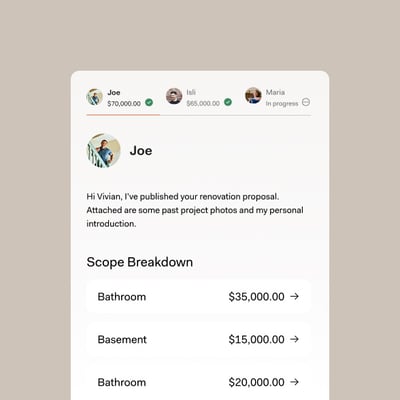
Compare Proposals with Ease
The Augusta-Richmond County Unified Government consolidates city and county planning functions. For projects within the city limits, the Planning and Development Department reviews permit applications. Infill projects in established neighborhoods can require additional steps, including zoning compliance review and, in some cases, Board of Zoning Appeals approval if the proposed structure does not conform to existing setback or use requirements.
What you will typically need to submit
Augusta remains one of the most affordable custom home markets in the South, and the numbers below reflect what projects actually cost here, not what people sometimes assume. Choosing cost-effective home designs from the start is one of the most reliable ways to protect that advantage.
Construction cost ranges
Custom home construction in the Augusta metro currently runs approximately $160 to $240 per square foot for the structure, depending on finish level, complexity, and site conditions. A 2,200 square foot home at the midpoint represents a construction cost around $440,000 before land and soft costs. Add land in Columbia County, permits, and soft costs, and a complete project in the $550,000 to $650,000 range is realistic for a well-built custom home on a good lot.
That number is hard to find in most of the South right now. In comparable markets in the Charlotte suburbs, Nashville exurbs, or coastal Georgia, the same project would run $800,000 or more. Augusta's window at these price points will not stay open indefinitely.
Budget categories to plan for
Where to be strategic
The mechanical envelope - insulation, HVAC, dehumidification - is where Augusta custom homes most commonly underperform relative to what they should be. Builders who are not focused on high-performance construction will often propose code-minimum insulation and a standard HVAC package. Pushing back on this early and budgeting the difference upfront is worth it. The climate demands it.
Augusta's contractor market is active and, compared to high-growth metros, not yet at the point where good builders are impossible to schedule. Columbia County's steady growth has tightened availability among the best residential custom builders, though, and last-minute timelines no longer work the way they might have a few years ago.

“A general contractor’s job is managing risk, schedules, and trades—not doing the labor themselves.”
What to look for
Look for contractors with a track record of custom home projects specifically in the Augusta metro - not just residential work broadly. Renovations and production builds require different skills and a different project management approach than a fully custom home. Ask to see completed custom projects and talk to recent clients about how the process went.
Ask specifically about their approach to building for Augusta's climate. A contractor who defaults to fiberglass batt insulation without a strong argument for why it suits your specific project, or who does not raise dehumidification as a topic, may not have the performance-focused mindset the climate demands.
Verify licensing through the Georgia State Licensing Board for Residential and General Contractors. Georgia requires licensure for new residential construction, and both the general contractor and key subcontractors should be able to provide current documentation.
Getting multiple bids
Three bids is the minimum. Augusta's market has enough variation in how contractors price custom work that comparing proposals carefully is worth the time. Line-item scopes are essential - a lump-sum bid tells you almost nothing about what is and is not included.
How Block Renovation can help
Block Renovation connects you with vetted contractors matched to your project type and location, reviews project scopes for gaps before bids are finalized, and provides a payment structure that protects your investment throughout the build.
Augusta's climate creates a few construction-specific considerations worth planning around.
Summer heat and humidity affect outdoor labor and certain materials. Concrete pours scheduled for midday in July or August can have curing complications. Framing lumber exposed to sustained humidity during construction should be allowed to dry before the envelope is closed.
Augusta does not face the same severe weather risks as coastal Georgia or Florida, but the area does experience occasional ice storms in winter that can shut down work sites for several days, and the tornado risk in the Piedmont region is not zero. Account for weather-related delays in your timeline planning.
Typical timeline
A custom home in Augusta typically takes 10 to 14 months from permit approval to certificate of occupancy. This is comparable to Akron's timeline, though Augusta's more predictable winter weather means fewer weather-related stoppages than northern markets. The most common sources of delay are subcontractor scheduling gaps and material procurement - particularly for custom cabinetry, specialty tile, and appliances, which should be ordered as early as possible.
Staying involved
Weekly check-ins with your contractor during active construction phases are the right cadence. The most expensive mistakes in custom home construction are ones that get built over - framing errors, rough-in placements that do not match the design - and catching them early is far cheaper than discovering them at the finish stage.
Block Renovation connects you with vetted contractors matched to your project, reviews your scope for gaps before you commit to a bid, and provides a payment structure that keeps your contractor accountable throughout the build.
Every contractor in the Block network carries a one-year workmanship warranty. And if questions arise during construction, Block's team is available to provide guidance and help navigate any issues that come up.
The affordability that makes Augusta compelling also makes it tempting to skip steps. Don't. The same rigor you'd bring to a $1.2M project in Nashville applies here - the quality of the result depends on it regardless of what the land cost.
Remodel with confidence through Block

Connect to vetted local contractors
We only work with top-tier, thoroughly vetted contractors

Get expert guidance
Our project planners offer expert advice, scope review, and ongoing support as needed
Enjoy peace of mind throughout your renovation
Secure payment system puts you in control and protects your remodel

Renovate confidently with Block
Easily compare quotes from top quality contractors, and get peace of mind with warranty & price protections.
Georgia
Planning a Brookhaven Custom Home? Start Here
06.11.2026
Georgia
Custom Home Building in Augusta, Georgia: Local Guide
04.23.2026
.png?width=640&name=u5821215421_Apartment_Therapy_style_simple_upgraded_garage_in_d4af6dfc-e05b-4eb3-8a40-1969bb173efb_2%20(1).png)
Georgia
How to Upgrade Your Atlanta Garage Without Overspending
04.23.2026

Georgia
Atlanta Condo Renovations: Smart Upgrades That Protect Your Investment
04.22.2026

Georgia
Home Renovation ROI in Atlanta: Preserving Character While Meeting Modern Expectations
04.15.2026