





Design
Dining Room Dimensions: Minimums and Standard Sizing
08.07.2026
02.02.2026


In This Article
The type of home you choose to build has a massive impact on your final costs. For example A 2,000-square-foot ranch on a slab foundation might cost $100,000 less to build than a 2,000-square-foot split-level with a basement, even with identical materials and labor rates.
But which home type actually delivers the best value? Some home types minimize construction costs but require larger lots. Others cost more to build but save you money on land.
Before diving into specific home types, it's helpful to understand what actually drives construction costs—and where you can find opportunities to save.
Construction complexity: The more intricate your home's design, the higher your labor and material costs. Homes with simple, rectangular footprints cost less to frame, roof, and finish than those with multiple wings, complex rooflines, or custom architectural details.
Square footage: This is the most obvious cost driver. Building 2,000 square feet costs significantly less than building 3,500 square feet, even if the design is identical. Focusing on efficient use of space—rather than sheer size—can help you stay within budget without sacrificing livability.
Foundation type: Slab foundations are typically the most affordable option, while full basements or pier-and-beam systems add cost. Your site conditions (soil type, slope, water table) will often dictate which foundation is feasible, but where you have a choice, simpler is usually cheaper.
Roofline: A basic gable or hip roof costs far less to build than a roof with dormers, multiple valleys, or steep pitches. Complex roofs require more materials, more labor, and more time—all of which add up quickly.
Site conditions: Building on a flat, accessible lot with existing utilities is far less expensive than building on a sloped, remote, or heavily wooded site. Grading, tree removal, septic systems, and long utility runs can add tens of thousands of dollars to your project.
Finishes and fixtures: The materials you select—flooring, countertops, cabinetry, plumbing fixtures, lighting—have an enormous impact on total cost. Choosing quality mid-range finishes over luxury options can save you 20–30% or more without compromising durability or style.
Understanding these variables helps you see that "cost-effective" doesn't mean cheap—it means making intentional choices that deliver the most value for your investment.
Renovate with confidence every step of the way
Step 1: Personalize Your Renovation Plan
Step 2: Receive Quotes from Trusted Contractors
Step 3: Let Us Handle the Project Details
Based on typical construction costs per square foot for a 2,000-square-foot home with mid-range finishes, here's how different home types compare:
Most cost-effective:
Moderately cost-effective: Split-level homes: $125–$200 per square foot
Least cost-effective (per square foot): Tiny homes: $150–$400+ per square foot
These ranges account for regional variations in labor and materials but assume relatively straightforward designs on accessible, flat lots. Complex architectural details, difficult sites, or high-end finishes will push costs toward the upper end of each range or beyond.
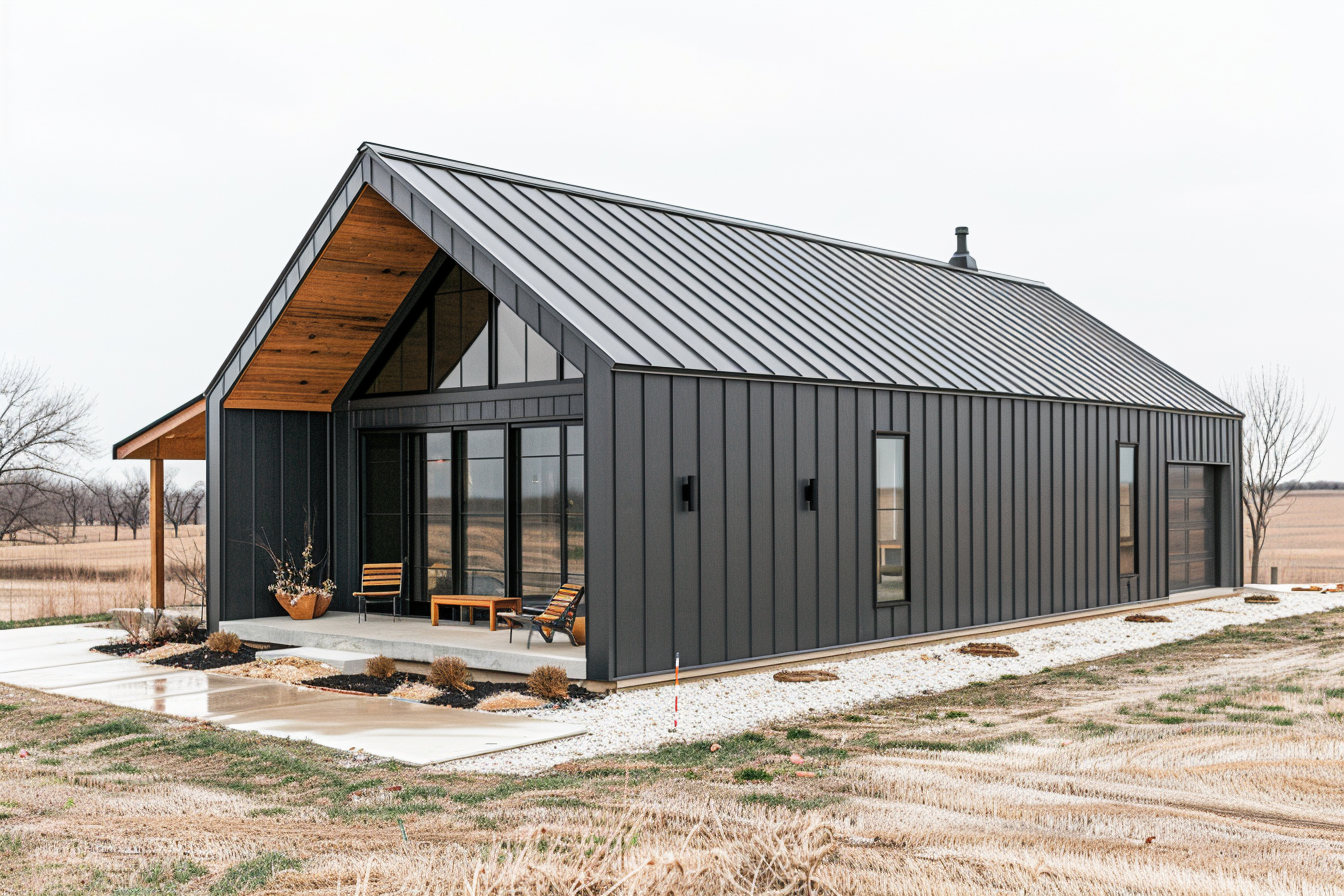
Barndominiums are the clear winner for raw construction cost. At $65–$95 per square foot, you can build a 2,000-square-foot barndominium for $130,000–$190,000—roughly 30–40% less than a comparable traditional home.
Why they're the most affordable: Metal framing and exterior panels cost significantly less than wood framing and traditional siding. A metal building shell can be erected in days rather than weeks, reducing labor costs substantially. The open-span design eliminates most interior load-bearing walls, further simplifying construction. Many barndominium builders offer prefabricated metal kits that arrive ready to assemble, streamlining the entire process.
The catch: Barndominiums require substantial insulation to be livable—budget $8,000–$15,000 for spray foam insulation in a 2,000-square-foot home. They're also subject to zoning restrictions in many areas, particularly in suburban neighborhoods with traditional aesthetic requirements.
Resale value can be lower than traditional homes in markets where buyers prefer conventional construction.
Important note about financing: Rocket Mortgage notes that getting financing for a "barndo"can be especially challenging, a sentiment shared by many in the industry. We talked to homeowner Daniel Witherspoon of Dripping Springs, TX about this struggle.
"We built a 2,400 square foot barndominium outside Austin in 2023 for $218,000, which was almost $100,000 less than the quotes we were getting for a conventional build on the same lot. That part is real and I'd do it again. But what I wasn't prepared for was hard the financing would be. Our credit union wouldn't touch it. Three banks turned us down before we found a specialty lender who'd work with metal construction, and the rate was much, much higher. If I were doing it again, I'd line up the financing before I fell in love with the blueprint."
Best for: Rural lots with minimal zoning restrictions, homeowners who value open floor plans and don't mind industrial aesthetics, and budgets under $200,000 for 2,000+ square feet.
Cost-saving tips:
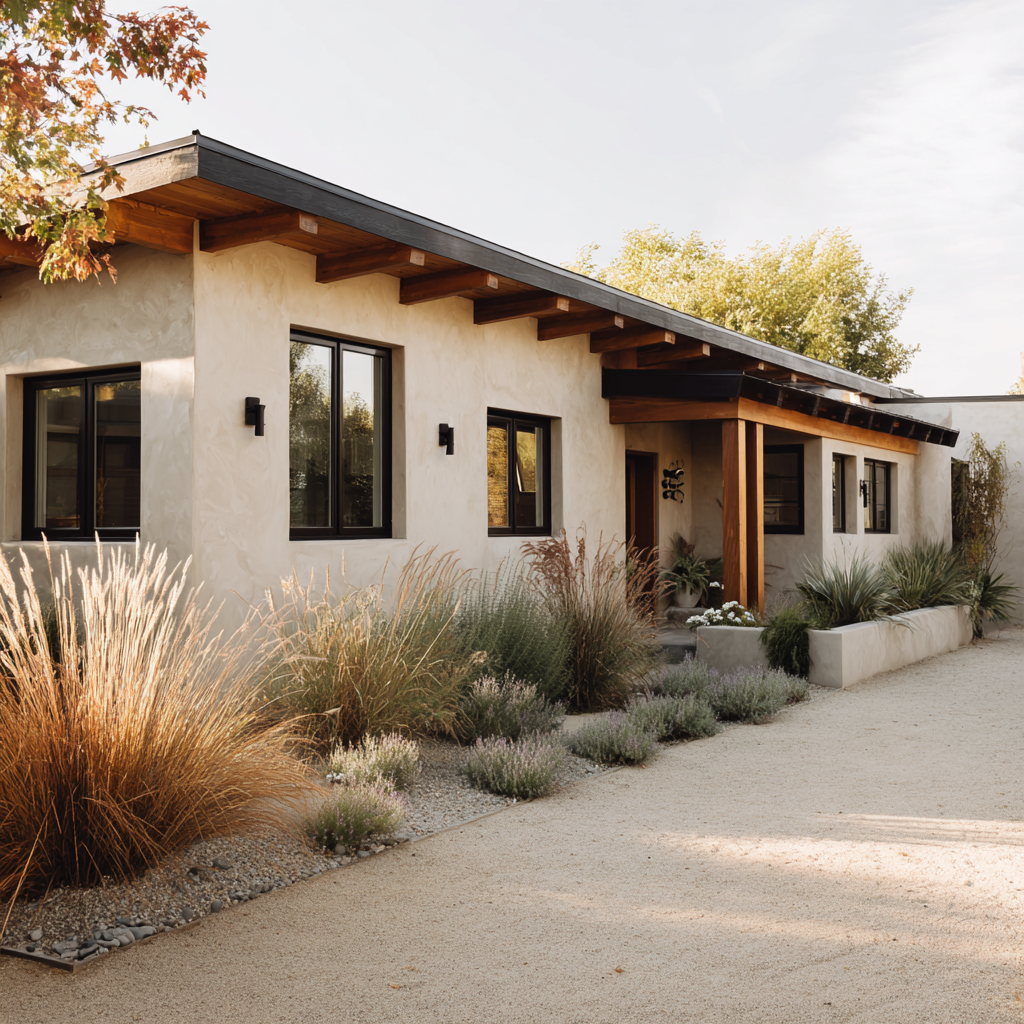
Ranch homes on slab foundations represent the most affordable traditional construction method. At $100–$150 per square foot, a 2,000-square-foot ranch costs $200,000–$300,000 to build—competitive pricing for conventional construction.
Why they're highly affordable: Single-story construction is straightforward and fast. There's no second-story framing, no stairs to build, and no structural complexity from stacking floors. Slab foundations are the cheapest foundation type, typically costing $4–$7 per square foot versus $12–$18 per square foot for a basement. Simple rooflines (usually gable or hip) minimize both material and labor costs. Ranches work well with standard material sizes, reducing waste and custom cutting.
The catch: Because all square footage is on one level, you'll pay for a larger foundation and roof compared to a two-story home of the same size. This means higher costs for these two specific components, even though overall construction is simpler. You'll also need a larger lot, which may be expensive or unavailable in urban areas.
Best for: Flat or gently sloped lots, suburban or rural areas where land is affordable, homeowners prioritizing accessibility, and budgets of $200,000–$300,000 for 2,000 square feet.
Asheville homeowner Rachel Pennington shared her perspective. "We originally wanted a single-story ranch because we liked the idea of aging in place, but then looked closer at the numbers. A 2,600 square foot two-story on the same foundation was quoted $82,000 less than a 2,600 square foot ranch with the same finishes. The foundation was smaller and the roof was smaller. We used the savings to put in a first-floor primary suite, which solved the aging-in-place question anyway."
Cost-saving strategies:
Two-story homes occupy a middle ground in cost-effectiveness. While they require more complex framing than ranches, they deliver significant savings on foundation and roofing—the two most expensive components per square foot. At $100–$175 per square foot, a well-designed two-story home costs $200,000–$350,000 for 2,000 square feet.
Why they're cost-effective: The key advantage is footprint efficiency. A 2,000-square-foot two-story home needs only a 1,000-square-foot foundation and roof, versus 2,000 square feet for each in a ranch. Foundation savings alone can be $15,000–$30,000. Roof savings add another $10,000–$20,000. Two-story homes also require smaller lots, which can save tens of thousands in land costs in expensive markets.
The catch: Second-story framing increases labor costs by 15–25% compared to single-story construction. You'll need stairs (adding $2,000–$5,000), and HVAC may require zoning for temperature control between floors (adding $3,000–$8,000). Complex two-story designs with multiple roof planes or second-story overhangs can quickly push costs toward $200+ per square foot.
Best for: Smaller or expensive lots, urban and suburban areas, homeowners comfortable with stairs, and budgets of $200,000–$350,000 for 2,000 square feet.
Cost-saving strategies:
Split-level homes fall in the middle of the cost spectrum at $125–$200 per square foot. For 2,000 square feet, expect to pay $250,000–$400,000. They're not the cheapest option, but they can be the most cost-effective solution for specific lot conditions.
Why they're moderately affordable: Split-levels shine on sloped lots where they can eliminate expensive site work. On a hillside that would require $30,000–$60,000 in grading or retaining walls for a traditional home, a split-level design works with the natural terrain, often requiring minimal excavation. The staggered levels also create distinct living zones without the full expense of a complete second story.
The catch: Multiple floor levels increase framing complexity and labor time by 20–30%. More level transitions mean more structural connections, more complex HVAC ducting, and more expensive plumbing runs.
Split-levels also have limited market appeal in many areas, which can hurt resale value. On flat lots, they offer no cost advantage over simpler designs.
Best for: Sloped or hillside lots where grading would be expensive, homeowners who want distinct living zones without a full two-story design, and budgets of $250,000–$400,000 for 2,000 square feet.
Cost-saving strategies:
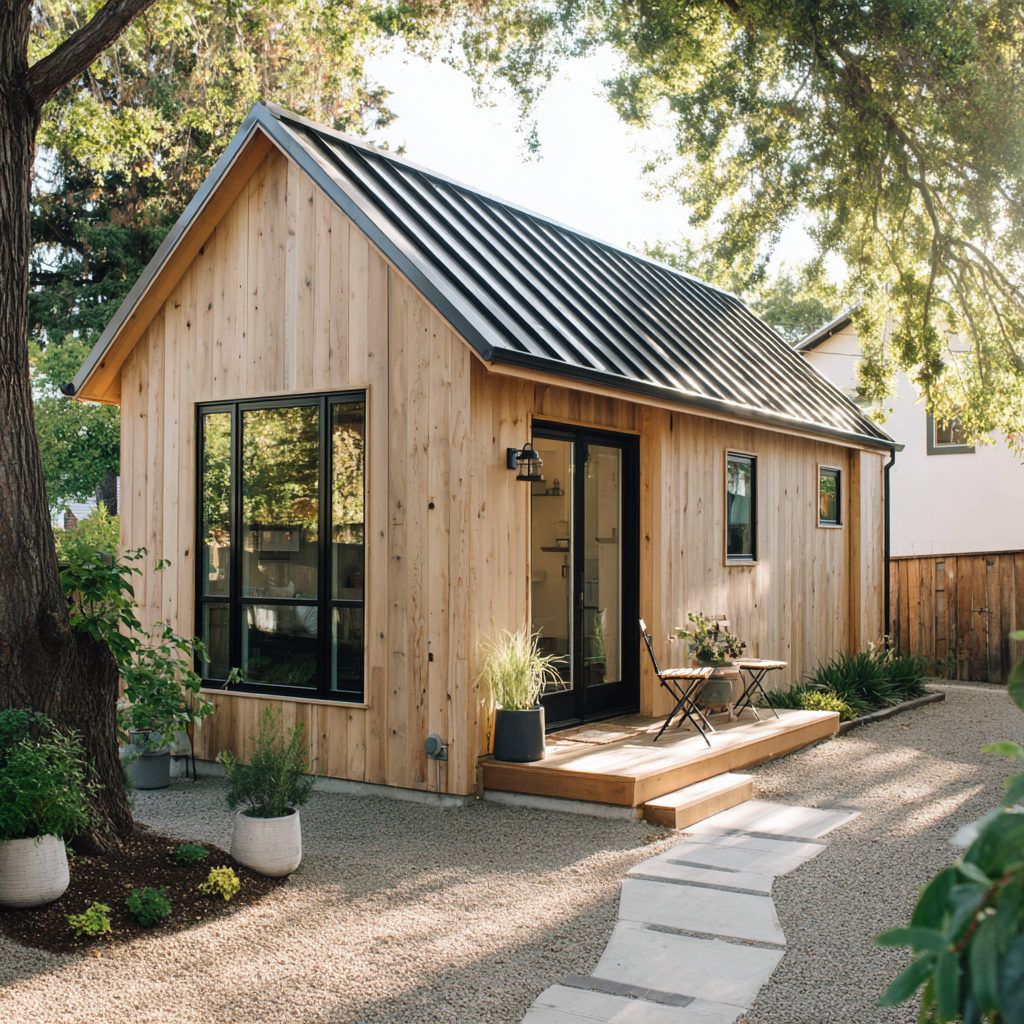
Tiny homes—typically under 600 square feet—have the highest per-square-foot construction costs, ranging from $150–$400+. A 400-square-foot tiny home can cost $60,000–$160,000 or more.
Why cost per square foot is misleading: Tiny homes cost more per square foot because they still require the same kitchen, bathroom, and utility systems as larger homes—these costs are simply spread over less space. A kitchen with basic appliances, cabinets, and countertops costs $8,000–$15,000 whether it's in a 400-square-foot home or a 2,000-square-foot home. Custom, space-saving features (Murphy beds, fold-down tables, compact appliances) also cost more than standard alternatives.
Why they're still cost-effective for some buyers: Despite high per-square-foot costs, total project costs are low. Building a 400-square-foot tiny home for $80,000 is far more affordable than building a 2,000-square-foot traditional home for $250,000. Ongoing costs are also dramatically lower—utilities, maintenance, property taxes, and insurance may be 60–80% less.
The catch: Zoning restrictions make tiny homes difficult or impossible to build in many areas. Minimum square footage requirements (often 600–1,000 square feet for permanent residences) exclude tiny homes in most suburban municipalities. Resale markets are limited, and financing can be challenging—many lenders won't finance homes under 600 square feet.
Cost-saving strategies:
Beyond choosing a home type, specific design decisions can dramatically affect your construction budget.
Floor plan efficiency: Open floor plans reduce the number of interior walls, lowering framing and drywall costs by 10–15%. A 2,000-square-foot home with an open great room concept might save $8,000–$12,000 in framing costs compared to the same home divided into multiple smaller rooms. Open plans also improve HVAC efficiency by allowing air circulation.
Ceiling height: Standard 8-foot ceilings are the baseline. Raising to 9 feet adds 8–12% to framing, drywall, and painting costs—roughly $5,000–$8,000 on a 2,000-square-foot home. Vaulted or cathedral ceilings can add $15,000–$30,000 depending on complexity. If you want drama without the expense, consider raising ceilings only in main living areas.
Number of corners: Every corner in your floor plan adds framing complexity. A rectangular home costs 5–10% less to frame than an identical-square-footage home with multiple wings or alcoves. On a $250,000 build, that's $12,500–$25,000 in potential savings by simplifying the footprint.
Roof complexity: A simple gable or hip roof is the baseline. Adding dormers adds $3,000–$8,000 each. Multiple roof planes increase costs by 20–40%. Complex roofs also create more opportunities for leaks, increasing long-term maintenance costs. Stick with simple rooflines unless architectural interest is a priority.
Bathroom count and placement: Each bathroom adds $8,000–$15,000 (for a basic 3-piece bathroom) or $15,000–$30,000 (for a larger primary bath). Stacking bathrooms vertically in a two-story home or grouping them adjacently saves 15–25% on plumbing costs by reducing pipe runs. A 2,000-square-foot home with three bathrooms clustered together costs $5,000–$10,000 less to plumb than one with bathrooms at opposite ends.
Kitchen placement: Placing the kitchen on an exterior wall provides easier venting and plumbing access, potentially saving $2,000–$5,000. Island kitchens that require running plumbing to the center of the room add cost but may be worth it for functionality and aesthetics.
Window and door choices: Stock-sized windows and doors cost 30–50% less than custom options. A standard 36″×60″ double-hung window costs $200–$400; a custom arched window of similar size costs $800–$1,500. Minimizing specialty windows and using standard sizes throughout can save $5,000–$15,000 on a typical home.
Garage configuration: An attached garage shares a wall with the house, reducing overall construction costs by $3,000–$8,000 compared to a detached garage. A simple single-story garage with a flat or gently sloped roof costs less than one with living space above or complex rooflines.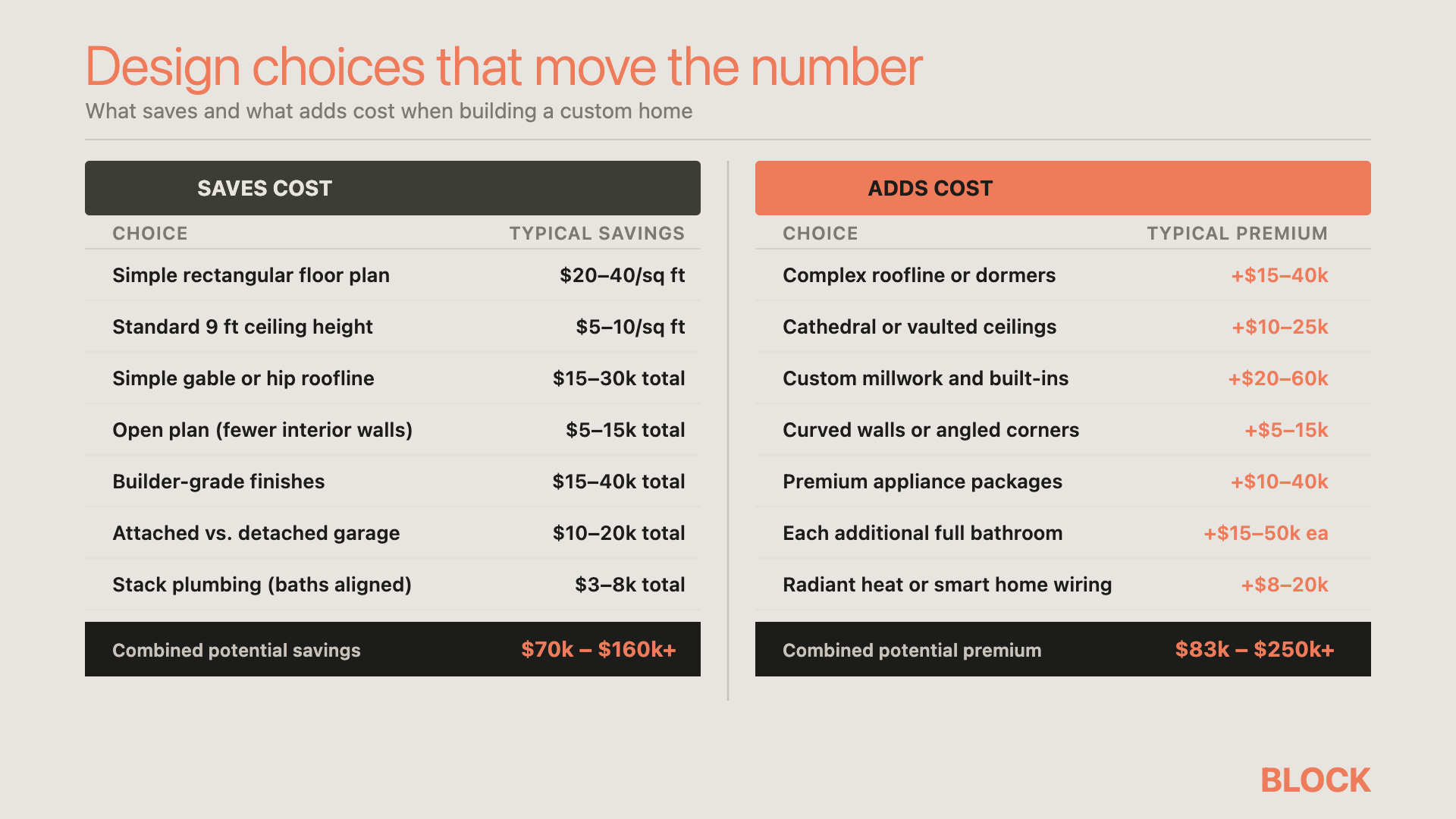
Choose a barndominium if: You're building on a rural lot with minimal zoning restrictions, your budget is under $200,000 for 2,000+ square feet, you value open floor plans, and you're comfortable with an industrial aesthetic.
Choose a ranch if: You have access to affordable land, want single-story living for accessibility, have a budget of $200,000–$300,000 for 2,000 square feet, and prefer traditional construction.
Choose a two-story home if: Your lot is small or expensive, you're comfortable with stairs, want the most efficient use of foundation and roof costs, and have a budget of $200,000–$350,000 for 2,000 square feet.
Choose a split-level if: You're building on a sloped lot where it would save significant site prep costs, want distinct living zones, and have a budget of $250,000–$400,000 for 2,000 square feet.
Choose a tiny home if: You're committed to minimalist living, building in a rural area with favorable zoning, and working with a total budget under $100,000.
Understanding cost-effective home types is the first step—but executing your vision within budget requires the right builder.
Block Renovation connects homeowners with thoroughly vetted, licensed, and insured contractors who specialize in custom home construction. We match you with builders experienced in your preferred home type, who understand local building codes, and who can deliver quality work on time and within budget.
With Block, you'll receive detailed proposals from multiple contractors, allowing you to compare pricing, timelines, and approaches side by side. Our project planners review scopes, identify potential cost savings, and help you make informed decisions at every stage. From planning and permitting to final walkthrough, Block provides the guidance and protections you need to build with confidence.
Remodel with confidence through Block

Connect to vetted local contractors
We only work with top-tier, thoroughly vetted contractors

Get expert guidance
Our project planners offer expert advice, scope review, and ongoing support as needed

Enjoy peace of mind throughout your renovation
Secure payment system puts you in control and protects your remodel


Renovate confidently with Block
Easily compare quotes from top quality contractors, and get peace of mind with warranty & price protections.
Design
Dining Room Dimensions: Minimums and Standard Sizing
08.07.2026

Custom Home Build
Cost to Build a 1,500 Sq Ft House in 2026
07.14.2026

Custom Home Build
Spec Home vs Custom Home: What the Math Misses
05.19.2026
Basement
Daylight vs. Walkout Basement: Which Is Better?
05.18.2026
.png?width=640&name=u5821215421_A_stylishly_renovated_A-frame_living_room_with_pi_bf06e9f9-ecb5-47c7-8242-2bc77e83ce8e_0%20(1).png)
Custom Home Build
How to Save When Building a Home
05.08.2026