




Design
Dining Room Dimensions: Minimums and Standard Sizing
08.07.2026
02.02.2026


In This Article
Choosing whether to buy or build your next home can feel like a huge fork in the road. One side offers speed and simplicity: pick a home, close, move in. The other side promises creative control and a space that actually matches how you live, right down to the custom coffee nook or bedroom layout you’ve sketched for years. But what does each path cost—and how do you know which one really makes sense for your budget and priorities?
We’ve broken down key numbers, region insights, and honest pros and cons, using latest state-by-state research.
Let’s cut straight to the numbers: across the entire U.S., building a new home comes in at about $421,000, while the median price for buying an existing, single-family home is roughly $415,000. On the surface, there’s only a $6,000 difference—hardly the stuff of life-changing decisions.
But that national average masks some big swings depending on location: In certain states, building is actually hundreds of thousands cheaper than buying. In others, building can cost $100,000 or more above the price of simply purchasing.
Here’s how to think about it:
A few quick examples:
At this point, it’s easy to say, “I’ll just go with whichever option is cheapest.” However, the numbers reflected above only reflect upfront home building costs. So here are a few extra reasons building may still make sense, even if it costs a bit more up front:
All of the above suggest that a custom built home has the potential to save you money in the long run.
Design a Home That’s Uniquely Yours
Block can help you achieve your renovation goals and bring your dream remodel to life with price assurance and expert support.
Get Started
Every decision—from the sourcing of tiles to the elevation of ceilings will impact your bottom line. However, some elements of building a new home will naturally have a larger impact. These are:
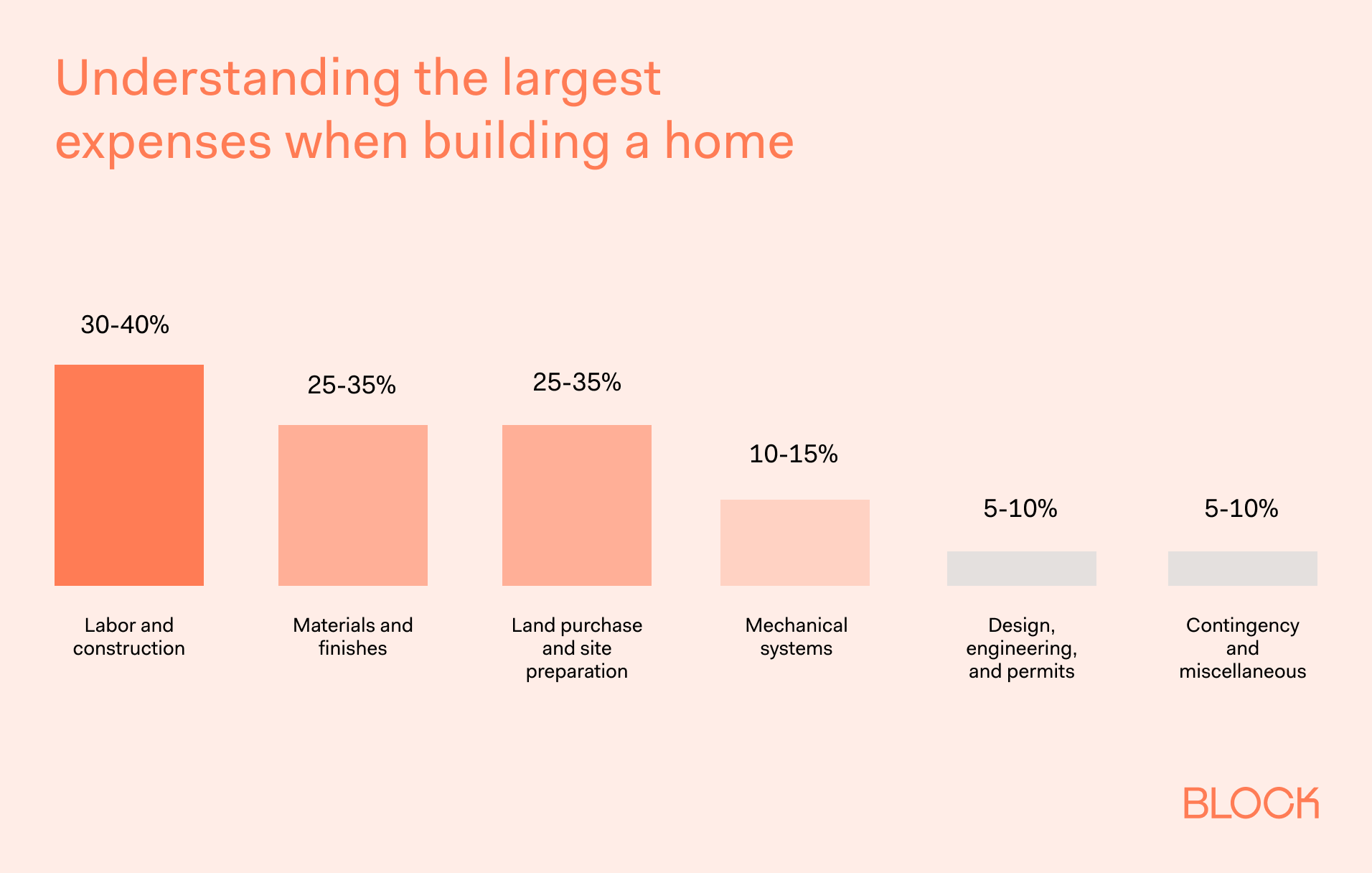
Picking your lot is one of the most important steps of the entire building process—and it’s often where costly surprises come from. While it’s tempting to jump at a lower-priced plot or a location with a killer view, the real costs of building on a piece of land go well beyond that sticker price.
Before you fall in love with a parcel, work with a professional to do your due diligence. Ordering a survey, soil test, and a check of utility access can save you from finding out too late that your “bargain” lot comes with tens of thousands in extra costs or months of red tape.
Here’s something we hear from homeowners all the time: “We thought we had a budget, but it just kept growing.” Custom builds rarely spiral out of control all at once—it’s usually a pile-up of small choices or late changes that sneak up over weeks and months.
Some ways to keep your budget realistic (and sleep a little easier):
Here’s the latest state-by-state breakdown for house building costs. Use these numbers as a starting guide, but always check your local prices, especially for land, labor, and permits.
|
State |
Total building costs |
Median single family home listings price |
Difference |
|
Alabama |
$367,000 |
$350,000 |
$17,000 more expensive to build |
|
Arizona |
$493,000 |
$490,000 |
$3,000 more expensive to build |
|
Arkansas |
$358,000 |
$260,000 |
$98,000 more expensive to build |
|
California |
$495,000 |
$700,000 |
$205,000 cheaper to build |
|
Colorado |
$492,000 |
$600,000 |
$108,000 cheaper to build |
|
Connecticut |
$574,000 |
$449,000 |
$125,000 more expensive to build |
|
Delaware |
$394,000 |
$490,000 |
$96,000 cheaper to build |
|
Florida |
$375,000 |
$451,000 |
$76,000 cheaper to build |
|
Georgia |
$365,000 |
$395,000 |
$30,000 cheaper to build |
|
Hawaii |
$551,000 |
$1,045,000 |
$494,000 cheaper to build |
|
Idaho |
$505,000 |
$575,000 |
$70,000 cheaper to build |
|
Illinois |
$461,000 |
$295,000 |
$166,000 more expensive to build |
|
Indiana |
$452,000 |
$310,000 |
$142,000 more expensive to build |
|
Iowa |
$460,000 |
$299,000 |
$161,000 more expensive to build |
|
Kansas |
$449,000 |
$322,000 |
$128,000 more expensive to build |
|
Kentucky |
$359,000 |
$300,000 |
$59,000 more expensive to build |
|
Louisiana |
$362,000 |
$269,000 |
$93,000 more expensive to build |
|
Maine |
$544,000 |
$380,000 |
$164,000 more expensive to build |
|
Maryland |
$365,000 |
$460,000 |
$95,000 cheaper to build |
|
Massachusetts |
$576,000 |
$629,000 |
$53,000 cheaper to build |
|
Michigan |
$452,000 |
$299,000 |
$153,000 more expensive to build |
|
Minnesota |
$453,000 |
$388,000 |
$65,000 more expensive to build |
|
Mississippi |
$363,000 |
$287,000 |
$76,000 more expensive to build |
|
Missouri |
$445,000 |
$290,000 |
$155,000 more expensive to build |
|
Montana |
$515,000 |
$599,000 |
$84,000 cheaper to build |
|
Nebraska |
$467,000 |
$364,000 |
$103,000 more expensive to build |
|
Nevada |
$493,000 |
$489,000 |
$4,000 more expensive to build |
|
New Hampshire |
$567,000 |
$475,000 |
$92,000 more expensive to build |
|
New Jersey |
$548,000 |
$500,000 |
$48,000 more expensive to build |
|
New Mexico |
$488,000 |
$385,000 |
$104,000 more expensive to build |
|
New York |
$524,000 |
$535,000 |
$11,000 cheaper to build |
|
North Carolina |
$363,000 |
$395,000 |
$32,000 cheaper to build |
|
Ohio |
$450,000 |
$272,000 |
$178,000 more expensive to build |
|
Oklahoma |
$359,000 |
$299,000 |
$60,000 more expensive to build |
|
Oregon |
$502,000 |
$545,000 |
$43,000 cheaper to build |
|
Pennsylvania |
$528,000 |
$345,000 |
$183,000 more expensive to build |
|
South Carolina |
$363,000 |
$355,000 |
$8,000 more expensive to build |
|
South Dakota |
$479,000 |
$335,000 |
$144,000 more expensive to build |
|
Tennessee |
$361,000 |
$374,000 |
$13,000 cheaper to build |
|
Texas |
$361,000 |
$412,000 |
$51,000 cheaper to build |
|
Utah |
$538,000 |
$635,000 |
$97,000 cheaper to build |
|
Virginia |
$361,000 |
$458,000 |
$96,000 cheaper to build |
|
Washington |
$493,000 |
$559,000 |
$66,000 cheaper to build |
|
West Virginia |
$358,000 |
$225,000 |
$133,000 more expensive to build |
|
Wisconsin |
$456,000 |
$340,000 |
$116,000 more expensive to build |
|
Wyoming |
$519,000 |
$499,000 |
$20,000 more expensive to build |
Source: https://www.storagecafe.com/blog/is-it-cheaper-to-build-or-buy-a-house-in-the-us/
So, you’ve made your call (or you’re close): whether you land on building, buying and remodeling, or simply updating your existing place, finding the right contractor is what turns plans into reality.
Block Renovation matches homeowners with top, vetted contractors who bring deep experience—and care—into every project. The best builds (and buys) are the ones where the homeowner feels both confident and in control, from budget to final walkthrough. With the right partnership, you can sidestep many of the typical headaches and focus on the real goal: making a home that’s truly your own.
Still unsure whether building is right for you? Want to check your local numbers? Need help prepping for a contractor search? Reach out to Block and start your journey with clear, honest answers—not just guesses.
Remodel with confidence through Block
Connect to vetted local contractors
We only work with top-tier, thoroughly vetted contractors

Get expert guidance
Our project planners offer expert advice, scope review, and ongoing support as needed
Enjoy peace of mind throughout your renovation
Secure payment system puts you in control and protects your remodel

Renovate confidently with Block
Easily compare quotes from top quality contractors, and get peace of mind with warranty & price protections.
Design
Dining Room Dimensions: Minimums and Standard Sizing
08.07.2026

Custom Home Build
Cost to Build a 1,500 Sq Ft House in 2026
07.14.2026

Custom Home Build
Spec Home vs Custom Home: What the Math Misses
05.19.2026
Basement
Daylight vs. Walkout Basement: Which Is Better?
05.18.2026
.png?width=640&name=u5821215421_A_stylishly_renovated_A-frame_living_room_with_pi_bf06e9f9-ecb5-47c7-8242-2bc77e83ce8e_0%20(1).png)
Custom Home Build
How to Save When Building a Home
05.08.2026