



.png?width=640&name=u5821215421_Sophisticated_transitional_living_room_with_matte_d152b2ae-2c97-4d40-8f63-6c8c3f2cd61f_0%20(1).png)
Maryland
Home Additions in Baltimore: Building on Small Lots
05.22.2026
04.02.2026


In This Article
Renovating a condo or apartment in Baltimore comes with a unique set of rules, relationships, and decisions that don't apply to single-family homes. Whether you own a unit in a converted rowhouse in Fells Point, a high-rise condo in Harbor East, or a co-op in Charles Village, the renovation process involves navigating your building's governing documents, board approvals, neighbor considerations, and city permits—all before a single tile is laid.
This guide walks Baltimore condo and apartment owners through every stage of the renovation process, from understanding what you can legally change to finding the right contractor and managing the project without disrupting your building community.
In Baltimore, the term 'condo' often gets used loosely to describe any apartment-style ownership. But the specific ownership structure matters enormously when it comes to renovation rights.
In a condo, you own your individual unit and share ownership of common areas with other unit owners. Your condo association's governing documents—the Declaration, Bylaws, and Rules and Regulations—define exactly what you can and cannot modify. Typically, you own everything inside your unit from the paint on the walls inward, while the association owns building systems, structural elements, and exterior surfaces.
Co-ops are less common in Baltimore than in cities like New York but do exist, particularly in older apartment buildings and converted properties. In a co-op, you own shares in the corporation that owns the building rather than a deed to your specific unit. Co-ops typically have stricter renovation rules and require board approval for a broader range of changes.
Renters have the most limited renovation rights. Most standard leases allow only cosmetic changes—painting, removable fixtures, and décor—with written landlord approval. If you're a renter interested in more significant changes, you'll need to negotiate directly with your landlord and get any agreement in writing before work begins. Find insights for high-ROI projects for rental units.
Turn your renovation vision into reality
Get matched with trusted contractors and start your renovation today!
Find a Contractor
Even if Baltimore City doesn't require a permit for your specific renovation, your condo association almost certainly has its own approval requirements. Skipping this step can result in forced reversal of your work, fines, and legal disputes that far exceed what the renovation itself cost.
Most Baltimore condo boards require a written description of the proposed work, contractor credentials including license and insurance certificates, architectural or design drawings if structural changes are involved, a project timeline with daily work hours (many buildings restrict construction to weekday business hours), and a damage deposit to protect common areas during construction.
Baltimore condo boards can take anywhere from two weeks to two months to approve renovation requests. Build this into your planning timeline, and confirm approval in writing before any work begins. An approved renovation that starts without written confirmation creates unnecessary exposure if the board later disputes the scope of what was approved.
In addition to association approval, many condo renovations require permits from Baltimore City's Department of Housing and Community Development. Cosmetic work—painting, flooring over an existing subfloor, cabinet replacements, fixture swaps—typically does not require a permit. Structural work, wall removals, electrical upgrades, and plumbing changes do require permits, and your contractor should pull all required permits before work begins.
In historic buildings or districts, exterior changes visible from the street may require review from the Commission for Historical and Architectural Preservation (CHAP). This applies to window replacements, balcony modifications, and any changes to the building's exterior envelope. If your condo is in Fells Point, Federal Hill, Bolton Hill, or another designated historic area, confirm whether any planned work triggers CHAP review before submitting your board application.
Never allow a contractor to proceed without permits on work that legally requires them. Unpermitted work creates liability, can complicate your future sale, and in some cases requires demolition and rework at your expense if discovered during inspection.
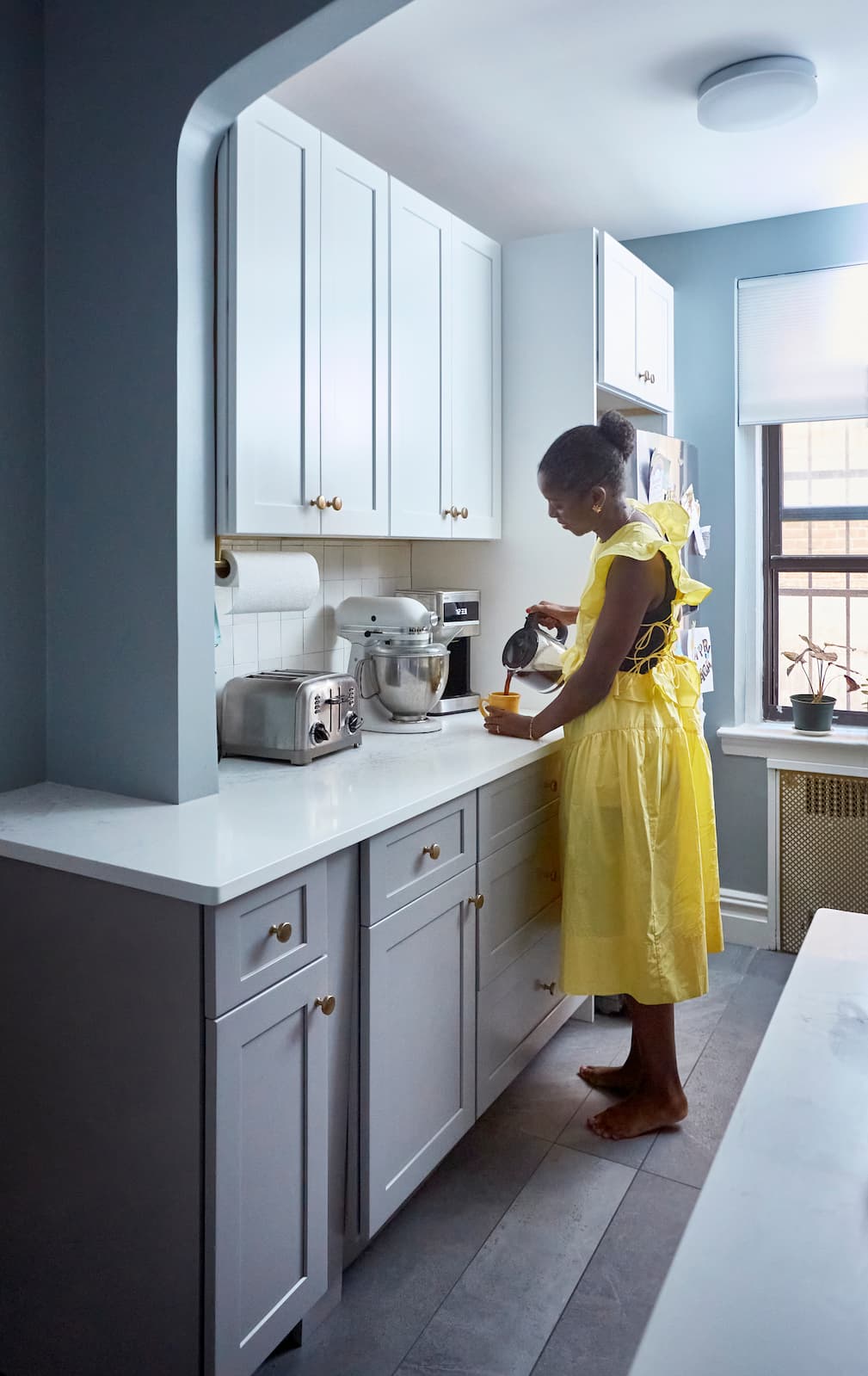
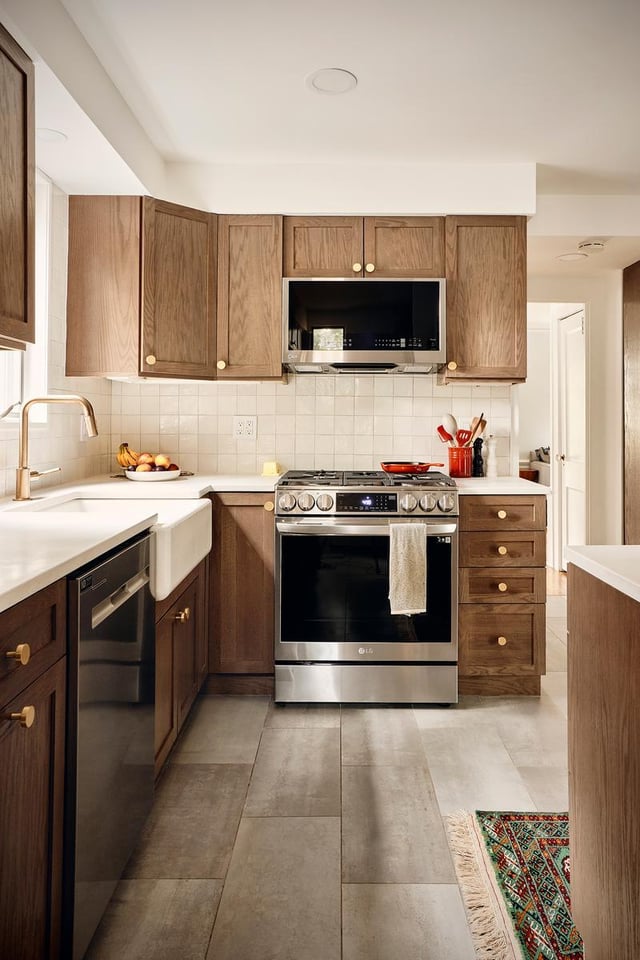
Kitchens in older Baltimore condo buildings are typically small—galley layouts of 80–120 square feet with cabinetry from the 1980s or 1990s. Cabinet refacing or painting paired with new countertops and lighting typically delivers the strongest ROI. A mid-range kitchen renovation runs $15,000–$35,000; high-end finishes with custom cabinetry can exceed $50,000. Because units are small, labor accounts for a higher share of cost than in a single-family home. Click here to learn more about remodeling condo kitchens.
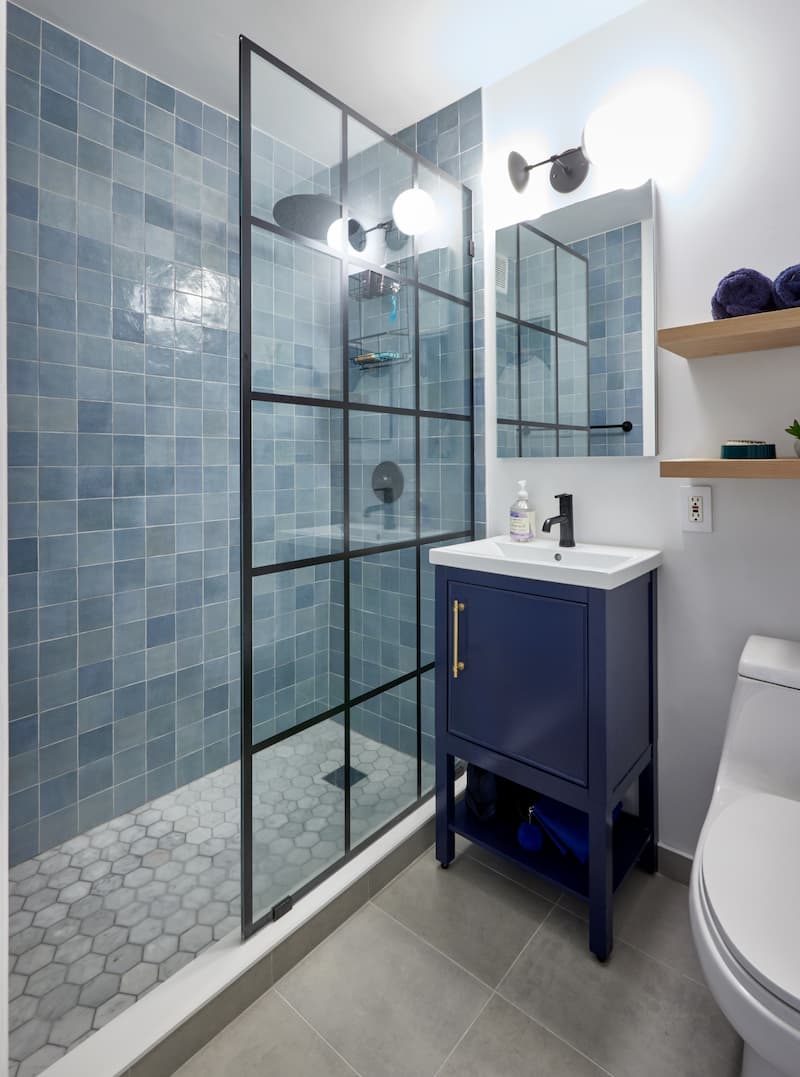
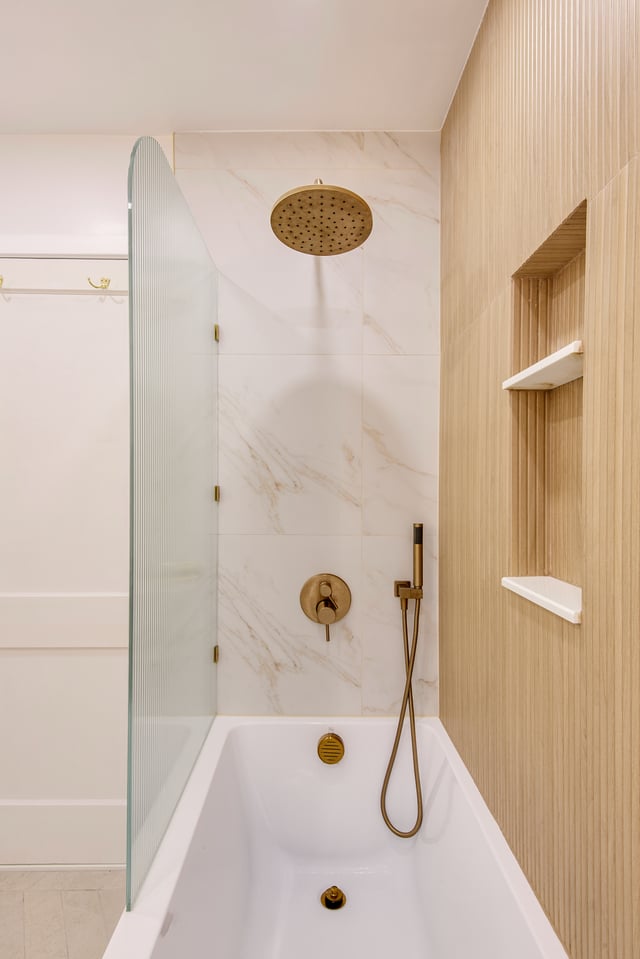
Bathroom work is the most tightly regulated renovation in condo buildings because it involves shared plumbing stacks. Replacing tile, fixtures, and vanities typically requires only standard board notification; relocating plumbing requires board approval and coordination with the unit below. Budget $12,000–$30,000 depending on scope. In buildings with aging cast-iron drain lines, a pre-renovation camera inspection is a worthwhile precaution.
Most Baltimore condo buildings require a sound-insulating underlayment when replacing carpet with hard-surface flooring. Check your governing documents for minimum IIC (Impact Isolation Class) ratings—some associations specify exact approved products. Non-compliance can mean forced removal at your expense. Budget $6,000–$18,000 for a full unit flooring replacement.
Removing non-structural walls to open a kitchen to the living area is one of the most impactful layout changes available to Baltimore condo owners. Always confirm the wall is non-structural and doesn't contain mechanical, electrical, or plumbing runs before proceeding. Budget $5,000–$15,000 including structural assessment, demo, and finishes.
Single overhead fixtures and fluorescent kitchen strips are nearly universal in older Baltimore condo buildings. Adding recessed lighting, pendant fixtures, and under-cabinet LEDs dramatically improves the perceived quality of the space. Lighting work on existing circuits typically doesn't require permits; adding new circuits does.
Most Baltimore condos—whether converted rowhouses in Fells Point or mid-rise units in Harbor East—top out under 900 square feet. The renovation decisions that matter most in a small unit aren't the ones that add space; they're the ones that make the existing space feel larger, more organized, and more livable.
Nothing expands a small space more cheaply or effectively than light. Painting walls, ceilings, and trim in the same light tone (warm white throughout, rather than contrasting wall colors) removes the visual chop that makes small rooms feel smaller. Mirrors placed opposite windows double the perceived depth of a room. Under-cabinet lighting in the kitchen makes the space feel open even at night. These changes cost hundreds, not thousands.
Floor-to-ceiling cabinetry in kitchens and built-in shelving in living areas use vertical space that most small condos waste. A kitchen with cabinets that run to the ceiling provides significantly more storage than one with standard-height upper cabinets and a gap above—and the uninterrupted vertical line makes the room feel taller. The same principle applies to bathroom vanities: a floor-to-ceiling linen cabinet beside the vanity adds storage without consuming floor area.
In small Baltimore condo units, running the same flooring material continuously through the main living areas—rather than switching between kitchen tile and living room hardwood—removes the visual interruption that divides and shrinks the space. Open-concept layouts amplify this effect by eliminating the wall that previously made each room feel even smaller.
Oversized fixtures—a large kitchen island, a pedestal sink that juts into the bathroom, thick crown molding—make small spaces feel cramped. Appropriately scaled choices make the same square footage feel proportional and intentional. In bathroom renovations, a wall-mounted vanity with open floor space below visually expands the room in a way a floor-mounted cabinet never will. In kitchens, a peninsula rather than a full island provides prep and seating space without blocking circulation.
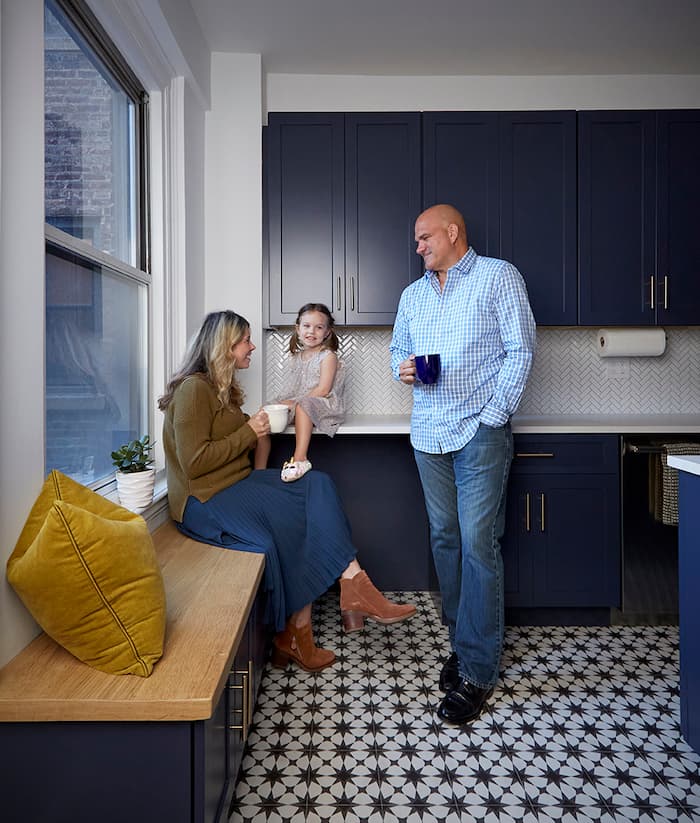
Every renovation decision in a small Baltimore condo is an opportunity to add storage. A bathroom renovation that includes a recessed medicine cabinet gains four inches of depth without consuming any floor area. A kitchen renovation that adds a pull-out pantry in a previously wasted corner solves a storage problem without expanding the footprint. Built-in window seats in a living room provide seating, storage, and visual interest simultaneously. The best small-unit renovations treat storage as a design constraint from the start, not an afterthought.
|
Project |
Estimated cost range |
Common considerations |
|
Kitchen renovation (mid-range) |
$15,000–$35,000 |
Board approval often required |
|
Kitchen renovation (high-end) |
$35,000–$70,000+ |
CHAP review if historic building |
|
Bathroom renovation |
$12,000–$30,000 |
Plumbing stack access may need coordination |
|
Flooring replacement |
$6,000–$18,000 |
Underlayment required in most buildings |
|
Open-concept wall removal |
$5,000–$15,000 |
Structural assessment required |
|
Lighting upgrade |
$2,000–$6,000 |
New circuits require permits |
|
Full unit renovation |
$60,000–$150,000+ |
Multiple board approvals and permits |
Even a fully approved and permitted renovation will affect your neighbors. Noise, dust, and disrupted building access are unavoidable byproducts of construction, and how you handle them says a lot about what kind of neighbor you are. A brief note to adjacent units—above, below, and to either side—before work begins goes a long way toward maintaining goodwill and heading off complaints to the board.
Most Baltimore condo buildings require contractors to protect lobbies, elevators, and hallways during renovation with padding, floor protection, and careful management of material deliveries. Make sure your contractor understands these requirements before work begins—violations can result in fines and board complaints that complicate your project. Confirm the building's approved work hours and include them explicitly in your contractor agreement.
Always request a Certificate of Insurance (COI) from your contractor naming your condo association as an additional insured. Most Baltimore condo boards require this, and it protects you if something goes wrong during construction. Contractors who resist providing a COI are a red flag worth taking seriously.
Condo renovation requires contractors who are organized communicators, not just skilled builders. The best contractors for shared-building work understand board approval processes, can navigate building access restrictions, work within constrained hours without cutting corners on timeline, and treat common areas with the same care they give the unit being renovated.
In Baltimore's condo market, which ranges from converted 19th-century rowhouses to modern high-rises, experience with the specific building type matters. A contractor who has worked in Harbor East high-rises understands the freight elevator scheduling and building management relationships that make the difference between a smooth project and a contentious one. A contractor experienced with Fells Point condo conversions understands the structural quirks of 150-year-old masonry buildings.
Block Renovation connects Baltimore condo owners with vetted contractors who have experience in exactly this environment. Every contractor in Block's network is licensed, insured, and has been evaluated for workmanship, client communication, and professionalism. Block's project planners can also help you navigate the board approval process and ensure your proposal is complete from the start—reducing the back-and-forth that delays so many condo projects.
Block Renovation is a technology-powered renovation platform that protects homeowners from common and costly renovation pitfalls. From unclear contractor vetting to unpredictable pricing and payment risks, Block reimagines every step of the process to give homeowners clarity, control, and confidence. With Block, homeowners can visualize their space and receive personalized price estimates before construction begins. Block manages payments through a secure, progress-based system, ensuring contractors are only paid as work gets done.
Remodel with confidence through Block

Connect to vetted local contractors
We only work with top-tier, thoroughly vetted contractors

Get expert guidance
Our project planners offer expert advice, scope review, and ongoing support as needed
Enjoy peace of mind throughout your renovation
Secure payment system puts you in control and protects your remodel

Renovate confidently with Block
Easily compare quotes from top quality contractors, and get peace of mind with warranty & price protections.
Maryland
Home Additions in Baltimore: Building on Small Lots
05.22.2026
.webp?width=640&name=u5821215421_A_cozy_realistic_finished_basement_living_room_av_09475126-f5ff-49a9-b7c7-a57ed46c2d09_0%20(1).webp)
Maryland
Affordable Remodeling in Baltimore: High-Impact Upgrades on a Budget
04.08.2026
Maryland
Home Renovation ROI in Baltimore: Best Projects for Sellers
04.03.2026

Maryland
Commercial Renovation in Baltimore: Permits, Costs & Contractors
04.03.2026
Maryland
Condo & Apartment Renovation in Baltimore: Rules, Costs & Tips
04.02.2026