



Building your custom home in Baltimore: A neighborhood-focused guide

Budget your upcoming Baltimore custom home build with help from Block
How we get your estimate
Fill out the form above to either connect with contractors for a personalized quote or estimate your costs with Block's Renovation Studio.
Traditional grey home with white gables and lush green lawn.

In This Article

    Baltimore sits in a uniquely appealing spot on the East Coast—a working harbor, block-by-block neighborhood character from Federal Hill and Locust Point to Roland Park and Hampden, and a culture shaped by Chesapeake Bay traditions, Johns Hopkins, and a down-to-earth, blue-collar backbone. Its proximity to Washington, D.C. draws government and federal contractor households who want more space, more personality, and more community than most D.C.-area suburbs offer. Just beyond the city limits, Howard, Anne Arundel, Baltimore, and Harford Counties each have their own feel and school systems that pull in families who might be priced out of central neighborhoods or prefer a different pace. If you care about historic architecture, distinct neighborhoods, and easy access to the Bay and its tributaries, the Baltimore region offers a building backdrop that’s hard to duplicate anywhere else on the coast.

    Design a Home That’s Uniquely Yours

    Block can help you achieve your renovation goals and bring your dream remodel to life with price assurance and expert support.

    Get Started

    Understanding the role of an architect

    In Baltimore’s custom home world, the argument for bringing in a licensed architect is especially strong compared with more straightforward markets. Maryland’s building codes, the city’s historic preservation overlays, and the Chesapeake Bay Critical Area rules all reward the kind of detailed construction documents an experienced architect can produce. Someone who knows, for example, the difference between designing in Mount Vernon, Canton, or along the Middle River can move your plans through historic review, Critical Area buffers, and county site plan approvals in ways that head off expensive redraws mid-review.

    The broader region’s architectural story—Federal and Greek Revival in older city neighborhoods, Victorian Italianate and Colonial Revival in places like Bolton Hill and Guilford, early Modernist and mid-century in the inner suburbs—also means proportions, materials, and massing really matter to neighbors, review boards, and future buyers. An architect can either work within that character or deliberately contrast with it, but in a way that feels intentional instead of out of place.

    On the other hand, if you’re building semi-custom in a planned community in Howard or Anne Arundel County—think larger developments near Clarksville, Columbia, or Severna Park—HOA-approved plans and builder design standards usually cover most decisions. In those settings, a full architectural commission can add cost without matching benefit, and a designer or draftsperson can handle tweaks within the existing framework. It mostly comes down to how much original thinking your site, neighborhood context, and vision really demand, versus customizing from a pre-set menu.

    Cost and timeline overview for future Baltimore homeowners

    Understanding what custom home construction actually costs in the Baltimore region—and how long it realistically takes—is essential groundwork before any design decisions are made, because the numbers here differ significantly from national averages and can shift substantially based on location and site conditions.

    Custom home construction in the Baltimore metro typically runs between $250 and $400 per square foot for standard to mid-range builds, with architecturally ambitious projects or premium finishes pushing costs to $500 or more per square foot. Labor costs in the Baltimore-Washington corridor are substantially higher than national averages, driven by a competitive trade market that serves both urban Baltimore and the D.C. metro simultaneously. Material costs reflect regional supply chain realities, including elevated freight costs for items not sourced locally and the premium associated with historically appropriate materials required in some historic district contexts. Land values vary enormously across the region: Baltimore City infill lots in desirable neighborhoods like Roland Park, Guilford, or Homeland can command prices that reflect proximity to top private schools and urban amenity, while suburban lots in Baltimore County, Harford County, and Howard County offer more land at lower entry points with the trade-off of longer commutes.

    Loose timelines for custom home builds in Baltimore

    A realistic custom home timeline in Baltimore typically runs 16 to 24 months from design initiation through certificate of occupancy, with projects involving historic district review, Critical Area permitting, or complex site conditions extending further.

    Baltimore's climate introduces specific seasonal constraints: the Chesapeake Bay region's humid continental climate brings cold winters that complicate concrete work and exterior construction from December through March, while summer humidity can affect interior finish schedules and require careful moisture management during framing and drywall phases. The region's active thunderstorm season in late spring and summer adds weather-related delay risk during what is otherwise the most productive construction period. Historic district review processes in Baltimore City add additional time that varies by neighborhood and the scope of proposed work—some reviews are completed in weeks, others take months with required public hearings.

    Finding the right site in Baltimore for your custom home

    Choosing a lot around Baltimore is less about just liking the address and more about understanding how regulations, history, and land conditions change as you move from, say, Lauraville to Towson to northern Harford County. An experienced local builder can look at a parcel—whether it’s an infill rowhouse tear-down in the city or a wooded acreage lot in northern Baltimore County—and quickly size up buildability and red flags. That first-pass assessment can be as valuable as anything else they do for you.

    • Soil quality and site stability. Baltimore sits on the transition between the Piedmont and the Coastal Plain, and you feel that shift in the ground beneath you. In Baltimore City and the older inner-ring suburbs—from Catonsville across to Parkville—you’re mostly dealing with Piedmont soils with high clay content that expand and contract with moisture. Without the right engineered foundation system, that movement can turn into cracks and settlement. As you move toward the Eastern Shore or down into lower Anne Arundel County, soils trend to sandier, more poorly draining Coastal Plain types that call for different foundation strategies and can complicate septic design where public sewer doesn’t reach.
    • Utilities access. In the city and most established first- and second-ring suburbs, public water, sewer, electric, and gas are typically available, though connection and capacity fees can be significant in older areas where the city is upgrading aging pipes. Once you’re on larger lots in Harford County, Carroll County, or the rural edges of Baltimore County, private wells and septic are common. Maryland’s more recent septic rules—tightened in response to Chesapeake Bay nutrient concerns—often mean nitrogen-reducing septic systems that add $15,000 to $30,000 over a traditional system. BGE (Baltimore Gas and Electric) provides gas and electric across most of the metro, with connection timelines that shift depending on local demand and project complexity.
    • Zoning and restrictive covenants. Zoning in and around Baltimore is layered. Baltimore City has its own code and historic overlays, and each county around it operates under the state’s planning framework but with its own twist. In certain long-established neighborhoods—Roland Park, Guilford, Homeland, and a few similar pockets—deed restrictions from the original developers can still control details like minimum house size, exterior materials, and fencing. Those private rules sit on top of whatever the city or county zoning says and still apply today.
    • Lot slope and drainage. The roll of Baltimore’s hills—especially around valleys like those carved by Jones Falls, Gwynns Falls, and Herring Run—creates some dramatic, beautiful building sites, but also real drainage challenges. Lots near these waterways or their smaller branches can fall into FEMA floodplain designations or state-regulated stream buffers that shrink your buildable footprint and require engineered stormwater solutions. Maryland’s stormwater rules, some of the strictest in the country, apply to nearly all new homes and call for on-site systems—whether that’s infiltration, retention, or treatment—that take both money and space.
    • Proximity to amenities. What “location” means depends on which part of greater Baltimore you’re drawn to. In the city, many custom builds and major infills are about walkability to neighborhood main streets, closeness to Hopkins or University of Maryland medical campuses, and easy access to the Inner Harbor, stadiums, and cultural spots. In Howard and Anne Arundel Counties, focus often shifts to school rankings, commute times into downtown Baltimore, Fort Meade, or D.C., and how close you are to the Bay, marinas, and seafood spots. Howard County schools, in particular—especially around Columbia, Ellicott City, and Clarksville—tend to push lot prices higher because of ongoing demand from families.
    • Environmental concerns or hazards. Baltimore’s industrial past—shipbuilding, manufacturing, rail yards—means that seemingly attractive urban and near-urban lots can come with environmental baggage. Former factory parcels, rail-adjacent land, and older waterfront sites may need a Phase I, and sometimes Phase II, environmental review to check for heavy metals, petroleum products, or other contaminants. Within 1,000 feet of tidal waters and their tributaries, the Chesapeake Bay Critical Area rules kick in, adding buffers, hard caps on impervious surfaces, and strict vegetation rules that can significantly limit what’s possible on a waterfront or near-waterfront lot. For infill projects that involve older structures, Maryland’s lead paint rules for any building pre-1978—covering most of the city’s rowhouse fabric—add another layer of due diligence around demolition and renovation.
    • View, orientation, and privacy. The region’s topography and the pull of the Bay create pockets where views are a real asset—think higher ground in northern Baltimore County, parts of Harford County, or Anne Arundel spots with glimpses of tidal rivers and coves. With the right siting and window strategy, custom homes on these lots can command a premium for their outlook. In the city itself, infill parcels are usually tucked tightly between neighbors, so privacy becomes more about smart window placement, landscaping, and interior layout than about lot size. In rowhouse-heavy areas, especially, careful planning can make the home feel sheltered even when you’re just a party wall away from the next household.

    For families with kids, school districts often determine which side of the Beltway they land on. Howard County’s public schools—where high schools like Centennial, River Hill, and Howard routinely appear in national rankings—are a major driver of lot demand and support strong resale values as you get closer to those attendance zones. At the same time, medical and research professionals may prioritize proximity to the Johns Hopkins East Baltimore campus or the University of Maryland Baltimore County corridor, while federal and defense workers often weigh commutes to hubs in Anne Arundel County. Lots with reasonable access to these employment centers tend to hold their value across market cycles, whether they’re in older inner suburbs or newer communities farther out.

    Popular custom home styles and trends in Baltimore

    Baltimore’s custom home scene is constantly interacting with one of the richest architectural backdrops on the East Coast. You can walk a few blocks and pass Federal-era rowhouses, Victorian singles, Colonial Revival mansions, and mid-century Moderns, all within the same broader neighborhood. New custom homes—whether in the city or the counties—tend to either echo that history or deliberately riff on it.

    • Colonial Revival and Federal-inspired architecture dominate the Baltimore suburban custom market. In places like Ruxton, Timonium, parts of Ellicott City, and Severna Park, buyers often lean toward classic, symmetrical facades that fit comfortably into established streetscapes—brick or stone exteriors, gracious front porches, and double-hung windows with true or high-quality simulated divided lights. Behind those traditional exteriors, layouts are usually updated: open kitchen and family spaces, generous primary suites with spa-style baths, and integrated smart home wiring that lets the house live like a new build while it looks right at home on the block.
    • Chesapeake Bay-influenced design features—screened porches, covered waterside decks, and board-and-batten accents—are popular throughout the region. Even if you’re not directly on the water, local design often nods to the Bay. Screened porches that stretch out spring and summer evenings, durable Ipe or composite decks that handle humidity and storms, and subtle nautical touches in materials and trim show up from Pasadena and Annapolis-area lots all the way back toward the city. True waterfront homes may add widow’s walks, tiered decks, and large window walls carefully oriented toward river or harbor views.
    • Modern Farmhouse aesthetics with black window frames and fiber cement siding have gained significant ground in Baltimore’s suburban custom market. On larger parcels in Howard County, newly developed streets on the outskirts of Baltimore County, and even select infill lots in older areas, you’ll see this clean-lined look: simple rooflines, fiber cement siding that handles freeze-thaw cycles, and dark-framed windows that pop against light facades. Inside, white oak floors, selective shiplap, and restrained finishes keep spaces feeling current without tipping into ultra-modern. The style’s flexibility works across a lot of different neighborhood contexts, from more rural fringes to close-in suburbs.
    • Finished lower levels and bonus rooms that serve as multi-generational or au pair suites are a frequent request. In family-heavy suburbs and county neighborhoods, it’s common to plan for more than one generation under one roof. Lower levels or over-garage spaces often get designed as near-independent suites, with their own kitchenette, full bath, and sometimes a separate entrance. Whether you’re in a Howard County subdivision or on acreage in northern Baltimore County, that flexibility makes it easier to accommodate adult children, aging parents, or live-in help over time.
    • Energy-efficient systems and high-performance building envelopes are increasingly baseline specifications in Baltimore custom builds. Given Maryland’s tighter energy codes and our truly four-season climate—humid summers, real winter cold, and shoulder seasons that swing—better insulation, triple-pane windows, and heat pump systems are less “nice to have” and more expected. Across both city infills and new houses in the counties, buyers are also asking for solar-ready electrical setups and EV charging, looking ahead to operating costs and future resale.
    • Dedicated home office spaces with soundproofing and separate street access are now standard program elements. With so many residents tied to federal work, medicine, research, and hybrid-eligible jobs, carving out a proper home office has become non-negotiable. In neighborhoods from Canton and Brewers Hill to the suburbs along I-95 and I-83, you’ll see plans that include a quiet, acoustically separated workspace. Where the lot allows, a separate exterior entry to that office is a frequent wish list item, making it easier to host clients or students without walking them through the main living areas.
    • Outdoor kitchens and hardscaped entertaining areas that respond to Baltimore’s spring and fall climate are consistently popular. Between April and June, and again from September into November, the weather around Baltimore is ideal for being outside, whether you’re in a compact city backyard or on a larger county lot. Custom homes routinely budget for covered grill stations, stone patios, built-in fire pits, and landscaping that screens out nearby houses while keeping things open and usable. With local access to Chesapeake seafood—crabs, oysters, rockfish—serious outdoor cooking and entertaining spaces often feel less like a luxury and more like an extension of everyday living.

    Renovate now, pay later

    Achieve the space you're looking for today, while financing it over time with our trusted partner.*

    *Not available in NYC

    Learn More
    Practical tips for keeping your custom home build drama-free

    Because Baltimore combines complex regulations with a busy, shared trade labor pool, there are a few pressure points that can either derail a project or feel manageable—depending on how early you plan for them. Homeowners who go into the process with clear eyes about how things work here tend to have smoother builds, whether the site is in the city, just outside the Beltway, or further out.

    • Engage with historic district or Critical Area requirements before finalizing your lot purchase. If a rowhouse lot in Fells Point or a waterfront parcel near the Middle River or Severn turns out to fall in a historic district or Critical Area after you’ve closed, you may be facing delays and redesigns you didn’t budget for. A quick pre-purchase consultation with a builder or land use attorney who routinely works with Baltimore’s review boards and environmental agencies can clarify how those overlays will affect your design, timeline, and bottom line before you commit.
    • Budget explicitly for Maryland’s stormwater management requirements. Whether you’re building in an older neighborhood that’s never really dealt with modern runoff systems or in a brand-new subdivision, Maryland’s stormwater rules will apply. Rain gardens, infiltration trenches, dry wells, or small retention basins aren’t optional upgrades a builder can simply value-engineer away; they’re required, and they take both money and yard space. Treating these systems as a fixed line item from day one keeps them from feeling like surprise add-ons down the road.
    • Confirm your builder’s subcontractor relationships are secured, not assumed. In and around Baltimore, the same electricians, plumbers, HVAC crews, and finish carpenters who work on custom homes often bounce between residential and commercial projects. When big commercial work surges, availability for individual homes can get tight. When you’re interviewing builders, ask specifically which subs they plan to use on your job, how long they’ve worked together, and whether those teams are committed to your project or just penciled in depending on how the calendar shakes out.
    • Lock your design and finish selections before construction begins. Changing layouts or major finish choices after framing—whether downtown or out in the counties—creates ripple effects. In this market, those changes can also trigger revised permitted drawings and fresh rounds of review from multiple agencies. The more time you spend nailing down the design and specifications before plans go in for permitting, the better your odds of staying on schedule and on budget once work starts on site.
    Danny Wang

    The biggest renovation budget overruns happen when homeowners start construction before fully finalizing layouts, materials, and design decisions.

    Additional articles to help prepare you for the home building process

    • Costs & Considerations When Planning a Luxury Kitchen RemodelThis guide offers detailed insight into what drives costs in high-end kitchen projects, from custom cabinetry and countertop selection to appliance packages and layout optimization. For Baltimore homeowners designing a custom kitchen in a region where entertaining around Chesapeake seafood is a genuine cultural institution, it provides a useful benchmark for where kitchen investment pays off.
    • Guest House Remodeling: Building Costs & Other Insights Baltimore's suburban lot sizes and the region's multi-generational household culture make detached guest structures or in-law suites a compelling addition to custom home programs. This article covers cost ranges and design considerations for both attached and detached guest accommodations that maintain privacy while keeping extended family close.
    • How Much Does it Cost to Build a Garage?In a region where suburban lots support two- and three-car garages and where EV infrastructure investment is increasingly standard, understanding garage construction costs helps Baltimore homeowners budget accurately for a space that does significant daily work. This guide breaks down how size, finish level, and specialized features affect overall construction cost.
    • The Complete Guide to Bedroom Remodel Costs in 2026 Understanding how bedroom space is valued and what thoughtful design decisions cost helps Baltimore custom home buyers make smarter choices about room count, suite configuration, and finish level from the outset of a new build. This guide provides useful benchmarks for what bedroom-related investments return in livability and long-term resale value.

    Partner with Block to find your ideal Baltimore custom home builder

    Block connects Baltimore-area homeowners with pre-vetted builders who already understand what it takes to build in this region—whether that’s navigating Chesapeake Bay Critical Area permits on a waterfront lot, working through historic design review in city neighborhoods, or managing HOA standards in places like Howard County. The matching process focuses on aligning your project scope, aesthetic, and budget with builders who have proven experience delivering similar work across the Baltimore metro.

    Block Renovation’s milestone-based payment system ties releases of project funds to verified stages of construction, rather than solely to a builder’s billing calendar. For a custom home that might span 18 to 24 months in this region, that structure keeps financial exposure in check as you move from design through completion. You can see exactly how Block’s protections and contractor matching work at blockrenovation.com/how-it-works.

    Remodel with confidence through Block

    Happy contractor doing an interview

    Connect to vetted local contractors

    We only work with top-tier, thoroughly vetted contractors

    Couple planning their renovation around the Block dashboard

    Get expert guidance

    Our project planners offer expert advice, scope review, and ongoing support as needed
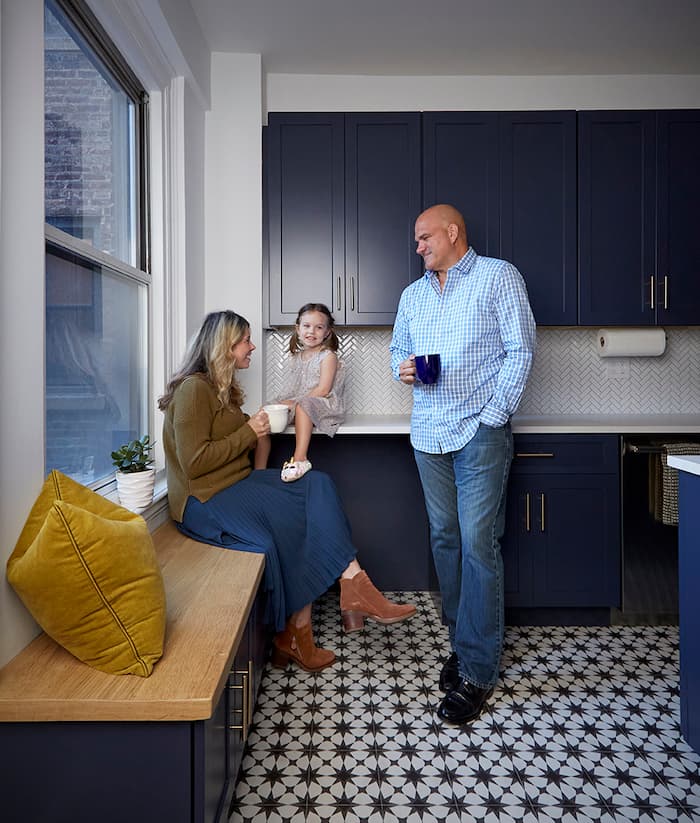
    Familty enjoying coffee in their newly renovated modern ktchen

    Enjoy peace of mind throughout your renovation

    Secure payment system puts you in control and protects your remodel

    Get Started

    Frequently asked questions

    What role would an interior designer play in a custom home build?

    An interior designer on a Baltimore custom home build typically engages after architectural drawings are substantially complete, taking ownership of the finish selections that give the home its character and livability. Their scope covers flooring materials, tile layout and design, cabinetry style and hardware, paint and stain palettes, lighting fixtures, plumbing fixtures, and often furniture planning for key rooms—a cumulative set of decisions that needs to feel unified rather than assembled from unconnected choices. In Baltimore's market, where custom homes frequently reference the region's deep architectural heritage, a designer's ability to navigate the tension between historic context and contemporary living standards—specifying materials that feel period-appropriate while performing to modern standards—is particularly valuable. Designers also help clients working in Baltimore's historic districts understand which material choices will pass design review and which will trigger objections, saving time and revision cycles during the permitting process.

    What custom home features should I incorporate to boost resale value?

    In the Baltimore metro, resale value is most consistently supported by features that address the region's specific climate, buyer culture, and architectural expectations. A high-performance building envelope—quality insulation, well-sealed windows, and heat pump HVAC—is increasingly scrutinized by buyers who understand Mid-Atlantic energy costs and who compare utility bills across properties before making purchase decisions. Screened porches and covered outdoor living spaces carry disproportionate resale appeal in a region where the shoulder seasons are genuinely beautiful and where outdoor entertaining culture runs deep. Kitchen packages with professional-grade appliances, durable stone countertops, and custom cabinetry hold their value well in a buyer pool that uses the kitchen as a primary entertaining space year-round. Multi-generational flexibility—a lower-level or above-garage suite with a separate entrance, kitchenette, and full bathroom—is increasingly valued by buyers who anticipate longer-term ownership and need to plan for evolving household configurations. Brick or stone exterior materials, which perform well in Maryland's freeze-thaw climate and signal quality to buyers who associate them with durability, consistently outperform vinyl or wood siding at resale in the Baltimore market.

    Is it realistic to move into the home while part of it is still being built?

    In Maryland, a certificate of occupancy is required before legal habitation, and Baltimore City and surrounding county inspectors enforce that requirement consistently—so the question is less about whether early occupancy is possible and more about whether living through the remaining construction phase is actually desirable. Even after a CO is issued, active construction in unfinished portions of the home creates daily disruptions that compound over time: construction dust that infiltrates through HVAC systems, subcontractor access that reduces privacy and security, noise that disrupts work and sleep, and a psychological inability to fully inhabit and organize a home that still feels like a project. Maryland's licensing requirements also mean that construction on an occupied structure involves additional safety protocols and sometimes additional permit conditions that can slow work compared to an unoccupied site. The approach that most experienced Baltimore builders recommend when timeline pressure is real is phased completion—front-loading the primary bedroom, bathrooms, kitchen, and main living areas for early certificate of occupancy while deferring secondary spaces, landscaping, and finish details to a subsequent phase with clearly defined scope, timeline, and payment terms agreed to before occupancy begins.