



Design
Bathtub to Shower Conversion: Cost, Ideas, Examples & More
08.11.2026
05.11.2026


In This Article
Nearly 1 in 2 renovators (47%) are remodeling bathrooms in 2026, according to Block Renovation's How America Renovates 2026 report. It's the most-renovated room in the country, and it's also one of the most variable in price. The same 50-square-foot footprint can cost $8,000 or $80,000, and the difference comes down to how much you tear out and what you put back in.
This guide explains what's actually behind those numbers. What a $20,000 bathroom buys versus a $50,000 one, what plumbing decisions cost in real dollars, what's hiding in the walls, and where the budget bends without the finished bathroom suffering for it.
Bathroom remodeling cost in 2026 typically lands between $10,000 and $30,000, with a national average around $16,500. Per square foot, mid-range projects run roughly $120 to $280. Three things move that number more than anything else: the size of the bathroom, whether the layout changes, and the quality of materials and fixtures.
|
Tier |
Typical cost range |
Per sq ft |
What's usually included |
|
Cosmetic refresh |
$5,000–$10,000 |
$80–$120 |
Paint, fixture swaps, vanity replacement, lighting. No layout change, no tile replacement. |
|
Mid-range remodel |
$15,000–$30,000 |
$150–$250 |
New tile, vanity, tub or shower, flooring, fixtures. Same plumbing footprint. |
|
High-end remodel |
$35,000–$60,000 |
$250–$400 |
Custom tile, premium fixtures, layout adjustments, possible structural work. |
|
Luxury / primary suite |
$60,000–$120,000+ |
$400–$600+ |
Double vanities, freestanding tub, custom shower, heated floors, specialty finishes. |
A cosmetic refresh is the cheapest path to a meaningful change. Skip the tile demo, leave the plumbing alone, and the budget goes mostly to a new Glacier Bay vanity (around $400 to $700 for a 30-inch unit with a top), a new toilet, fresh paint, updated lighting, and a faucet swap. A capable handyman can complete most of this in a week, and the result looks new without touching what's behind the walls.
A mid-range remodel is what most homeowners actually do. The shower gets re-tiled, the tub may be replaced, the vanity and floor go, and the fixtures get upgraded, but plumbing stays where it is. Most homeowners in this range spend $20,000 to $25,000 and get a bathroom that holds up for another 15 years.
A high-end remodel changes the structure itself, not just the surfaces. Layout shifts, plumbing relocations, custom tile work, and premium fixtures from collections like the Delta Trinsic line ($300 to $600 for a shower trim alone) push the project into a different category. Specialty trades stay on site longer, and the permit set includes plumbing and electrical.
A luxury or primary suite remodel adds features that drive cost independently of square footage. A Kohler Underscore freestanding tub runs around $1,800 to $2,500 just for the tub itself, before the floor-mount filler ($800 to $1,500), the rough-in, and the structural reinforcement that freestanding tubs sometimes require. Heated floors add $1,500 to $4,500. Steam showers run $5,000 and up. Pick three of those and you've added $10,000. Worth knowing before you do: of those three, heated floors are the one homeowners actually use every day for the life of the bathroom. Freestanding tubs and steam showers tend to get used less than the rendering suggests, and the dollars spent on them are often the dollars a homeowner would most like to have back five years in.
Type matters as much as quality. The number of fixtures, square footage of tile, and amount of plumbing rough-in is set by what kind of bathroom you're building.
|
Bathroom type |
Typical size |
2026 cost range |
|
Powder room (half bath) |
15–25 sq ft |
$3,000–$12,000 |
|
Guest / hall bath |
35–50 sq ft |
$10,000–$25,000 |
|
Primary bath (mid-range) |
75–100 sq ft |
$25,000–$50,000 |
|
Primary suite (high-end) |
100+ sq ft |
$50,000–$120,000+ |
|
Accessibility-focused remodel |
varies |
$10,000–$30,000+ |
A powder room has two fixtures: a toilet and a sink. There's no shower, no tub, no waterproofing membrane, no curb, and no glass to budget for. The cost driver is finishes, because the space is small enough that homeowners often splurge on tile or wallpaper they wouldn't use in a larger room. A $3,000 powder room is paint, a Kohler Memoirs toilet (around $530 to $710), and a swapped vanity. A $12,000 powder room is custom tile, a wall-mounted vanity, designer wallpaper, and an upgraded faucet. Cost-per-square-foot math gets weird in small rooms. A $12,000 powder room can run $500 a square foot and still cost less in total than a basic primary bath remodel.
A guest bath is where most mid-range projects live. The work is straightforward, including a tub-shower combo or walk-in shower, single vanity, toilet, tile, paint, and fixtures. Costs scale with shower complexity. A prefab acrylic shower surround runs $1,500 to $3,000 installed. A custom-tiled shower with a glass enclosure runs $5,000 to $12,000 by the time waterproofing, tile labor, and frameless glass are accounted for.
A primary bath is the most expensive room because it has the most of everything. The footprint is bigger, the vanity is doubled, and the tub and shower are separate, sometimes with a private water closet. Every one of those choices doubles the supply lines, the drains, and the labor hours that go with them. The mid-range range of $25,000 to $50,000 reflects that scope, not luxury finishes.
An accessibility remodel includes some combination of grab bars, a curbless or low-curb shower, a comfort-height toilet, slip-resistant flooring, lever handles, and sometimes a walk-in tub. The cost variance is wide because accessibility ranges from a $200 grab bar installation to a full ADA-compliant primary suite with a roll-in shower and reinforced wall blocking. A typical aging-in-place bathroom retrofit lands at $15,000 to $25,000.
Turn your renovation vision into reality
Get matched with trusted contractors and start your renovation today!
Find a Contractor
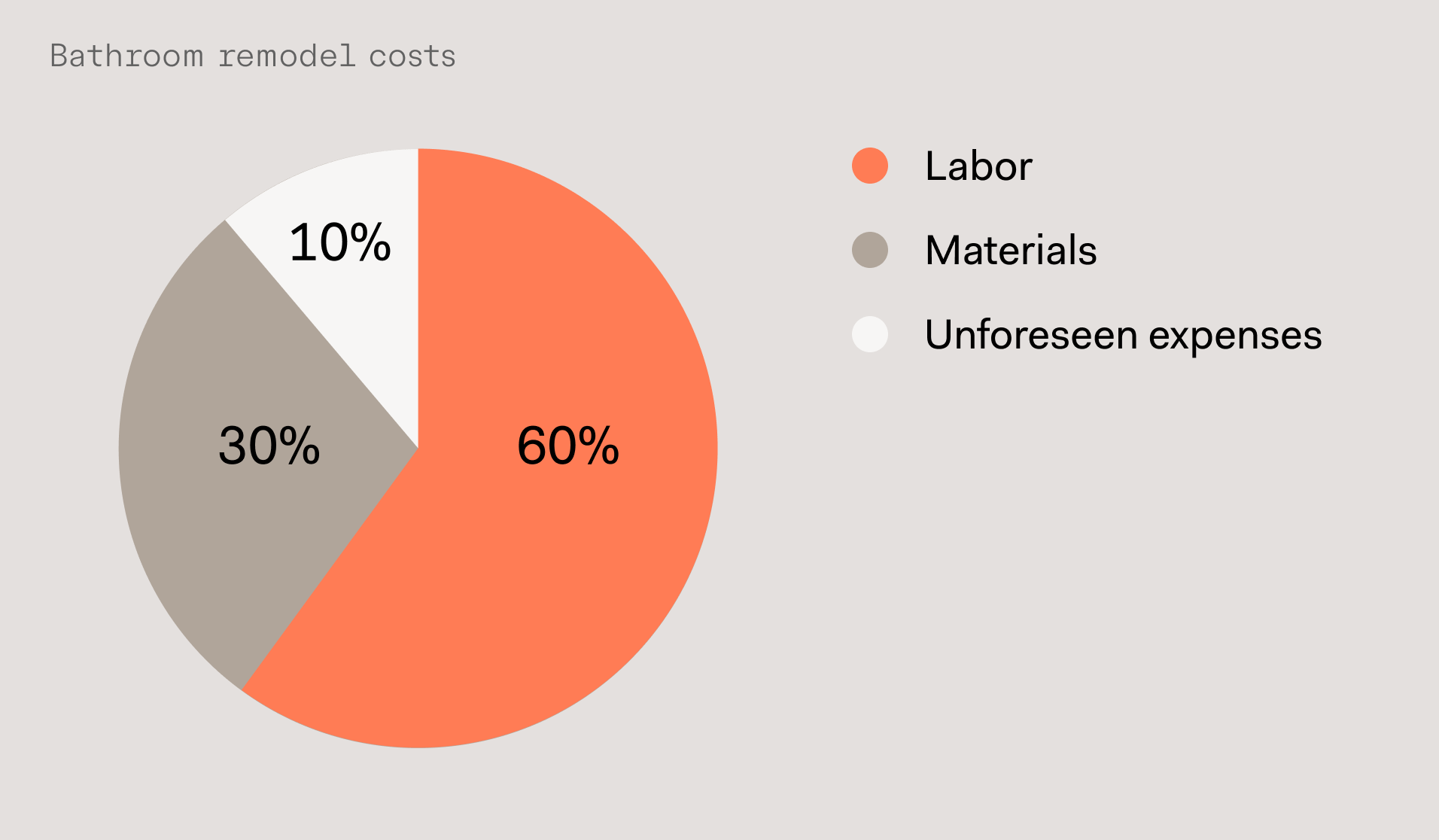
In a typical mid-range bathroom remodel, labor takes 50% to 65% of the total project cost. Materials take 30% to 45%. The remaining 5% to 10% covers permits, demolition, and disposal. That ratio shifts in either direction with project type. High-end finishes pull the mix toward materials. Layout changes and structural work tilt it toward labor.
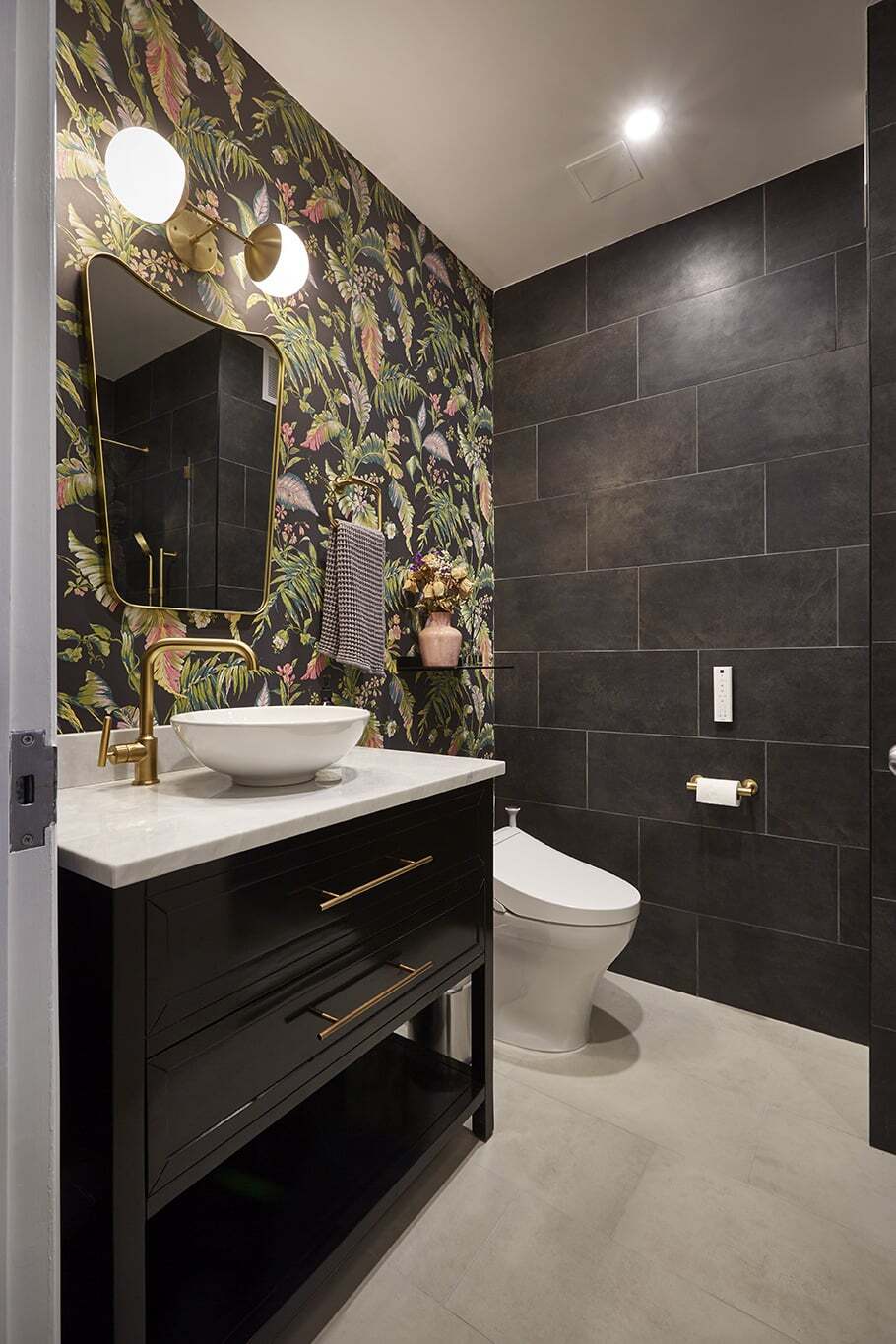
Bathroom size is the first variable in any cost estimate. Larger bathrooms cost more in absolute terms, but per-square-foot pricing usually drops as size increases. The fixed costs (demolition setup, permits, fixtures) get spread across more area. A 25-square-foot powder room can run $200+ per square foot. A 100-square-foot primary bath in the same market often comes in closer to $150 per square foot for comparable finish quality.
The exception is the small bathroom that requires intricate work. Curbless showers in tight footprints, custom-cut tile patterns, and floating vanities in spaces with awkward plumbing all push the per-square-foot number up.
Scope drives cost more than any other single decision. A cosmetic refresh skips the trades that drive most of the cost, which is why the same footprint can be a $7,000 job or a $40,000 job depending on whether walls come down.
Once a shower gets demolished to the studs, waterproofing and tile labor enter the budget at $5,000 to $12,000 minimum, plus new plumbing rough-in if any fixture moves. A homeowner who keeps the existing shower surround intact and replaces only the vanity, toilet, fixtures, and flooring will save $8,000 to $15,000 compared to a full mid-range remodel.
Plumbing is the biggest swing factor in a bathroom budget, as noted by Steven Morgan, Licensed Master Plumber and Head of Plumbing Operations at 24hr.Supply.
"The best cost-saving move I know in plumbing is also the simplest. Keep your rough-in locations close to existing stacks. Every foot you move a toilet or sink away from the main waste line adds labor, material, and usually some compromised framing from cutting floor joists. I've repositioned a powder room three feet toward the existing stack and saved a client several thousand dollars with zero impact on how the space looks or functions. It's one of those decisions that costs nothing to make and pays immediately."
Move a fixture and the cost cascade starts. Drain-side relocations cost more than supply-side because they require a slope (typically 1/4 inch per foot) for gravity drainage, which means cutting deeper into framing and running longer pipe to reach the existing waste stack.
Typical plumbing costs in a mid-range project:
The cheapest bathroom is the one where every fixture stays exactly where it is. Wet walls, meaning the walls containing existing supply and drain lines, should be treated as fixed features in any remodel trying to control cost. Designers who work in renovation rather than new construction orient the new layout around that wall, which is why the same designer can produce a $20,000 plan or a $45,000 plan for the same bathroom depending on whether the wet wall is honored or fought.
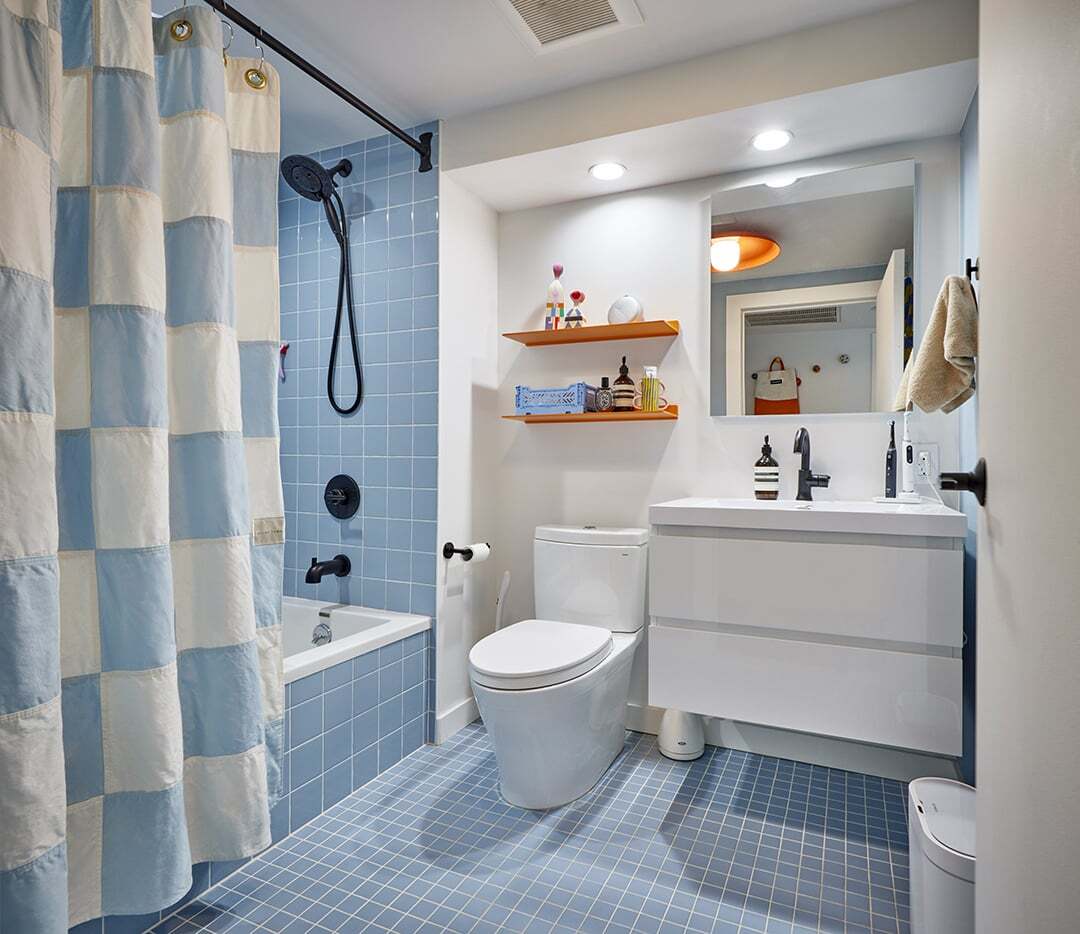
Older bathrooms often need a panel upgrade, GFCI outlets, dedicated circuits for heated floors or towel warmers, and updated venting to meet code. Plan on $800 to $2,500 for typical electrical work in a mid-range remodel. A panel upgrade alone runs $850 to $2,500.
Code-required upgrades are easy to underestimate. Once an electrician is on site and the walls are open, any non-compliant existing wiring becomes their responsibility to address. That can mean replacing two-prong outlets, adding GFCI protection on every wet-location circuit, and running a dedicated 20-amp circuit for the bathroom. None of those upgrades are visible in the finished bathroom, but they show up on the invoice. The fix is to ask any contractor bidding the project to spell out which electrical upgrades are included in the base price and which would be billed as code-required additions, because that line item is where bids drift apart most.
Tile, vanity, countertop, and fixtures are the four big material decisions in a bathroom. Each one has a budget, mid-range, and high-end tier, and the cost compounds across categories. Picking high-end in all four is what turns a $25,000 bathroom into a $50,000 bathroom.
Material cost runs $2 to $40+ per square foot, with labor typically 2x to 3x the material cost on top.
Tile size affects labor cost more than most homeowners expect. A 50-square-foot shower wall in 12x24 porcelain can be installed in a day; the same wall in 2x2 mosaic takes two to three days because every tile has to be set, every grout line spaced, and every cut precise. The material spec drives the labor spec, and that compounds across the bathroom.
Vanity cost is driven by construction quality and whether the unit is stock, semi-custom, or custom-built.
Fixtures show the steepest cost curve of any material category. The valve behind the wall is usually identical across price points; the spend goes to visible trim.
Performance is roughly equivalent across price points. The cost difference is style and brand.
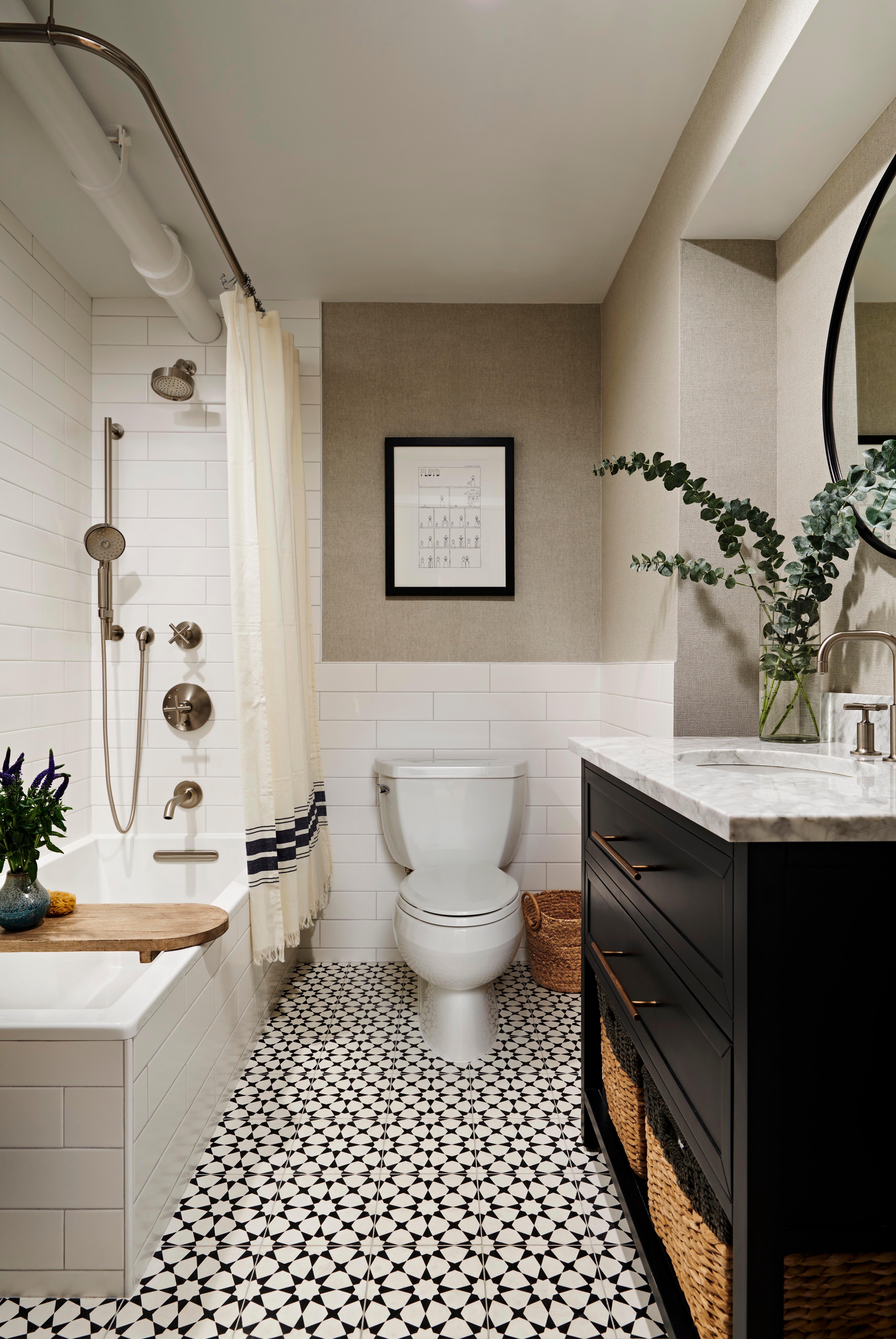
Labor is the largest regional variable in a bathroom remodel, and it's the reason the same project can cost 30% to 40% more in a coastal urban market than in the Midwest. Trade rates, permit complexity, and material delivery costs all scale with cost of living.
The trade rates that drive most of the variance:
For example:
Permit costs and inspection complexity also vary regionally. A bathroom remodel in NYC requires a Department of Buildings permit, often involves co-op or condo board approval, and may require a licensed expediter, all of which add $1,500 to $5,000 in soft costs that don't exist in most suburban markets. The cost difference between markets isn't just labor rates, it's the friction layered on top.
Design a Home That’s Uniquely Yours
Block can help you achieve your renovation goals and bring your dream remodel to life with price assurance and expert support.
Get Started
Hidden costs are what shows up once demolition starts. Old houses hide things, and a 30-year-old wall has had three decades to develop problems no one knew about.
|
Hidden cost |
Typical range |
When it shows up |
|
Water damage / rotted subfloor |
$3.75–$7 per sq ft |
Demo of toilet, tub, or shower |
|
Outdated plumbing replacement |
$1,500–$4,000 |
Homes built before 1970 |
|
Mold remediation |
$500–$6,000 |
Behind tile after slow leaks |
|
Asbestos / lead abatement |
$500–$3,000+ |
Homes built before 1980 |
|
Code-required electrical upgrades |
$500–$2,500 |
Any time an electrician opens a wall |
|
Joist sistering or replacement |
$300–$1,500 per joist |
Severe water damage |
The most common surprise in a bathroom remodel. A long-leaking toilet wax ring, a hidden shower pan failure, or condensation from poor venting will eventually rot the subfloor and sometimes the joists. Repairs run $3.75 to $7 per square foot for subfloor replacement, and $300 to $1,500 per damaged joist for sistering or replacement. Major rot under a tile floor can mean cutting back to the wall framing and rebuilding, which is a multi-thousand-dollar add.
In homes built before 1970, galvanized supply lines and cast iron drain stacks are common. Both should be replaced when walls are open. Galvanized pipe corrodes from the inside and chokes flow. Cast iron drains crack at hub joints and leak. Replacement runs $1,500 to $4,000 for the bathroom's portion of the plumbing tree, more if the work extends into the basement or crawlspace.
Where there's been a slow leak, there's usually mold behind the tile. Surface mold remediation runs $500 to $1,500. Full remediation with containment, HEPA filtration, and material removal runs $2,000 to $6,000.
In homes built before 1980, asbestos-containing materials may exist in vinyl floor tile, mastic adhesive, joint compound, or pipe insulation. Lead paint is common in homes built before 1978. Both require licensed abatement before demolition can proceed. Abatement adds $500 to $3,000 for typical bathroom-scale work, more with full containment.
Once an electrician is on site for any bathroom work, existing non-compliant wiring becomes their responsibility. Bringing the bathroom circuit up to code (GFCI, dedicated 20-amp circuit, proper grounding) runs $500 to $2,500.
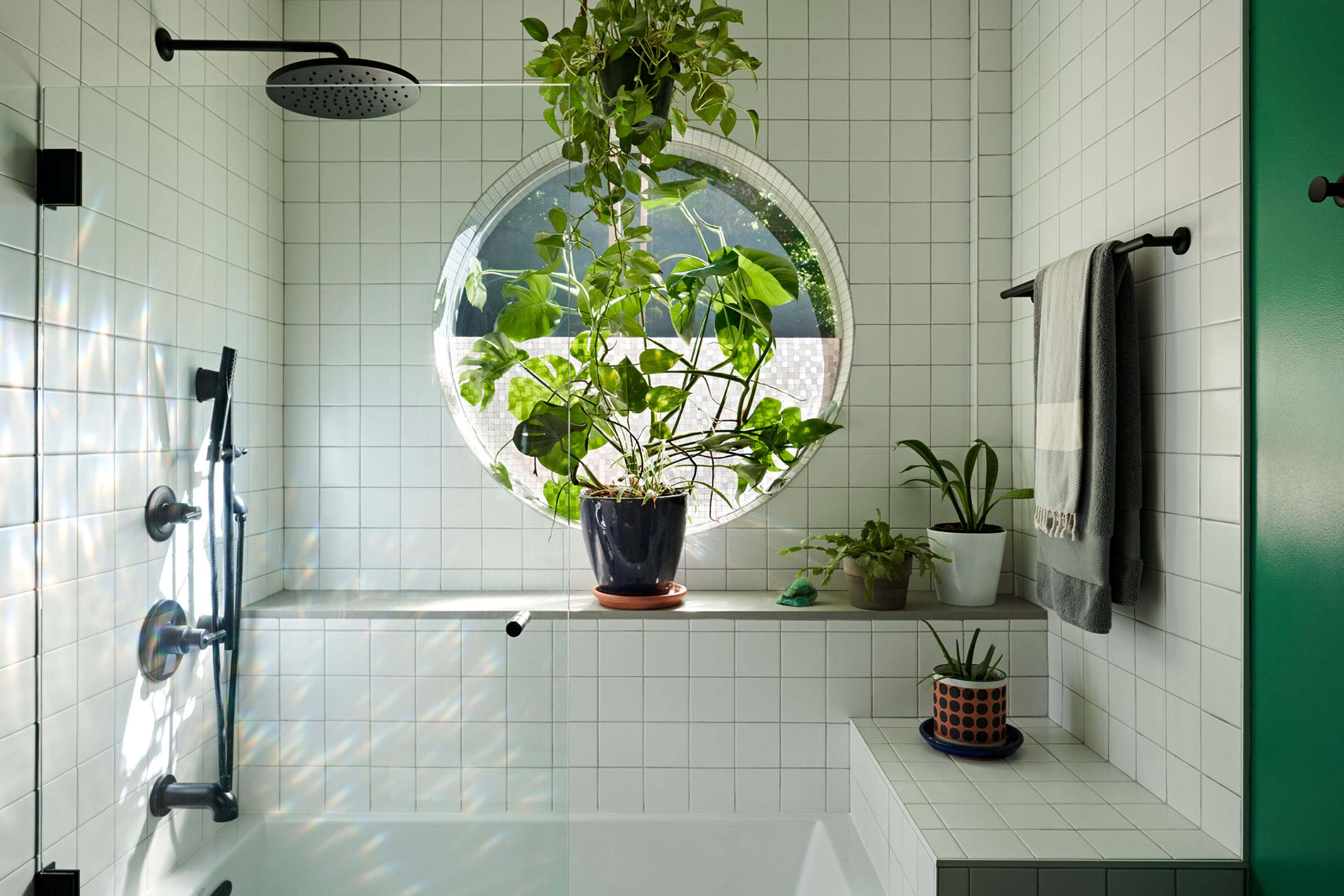
Lowering cost without cutting quality comes down to knowing where the labor is and what's actually visible. The savings worth chasing are the ones nobody sees in the finished bathroom.
Plumbing relocations are the single biggest avoidable cost in a bathroom remodel. A bathroom that uses the existing toilet flange, sink supply lines, and shower drain saves $3,000 to $8,000 versus the same finishes in a relocated layout. The savings come from less plumbing labor and fewer permit fees, plus the project moves faster. Layout-preserving remodels also reduce the chance of triggering hidden-cost surprises, because nobody's cutting into framing or subfloor that hasn't been touched in 40 years.
Reglazing a tub costs $300 to $600 and adds 10 to 15 years of life. Replacing a tub costs $2,000 to $9,400 by the time demolition, new tub, plumbing tie-in, and surround tile are accounted for. Reglazing is the right call when the tub is structurally sound but cosmetically tired.
A prefab acrylic shower pan paired with custom tile walls saves $800 to $2,000 in labor compared to a fully custom mortar-bed shower pan. The pan is invisible behind the curb. The tile is what the eye sees.
Standard 12x12 or 12x24 tile is the sweet spot for tile labor. Small-format mosaic and large-format slabs both push labor costs higher. Mosaics increase tile count and grout work; large-format requires extra hands, leveling systems, and waste from cuts.
Most major manufacturers offer trade pricing when fixtures come from the same collection. Ordering a faucet, shower trim, towel bar, and toilet handle from a single line like Delta Trinsic is often 10% to 20% cheaper than mixing brands.
Spend on what gets touched daily: the faucet, the showerhead, the vanity hardware. Save on what's hidden, since the supply lines, the shower valve cartridge, and the exhaust fan all perform the same regardless of price point. The visible-versus-invisible test is the simplest budgeting filter in a bathroom remodel: if a guest will see or touch it, it earns the upgrade; if it lives behind a wall, the budget version performs the same job for a fraction of the cost.
Lighting is the cheapest way to change how a bathroom feels.

"Improving your lighting doesn't have to mean a full electrical overhaul or adding a ton of recessed fixtures. Sometimes it's as simple as adding lamps to a space, so it's not just overhead lighting but something more dispersed."
A plug-in sconce, a vanity lamp, or a small lit mirror changes how a bathroom feels without touching a single wire in the wall. That's the kind of decision that quietly saves $1,000 or more in electrical work and inspection time.
The DIY math is straightforward when the only consideration is cost outcomes. The complication is that cost outcomes aren't the only consideration.
Worth doing yourself if you have the time and tools:
Worth paying a pro for, every time:
Demolition and finish painting are the jobs worth doing yourself. Water and electricity are the jobs where a mistake gets expensive fast, and those should always go to a licensed trade.
Bathrooms get renovated more than any other room, and the budget swings on that work are wider than most homeowners expect going in. Block helps homeowners settle the scope, the contractor, and the budget before demolition starts.
Block's free Renovation Studio lets homeowners design their bathroom and get real-time cost estimates that update as decisions change. The pricing reflects actual labor and material costs in the homeowner's market, so the budget that comes out of planning matches the budget the project starts with.
Start designing in Renovation Studio
Tell Block the project details once and have local vetted contractors compete for the work. Every scope is reviewed by Block experts to catch missing line items and red flags before quotes come in. Payments run through Block's secure system and release in stages as the project progresses, which keeps contractors on schedule and homeowners in control of the budget.
Remodel with confidence through Block
Connect to vetted local contractors
We only work with top-tier, thoroughly vetted contractors

Get expert guidance
Our project planners offer expert advice, scope review, and ongoing support as needed
Enjoy peace of mind throughout your renovation
Secure payment system puts you in control and protects your remodel

Renovate confidently with Block
Easily compare quotes from top quality contractors, and get peace of mind with warranty & price protections.
Design
Bathtub to Shower Conversion: Cost, Ideas, Examples & More
08.11.2026
Design
Open Shelving Bathroom Design Ideas & Optimal Placement
08.08.2026
Bathroom
Bathroom Wall Texture Ideas and What to Avoid
08.03.2026
Cost
20x20 Room Addition Cost: What to Budget in 2026
07.28.2026
Bathroom
High End Toilets for an Upgraded Bathroom
07.24.2026