




Washington
Custom Home Building in Vancouver, Washington: Local Guide
04.17.2026

03.10.2026


In This Article
A well-built deck extends your living space into Seattle’s outdoors—and despite the city’s reputation for rain, Seattle homeowners get more usable deck days than most people assume. Summers are reliably dry from late June through September, and even the shoulder months offer plenty of mild, overcast days that are perfect for outdoor dining, morning coffee, or remote work with a view.
But building or remodeling a deck in Seattle comes with specific considerations around materials, weather resistance, permitting, and design. This guide covers the practical details you need to plan your project.
This is the first decision most Seattle homeowners face, and the answer depends on your priorities, budget, and tolerance for maintenance.
Cedar is the traditional deck material in the Pacific Northwest, and it has natural advantages—it’s naturally resistant to rot and insects, lightweight, and beautiful. Seattle’s cool, moist climate is actually where cedar performs best compared to hotter, drier regions where it can crack and split. A well-maintained cedar deck can last 15 to 25 years. The catch is the maintenance: cedar requires annual cleaning, periodic sealing or staining (every one to three years), and will eventually weather to a silver-gray patina if left untreated. Expect to pay $8 to $14 per square foot for materials alone.
Pressure-treated Southern yellow pine is the budget-friendly option, costing roughly $4 to $8 per square foot for materials. It’s structurally strong and treated with preservatives that resist rot and insects. However, it’s more prone to warping, checking, and splitting than cedar—particularly in Seattle’s wet-dry cycles—and it requires the same level of ongoing maintenance. Most contractors recommend it for structural framing rather than decking boards.
Composite materials (brands like Trex, TimberTech, and Fiberon) have become the dominant choice for new deck installations in the Seattle area. Modern composites are made from a blend of recycled wood fiber and plastic polymers, and they’ve improved dramatically from the early-generation products that faded and grew mold. Today’s capped composites resist moisture, fading, staining, and scratching, and they require virtually no maintenance beyond occasional cleaning.
For Seattle specifically, composite’s moisture resistance is its strongest advantage. Cedar and pressure-treated wood can develop mold and algae growth during Seattle’s wet months, requiring regular power washing and treatment. Composite boards resist this growth and dry more quickly after rain. The trade-off is cost: composite materials run $10 to $22 per square foot, significantly more than wood upfront, though the lifetime cost is often lower when you factor in maintenance savings. Composite can also feel less “natural” underfoot and can get hotter in direct sun, though Seattle’s moderate summer temperatures make heat retention less of an issue than in Southern markets.
Design a Home That’s Uniquely Yours
Block can help you achieve your renovation goals and bring your dream remodel to life with price assurance and expert support.
Get Started
Seattle’s deck permitting rules are administered by SDCI, and the requirements depend on your deck’s height above grade.
Decks with a walking surface 18 inches or less above grade generally do not require a construction permit (unless they’re in or near an environmentally critical area). Once the deck exceeds 18 inches above grade, you’ll need a construction permit—either a subject-to-field-inspection (STFI) permit for simpler projects or a full addition/alteration permit for more complex builds.
Decks more than 36 inches above ground count toward your property’s lot coverage calculation, which is capped at 35 percent in most Neighborhood Residential zones for lots 5,000 square feet or larger. Setback requirements also apply: decks more than 18 inches above grade must be at least 20 feet from the front property line, 5 feet from side property lines, and 25 feet from the rear property line (or within the rear 20 percent of lot depth, whichever is less).
Guardrail requirements kick in for any deck surface 30 inches or more above grade. Seattle follows Washington State amendments to the International Residential Code, requiring guardrails at least 36 inches high for residential decks. Balusters must be spaced no more than 4 inches apart. Seattle’s marine climate and seismic environment have also led to enhanced requirements for corrosion-resistant hardware—stainless steel fasteners and galvanized connectors are recommended for long-term durability.
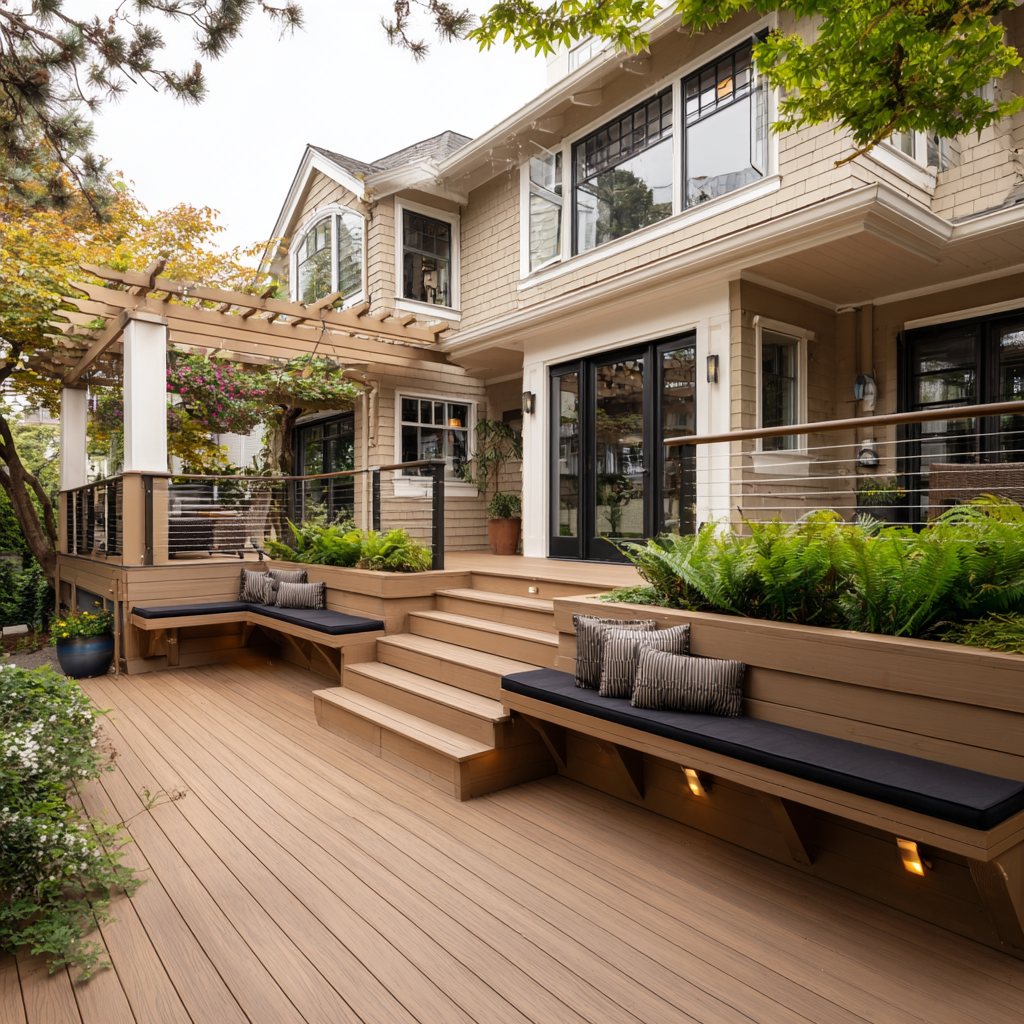
Given that Seattle receives rain for much of the year, adding a roof structure, pergola with a retractable canopy, or even a solid patio cover dramatically increases the usable days of your deck. A covered deck also protects furniture and finishes, reducing maintenance regardless of your material choice.
Proper drainage is critical in Seattle. Decks should be built with a slight slope (typically 1/4 inch per foot) away from the house to direct water runoff. For elevated decks, under-deck drainage systems (like Trex RainEscape or DrySpace) capture water and channel it away, creating dry storage or usable space below the deck.
Seattle’s winter daylight hours are short—sunset is before 4:30 PM in December. Integrated deck lighting (post caps, riser lights, under-rail strips) extends the usability of your deck well into the evening and adds safety on stairs and transitions. Plan the wiring during construction, not after.
Many Seattle homes sit on hillsides or sloped lots with views of the Cascades, Olympics, Puget Sound, or Lake Washington. Deck orientation and railing design should maximize these views—cable railings and glass panels maintain sightlines while meeting code. For flat lots in denser neighborhoods, privacy screens, vertical gardens, or lattice panels can create a sense of seclusion without boxing you in.
Built-in bench seating along deck perimeters provides ample seating without the clutter of freestanding furniture. Integrated planters filled with native species like sword ferns, salal, or ornamental grasses create a natural buffer and add greenery that connects your deck to Seattle’s lush landscape. Both features can be designed to double as storage.
A typical 200-square-foot cedar or composite deck in Seattle costs between $8,000 and $14,000 for materials and basic construction. Adding stairs, railings, and custom features can bring the total to $15,000 to $25,000 or more. Larger or multi-level decks with built-in seating, outdoor kitchens, or roofing structures can exceed $40,000. Construction timelines range from one to four weeks for simple builds, and three to twelve weeks for complex projects with stairs, railings, and covered areas. Permitting can add several weeks to your timeline, especially if you’re applying during the busy spring and summer season. Working with Seattle remodeling contractors who understand the local permitting process can help avoid unnecessary delays.
Whether you’re building a new deck from scratch or remodeling an aging one, the right contractor makes a significant difference in the quality of the finished product and the smoothness of the process. Block Renovation connects Seattle homeowners with vetted, licensed contractors matched to your specific project type and neighborhood. You’ll get detailed proposals to compare, expert scope reviews, and the protection of progress-based payments.
If you’re also considering broader exterior or home projects alongside your deck, Block’s team can help you coordinate a custom remodeling plan that addresses multiple priorities. For insights into local building costs, Block’s resources provide a solid starting point for budgeting your Seattle deck project.
Remodel with confidence through Block

Connect to vetted local contractors
We only work with top-tier, thoroughly vetted contractors

Get expert guidance
Our project planners offer expert advice, scope review, and ongoing support as needed
Enjoy peace of mind throughout your renovation
Secure payment system puts you in control and protects your remodel

Renovate confidently with Block
Easily compare quotes from top quality contractors, and get peace of mind with warranty & price protections.
Washington
Custom Home Building in Vancouver, Washington: Local Guide
04.17.2026

Washington
Bathroom Remodeling in Spokane, WA: Costs & Other Factors
04.10.2026
Attic
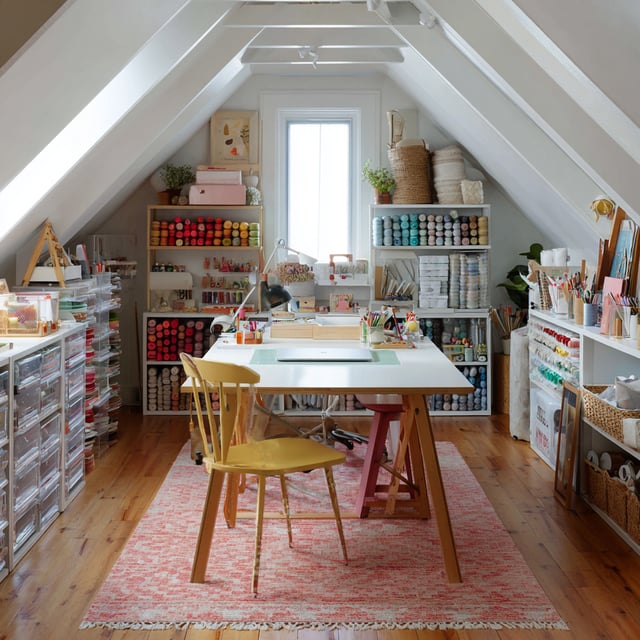
Finishing Your Seattle Attic: A Practical Guide | Block Renovation
04.06.2026

Washington
Kitchen Remodel Spokane, WA: Costs & Local Tips
04.02.2026
.webp?width=640&name=f55ee650-d34a-11eb-9d1d-3514adcc0bb1%20(1).webp)
Washington
Aging in Place Remodels for Seattle Homes | Block Renovation
04.01.2026