




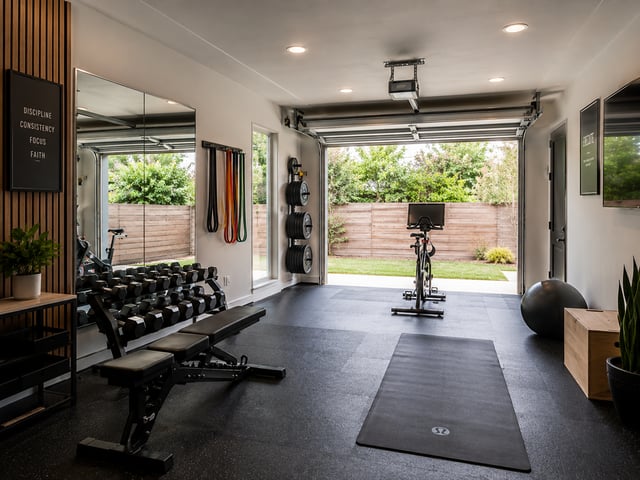
Basement
Home Gym Dimensions: Room Sizes and Layout Guide
08.12.2026

07.17.2026


In This Article
If you've priced a basement finish, you've probably seen numbers that can't all be true: one guide says $15,000, a neighbor paid $70,000, and a contractor quoted something in between. The figures disagree because they describe different projects, and scope, not square footage, is what separates them. A contractor-led finish in 2026 runs $30 to $75 per square foot, with a bare-bones refresh on an already dry, wired shell coming in under that and a full living suite passing $100.
How much does it cost to finish a basement?
Scope sets the price more than size does. The same 1,000 square feet can cost $20,000 as an open rec room or $90,000 as a one-bedroom apartment with a kitchen and full bath. The clearest way to estimate is by finish level, then adjust for square footage.
|
Finish level |
Cost per sq ft |
What it usually includes |
|
Basic finish |
$15 to $30 |
Flooring, drywall, paint, and lighting on a dry, code-ready shell |
|
Standard contractor finish |
$30 to $75 |
Framing, insulation, drywall, flooring, egress, basic electrical and HVAC |
|
Full living suite |
$75 to $120+ |
Bathroom, kitchenette, bedroom egress, upgraded systems, apartment-level code work |
Most homeowners hiring a basement contractor for a standard finish land in the $30 to $75 range. The 2025 Cost vs. Value Report puts the national average for a midrange basement remodel near $52,000.
Once you know your finish level, square footage gives you a working budget. Basement remodel pricing in the table below uses the standard contractor-led range of $30 to $75 per square foot. A basic finish comes in lower, and a full suite with a bathroom or kitchen pushes past the top of each range.
|
Basement size |
Typical cost (standard finish) |
Common use |
|
400 sq ft |
$12,000 to $30,000 |
Home office, gym, or rec room |
|
500 sq ft |
$15,000 to $37,500 |
Guest room or media room |
|
700 sq ft |
$21,000 to $52,500 |
Home theater plus a second use |
|
800 sq ft |
$24,000 to $60,000 |
Family room with a wet bar |
|
1,000 sq ft |
$30,000 to $75,000 |
|
|
1,200 sq ft |
$36,000 to $90,000 |
Multi-room layout with a full bathroom |
|
1,500 sq ft |
$45,000 to $112,500 |
In-law suite or legal apartment |
A 400 sq ft basement finished to a standard level runs about $12,000 to $30,000, a 700 sq ft basement runs about $21,000 to $52,500, and a 1,500 sq ft basement runs about $45,000 to $112,500. The cost to renovate a basement that's already partially finished usually lands below these ranges, since some framing, wiring, or drainage work is already in place. Location matters too: labor and permit costs in a high-cost metro sit well above a smaller market, so confirm the numbers with local quotes before you commit to a scope.
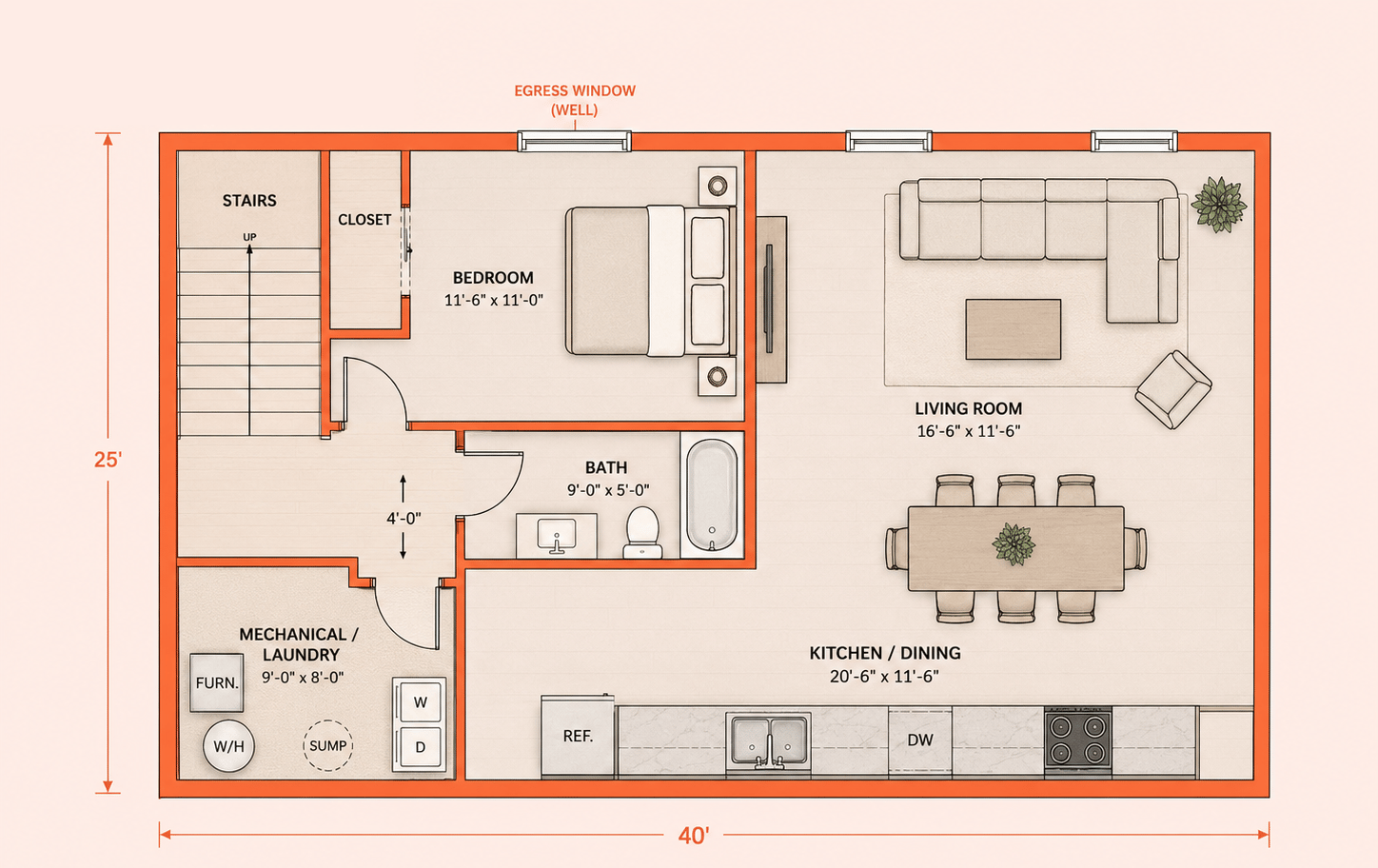
What you plan to do with the space matters as much as the square footage. A carpeted rec room and a permitted apartment can fill the same footprint and differ by $60,000 in basement remodel price. Here is what the most common upgrades add on top of a basic finish.
A bathroom is the most requested basement add-on and among the priciest per square foot, mostly because of drainage. Fixtures below the sewer line often need a sewage ejector pump or an up-flush system, which a main-floor bathroom never requires because waste there drains downhill on its own. The identical bathroom one floor up would cost thousands less for that reason alone. A half bath sits toward the low end of the range, while a full bath with a tiled shower lands near the top.
If a bedroom or rental unit is not in your plan, a rough-in is often the smarter spend: have the plumber set and cap the drain during construction, then add the fixtures whenever you actually want the bathroom. Retrofitting plumbing under a finished slab later means cutting concrete, which can roughly double the plumbing cost, so the rough-in protects the option for a fraction of the price. See building a basement bathroom for the full breakdown.
Budget $5,000 to $12,000 for a wet bar with a sink, a mini fridge, and cabinets. A full kitchenette with a range, a larger refrigerator, and counter space pushes that to $15,000 to $25,000, mostly from added plumbing, a dedicated circuit, and ventilation. Keeping the setup near existing supply lines holds either option toward the low end.
At the low end, a media room with wiring, blackout treatment, and seating starts around $5,000. A dedicated home theater with soundproofing, tiered seating, a projector, and surround sound can reach $20,000 to $30,000. Most of that budget goes to the soundproofing and the audio-visual package rather than the framing.
Three things separate a conforming bedroom from a finished rec room: a 7-foot ceiling, a closet, and an emergency escape window or door. The egress opening is the expense, $2,500 to $5,500 once excavation and a window well are included. An appraiser counts the room as a bedroom only when it has that opening, no matter how well the rest of it is finished. Without legal egress, the room cannot be appraised or listed as a bedroom.
Combine a kitchen, a bathroom, egress, and often a separate entrance, and a full living unit typically runs $40,000 to $100,000 or more. Finishing a basement for your own use is largely a cosmetic job, but a unit someone can legally rent has to satisfy a building inspector, the zoning code, and in many cities a separate rental license, so a finished room is not automatically a legal apartment. Zoning and permitting drive both the cost and the timeline, and the rules vary widely by city. Converting a basement into a legal apartment walks through the code and zoning steps.
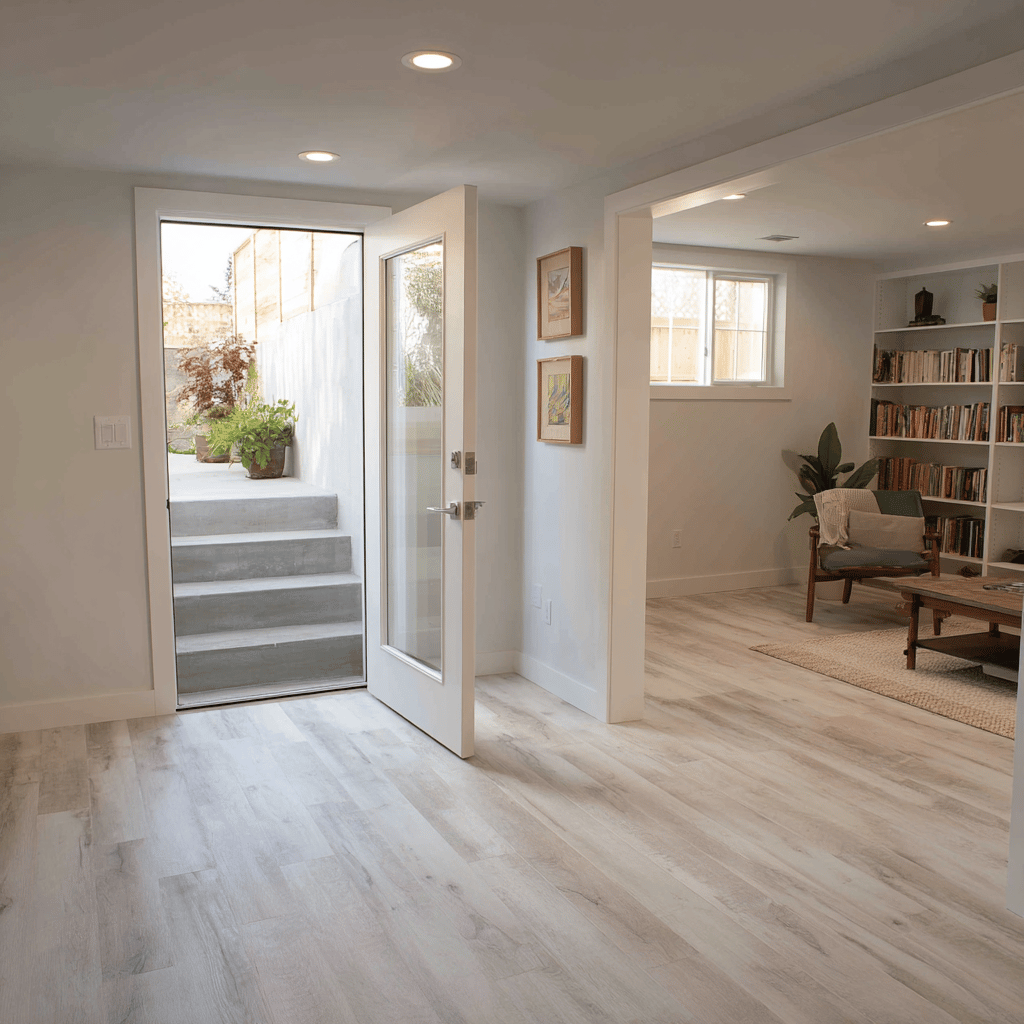
Most of a basement budget goes to work you will never see once the drywall goes up. The biggest swings come from a few conditions: moisture, code-required egress, plumbing and electrical capacity, ceiling height, and structural repairs. Price these before you lock a scope, because any one of them can move the budget by five figures.
Systems work costs more than anything else in a basement finish. Licensed plumbers and electricians bill the highest hourly rates on the job, and any plan with a bathroom or kitchenette leans on both trades for new supply lines, drainage, and dedicated circuits. When the basement starts out rough, three other line items can rival the systems bill: structural repairs, waterproofing, and a code-compliant egress opening.
Radon is the line item homeowners miss most often. A test kit costs a few dollars, and adding a mitigation system during construction costs far less than retrofitting one under finished walls later. The EPA recommends testing before the work begins and again after it wraps.
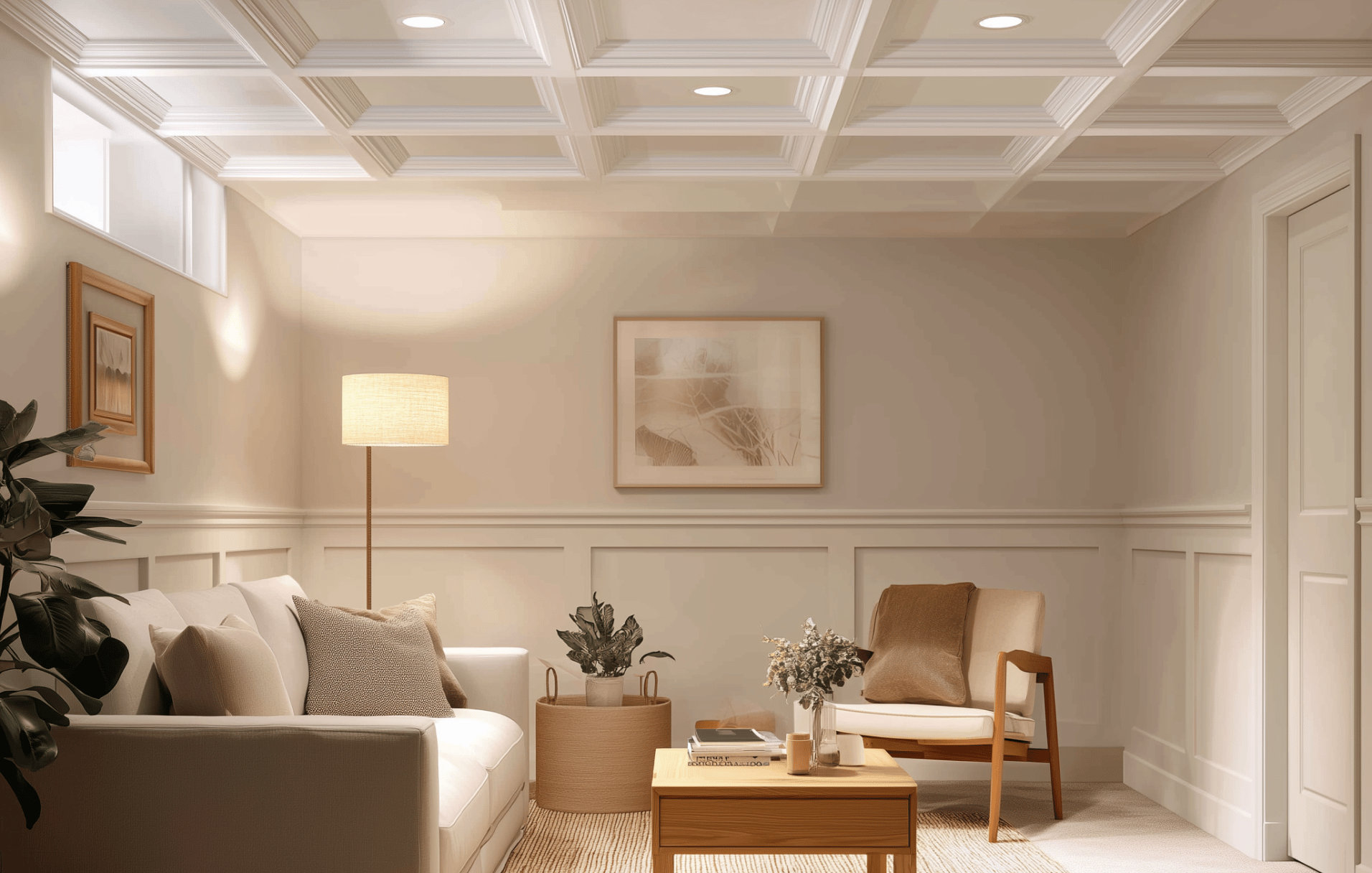
Published basement finishing estimates disagree more than almost any other renovation number. Some online cost guides put the work as low as $7 to $23 per square foot, while basement remodel pricing for permitted, code-compliant contractor work in 2026 starts closer to $30. The gap comes from what each figure includes. Many of the lowest numbers come from lead-generation sites that publish optimistic ranges to prompt quote requests, and those ranges often leave out permits, egress, systems upgrades, and the moisture work that most unfinished basements need. A true $15 per square foot finish exists, but it describes flooring and paint on a space that was already dry, wired, and code-ready, and almost no unfinished basement starts there. Treat any per-square-foot figure, including the ones in this guide, as a planning range rather than a bid.
A real estimate is built line by line. These are the components a detailed basement quote prices individually:
|
Line item |
Typical cost |
|
Framing and drywall |
$5 to $10 per sq ft |
|
Insulation |
$1 to $3 per sq ft |
|
Flooring |
$4 to $15 per sq ft installed |
|
Electrical wiring and fixtures |
$4 to $9 per sq ft |
|
Plumbing rough-in |
$500 to $2,000 per fixture |
|
Permits and inspections |
$200 to $2,000 depending on scope |
|
Egress window |
$2,500 to $5,500 installed |
Never settle for fewer than three quotes, and compare the scopes line by line rather than the totals alone. A detailed scope names the ceiling type, the flooring product, the number of new circuits, who pulls the permits, and how moisture will be handled before finishes go in. When a quote skips any of those lines, the work still has to happen, and it usually gets priced later as a change order.
Renovate with confidence every step of the way
Step 1: Personalize Your Renovation Plan
Step 2: Receive Quotes from Trusted Contractors
Step 3: Let Us Handle the Project Details

Labor runs 40 to 60% of a basement budget, and a general contractor coordinating the trades adds another 10 to 25% for managing the schedule, the permits, and the handoffs between specialists. Those amounts already sit inside the per-square-foot ranges above, not on top of them, which is why the coordination fee surprises homeowners who expect the labor line items to cover it. However, considering the many moving pieces that come with basement remodels, a general contractor is more than worth it.
Whether to hire out or do the work yourself comes down to your skills, your schedule, and how much of the job is code-regulated.
|
Aspect |
Professional finish |
DIY finish |
|
Code compliance |
Handled by a licensed contractor |
You research and meet codes yourself |
|
Project management |
Coordinated across trades |
Self-managed |
|
Quality assurance |
Warranty and guarantees typical |
Relies on your own diligence |
|
Cost |
Higher upfront for labor |
Lower if done right, mostly materials |
|
Timeline |
Generally faster |
Can run several months |
|
Risk |
Lower, with oversight |
Higher, mistakes can be costly to fix |
A professional finish makes the most sense when the job involves plumbing, electrical, egress, or structural work. Those systems have to pass inspection, and a failed inspection means redoing finished work. Licensed contractors know local code, carry warranties, and absorb the surprises that surface once walls and floors come open.
DIY suits a basement that is already dry and structurally sound, with mostly cosmetic work left. A botched install often costs more to fix than hiring out would have, so a hybrid approach works well: handle the painting and decorating yourself, and leave the systems to a pro.
The surest savings come from trimming the scope rather than swapping in cheaper materials. Finishing less area, or finishing to a lower level, shrinks the labor and material line items together.
You do not have to finish the whole basement at once, or to the same level throughout. A partially finished basement keeps utility and storage zones raw while finishing only the areas you will live in, which captures most of the everyday benefit for a fraction of a full remodel.
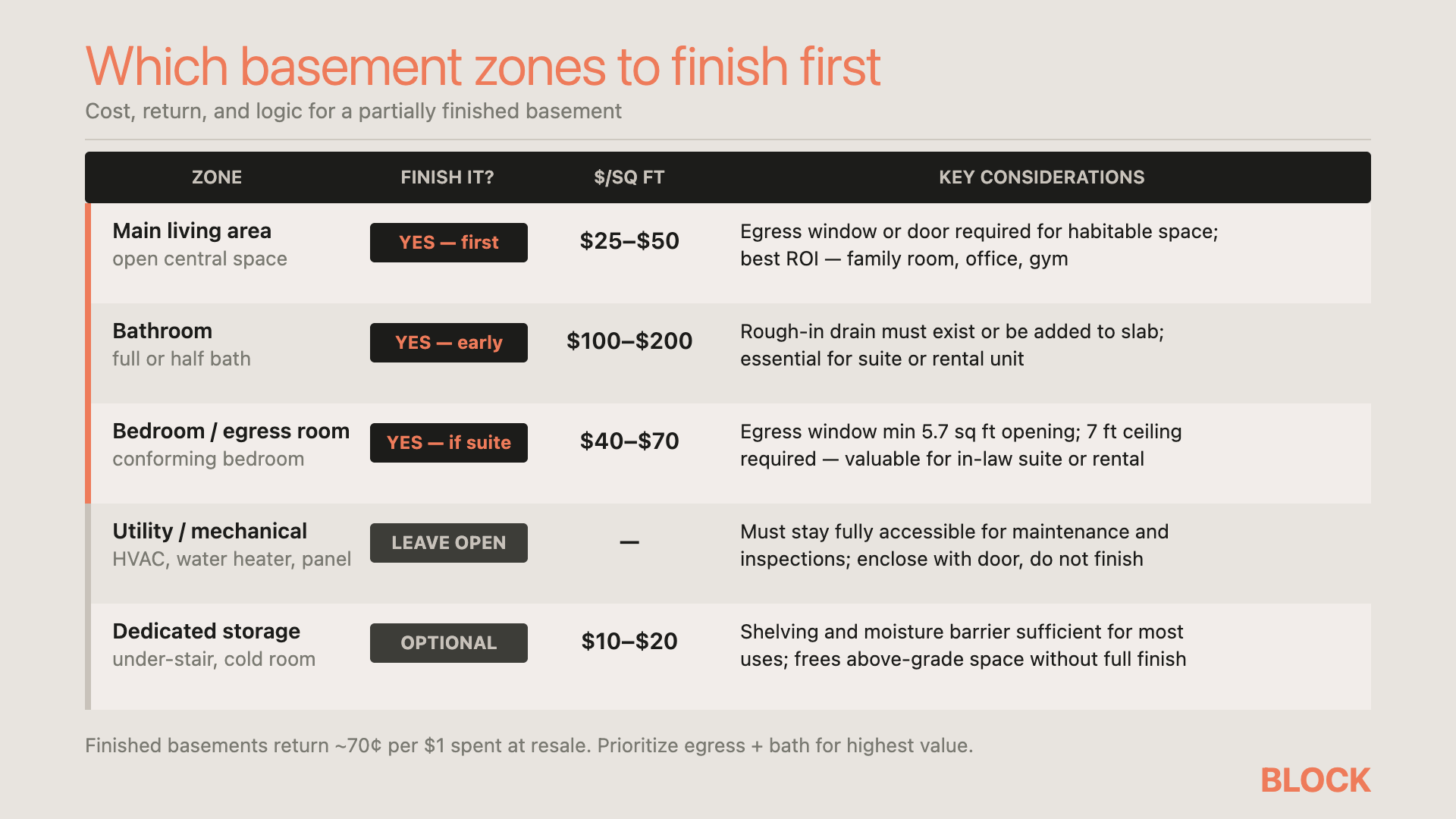
The savings come from the surfaces you leave alone. Exposed joists, sealed concrete, and bare foundation walls each cut a line item that a full finish would add.
|
Element |
Lower-cost choice |
Approximate savings |
|
Ceiling |
Paint exposed joists instead of a drop or drywall ceiling |
$3,000 to $6,000 |
|
Floors |
Seal the concrete and add rugs instead of finishing the whole floor |
$5,000 to $10,000 |
|
Walls |
Paint or seal the foundation instead of framing and insulating every wall |
$2,000 to $5,000 |
|
Scope |
Frame and drywall only the living zone, leave storage and utility areas open |
$3,000 to $7,000 |
Luxury vinyl plank is the usual basement flooring pick when you do want a finished floor, since it resists moisture and installs right over the slab without feeling as cold as bare concrete. For more on where to spend and where to hold back, see the partially finished basement guide.
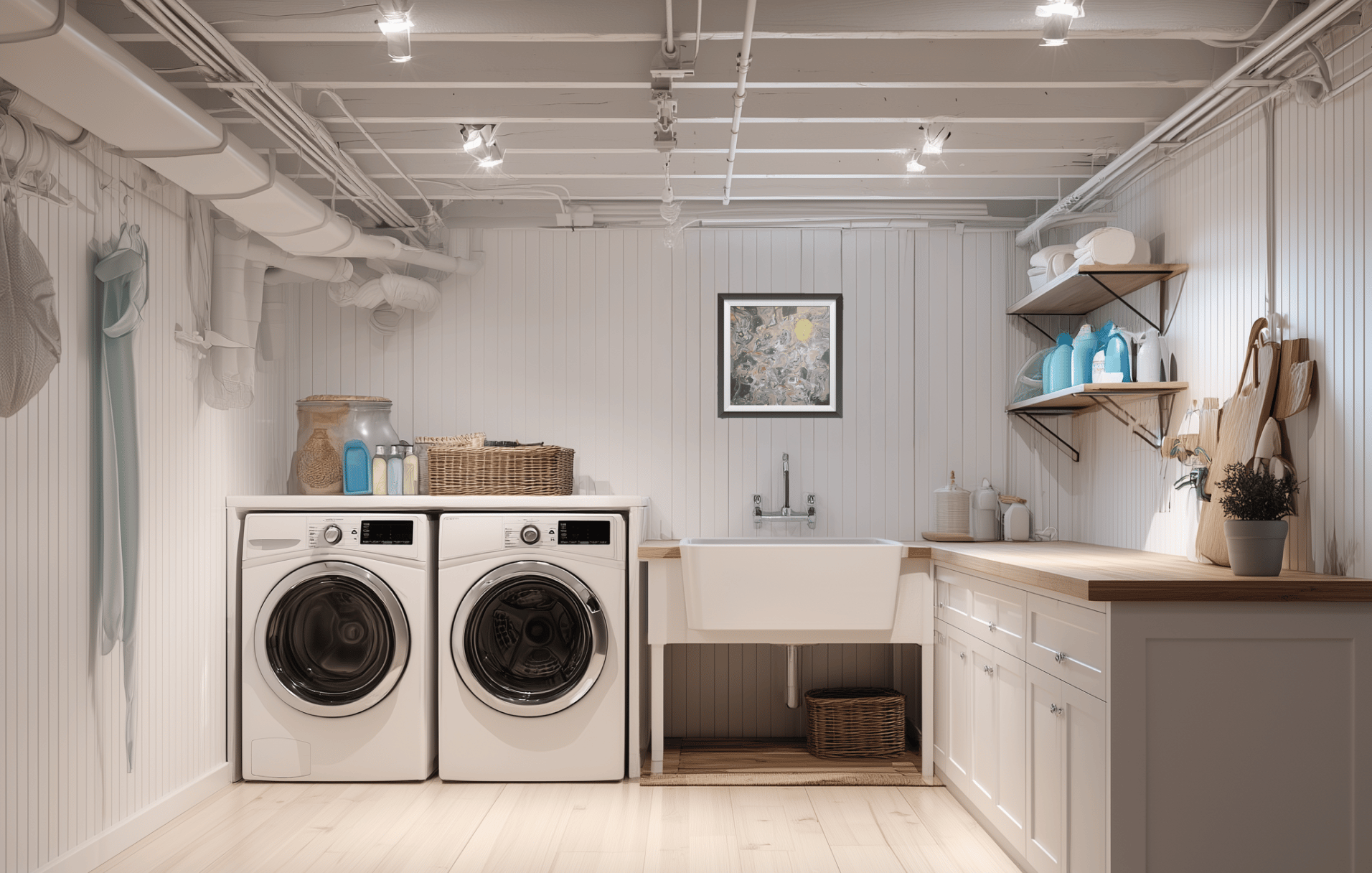
A finished basement adds real living space, though one detail catches many homeowners off guard: it usually does not count toward your home's official square footage. Appraisers and listing services treat below-grade space separately from the floors above and value it at a discount, even when it is finished to the same standard. Walkout and grade-level basements can be exceptions, so local practice matters.
Resale return varies by source as well. The 2025 Cost vs. Value Report puts a midrange basement remodel at about 71% of cost recouped at resale, on a national average job cost near $52,000. The 2022 NAR and NARI Remodeling Impact Report put basement conversion to living area higher, around 86%.
Resale value is only part of the picture. A finished basement also adapts to whatever you need over the years, a family room now and an office or rental later, which widens its appeal to future buyers. How the space feels matters as much as how it is finished: a bright lower level with full windows and outdoor access shows far better than a darker room of the same size, because buyers can picture living in it instead of storing things in it. If your lot allows it, a daylight or walkout basement wins back much of that light. A space framed and wired for a legal bedroom or apartment generally returns more than an unpermitted finish. If resale is part of your plan, permit the work.
The ranges here are built for planning, and local quotes turn them into a real scope. With Block, your area's best contractors compete for your project, every scope gets an expert review that catches missing line items early, and payments release in stages as the work gets done.
Remodel with confidence through Block

Connect to vetted local contractors
We only work with top-tier, thoroughly vetted contractors

Get expert guidance
Our project planners offer expert advice, scope review, and ongoing support as needed

Enjoy peace of mind throughout your renovation
Secure payment system puts you in control and protects your remodel


Renovate confidently with Block
Easily compare quotes from top quality contractors, and get peace of mind with warranty & price protections.
Basement
Home Gym Dimensions: Room Sizes and Layout Guide
08.12.2026
Cost
20x20 Room Addition Cost: What to Budget in 2026
07.28.2026
Basement
Crawl Space to Basement Conversion: Cost, Process & Planning
07.24.2026
Remodeling
Cinder Block Garage Cost: Prices by Size & Material
07.23.2026
Cost
2026 Bedroom Remodel Cost Guide: Average Price, Tips & ROI
07.22.2026