



Commercial
Commercial Tenant Improvement Contractors Explained
07.27.2026
02.26.2026


In This Article
A brewery is one of the most complex commercial spaces you can build. It's part production facility, part hospitality venue, part retail experience—and every square foot needs to serve multiple purposes without creating bottlenecks, safety hazards, or dead zones.
The difference between a brewery that thrives and one that struggles often comes down to flow: how people, product, and equipment move through the space. When flow is right, staff work efficiently, customers feel comfortable and stay longer, and the operation runs without unnecessary friction. When it's wrong, you feel it everywhere—in slow service, confused guests, overworked staff, and costly workarounds that never should have been necessary.
This guide breaks down the key considerations for brewery construction and architecture, with a focus on designing spaces where everyone—from your head brewer to your Saturday afternoon regulars—can move with purpose.
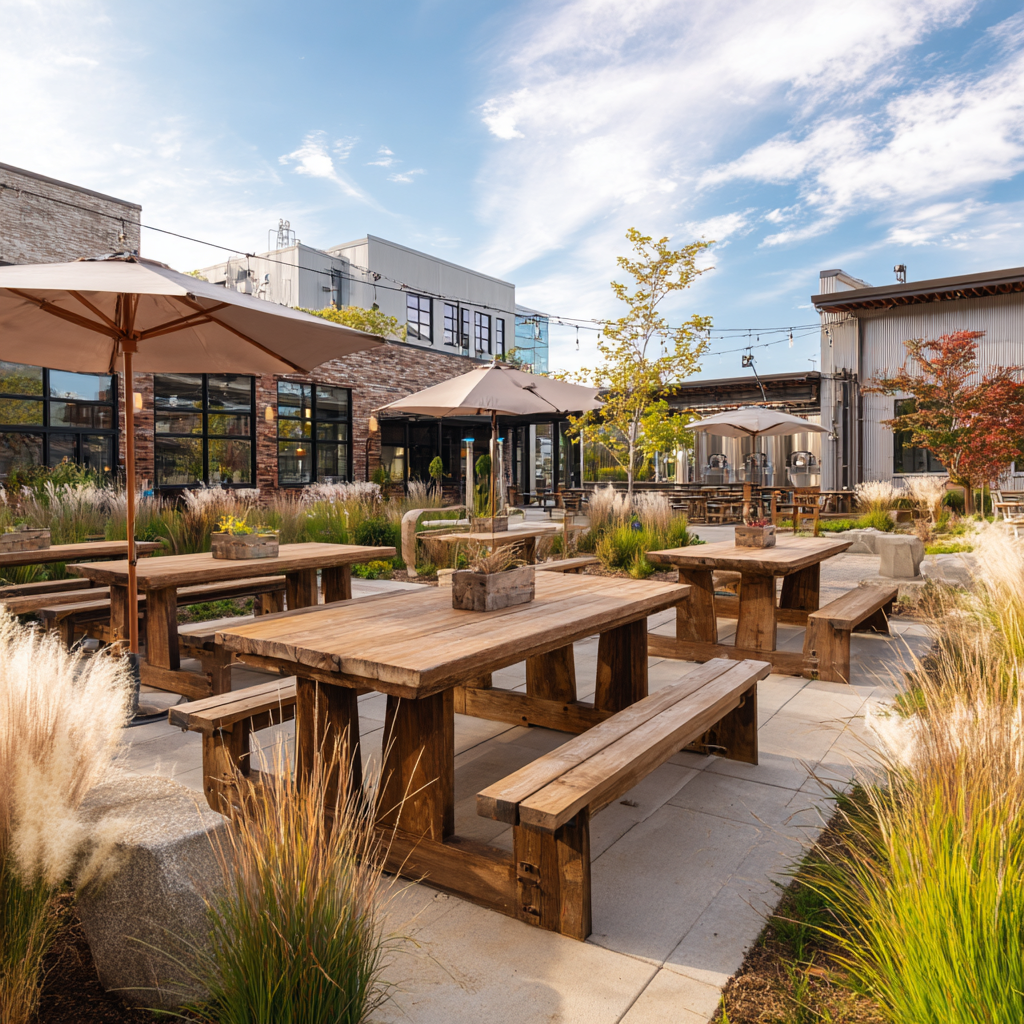
Your taproom is the public face of your brewery. It's where first impressions happen, where people decide to stay for another round, and where brand loyalty is built one visit at a time. Designing it well means thinking carefully about how guests experience the space from the moment they walk in.
When customers arrive, they should immediately understand where to go. That sounds simple, but many brewery taprooms fail here—guests walk in and aren't sure whether to seat themselves, order at the bar, or wait for someone. That moment of confusion can shape the entire visit.
Design your entry to offer clear sightlines to the bar or ordering area. Use architectural cues like lighting changes, flooring transitions, or ceiling height shifts to gently direct movement without signage clutter. A short landing zone near the entrance—even just a few feet of breathing room—gives guests a chance to orient themselves before committing to a direction.
The bar is your primary point of interaction with customers, and its design has an outsized impact on flow. A few principles to keep in mind:
Not every customer wants the same experience. Some groups are there for a long, loud evening. Others want a quieter conversation over a flight. Designing distinct seating zones—without hard walls or awkward dividers—lets your taproom serve different moods simultaneously.
Consider varied seating types: communal tables for larger groups, two-tops and four-tops for smaller parties, bar seating for solo visitors or quick stops, and lounge-style areas for a more relaxed vibe. Use furniture height, lighting intensity, and proximity to the bar or brewing area to naturally differentiate these zones.
Circulation paths between seating areas should be at least four feet wide—wide enough for a server carrying a tray or a customer navigating to the restroom without bumping chairs.
Restroom trips are the most common reason a customer leaves their seat. If the path to the restrooms cuts through the ordering line, the kitchen pass, or a narrow corridor next to the brewing equipment, you've created a recurring disruption. Route restroom traffic along the perimeter of the taproom whenever possible, and make sure wayfinding is intuitive—a well-placed hallway or a subtle floor material change works better than a dozen signs.
While customer flow shapes the guest experience, staff flow determines your operational efficiency. Your team moves through the space dozens of times per hour, often carrying heavy or fragile items, and any design friction gets multiplied across every shift.
The production side of your brewery is an industrial workspace, and it should be designed like one. Key principles include:
Where your production space meets your taproom is one of the most critical transitions in your building. Staff need to move between these areas quickly and safely, but customer access to the production floor needs to be controlled.
A dedicated service corridor—even a short one—between the taproom and the brewery can prevent cross-traffic issues. This corridor can also serve as a staging area for kegs being moved to the tap system, dirty glassware heading to the wash station, or food coming out of the kitchen.
If your taproom offers views into the brewing area (which many customers love), consider using glass walls or open windows that provide visual access without physical access. This gives guests the "behind the scenes" feeling while keeping your production environment secure and sanitary.
If your brewery includes a food program, kitchen flow deserves just as much attention as your brewing layout. The kitchen should have its own receiving area for deliveries, separate from the brewery's grain and supply deliveries. The pass—where plated food is handed to servers—should be positioned to minimize the distance between kitchen and seating areas, without forcing servers through the brewing floor or customer queues.
Walk-in coolers shared between the kitchen and the brewery should have access points from both sides when possible, reducing the need for staff to cross into each other's workspaces during peak hours.
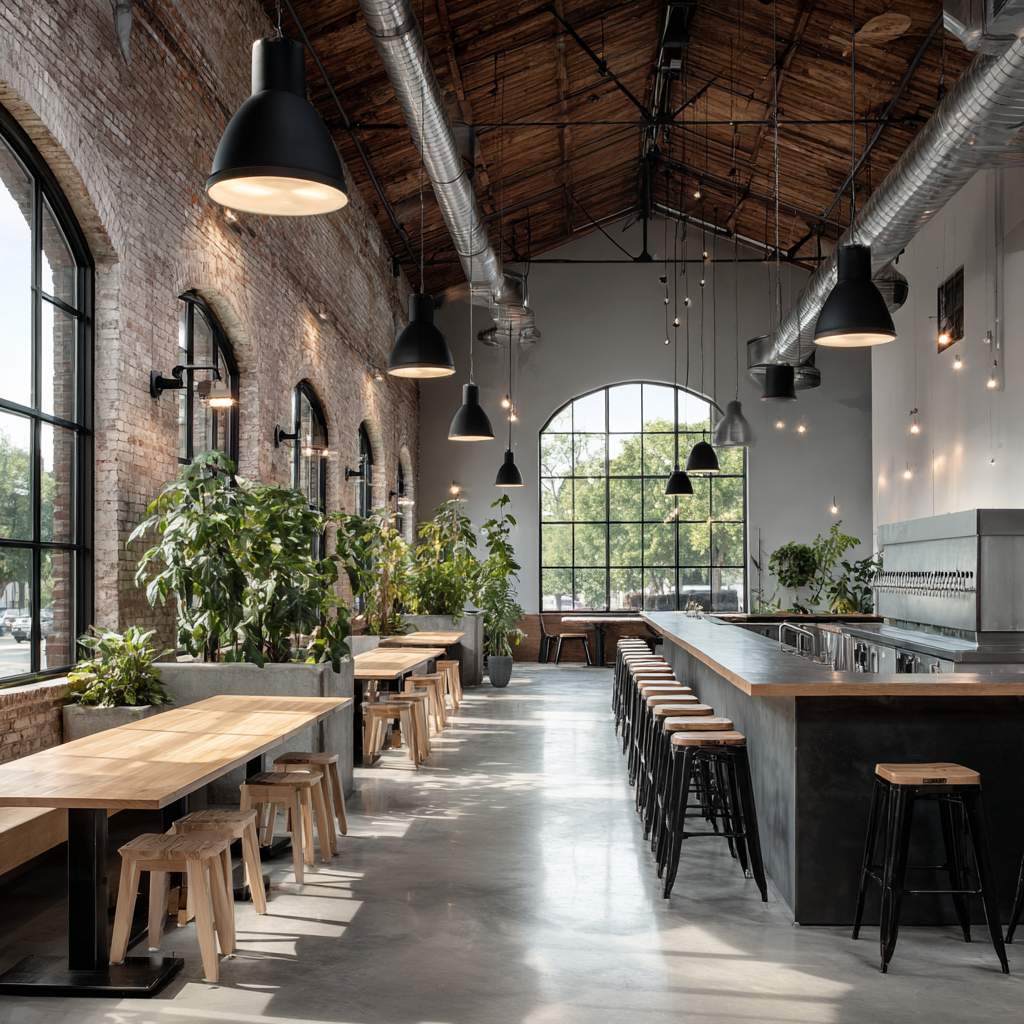
Flooring is arguably the most important material decision you'll make in a brewery build. You're dealing with constant moisture, caustic cleaning chemicals, thermal shock, heavy equipment, and high foot traffic—often all under the same roof. The needs differ dramatically between the production floor and the taproom, and getting it wrong leads to premature wear, safety hazards, and expensive replacement.
Epoxy is the workhorse of brewery production floors. It bonds to the concrete substrate to create a durable, chemical-resistant surface that can handle the daily assault of hot wort spills, caustic washdowns, and rolling keg loads. Specify a slip-resistant aggregate mixed into the topcoat—smooth epoxy becomes dangerously slick when wet. You'll also want a minimum slope of 1/8 inch per foot toward floor drains to prevent standing water, which is both a slip hazard and a sanitation concern.
Where standard epoxy can crack under repeated thermal cycling, urethane cement holds up. It's the go-to for areas near the brewhouse, hot liquor tanks, and anywhere that sees rapid temperature changes—such as floors that get hit with boiling runoff and then cold washdown water in quick succession. Urethane cement is also highly resistant to the acids and caustics used in brewery cleaning, making it a strong long-term investment for production floors that take heavy abuse.
For taproom floors, polished concrete strikes a practical balance between durability and aesthetic appeal. It's low-maintenance, easy to clean, and gives the space that industrial-modern look that pairs naturally with exposed brewing equipment. Stained concrete adds color and visual warmth without sacrificing performance. Both options handle foot traffic well, though they can be slippery when wet—consider a matte or textured finish near high-spill areas like the bar.
Wood flooring brings warmth, character, and a sense of history that's hard to replicate with other materials. Reclaimed wood in particular tells a story and fits well in breweries going for a rustic or farmhouse aesthetic. The trade-off is maintenance: brewery taprooms are humid environments, and wood absorbs moisture. If you're using it, seal it thoroughly and keep it away from areas prone to standing water or heavy spills. Wood works best in dedicated seating zones or lounge areas rather than directly around the bar or service paths.
Tile and brick offer design versatility and a classic feel, and they're common in taproom accent areas, entryways, and restrooms. Porcelain tile is dense, moisture-resistant, and available in a huge range of finishes. Brick adds rustic texture but is more porous and can be harder to clean. For either material, grout lines require regular maintenance to prevent staining and mildew—especially in a brewery environment where spills are constant. Use these materials strategically rather than wall-to-wall for the best balance of style and practicality.
Walls in a brewery serve double duty. In production areas, they need to withstand moisture, chemicals, and regular washdowns. In the taproom, they set the visual tone for the entire guest experience. Choosing the right surface for each zone keeps maintenance costs down and ensures your space looks as good in year five as it did on opening day.
FRP is the standard for production-side walls, especially near washdown zones, above drains, and around brewing equipment. These panels are waterproof, chemical-resistant, and easy to wipe clean—exactly what you need in a space that gets hosed down regularly. They're not the most attractive option, which is why they're best reserved for back-of-house areas where function matters more than aesthetics.
In the taproom, exposed brick adds depth, texture, and a sense of permanence. It's especially effective in historic buildings or converted warehouse spaces where the brick is original to the structure. Keep in mind that brick is porous—in high-humidity environments like a brewery, you'll want to seal it to prevent moisture absorption and potential mold issues.
Wood paneling creates warmth and visual interest, particularly as an accent wall behind the bar or in lounge seating areas. Reclaimed wood fits naturally with the craft brewery aesthetic and offers character that new materials can't replicate. Like wood flooring, it needs to be sealed against moisture. Use it in areas with good ventilation and lower humidity exposure for the longest lifespan.
Painted or sealed concrete block is a practical, budget-friendly option that works in both production and taproom spaces. It's durable, fire-resistant, and easy to maintain. In the taproom, a clean coat of paint can make concrete block feel intentional and modern rather than unfinished. It pairs well with industrial lighting and exposed ductwork.
Your bar top is one of the hardest-working surfaces in the building. It endures constant contact with liquids, heavy glassware, cleaning products, and the wear of hundreds of elbows per week. The material you choose affects durability, maintenance, and the overall feel of your taproom.
Warm, character-rich, and full of visual history. Reclaimed wood bar tops fit naturally in breweries with a rustic or farmhouse identity. The trade-off is upkeep—wood needs regular sealing to resist water rings, staining, and warping. Plan for periodic refinishing, especially in high-traffic areas.
Highly durable and customizable in color, texture, and finish. A concrete bar top can be poured in place or precast to fit your exact dimensions. Seal it thoroughly to prevent staining from beer, food, and cleaning chemicals. Concrete develops character over time, and minor surface wear tends to add to the aesthetic rather than detract from it.
Copper bar tops are distinctive, antimicrobial, and age beautifully—developing a natural patina that shifts over time. The material cost is higher, but the visual impact is significant. Copper works particularly well as a statement piece in breweries that want a bold, memorable bar experience.
A middle ground between the warmth of wood and the durability of harder surfaces. Butcher block is dense enough to handle daily use but still needs periodic oiling and sealing against moisture. It's a good fit for breweries that want a natural, approachable look without the maintenance demands of reclaimed wood.
Taproom ceilings often go overlooked during brewery construction—until the space opens and it's too loud for anyone to hold a conversation. Hard surfaces like concrete, metal, and wood reflect sound, and a room full of happy customers can quickly become uncomfortably noisy. Planning for acoustics during the build is far easier and cheaper than retrofitting after opening day.
Open ceilings with exposed ductwork, beams, and piping are a signature look for many breweries. They create a sense of volume and give the space an industrial character that feels authentic. The challenge is that all those hard surfaces bounce sound around. Adding acoustic baffles—panels suspended vertically from the ceiling—absorbs sound without hiding the architectural elements above. Baffles come in a range of colors and materials, so they can complement the space rather than clash with it.
Wall- or ceiling-mounted acoustic panels are one of the most effective ways to control noise in a taproom. They can be placed strategically in the loudest zones—near the bar, in communal seating areas, or along hard walls—and many manufacturers offer custom printing or fabric wrapping so the panels double as design elements.
For breweries with drop ceilings (more common in converted commercial or retail spaces), acoustic ceiling tiles are a straightforward solution. They're effective at absorbing sound and relatively inexpensive to install. The aesthetic isn't for everyone, but modern options have moved well beyond the generic office look—textured, painted, or wood-look tiles can work in the right setting.
Corrugated metal and wood plank ceilings both contribute to the brewery aesthetic, but they reflect sound aggressively. If you're set on one of these materials, pair it with other acoustic treatments in the room—baffles above, panels on the walls, or soft furnishings in the seating areas—to keep noise levels manageable.
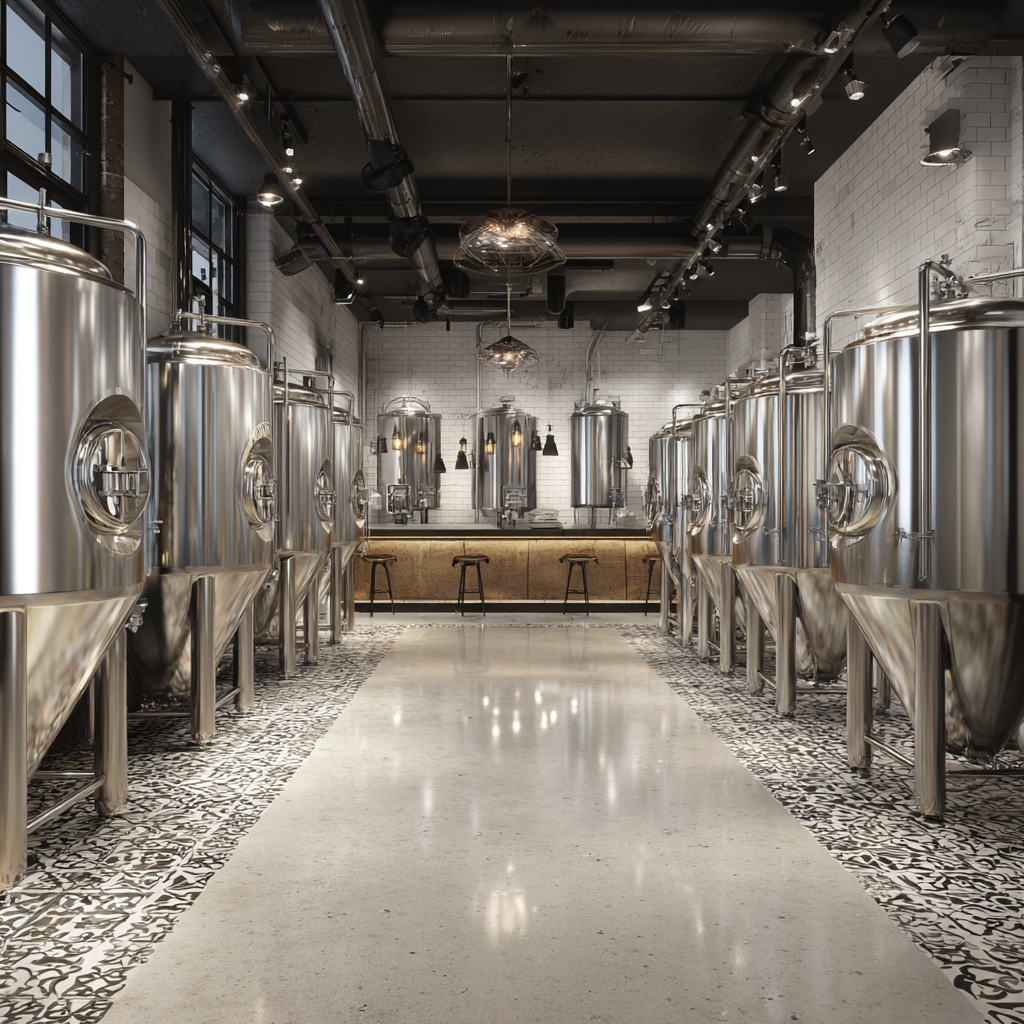
This one isn't glamorous, but it's essential. Brewery production floors generate significant volumes of wastewater from cleaning, spills, and process overflow; if your drainage can't keep up, you're looking at standing water, slip hazards, and sanitation problems.
Trench drains are the industry standard for brewery production floors. They run in long channels across the floor and handle high volumes of water far more effectively than point drains. Stainless steel grates over the trenches provide durability, easy access for cleaning, and resistance to the acids and caustics used in brewery washdowns. Position trenches along the natural flow paths of your production floor, and make sure they're wide enough to handle peak volumes during cleaning cycles.
Point drains (also called floor sinks) work well in smaller areas like restrooms, behind the bar, or in kitchen prep spaces where water volume is lower and more predictable. They're less expensive than trench systems but can become bottlenecks if water volume exceeds their capacity. In production areas, they're generally insufficient on their own.
Brewery wastewater carries a significant biological load—sugars, yeast, spent grain residue, and cleaning chemicals. Many municipalities have specific discharge requirements for brewery effluent, and some require pretreatment before wastewater enters the public sewer system. Consult local regulations early in the design process and factor any pretreatment systems (like pH neutralization tanks) into your floor plan and budget.
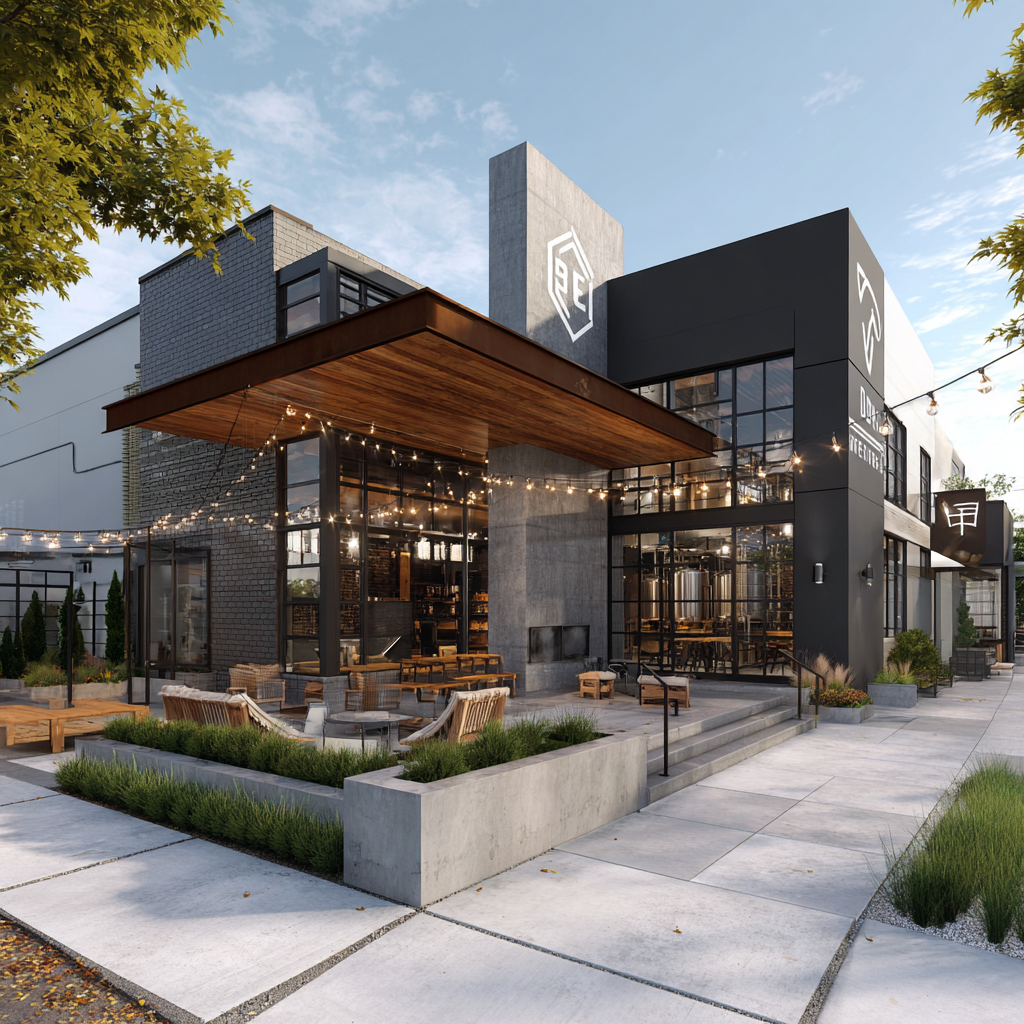
Outdoor space can be one of your brewery's most valuable assets. A well-designed patio, beer garden, or courtyard extends your capacity, creates a distinct atmosphere, and often becomes the reason customers choose your brewery over the one down the street. But outdoor areas come with their own set of design challenges—weather, noise, and logistics all need careful planning.
Start by defining how the outdoor space connects to the interior. Ideally, there's a direct, wide opening between the taproom and the patio—a garage door, bi-fold glass panels, or large sliding doors—so the spaces feel connected rather than separate. This also makes service easier, since staff can move between indoor and outdoor areas without long detours.
Plan your outdoor seating layout with the same care as your interior. Allow for a mix of table sizes, maintain clear circulation paths (four feet minimum), and consider the flow of service from the bar or kitchen to the farthest outdoor table. If customers need to order inside and carry drinks outside, the path between the bar and the patio should be short and obvious.
Your outdoor area needs clear physical boundaries—both for legal service area requirements (especially if you serve alcohol) and for the comfort and safety of your guests. Fencing, planters, low walls, or hedgerows can define the perimeter without making the space feel caged in.
Landscaping does more than look good. Strategic planting can provide shade, reduce noise from adjacent streets, create privacy, and even help with stormwater management. Native, low-maintenance plants are usually the smartest choice—your staff shouldn't need to become gardeners to keep the patio looking good.
Outdoor brewery spaces and residential neighbors don't always mix easily. Check local noise ordinances early in the design process and plan accordingly. Solid fencing, landscaping buffers, and thoughtful speaker placement can all help manage sound. If live music is part of your vision, you may need additional permits and sound mitigation measures—plan for this before construction, not after your first noise complaint.
Think through how drinks and food reach outdoor customers. If servers are carrying trays across a gravel patio or down a set of stairs, that's a service bottleneck and a safety risk. Paved or stabilized paths between the kitchen or bar and outdoor seating areas keep service smooth. If your outdoor space is large, a secondary service station—even a small one with a keg tap, a POS terminal, and a bus tub—can significantly improve speed and reduce staff fatigue.
Planning your build with Block Renovation
Brewery construction is complex, but it doesn't have to be chaotic. The right planning, the right team, and the right materials make the difference between a space that works on opening day and one that works for years to come.
Block Renovation connects you with experienced, vetted contractors who understand the unique demands of commercial builds—from production floor drainage to taproom acoustics to patio permitting. Our platform helps you compare detailed proposals, review scopes side by side, and move forward with confidence that your project is in capable hands.
Whether you're converting a warehouse, building from the ground up, or expanding an existing operation, Block can help you bring your vision to life—on budget and on schedule.
Build your business with confidence

Renovate confidently with Block
Easily compare quotes from top quality contractors, and get peace of mind with warranty & price protections.
Commercial
Commercial Tenant Improvement Contractors Explained
07.27.2026

Working with Contractors
Is a Property Renovation Company Worth the Cost?
06.24.2026

Commercial
Commercial Remodeling in San Diego by Neighborhood | Block Renovation
04.27.2026
Commercial
Commercial Remodeling and Buildouts in Dallas-Fort Worth | Block Renovation
04.24.2026
Commercial
2026 Restaurant Design: 11 Trends Defining the Industry
04.24.2026