



Commercial
Commercial Tenant Improvement Contractors Explained
07.27.2026
12.18.2025


In This Article
Your restaurant floor may not always steal the show, but the right choice can mean easier cleanups, fewer slip risks, and a vibe that has guests talking before their food arrives. Whether you’re running a polished downtown bistro or a bustling breakfast spot, picking your flooring is part operational strategy, part design story.
Flooring needs in restaurants go way beyond the color sample—these surfaces take a pounding every day from chairs, plates, shoes, and spills. If you’re planning an upgrade or a full renovation, a little upfront knowledge will save you time, money, and probably a little drama on opening day. Here’s a look at what matters, what the main materials are (and why they might fit your space), and what to expect for cost and timing—plus how to find a contractor who won’t gloss over the tricky details.
In any thoughtful restaurant remodel, floors do far more than provide a place for chairs and tables. After all, your floors need to stand up to the lunch rush, look sharp at midnight, and stay safe even when lemonade ends up where it shouldn’t. The best restaurant flooring balances four essentials: durability, safety, cleaning, and style. Daily, you’re facing a mix of foot traffic, rolling carts, constant chair shuffle, and enough dropped forks to count as a chorus.
Durability: Surfaces have to handle near-constant wear, endless cleaning, moving chairs, and the odd stubborn stain.
Slip resistance: Safety isn’t just a sign on the wall. Your floor’s grip matters, especially around bar areas, kitchens, and wet entryways.
Ease of cleaning: Fast, efficient cleaning means less staff time wasted and more room for guests.
Comfort and feel: Hosting a busy dinner rush? Underfoot “give,” noise control, and overall vibe all factor into daily operations.
Design: The floor is one of the first big design cues guests pick up on. It frames the whole experience, whether you’re all about bold prints, cozy warmth, or industrial cool.
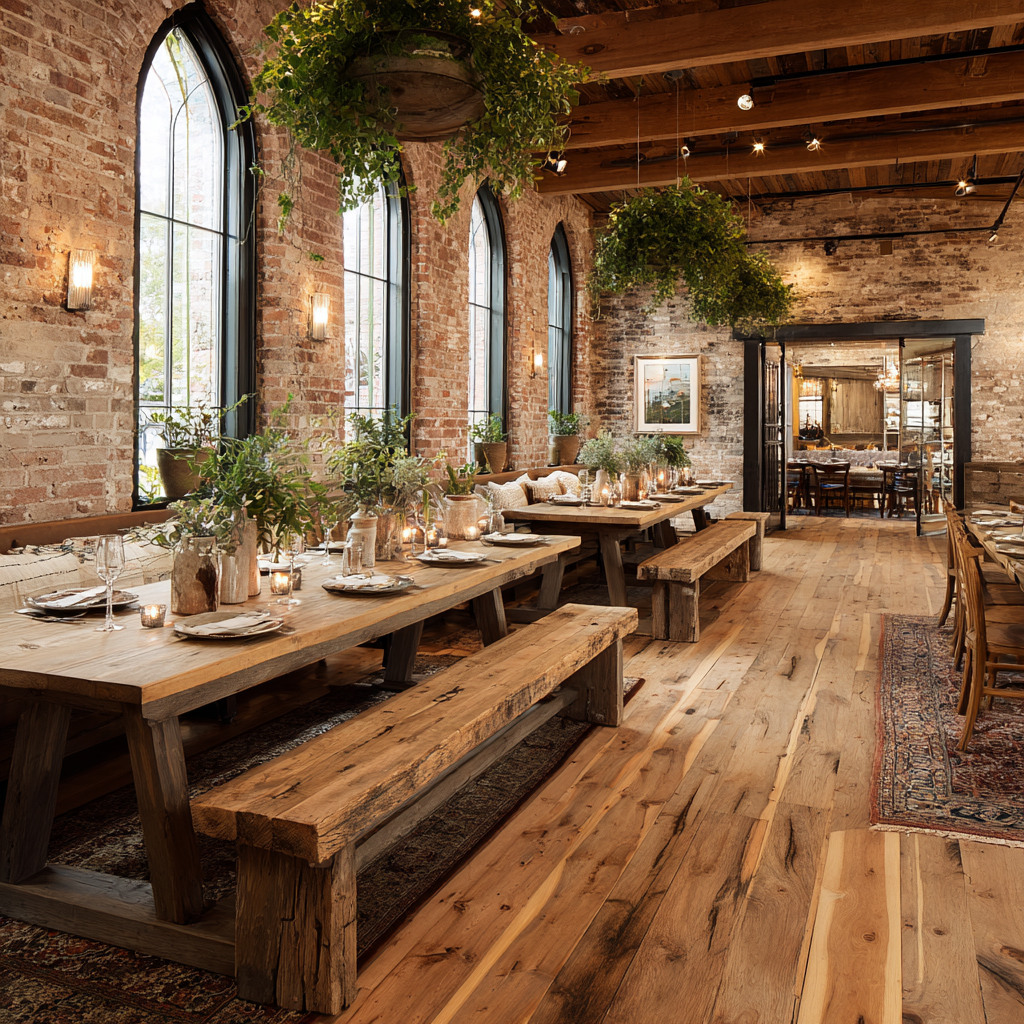
Porcelain and ceramic tile have been favorites in both flashy dining rooms and always-busy kitchens thanks to their mix of ruggedness and style potential. They can take on just about any look, from farmhouse rustic to sleek metro, and stand up to years of foot traffic and cleaning solutions.
Why consider tile for your restaurant:
Porcelain and ceramic tile are easy to mop up, don’t blink at cleaning chemicals, and with the right finish, can keep feet from slipping even on a rainy day. If you want the flexibility to go classic or wild with your design, tile is tough to beat. Textured, commercial-grade options are especially popular near kitchen lines, entries, and restrooms because they handle messes and temperature swings.
Just be ready for pro installation—and expect grout to take a little TLC after the 500th coffee spill.
Engineered wood flooring offers the look and feel of traditional hardwood, but with greater stability and moisture resistance thanks to its layered construction. It stands up better than solid wood to temperature changes and humidity—features that are especially important in busy dining areas or lounges.
Why consider tile for your restaurant:
While engineered wood isn’t as spill-proof as tile or vinyl, it’s well suited to front-of-house spaces where aesthetics matter and water exposure is moderate. Choosing a commercial-grade finish will help boost its durability and make ongoing care easier. For many restaurants, this flooring provides a balance of natural warmth and day-to-day practicality.
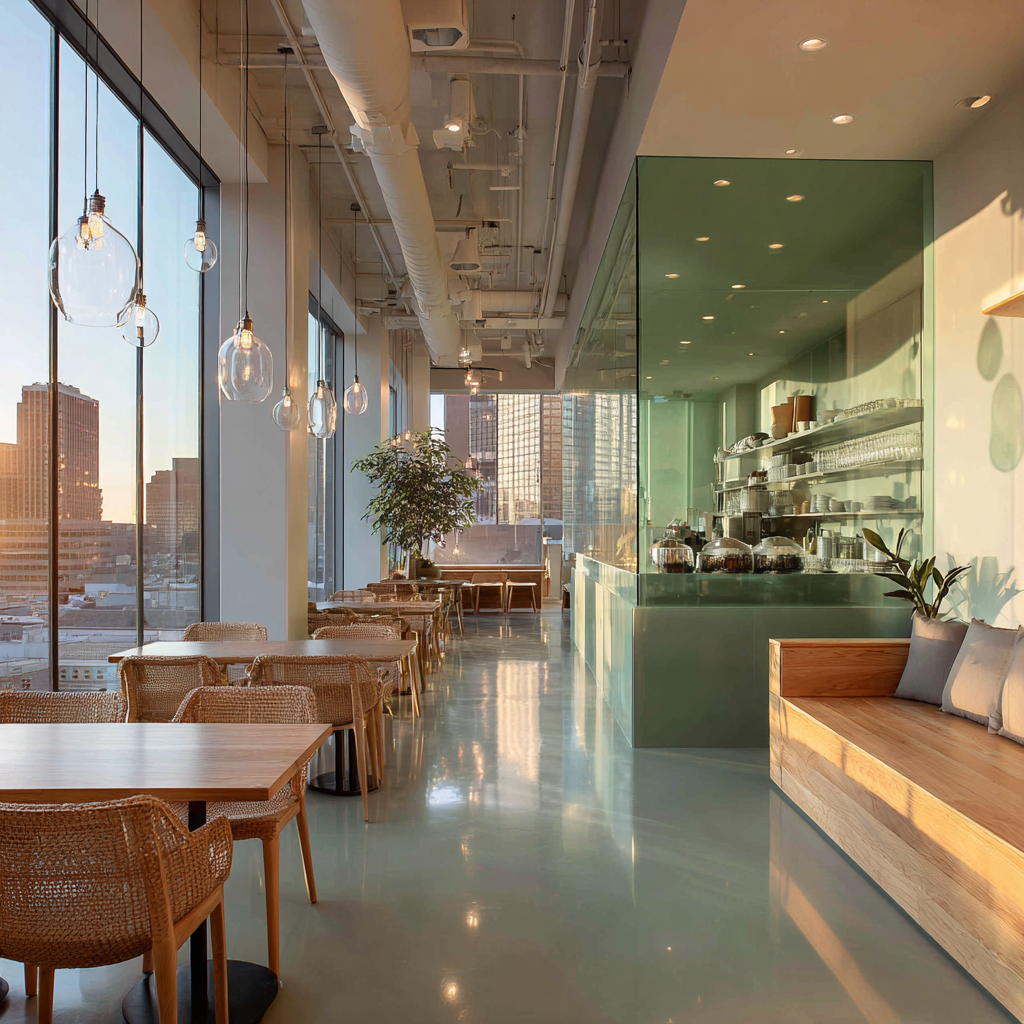
Commercial vinyl—whether in plank, tile, or sheet form—has come a long way from the vinyl floors of the past. It offers a polished look that can fake hardwood, stone, or bright colors and holds up under carts, crowds, and pretty much whatever dinner rush throws at it.
Why consider commercial vinyl for your restaurant:
Vinyl is waterproof, unbothered by kitchen chaos, and kind to staff who log long hours on their feet. Because it absorbs shock, dropped mugs might actually survive, and cleaning after a spill is a quick, no-sweat job. The speed of installation and the huge range of patterns mean you can go from tired to wow in a matter of days.
Just choose a version rated for true commercial use, or that vinyl pie may curl up at the edges after one too many double shifts.
If “bulletproof” ever applied to flooring, epoxy is as close as it gets—building a smooth, unbroken surface you can hose down, sanitize, and trust to stand up to grease, acids, and nightly closing routines. It’s the workhorse surface for most commercial kitchens and breweries, now with a look that can rival a high-gloss showroom or a funkier textured finish.
Why consider epoxy for your restaurant:
Epoxy floors are just about unbeatable for water, stains, and the endless drag of fridges, bins, and heavy prep tables. They’re poured on in one continuous go, so there’s no place for crumbs or runoff to hide. You can customize color, embed grip, or treat it with antimicrobial finishes if cleanliness is non-negotiable (and it always is).
Expert installation is key—done poorly, epoxy can peel or puddle, so always schedule expert installers as part of your overall restaurant remodel fit out strategy.
Natural stone is as permanent as it gets, perfect for big entrances or fancier dining rooms that want to make a grand first impression. It’s strong enough to hold hundreds of guests but full of character in a way that never really goes out of style.
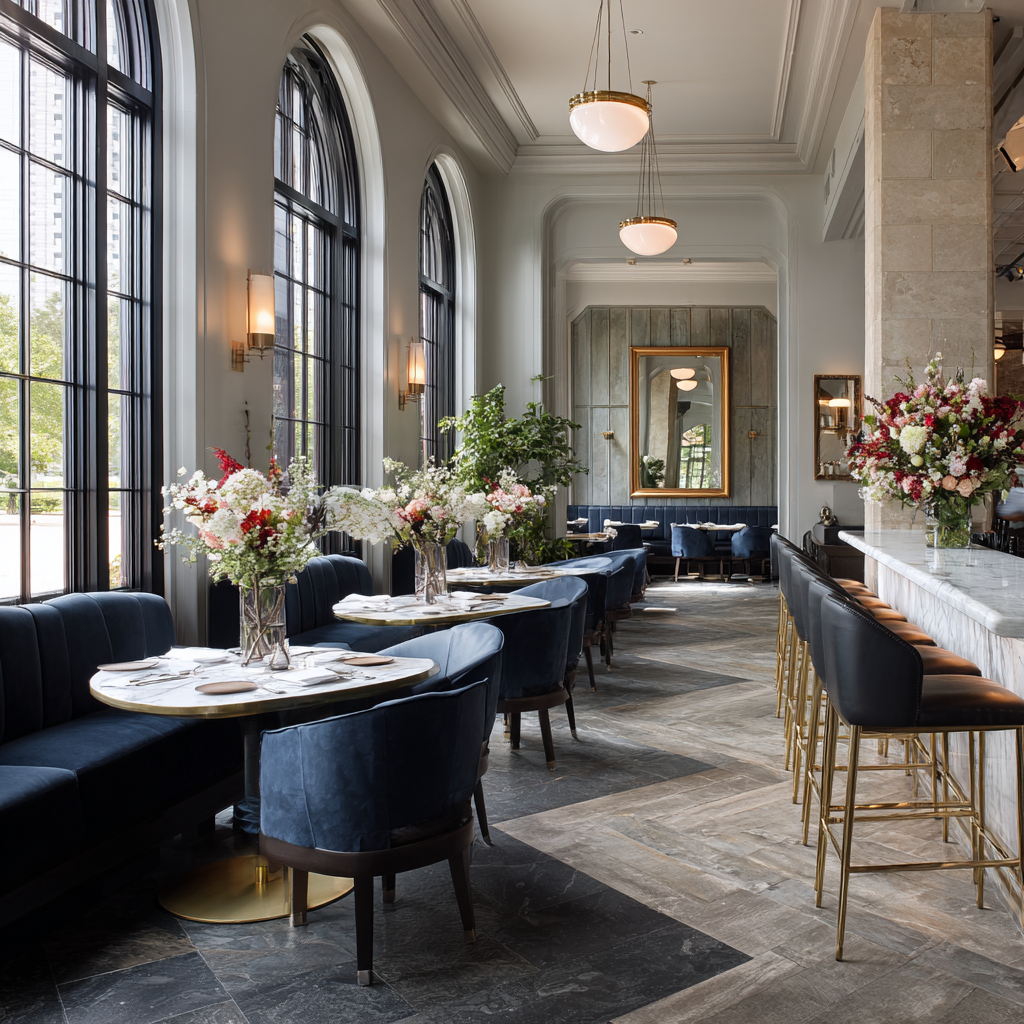
Why consider stone for your restaurant:
Stone floors like slate, granite, or limestone can last decades (sometimes centuries) and show off their texture and uniqueness the whole way. They elevate a room immediately while holding up to serious use and the inevitable tumble of glassware.
Just remember: polished finishes can get slick, so textured or matte surfaces work better in busy areas—plus, all stone needs periodic sealing and specialist install is a must.
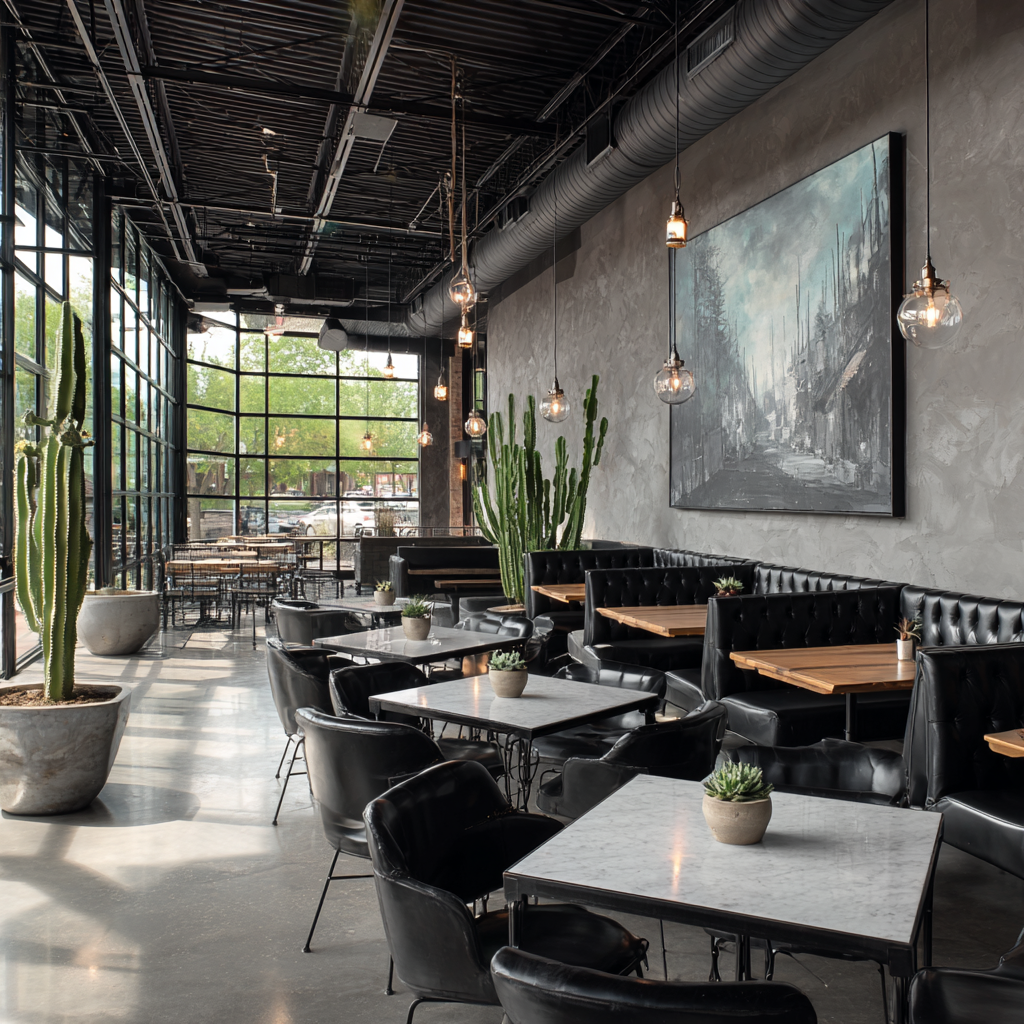
Concrete flooring gives restaurants that modern, urban, or industrial look on a whole different level. It’s pure versatility—you can stain it, polish it, grind it down for texture, or just use it as a blank-canvas foundation for any design direction.
Why consider concrete for your restaurant:
Once professionally sealed, concrete shrugs off stains and dings, and if you want to roll in a new layout or move kitchen equipment, there’s no floor to baby. Maintenance is low if resealed properly, and it keeps a cool vibe (literally and visually) in hotter climates.
The downside? It’s not cushy, so drop zone mats or fatigue mats are smart for the folks working the line.
Carpet is rare in most active dining zones but shines for some private rooms, lounge spaces, or where taming noise is as important as any design detail. Carpet tiles are modular, easy to swap out, and can bring playful patterns or subtle blends that soften a space.
Why consider carpet tiles for your restaurant:
They noticeably dampen sound, making guests linger and conversation flow, plus they’re warmer underfoot for both team and diners. If a red wine disaster hits, you can pull up and replace a single tile rather than the whole carpet.
Carpets do need regular cleaning attention and aren’t at their best near bars or anywhere prone to splashes.
Numbers here depend on how much space you’re covering, the material you pick, and just how fancy you’re feeling (plus, your city’s labor rates). Expect a realistic range as follows:
Porcelain/ceramic tile: $10–\)30 per square foot professionally installed (it can jump for special mosaics or artisanal shapes)
Commercial vinyl: $6–$5 per square foot installed (price varies with the thickness and pattern)
Epoxy/resin flooring: $8–$8 per square foot depending on subfloor prep and finish
Natural stone: $20–$40+ per square foot installed (exotics or custom inlays can soar)
Polished or stained concrete: $8–$6 per square foot installed
Commercial carpet tiles: $7–$5 per square foot (including pro install and adhesives)
Budget a bit higher for spaces that need extra demolition, waterproofing, or subfloor leveling—kitchens and bathrooms often add to the cost.
You want to open, not camp out at a worksite—so timing matters. Typically, installation goes like this (excluding rare surprises or delays):
Vinyl and carpet tile: The speed demons. Most dining rooms can flip in 1–3 days.
Porcelain and ceramic tile: Plan on 3–7 days, including setting and grouting time—a bit longer for complex patterns or large kitchen zones.
Epoxy/resinous floors: 2–4 days for most jobs, but add extra time if your substrate is in rough shape.
Natural stone: Allow 5–10 days; cutting, fitting, leveling, and sealing all take expert hands and time.
Concrete finishing: Staining and polishing usually clock in at 4–7 days after prep and any needed curing.
Busy locations, permitting hurdles, or surprise structural fixes can stretch these timelines—always confirm with your contractor, and don’t be shy about building in a buffer before any planned reopening or event.
Choosing your restaurant’s flooring is just the start—a great outcome relies on the team behind it. When you work with Block Renovation, you’re matched with contractors who know commercial spaces, safety codes, and the fast pace of hospitality spaces. We help you compare transparent bids, understand exactly what’s included, and plan for every step (not just the day the keys are handed back). That means more confidence, smoother installs, and a process as reliable as the floor you’re investing in.
Whether you’re opening your first café or reinventing a neighborhood classic, start with Block to connect with the right pros and keep your project grounded from day one.
Build your business with confidence

Renovate confidently with Block
Easily compare quotes from top quality contractors, and get peace of mind with warranty & price protections.
Commercial
Commercial Tenant Improvement Contractors Explained
07.27.2026

Working with Contractors
Is a Property Renovation Company Worth the Cost?
06.24.2026

Commercial
Commercial Remodeling in San Diego by Neighborhood | Block Renovation
04.27.2026
Commercial
Commercial Remodeling and Buildouts in Dallas-Fort Worth | Block Renovation
04.24.2026
Commercial
2026 Restaurant Design: 11 Trends Defining the Industry
04.24.2026