Building a Custom Home in Charleston That Honors Its Historic Architecture

Budget your upcoming Charleston custom home build with help from Block
How we get your estimate
Fill out the form above to either connect with contractors for a personalized quote or estimate your costs with Block's Renovation Studio.
A modern, open-plan kitchen, dining, and living area.

In This Article

    Charleston is one of the most architecturally significant cities in America, and building a custom home here means entering a conversation with three centuries of design history. The city’s cobblestone streets, single houses with side piazzas, Lowcountry plantations, and Georgian row homes create a streetscape so distinctive that it’s protected by one of the nation’s oldest preservation ordinances. Beyond its beauty, Charleston offers a thriving economy driven by Boeing, the Medical University of South Carolina, and a booming tourism sector, alongside nationally ranked schools and a coastal lifestyle that draws families and professionals from across the country.

    Building custom in Charleston, however, means working within a regulatory framework designed to protect that heritage. The Board of Architectural Review (BAR) governs new construction within the city’s historic districts, adding design review steps that don’t exist in most markets. Flood zone requirements, hurricane-rated construction standards, and the Lowcountry’s challenging soil and moisture conditions further shape what’s possible and what it costs.

    Turn your renovation vision into reality

    Get matched with trusted contractors and start your renovation today!

    Find a Contractor

    Cost and timeline overview for future Charleston homeowners

    Charleston’s construction market operates at a premium relative to much of South Carolina, and understanding why is essential before you start designing.

    Custom home construction in Charleston typically ranges from $200 to $400 per square foot, with luxury builds in the historic district or waterfront neighborhoods pushing $500 or more. A 2,500-square-foot custom home on the peninsula might cost $750,000 to $1.2 million to build before land, while comparable builds in Mount Pleasant, James Island, or West Ashley run 15 to 25 percent less. Land prices on the peninsula can exceed $300,000 for a modest lot; suburban parcels range from $80,000 to $200,000.

    Several factors drive Charleston’s costs. BAR-compliant materials—historically appropriate siding, roofing, windows, and hardware—cost more than standard alternatives. Elevated foundations required in flood zones add $20,000 to $60,000 compared to slab-on-grade construction. Skilled labor remains tight, with experienced tradespeople who understand Charleston’s historic detailing commanding premium rates. Hurricane-rated windows, structural tie-downs, and impact-resistant roofing are code requirements, not options, in this coastal market.

    Lot choice substantially affects both land and build costs. Peninsula lots carry the highest premiums and the strictest BAR oversight. Lots in newer communities like Daniel Island or Park West offer more design freedom but less of the historic walkability that defines Charleston living. Waterfront or marsh-front parcels provide stunning views but demand elevated construction, flood insurance, and careful stormwater management.

    Loose timelines for custom home builds in Charleston

    Charleston custom builds typically take 14 to 20 months from design to occupancy. Pre-construction—including architectural design, BAR review for historic district projects, engineering, and permitting—often takes four to seven months. BAR review alone can add two to four months if conceptual and final approvals are required, and any requested revisions restart portions of that timeline.

    Charleston’s subtropical climate brings intense summer heat and afternoon thunderstorms that can slow exterior work from June through September. Hurricane season (June through November) introduces weather uncertainty that builders must plan around. Subcontractor availability tightens during peak building season, and specialty craftsmen who can execute historic detailing—handmade ironwork, custom millwork, tabby concrete—often carry long lead times.

    harold blackmon

    “Extremely low bids often signal trouble. Contractors may struggle to finish or rely on change orders.”

    Understanding the role of an architect in honoring historic character

    In Charleston’s historic districts, an architect isn’t just helpful—they’re practically essential. The BAR requires detailed architectural drawings that demonstrate compliance with the Secretary of the Interior’s Standards and the city’s own design principles for new construction. An architect experienced with Charleston’s review process knows how to design homes that satisfy the board while reflecting your personal vision, saving months of revision cycles. They also coordinate with structural engineers on elevated foundation systems and hurricane-resistant framing. Outside the historic districts—in communities like Mount Pleasant, Summerville, or Johns Island—a design-build firm with strong in-house design capabilities can often handle the process without a separate architect, particularly for homes that don’t need to navigate preservation review.

    Finding the right site in Charleston for your custom home

    A builder who understands Charleston’s unique coastal and regulatory landscape can save you from buying a lot that looks perfect but presents hidden construction challenges. Before committing to land, have your builder evaluate:

    • Soil quality and site stability. Charleston sits on a coastal plain where soils range from sandy loam to dense pluff mud—the dark, sulfurous marsh soil that underlies much of the Lowcountry. Near the Ashley and Cooper Rivers, high water tables and soft soils often require deep pilings rather than standard footings, adding $30,000 to $80,000 to foundation costs. A geotechnical investigation is essential on any Charleston lot, particularly near tidal creeks, marshes, or filled land that may compact unevenly over time.
    • Utilities access. Most lots within Charleston’s city limits connect to Charleston Water System for water and sewer, and Dominion Energy for electricity. In developing areas like Johns Island or rural portions of West Ashley, septic systems may be required, adding $10,000 to $25,000 plus permitting through DHEC. Confirm utility availability and capacity before purchasing—some older infrastructure in the historic district has limited capacity for new connections.
    • Zoning and restrictive covenants. Charleston’s zoning is complex, with overlay districts, height restrictions (particularly in the Old City), and flood zone designations that govern building elevation, lot coverage, and setbacks. Historic district lots carry BAR jurisdiction; suburban communities often layer HOA architectural review on top of city zoning.
    • Lot slope and drainage. Charleston is famously flat and low-lying, which means drainage is a critical concern rather than slope. Most of the peninsula sits just 10 to 20 feet above sea level, and tidal flooding during king tides and heavy rains is increasingly common. Your builder must design a comprehensive stormwater management plan that accounts for the lot’s relationship to the local flood elevation and tidal patterns.
    • Proximity to amenities. Charleston’s walkable peninsula offers unmatched access to restaurants, galleries, the College of Charleston, and the city’s legendary hospitality culture. Suburban communities trade walkability for larger lots and proximity to top-rated school districts like those in Mount Pleasant and Daniel Island.
    • Environmental concerns or hazards. Coastal flooding, hurricane storm surge, and sea level rise are the defining environmental risks for Charleston properties. FEMA flood zone designations dictate minimum building elevations, and many lots fall within AE or VE zones that require substantial elevation above base flood levels. Charleston’s seismic history—the devastating 1886 earthquake centered nearby—means building codes also incorporate earthquake-resistant design standards.
    • View, orientation, and privacy. Marsh and harbor views command extraordinary premiums in Charleston, and southern exposure maximizes breeze flow during the city’s hot, humid summers. The traditional Charleston single house—oriented with its narrow end to the street and its side piazza facing south or west—was designed precisely to capture prevailing breezes, a principle that remains architecturally relevant today.

    Charleston homeowners prioritize school district quality (Mount Pleasant and Daniel Island are consistent draws), flood zone classification (which directly affects insurance costs), and walkability to the city’s cultural and dining offerings. Access to boating, the beaches of Sullivan’s Island and Isle of Palms, and the region’s extensive park system also weighs heavily in site selection.

    Popular custom home styles that honor Charleston’s architectural heritage

    Charleston’s architectural vocabulary is one of the richest in the country, and custom builders here work within a tradition that rewards thoughtful interpretation rather than slavish imitation.

    • The Charleston single house—oriented sideways to the street with a south- or west-facing piazza—remains the city’s signature residential form. Modern interpretations maintain the narrow-lot proportions and stacked porches while opening interiors to contemporary floor plans. Custom versions incorporate hidden garages, rooftop terraces, and ground-floor flex spaces that earlier generations didn’t need.
    • Lowcountry architecture with elevated foundations, wide porches, and standing-seam metal roofs is the dominant style for new custom builds outside the historic district. These homes are engineered for the climate—elevated living areas provide flood protection, deep overhangs shade windows from the summer sun, and operable shutters manage both light and hurricane protection. Fiber cement siding and composite trim mimic traditional wood detailing with reduced maintenance.
    • Tabby and brick construction—traditional Charleston masonry using local materials—is experiencing a revival in custom builds. Tabby, a concrete made with oyster shells, lime, and sand, connects new homes to the Lowcountry’s colonial past while providing exceptional durability. Brick accents and full brick facades remain popular on the peninsula, where masonry aligns with the district’s historic character.
    • Open-concept interiors adapted to the Charleston climate incorporate cross-ventilation strategies and generous ceiling heights. Twelve-foot ceilings on the first floor, transom windows, and aligned window placement create airflow patterns that reduce cooling loads. These features honor the climate-responsive design principles embedded in Charleston’s historic architecture.
    • Hurricane-resilient design has evolved from a code requirement into an aesthetic choice. Impact-rated windows with historically appropriate muntin patterns, reinforced garage doors, and hip roof configurations that resist uplift are now standard. The best Charleston builders integrate these elements so seamlessly that safety features enhance rather than compromise the home’s character.
    • Outdoor living spaces—piazzas, screened porches, courtyard gardens—are among the most requested features in Charleston custom builds. The city’s long warm season (March through November) makes covered outdoor rooms functionally essential, and Charleston’s tradition of walled gardens and courtyard designs provides endless inspiration for private outdoor spaces on even modest lots.
    • Smart-home technology discreetly integrated behind period-appropriate finishes reflects Charleston’s blend of tradition and modernity. Automated hurricane shutters, whole-house dehumidification systems, flood sensors, and energy management platforms are increasingly standard in high-end builds, hidden behind the traditional facades and millwork that define Charleston’s aesthetic.

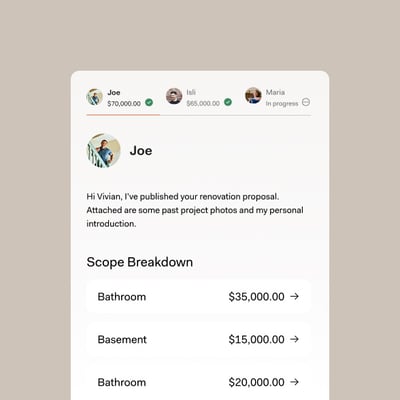
    Compare Proposals with Ease

    Easily compare contractor quotes with intuitive layouts, and side-by-side comparisons to help you make the best choice.
    Get a Quote

    Practical tips for keeping your historic-compatible custom home build drama-free

    Building a custom home that honors Charleston’s architectural heritage while meeting modern performance standards requires careful coordination. These strategies address the most common friction points:

    • Engage the BAR process early and with realistic expectations. If your lot falls within a historic district, treat BAR review as a design partner rather than an obstacle. Submitting well-prepared conceptual drawings and responding promptly to feedback shortens the review cycle and prevents costly redesigns after construction starts. Builders with BAR experience can anticipate likely concerns and address them proactively.
    • Budget 15 to 20 percent above standard construction estimates for historic-district builds. Historically appropriate materials—real wood siding, custom-profile windows, period-correct hardware—cost more than production alternatives. Flood zone elevation requirements add further expense. Building this premium into your budget from the start prevents painful mid-project cuts.
    • Finalize all hurricane-resistance and flood-mitigation strategies during design, not during construction. Retroactively adding impact windows, reinforced framing, or additional elevation is exponentially more expensive than designing these features in from the beginning. Your structural engineer and builder should specify these systems as part of the initial design package.
    • Pre-order specialty materials with long lead times. Custom millwork, historically appropriate hardware, hand-forged ironwork, and custom windows from specialty manufacturers can take 16 to 24 weeks to deliver. Ordering during the design phase rather than mid-construction avoids idle crews and schedule slippage.
    • Establish a single point of contact for all design decisions. Charleston custom builds often involve an architect, an interior designer, a landscape architect, and the builder—creating potential for conflicting direction. Designating one project lead (typically the builder or architect) who coordinates all input prevents communication breakdowns.

    Additional articles to help prepare you for the home building process

    • Costs & Considerations When Planning a Luxury Kitchen Remodel — A detailed look at high-end kitchen budgeting, from custom cabinetry to professional-grade appliances. Charleston homeowners designing kitchens that blend historic millwork with modern functionality will find the cost benchmarks particularly relevant.
    • Guest House Remodeling: Building Costs & Other Insights — This guide covers the financial and design considerations for guest house construction. In Charleston, where carriage houses and dependency buildings are part of the historic fabric, it’s directly applicable to homeowners planning secondary structures on their property.
    • How Much Does it Cost to Build a Garage? — A practical garage cost breakdown by size and configuration. Charleston’s narrow peninsula lots and flood zone requirements make garage design uniquely complex—this guide provides baseline numbers to build from.
    • The Complete Guide to Bedroom Remodel Costs in 2026 — Room-by-room cost data for bedroom renovations. Charleston homeowners weighing renovation of a historic home against building new will find the per-square-foot comparisons instructive for decision-making.

    Partner with Block to find your ideal Charleston home builder

    Block Renovation connects Charleston homeowners with rigorously vetted local contractors who understand the city’s unique blend of historic preservation requirements and modern building standards. Block’s matching process includes background checks, insurance verification, and reference reviews, and pairs you with builders experienced in BAR-compliant construction, elevated foundation systems, and hurricane-resilient design. You receive up to three personalized proposals tailored to your project’s scope, style, and Charleston-specific requirements.

    Block’s protections keep your project on track. Payments flow through a secure, progress-based system that releases funds only as construction milestones are completed, giving you full transparency through Block’s dashboard. Every contractor in Block’s network provides a workmanship warranty, and Block’s renovation experts offer ongoing support from proposal review through final walkthrough—all at no cost to you.

    Remodel with confidence through Block

    Happy contractor doing an interview

    Connect to vetted local contractors

    We only work with top-tier, thoroughly vetted contractors

    Couple planning their renovation around the Block dashboard

    Get expert guidance

    Our project planners offer expert advice, scope review, and ongoing support as needed

    Familty enjoying coffee in their newly renovated modern ktchen

    Enjoy peace of mind throughout your renovation

    Secure payment system puts you in control and protects your remodel

    Get Started

    Frequently asked questions

    What role would an interior designer play in a custom home build?

    In Charleston, an interior designer bridges the gap between historic architectural character and contemporary living needs. They select finishes, furnishings, and materials that complement the home’s architectural style—whether that’s Lowcountry, Georgian, or a modern interpretation—while ensuring the interior functions for modern life. They’re particularly valuable in coordinating period-appropriate hardware, lighting, and millwork with modern kitchen and bath systems. The cost typically runs 10 to 20 percent of the furnishings budget, and their involvement prevents expensive material changes mid-construction. For BAR-reviewed properties, a designer who understands Charleston’s aesthetic traditions can also help ensure interior choices harmonize with exterior design requirements.

    What custom home features should I incorporate to boost resale value?

    In Charleston, elevated construction that exceeds minimum flood requirements consistently delivers strong resale returns by reducing insurance costs for future buyers. Impact-rated windows, reinforced roofing, and whole-house generator systems are highly valued in this hurricane-prone market. Covered outdoor living spaces—piazzas, screened porches, and courtyard gardens—are among the most desirable features in Charleston real estate. Quality kitchen finishes, primary suites on the main elevated floor, and energy-efficient HVAC systems (particularly dehumidification) also command premiums. Homes that successfully integrate modern amenities behind a historically appropriate exterior consistently outperform on resale.

    What are ideas for weatherproofing my new Charleston home?

    Charleston’s combination of heat, humidity, hurricanes, and tidal flooding demands a comprehensive weatherproofing strategy. Start with an elevated foundation that exceeds the Base Flood Elevation by at least two feet—this reduces flood insurance premiums and provides a meaningful safety margin as flood maps evolve. Install impact-rated windows and doors throughout, use fiber cement or composite siding rated for coastal salt exposure, and specify a standing-seam metal or fortified shingle roof rated for 150+ mph winds. A whole-house dehumidification system manages the persistent indoor moisture that degrades finishes and promotes mold in Charleston’s subtropical climate. Finally, install a whole-house surge protector and backup generator to protect against lightning strikes and post-storm power outages.

    Is it realistic to move into the home while part of it is still being built?

    South Carolina requires a Certificate of Occupancy before legal habitation, meaning all life-safety systems must be inspected and approved. In Charleston, this is especially rigorously enforced within the historic districts. Phased construction is occasionally possible—completing the primary living areas first and finishing secondary spaces later—but it requires explicit approval from the city’s building department and careful coordination with your builder to maintain a safe, habitable environment. The dust, noise, and chemical exposure from active construction make simultaneous habitation inadvisable for most families. A better strategy is to work closely with your builder to accelerate the critical-path items that determine your Certificate of Occupancy date.