



.png?width=640&name=u5821215421_Florida_new_build_backyard_with_screened_lanai_si_56aa2cb9-320d-4672-804f-2b347477f127_1%20(1).png)
North Carolina
Planning a Wilmington Home Addition? Start Here
06.04.2026

04.08.2026


In This Article
Durham has undergone one of the more dramatic transformations of any mid-sized American city in the last twenty years. The Research Triangle's anchoring presence at Duke University and a fast-growing biotech and life sciences sector have made Durham one of the country's most economically dynamic metros, drawing a steady stream of professionals, entrepreneurs, and families who want a city with real culture, walkable neighborhoods, and access to nature without the price tags of coastal metros. Neighborhoods like Watts-Hillandale, Trinity Park, and Old North Durham offer tree-lined streets and an architectural character built over generations, while the American Tobacco Campus and the Bull City's food and arts scene have turned downtown into a genuine destination.
The surge in demand has reshaped Durham's construction market significantly. Available lots within desirable neighborhoods are scarce, contractor schedules are full, and the city's permitting process has absorbed the pressure of a building boom that shows few signs of slowing. Homeowners who want to build custom in Durham need to approach the process with clear expectations and, preferably, a builder who has navigated the local market through its current growth phase.
Design a Home That’s Uniquely Yours
Block can help you achieve your renovation goals and bring your dream remodel to life with price assurance and expert support.
Get Started
Custom home construction in Durham and the surrounding Triangle area typically runs between $185 and $310 per square foot for the structure, excluding land. High-spec builds with performance envelopes, premium kitchens and baths, and significant outdoor living components can reach $350 or beyond. Land costs within Durham proper have appreciated sharply, with infill lots in established neighborhoods like Forest Hills and Duke Park carrying prices that would have been unimaginable a decade ago. Outlying areas in Durham County, as well as neighboring Chatham and Orange Counties, offer more affordable land with reasonable commutes, though the trade-off is typically less walkability and a longer drive to the core of the city. Contractor demand in the Triangle has outpaced labor supply over the same period, and subcontractor pricing has responded accordingly.
Durham's Piedmont topography, with its rolling hills, creek drains, and variable soil profiles, means that site work and foundation costs are less predictable than in flatter markets. Lots with significant grade change require retaining walls, engineered grading, and sometimes more complex foundation systems that add cost well beyond a standard crawl space or slab estimate. The area's clay-rich Piedmont soils, specifically the Cecil and Appling soil series that dominate much of the Piedmont, can be problematic for drainage and foundation performance, particularly when they shrink and crack during summer dry spells. North Carolina's energy code has become increasingly demanding, and mechanical systems designed for a climate with both hot humid summers and cold winters require careful specification for year-round performance.
The Triangle's strong job market has kept contractor schedules full and eroded the buyer's leverage on pricing; experienced local builders with stable subcontractor relationships are commanding premium rates relative to what prevailed in slower markets.
These additions most reliably expand Durham custom home budgets beyond initial estimates:
Plan on 14 to 20 months from initial planning through move-in for a Durham custom home. The design and permitting phase typically runs three to five months, with the City of Durham's permitting office processing timelines affected by the volume of construction activity across the metro. Active construction typically runs nine to twelve months. Durham's summer heat and humidity slow certain exterior work and can affect concrete curing schedules in July and August, while spring rainfall in the Piedmont can interrupt grading and foundation work for days at a time.
Durham's landscape rewards careful lot selection. A good builder who knows the local terrain can flag drainage issues, soil conditions, and neighborhood-specific constraints that you won't find in any listing.
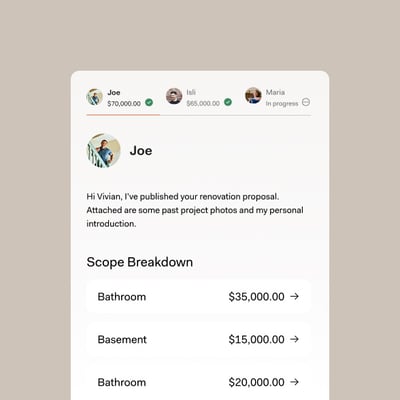
Compare Proposals with Ease
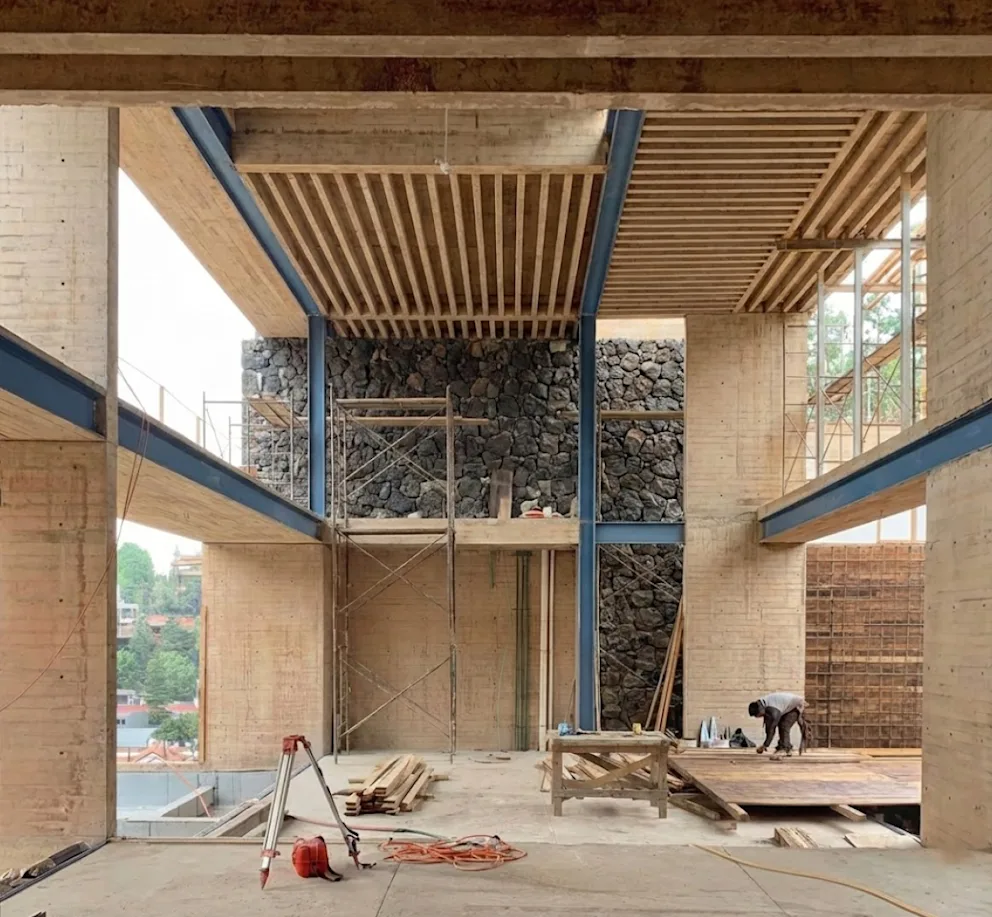
Durham's mix of Piedmont soil conditions, subtropical heat and humidity, a strained construction market, and low-lying floodplain geography creates a set of planning challenges that aren't obvious until you're in the middle of a build.
The Cecil and Appling clay loam soils that dominate the Durham Piedmont are among the most problematic for residential foundations in the Southeast. During the long dry spells that are common in North Carolina summers, these soils lose moisture and shrink, pulling away from foundation walls and sometimes creating differential settlement that cracks slabs, sticks doors, and opens gaps around windows. When fall rains arrive, the same soils expand back against the foundation and retain moisture that accelerates deterioration of untreated wood and concrete surfaces. Builders who work extensively in Durham know to specify foundations that account for this movement: either a post-tensioned slab designed to flex without cracking, a reinforced crawl space with encapsulated vapor barrier and positive drainage, or a full basement with waterproofed exterior walls and perimeter drain tile.
Durham sits in ASHRAE Climate Zone 4A, a mixed-humid designation that demands building envelope strategies different from those used in either the hot-dry Southwest or the cold-dominated Northeast. The challenge is managing both summer heat gain and winter heat loss while controlling moisture in a climate where outdoor humidity routinely exceeds 80 percent during the summer months. Walls that perform well thermally but allow vapor to accumulate in the assembly will develop mold and rot problems within a few years, particularly in crawl space homes where ground moisture adds to the vapor load.
Durham County has invested significantly in stormwater management infrastructure over the past two decades, partly in response to the nutrient impairment of Jordan Lake and Falls Lake, both of which receive stormwater runoff from the fast-developing Triangle. New construction projects above a threshold disturbed area must meet post-construction stormwater management requirements administered through the City of Durham's Stormwater Services division and, for sites draining to state-regulated waters, the NC DEQ Stormwater Program. Lots adjacent to streams, wetlands, or mapped floodplains must observe riparian buffer setbacks that can significantly reduce the buildable envelope of a parcel. FEMA flood maps identify areas within the 100-year floodplain where first-floor elevation requirements and flood insurance mandates apply, and several Durham neighborhoods near Ellerbe Creek and Northeast Creek have experienced significant flooding during heavy rain events in recent years.
Durham's building boom has created a construction labor market where experienced custom home builders are consistently booked out six months to a year in advance, and the subcontractors they depend on are in equally high demand.
The practical implication is that the best approach is to begin builder conversations, and potentially secure a position on a reputable builder's schedule, well before your design is finalized.
In a market where the best builders are booked far in advance, the selection process is as much about whether a builder is the right fit for you as whether they're available. Ease of communication over a 16-to-20-month project relationship is not a soft consideration.
Questions to ask potential Durham custom home builders include:

“The right contractor isn’t just about price—it’s about experience, communication style, and whether they can meet your expectations.”
Block connects Durham homeowners with vetted custom home builders who have been screened through a rigorous multi-step process covering license verification, insurance, background checks, and references from completed Triangle-area projects. Rather than navigating Durham's competitive and oversubscribed builder market on your own, you receive personalized contractor matches based on your project's scope, your lot's specific conditions, and your timeline.
Every Durham project managed through Block benefits from a progress-based payment system that releases contractor funds only as work is verified complete, protecting your investment through a build that spans multiple seasons and budget decision points. Block Protections include expert-reviewed project scopes that identify missing line items before they translate into change orders, plus a workmanship warranty backed by every contractor in the network. Your complete project timeline and payment schedule are visible through Block's dashboard from the first engagement through final walkthrough.
Lay the groundwork for a successful custom home
Match with vetted builders
Receive quotes from experienced contractors aligned to your vision.

Hire with confidence
Partner with Block experts to review quotes and timelines for end-to-end clarity.

Stay in control
Avoid surprises with Block Protections and a progress-based payment system.

Renovate confidently with Block
Easily compare quotes from top quality contractors, and get peace of mind with warranty & price protections.
North Carolina
Planning a Wilmington Home Addition? Start Here
06.04.2026
North Carolina
Custom Home Building in Durham, NC | Costs & Tips
04.08.2026
.png?width=640&name=u5821215421_A_modest_basement_family_room_with_a_TV_compact_s_7d7a7267-09ce-4160-bb5d-e8a36c46d1c6_2%20(1).png)
North Carolina
Greensboro Basement Renovation Costs, Options & Tips
03.26.2026

North Carolina
Bathroom Remodel Raleigh NC | Costs, Tips & Ideas
03.20.2026
.png?width=640&name=u5821215421_A_serene_Pacific_Northwest_bathroom_with_biophili_1c0219ec-aa54-40cb-bd52-85a0f63acd27_3%20(1).png)
North Carolina
Charlotte, NC, Bathroom Remodel Costs & Tips
03.16.2026