




Working with Contractors
Is a Property Renovation Company Worth the Cost?
06.24.2026
02.18.2026


In This Article
Ice cream shop interior design isn't about following trends—it's about creating a space that encourages larger orders, moves lines quickly, and makes guests want to stay longer. A well-designed ice cream shop remodel positions your dipping cabinet where every customer sees it, creates seating that encourages lingering, and builds a service flow that handles peak summer rushes without staff collisions.
When your ice cream shop feels chaotic, cramped, or confusing, it costs you sales every single day. Customers who can't see your flavors clearly don't order extras. Families who can't find seating leave after one scoop instead of staying for a second round. Service lines that bottleneck during rush hours frustrate guests and limit how many customers you can serve in an hour. The right interior design decisions during your remodel fix these problems and turn your space into a revenue-generating machine.
The moment a customer walks through your door, your interior design is either selling them on extras or letting them order the bare minimum. Strategic ice cream shop interior design triggers impulse orders before customers reach the counter.
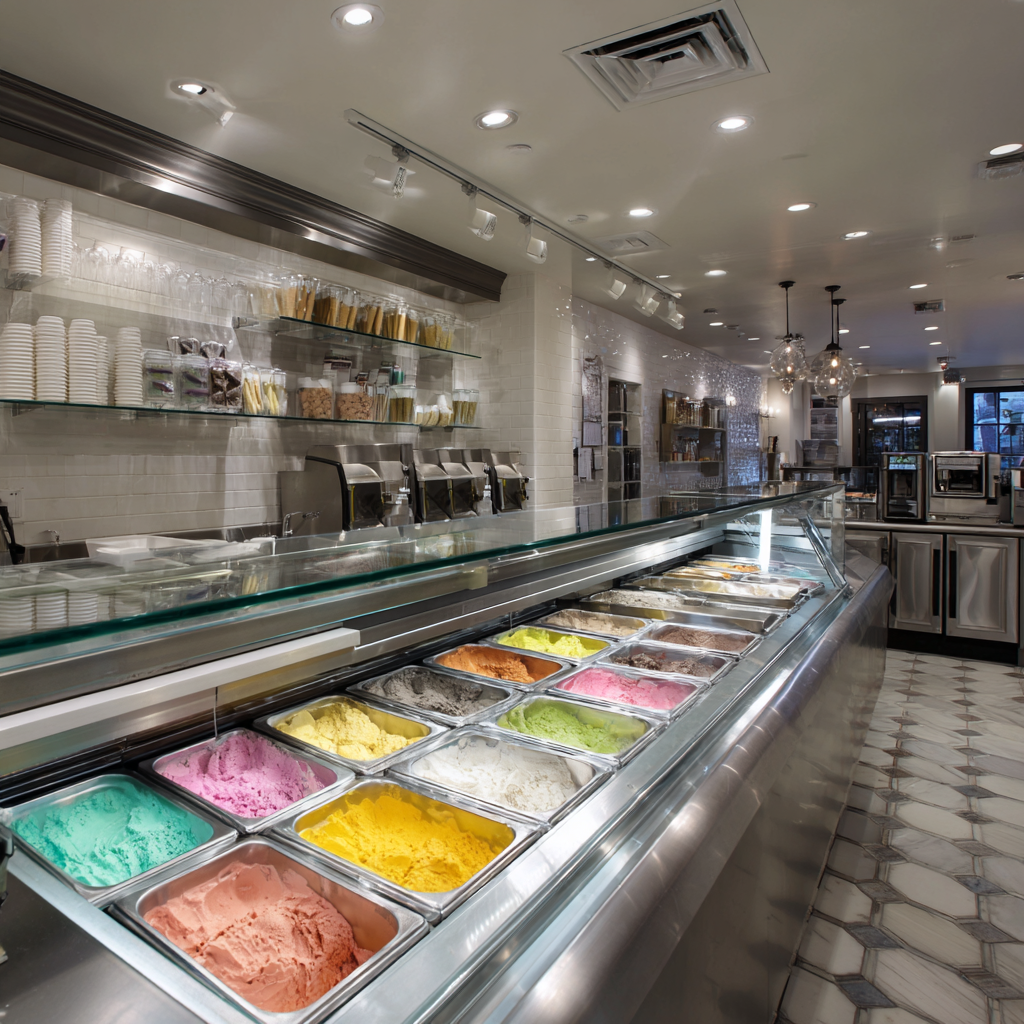
The dipping cabinet is your highest-margin real estate. Premium flavors, seasonal specials, and add-ins displayed at eye level generate impulse orders that significantly increase average ticket size. Yet many ice cream shops bury their dipping cabinets behind the counter or position them where customers can't see into the case until they're already placing their order.
During your ice cream shop remodel, position the dipping cabinet perpendicular to the service line—not parallel to it. This gives customers a full view of every flavor as they approach, rather than forcing them to crane their necks or wait until they're at the front of the line.
Ensure the dipping cabinet has excellent lighting—LED lighting inside the case and overhead spotlights that eliminate shadows. Dim or poorly lit ice cream looks unappetizing and reduces impulse orders.
If you're investing in new display cases during your ice cream shop remodel, choose models with glass fronts that extend below counter height so children can see flavors too—kids drive ordering decisions in ice cream shops.
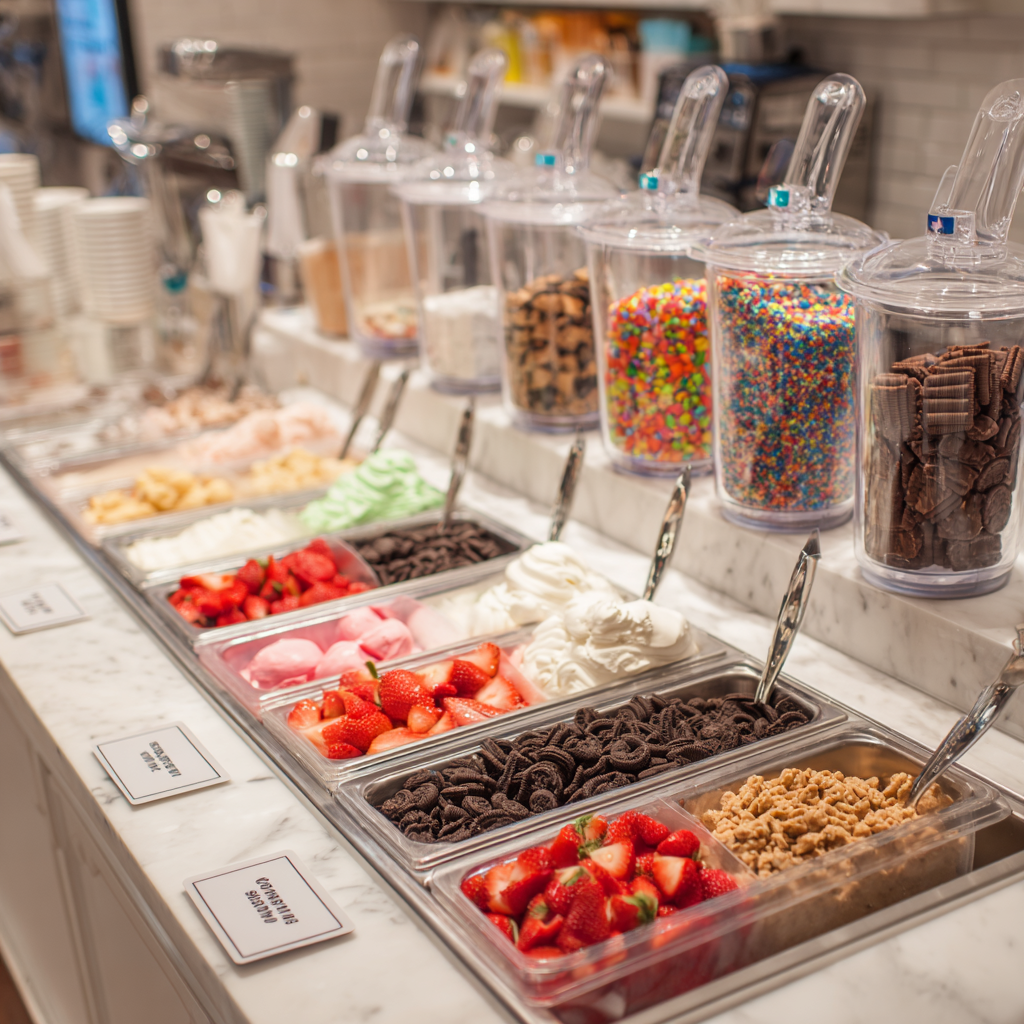
Toppings bars generate additional revenue, but only if customers know they exist before they order. Position your toppings display along the queue line in your ice cream shop interior design, not behind the counter where it's invisible until after the order is placed.
Use clear containers, good lighting, and bold signage that shows pricing. Customers who see fresh strawberries, crushed Oreos, hot fudge, and whipped cream while waiting in line add toppings to their order. Customers who discover toppings exist only after they've paid rarely come back to add them.
Menu boards in most ice cream shops are afterthoughts—poorly lit, cluttered with too many options, and positioned where customers can't see them until they're already at the register. Effective ice cream shop interior design uses menu boards to upsell.
Position your primary menu board where customers can see it from the entrance and while waiting in line. Use hierarchy: feature your most profitable items (sundaes, signature shakes, premium flavors) at eye level with larger fonts and images. List basic options (cups, cones, sizes) in smaller text.
During your ice cream shop remodel, invest in backlit menu boards or digital displays that can be updated easily.
Ice cream is a sensory experience, and your interior design should reinforce that at every touchpoint. Color, scent, sound, and even temperature work together to create an environment that makes guests hungry and ready to order.
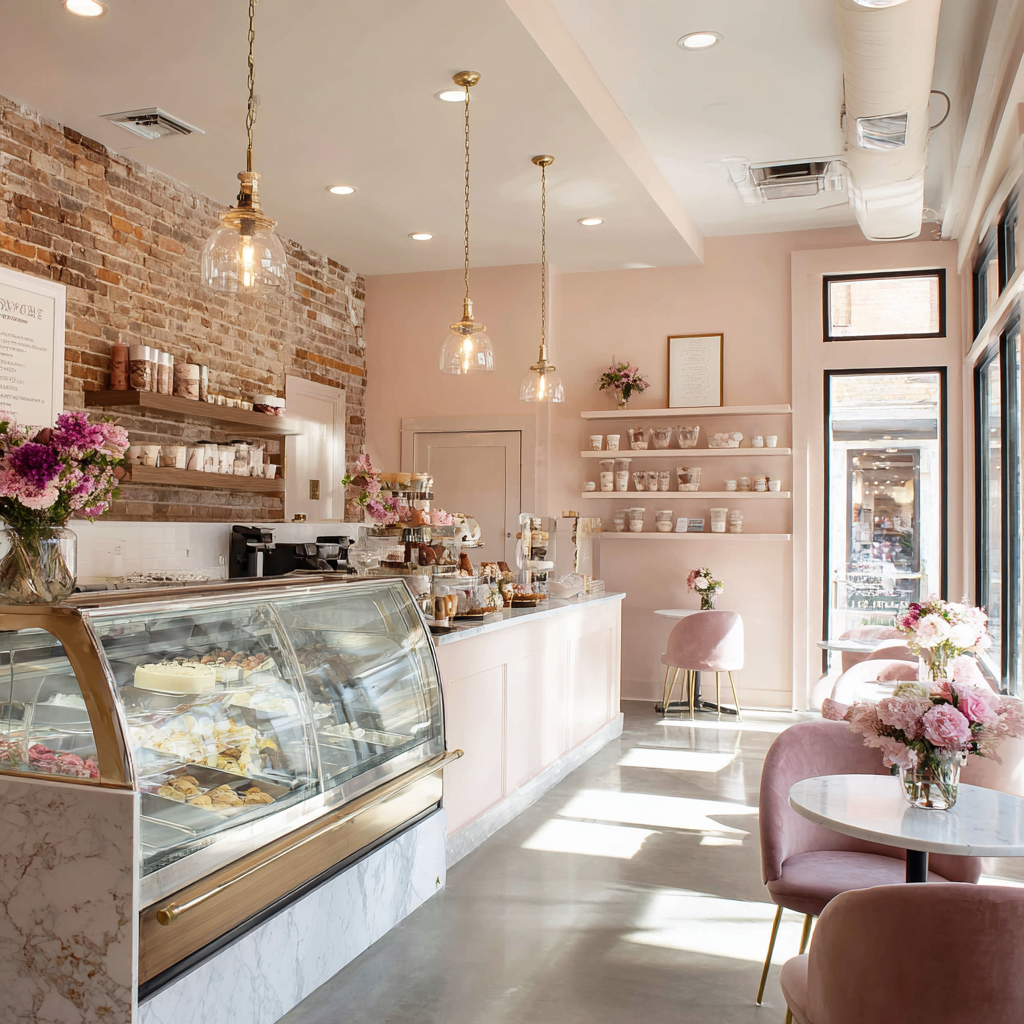
Ice cream shops benefit from social media visibility more than almost any other food business. A single Instagram post from a customer can generate dozens of visits. Your ice cream shop interior design should include visually distinctive elements that encourage photos and sharing.
Design features that photograph well:
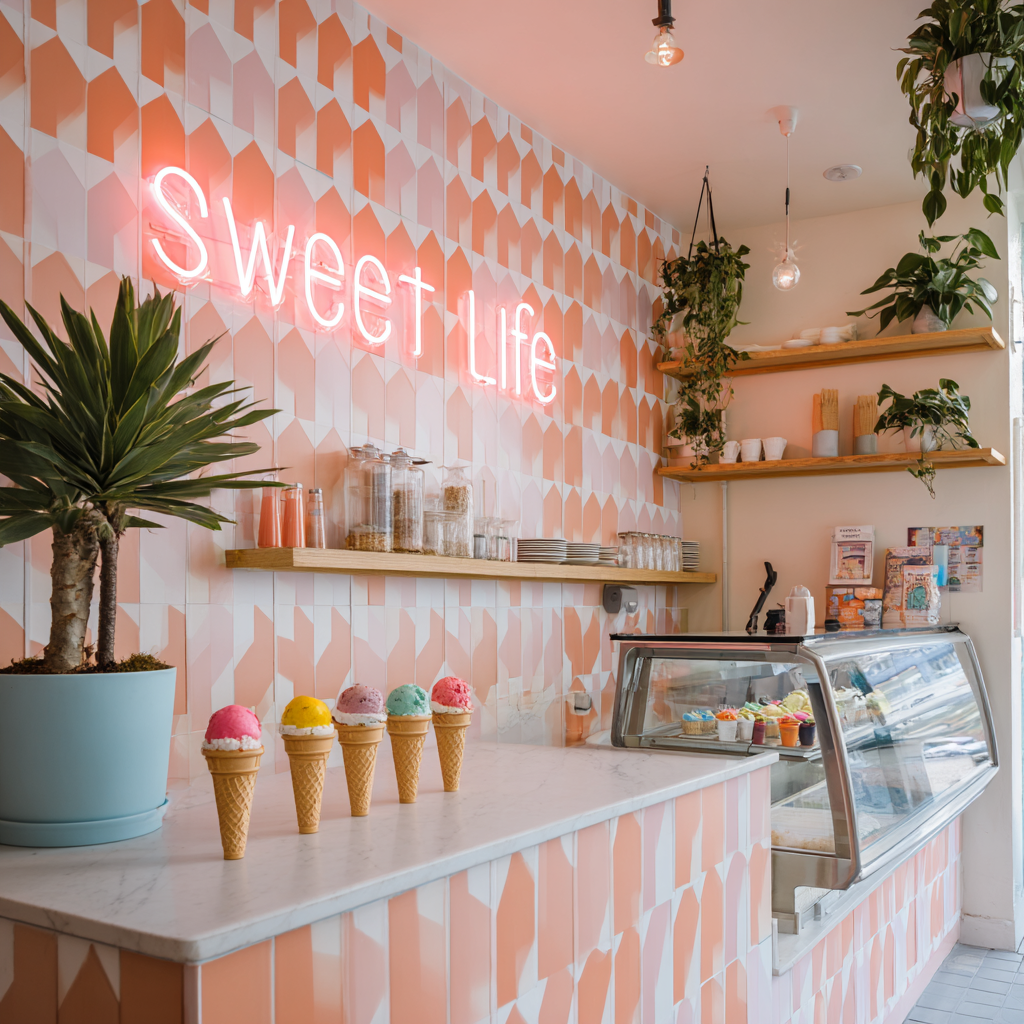
Revenue in an ice cream shop comes from three levers: average ticket size, customer count per hour, and time spent in the shop. Smart ice cream shop interior design pulls all three levers simultaneously.
A poorly designed service line creates bottlenecks that limit revenue during peak hours. If your staff can only serve 30 customers per hour during your busiest summer rushes, you're capping daily revenue regardless of demand.
The most efficient ice cream shop layout is a linear flow: queue → order → pay → pickup → exit. Customers shouldn't backtrack, cross paths with incoming guests, or wait in ambiguous spaces where they're unsure what to do next.
During your ice cream shop remodel, separate ordering from pickup if space allows. Customers place orders at one station, move to a pickup area while their order is prepared, then exit without blocking new arrivals. This doubles throughput during rushes compared to a single-point service model where one employee takes orders, scoops, and processes payment while a line builds.
Some ice cream shops want fast turnover—serve customers quickly and free up space for the next group. Others benefit from guests who linger, order seconds, and create a lively atmosphere that attracts walk-by traffic. Your ice cream shop interior design should match your business model.
For high-turnover operations: (downtown locations, tourist areas, limited seating) use smaller tables, backless stools, and bright lighting. These design choices encourage customers to enjoy their ice cream and move on, freeing up space for new arrivals.
For shops that benefit from lingering: (neighborhood locations, suburban settings with competition nearby) use comfortable seating, booth configurations, and slightly dimmer lighting during evening hours. Add power outlets for laptops if you want to attract remote workers during slower afternoon hours. Customers who stay longer often order a second scoop, a drink, or bring friends back later.
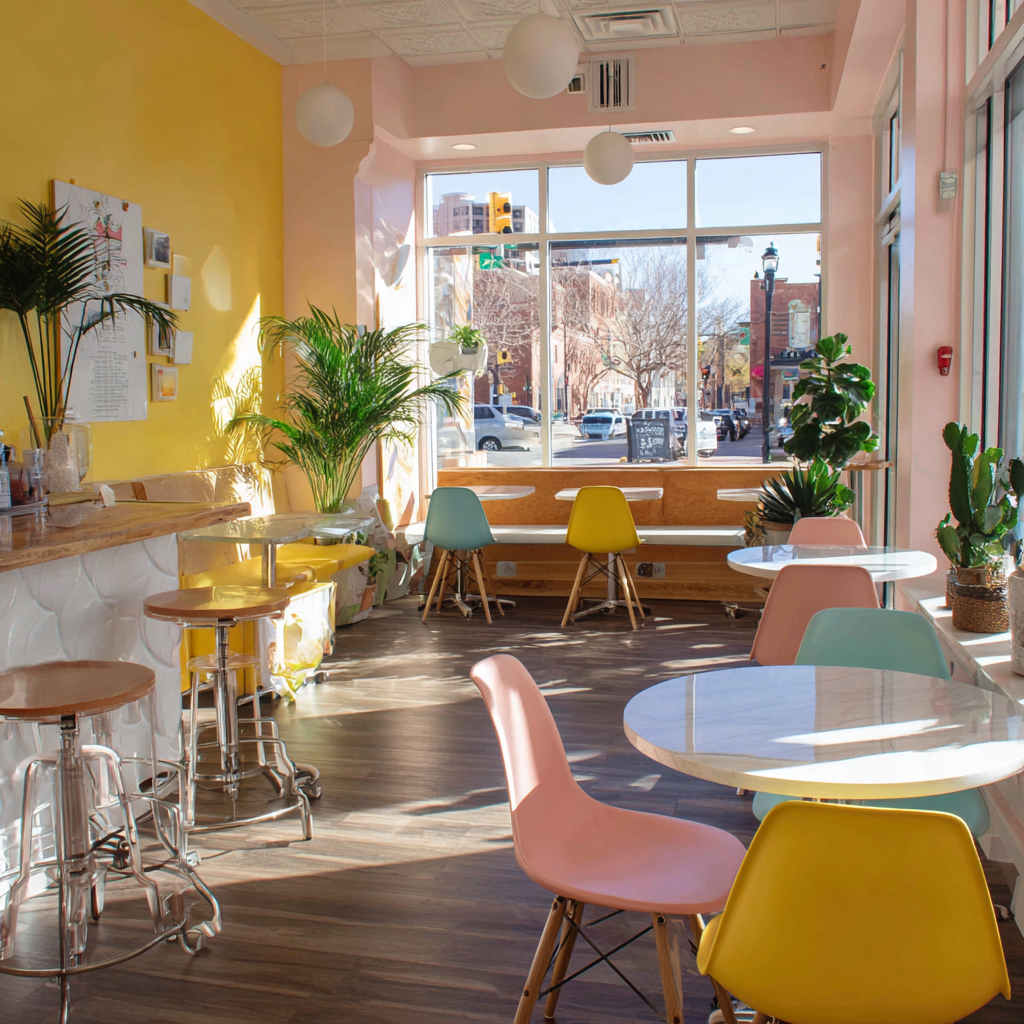
During your ice cream shop remodel, balance seating types. Include a mix of two-tops for couples, four-tops for families, and bar seating along windows for solo guests. Window seating serves double duty—it provides seats and creates street presence that attracts passersby who see a busy, inviting shop.
Cheap finishes in an ice cream shop don't just look bad—they create operational headaches. Floors that stain, counters that scratch, and walls that absorb odors require constant maintenance and look worn within months.
Flooring in ice cream shops takes constant abuse: spills, sticky residue, and foot traffic. Polished concrete or commercial-grade porcelain tile are the most durable options for ice cream shop remodels. Both clean quickly, resist staining, and handle dropped cones without chipping. Avoid laminate (swells when wet), cheap vinyl (tears and stains), and anything with grout lines that trap sticky residue. Find more tips in our guide to restaurant flooring.
Countertops and serving surfaces should be solid surface material, stainless steel, or high-pressure laminate. These materials wipe clean, resist heat (important near waffle cone makers), and don't harbor bacteria. During your ice cream shop remodel, extend durable surfaces to areas guests touch—door handles, table edges, serving counters.
Wall finishes matter more in ice cream shops than most food businesses because bright colors are part of the brand. Use semi-gloss or satin paint in high-traffic areas so walls can be wiped down. In areas prone to splashes (near the serving counter, around soda fountains), consider tile, FRP panels, or other waterproof finishes that handle cleaning without damage.
Ice cream shop furniture takes a beating from sticky hands, spilled toppings, and constant use. Choose tables and chairs with commercial-grade finishes that wipe clean and don't show wear. Metal or wood with sealed finishes outlasts painted furniture. Avoid upholstered seating unless you're using commercial-grade vinyl that can be sanitized—fabric absorbs spills and odors.
Some ice cream shop interior design choices seem appealing but create operational problems or limit revenue. Avoid these common mistakes during your remodel.
Ice cream shop remodels require contractors who understand food service codes, high-traffic commercial finishes, and how to minimize downtime during your busiest season. Block Renovation connects you with vetted contractors experienced in food service buildouts—professionals who know that your summer months generate the majority of annual revenue and can't be lost to extended closures.
Block's project planners help you think through the operational details that separate ice cream shops that struggle from those that thrive: dipping cabinet placement, service flow efficiency, material durability, and seating configurations that match your business model. Our contractors understand that every design choice in your ice cream shop interior should serve a purpose—either increasing revenue, reducing labor costs, or improving the guest experience.
Build your business with confidence

Renovate confidently with Block
Easily compare quotes from top quality contractors, and get peace of mind with warranty & price protections.
Working with Contractors
Is a Property Renovation Company Worth the Cost?
06.24.2026

Commercial
Commercial Remodeling in San Diego by Neighborhood | Block Renovation
04.27.2026
Commercial
Commercial Remodeling and Buildouts in Dallas-Fort Worth | Block Renovation
04.24.2026
Commercial
2026 Restaurant Design: 11 Trends Defining the Industry
04.24.2026

Commercial
Restaurant Remodel Regulations Checklist
04.21.2026