



.webp?width=640&name=u5821215421_A_renovated_attached_garage_interior_used_for_dai_be957847-8779-47d0-80bc-5a7ad148320e_0%20(1).webp)
Cost
Garage Remodel Costs in 2026: Makeovers to Conversions
07.07.2026
04.20.2026


In This Article
Most homeowners don't think much about the space between their garage and their house until they've spent enough winters making the trip in the rain, arms full, door stuck. An enclosed breezeway fixes that, but it does a lot more than keep you dry.
A covered, enclosed passage connecting a detached or semi-detached garage to the main house adds conditioned square footage, improves your home's energy efficiency, and creates a natural transition zone between the garage and your living space. Depending on how you finish it, that zone becomes a mudroom, a laundry room, a sunroom, a pet area, or some combination.
Mike Barclay of Indiana talked with Block about the value of building a breezeway to connect him home and garage. “Honestly we did it because I was sick of getting cold every time I brought in groceries. That's it. But now half our garage storage is now stored there. Camping gear, the stuff we use maybe twice a year. It’s become an all-purpose kind of space, which we appreciate.”
Enclosing a breezeway between the garage and the house is a real construction project, not a weekend job. Before you start pulling inspiration images, it's worth understanding what you're actually building.
| Roof tie-ins fail first | The weak point is usually where the garage roof meets the house. Bad flashing can sit unnoticed behind drywall for years before leaks stain ceilings or rot framing. |
| Frost footings change the project | In cold climates, enclosing a breezeway can trigger excavation, frost footings, and concrete work before framing starts. That shifts the job from light enclosure to structural addition fast. |
| Cheap glass costs twice | Builder-grade windows lower the upfront number, then turn the room cold and drafty every winter. Smaller window layouts with better-performing glass usually hold up better long term. |
The shape of your lot and the position of your garage relative to the house will largely determine what kind of breezeway is possible. Three configurations come up most often.
A contained breezeway runs in a straight line between the house and garage, sharing a continuous roofline with both structures. These feel the most integrated, like the connection was always meant to be there, and are the most common when the breezeway was part of the original build or a previous renovation. If your garage and house already face each other squarely and the rooflines are compatible, this is typically the most straightforward and cost-effective configuration to execute.
An offset breezeway accommodates garages that aren't directly across from the entry point of the house. They typically involve a jog or turn in the middle, which adds complexity to framing and roofing but solves a layout problem that a contained breezeway can't. If your garage sits at an angle or deeper into the lot, this is often the only configuration that works without major site changes. Expect the roofline connection to require more detailed planning and a contractor with experience handling non-linear additions.
A wider utility breezeway is built with extra square footage intentionally, think eight to ten feet across rather than the bare minimum, specifically to accommodate a mudroom, laundry setup, or storage built-ins. The extra width costs more to build but opens up significantly more functional possibilities. For households with kids, dogs, or anyone who spends time outdoors, the additional square footage tends to pay for itself quickly in how the space actually gets used day to day.
Before any design decisions get made, a contractor should assess your existing structures: whether the foundation of the garage and the house can support a connection, where frost footings are needed (critical in cold climates, where an improperly supported slab will heave and crack), and whether the rooflines of both structures can be tied together without major structural work. These aren't surprises you want mid-project.
Enclosed breezeway ideas from the garage to the house tend to fall into a few distinct aesthetic directions, and each one involves real material choices your contractor will ask you to make before work begins.
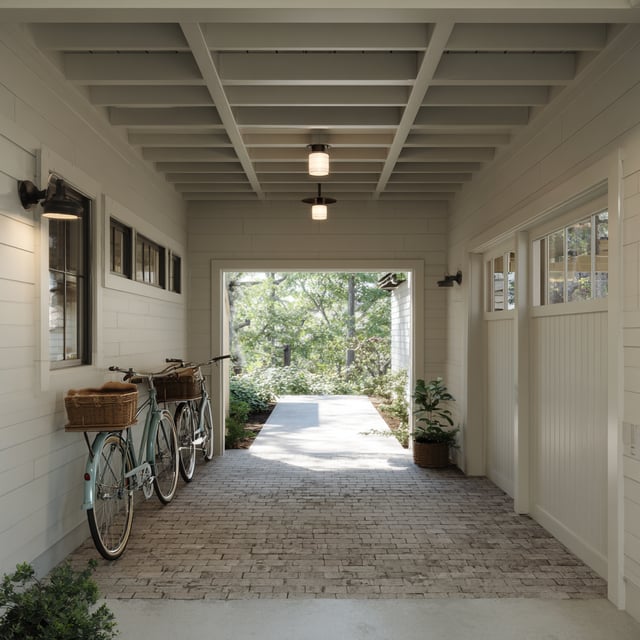
Shiplap or board-and-batten walls, wood-clad or painted ceilings, trim that matches the existing house profile, paneled doors. Brick or natural stone flooring ties the space to exterior materials already on the home. The key material decision here is real brick versus brick-look porcelain tile. Real brick is heavier, requires a sturdier subfloor, and costs more to install. It also needs to be properly sealed to handle moisture in a space that sees wet boots and open doors in all weather.
Brick-look porcelain is more forgiving, easier to maintain, and significantly cheaper, but the grout lines and surface texture don't hold up to close inspection the way the real thing does. For a breezeway meant to feel like it's always been there, the original material is usually worth the premium. If budget is the constraint, consider using real brick only on the floor field and porcelain on the border, or vice versa.
White or off-white walls, simple trim, large windows, maybe a skylight if the roof configuration allows. The material palette is restrained by design. Where homeowners make the most consequential decisions is in window specifications: double-pane insulating glass is standard, but in cold climates, triple-pane is worth pricing out, particularly for a south-facing wall with significant glazing. The performance difference in winter is meaningful. For flooring, large-format matte porcelain in a light tone keeps the brightness without making every footprint visible. High-gloss tile looks striking in showrooms and shows every scuff after a week of real use in a high-traffic entry space. Matte or satin finishes hold up considerably better.
Exposed wood beams, reclaimed or rough-sawn lumber, matte black hardware, warm neutral tones. This is one of the more forgiving aesthetics when it comes to imperfection since slight variations in material and visible texture read as intentional. Concrete floors with a matte sealer work well here, both visually and financially. Reclaimed wood is the material decision that trips people up most often in this style. It requires careful sourcing, sometimes treatment for pests or moisture, and not every piece is structurally usable as-is.
A contractor experienced with this aesthetic will know the difference between decorative reclaimed wood and load-bearing reclaimed wood, and where each belongs. Budget extra time for sourcing if this is a priority.
Flat-front cabinetry, large-format tile with tight grout lines, windows with slim aluminum or steel profiles, concealed storage throughout. Every material decision in this style is about surface quality because there's nowhere to hide imperfect installation. Flooring often comes down to polished concrete versus large-format porcelain that mimics it. Polished concrete is the real thing and ages distinctively, but it requires diamond grinding, densifier application, and ongoing sealing, and not every contractor has the equipment or experience to execute it well.
The porcelain alternative is lower maintenance, more consistent, and often significantly cheaper. Grout color is also worth a deliberate conversation: light grout in a high-traffic breezeway will discolor quickly. A dark or mid-tone grout color matched to the tile is a smarter long-term call.
Natural wood, lots of windows, vintage-inspired hardware and light fixtures, plants throughout. The material palette leans soft and layered: tongue-and-groove ceiling planks, subway or handmade tile, unlacquered brass or oil-rubbed bronze hardware that develops a patina over time. This works particularly well for homeowners who want to use the breezeway as a potting area or morning coffee spot. Humidity is the practical issue that doesn't come up enough with this style.
Plants release moisture continuously, and in a relatively small enclosed space, that adds up fast. Walls finished with moisture-resistant paint or tile wainscoting, adequate ventilation, and a properly sealed floor are worth specifying before work begins rather than addressing after mold appears behind the baseboard.
Enclosing a breezeway between the garage and the house covers a wide cost range. A basic enclosure, adding walls, windows, and simple finishes to an already-covered passage, will cost considerably less than building a new structure from the ground up or converting a raw passage into a fully finished, climate-controlled room with built-ins and plumbing.
General ranges to plan around:
Several cost drivers that homeowners often don't anticipate when enclosing a breezeway between the garage and the house:
Block Renovation connects homeowners with thoroughly vetted, experienced contractors who handle projects like this regularly, from the permitting paperwork to the roofline tie-in to finish selection. Every contractor in the Block network has been license-verified and reviewed for workmanship quality through virtual site visits before they ever appear in your matched results.
Remodel with confidence through Block

Connect to vetted local contractors
We only work with top-tier, thoroughly vetted contractors

Get expert guidance
Our project planners offer expert advice, scope review, and ongoing support as needed
Enjoy peace of mind throughout your renovation
Secure payment system puts you in control and protects your remodel

Renovate confidently with Block
Easily compare quotes from top quality contractors, and get peace of mind with warranty & price protections.
Cost
Garage Remodel Costs in 2026: Makeovers to Conversions
07.07.2026
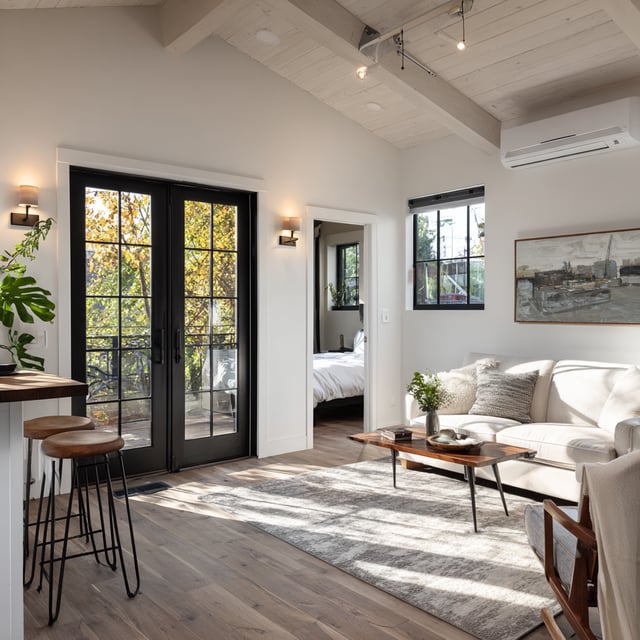
Garage
1-Bedroom Garage Apartment Floor Plans | Block
06.11.2026

Garage
Carport to Garage Conversion Cost & Execution Guide
05.05.2026
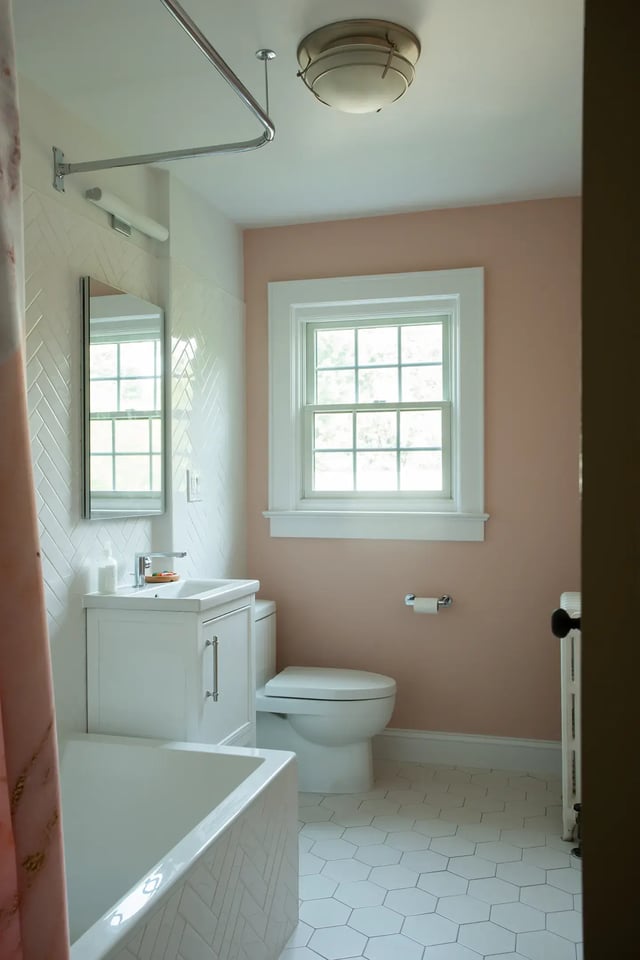
Bathroom
Adding a Bathroom to a Garage: Costs & Execution
04.27.2026
Garage
Ideas for an Enclosed Breezeway from the Garage to the House
04.20.2026