




Florida
Renovating in an Orlando HOA: What to Know First
06.26.2026
04.14.2026


In This Article
Miami’s bathroom design trends don’t follow the national playbook exactly. The city’s subtropical climate, its deep Latin American and European design influences, and the way Miami homeowners actually use their bathrooms all shape what’s popular here in ways that don’t always match what you’d see trending in a Brooklyn brownstone or a Portland bungalow.
What’s happening in Miami bathrooms right now is a blend of spa-like minimalism, warm natural materials, and practical choices driven by the reality of living in a place where humidity is a year-round consideration. The best Miami bathroom remodels don’t just look good on day one; they’re designed to perform well and age gracefully in South Florida’s demanding climate. Here are the trends that are defining Miami bathroom design and the ones worth considering if you’re planning a remodel.
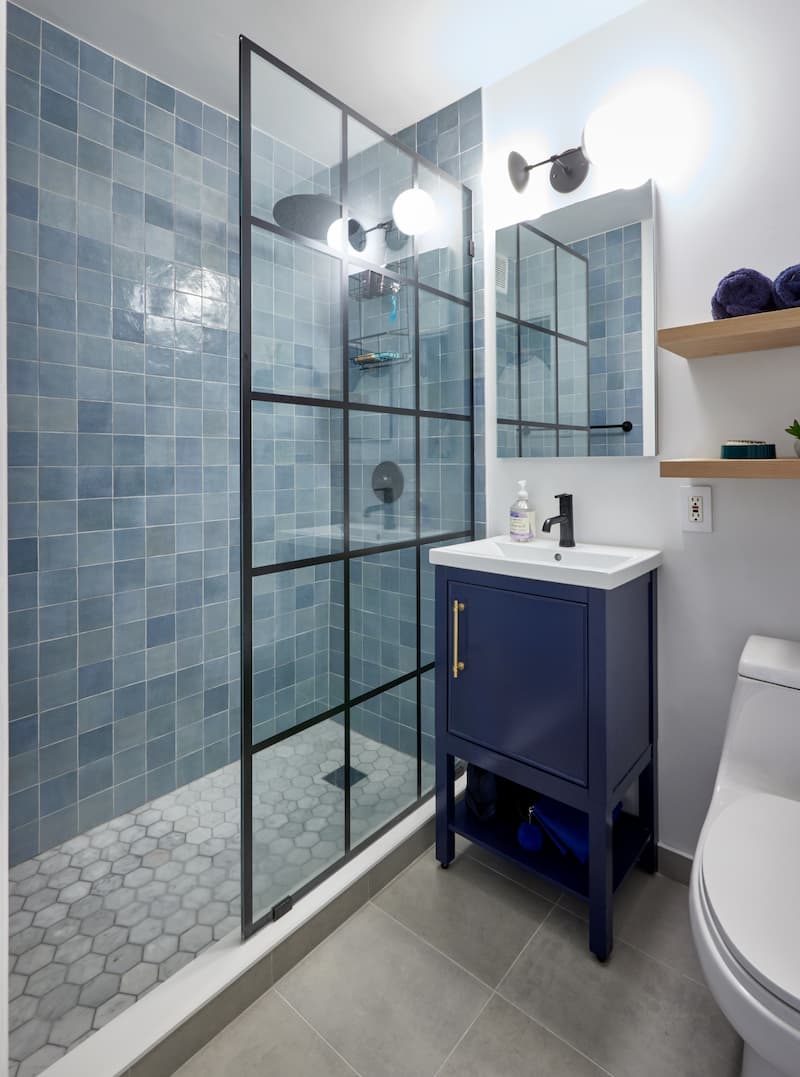
The open, barrier-free shower has moved from a luxury niche to a mainstream expectation in Miami’s higher-end bathroom remodels. Curbless showers with linear drains and frameless glass panels create a sense of openness that makes even compact Miami bathrooms feel more generous.
Full wet room conversions take this further by waterproofing the entire bathroom floor, eliminating the shower enclosure entirely. The result is a room that feels more like a European spa than a traditional American bathroom. In Miami, where indoor-outdoor flow is a design priority, the wet room aesthetic feels especially natural.
The practical consideration: proper waterproofing is critical. Miami’s humidity means any shortcuts in membrane installation or drain placement will show up as problems faster than they would in drier climates. Make sure your contractor has specific experience with wet room builds.
The all-gray, all-white bathroom that dominated the last decade is giving way to warmer tones in Miami. Homeowners are gravitating toward materials and colors that feel organic and connected to South Florida’s natural environment.
What this looks like in practice:
While the overall bathroom palette in Miami is trending warmer and more neutral, tile is where homeowners are getting bolder. A single wall of handmade zellige, a patterned encaustic cement floor, or a gradient glass mosaic in the shower serves as the room’s focal point while the rest of the space stays restrained.
This “one bold move” approach works particularly well in Miami’s smaller bathrooms, where a single feature wall has more visual impact than trying to cover every surface in pattern. The earthy tones and handcrafted textures of zellige and encaustic tile also connect to Miami’s Mediterranean and Caribbean design roots.
For small bathroom design ideas that use statement tile effectively without overwhelming a compact space, scale and placement matter as much as the tile itself.
Wall-mounted vanities have become the standard in Miami’s bathroom remodels, from compact guest baths to spacious primary suites. They make the floor plane continuous, which creates a sense of openness, and they make cleaning easier in a climate where mildew loves to hide in hard-to-reach spots.
The trend is moving toward vanities that feel more like furniture than cabinetry:
For storage, recessed medicine cabinets and built-in shower niches continue to be the preferred approach in Miami bathrooms. They keep essentials accessible without adding visual clutter, which matters in a design culture that values clean lines.
Miami homeowners are increasingly designing bathrooms that borrow from the hotel and spa experiences the city is known for. This isn’t about adding a sauna to every home; it’s about specific features that elevate the daily routine.
Lighting used to be an afterthought in bathroom design. In Miami’s current remodeling market, it’s treated as a design element on par with tile and fixtures. The approach is layered:
Backlit mirrors have become especially popular in Miami bathrooms. Many models include dimmable controls and anti-fog functions, both practical additions in Miami’s humid climate.
The days of suction-cup shower caddies and corner shelves are over in Miami’s remodeled bathrooms. Built-in niches, tiled to match the surrounding shower wall, have become the expected standard. The trend is moving toward longer horizontal niches (spanning 24 to 36 inches) rather than the small, single-square cutouts of a few years ago.
Some Miami homeowners are also adding a continuous stone ledge along the back wall of the shower, which provides storage while creating a clean, linear design detail. In a wet room or curbless shower, these integrated elements reinforce the streamlined look that defines the current Miami aesthetic.
Across fixtures, tile, and hardware, Miami bathrooms are shifting toward matte and satin finishes. Matte black faucets and showerheads have been popular for several years, but the trend is expanding to matte brass, matte white fixtures, and honed (rather than polished) stone surfaces.
The reason is both aesthetic and practical: matte finishes show fewer fingerprints, water spots, and soap residue, which matters in a city where high humidity means surfaces are constantly exposed to moisture. Matte porcelain tile on bathroom floors also provides better slip resistance than polished alternatives, a safety consideration that doesn’t sacrifice style.
In Miami’s luxury and upper-mid-range markets, the bathroom is increasingly designed as a space that connects to the outdoors. This shows up as floor-to-ceiling glass walls or sliding doors that open from a primary bathroom to a private garden, courtyard, or screened patio.
Even in homes where a full indoor-outdoor connection isn’t possible, the influence appears in material choices (natural stone, teak, live-edge wood) and design elements (indoor plants, natural light maximization, earth-toned palettes) that blur the boundary between the bathroom and the tropical environment outside. In neighborhoods like Coconut Grove, Pinecrest, and parts of Coral Gables where lot sizes allow for private outdoor areas adjacent to the primary suite, this trend has moved from aspirational to expected in higher-end remodels.
Trends are worth following when they align with how you live and with the practical demands of your environment. In Miami, that means running every design decision through a climate filter:
Understanding typical bathroom remodeling costs in Miami can help you prioritize which trends to invest in and where to be more conservative with your budget.
Block Renovation’s Renovation Studio lets you experiment with layouts, materials, and finishes and see how each choice affects your estimated cost in real time. It’s a useful way to test whether a trend actually works in your specific space before committing to it.
A trend-forward bathroom remodel requires a contractor who can execute with real precision. Curbless showers need exact slope and waterproofing. Floating vanities need proper wall blocking. Statement tile demands clean, consistent installation. In Miami, the details matter.
Block Renovation connects Miami homeowners with vetted, licensed contractors who have been evaluated for workmanship quality and project fit. You’ll receive detailed proposals you can compare side by side, with support from a project planner throughout the process.
Remodel with confidence through Block

Connect to vetted local contractors
We only work with top-tier, thoroughly vetted contractors
Get expert guidance
Our project planners offer expert advice, scope review, and ongoing support as needed
Enjoy peace of mind throughout your renovation
Secure payment system puts you in control and protects your remodel

Renovate confidently with Block
Easily compare quotes from top quality contractors, and get peace of mind with warranty & price protections.
Florida
Renovating in an Orlando HOA: What to Know First
06.26.2026

Florida
Planning a Jacksonville Home Addition? Start Here
06.09.2026
Florida
The Contractor Shortlist for Miami and Fort Lauderdale
05.29.2026
.png?width=640&name=u5821215421_A_bright_open-concept_bathroom_in_a_city_apartmen_1728a26f-2551-4daf-aa9f-8b48513e3949_2%20(1).png)
Florida
Tampa Condo and Apartment Renovations: Smart Spending in a Market That Rewards It
04.23.2026

Florida
Miami Condo Renovations: Upgrading Your Unit in a Changing Regulatory Landscape
04.21.2026